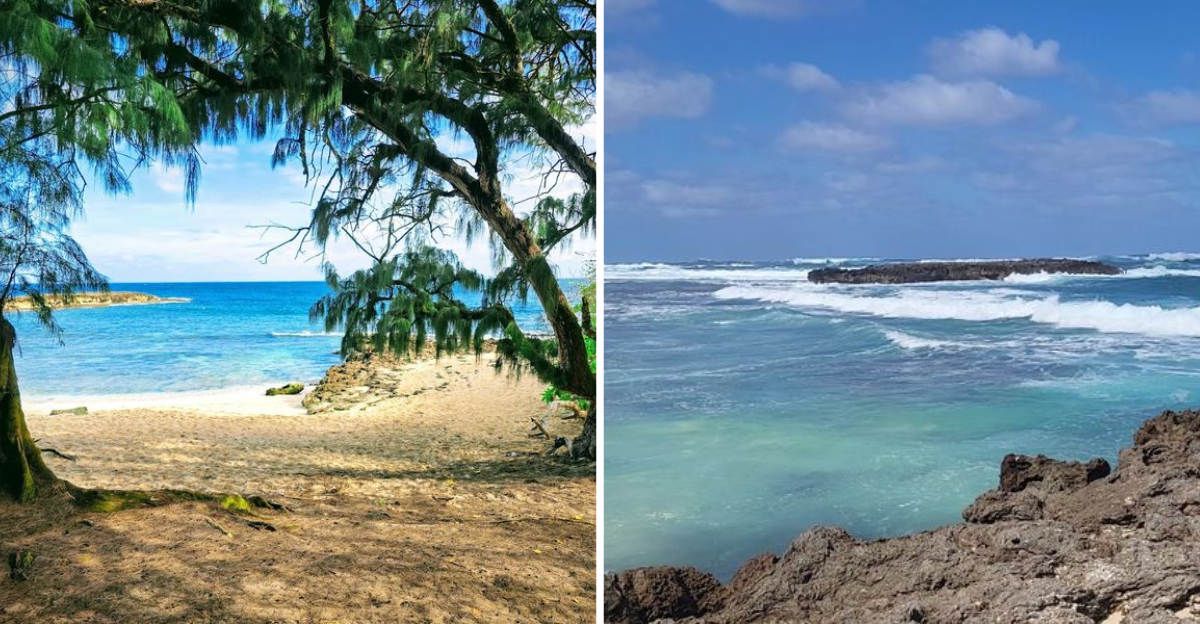
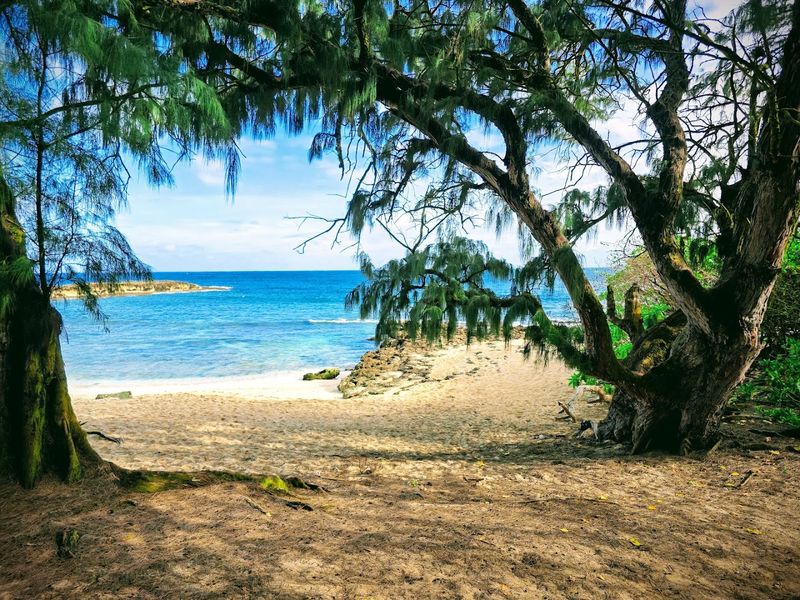
Ironwood and banyan trees grow thick along that North Shore beach in Hawaii, almost like they are keeping a secret from the rest of the island. Most tourists never find it, and honestly, that is part of what makes it so special.
I stepped through the forest and the ocean came into view, and a sudden rush of calm hit me all at once.
The trees grow so close to the water that the shade stretches nearly to the shoreline, something you rarely see on Hawaiian beaches.
I sat beneath those branches, the only sounds rustling leaves and soft waves lapping against the sand, and felt like I had stumbled onto something genuinely untouched.
That kind of quiet is rare on an island as visited as this one.
I stayed longer than planned, not wanting to break the spell.
The Ironwood Forest That Leads You to the Shore
Most beaches announce themselves loudly, with parking lots, signs, and crowds. Kawela Bay does none of that.
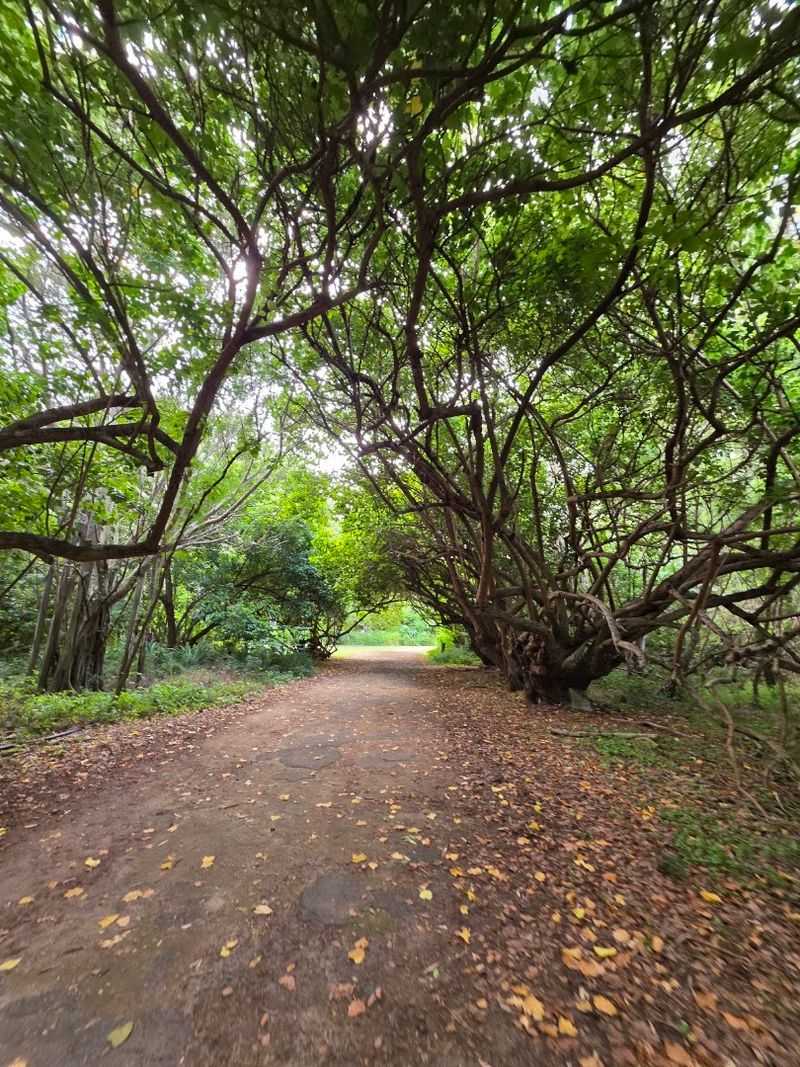
You find it by walking through a forest, and that walk is honestly half the experience.
The ironwood trees here are tall, sometimes reaching 80 to 100 feet, and they grow in dense clusters that block out much of the sky. Their needle-like leaves drop to the ground in soft layers, creating a quiet, cushioned path underfoot.
The light that filters through is dappled and golden, especially in the morning hours.
Ironwood trees, known scientifically as Casuarina equisetifolia, were introduced to Hawaii in the 1870s. They were originally planted as windbreaks and for reforestation efforts across the islands.
Over time, they became a defining feature of places like Kawela Bay, even though they are not native to Hawaii.
One thing worth knowing is that these trees have a relatively short lifespan of around 40 to 50 years, and their shallow roots make them prone to falling during strong winds.
The forest floor can also accumulate thick needle litter, which limits the growth of native plants beneath them.
Still, walking through this forest feels genuinely magical. The canopy creates a kind of natural tunnel that builds anticipation as you move toward the beach.
Children especially love exploring here, climbing trees and searching for small critters among the roots. The forest does not just frame the beach.
It is part of the whole Kawela Bay experience, one that rewards the curious traveler willing to wander a little before finding the water.
A Crescent Bay Shaped for Calm
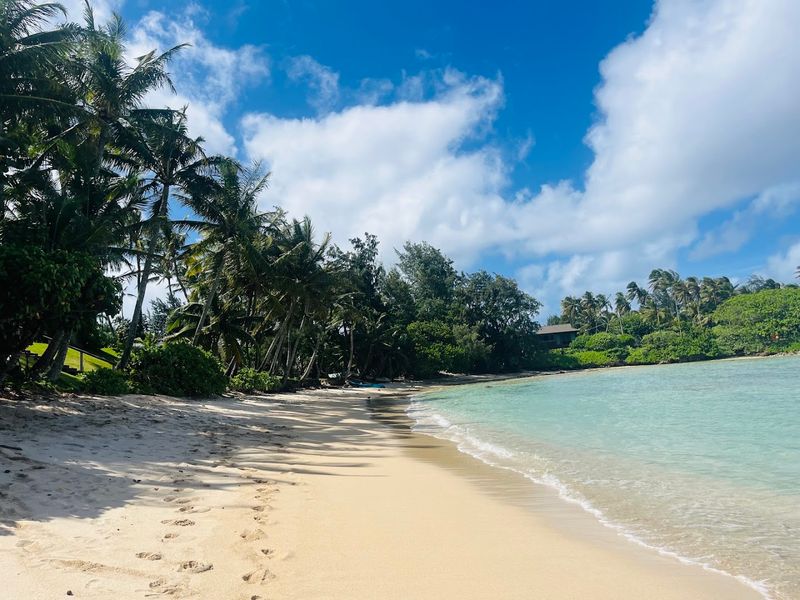
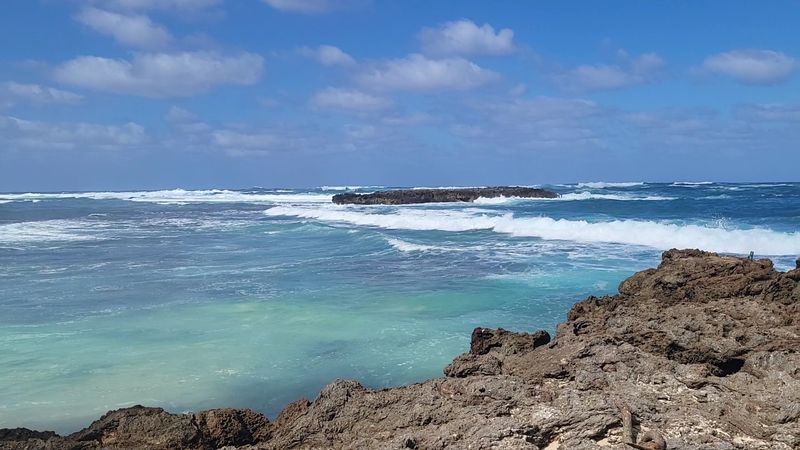
The shape of Kawela Bay is one of the first things you notice when you finally step out of the trees. It curves gently inward like a cupped hand, and the water inside it sits noticeably calmer than the ocean just beyond the reef.
That protective reef is the reason for the stillness. It absorbs much of the wave energy that pounds other North Shore beaches, especially during the powerful winter swells.
The result is a bay that feels almost sheltered year-round, which locals genuinely appreciate.
The center of the bay tends to offer the most suitable conditions for wading and light swimming. The ocean bottom is rocky and covered in coral rubble in places, so water shoes are a smart idea if you plan to walk around.
The water can also turn murky when surf outside the bay stirs up sand, so visibility for swimming is not always ideal.
Paddleboarding and kayaking are popular here on calm days, and the bay’s gentle surface makes it easy to glide across without much effort. There are no rental shops on site, so you would need to bring your own gear or arrange it ahead of time.
One strong recommendation is to check conditions before heading in. Even though the bay looks peaceful, swells can occasionally push through, especially in winter.
After heavy rainfall, it is also wise to wait at least 72 hours before entering the water. The bay rewards patience and a little preparation with a genuinely serene experience.
Green Sea Turtles and the Wildlife That Calls This Place Home
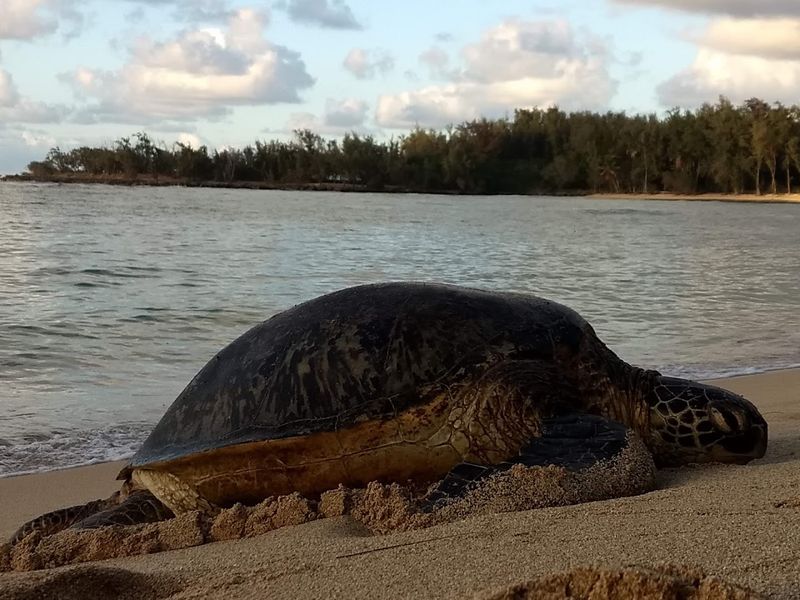
One afternoon at Kawela Bay, I spotted a green sea turtle drifting lazily near the shoreline, completely unbothered by anything around it. That kind of encounter is not unusual here.
The bay is known as a regular foraging spot for Hawaiian green sea turtles, and sightings happen often enough that locals come specifically hoping to see them.
The shallow, calm waters of the bay make it easy for turtles to graze on algae growing along the rocky bottom. If you are patient and quiet, you can sometimes watch them from the shore without disturbing them at all.
Always keep a respectful distance, as these animals are protected under federal law and should never be touched or approached closely.
Kawela Bay occasionally attracts Hawaiian monk seals as well, one of the most endangered marine mammals in the world. Spotting one resting on the sand is a genuinely rare and memorable experience.
If you see one, stay well back and do not let children run toward it.
The surrounding forest is also a haven for birdwatchers. The dense canopy and varied vegetation attract a range of bird species, making early morning visits especially rewarding for anyone with a pair of binoculars.
The tidal areas near the rocky points are worth exploring too, with small critters tucked into crevices and pools.
Wildlife at Kawela Bay is not a side note. It is woven into the whole atmosphere of the place, and it adds a layer of wonder to every visit that is hard to replicate at busier beaches.
The Famous Banyan Trees and Their Hollywood History
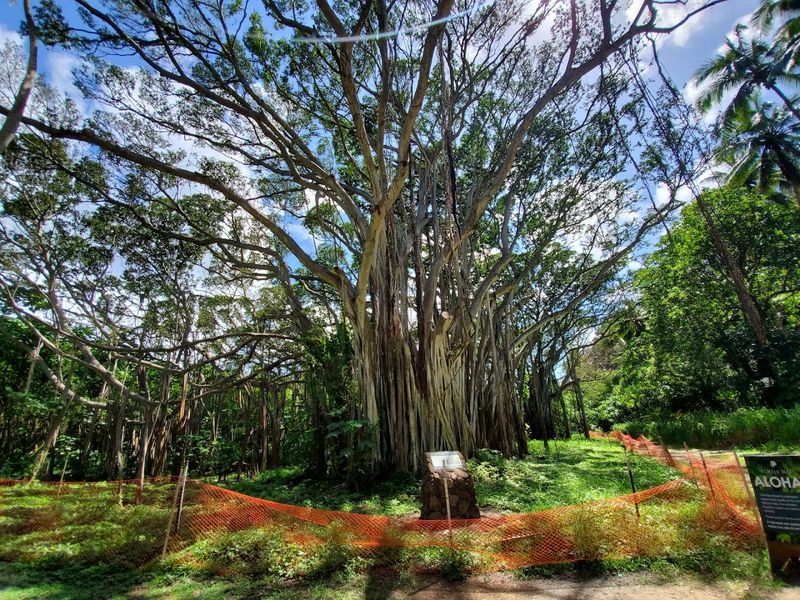
Tucked within the forest that borders Kawela Bay is one of the most photographed trees on the entire North Shore.
A massive banyan tree, with its sprawling aerial roots and wide canopy, has drawn visitors long before most people even knew this beach existed.
This tree became famous as a filming location for the television series LOST, which used the surrounding forest extensively for its jungle scenes.
Pirates of the Caribbean also filmed here, drawn by the same overgrown, atmospheric quality that makes this forest feel like a world apart from everyday Hawaii.
Some of the well-known banyan trees near the beach access now have ropes around them and informational signs, largely due to the presence of the nearby Ritz-Carlton Turtle Bay.
The wider forest, however, remains accessible and worth wandering through at your own pace.
Banyan trees grow in a remarkable way, sending down roots from their branches that eventually thicken into additional trunks.
A single tree can spread across an enormous area over time, creating a living structure that feels almost architectural.
The ones at Kawela Bay have clearly been growing for many decades.
There is something genuinely humbling about standing near a tree that has been here far longer than any of the visitors passing through.
The forest around Kawela Bay has this layered, slightly overgrown quality that makes exploration feel rewarding.
Every visit reveals something new, a different root formation, an unexpected trail opening, or a shaft of light breaking through the canopy in just the right way.
How to Get There and What to Bring
Getting to Kawela Bay is part of the adventure, and it requires a little more effort than pulling into a standard beach parking lot.
Most visitors reach the beach by parking along Kamehameha Highway, typically across from old roadside fruit stand areas near Kawela Camp Road.
From there, an unmarked path leads through the trees to the shore.
The walk is short, usually just a few minutes, but the lack of signage means first-time visitors sometimes walk right past the entrance. Keep an eye out for worn paths between the trees and follow them toward the sound of the water.
You can also approach from the Turtle Bay Resort side if you are staying there.
There are no public facilities at Kawela Bay. No bathrooms, no picnic tables, no lifeguards.
Packing your own water, snacks, and sunscreen is essential. Bringing a trash bag to carry out what you bring in is a good habit that helps keep the beach as beautiful as it is.
Car break-ins have been reported in the area, so avoid leaving valuables visible in your vehicle. Take your important items with you or leave them at your accommodation.
Also worth noting: coconut palms line parts of the shore, and falling coconuts are a real hazard. Set up your towel or hammock with a bit of awareness about what is overhead.
Arriving early in the morning gives you the best chance of having the beach almost entirely to yourself, which is a rare and genuinely lovely experience on Oahu.
Why Kawela Bay Stays Off the Beaten Path
There is no big sign pointing to Kawela Bay. No food trucks, no beach chair rentals, no tour buses pulling into a designated lot.
That is entirely by circumstance rather than design, and it is exactly what keeps this place feeling the way it does.
The beach sits within a stretch of North Shore coastline that has always attracted more surfers and locals than resort visitors. Kawela Bay benefits from that geography.
It is close enough to the Turtle Bay area to be accessible, but just removed enough to stay genuinely quiet on most days.
The lack of facilities is a real consideration for families or anyone planning a long stay. No lifeguard means you are responsible for your own safety in the water.
The rocky bottom and occasional murky visibility are reminders that this is a natural environment, not a managed resort beach.
What Kawela Bay offers instead is something increasingly rare on a heavily visited island. Space.
Shade. The sound of wind moving through ironwood needles overhead.
A turtle surfacing near the rocks. A forest trail that winds through dripping banyan roots and connects to paths beyond.
Visitors who appreciate nature and quiet over convenience tend to love this place deeply. It rewards people who come prepared, who move slowly, and who are happy to simply sit in the shade and watch the water for a while.
Kawela Bay does not need to advertise itself. The people who find it usually come back.
Address: Kawela Bay, Hawaii 96731
