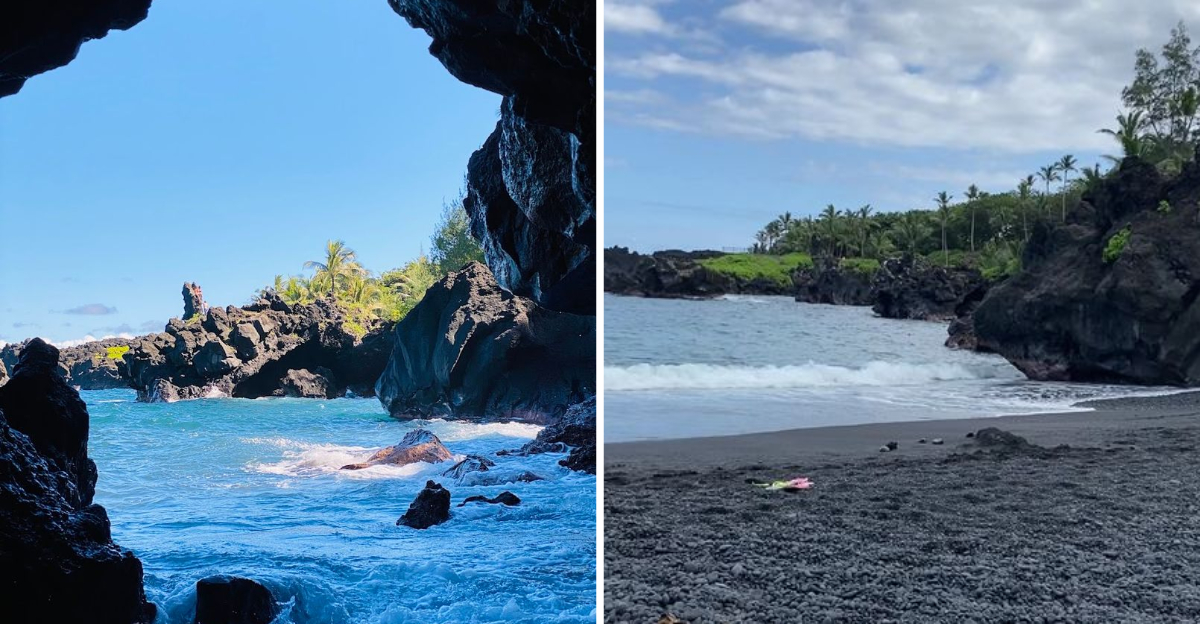
Black sand gleaming against turquoise water and jagged lava cliffs stopped me mid-step in Hawaii. I stood there for a moment, the warm air wrapping around me, and had to remind myself to breathe.
The drive there winds and twists for miles, taking hours through narrow bridges and lush rainforest. But every curve of that road, every ancient lava field you cross on foot to reach this beach, makes the arrival feel like something you truly earned.
I spent hours wandering the shoreline, the sound of waves and the sight of that surreal black sand etching themselves into my memory.
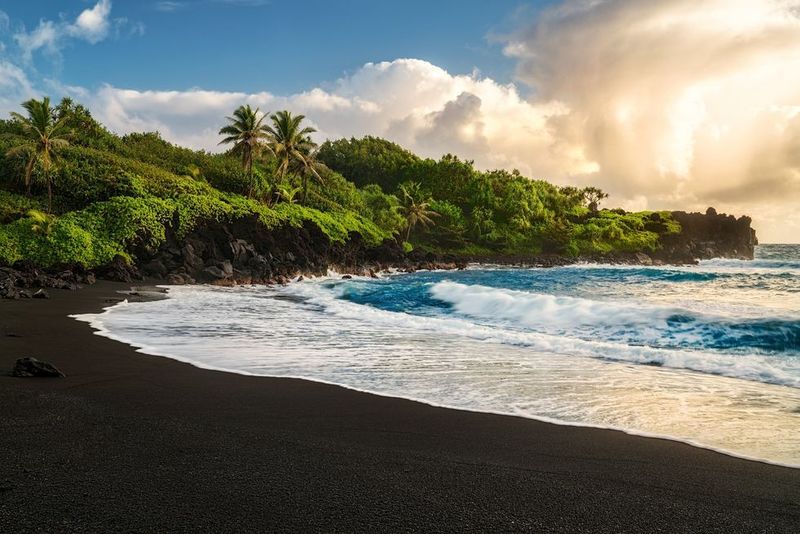
The contrast between the dark sand, the bright water, and the green cliffs rising behind it all felt almost impossible, like a painting that had somehow come to life.
I sat on a piece of driftwood and watched the sun shift across the water, knowing I would carry this place with me long after I left.
The Drive Along Hana Highway to Reach the Park
Few roads in the world prepare you for what is waiting at the end quite like the Hana Highway does. The drive from Kahului covers roughly 52 to 53 miles, but those miles are nothing like a typical highway stretch.
The road twists through dense rainforest, crosses more than 50 one-lane bridges, and hugs cliffsides with the Pacific Ocean crashing far below.
It takes most people between two and a half to three hours to reach the park entrance near mile marker 32, and that is if you do not stop along the way. Stopping is tempting, because the scenery keeps changing in ways that feel almost theatrical.
Waterfalls appear without warning, roadside fruit stands pop up between the trees, and the smell of the air shifts from earthy and green to salty and sharp as you get closer to the coast.
Waianapanapa State Park sits just about three miles outside the town of Hana itself, so you are almost at the finish line before you know it. Non-resident visitors currently need advance reservations for both park entry and parking, booked online up to 30 days ahead.
Same-day bookings are not accepted, so planning before you leave home is essential. Timed entry slots are spread throughout the day, which actually helps keep things from feeling overwhelmingly crowded once you arrive.
The drive is long, occasionally nerve-wracking, and completely worth it.
Hiking Across the Ancient Lava Fields on the Piilani Trail
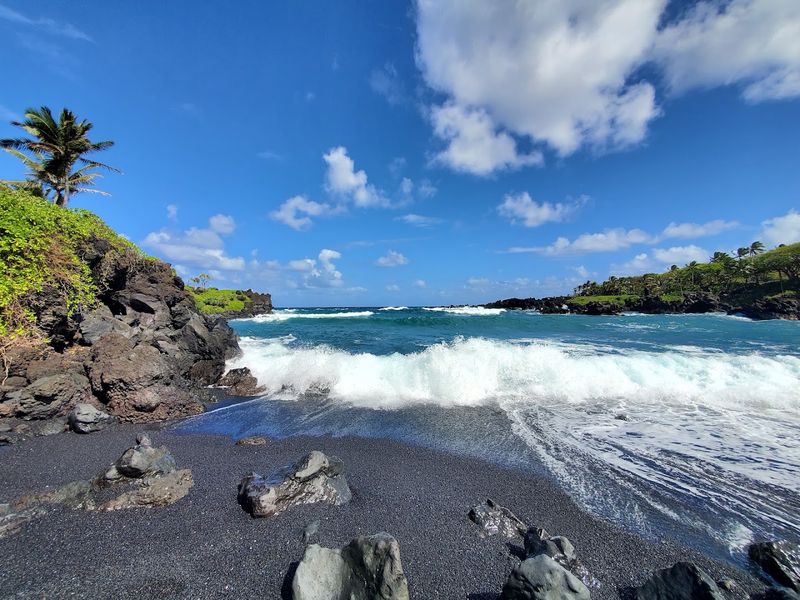
The moment your feet hit the lava rock trail, something shifts. The ground beneath you is uneven, dark, and ancient in a way that is hard to put into words.
The Piilani Trail, also known as the King’s Highway or Ke Ala Loa O Maui, is one of Hawaii’s oldest footpaths, once used by Hawaiian royalty and messengers to travel the island’s coastline.
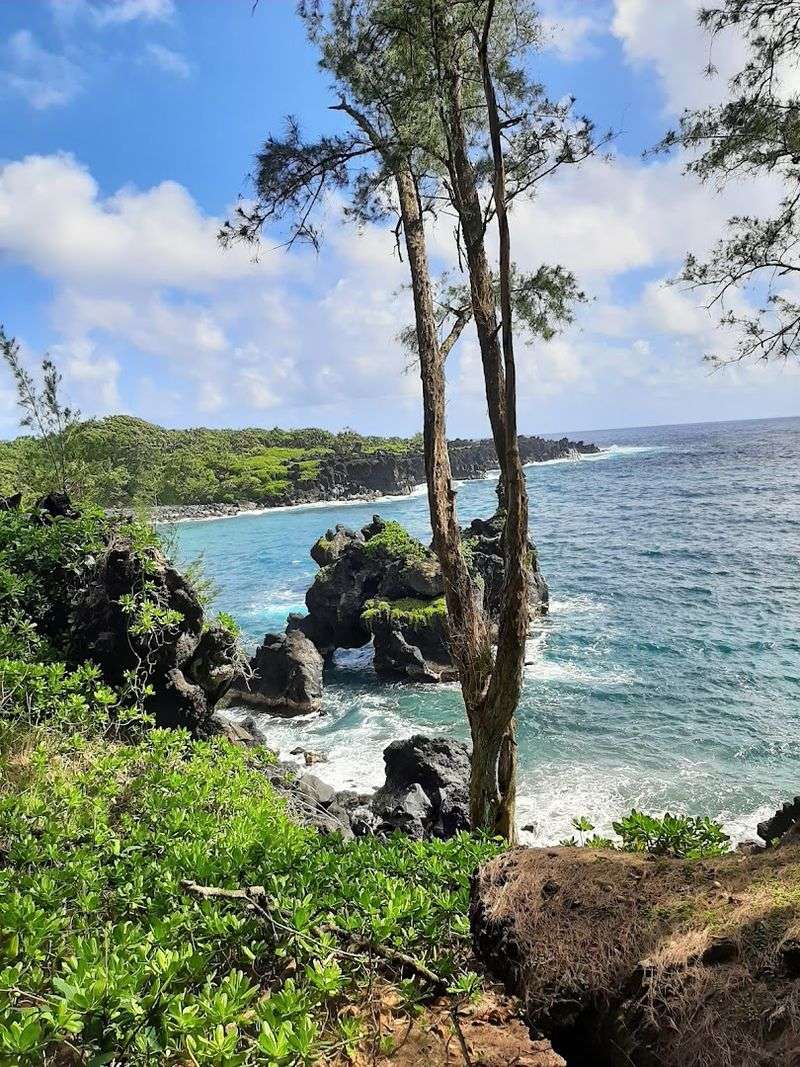
A particularly rewarding section begins right at the black sand beach and follows the coast for about 2.2 miles. The trail passes through hala groves, past blowholes that shoot seawater into the air during high surf, and alongside natural stone arches that have been carved by centuries of relentless ocean erosion.
Sea stacks rise dramatically from the water, and the views keep opening up in ways that reward every careful step.
Sturdy footwear is not optional here. The lava rock surface is jagged and unpredictable, and a wrong step in sandals can mean a scraped ankle fast.
Water shoes or proper hiking shoes with grip are strongly recommended. The trail can feel strenuous in sections, especially where the path narrows near the cliff edges.
But the combination of raw volcanic scenery, ocean spray, and that deep sense of walking a route that generations of Hawaiians walked before you makes this hike genuinely unlike anything else on Maui. Take your time, watch your footing, and let the coast do its work on you.
Pa’iloa Beach and the Volcanic Black Sand Up Close
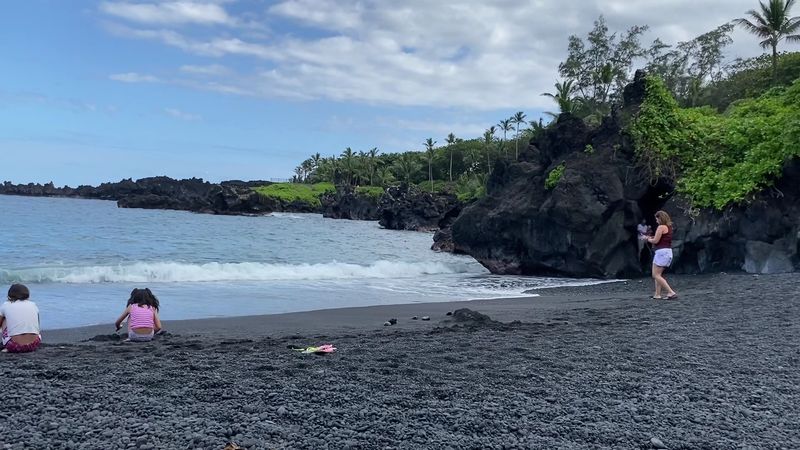
Pa’iloa Beach does not look real at first glance. The sand is not the warm golden color most people picture when they think of Hawaii.
It is deep black, made up of tiny volcanic fragments and fine lava pebbles created when molten lava from Haleakala met the cold ocean and shattered into dark, glittering pieces over thousands of years.
The contrast between that black shoreline and the vivid turquoise water beyond it is genuinely striking. Photographs do not fully capture the way the light moves across the dark surface, especially on a bright morning when the pebbles are still warm from the sun.
The name Waianapanapa itself translates to “glistening water” in Hawaiian, and once you see the way the light catches both the sea and the sand, that name makes complete sense.
A few practical notes worth knowing before you head down the stairs to the beach: the surface is mostly small, dark pebbles rather than soft fine sand, so water shoes are a good idea for walking around comfortably. The ocean here is powerful and the currents can be strong, with rough, choppy waves that are not ideal for casual swimming.
There are no lifeguards on duty. Most visitors spend their time exploring the shoreline, photographing the dramatic scenery, and watching the waves crash against the lava rock cliffs.
The beach is compact and cove-like, which gives it an enclosed, almost secret feeling that larger beaches simply cannot replicate.
Sea Caves, Lava Tubes, and the Legends That Live Here
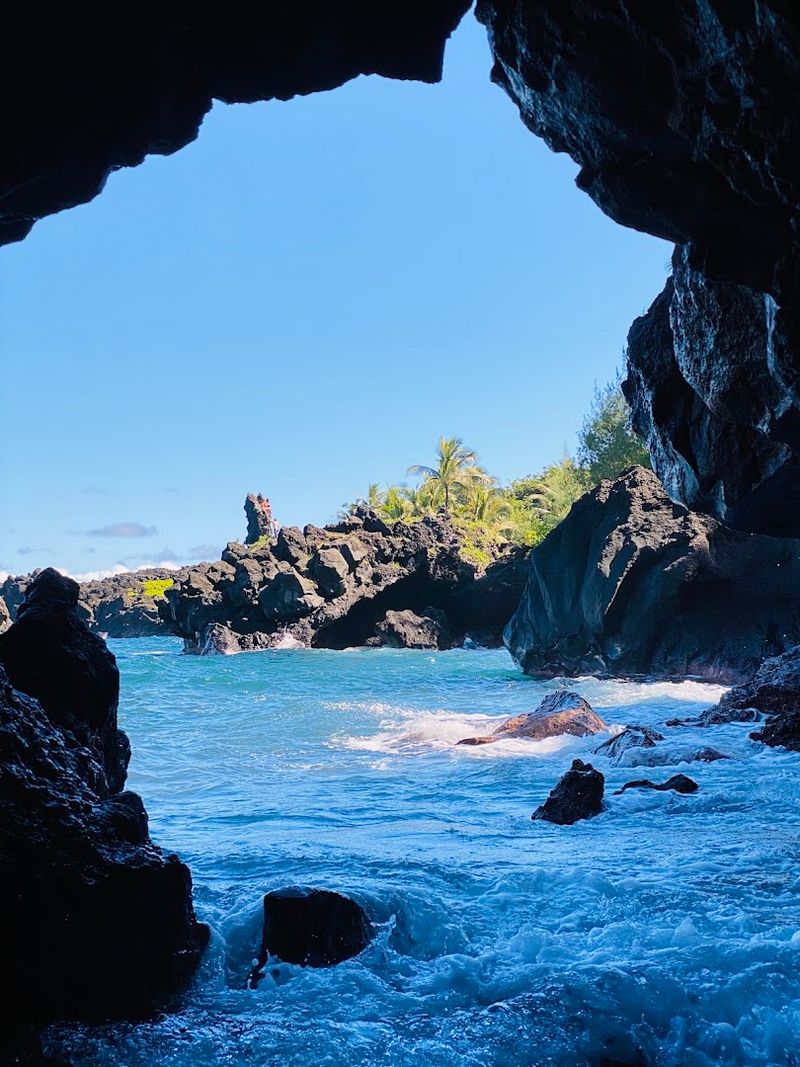
Beyond the beach itself, the park holds a world of volcanic features that feel almost mythological. The coastline at Waianapanapa is riddled with sea caves and lava tubes, some of which contain freshwater pools that float above saltwater in a natural layering phenomenon that still feels surprising no matter how many times it is explained.
These caves are also home to tiny endemic red shrimp called ‘opae’ula. According to local legend, the caves were once the hiding place of Princess Popoalaea, who sought refuge there from her husband, Chief Ka’akea, and was tragically killed inside.
The story goes that when the red shrimp appear in great numbers, turning the pool water crimson, it marks the anniversary of her death. Whether you take the legend literally or not, standing at the cave entrance and looking into that dark, still water has a weight to it that is hard to shake.
The blowholes along the coastal trail are another feature worth seeking out. During high surf, they send towers of white seawater shooting up through cracks in the lava rock with a sound like a cannon going off.
Natural stone arches extend into the waves nearby, shaped by centuries of erosion into forms that look almost intentional. The park covers 122 acres in total, and the further you explore from the main beach, the more it reveals.
Each volcanic feature feels like another layer of the same ancient, powerful story this coastline has been telling for thousands of years.
Cultural and Archaeological Significance of the Park
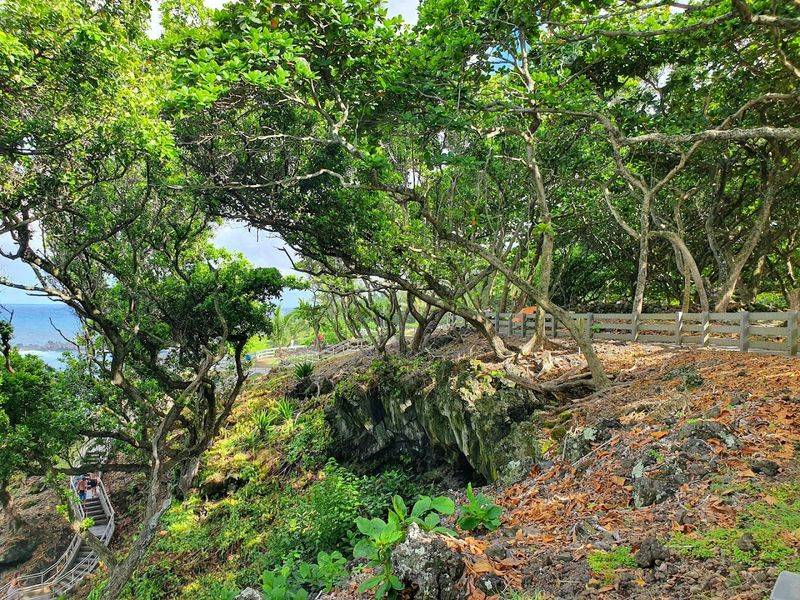
Waianapanapa is not just a geological wonder. It is a place where the physical landscape and the human history of Hawaii are completely inseparable.
The 122-acre park contains remnants of ancient Hawaiian communities, including burial grounds, the foundation platforms of old house sites, and heiau, which are religious temples used for ceremony and worship.
The Kihaapi’ilani Trail that runs through the park was part of a larger ancient King’s Trail system that once connected communities all the way around the island. Royalty and messengers used it to travel efficiently along the coast.
Seeing sections of that original stone-paved path still intact under your feet is a genuinely humbling experience. It is one of those rare moments where history is not behind glass in a museum but right there beneath your boots.
The volcanic soil around Hana was historically fertile enough to support thriving Hawaiian settlements, with crops like taro and sweet potato cultivated in the area for generations. That agricultural past, combined with the sacred sites and the trail system, means the park carries a cultural depth that goes far beyond its dramatic scenery.
Visitors are encouraged to be respectful of all archaeological sites and to leave everything exactly as they found it. Taking black sand or rocks from the beach is strongly discouraged, both out of respect for the local belief connected to Pele, the Hawaiian goddess of fire, and because it is a protected natural area.
The place deserves that care.
Staying Overnight and Making the Most of Your Visit
Most people visit Waianapanapa as a stop on the Hana Highway, spending an hour or two before moving on. That is absolutely fine, but staying overnight changes the experience entirely.
The park offers both tent camping and cabin rentals, and waking up to the sound of the ocean with no day-trippers around yet is the kind of morning that is hard to replicate anywhere else on Maui.
Reservations for camping and cabins fill up months in advance, so this requires serious planning. The park also has picnic areas with ocean views, restrooms, and outdoor showers near the beach for rinsing off after exploring.
Bringing your own soap or hand sanitizer is a good idea, as some facilities may not be fully stocked. Chairs or a thick towel are worth packing too, since the rocky beach surface is not ideal for lounging directly on the ground.
Wildlife sightings are a real possibility here. Green sea turtles have been spotted resting near the shoreline, and various seabird colonies nest in the area.
Keeping a respectful distance from any wildlife you encounter is part of what makes this place feel so undisturbed. The park also sees a fair number of free-roaming cats near the parking area, which surprised more than a few visitors.
Arriving at the start of your reservation window gives you the best chance of experiencing the park at its quietest and most atmospheric. The address for planning your visit is below.
Address: Wai’anapanapa Road (off Hana Highway), Hana, Maui, Hawaii
