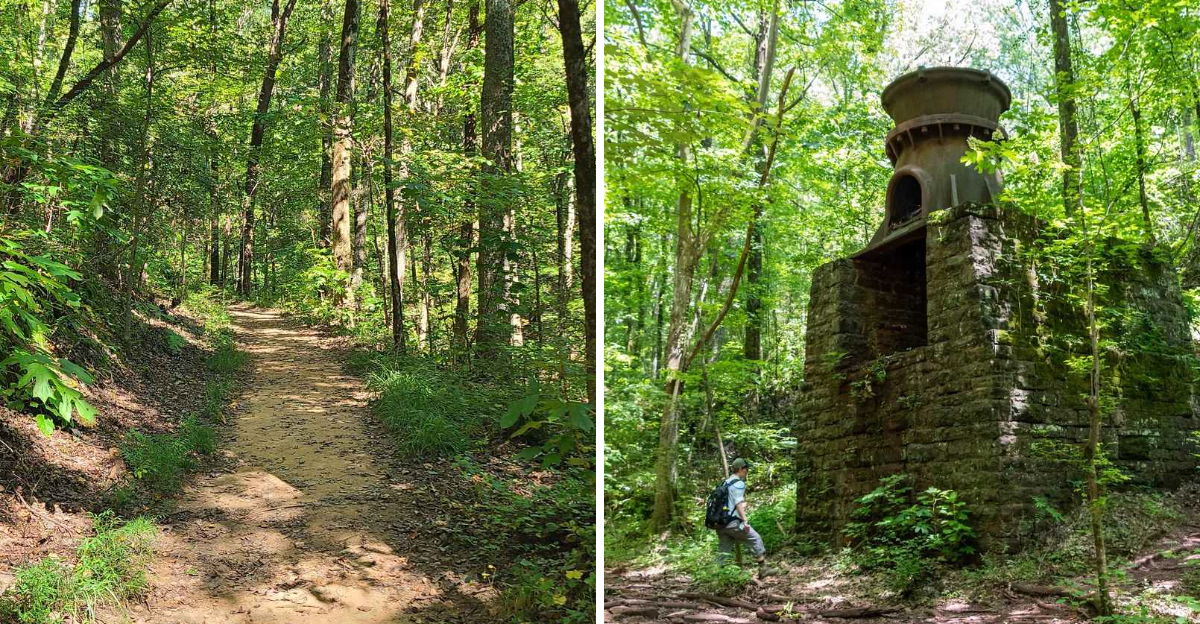
What if a quiet forest trail suddenly led you to the remains of a massive piece of mining machinery? One Alabama preserve hides an unexpected reminder of the region’s industrial past among its trees, where an old iron ore crusher and crumbling mining foundations still stand along the trail.
The contrast is striking, with peaceful woodland surrounding machinery that once played a role in processing ore from the mountain. Exploring the area gives you a chance to see how dramatically the landscape has changed while traces of its mining history remain.
If you love discovering unusual historic remnants in unexpected places, this is a trail worth seeking out.
The Ore Crusher Ruins That Stop You in Your Tracks
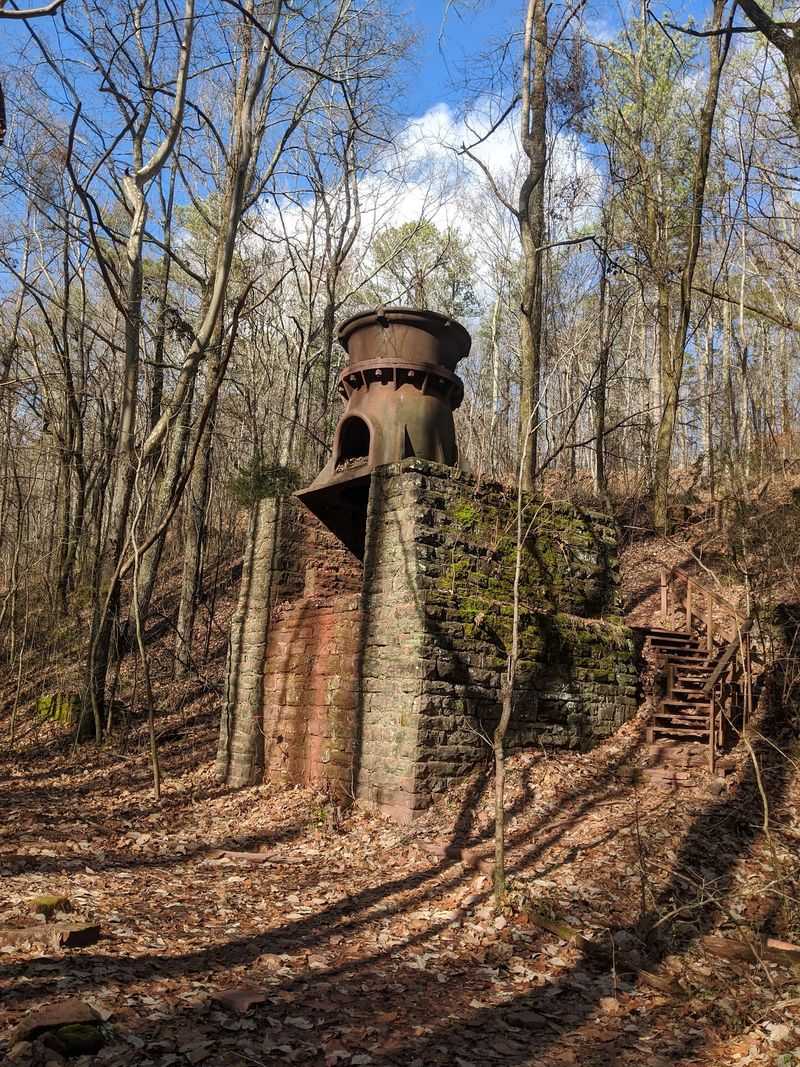
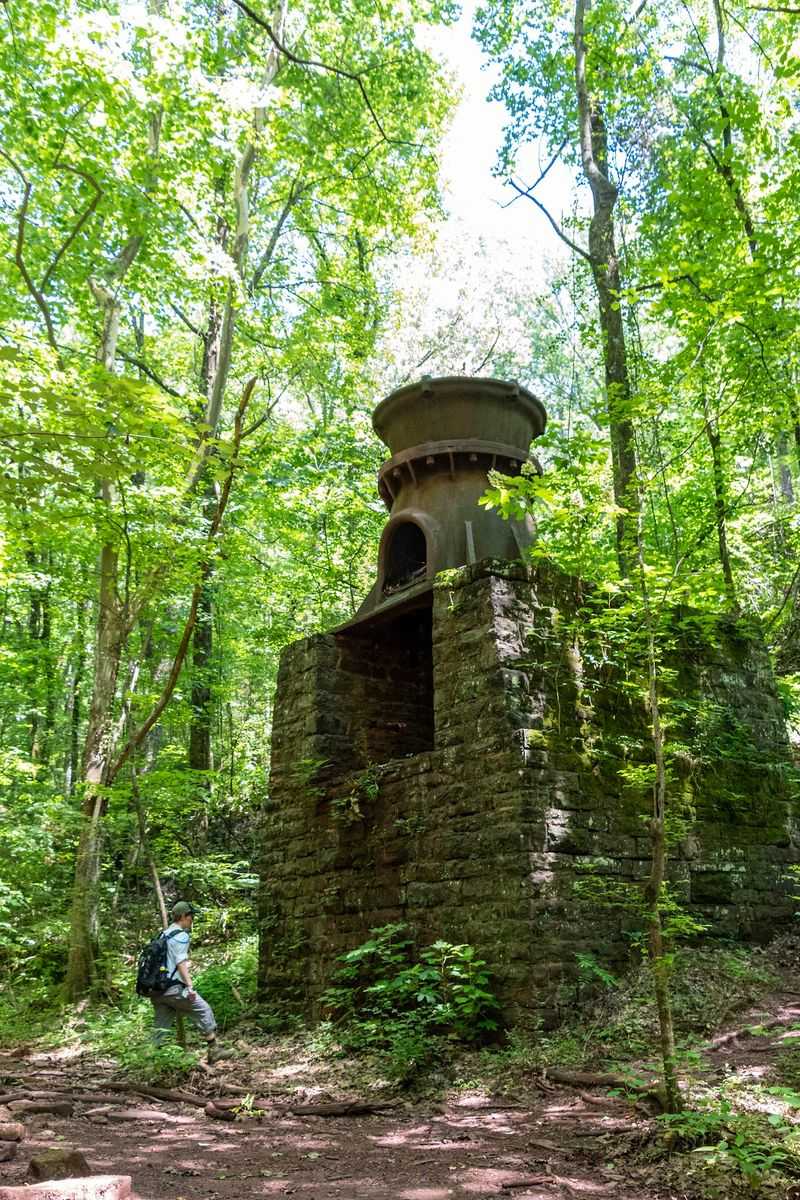
Ruffner Mountain has a lot going for it, but nothing quite hits the same as rounding a bend on the Crusher Trail and suddenly facing the massive concrete skeleton of a century-old ore crusher. It is one of those moments where you stop walking and just stare.
The structure is enormous, far bigger than most people expect from a trail in the middle of an urban forest.
The Ruffner No. 2 mine ran from 1886 all the way to 1953, and at its peak the McCully No. 8 gyratory breaker on this site could crush somewhere between 100 and 180 tons of iron ore every single hour. That is not a small operation.
The raw scale of that machine becomes very real when you are standing next to what is left of it.
Moss and vines have slowly crept over the concrete over the decades, giving the whole thing an almost cinematic quality. The forest has partially reclaimed the structure, which makes the contrast between nature and industry feel dramatic and alive.
Photographers absolutely love this spot, and it is easy to see why.
Bring good shoes and take your time on the Crusher Trail because the terrain can get uneven near the ruins. The payoff is absolutely worth the effort.
Few places in Alabama offer this kind of up-close industrial history sitting right in the middle of a living, breathing forest.
Have You Ever Hiked Through a City Without Leaving the Forest
One of the strangest and most satisfying things about hiking Ruffner Mountain is the constant reminder that you are still inside a major city. Every now and then, through a gap in the trees, you catch a glimpse of downtown Birmingham or a plane descending toward the airport.
Then the trail curves and the forest swallows you whole again.
The preserve covers roughly 1,038 acres, which is genuinely impressive for an urban green space. Trails range from easy, shaded walks to moderately difficult climbs with real elevation change and exposed root systems.
There is something here for first-timers and experienced hikers alike, which makes it a rare kind of destination.
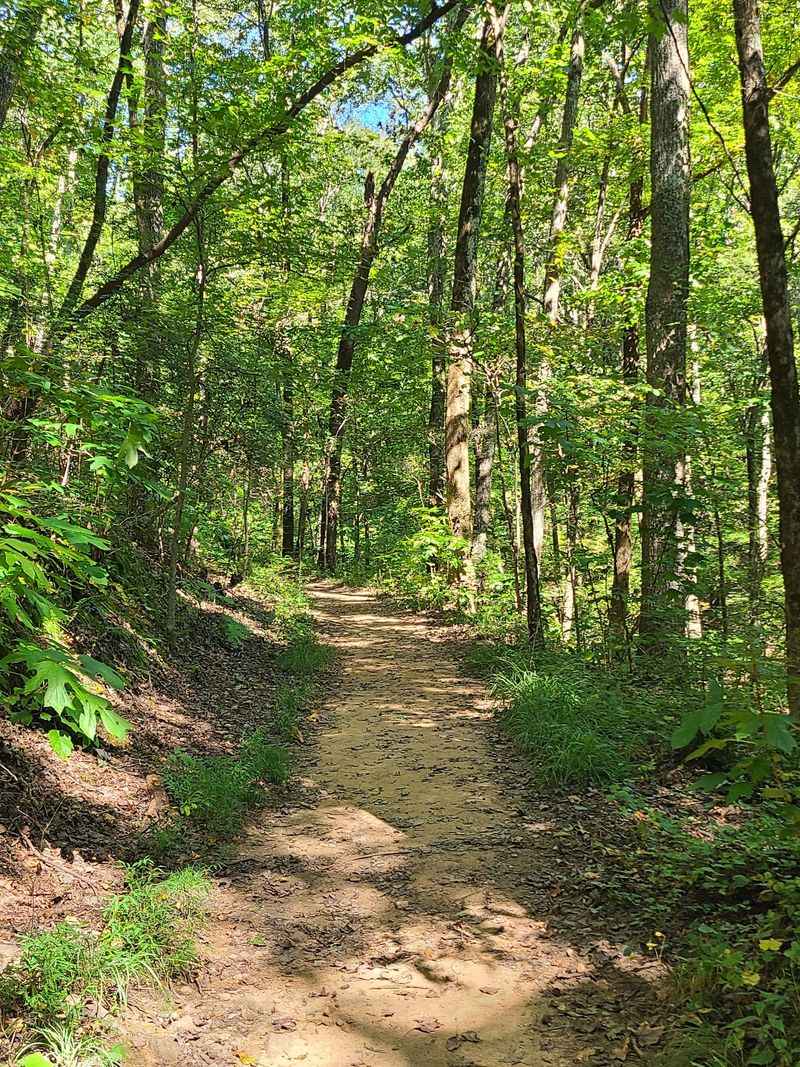
The tree cover is thick with oak, walnut, and pine, so most trails stay shaded even during summer. That shade makes a huge difference on a warm Alabama afternoon.
A few visitors have noted that the trail markings are excellent, with clear blazes and signage at intersections, so getting turned around is genuinely hard to do even if you are exploring for the first time.
The trail network stretches between 11 and 14 miles total, giving you plenty of room to mix and match routes based on how much time you have. Whether you have an hour or a full morning, Ruffner Mountain fits your schedule.
It is the kind of hike that makes you feel genuinely refreshed by the end.
The Lizard Loop and the Ghost of a Railroad That Once Hauled Ore
Not every trail at Ruffner Mountain is just a walk through the woods. The Lizard Loop spur trails carry a layer of history that most casual visitors completely miss.
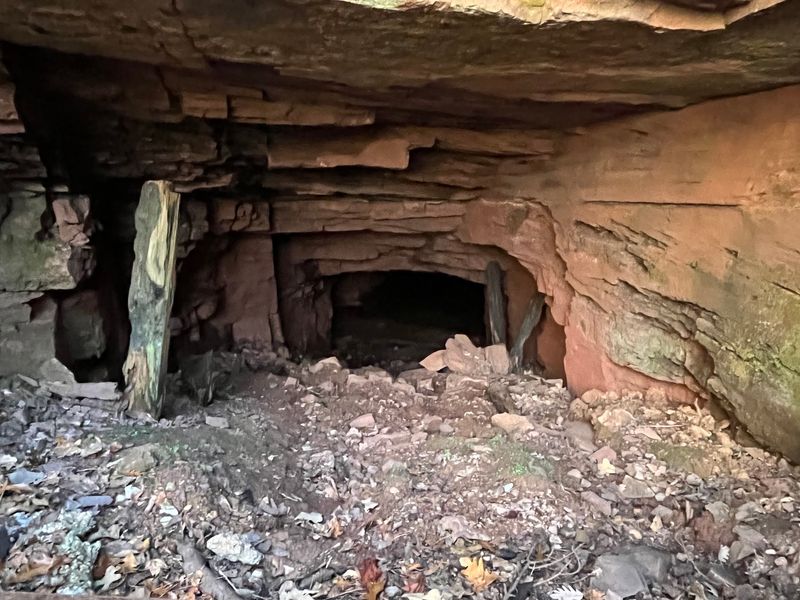
The foundation beneath your feet on parts of this trail was once a railcar route used to haul iron ore down the mountain during active mining operations. You are literally walking on industrial history.
Along the Lizard Loop, you can spot a cable hoist building and old electric power poles that were part of the mining infrastructure. These artifacts are not behind glass or roped off with signs.
They are just there, sitting in the forest, slowly being absorbed by the landscape. It feels more like discovery than tourism.
That sense of stumbling onto something real is what separates Ruffner Mountain from more polished outdoor destinations. There is no dramatic presentation here, just honest remnants of a working past surrounded by trees that have been growing for decades since the mines closed on June 1, 1953.
The forest has had a long time to settle back in.
Hikers who take their time on the Lizard Loop often say it feels like a different world compared to the main trails. The spur paths are quieter and less traveled, which adds to the atmosphere.
If you enjoy that mix of nature and industrial archaeology, this particular section of the preserve is going to be a personal highlight.
Hawk’s View Overlook and the Skyline That Earns Its Name
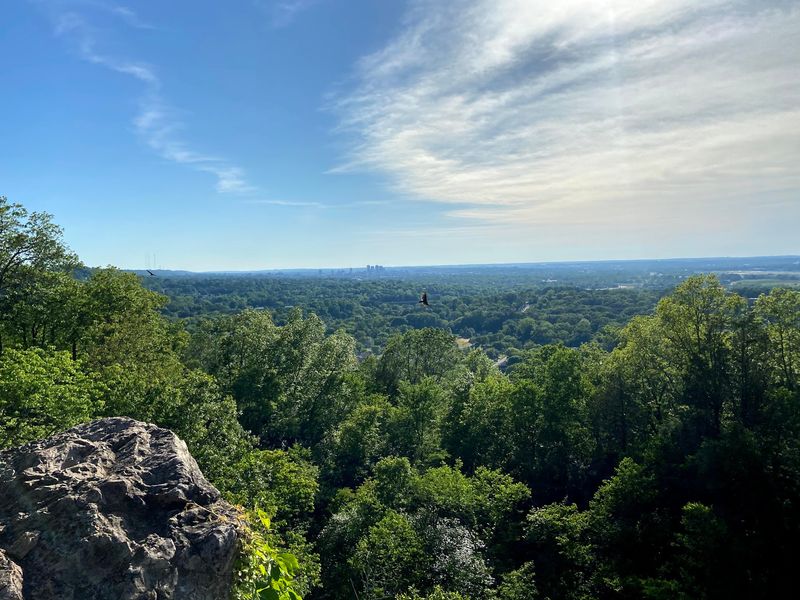
Getting to Hawk’s View overlook at Ruffner Mountain is the kind of reward that makes every uphill step feel completely worth it.
From up there, the whole spread of downtown Birmingham opens up in front of you, with the airport visible in the distance and the highway interchange at Irondale stretching out below.
On a clear day, the view is genuinely striking.
The red overlook trail is the most direct way to reach this vantage point. It is a moderate climb, not brutal, but enough to get your heart rate up and make the view feel earned.
Several visitors have pointed out that the fall and winter months offer the clearest sightlines because the leaf cover thins out and reveals layers of the landscape that stay hidden in summer.
There is something quietly satisfying about standing on a ridgeline inside a city and looking down at the skyline. It reframes Birmingham in a way that a street-level view never could.
The mountain has been here longer than the city itself, and the overlook makes that feel obvious.
Bring water and a snack because the overlook is a natural rest stop before heading back down or continuing along the trail network. Early morning visits tend to offer softer light and fewer crowds.
The quarry viewpoint is also reachable from the red trail and adds another dramatic layer to the same route, so plan to spend some time up there.
The Nature Center Is Honestly Worth the Stop on Its Own
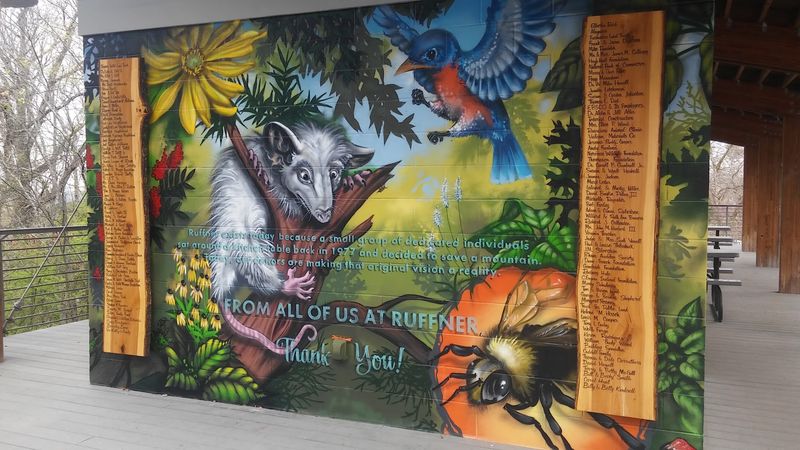
A lot of people head straight for the trails and completely skip the Nature Center, which is a mistake. The building houses live native Alabama animals, many of them permanent residents because they were injured and can no longer survive in the wild.
Raptors, owls, turtles, and snakes are all part of the collection, and getting up close to them is a genuinely memorable experience, especially for kids.
The exhibits are informative without being overwhelming. You get enough context to appreciate what you are looking at without feeling like you are back in school.
The staff and volunteers are friendly and clearly passionate about the preserve and its mission, which makes the whole visit feel personal rather than institutional.
Environmental education programs run through the Nature Center regularly, making it a popular destination for school groups and families.
The building is ADA accessible, and so is the pavilion area nearby, which is a thoughtful detail that makes the preserve more welcoming to a wider range of visitors.
After a long hike, sitting inside the Nature Center for a few minutes is a genuinely pleasant way to wind down. The building is clean and well-kept, and the picnic pavilion just outside is a perfect spot to eat lunch before heading back to the car.
The Nature Center alone is reason enough to come, even if you never set foot on a trail. It adds real depth to the overall experience.
A Living Record of Birmingham’s Iron and Steel Past
Birmingham was built on iron and steel, and Ruffner Mountain is one of the few places where you can physically touch that history. The iron ore pulled from this mountain, specifically a phosphorous-rich red ore, was sent to nearby Sloss Furnace to be turned into pig iron.
That industrial chain shaped the entire region, and Ruffner Mountain was a key link in it.
Mining operations here kicked off around 1886 and continued for nearly 70 years before finally shutting down in 1953. In that span, the mountain was carved, blasted, and hauled out piece by piece.
What remains today is a fascinating patchwork of natural regrowth layered over industrial scars, and hiking through it gives you a sense of just how completely the forest has healed.
The rock quarry is one of the most dramatic remnants. From above on the red trail or from inside the quarry itself via a separate access point, the exposed rock faces and deep cuts in the earth tell the story of decades of extraction.
It is not subtle. The scale of what was removed from this mountain is genuinely hard to wrap your head around.
For anyone interested in Alabama history, Southern industry, or just the way landscapes carry memory, Ruffner Mountain offers something that no museum quite replicates. The story is written into the ground here, and the trails take you straight through it.
That combination of nature and history is rare and worth seeking out.
Ready To Find Your New Favorite Birmingham Outdoor Spot?
Ruffner Mountain has a way of surprising people who thought they already knew Birmingham.
The preserve opened its first protected acres in 1977 thanks to the Ruffner Mountain Nature Coalition, and it has been growing and improving ever since through support from programs like Alabama’s Forever Wild.
The fact that it exists at all inside a major city is something worth appreciating.
Parking is available at both entrances, and the lots tend to be well-managed. A small daily parking permit fee applies for non-members, payable through a mobile app or on-site vending machine.
Trails are open from dawn to dusk most days of the week, though the preserve is closed on Mondays, so plan accordingly before making the drive.
The biodiversity here is genuinely impressive. Over 150 species of birds have been recorded at the preserve, and the plant life ranges from native southern magnolias to ferns growing right on the sides of trees.
For anyone who enjoys nature beyond just the hiking itself, Ruffner Mountain offers layers of discovery that keep revealing themselves the more time you spend there.
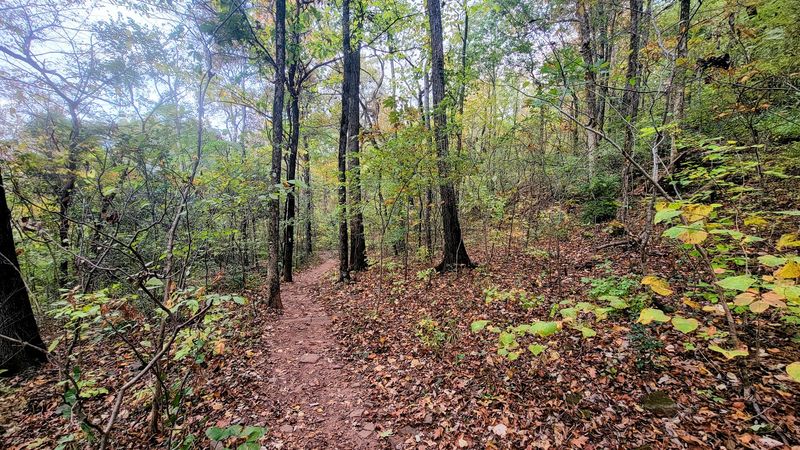
Fall is a particularly special time to visit. The leaf color along the ridges is beautiful, and the cooler temperatures make the steeper sections much more comfortable.
Winter visits are also surprisingly rewarding because the bare trees open up views that stay hidden during warmer months. Any season works here.
The mountain always has something to offer, and it never quite feels the same twice. Address: 1214 81st St S, Birmingham, AL 35206.
