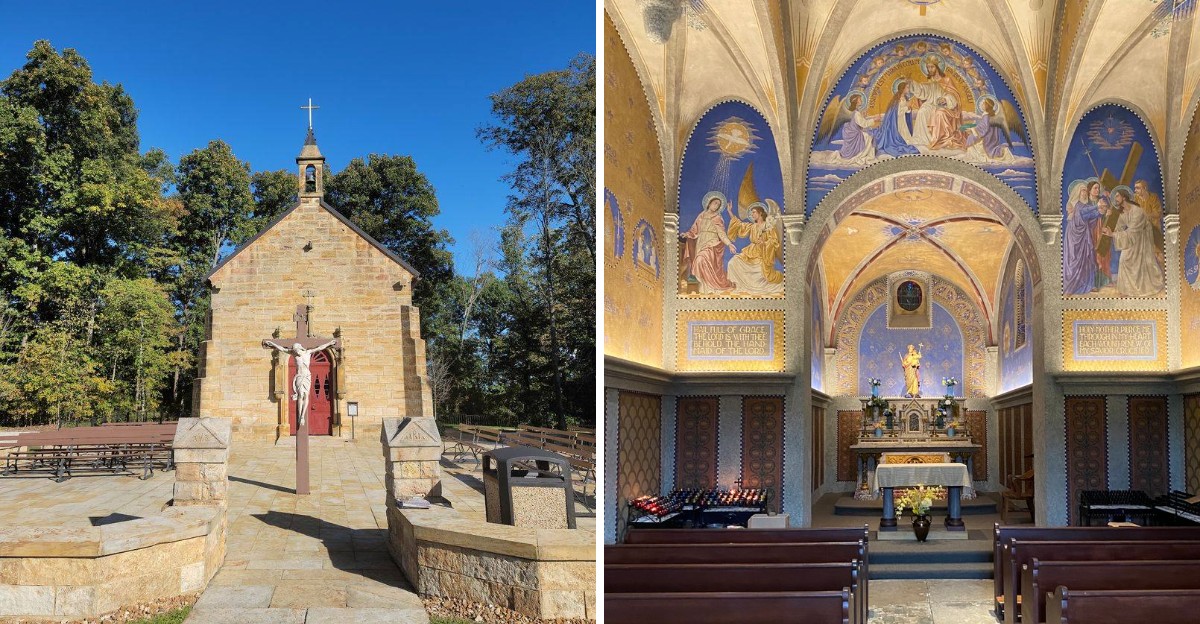
A postcard from Europe would probably look less convincing. There is the stone chapel.
The wooded hill. The tiny rise in the road.
Then the colored glass catches the sunlight and suddenly the whole scene looks staged. It is not.
This Indiana sanctuary has been sitting here since 1870, when Benedictine monks built it after leaving Europe. The chapel’s simple sandstone walls give way to richer details inside, including cobalt stained glass and a hand-carved statue that crossed the ocean before finding a home here.
Nothing costs anything to enter. Nobody needs to stay long.
Yet this tiny place has a strange habit of making travelers slow down without being asked.
A Swiss Chapel That Somehow Landed in Spencer County
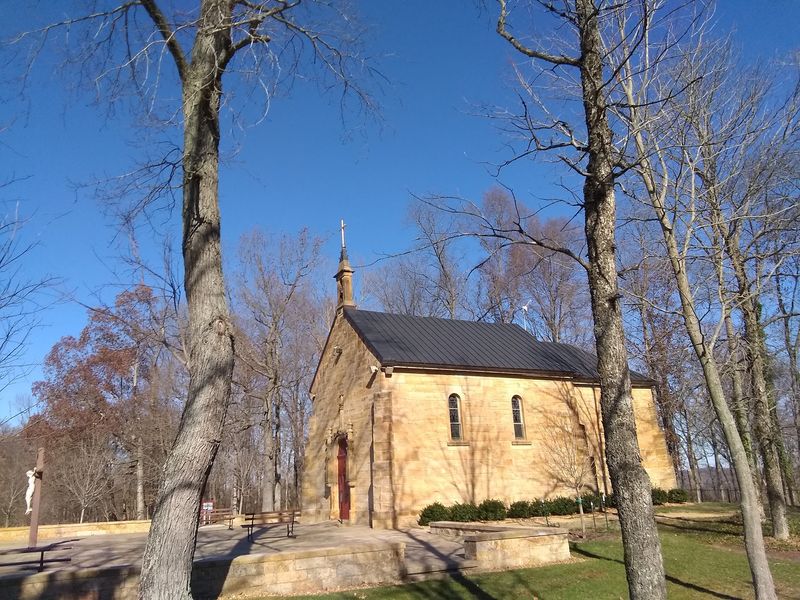
The first look catches most people off guard. Rough sandstone walls, a modest arched entry, and a slim bell tower rise from the trees like something lifted out of an alpine village and set down in Spencer County farmland.
Swiss monks founded Saint Meinrad Archabbey in 1854, and their homesickness shows in the stonework. The chapel’s design nods to the early shrine of Our Lady at Einsiedeln in Switzerland, the motherhouse that sent those first monks across the Atlantic.
Every block of sandstone came from a quarry nearby, which is part of why the building feels rooted rather than imported. It weathered into soft gray and honey tones over more than 150 years.
Dedication came in 1870, back when the surrounding countryside was mostly woods and small farms. Not much has changed about the view.
Photographers tend to circle the building twice before pulling out a camera, mostly because the angles keep improving. Morning light softens the stone.
Late afternoon sharpens every shadow along the arches.
The scale surprises visitors too. It seats only a small group, which makes the interior feel intimate instead of grand.
Find it one mile east of the Archabbey along Indiana 62, tucked back from the road just enough that first-timers sometimes drive past the turn. Slow down near the sign and the hill appears on the right.
Cobalt Blue Glass and a Statue That Sailed From Switzerland
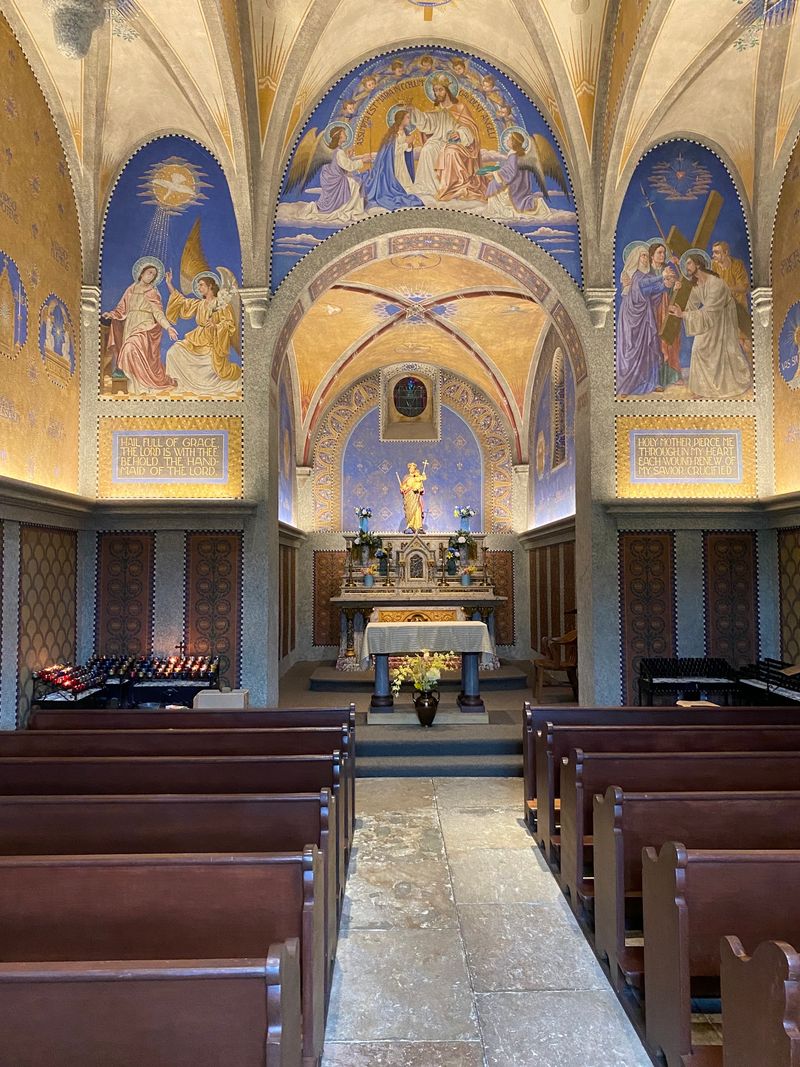
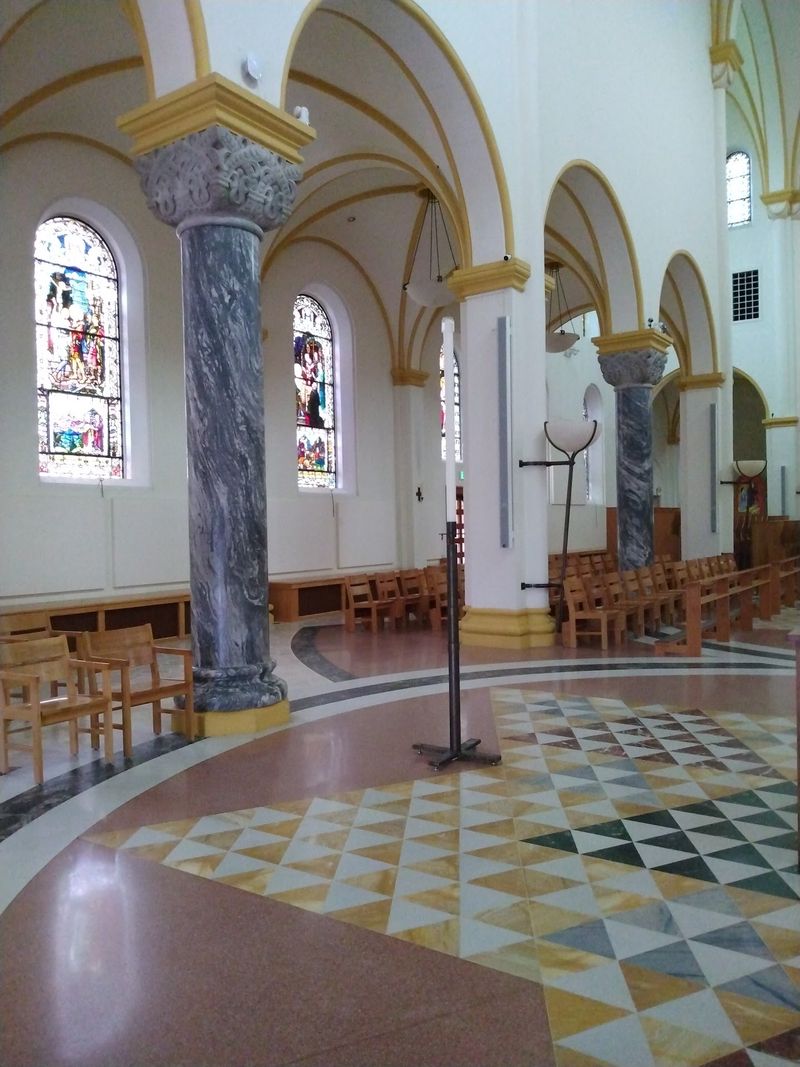
Pull open the door and the temperature of the light changes completely. Deep cobalt blue pours through the original stained glass, washing the little nave in a color that feels almost underwater.
Those windows carry real pedigree. Some came from the Emil Frei Studio in St. Louis, Missouri, while others were made by Francis X.
Zettler of Munich, Germany, and the craftsmanship holds up beautifully.
Above the altar stands a wooden statue of the Blessed Virgin and Child, hand-carved in Switzerland and shipped over to preside here. The carving details reward a close look, particularly around the folds of the robes.
Painted murals stretch across the ceiling and upper walls, adding layers of old world artistry that most people do not expect inside such a small building. Faded gold, deep reds, careful line work.
Acoustics inside are surprisingly warm. A whisper carries, which visitors figure out quickly and then respect.
Benches fill only a modest portion of the floor, so the space never feels crowded even when a few families arrive at once. Take a seat near the back for the best full view of the altar and windows together.
Cameras struggle with the blue light, so anyone hoping for good photos should turn off the flash and let the natural color do its work. Patience pays off here.
The Novena That Locals Still Talk About
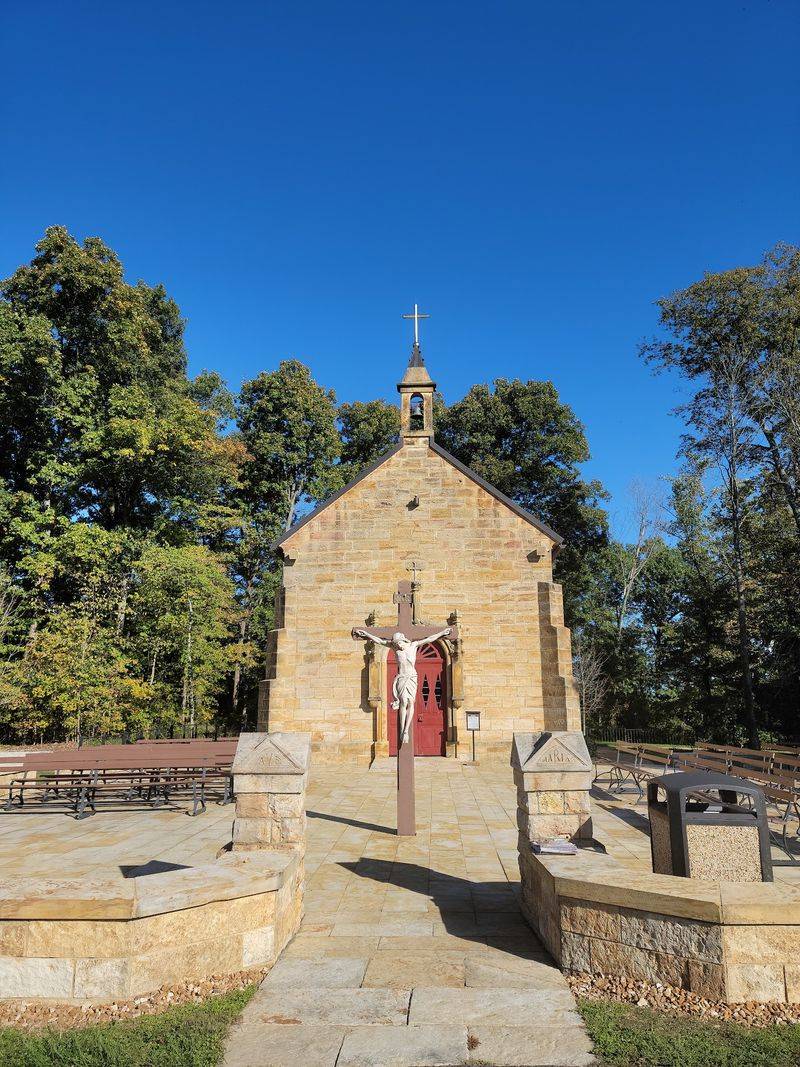
History here is not just architectural. In 1871, a smallpox epidemic swept toward the village of St. Meinrad, and residents turned to a novena, a nine day series of prayers offered to Our Lady of Monte Cassino.
The village was spared. That outcome, credited locally to the novena, transformed a modest hilltop chapel into a genuine place of pilgrimage almost overnight.
Word traveled through southern Indiana and beyond, and people began walking up the hill with intentions of their own. More than a century and a half later, they still do.
Visitors often notice small signs of that continuing devotion. Candles, folded notes, quiet people sitting longer than a typical sightseeing stop would require.
Understanding the story changes how the space feels. What might read as a charming stone building becomes something with weight behind it.
Reading up before the trip is worth the effort. The Archabbey shares the shrine’s background, and knowing the 1871 events adds real texture to the visit.
Nobody is asked to share the same beliefs to appreciate what happened here. Plenty of travelers come purely for the history and leave impressed by the endurance of a local tradition.
It is a rare thing in American travel, a small rural site where an event from the 1870s still shapes what happens on a given Sunday afternoon.
Views Over the Anderson Valley That Beg You To Sit Down
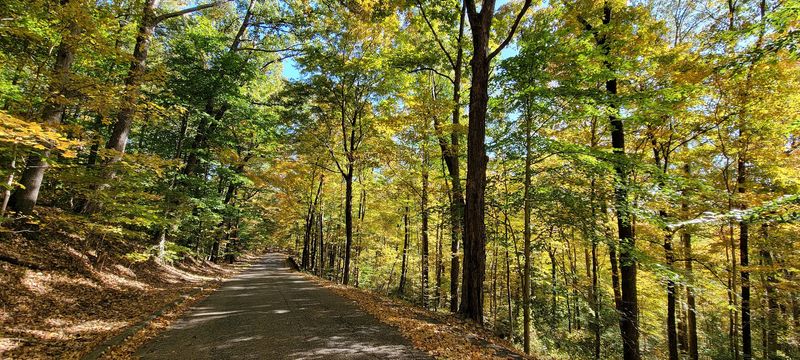
Behind the chapel, the ground drops away and the Anderson Valley opens up in layers of green. Farm fields, treelines, and the occasional barn roof stretch toward the horizon with almost nothing to interrupt the view.
Benches sit along the edge for exactly this reason. People arrive planning to stay ten minutes and end up staying forty.
Seasons rewrite the scenery completely. Spring brings pale new leaves and dogwood blooms, while October turns the whole valley into rust, gold, and copper.
Winter has its own appeal, stripped down and quiet, with the stone chapel standing sharp against bare branches. Fewer visitors show up then, which some travelers count as a bonus.
Sound is part of the experience too. Wind through the trees, distant birds, the occasional tractor somewhere far below.
Comfortable shoes help since the approach involves a short walk uphill on a stone path. Nothing strenuous, but flip flops are not ideal.
Sunrise visitors get mist pooling in the low ground, which is worth the early alarm. Sunset works beautifully as well, though the gates follow dawn to dusk hours so timing matters.
Bring water and maybe a snack for the benches. There are no shops on the hill, and the nearest supplies are back toward the Archabbey campus.
Sunday Rosary Pilgrimages and Saturday Mass on the Hill
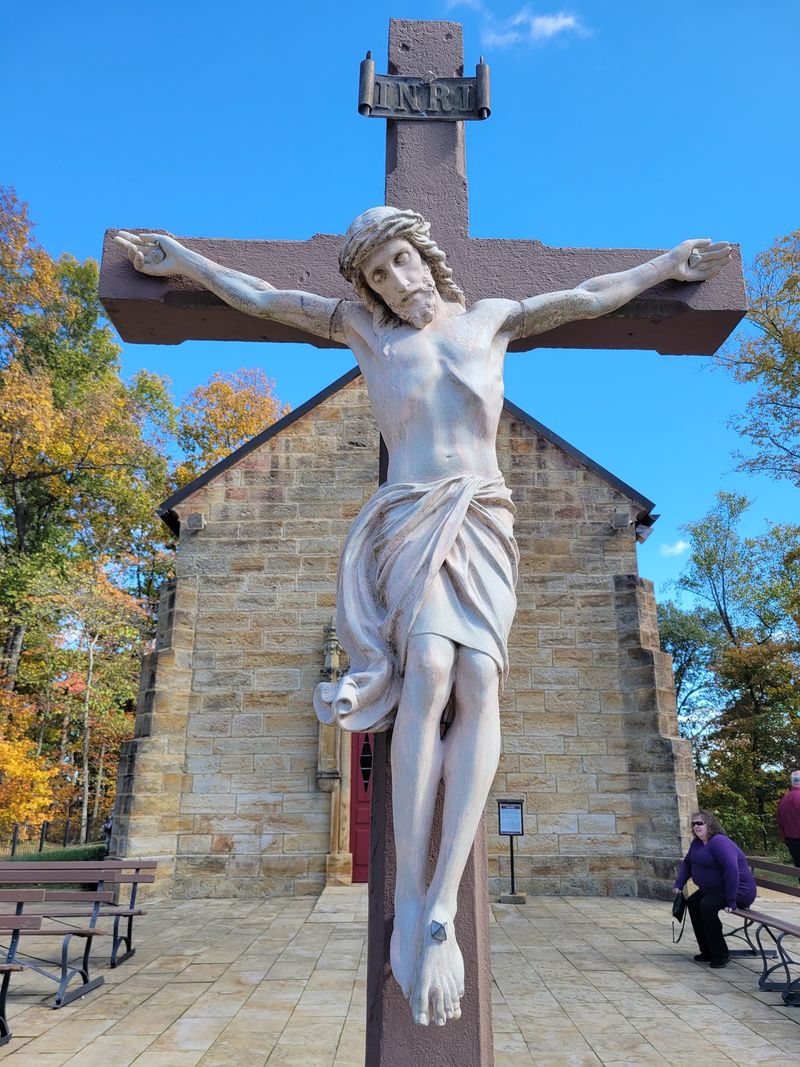
Show up on a Sunday in May or October and the hill looks different. Public rosary pilgrimages fill the grounds, drawing people from across the region who walk, pray, and gather around the chapel.
The tradition has run for generations. Families return year after year, and newcomers blend in easily since nobody is checking credentials at the gate.
Saturdays bring something quieter. A Benedictine monk from the Archabbey celebrates Mass inside the chapel, which gives visitors a chance to experience monastic life in its natural setting rather than reading about it.
Timing a trip around either event adds a completely different layer to the visit. The same building that feels hushed and empty on a Tuesday becomes a gathering place.
Anyone preferring solitude should simply pick a weekday. Both versions of the shrine are worth seeing.
Checking the Archabbey’s schedule ahead of time is smart, since pilgrimage dates cluster in specific months and Mass times can shift. A quick look at saintmeinrad.org sorts it out.
Dress is casual and practical, though modest clothing fits the setting better. Weather matters more than fashion since much of the gathering happens outdoors.
Arrive early on pilgrimage Sundays. Parking near the shrine is limited, and the closest spots disappear fast.
Fresh Landscaping, Restored Murals, and a Marian Prayer Garden
Old buildings usually come with a catch. Peeling paint, drafty corners, lighting that leaves the good details in shadow.
Monte Cassino sidestepped all of that.
Restoration work brought the ceiling and wall murals back to life, cleaning away decades of grime and stabilizing the artwork underneath. Colors that had gone dull now read clearly again.
Practical upgrades came along with the artistic ones. Heating, air conditioning, and improved lighting mean the chapel stays comfortable in January humidity and August heat alike.
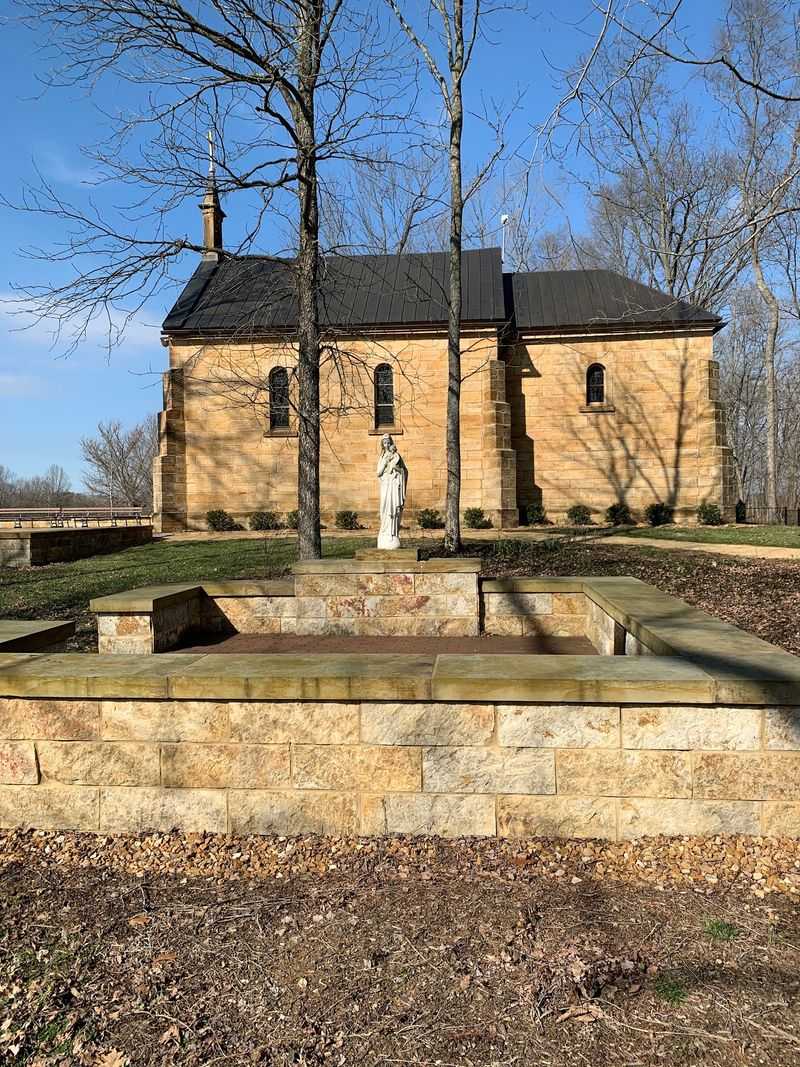
Outside, the grounds got their own refresh. New landscaping, fencing, and a stone path replaced worn ground, making the approach feel intentional rather than accidental.
A Marian prayer garden now sits near the chapel, planted with flowers and arranged for people who want to linger outdoors. It softens the whole hilltop.
Accessibility improved as a result. The stone path handles strollers and unsteady footing far better than the old dirt approach did.
What impresses most is the restraint of the work. Nothing feels overly modernized or scrubbed of character, and the sandstone still shows its age proudly.
Photographers benefit from the improved interior lighting, which finally lets the murals show up without heavy editing. The blue windows still steal the show, naturally.
Small changes, big difference. The chapel feels cared for rather than merely preserved.
Make a Day of It at Saint Meinrad Archabbey
Skipping the Archabbey after visiting the shrine would be a mistake. One mile west along Indiana 62, the full monastery campus spreads across roughly 2,500 hilly acres at 200 Hill Drive, St. Meinrad, Indiana 47577.
The Archabbey church anchors everything, a massive sandstone structure with twin towers visible from a good distance. Founded in 1854 by Swiss monks, the community has operated continuously ever since.
Walking the grounds is free and encouraged. Paths wind past gardens, old stone buildings, and open lawns with views that rival the shrine’s.
Anyone wanting more time can stay at the Archabbey Guest House and Retreat Center, which welcomes travelers looking for quiet rather than nightlife. Rooms are simple and the setting does the heavy lifting.
Pairing both stops makes for a satisfying half day, maybe longer if the weather cooperates. Add a drive through the surrounding countryside and it becomes a full outing.
Southern Indiana’s back roads deliver here. Rolling hills, small towns, and farmland stretch in every direction between Evansville and Louisville.
Gas up before heading out since services thin considerably in this stretch. Cell signal can be spotty too.
What lingers afterward is the contrast. A hidden hilltop chapel, a working monastery, and a landscape that genuinely earns the European comparison people keep making.
