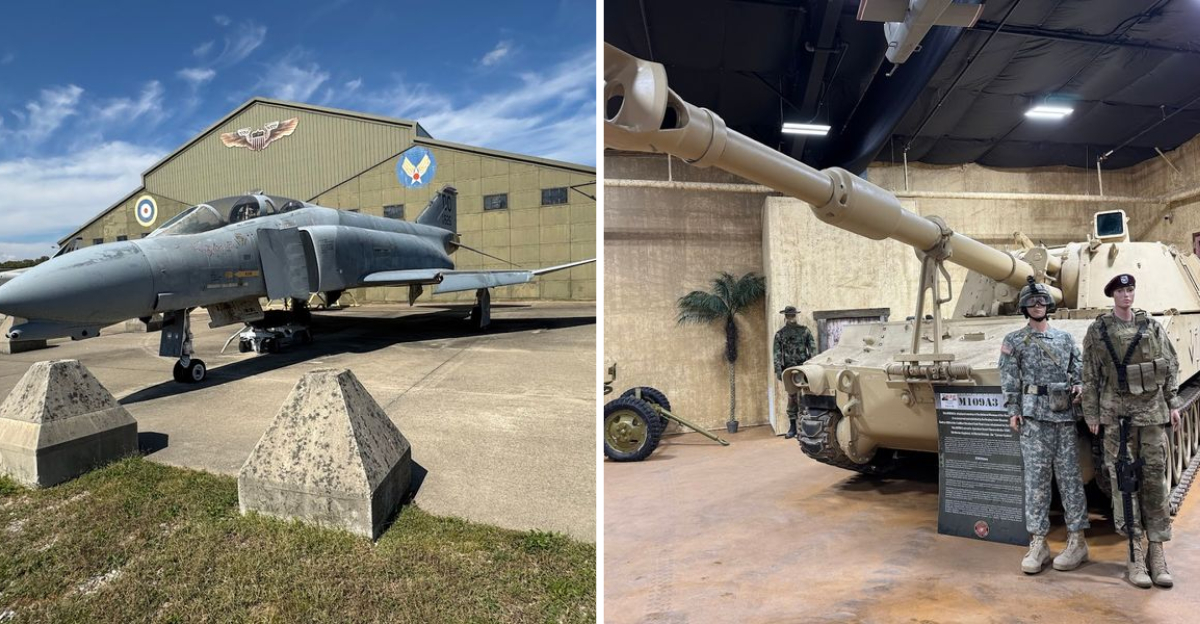
Rare WWII aircraft, tanks on loan from the Marine Corps, and personal items from generals and war heroes all under one roof in a small Indiana city. I had no idea a collection this deep existed outside of a major national institution. The museum does not announce itself loudly, but the sheer density of authentic military history is overwhelming in the best way.
Rows of restored equipment sit alongside uniforms, letters, and artifacts that carry real weight and personal stories from the past. Every exhibit feels carefully preserved rather than simply displayed, giving the space a grounded, respectful atmosphere.
History buff, veteran, or just someone who loves discovering places that feel truly meaningful, this Indiana museum deserves a spot on your list.
The WWII Aircraft Collection That Will Leave You Speechless
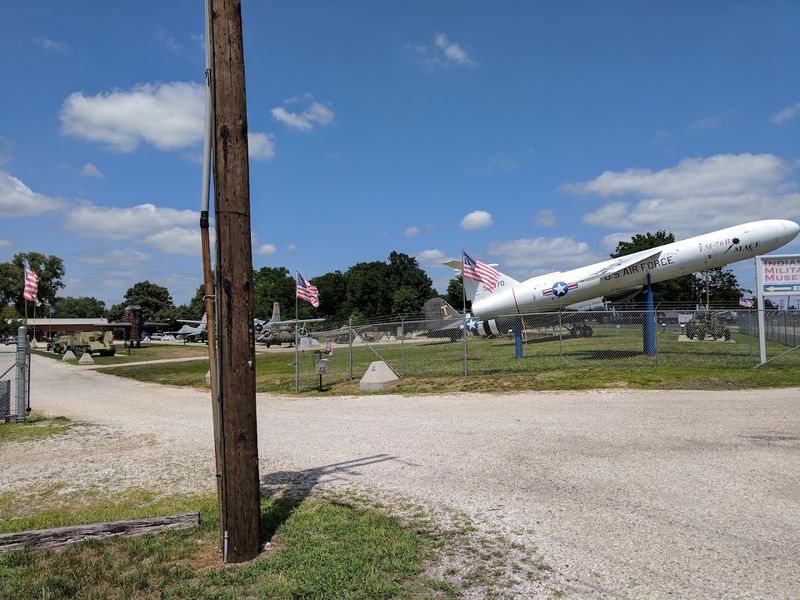
There is something about being up close to a real WWII aircraft that no photograph can fully prepare you for. The Indiana Military Museum holds a collection of planes that genuinely earns that reaction.
Among the highlights is a WWII-era C-47 transport plane, the kind of workhorse aircraft that carried troops and supplies across war zones during some of history’s most intense conflicts.
The museum also features a C-45 transport and an A-26 Invader, a bomber with a remarkable service record stretching from WWII all the way through the Vietnam War. That alone is a fascinating detail.
One aircraft, three major conflicts, and a story that spans decades.
These planes are not behind thick glass or roped off at an impossible distance. Visitors get genuinely close, which makes the experience feel personal rather than clinical.
The scale of these aircraft hits differently when you are standing right next to them. You start thinking about the crews who flew these missions, and the weight of that history becomes very real.
For aviation enthusiasts especially, this section of the museum is worth the trip to Vincennes all on its own.
Rare Artifacts Tied Directly to Famous WWII Missions
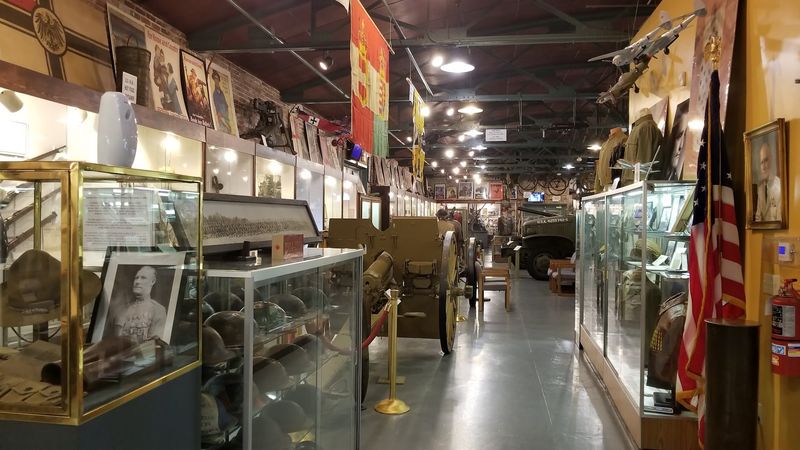
Few museums anywhere in the country can claim artifacts this directly connected to legendary WWII moments. The Indiana Military Museum holds the cloth wings worn by the pilot of the very first Allied glider to land in Normandy before the D-Day invasion.
That is not a replica or a reproduction. It is the real thing, and seeing it in person carries a quiet but powerful weight.
Equally remarkable are the trousers belonging to Ted Lawson, pilot of the B-25 “Ruptured Duck” during the famous Doolittle Raid. Lawson’s story is one of incredible bravery and survival, and having his actual clothing on display brings that chapter of history into sharp, personal focus.
The museum also displays a uniform from Captain Robert Morgan, pilot of the iconic B-17 “Memphis Belle.” Morgan’s crew was among the first heavy bomber crews to complete a full tour of duty in the European theater, and their story became a symbol of courage under fire. These are not decorative pieces.
Each item is a thread connecting visitors directly to the human beings who shaped the outcome of the war. That kind of tangible history is genuinely rare.
The Japanese Type 1 Chi-He Tank You Almost Certainly Have Never Seen Before
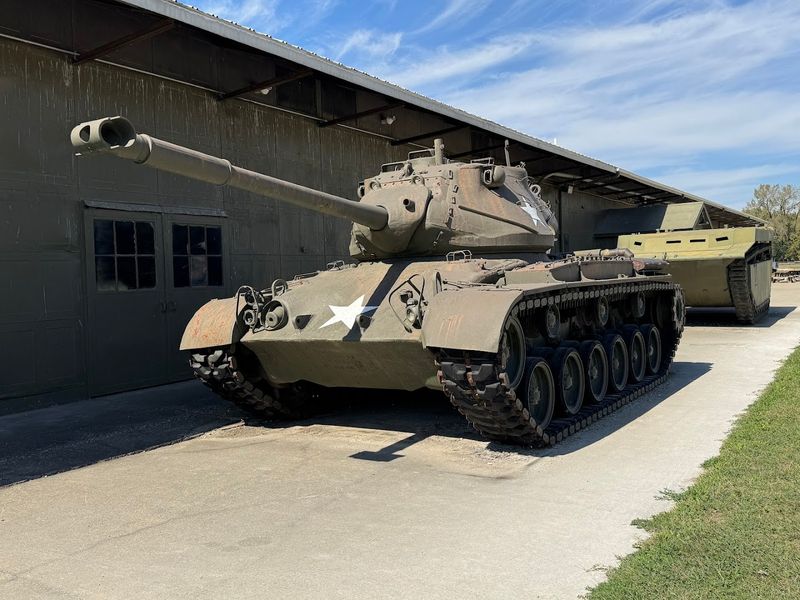
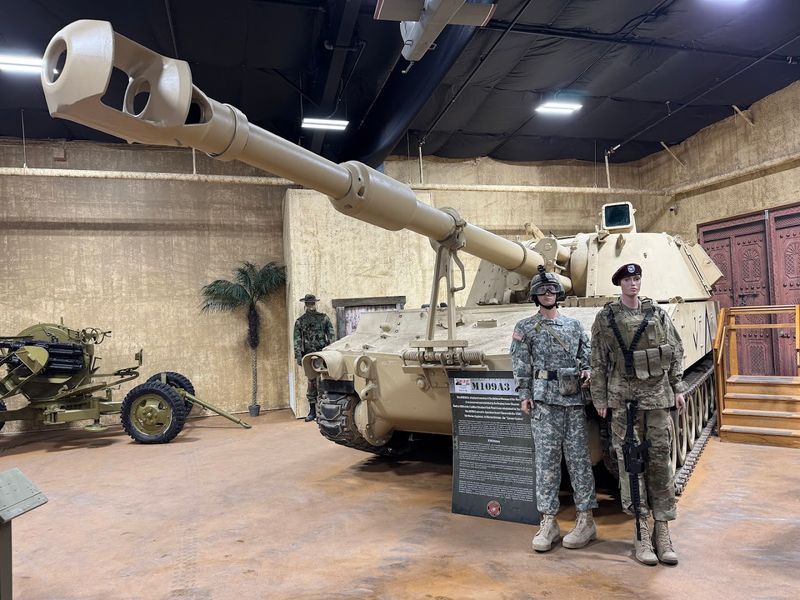
Most people have never seen a Japanese Type 1 Chi-He medium tank in person, and honestly, most people never will. Only 170 of these tanks were ever produced during the entirety of World War II, making surviving examples extraordinarily scarce.
The Indiana Military Museum has one on loan from the U.S. Marine Corps, and it is one of the collection’s most talked-about pieces.
Seeing it in person gives you an immediate sense of how different Japanese armor design was compared to American or European counterparts. The proportions, the construction details, the overall silhouette, everything about it feels distinct.
It is a fascinating window into a side of WWII armored warfare that rarely gets the attention it deserves.
Alongside the Chi-He sits another remarkable tank with a very different story: a Soviet T-34-85, gifted to the museum by Soviet President Mikhail Gorbachev. Two tanks, two very different corners of the global conflict, sitting in the same space in a small Indiana city.
The contrast between them is almost cinematic. For anyone interested in armored vehicles and military engineering, this section of the museum is genuinely unlike anything else you will find in the Midwest.
Uniforms and Personal Items from the War’s Most Iconic Figures
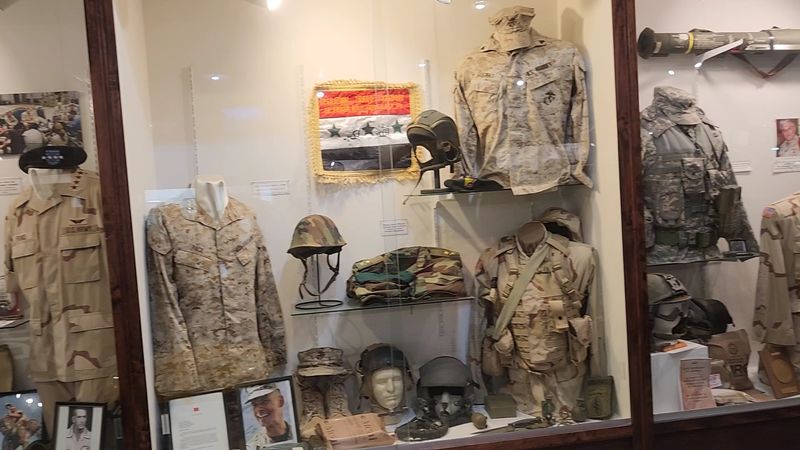
Personal items from famous historical figures have a way of making the past feel suddenly close. The Indiana Military Museum houses one of General Dwight D.
Eisenhower’s four WWII-era walking-out tunics, an artifact that is as rare as it sounds. Eisenhower commanded the entire Allied Expeditionary Force in Europe, and having one of his actual dress uniforms on display in Indiana is a remarkable curatorial achievement.
Right alongside it is General George S. Patton’s tanker jacket.
Patton is one of the most studied and debated military commanders in American history, and his jacket carries that complicated, fascinating legacy with it. These are not facsimiles or gift shop reproductions.
They are authenticated personal garments worn by two of the most consequential military figures of the 20th century.
There is also a lighter, more unexpected piece in this section: the WWII walking-out uniform of comedian Red Skelton, who was a Vincennes native. Skelton served during the war, and having his uniform displayed here adds a genuinely local and human dimension to the collection.
It is a reminder that the people who served came from every corner of American life, including the stage and screen.
The Higgins Boat and Outdoor Grounds That Expand the Story
Most people associate Higgins boats with the beaches of Normandy, and for good reason. These flat-bottomed landing craft delivered Allied troops directly onto enemy-held shores during some of the most dangerous amphibious assaults in military history.
The Indiana Military Museum has a rare WWII-era Higgins boat among its collection, and it is one of those pieces that genuinely stops you in your tracks.
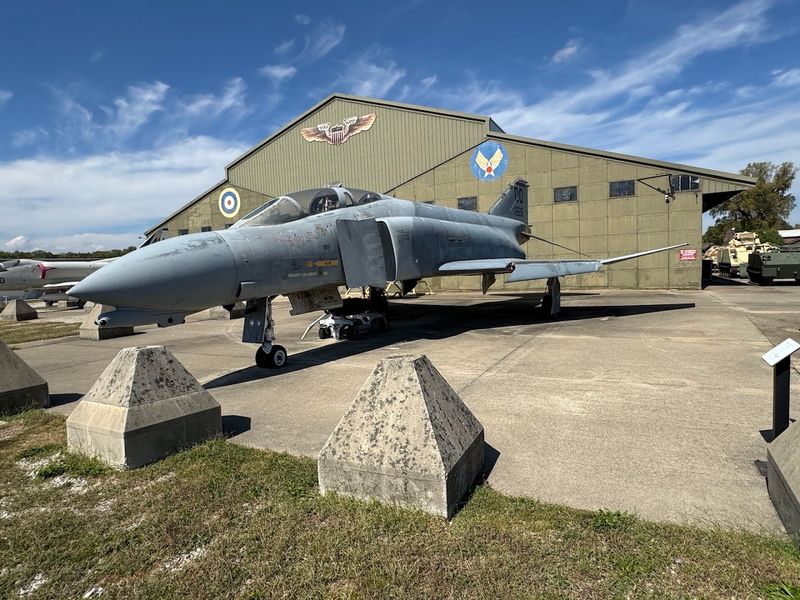
The outdoor grounds surrounding the museum expand the experience considerably. Tanks, jeeps, helicopters, planes, and even a partial submarine are spread across the property, giving visitors a sense of scale that the indoor galleries alone cannot provide.
On a clear day, wandering through the outdoor displays feels like moving through a compressed timeline of American military hardware.
Almost all of the vehicles in the collection are reportedly still functional and are regularly used in reenactments held on the museum grounds. That detail changes how you look at everything.
These are not static relics slowly deteriorating behind barriers. They are maintained, operational machines with living histories.
The outdoor space also includes recreated bunkers and trench systems that add another layer of immersive context to the visit. Plan to spend time out here.
The WWII Homefront Displays and Recreated Barracks
Not every story from World War II happened on a battlefield. The Indiana Military Museum understands that, and it shows in the way the homefront exhibits are put together.
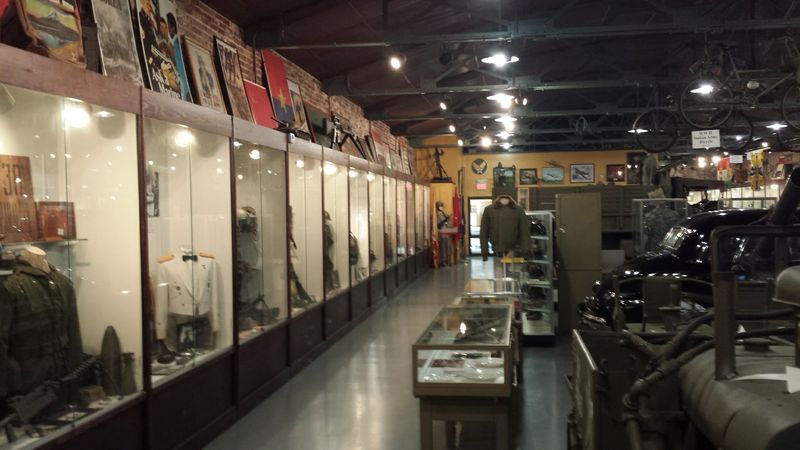
Authentic WWII homefront displays capture the domestic side of the war effort, the rationing, the factory work, the everyday sacrifices made by millions of Americans who never left U.S. soil but contributed enormously to the outcome.
The museum also features a recreation of WWII barracks from George Field, the former military airfield located not far from Vincennes. George Field trained thousands of pilots during the war, and having a physical recreation of that environment inside the museum gives local military history a tangible presence.
It is the kind of exhibit that connects regional history to the broader national story in a way that feels meaningful rather than obligatory.
A Rosie the Riveter exhibit adds another compelling angle to this section, celebrating the women who powered American industry during the war years. Visitors who spend time in these displays often find them just as moving as the aircraft and tanks.
The human scale of these exhibits, the personal objects, the familiar domestic details, creates a different kind of connection to the past. Give this section the attention it deserves.
Why the Indiana Military Museum Belongs on Every History Lover’s Radar
The Indiana Military Museum carries a 4.9-star rating across hundreds of reviews, and reading through them, it is clear that the reaction is consistently one of genuine surprise and admiration. Visitors regularly describe it as one of the best military museums they have ever visited, with many comparing its depth of collection favorably to major national institutions.
That kind of sustained enthusiasm says a lot about what this place delivers.
The museum is run entirely by full-time volunteers and supported by private donations. There is something about that model that gives the whole experience a different quality.
The people guiding you through the exhibits are there because they care deeply about this history, and that passion is obvious the moment you start a conversation with any of them.
Plan to give yourself at least two to three hours, though many visitors end up staying four to five. The collection spans two large buildings plus the outdoor grounds, and there is genuinely no shortage of things to discover around every corner.
It is the kind of place that rewards slow, curious visitors. Located at 715 S 6th St in Vincennes, Indiana, the museum is open most days of the week.
Address: 715 S 6th St, Vincennes, IN 47591.
