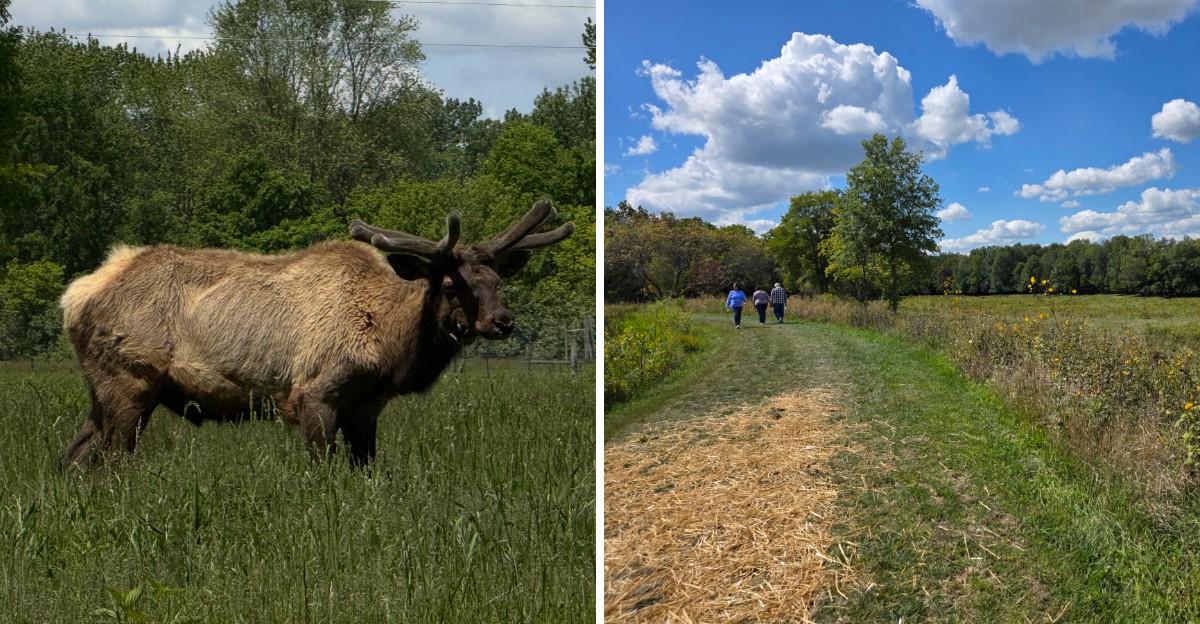
There are sounds people know belong in a forest. Birdsong.
Crickets. Wind through the trees.
An elk bugle is not usually on the list. Yet that is exactly what can cut across the prairie at this Indiana nature park, where two bull elk may answer each other from opposite sides of the landscape.
The call rises into a strange whistle before dropping into a rough grunt that carries much farther than expected. The park covers more than 300 acres of restored grassland, woods, and wetlands.
It is also home to the state’s only free-roaming bison and elk herds. That combination makes the visit feel a little like someone moved part of the West into the Midwest.
Indiana’s Only Free-Roaming Bison and Elk Share the Same Land
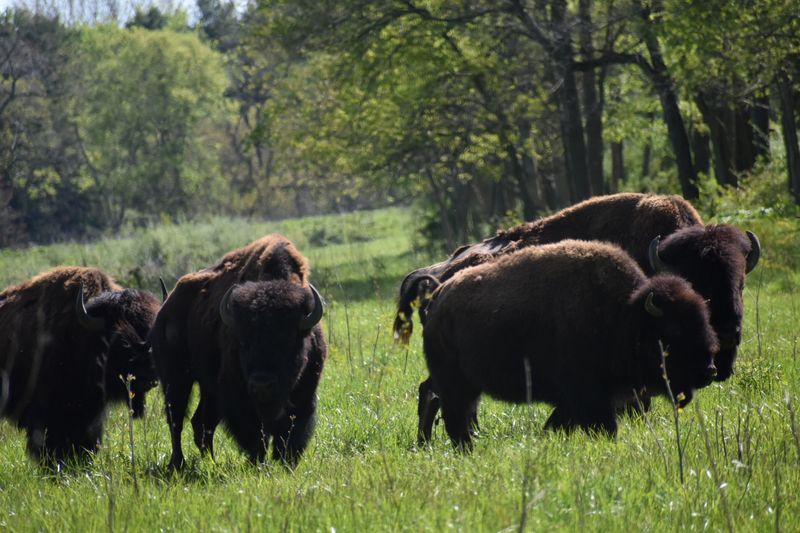
Two animals that shaped the Midwest for thousands of years graze here on the same acreage, and that combination does not exist anywhere else in Indiana.
Elk arrived at the property in 2011. Bison followed in 2012.
Both herds move freely across the land rather than living in small enclosures, which changes how visitors see them. One morning the bison might be running across open prairie close to the trail.
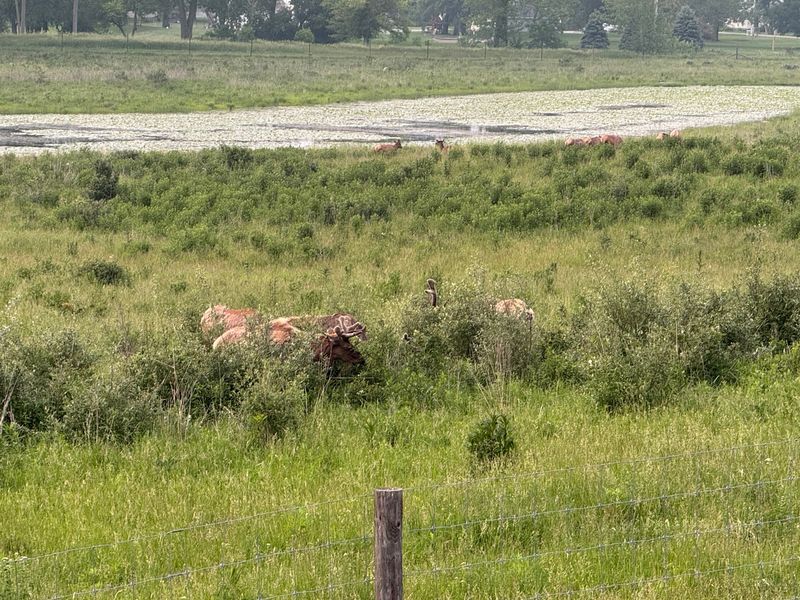
Another day the elk stay tucked into the tree line, visible only as antlers moving through shade.
Visitors have counted more than thirty bison and over twenty elk during a single guided outing, though numbers shift with the seasons and the herd.
The animals are not decoration. Bison hooves break up compacted soil and press native seeds into the ground, while their grazing keeps aggressive grasses from smothering wildflowers.
Elk browse differently, shaping the edges where woods meet prairie.
Together they do the work that kept these ecosystems healthy long before anyone wrote it down. Bring binoculars.
Even on a good day, some of the best viewing happens at a respectful distance, and a decent pair turns a distant brown shape into a shaggy giant with steam rolling off its back.
Patience pays off more than pacing the trail does.
The Fall Bugling Season Turns the Prairie Into a Concert Hall
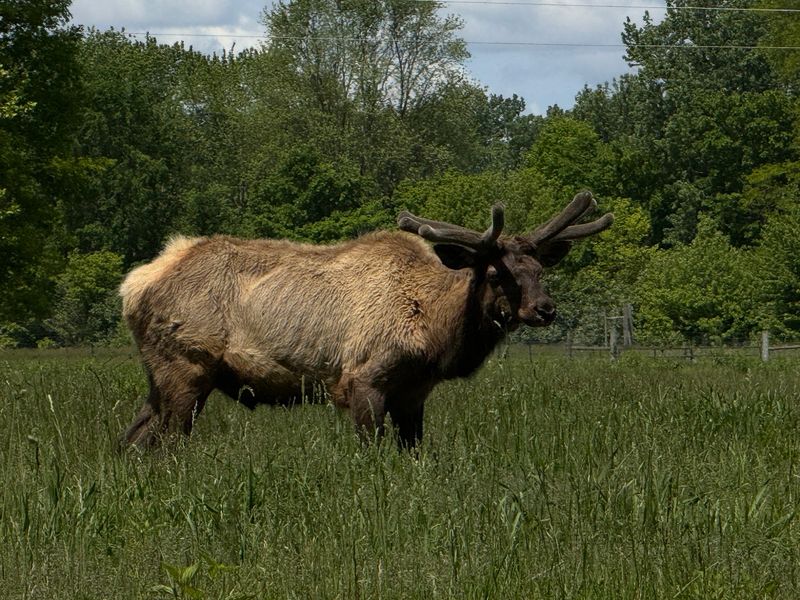
Autumn flips a switch at this park. Beginning around early September and running through October, the bull elk enter their rut, the mating season, and the whole valley changes character.
A bugle is hard to describe until it happens. The call starts as a deep rumble, rises into something almost like a scream, then finishes with a series of short grunts that sound faintly like laughter.
When one bull calls, another usually answers from across the field, and the back-and-forth can go on for several minutes.
Timing matters more than luck here. The calls tend to come strongest after sunset and again before sunrise, though bulls may bugle on and off through the night.
Early October is generally the loudest stretch of the year.
Bugling can begin as early as late August and sometimes stretches into the first days of November, so the window is wider than most people assume. Dress warmer than expected.
Prairie mornings in Indiana hold a damp chill that sneaks through a light jacket.
What makes the sound land so hard is the setting. There are no mountain crowds, no packed overlooks, just open grassland, a ring of trees, and a call that once echoed across this whole region before elk disappeared from the state.
Hearing it again feels like something being put back where it belongs.
Nearly Five Miles of Trails Through Prairie, Woods, and an Ancient Dune
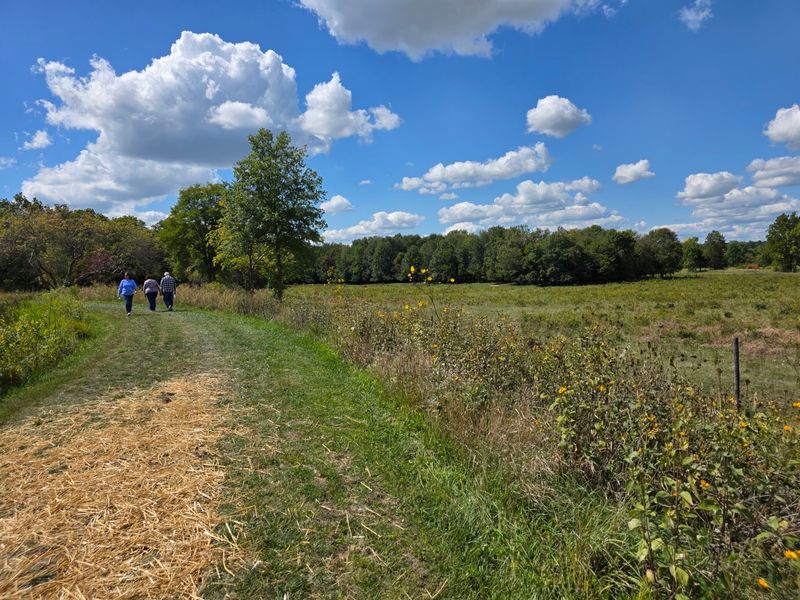
Trails here do not feel manufactured. Mowed paths cut through tallgrass that can reach shoulder height by late summer, then duck into hardwood forest where the temperature drops noticeably in a matter of steps.
Roughly five miles of trail wind across the property, with routes ranging from short and easy to a longer loop that covers most of the park. A few gentle hills show up along the way, enough to make the walk interesting without turning it into a workout.
One of the stranger features is an ancient sand dune, a leftover from a time when meltwater and wind reshaped this part of Indiana. Standing on sand in the middle of farm country is an odd little geology lesson.
An All Persons Trail makes part of the park reachable for visitors who use wheelchairs or need a smoother, flatter surface, which matters in a place where so much terrain is rough grassland.
Viewpoints are placed where the animals tend to gather, so the walk delivers more than scenery. Wildflowers put on a serious show in spring and again in late summer.
Sturdy shoes beat sandals here without question. Grass holds dew well past mid-morning, and nobody enjoys squelching through the back half of a loop.
Safari Bus Tours Get You Closer Than Walking Ever Will
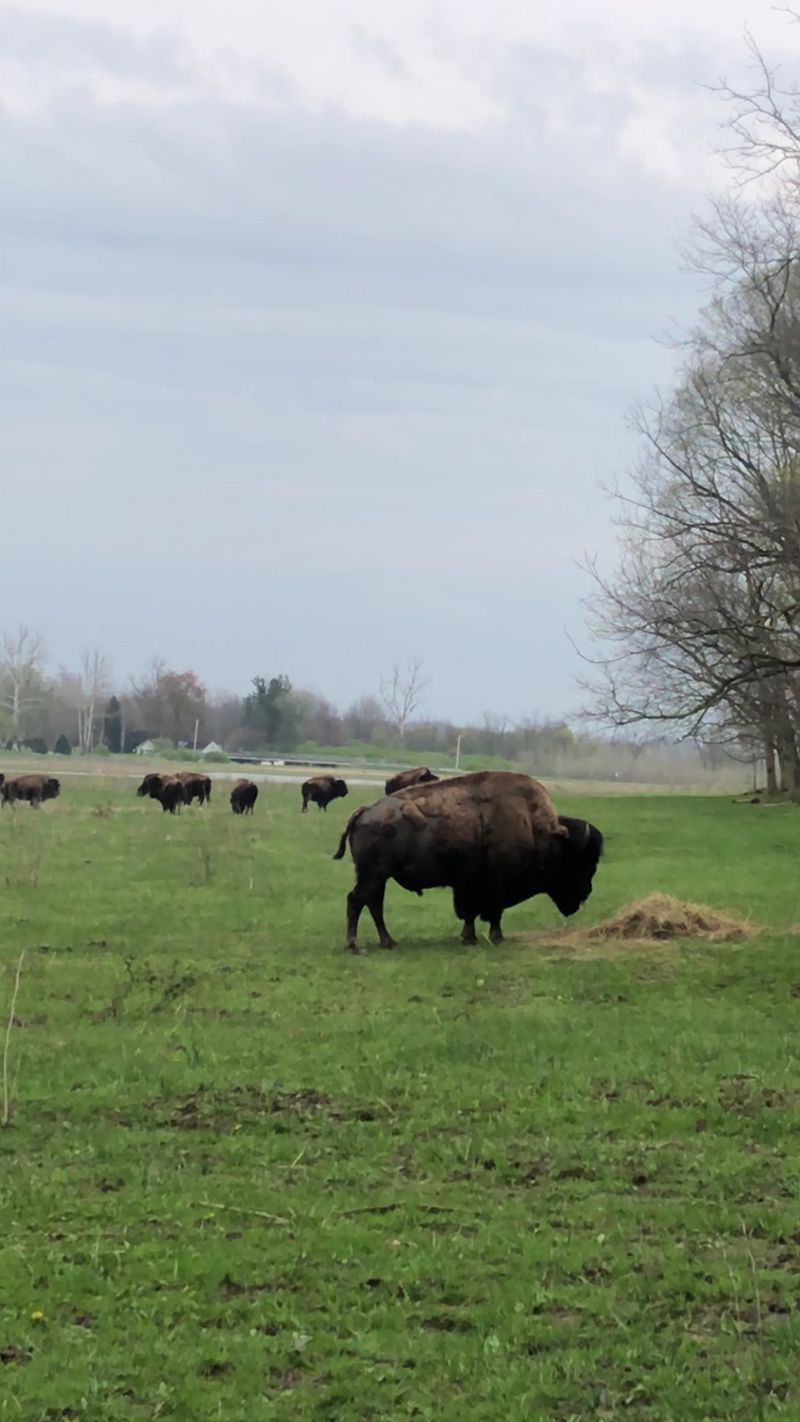
Riding gets people closer than hiking does. The safari bus tours roll out along interior routes that foot traffic does not reach, which often puts bison and elk within easy camera range.
Guides run these tours, and the guiding is half the point. Staff here tend to be deeply involved in caring for the animals and managing the land, so the commentary covers herd behavior, local history, plant identification, and the reasoning behind restoration choices.
Photographers do especially well on these rides. Photography groups have toured the park specifically for the access, and the open sightlines across prairie make for clean shots without fences cluttering the frame.
Tours typically run on Saturdays during the open season, with multiple departure times through the day, though schedules shift around festivals and special events. Booking ahead is strongly recommended since seats are limited and the park schedules everything in advance.
Families with small children often find the bus easier than a long walk, and older visitors appreciate not having to cover four miles on uneven ground to see the herds.
Check the park website before driving out. Availability changes with the season, the weather, and whatever program happens to be running that weekend, and a quick look saves a wasted trip.
A Barn From the 1890s Reborn as the Mills Education Center
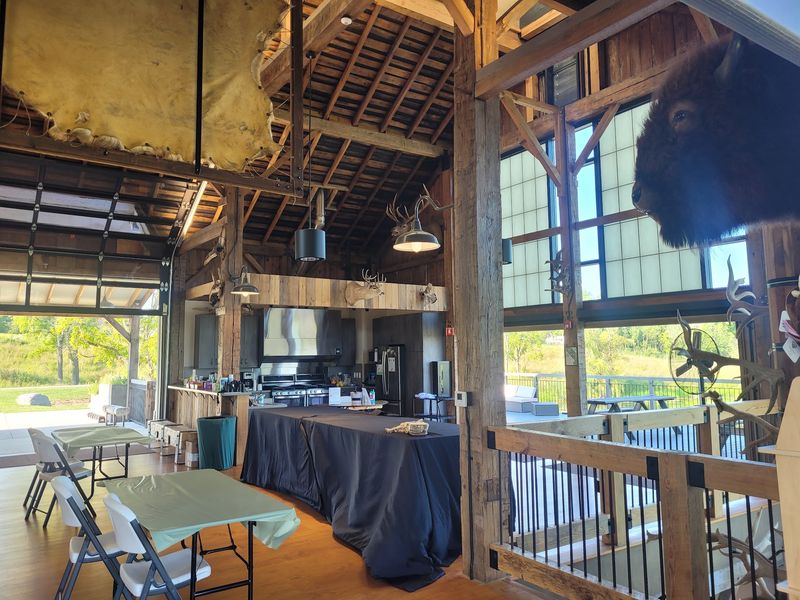
Old bones, new purpose. The Mills Education Center occupies a barn built in the late 1890s, restored rather than replaced, and the original timber framing still carries the weight of the place.
Inside, the setup goes well beyond a few posters on a wall. Educational displays explain the ecology of the valley, a teaching kitchen hosts hands-on food and nature programming, and a rainwater lab shows how water moves across the landscape and why that matters for wetlands downstream.
The bison overlook might be the best part. Watching a herd graze through the windows of a century-old barn creates a strange and pleasant collision of time periods.
Programs run out of this building throughout the year on subjects like birds and raptors, invasive species, pollinators, and the sounds of nature. School groups book field trips here, and the park tailors sessions to different ages and interests.
Camp Trillium brings kids onto the property for longer stretches during warmer months, trading screens for creek mud and field guides.
Even visitors who come strictly for the elk should step inside for a few minutes. Context changes what the animals look like out in the field, and the displays explain why a restored prairie needs heavy grazers to stay healthy.
Land With Miami Tribe Roots and a Family Story Behind the Name
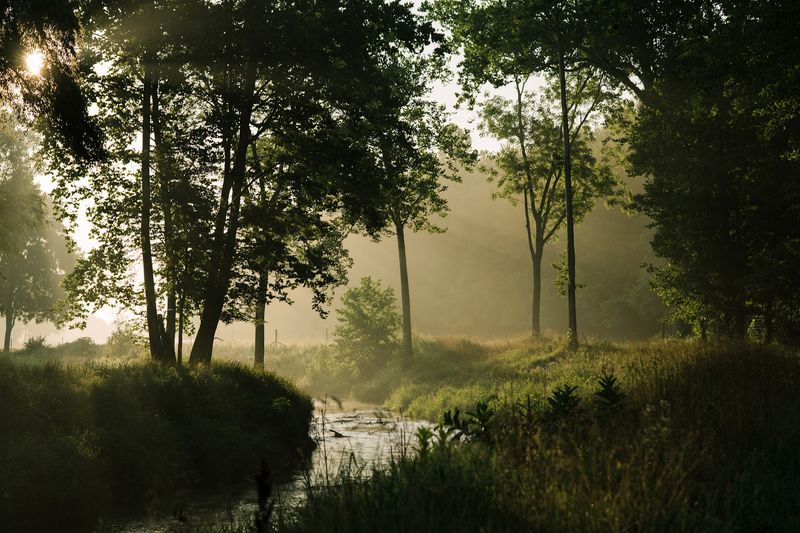
The story attached to this ground runs deeper than the park itself. In the late 1800s, the land was part of a reserve for the Myaamia, the Miami tribe, whose presence shaped this stretch of the Little River Valley long before section lines and fence posts arrived.
The park sits in that same valley, southwest of Fort Wayne, where waterways once served as major travel routes across the region.
The modern chapter began in 2019, when the Brooks Family established the park in memory of Carol Brooks. LC stands for Loving Carol.
That detail tends to stick with people once they hear it, turning an abbreviation into something personal.
Public access came in May 2021, opening a property that had spent years being quietly restored.
Events throughout the year lean into that history. National Bison Day celebrations include insight into the Miami Tribe, Native American art, and what Indiana’s landscape looked like before settlement reshaped it.
Guides weave the history into hikes and tours rather than saving it for a plaque, which keeps it from feeling like a separate lesson bolted onto a nature walk.
Knowing whose footsteps came first changes the walk. The prairie stops being scenery and starts feeling like a place with a memory, located at 9744 Aboite Road, Roanoke, IN 46783
Seasonal Festivals, Antler Hunts, and a Nonprofit Worth Supporting
Something different happens here nearly every month of the open season, and the calendar is half the fun.
Trillium Fest arrives in early May, timed to the white blooms that carpet the forest floor, and it draws families out for a relaxed day of trails and activities.
Antler Round Up sends visitors searching the fields for naturally shed elk and bison antlers, which is exactly as satisfying as it sounds when someone actually finds one.
National Bison Day in fall pairs the herd with history, art, and stories about the Indiana landscape.
The park generally opens to the public on Saturdays from May into November, with guided hikes, bus tours, and special programming filling those days. Outside of scheduled events, the property stays closed, which is part of why the animals behave so naturally.
Everything runs through an independent nonprofit. No government funding, no tax support, just donations, grants, sponsorships, and program fees keeping the lights on and the invasive garlic mustard and honeysuckle pulled out of the woods.
Volunteers help too, serving as trail guides, docents, camp counselors, and land stewards.
Showing up is itself a small act of support.
