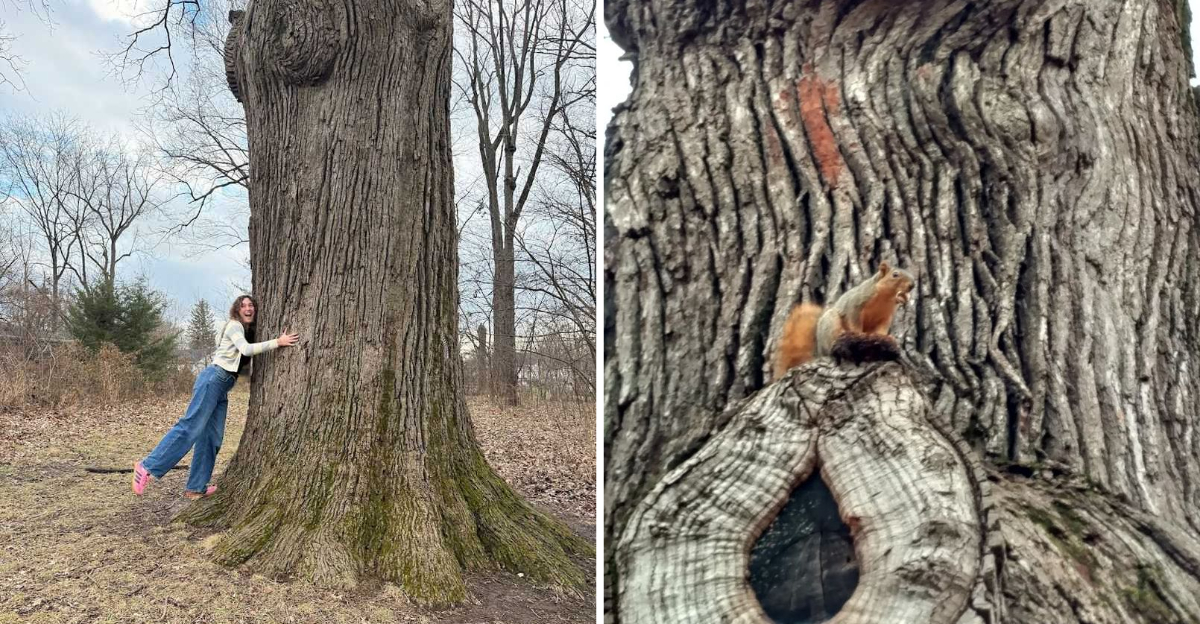
Ancient history is not always locked behind museum glass. In Indiana, one living landmark has quietly outlasted wars, generations, and the birth of an entire state, all while standing on an ordinary neighborhood street.
Its sprawling canopy and enormous trunk make it almost impossible to walk past without stopping for a closer look.
The setting stays peaceful, letting the tree do all the talking.
A short visit quickly turns into a reminder that some of the state’s most remarkable attractions have been growing in plain sight for hundreds of years, still rooted firmly in time and memory today.
A Tree That Predates the United States
Some trees are big. This one is on a completely different level.
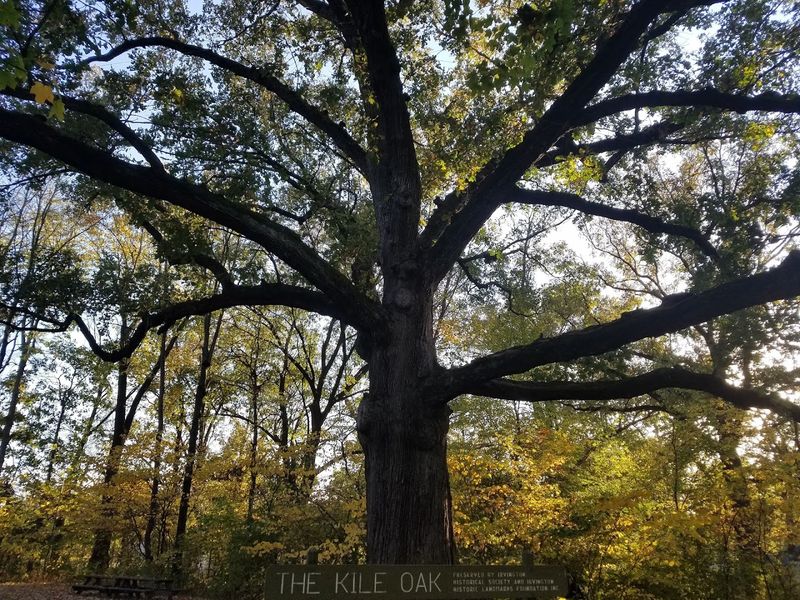
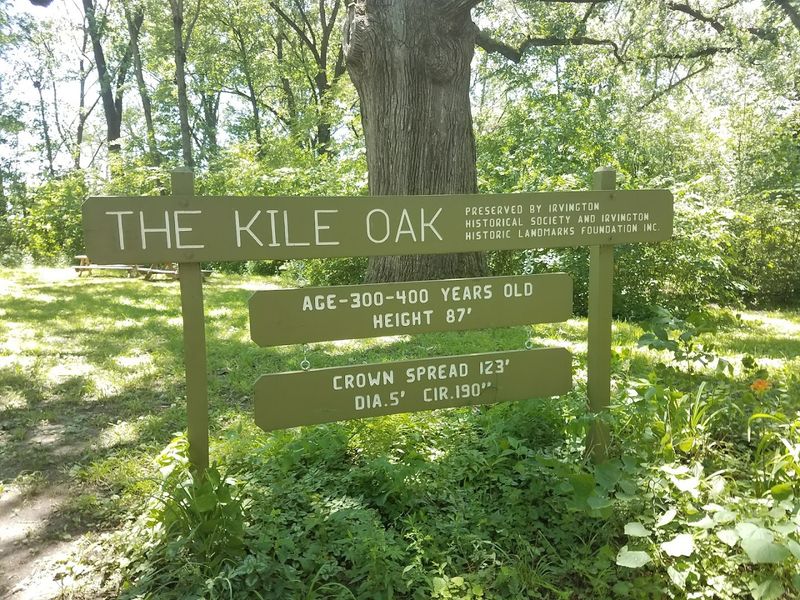
The Kile Oak is a Bur Oak, scientifically known as Quercus macrocarpa, and arborists estimate its age somewhere between 400 and 500 years old. That means it was already standing tall when the American Revolution had not even been imagined yet.
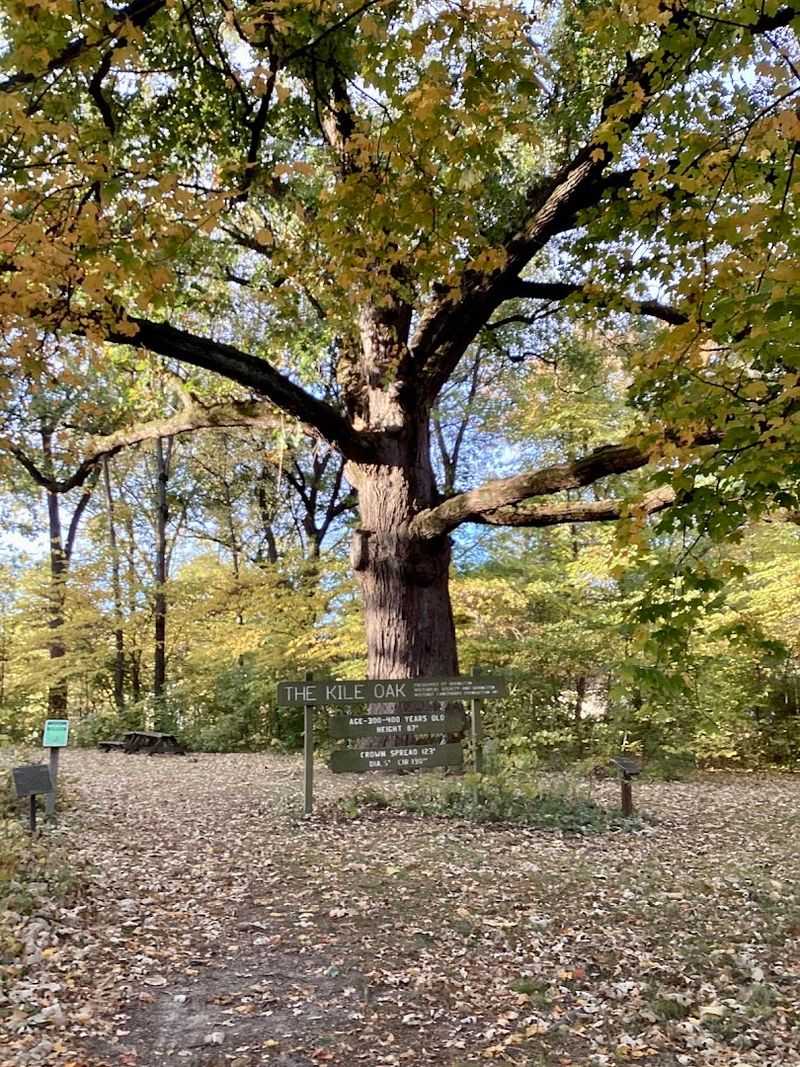
The numbers alone are staggering. The tree reaches about 87 feet into the sky, its crown spreads somewhere between 122 and 125 feet wide, and its trunk has a circumference of 190 inches.
That is roughly 15.8 feet around. You need multiple people joining hands to even attempt to hug it fully.
It holds the title of the largest Bur Oak within any metropolitan city in Indiana. That is not a small claim.
The Irvington Historic Landmarks Foundation and the Irvington Historical Society both work to protect it, with support from the Irvington Garden Club. The tree received a plaque from the Indiana Arborist Association in 1973 and was named Bicentennial Tree of the Year in 1976 for having lived through the American Revolutionary period.
Few living things in this state carry that kind of history.
The Irvington Neighborhood Hiding This Gem
Irvington does not shout. It is the kind of neighborhood that rewards slow walkers and curious minds.
The historic district sits on the east side of Indianapolis, filled with early 20th-century homes, shady sidewalks, and a community that genuinely takes pride in its roots.
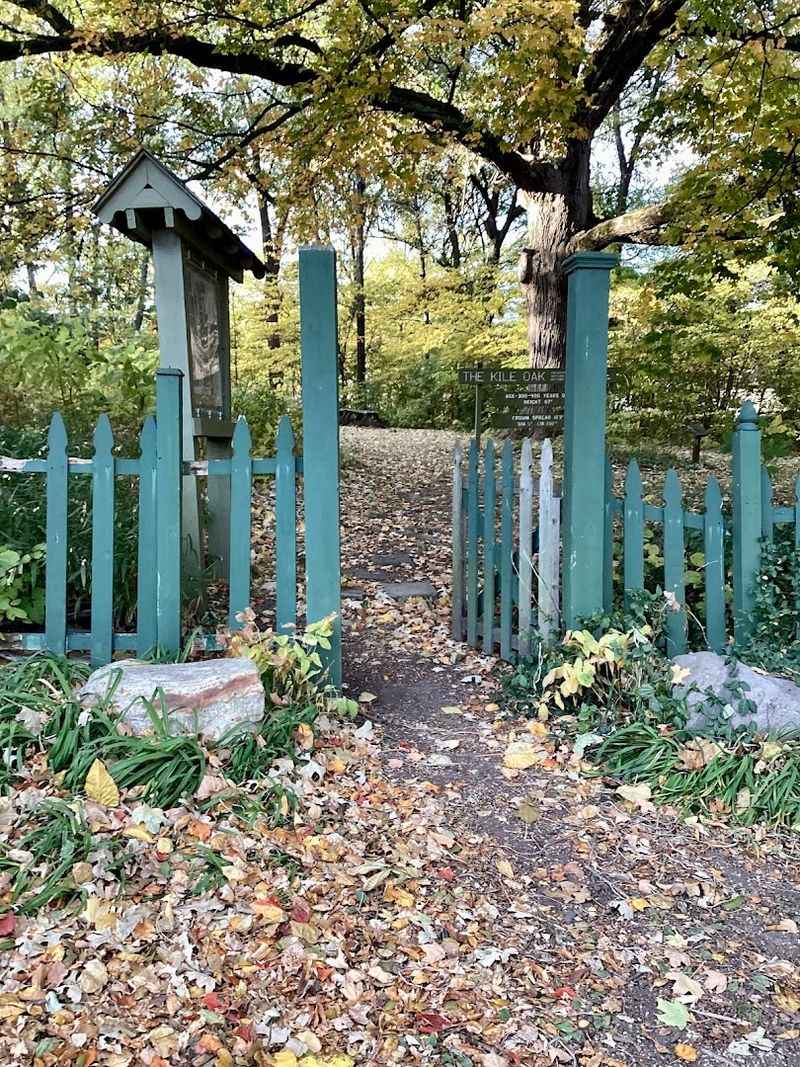
Kile Oak Tree Park sits on Beechwood Avenue, a quiet residential block where the tree appears almost without warning. You might be looking at ordinary houses and then suddenly realize there is a canopy above you that simply does not belong to any normal yard tree.
It catches you off guard in the best way.
The neighborhood itself is worth exploring before or after your visit. Irvington has a library, local shops, and a community feel that is refreshingly unhurried.
A sign at the Irvington Public Library actually points visitors toward the Kile Oak and other local landmarks, so it is worth stopping there first to get your bearings. The whole area has a lived-in warmth that makes the park feel less like a tourist stop and more like a neighborhood secret you have been let in on.
The Family That Fought to Save It
Every great tree has a story behind it, and the Kile Oak’s story involves a family who refused to let it disappear. Rev.
Oliver Kile purchased the property in the early 1900s and built his home right beside the tree. He clearly recognized that living next to something ancient was worth something.
After Rev. Kile passed away, his daughter Mae took up the cause with remarkable dedication.
She spent decades campaigning for the tree’s protection, making sure it would not be cut down or built over. Mae even kept a guestbook starting in 1928, where visitors from across the country and even internationally signed their names.
When Mae Kile died in 1973, the Irvington Historical Society stepped in and acquired the property. Her decades of effort had laid the groundwork for permanent preservation.
Without her persistence, this tree might have been lost to development long ago. The Kile name now lives on through the park itself, a small but meaningful tribute to two people who understood that some things are worth protecting even when it is inconvenient.
That kind of quiet determination is exactly what keeps places like this alive.
What It Actually Feels Like to Stand Next to It
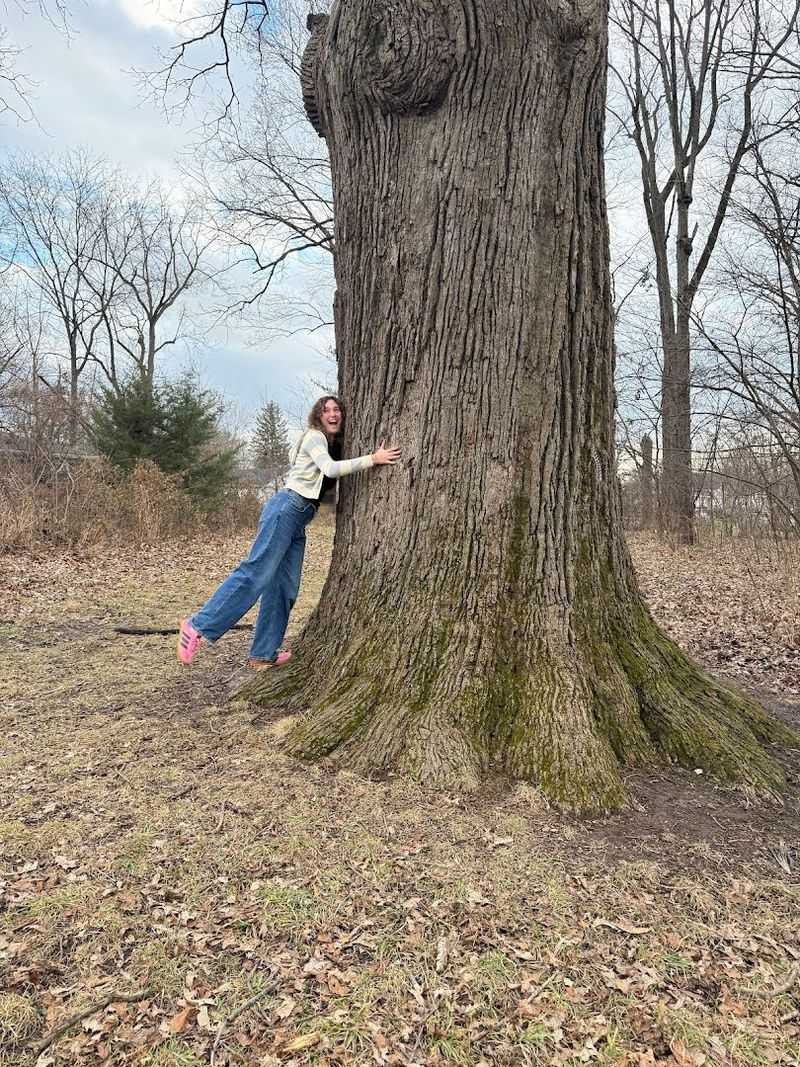
No photograph really prepares you for the moment you walk up to the Kile Oak. The trunk is not just wide, it is textured and gnarled in ways that make it look ancient in the truest sense.
Thick ridges of bark run up the sides like something carved by centuries of weather and seasons.
The canopy above is equally impressive. On a warm afternoon, standing underneath it feels like being sheltered by something that has no reason to rush.
The shade it casts is deep and wide, and there is a stillness to the space that you do not expect from a spot tucked between ordinary residential homes.
Visitors consistently describe feeling a kind of quiet awe when they first see it up close. Some people describe it as almost spiritual, the kind of presence that makes you reflect on how brief your own time here really is.
Others just stand there quietly for a few minutes, which is honestly the right response. The tree does not need commentary.
It just needs you to show up and pay attention, and it handles the rest entirely on its own.
Wildlife, Nature Study, and a Backyard Habitat
In 2013, the National Wildlife Federation officially designated the Kile Oak site as a Backyard Wildlife Habitat. That recognition says a lot about how much life this single tree supports.
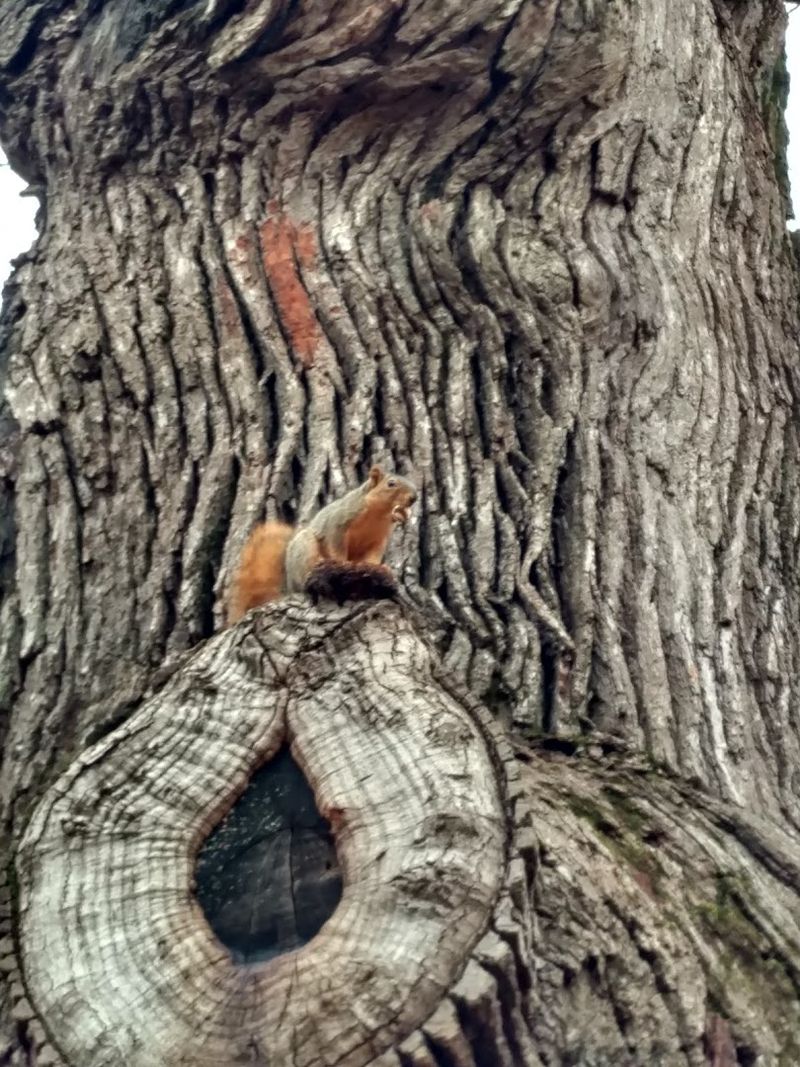
Squirrels are a regular presence, and the dense canopy makes it ideal for birds seeking shelter.
The park is also used for nature study and outdoor education, which makes it a genuinely useful space beyond just being a landmark. Schools and nature groups have found it to be a meaningful outdoor classroom, one where the lesson plan basically writes itself.
Explaining tree rings, canopy ecology, or forest age to a curious kid becomes much easier when you are standing under a 400-year-old example.
The area around the base has been maintained to encourage native plant growth, which supports local pollinators and small animals. The site is not a manicured garden, and that is part of its appeal.
It feels like a living ecosystem rather than a display. Arborists remain actively involved in the tree’s ongoing care, especially after storm damage in September 2024 required the removal of some branches before the site was safely reopened to the public.
Practical Tips for Visiting the Kile Oak
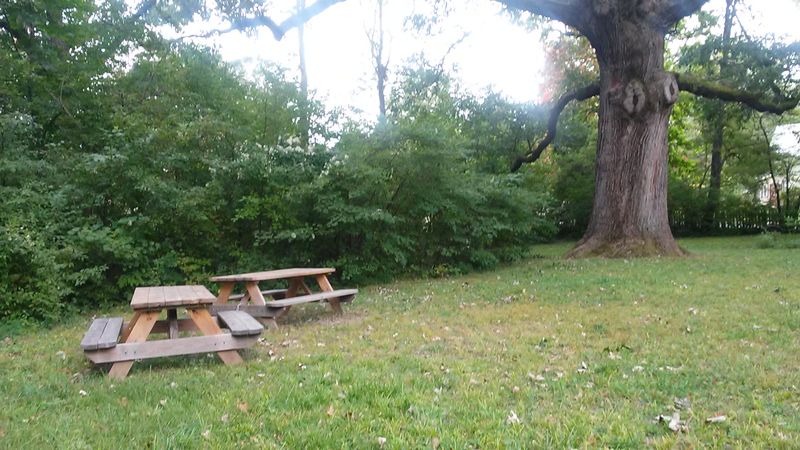
The Kile Oak is open to visitors from 8 AM to 7 PM daily, which gives you a solid window to stop by at a comfortable pace. It is free to visit, and parking on the surrounding residential streets is generally easy to find.
The address is 5939 E Beechwood Avenue, Indianapolis, IN 46219.
Bug spray is genuinely worth bringing, especially in late spring and summer. The natural setting around the tree means mosquitoes can be active, and a quick spray before you arrive makes the experience much more enjoyable.
Comfortable walking shoes are also a good call since the ground around the tree is uneven in places.
The area around the base has been fenced off in sections to protect native growth and ensure the tree’s long-term health. So while you cannot sit directly beneath the trunk as you once could, the view from just outside the fence is still extraordinary.
The Irvington Public Library nearby has signage pointing to the Kile Oak and other local landmarks if you want to make a small walking tour of the area. Donating to the Irvington Historic Landmarks Foundation is a meaningful way to support the tree’s continued preservation.
Why This Small Park Deserves a Spot on Your List
Not every worthy destination comes with a parking garage and a gift shop. The Kile Oak is the opposite of that, and honestly, that is exactly what makes it special.
It is a real place, cared for by real volunteers, sitting on a regular street in a regular neighborhood.
People who grew up in Indianapolis sometimes discover it for the first time as adults and feel a mix of surprise and mild embarrassment that they never knew it was there. That reaction is part of the charm.
It reminds you that even familiar cities still hold things worth finding.
The Kile Oak has been here through wars, pandemics, political upheavals, and generations of families moving in and out of the surrounding homes. It has outlasted almost everything around it and shows no sign of giving up.
Visiting it feels less like checking off a landmark and more like paying a quiet visit to something that has earned its place in the world through sheer endurance. Indianapolis has plenty of well-known attractions, but few of them carry the same quiet weight as this one ancient tree on a side street in Irvington.
Address: 5939 E Beechwood Ave, Indianapolis, Indiana
