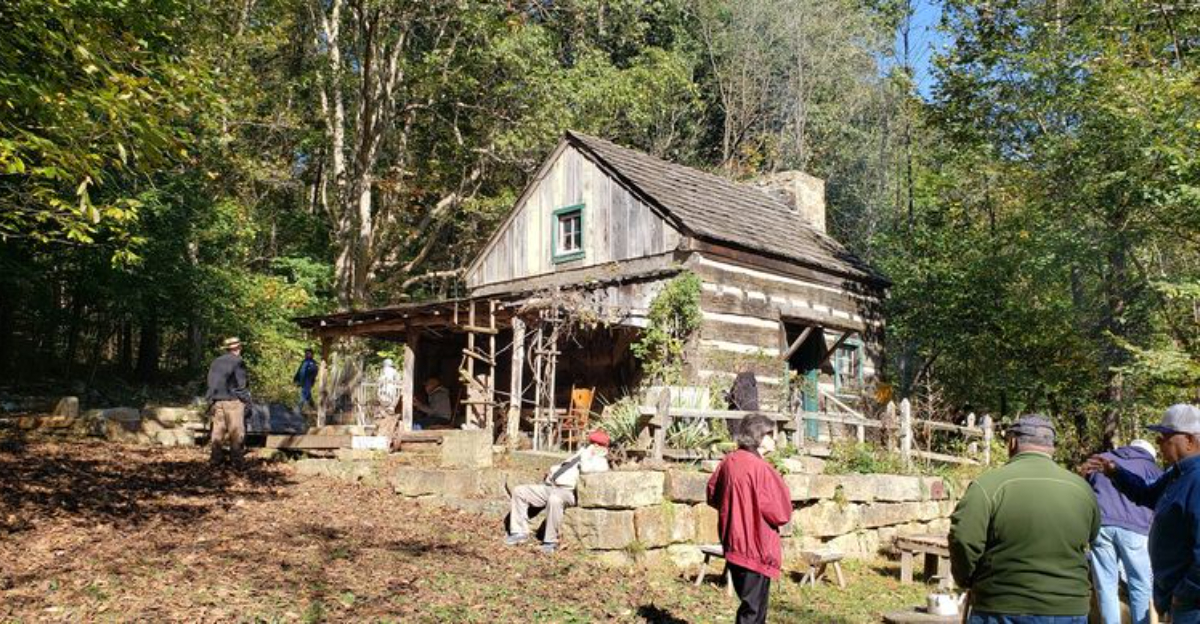
Most people drive right past Perry County without knowing a remarkable piece of living history sits quietly nearby. A pioneer village in Cannelton, Indiana is one of those rare places where the past does not just sit behind glass.
Authentic log cabins, a working blacksmith shop, stone ovens, and carefully preserved historic buildings recreate everyday life from the mid-1800s with impressive attention to detail.
Instead of simply reading about history, visitors can walk through it, imagining what daily routines, trades, and community life looked like for early settlers.
Seasonal demonstrations and special events make the experience even more immersive, bringing traditional skills and craftsmanship back to life. If you have ever wondered what pioneer life was really like, this historic village offers an authentic journey into the past that is well worth the drive.
Come Learn Inside the Milestone One-Room School
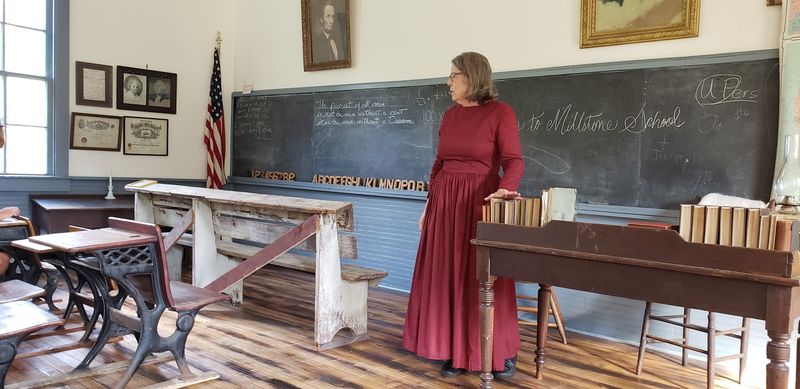
Imagine sitting at a wooden desk, sharing a single room with students of every age, all learning from one teacher who handled everything from arithmetic to reading aloud.
That was the reality of education in pioneer Indiana, and the Milestone One-Room School at Shubael Little Pioneer Village captures it with quiet honesty.
This building is not staged to impress. It is arranged to inform, and the difference matters.
The simple design of the schoolhouse reflects the values of the era. Practicality ruled every decision.
Benches were hard. Light came from small windows.
The teacher stood at the front with limited resources and enormous responsibility. Period furnishings inside the school help you picture a full classroom of pioneer children, many of whom walked miles through woods just to attend.
For younger visitors especially, this stop on the village grounds tends to spark genuine curiosity. Kids often find it strange that students of different ages shared the same space and the same lessons.
That reaction is exactly the point. When something surprises you, it sticks with you.
The Milestone One-Room School does not just show you what early education looked like. It makes you think about how much has changed and what has stayed the same in the way communities choose to teach their children.
That kind of reflection is hard to manufacture and easy to find here.
Plan to Inspect the Troy Stone Jail Up Close
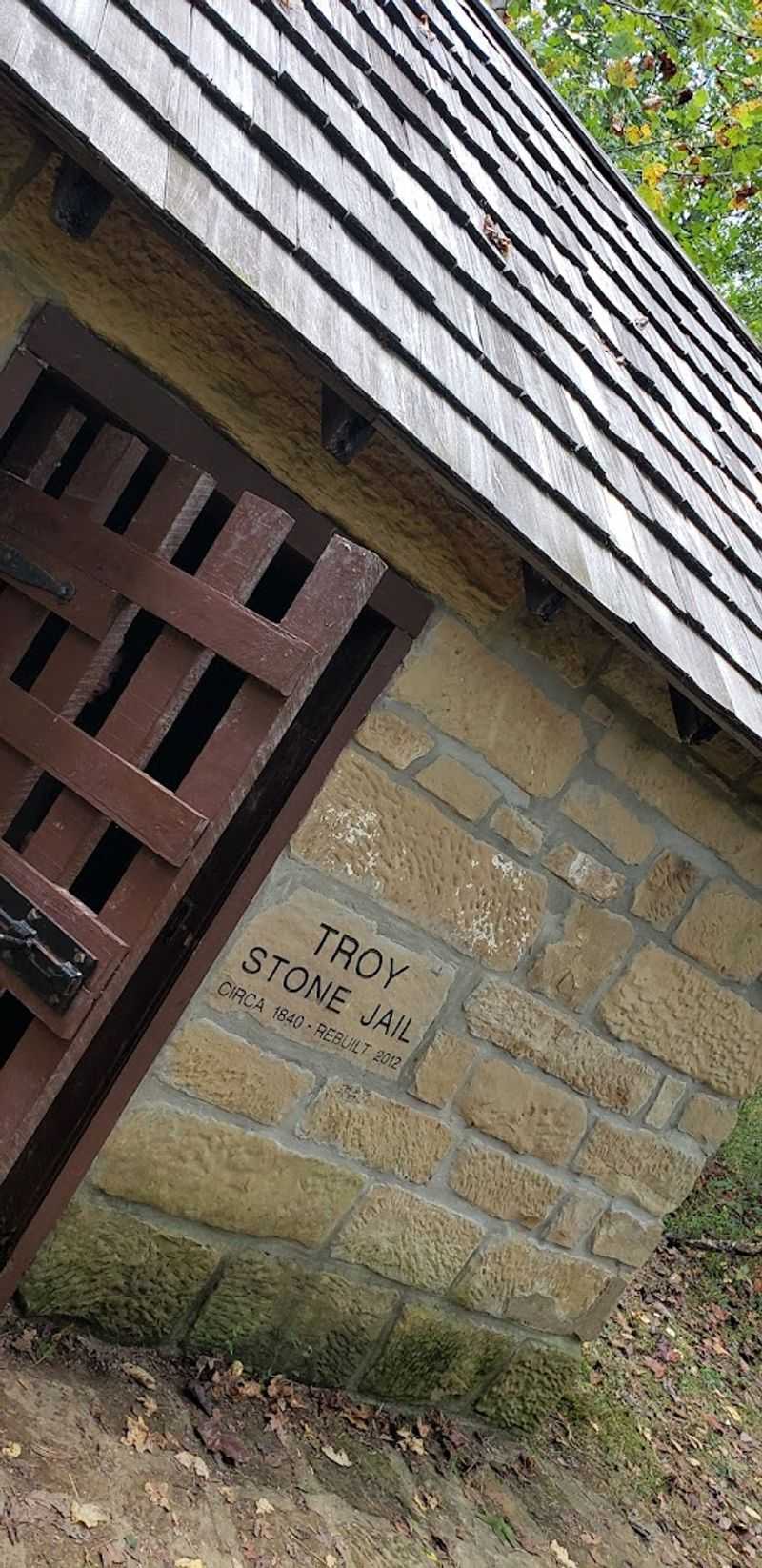
Not every piece of pioneer history is warm and welcoming, and that is part of what makes the Troy Stone Jail one of the most thought-provoking stops at Shubael Little Pioneer Village. Law and order on the frontier looked nothing like what we know today.
This compact stone structure with its iron-barred cells gives you a direct look at how a developing settlement handled crime, conflict, and the early mechanics of justice.
The Troy Stone Jail originally served the town of Troy, Indiana, before being relocated to the village. Its thick stone walls were built to last, and they have.
Standing inside or looking through those iron bars, you feel the weight of what confinement meant in an era without modern legal systems or prison infrastructure. There was no comfort built into this design.
It was purely functional, a statement about community order in a time when that order was fragile.
Nearby, the carpenter’s shop offers a useful contrast. Where the jail represents control and consequence, the carpenter’s shop represents creation and craft.
Together, these two structures reveal the full range of pioneer community life. One kept the peace.
The other built the furniture, the doors, and the tools that made everyday survival possible. Seeing both side by side helps you understand that a frontier settlement was not just survival.
It was a society in the process of forming itself, one decision and one building at a time.
You Can Wander Through Six Authentic Log Cabins
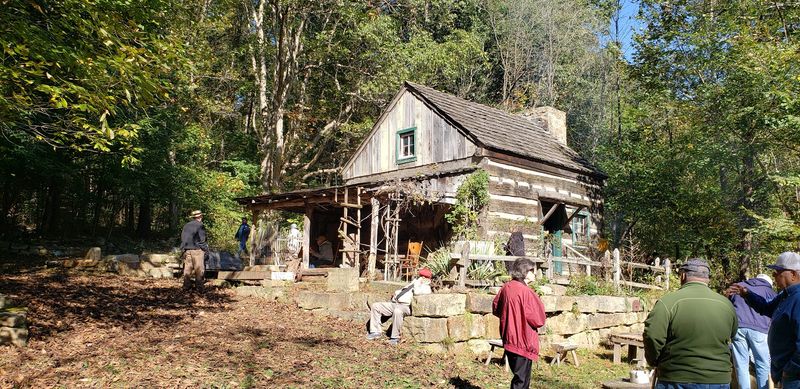
History does not always need a museum label to speak clearly. At Shubael Little Pioneer Village, located at 7590 E IN-66, Cannelton, Indiana 47520, six genuine 1800s log cabins stand on the grounds, each one carefully relocated and reconstructed to preserve its original character.
These are not replicas built to look old. They are the real thing, with hewn timber walls and hand-cut joinery that tells you exactly how much work went into building a life from scratch.
Inside each cabin, authentic artifacts fill the space. Old letters, worn photographs, iron cookware, and handmade furniture sit exactly where they might have been used by an Indiana family nearly two centuries ago.
You get a sense of how small and purposeful every object had to be. Nothing was wasted.
Nothing was decorative for its own sake.
Walking from cabin to cabin gives you a rhythm that feels almost meditative. Each structure has its own story, its own original owner, its own details that set it apart from the others.
A child’s cradle in one corner. A spinning wheel near a window.
A Bible left open on a table. These small touches make the experience feel personal rather than just educational.
You leave understanding pioneer life not as a distant concept but as something real people actually lived through every single day.
Try Watching the Edgar Carter Blacksmith Shop in Action
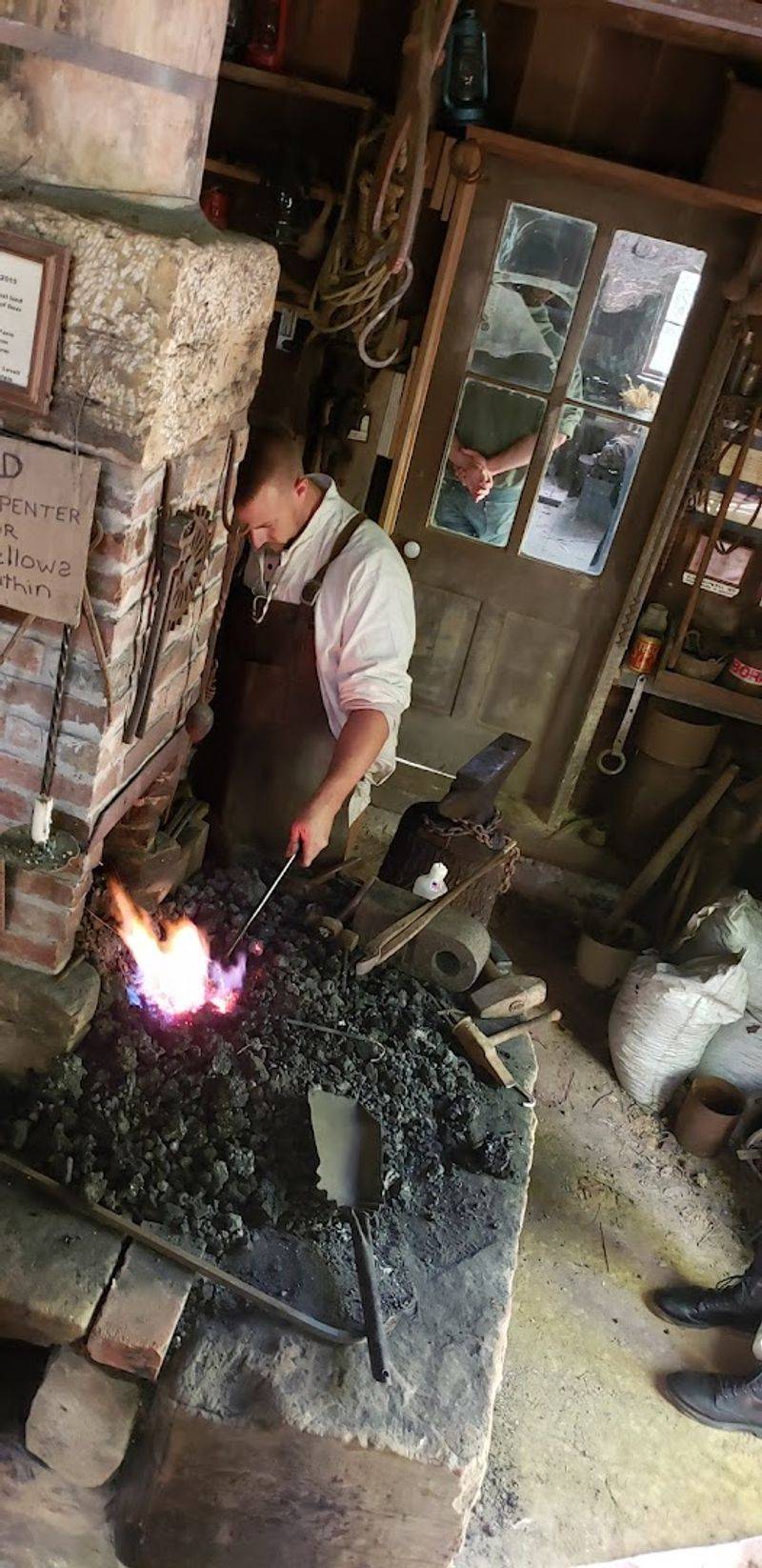
There is something almost hypnotic about watching a blacksmith work. The rhythm of the hammer, the orange glow of heated metal, the sharp hiss when iron meets water.
At the Edgar Carter Blacksmith Shop and Forge within Shubael Little Pioneer Village, that sensory experience is front and center. This is not a quiet exhibit.
It is a working demonstration of one of the most essential trades in 19th-century frontier life.
Blacksmiths were not optional in a pioneer settlement. They made the nails that held cabins together, the hinges on every door, the tools that broke ground for farming, and the horseshoes that kept transportation moving.
Without a blacksmith, a community struggled to function. The Edgar Carter shop honors that legacy by keeping the craft alive in a hands-on, visible way that no photograph or pamphlet could replicate.
When demonstrations are scheduled, watching skilled artisans at the forge is genuinely impressive. The precision required to shape metal at that temperature, using tools that have barely changed in two centuries, reminds you that pioneer craftspeople were not simple.
They were highly skilled workers whose knowledge was passed down through years of practice. Bring the kids for this one.
Watching fire and metal work together tends to hold attention in a way that quiet exhibits sometimes cannot. The blacksmith shop turns history into something you can hear, smell, and feel from just a few feet away.
You Should Smell Fresh Bread From the Rogier Beehive Oven
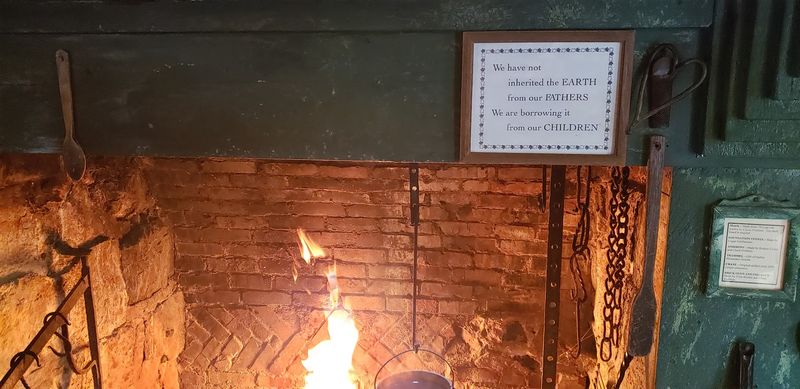
Before electric ovens, before gas ranges, before any of the kitchen technology we take for granted today, pioneer families relied on stone ovens to bake the bread that fed their households.
The Rogier Beehive Oven at Shubael Little Pioneer Village is a rare and authentic example of this old-world baking method, and during special events, it does more than just sit there looking historic.
It actually works.
The beehive shape was not a design choice made for style. It was engineering.
The rounded dome interior distributes heat evenly, allowing bread to bake consistently even without a thermostat or timer. A fire is built inside, the oven heats through the stone walls, and then the coals are raked out before the dough goes in.
The retained heat does the baking. It is a process that takes patience, skill, and experience to get right.
During events when the oven is in use, the smell of baking bread drifts through the village grounds in a way that feels almost cinematic. It is warm and familiar and completely out of place with the 21st century, which is exactly the point.
Tasting bread made this way, if samples are available during your visit, connects you to a daily ritual that pioneer families performed out of necessity rather than novelty. Few things at the village feel quite as immediate or as human as this simple, ancient act of baking.
Stroll the Wooded Paths Between Pioneer Structures
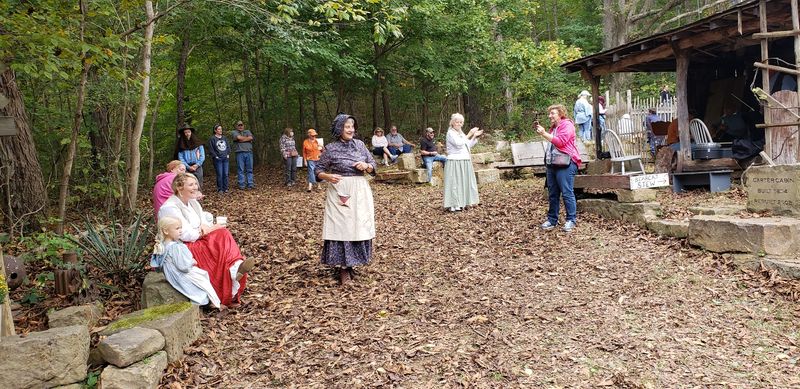
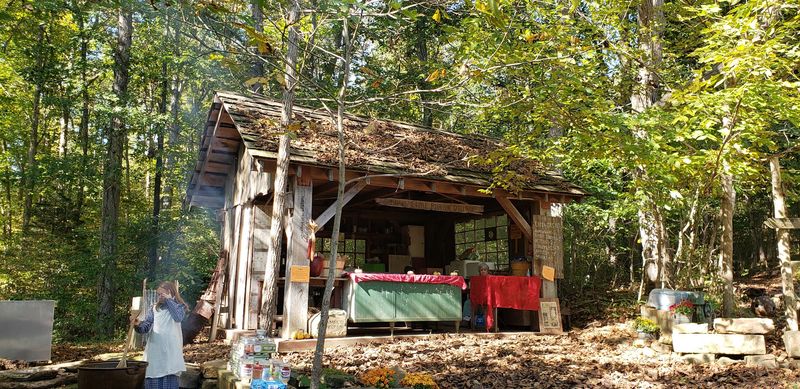
Shubael Little Pioneer Village is not laid out like a theme park with paved walkways and directional signs every ten feet. The grounds feel genuinely rural, with long primitive paths winding through thick woods that connect the various historic structures.
That layout is part of what makes the experience feel authentic rather than manufactured. You are not shuffled through a circuit.
You explore at your own pace, through trees and open clearings, much like an actual pioneer settlement would have been arranged.
The natural setting adds something that indoor museums simply cannot offer. Birdsong, rustling leaves, the crunch of gravel underfoot, the way sunlight filters through the canopy above the cabins.
These sensory details build an atmosphere that supports the history rather than competing with it. The land itself has meaning here.
Shubael Little, the man this village honors, originally settled this very land in 1837, making the surrounding woods more than just scenery.
Taking time to walk slowly between structures rather than rushing from one exhibit to the next pays off. Details emerge that you might miss otherwise.
The way a cabin sits on its foundation. The angle of a fence line.
The distance between buildings that suggests how spread out frontier life actually was. The wooded paths are not just connective tissue between the attractions.
They are part of the story. Give yourself enough time to actually walk them and look around rather than simply moving through.
Make Time for the Candlelight Tour Holiday Event
Visiting Shubael Little Pioneer Village during the Candlelight Tour is a completely different experience from a daytime visit, and that difference is worth planning around. The annual event, known as An 1800s Christmas in the Village, transforms the grounds after dark.
Lantern light flickers across the log cabin walls. Volunteers dressed in period clothing bring the holiday traditions of the 1850s to life in a way that is quiet, warm, and genuinely moving.
Pioneer Christmas celebrations looked nothing like the commercialized holiday season most people know today. Gifts were handmade and modest.
Decorations came from the natural world, pinecones, dried berries, candles, and evergreen branches. Food was central to the celebration, shared among neighbors as a gesture of community and gratitude.
The Candlelight Tour recreates that spirit without trying to make it flashy or theatrical. The simplicity is the point.
Beyond the Christmas event, the village also hosts an annual Fall Festival and Open House that features food, music, and rotating exhibits throughout the year. These events give you a reason to return more than once, because each one offers a different lens on the same history.
If your schedule allows only one visit, the Candlelight Tour tends to leave the strongest impression. There is something about lantern light and old timber and the smell of a wood fire that bypasses your analytical brain entirely and goes straight to something older and quieter inside you.
