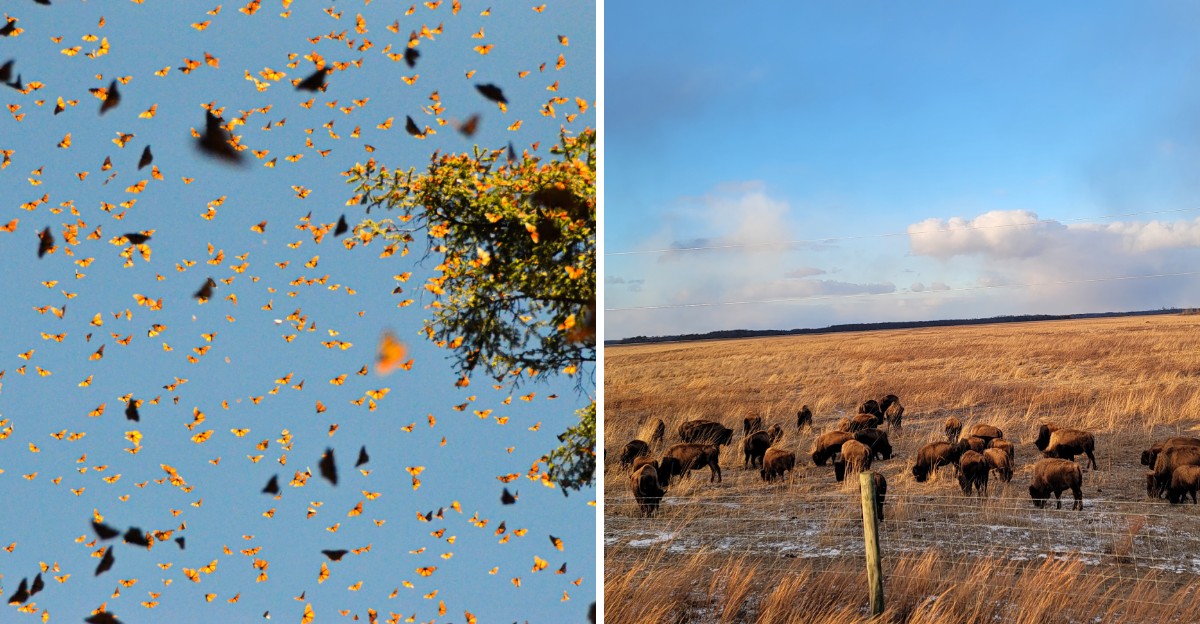
The butterfly show has a very annoying schedule. You only get a few weeks.
Miss the timing, and the prairie is still there. The bison are still there.
The trails are still there. The monarchs, however, have moved on toward Mexico.
That brief appearance is what makes this Indiana preserve so fascinating. In September, goldenrod turns the restored prairie bright yellow while migrating monarchs arrive by the hundreds and thousands to feed and rest.
Some gather in oak trees near a pasture where more than a hundred bison graze. The landscape was once farmland, but today it supports a completely different cast of characters.
And because the preserve is free and open from sunrise to sunset, there is no complicated event schedule to follow. The only challenge is showing up during the right few weeks.
Nine Kinds of Milkweed and a Prairie Built From Scratch
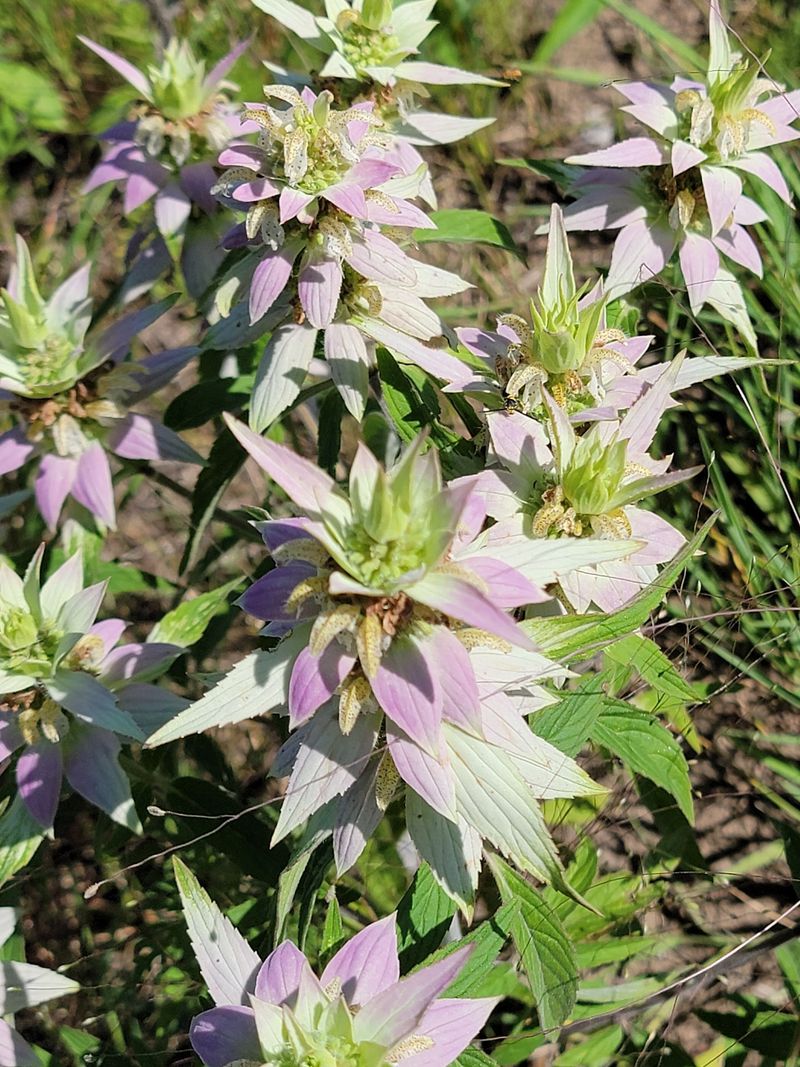
Monarch caterpillars eat one thing. Milkweed.
No milkweed, no monarchs, and that simple fact explains why this preserve matters so much to the species.
Nine different milkweed species grow across Kankakee Sands, from common milkweed to the swamp and butterfly varieties that thrive in wetter and sandier pockets. That variety spreads out the bloom and leaf-out schedule, so caterpillars find food across a longer stretch of the season.
Adult butterflies need fuel of a different kind. Goldenrods, bonesets, and ironweed fill the autumn prairie with nectar, which is the high-energy snack that powers a flight of well over a thousand miles.
Here is the part that surprises people. All of this was cornfields and soybeans not long ago.
The Nature Conservancy bought 7,200 acres in 1996 and began planting the land back into prairie and wetland, eventually seeding more than 600 native plant species into the sandy soil.
Habitat loss and disappearing milkweed are the biggest threats monarchs face, and this restoration answers both at once.
Walk slowly along a trail edge in early fall and check the undersides of milkweed leaves. Striped caterpillars, pale green chrysalises, and tiny yellow eggs all turn up if patience holds out for a few minutes.
It is habitat rebuilding you can actually see working.
The Fall Monarch Roost Near the Bison Pasture
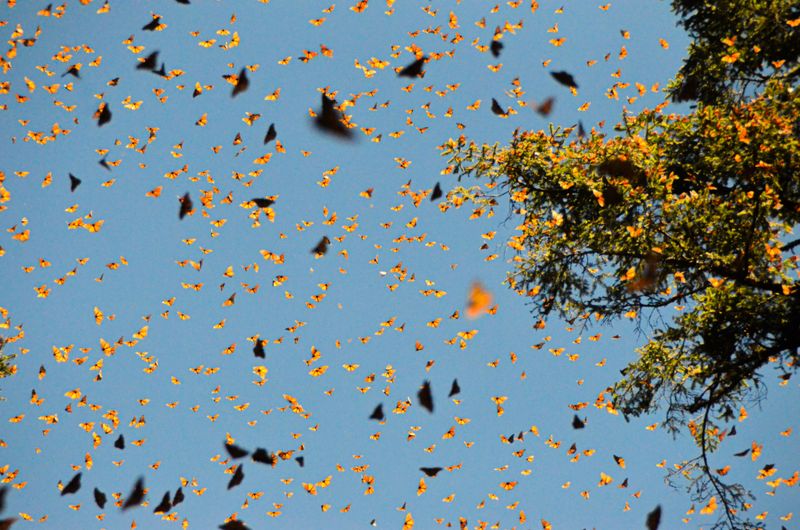
Late September is the sweet spot. As evening light softens over the prairie, monarchs begin drifting toward the oak trees near the Bison Viewing Area and settle in for the night, wings folded, clustered along the branches.
Thousands have been recorded gathering here before continuing south toward their overwintering forests in Mexico. From a distance, a roosting cluster looks like a strange crop of dried leaves hanging in the wrong season.
Then one shifts, and the whole branch flickers orange.
Morning is worth the early alarm too. Butterflies wait for the sun to warm their flight muscles, so they hold still longer, which makes them easier to watch and photograph without chasing anything around.
Timing shifts year to year with weather and wind, so flexibility helps. Cold fronts push big waves of migrating monarchs through, and a calm, sunny day right after one of those fronts often brings the heaviest numbers.
Bring binoculars. Stay on the gravel paths and keep a respectful distance from the oaks, since disturbed roosts waste energy the butterflies need for the rest of the journey.
Peak viewing generally runs through September and into October, though the prairie blooms keep attracting stragglers later in the fall. Nothing is guaranteed with wild migration, which is exactly what makes a good night here feel like a small piece of luck.
Bison Roaming Where Indiana’s Biggest Lake Used To Be
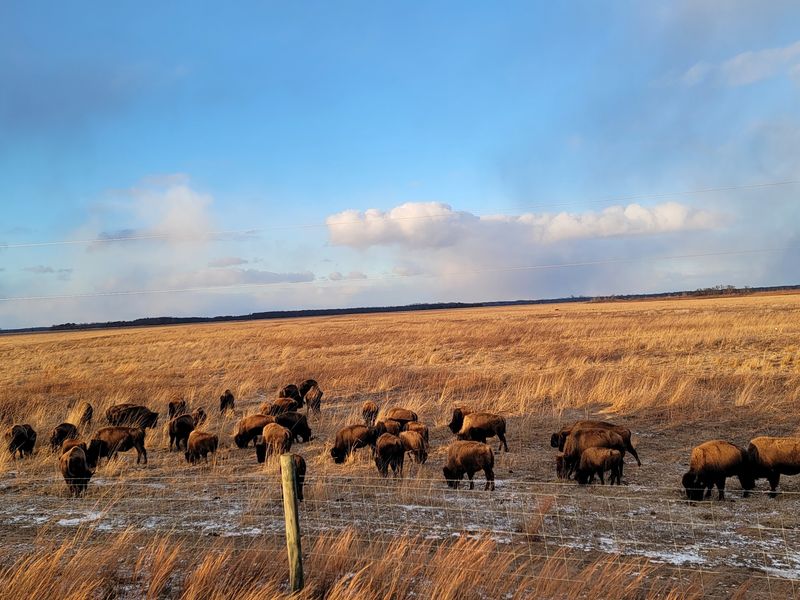
Bison in Indiana sounds like a tall tale until a shaggy brown shoulder rises out of the grass a few hundred yards away. A herd of over one hundred animals has grazed this prairie since 2016, and they are working residents, not scenery.
Their grazing keeps aggressive grasses in check, which lets wildflowers and milkweed thrive. Better flowers mean better fuel for butterflies, so the bison quietly help the monarchs.
The Bison Viewing Area sits off S 400 W in Morocco, reached by a gravel road with pull-offs where patient drivers often spot animals first. There is a small free parking lot, picnic tables, information panels, elevated viewing platforms with mounted scopes, and vault toilets.
Do not expect a petting zoo. The pasture is enormous, and some days the herd grazes far from any overlook.
Bring binoculars or a long camera lens, and give the loop road a slow drive if the viewfinders come up empty. Bison Rangers can be arranged by appointment for people who want the deeper story of the herd.
All of this unfolds over the old bed of the Grand Kankakee Marsh, where Beaver Lake, once the largest lake in Indiana, spread across the sand country before it was drained. The water is gone, but the wildness crept back.
Five Miles of Trails, Each With a Different Mood
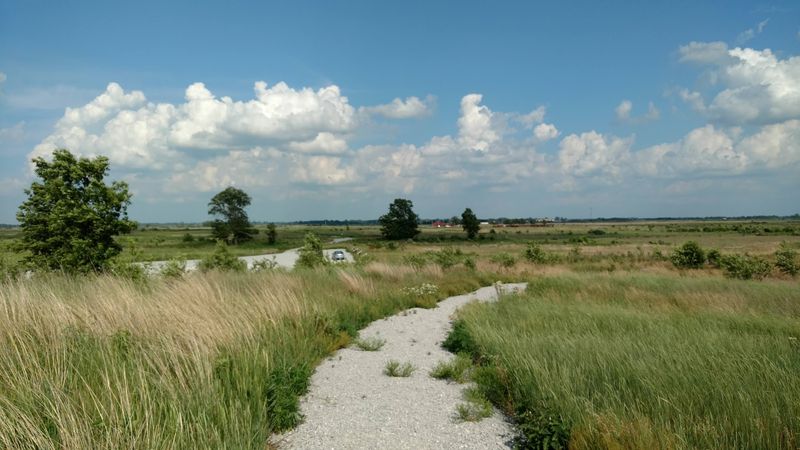
Anyone expecting a short stroll should look closer at the trail map, because there is more walking here than the parking lot suggests. About five miles of paths spread across the property, and each one has its own personality.
The Grace Teninga Discovery Trail runs a two-mile loop through open prairie where the grass can rise above shoulder height by autumn. The Conrad Station Savanna Trail covers 1.6 miles through oak savanna, with the ghostly remains of an old settlement tucked among the trees.
Shorter options exist for butterfly hunting. The Monarch and Pocket Gopher Trails at the Native Plant Nursery follow easy gravel and former nursery beds, with signs explaining the monarch and milkweed connection along the way.
There is also a one-mile Wet Prairie Trail loop for anyone drawn to soggier ground and the frogs that come with it.
A few practical notes. Shade is scarce out here, so a hat and water bottle beat regret, and after rain the low spots turn genuinely muddy.
Wind is a permanent feature of open prairie, which makes butterflies harder to spot but keeps the mosquitoes moving along.
Go slow. Prairie rewards people who stop, look down at the flowers, and let the grasshoppers scatter ahead of their boots.
A Birder’s Paradise Hiding in Plain Sight
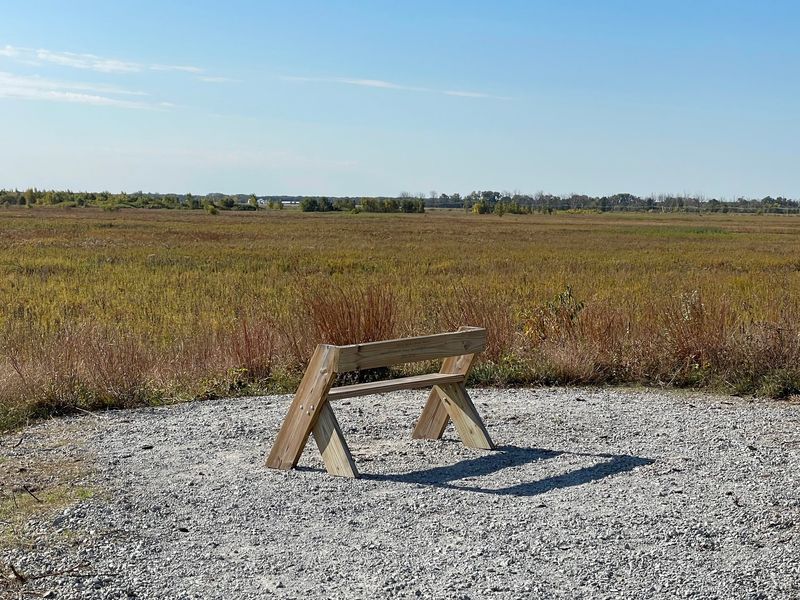
More than 240 bird species have been recorded at Kankakee Sands, which is a remarkable list for a place that was row crops three decades ago. Grassland birds are among the hardest to find in the Midwest, and several rare and endangered prairie species nest here.
Spring and early summer bring the loudest show, with March through June considered the strongest stretch for breeding and migrating birds. Visitors have reported hearing bobwhite quail calling across the grass.
Colder months shift the cast entirely. Wintering owls and hawks hunt the open fields, perching on fence posts and low shrubs where they are surprisingly easy to scan with binoculars.
Fall visitors chasing monarchs get a bonus soundtrack. Sandhill cranes and mixed flocks move through the region at the same time the butterflies are drifting south, so the sky stays busy.
Arrive early for the best results. Prairie birds are most active in the first couple of hours after sunrise, before the wind picks up and flattens the grass.
The viewing platform near the office at 3294 N US 41 in Morocco has spotting scopes mounted for public use, which helps anyone who forgot their own optics.
Patience is the main equipment. Sit still on a bench, let the prairie settle, and things start appearing.
Butterflies, Moths, Frogs and Other Small Wonders
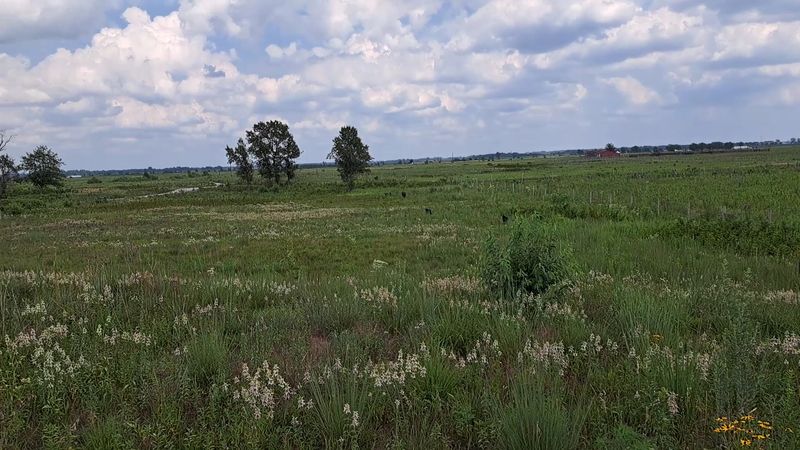
Monarchs get the headlines, but they share the prairie with a huge cast of smaller creatures. Sixty-eight butterfly species have been documented here, along with more than 900 kinds of moths, which is a staggering number for one property.
Dragonflies patrol the wet swales in summer, hovering and darting like tiny helicopters. Frogs set up a racket in the marshy corners after rain, loud enough to hear from the road on a still evening.
Badgers live here too, though they are shy and mostly leave evidence rather than appearances. Pocket gophers push up fresh mounds of sandy soil along the trails, which is oddly satisfying to spot once you know what you are looking at.
Deer wander the savanna edges in the soft hours of the day.
For anyone traveling with kids, this is the good stuff. Big animals require luck and distance, while insects are everywhere and happy to be watched from a foot away.
Pack a small magnifying glass or just use a phone camera to zoom in on flower heads. Ironweed and boneset blooms tend to be crowded with visitors in late summer and early fall.
Count the different butterflies spotted in an hour. The number usually climbs higher than expected, and it makes the whole prairie feel busier.
Free Entry, Easy Access, and a Driving Tour For Slow Days
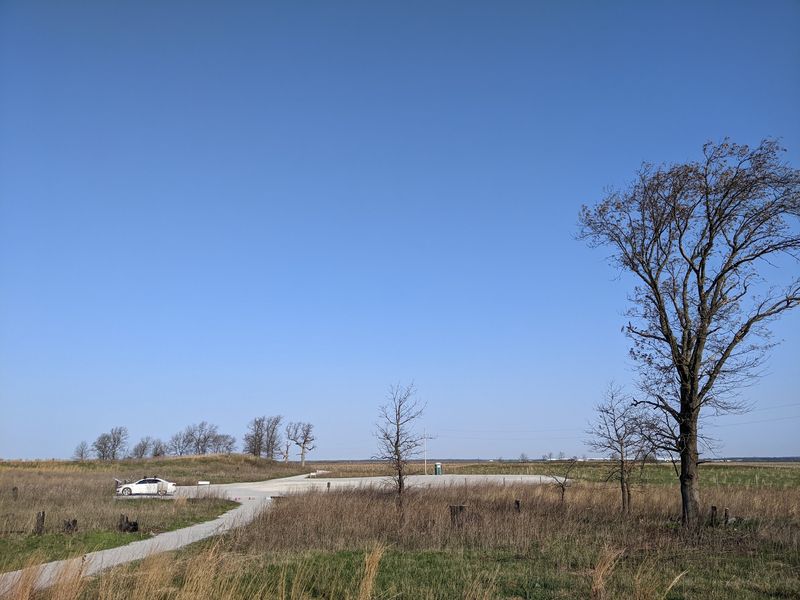
No entrance fee, no ticket booth, no reservation system. Kankakee Sands stays open to the public every day from sunrise to sunset, which makes a spontaneous detour off US 41 genuinely easy.
The Welcome Area near the preserve office is the smart first stop. Interpretive signage explains the restoration story, and there is a sheltered picnic area, a viewing platform with spotting scopes, and vault toilets.
Accessibility has been thought through. Both the Welcome Area and the Bison Viewing Area offer van-accessible parking, concrete paths, and platforms that work for visitors who are not up for a prairie hike.
On days when walking is not appealing, the self-guided driving tour covers the sprawling property in roughly two hours. Gravel roads and narrow shoulders come with the territory, so a relaxed pace is the right call.
The preserve connects with a much larger conservation landscape, linking over 20,000 acres of habitat and contributing to more than 36,000 protected acres of prairie and oak savanna reaching across the Indiana and Illinois line.
A few road-trip tips. Cell service can be patchy, food options are thin nearby, and the nearest services sit a short drive away.
Pack water, snacks, and binoculars. The prairie handles the rest.
