“Do you see it?” That is a surprisingly difficult question to answer while standing across from a courthouse in Alabama. The attic window is high above the square, and at first it looks like nothing more than old glass catching the light.
Then someone hands you binoculars, points upward, and suddenly there is a face staring straight back. Or at least, something that looks remarkably like one.
The story surrounding that image is even stranger. The courthouse survived a devastating fire, became tangled in accusations and local controversy, and somehow ended up with a ghost story that outlived nearly everyone involved.
The face has been part of that legend for generations. The building itself is perfectly respectable.
It is the window that refuses to behave.
The Attic Pane That Refuses To Let Go
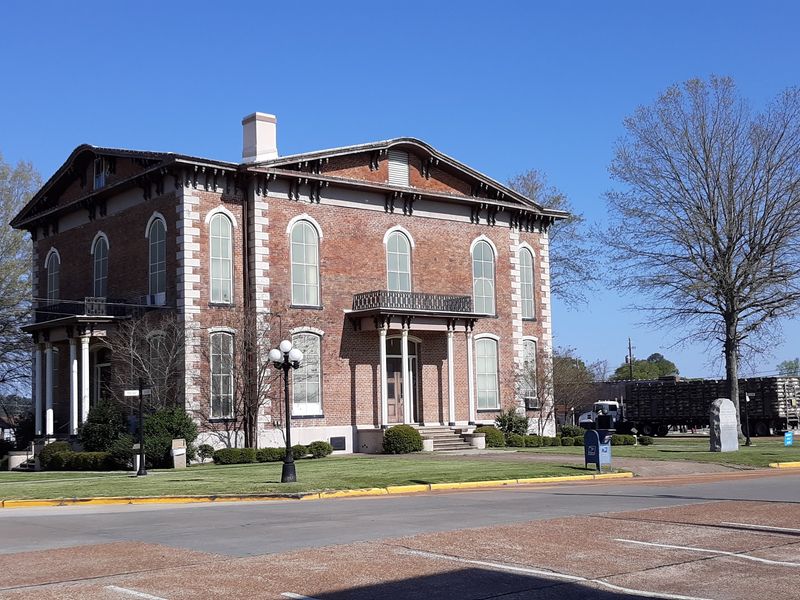
Look up. That is the whole instruction, and it is the reason most travelers pull off the highway in Carrollton in the first place, at 1 Courthouse Square, Carrollton, AL 35447.
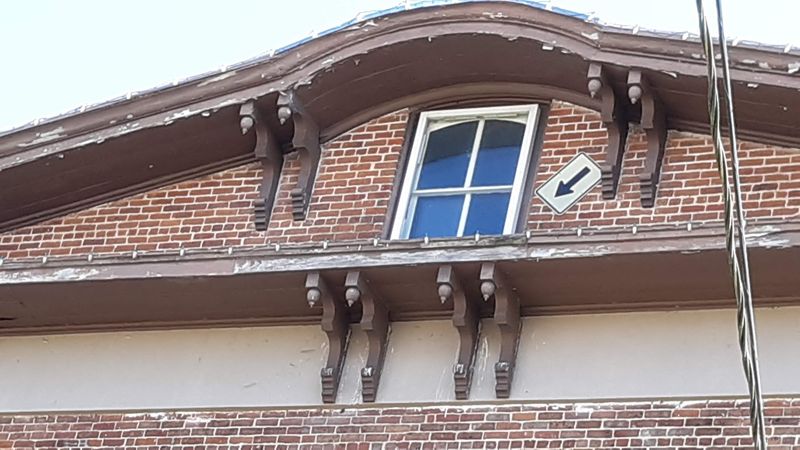
High in the north-facing garret window of the Pickens County Courthouse, a shape sits in the old glass that reads unmistakably as a human face. Shoulders, a jawline, dark hollows where eyes would be.
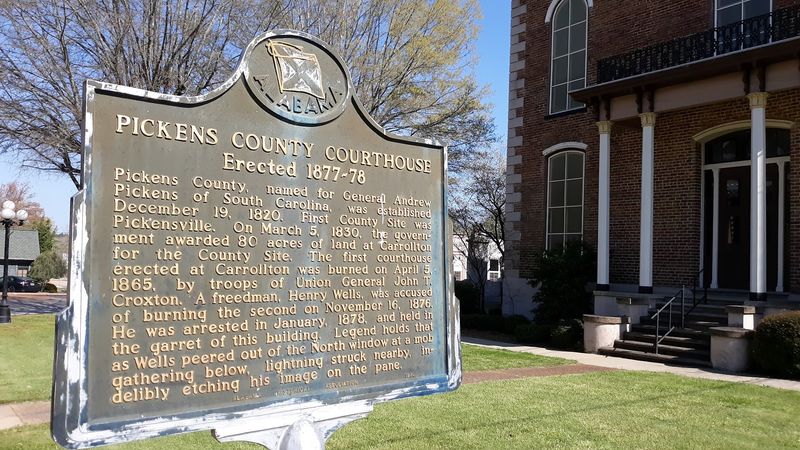
Local lore assigns the image to Henry Wells, a freedman accused of burning the county’s second courthouse in 1876.
According to the legend, Wells was held in the attic while an angry mob gathered below. Lightning cracked during a storm as he peered out, and his frightened features were seared into the pane forever.
Oddest detail of all? Reports say the face only shows from the outside.
Step into the building and the glass looks entirely ordinary, which somehow makes the whole thing stranger.
Timing helps when hunting for it. Softer, indirect light tends to bring out the contrast better than harsh midday glare, and patient viewers usually spot it faster than rushed ones.
Rain, decades of weather, and generations of curious eyes have not erased it. Whatever caused the marking, it has outlasted nearly every person who ever told the story, and that alone gives the little window an odd kind of gravity.
Three Courthouses, Two Fires, One Stubborn Town
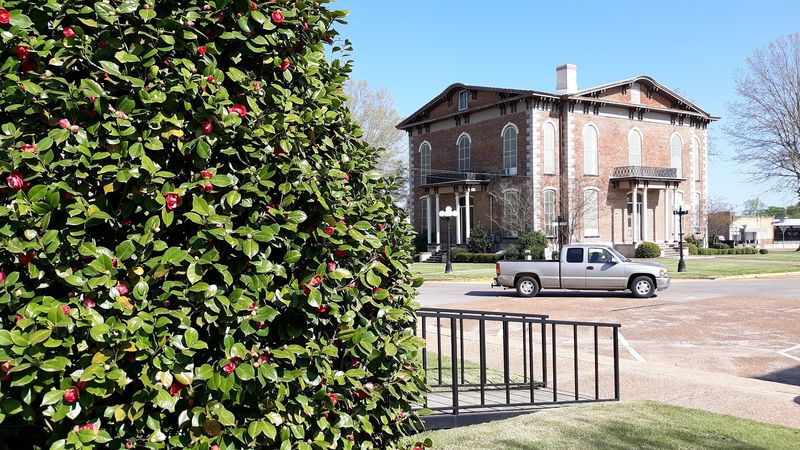
Few buildings have been rebuilt as many times as this one and still look this composed.
Pickens County was created on December 20, 1820, named for General Andrew Pickens of South Carolina, with Carrollton chosen as the county seat. The first courthouse went up in 1840 and served the community for roughly twenty-five years.
Then came April 5, 1865. Union troops under General John T.
Croxton set the building on fire, and the county’s legal records and civic center went up with it during the closing weeks of the Civil War.
Residents rebuilt in 1872. That second courthouse lasted barely four years before flames took it too, on November 16, 1876.
Twice burned, the county went at it again anyway. Construction on the current structure ran from 1877 into 1878, and that third building is the one standing today on the square in Carrollton.
Knowing the fire history changes how the place looks. Every arched window and stone detail represents a town that simply refused to accept an empty lot where its courthouse belonged.
Visitors who read the timeline before arriving tend to linger longer. The ghost story pulls people in, but the rebuilding story is what tends to stick with them on the drive home.
Italianate Details Worth Slowing Down For
Architecture buffs get an unexpected bonus here, because the building itself is a genuinely handsome piece of late 1870s design.
Set on Courthouse Square in Carrollton, Alabama, the two-story courthouse was built from buff-brown brick and trimmed in stone. The Italianate style favored balance and elegance, and this example delivers both without shouting about it.
Arched windows march across the facade in tidy symmetry. Small one-story porticos on each side rest on slender columns, giving the whole thing a stately, unhurried presence.
Take a slow lap around the exterior before hunting for the famous face. The brickwork and stone details reward a closer look, and circling the building also helps locate the correct viewing angle for the garret pane.
Photographers tend to do well in the late afternoon, when low sun rakes across the brick and picks out the ornamental trim. Morning works nicely too, with fewer shadows across the square.
What makes the design especially meaningful is context. A county that had just watched two courthouses burn chose permanence and civic pride over something quick and cheap.
Sturdy, symmetrical, and still fully in use, the building manages to be both a working government office and one of Alabama’s more distinctive architectural survivors.
Where The Legend And The Records Part Ways
Here is where the story gets genuinely fascinating, and a good deal more sobering.
Henry Wells was arrested in January 1878, charged with burglary and arson connected to the 1876 courthouse fire.
Newspaper accounts from the period report that he died of gunshot wounds five days after being shot during an attempted escape from arrest, and that a confession was obtained before his death, reportedly following beatings.
The most striking detail is a matter of dates. Records indicate the windows for the current courthouse were not installed until February and March of 1878, meaning Wells had already died before that pane was ever set in place.
So the image in the glass is real, and it is genuinely unexplained. Its connection to the lightning strike, though, does not survive a look at the calendar.
Historians generally read the legend as a blend of real events and folklore shaped by the tensions of the post-Reconstruction South. Federal troops withdrew in 1877, and violence against African American men rose sharply across the region in the years that followed.
Holding both threads at once makes the visit far more meaningful. The mystery in the window stays intact, while the human story behind it gets the seriousness it deserves.
Binoculars Bolted Across The Street, Because Of Course
Small towns rarely make ghost hunting this convenient, but Carrollton has thought the whole thing through.
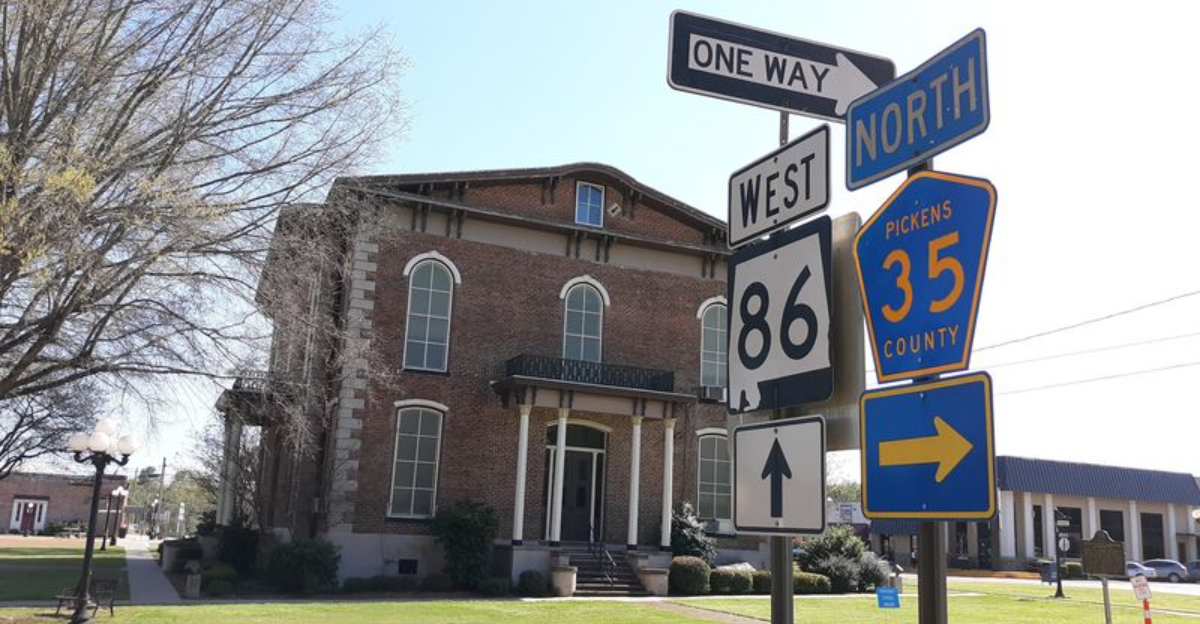
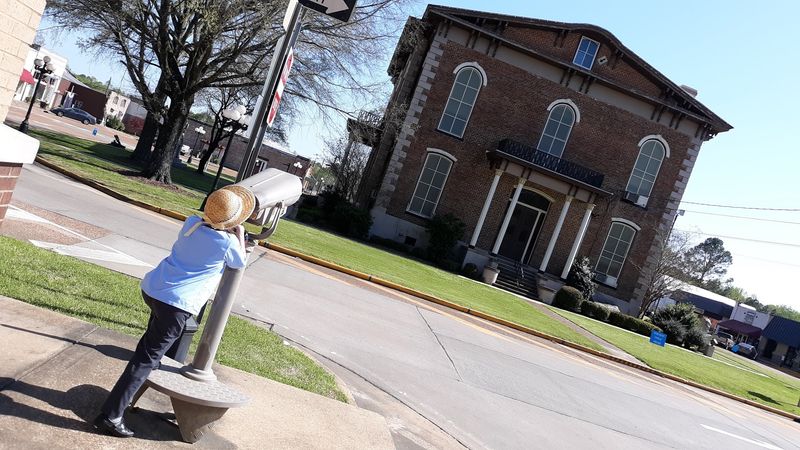
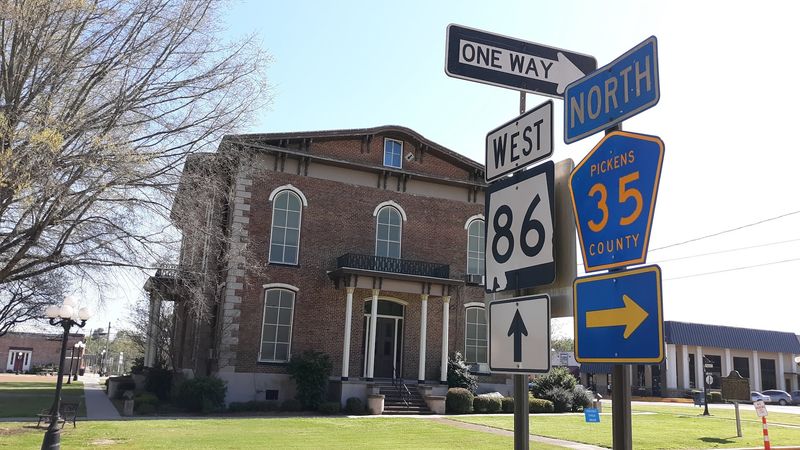
A reflective highway sign with an arrow points directly at the pane in question, sparing visitors the awkward business of scanning every window and hoping for the best. It is a wonderfully practical touch.
Across the street, permanent binoculars sit mounted and waiting. Lean in, adjust the angle, and the garret window jumps into focus, which is the difference between a maybe and a definite for most people.
Nearby stands a historical marker erected in 1974 by the Alabama Historical Association. It lays out the courthouse’s background alongside the legend, giving context before the staring contest begins.
No admission booth, no guided tour required, no need to time a visit around opening hours if the goal is just the window. The whole experience happens outdoors on the square.
Bring a camera with decent zoom if photographing the face matters. Phone cameras can struggle at that distance and height, especially in flat light.
Plan on twenty minutes minimum. Some travelers pop out of the car, peer up, and drive off in five, but the ones who read the marker and take a second look through the lenses tend to leave with a much better story.
A Play Performed In The Very Room Where It Happened
Theater inside a working courtroom is an unusual pitch, and it works better than anyone might expect.
Each year, a production titled The Face in the Courthouse Window is staged inside the courthouse’s own courtroom. Written by Barry Bradford, it dramatizes the burning of the second courthouse and the story of Henry Wells.
Performing it in that space collapses the distance between audience and subject. The wooden benches, the bench itself, the tall windows: all of it becomes set dressing that happens to be authentic.
Proceeds from the performances support preservation of the historic building, so ticket holders are directly helping keep the brick and glass in good shape.
The courthouse remains fully operational the rest of the year, housing the main administrative and court offices for Pickens County. It has been listed on the National Register of Historic Places and the Alabama Register of Landmarks and Heritage.
Anyone hoping to catch the play should check dates in advance, since it runs on a limited annual schedule rather than year-round.
Even outside performance season, the building’s dual identity is easy to feel. Business gets conducted, paperwork gets filed, and above it all sits a window that has kept a town talking for more than a hundred years.
Rolling Country, Steamboats, And A Wartime Chapter Nearby
Carrollton makes a fine anchor for a day of wandering, and the surrounding county has more layers than its size suggests.
West-central Alabama here is a landscape of timbered uplands and gently rolling plains, the kind of driving country where the road curves for no particular reason and nobody minds.
Over in Aliceville, history takes a sharp turn. During World War II, the town hosted one of the largest German prisoner of war camps in the nation, a chapter that surprises plenty of first-time visitors to the area.
Pickensville offers something else entirely. The visitor center there is home to the USS Montgomery, one of very few steamboats listed on the National Register of Historic Places.
String those stops together and a single afternoon covers the Civil War, a global conflict, river transportation, and a genuinely unexplained window. Not bad for one rural county.
Courthouse Square itself stays quiet and walkable, with the unhurried rhythm that makes small-town Alabama easy to enjoy. Benches, shade, and a slow pace.
Best approach is to arrive without a tight schedule. The window is the headline attraction, but the drive between these scattered landmarks is where the region really shows its character.
