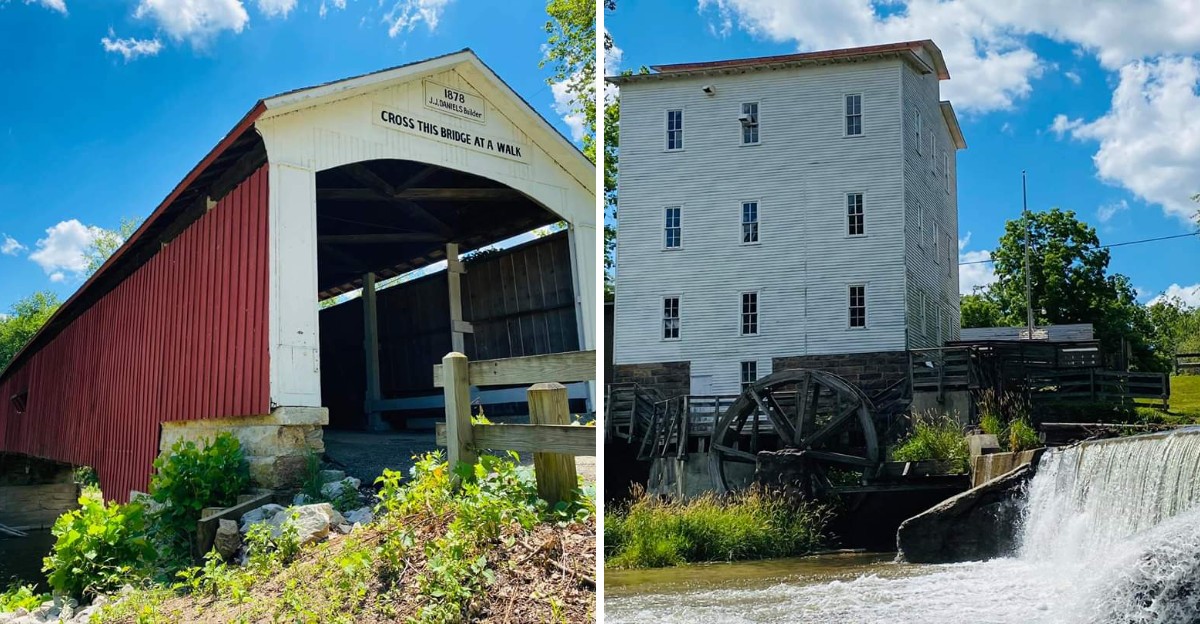
A water turbine installed in 1886 still spins inside an old three-story mill here. It powers the northern half of the building, using nothing but creek water.
I love that a machine older than the light bulb’s big debut still shows up for work.
Right next door, a red covered bridge stretches across the same creek. It was built in 1867 for wagons.
It has outlasted three major floods without structural damage.
The tiny village around them is home to only about 20 people. Then one October week arrives, and the whole place fills with crafts, pies, and color.
I believe this corner of Indiana proves history doesn’t have to sit behind glass. Here, it hums, creaks, and invites you to walk right through it.
A Creek-Powered Machine Still Earns Its Keep
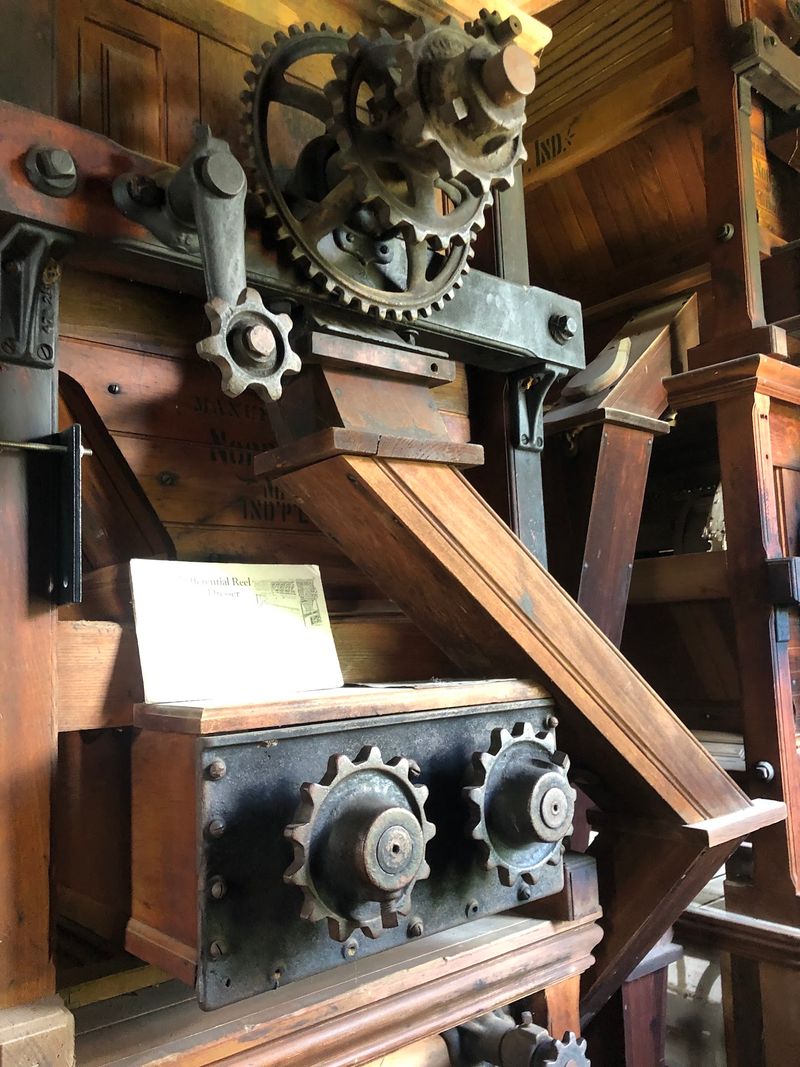
Water from Big Raccoon Creek still turns real machinery at the Mansfield Roller Mill. That’s not a recording or a clever display.
It’s an original Rodney Hunt Turbine, installed in 1886.
The turbine powers the northern half of the mill today. You get to see 19th-century engineering doing the same job it did generations ago.
Demonstrations happen during festivals and special events. That’s your chance to watch the equipment come alive with motion and sound.
The mill is a historic gristmill, but a specific kind called a roller mill. Rollers replaced old grinding stones to make finer white flour.
It was a big upgrade for local farmers and bakers back then.
The building rises three stories, so there’s plenty to explore. Each floor shows a different part of how grain turned into flour.
Kids usually grasp this faster than any textbook could explain it. Seeing gears and belts actually move makes the whole process click.
Here’s a practical tip for planning. Aim your trip around a festival or summer opening to catch the machinery running.
A quiet mill is still neat to see. A working mill, though, is the real show.
Two Centuries of Grit Live Inside These Walls
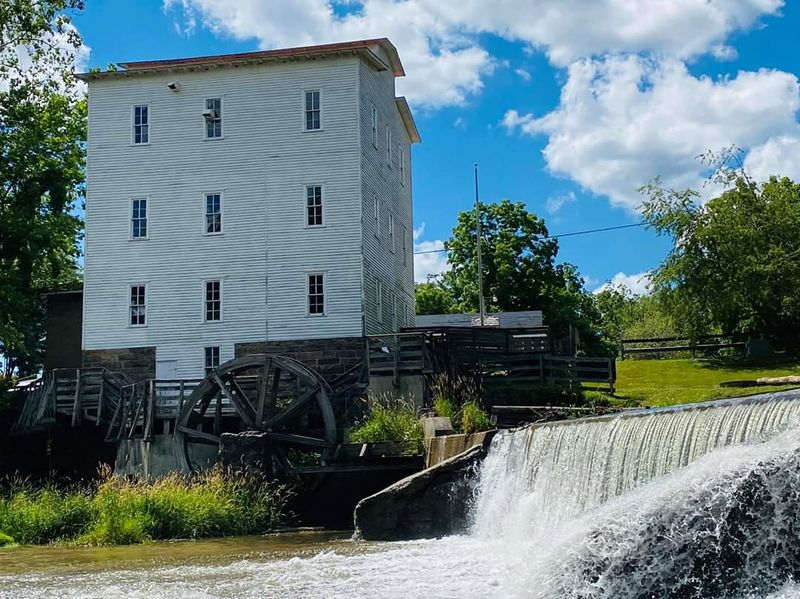
Long before the current building, a simple log mill stood on this spot. James Kelsey and Francis Dickson built it around 1819 to 1821.
The village wasn’t even called Mansfield then. It went by New Dublin.
A sawmill joined the north side in 1830. Then a flood damaged the dam, and things got shaky.
Jacob Rohm bought the mill in 1875 after that flood. By 1880, he had rebuilt it into the structure you see now.
Rohm switched from stone grinding to roller milling. He helped bring that modern method to the area.
The Rodney Hunt Turbine came in 1886, and a Lefel turbine followed in 1889. Commercial milling wrapped up around 1967 or 1968.
The story takes a fun turn in the 1970s. Actor Edward Tex Terry bought the mill and dreamed of building a frontier town.
That plan never fully happened, and he later sold it. In 1995, the Dalton and Hutcheson families donated the mill to the Indiana DNR.
Restoration work ran from 1998 to 2005. The mill also landed on the National Register of Historic Places in 1990.
Not bad for a log shack’s great-grandchild.
Red Walls, White Roof, and a Very Long Stroll
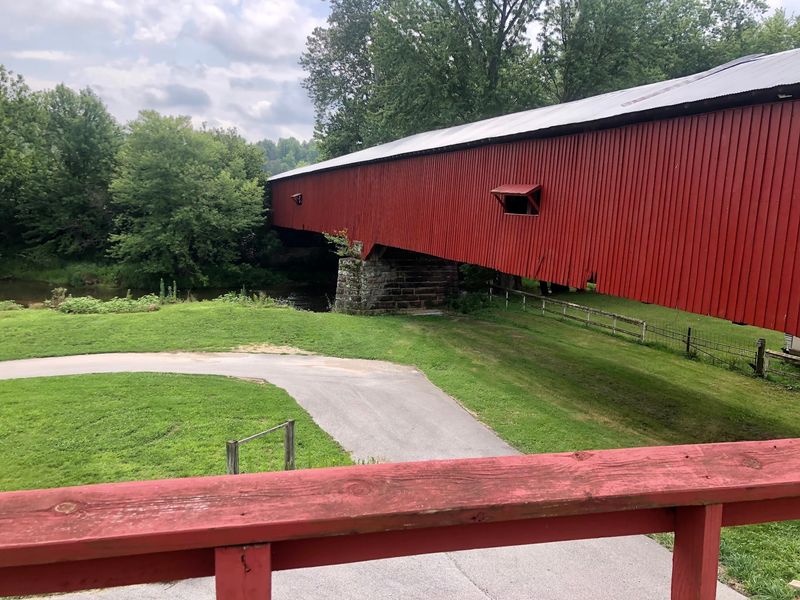
Red walls and a white roof make the Mansfield Covered Bridge easy to spot. It stretches across Big Raccoon Creek like something from a postcard.
Joseph J. Daniels built it in 1867.
He used a double Burr Arch, double span truss design.
That fancy name simply means strong wooden arches and trusses share the load. Two spans carry the bridge over the water.
Sources list its length at either 247 or 279 feet. Either way, it ranks among the longest covered bridges in Parke County.
The bridge rests on hewn limestone block abutments. Those sturdy stone bases help explain its long life.
It measures 16 feet wide with 10 feet, 6 inches of clearance. Tall trucks, please find another route.
Here’s the surprising part. The bridge is open all year, and cars can still drive through it.
It keeps a 10-ton load limit, a leftover from its wagon days. Foot traffic is welcome at all times too.
Walking it slowly is the best move. You can study the wooden arches up close and hear the creek below.
Bring your camera, because this bridge photographs beautifully from almost any angle.
Floods Tried Their Best and Lost
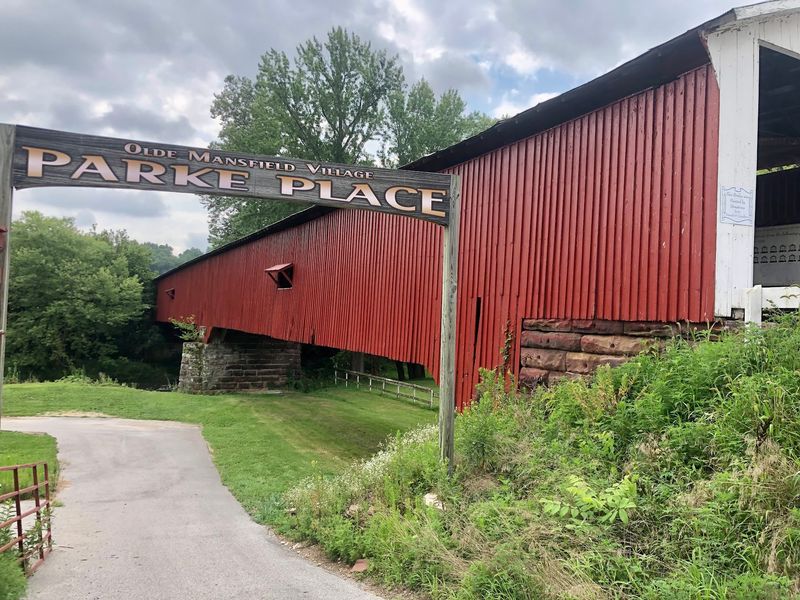
Just one year after it opened, the bridge faced its first big test. A major flood hit in 1868.
The bridge held strong. Then came the floods of 1913 and 1957, and it held again.
None of those floods caused structural damage. That’s an impressive record for a wooden bridge built in the 1860s.
Credit goes partly to smart design and solid stonework. Daniels clearly built it to stay put.
Extra protection arrived in the early 1960s. The Mansfield Flood Control Dam was built upstream on the creek.
That dam helps guard the bridge from future high water. Think of it as a bodyguard for a very old friend.
Care didn’t stop there. Repairs in 1980 addressed the abutments, roof, and deck.
The roof and deck were replaced again in 1990. Keeping a historic bridge healthy takes steady effort.
The bridge joined the National Register of Historic Places in 1978. It beat the mill to that honor by twelve years.
Next time you stand inside, look at those beams with fresh respect. They’ve seen a lot of water roll by.
Plan Your Trip Around the Open Days
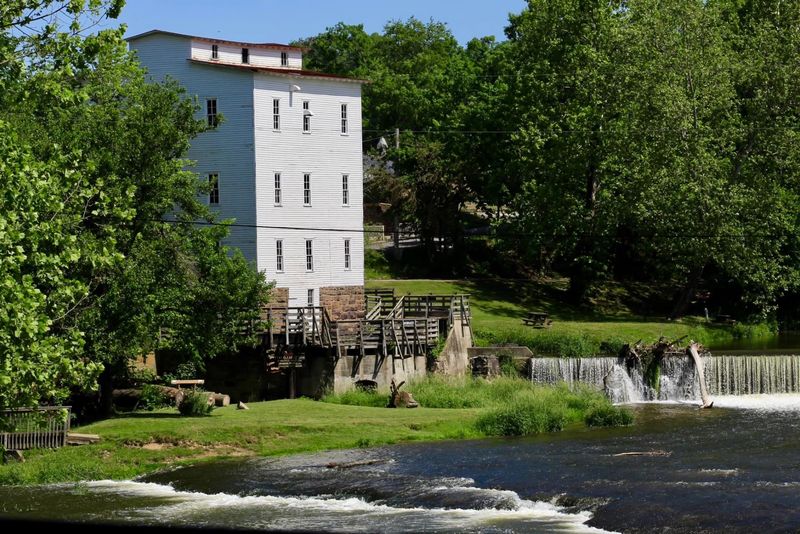
Timing matters more here than at most attractions. The mill keeps seasonal hours, so a little planning saves disappointment.
The Mansfield Roller Mill opens to the public during summer months. It also opens for the Mushroom Festival in April.
During the Covered Bridge Festival, it’s open daily from 10 AM to 4 PM. In 2026, that festival runs October 9 through 18.
Good news for your wallet too. Visiting the mill itself has no fee.
The Indiana Department of Natural Resources maintains the site. Raccoon Lake Interpretive Services from nearby Raccoon State Recreation Area operates it.
The mill’s gift shop is closed right now. Don’t expect a souvenir aisle inside.
The bridge is a different story. It stays open every day of the year.
So even on a closed mill day, the trip isn’t wasted. You can still walk the bridge and admire the mill from outside.
Checking the DNR schedule before you leave is smart. Hours can shift with events and seasons.
A quick look ahead turns a gamble into a sure thing. Your future self will thank you.
Ten Days When a Village of 20 Welcomes a Crowd
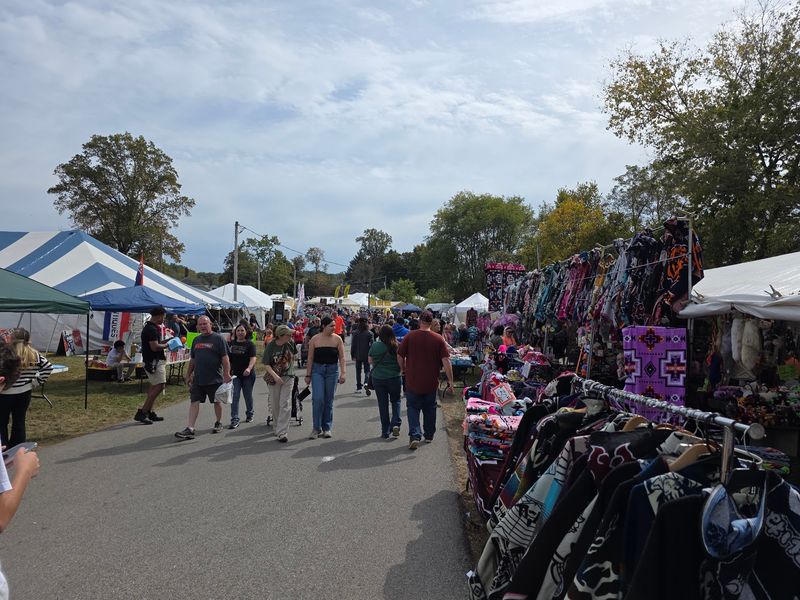
About 20 people live in Mansfield year-round. Then October arrives and everything changes.
The Parke County Covered Bridge Festival runs for 10 days. It starts the first full weekend of October.
Estimates put festival attendance between 1.25 and 2 million visitors a year. That’s across the county, but Mansfield is a key stop.
Hundreds of vendors sell handmade crafts and antiques. Shopping for gifts gets a lot more fun here.
The covered bridge closes to cars during the festival. Pedestrians take over, which makes strolling across much easier.
The mill stays open daily for the event. Equipment demonstrations often happen too, so you can watch the old turbine at work.
Fall color usually adds a bonus layer of beauty. Red bridge, gold leaves, and blue sky make a fine combo.
A practical tip: start early in the day. A huge event means parking and paths fill up.
Comfortable shoes are a must. You’ll cover more ground than expected.
Prefer peace and quiet? Then visit on a summer weekday instead.
Both versions of Mansfield are worth meeting.
Persimmon Treats and Festival Comfort Food
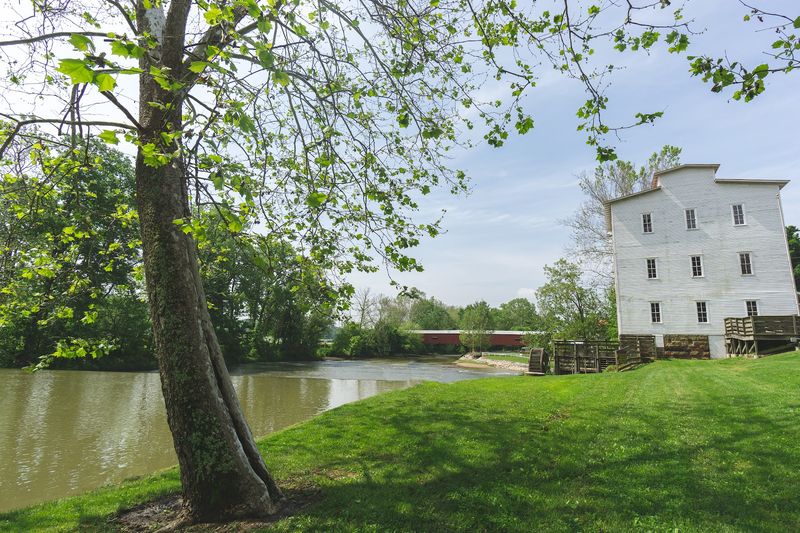
Persimmons are a true Indiana treasure, and festival time proves it. Right in front of the mill, Sherry’s Sugar Shack sells homemade persimmon baked goods.
If you’ve never tried persimmon, this is a great place to start. The fruit grows wild in southern Indiana and shines in sweet desserts.
The Covered Bridge Festival brings plenty of other classic eats. Chicken noodles are a popular favorite.
Apple butter shows up too, along with homemade pies. It’s the kind of food that feels like a family reunion.
Eating outdoors adds to the fun. The creek and bridge make a scenic backdrop for a snack break.
Here’s a helpful tip. Grab baked goods earlier in the day, since homemade items can sell out.
Bringing a small cooler or tote is smart. That way, treats survive the ride home.
Other village events add more flavor through the year. Mansfield hosts a Beans and Cornbread Day, which sounds exactly as cozy as it is.
No fancy restaurant needed here. Simple, homemade food fits this old mill village perfectly.
Slow Down by the Water for a While
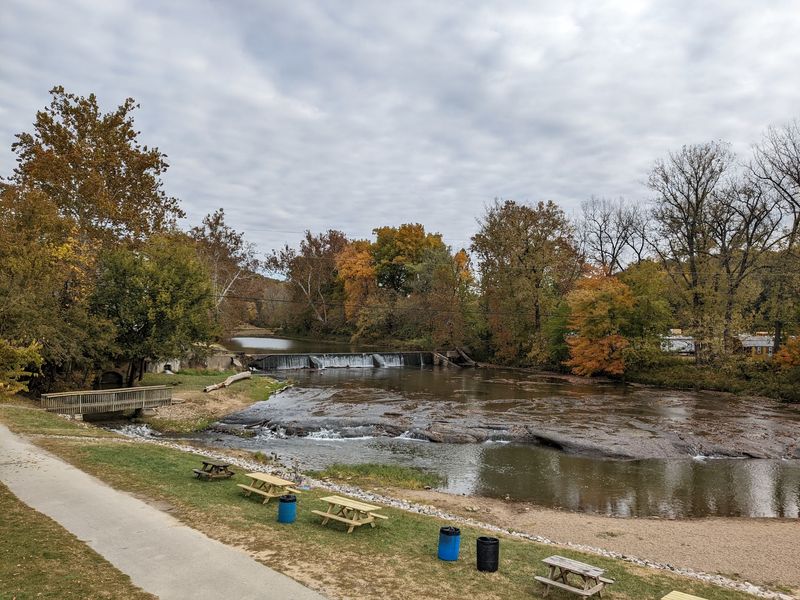
Picnic tables near a rushing dam? Yes, please.
Next to Big Raccoon Creek, a scenic park and Creekside Walk make relaxing easy.
You’ll find picnic seating and public restrooms. Those small comforts matter on a long day trip.
Pack a lunch and claim a table. The sound of the water beats any playlist.
Fishing is another option along the creek. Just follow Indiana’s fishing license rules before casting a line.
The views are the real prize. From the creek, you can see both the mill and the covered bridge together.
That’s the shot photographers and artists love. The red bridge, the old mill, and moving water create a classic scene.
Families with younger kids will appreciate the open space. It’s a nice break between exploring mill floors and walking the bridge.
Bring sunscreen in summer and a jacket in fall. Creekside air can feel cooler than you expect.
Don’t rush this part of the visit. Sitting still might be the best way to soak in the history around you.
Sometimes the best attraction is simply a good bench and a great view.
Finding Your Way to the Covered Bridge Capital
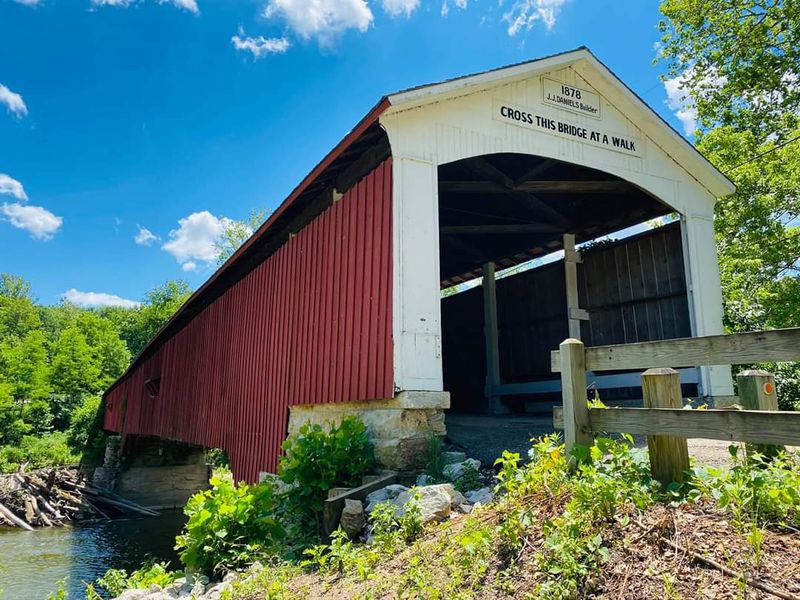
Getting here is part of the adventure. Mansfield sits on Indiana 59, about 50 miles west of Indianapolis.
That makes it an easy day trip from the capital city. The drive slowly trades traffic for farmland.
Plug in 6087 Mill Rd, Carbon, IN 47837 for the mill. The old Mansfield Road is sometimes called County Road 37 now.
Don’t be thrown by the Carbon mailing address. You’re still heading to the village of Mansfield.
Parke County calls itself the Covered Bridge Capital of America. It’s home to 31 or 32 covered bridges, depending on the source.
So the Mansfield Covered Bridge is just one stop on a bigger tour. Many visitors link several bridges into one scenic drive.
Raccoon State Recreation Area is nearby too. Its interpretive staff run the mill, so the connection makes sense.
In summer, Saturday craft sales pop up in Mansfield during June, July, and August. That’s a nice reason to visit outside festival season.
Bring a paper map as backup. Rural signals can get spotty.
Honestly, getting a little lost in Parke County isn’t the worst thing. Another bridge is probably around the bend.
