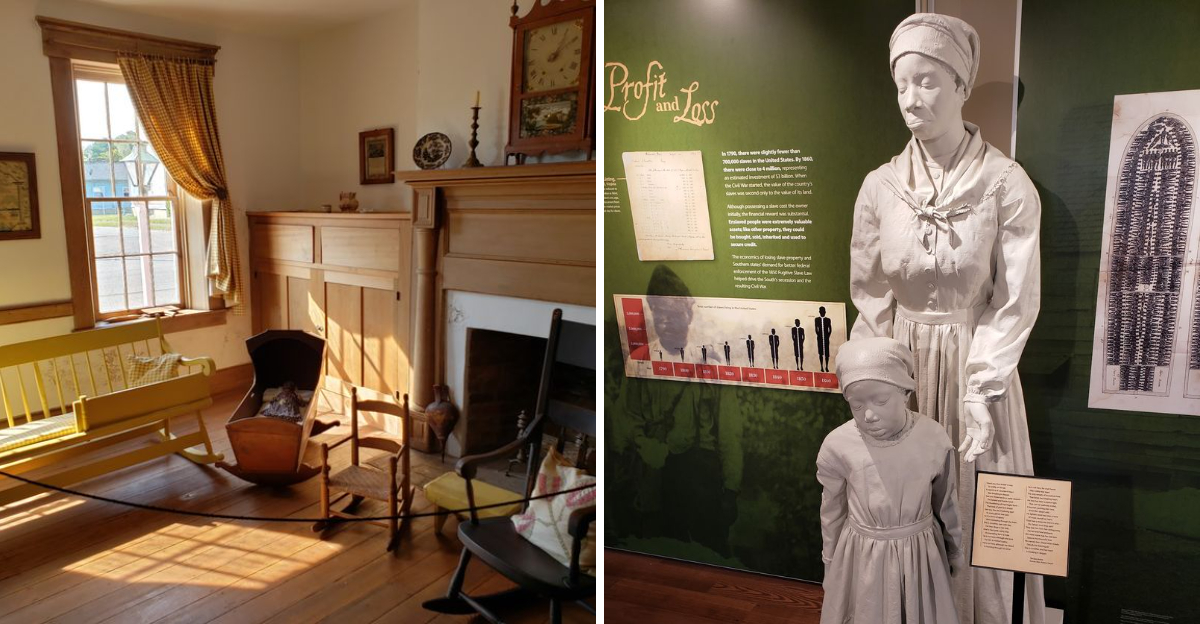
What if the most important parts of a historic house were the spaces you could barely see? Beneath the floors and behind the walls of one Indiana home are hidden passageways connected to the Underground Railroad and the people who risked everything while seeking freedom from enslavement.
Walking through the house offers a closer look at how these spaces were used and what life was like for those involved in this dangerous chapter of American history.
The experience goes far beyond simply touring an old building, giving visitors a chance to understand the courage, secrecy, and determination that shaped its story.
If you enjoy historic places that reveal stories you cannot fully understand from a textbook, this is a destination worth exploring.
The Hidden Crawl Space Upstairs Still Gives Me Chills
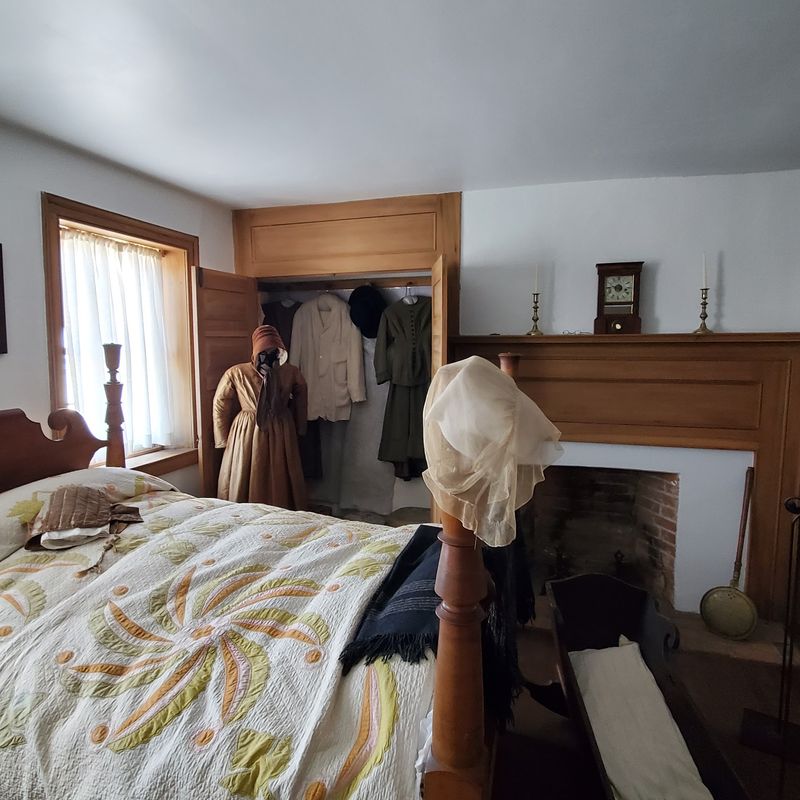
Our guide walked us into an upstairs bedroom, pointed at a low panel in the wall, and my brain took a second to catch up. It was a door.
A very small one.
Behind it sits a narrow crawl space that ran along the length of the room, and the guide explained that as many as fourteen to twenty people could tuck themselves inside.
The bed could be slid across the opening to hide it completely, so anyone glancing around the room saw nothing but furniture and quilts.
What struck me most was the size. Imagine crouching in there, listening to boots on the floorboards, holding your breath with strangers who had become your only protection.
Kids on our tour got very quiet at that point, which told me everything about how powerful the moment is. Adults did too.
Photographs are hard in that room because the light is low and the space is tight, so I would suggest just looking instead of fussing with your phone. The story lands harder when you are not staring at a screen.
If you take only one memory home from Fountain City, it will probably be that small door. It turns a history lesson into something you can nearly feel in your knees and shoulders.
A Basement Kitchen and Indoor Well That Solved a Dangerous Problem
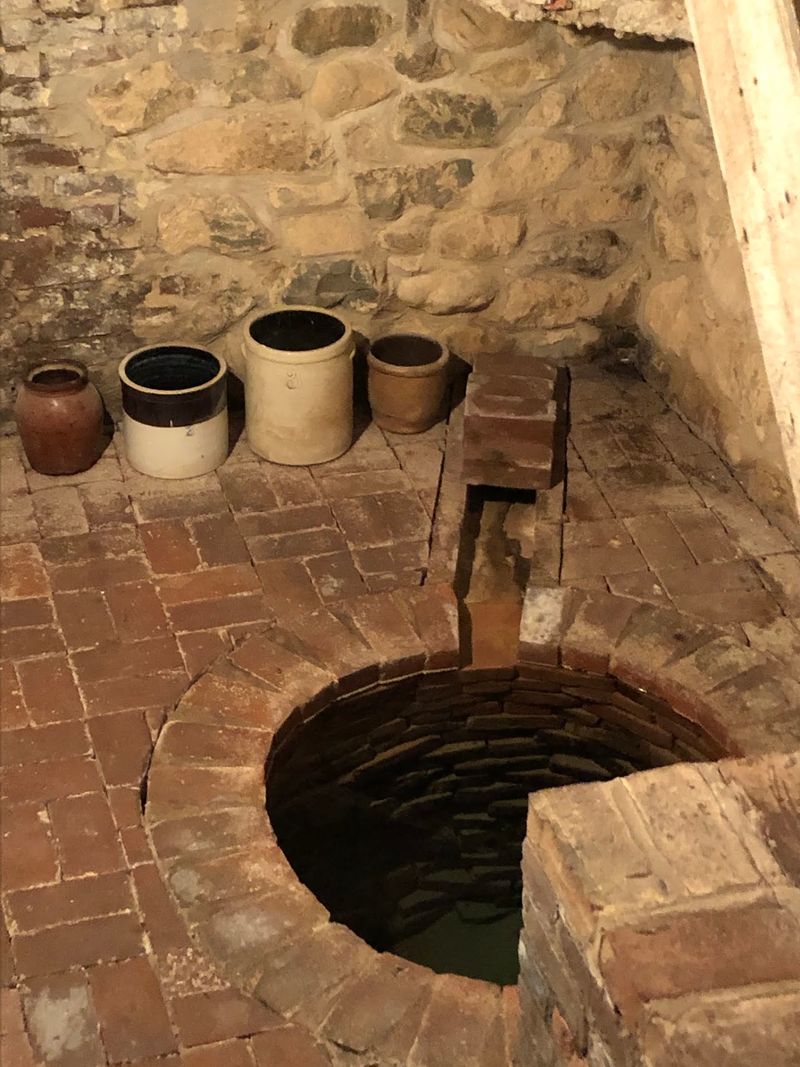
Here is the detail that made me admire Catharine Coffin more than any plaque could. Feeding twenty hidden people means cooking a lot of food, and hauling buckets of water from an outdoor well at odd hours would have looked suspicious to every neighbor with a window.
So the house was built with a spring-fed well right inside the basement.
Water came up quietly, at any hour, without a single trip outside. The basement kitchen sat beside it, complete with a hearth big enough to prepare meals for far more mouths than one family needed.
Our group ended the tour down there, and honestly it was the highlight. One visitor on a scorching summer day joked that the cool basement air alone was worth the ticket, and after climbing through the upper floors I understood.
The practicality of it all is what sticks with you. This was not a dramatic secret tunnel or a Hollywood trapdoor.
It was smart planning, done in advance, by two people who knew exactly what they were choosing to risk.
Stand near that well and think about the laundry too, because washing bedding for that many guests took water and time. Every ordinary chore in this house doubled as a form of quiet resistance.
You Really Should See How Many Exits One Room Has
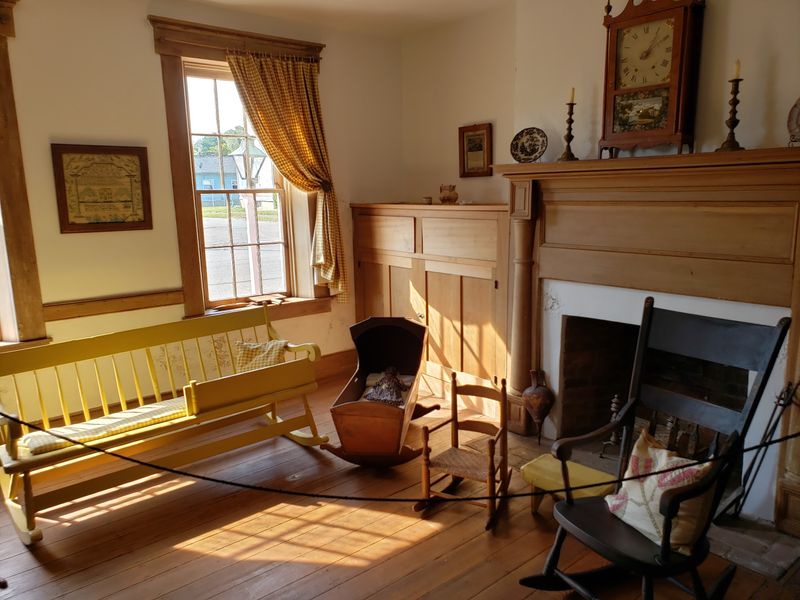
Count the doors. Seriously, that became a small game for our group as we moved from room to room.
Most rooms in the Coffin home have at least two exits, and one reportedly has five. That is a wild number for a family house of this size, and it was no accident.
If slave hunters ever came through the front, people inside needed more than one way to slip away. Multiple exits meant no room was ever a trap.
Then there is the side door with alley access, which let a wagon pull right up to the house so people could climb out without being seen from the street. That kind of thinking is everywhere once you know to look for it.
What I appreciated is how the guide let us notice things ourselves before explaining them. Nobody lectured.
We just started spotting the patterns, and the house began to make sense in a completely different way.
Architecture fans will get a lot out of the visit even beyond the Underground Railroad story, because the Federal-style brick construction from around 1838 and 1839 is beautifully preserved.
The furnishings match the 1839 to 1847 years the family lived here, plain and practical in true Quaker fashion.
Bring your curiosity and ask questions. The guides clearly enjoy them.
Climb Into the False-Bottom Wagon at the Interpretive Center
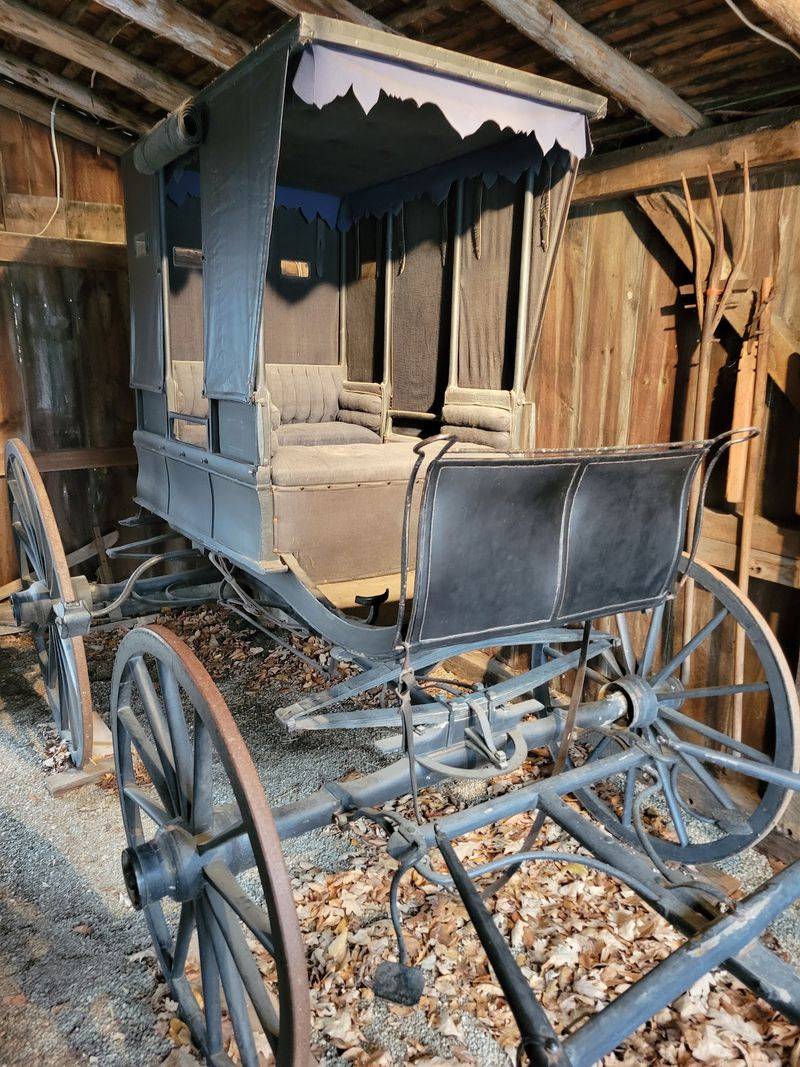
Every visit starts next door at the Interpretive Center, and I would not skip a minute of it. There is a short introductory film that sets up the era and the family before you ever step into the house.
Then comes the part that surprises people.
Inside the museum there is a mock false-bottom wagon, built so you can actually lie down in the hidden compartment underneath the cargo space. It is a simple exhibit and it is devastatingly effective.
You feel the boards close in above you. You imagine miles of rutted road, no light, no idea how far you have left to go.
My advice is to do this before the house tour, because it changes how you read every hiding spot you see afterward. The exhibits also cover the routes that brought freedom seekers north after crossing the Ohio River at Madison, Jeffersonville, or Cincinnati.
Three of those major routes converged right here, which is exactly why this house became so busy.
The Smithsonian named the Interpretive Center one of twelve new museums worldwide worth visiting back in 2016, and the displays hold up. Hands-on panels keep younger visitors engaged without watering down the seriousness of what happened.
Give yourself extra time to read the individual stories on the walls. They are the heart of the place.
Guides Who Turn Names Into Real People
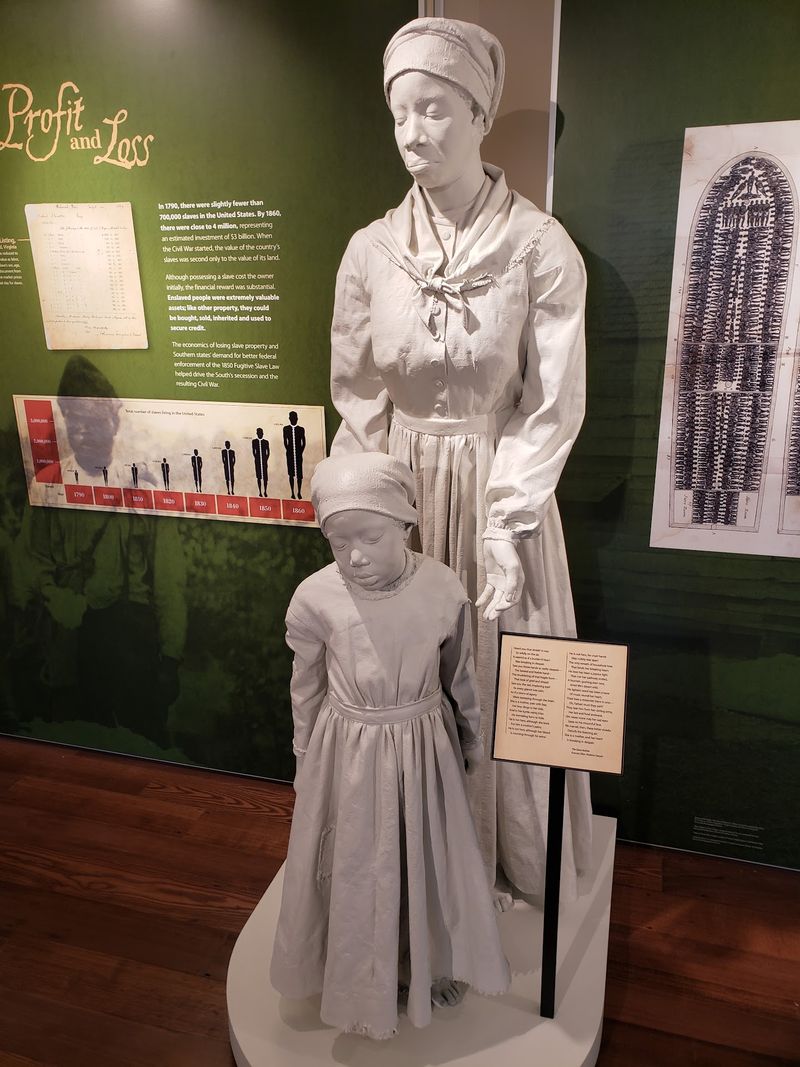
Honestly, the guides are the reason this site rises above so many historic homes. Our tour ran about an hour with a small group, which meant everyone could hear, ask, and linger a little.
Nothing felt rehearsed.
Instead of reciting dates, our guide talked about how the Quaker community around Newport, as Fountain City was then called, worked together to pass people safely to the next stop. She explained the risks the neighbors took, the signals, the sheer coordination required.
Catharine gets real attention too, which I loved. Visitors on other tours have mentioned learning far more about her role than they expected, and that balance feels intentional.
Small details stayed with me. A wooden bed key resting on a rope mattress led to an explanation of where the old saying about bedbugs biting came from, and suddenly the whole group was laughing before turning serious again a moment later.
That rhythm is what good storytelling does.
Descendants of the Coffin family sometimes visit, as do descendants of families who traveled this route, and the guides handle those conversations with real warmth. It is a working piece of living history, not a frozen display.
Ask about Levi demanding search warrants from slave hunters. That story alone is worth the drive.
Grand Central Station of the Underground Railroad, and Why the Nickname Fits
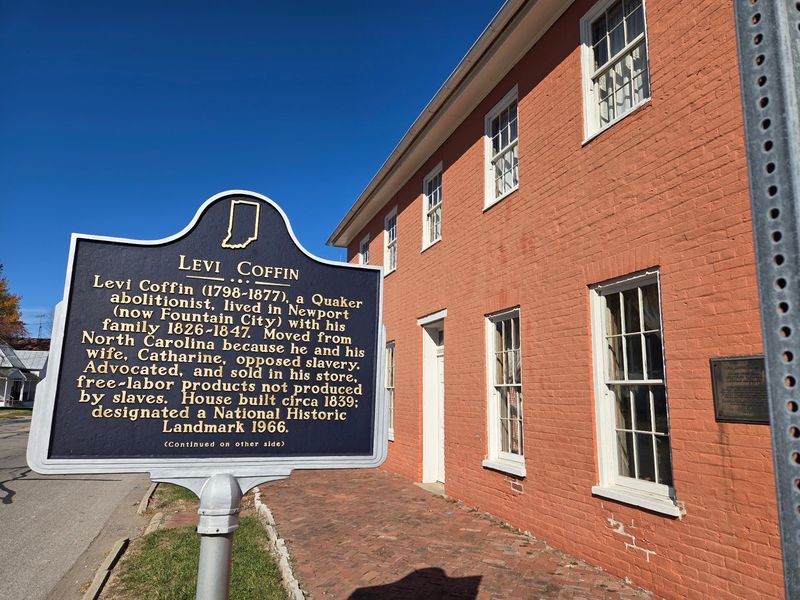
Roughly 2,000 freedom seekers passed through this single house over twenty years. Let that number settle for a moment, because it is not an estimate pulled from thin air.
Levi Coffin wrote about his work himself in his 1876 autobiography, Reminiscences of Levi Coffin.
The Coffins came north from Guilford County, North Carolina, in 1826, and they stayed until 1847. After moving on to Cincinnati they helped roughly 1,300 more people, pushing their lifetime total to about 3,300.
The nickname came about because three major escape routes met here. People crossing the Ohio River from Kentucky, whether at Madison, Jeffersonville, or Cincinnati, often funneled toward this crossroads on their way to northern states and Canada.
Remarkably, the house was never searched. Levi was openly known as an abolitionist, yet he insisted on seeing warrants and ownership papers, and the surrounding Quaker community made the whole area a difficult place for slave hunters to operate.
The History Channel once ranked this house among the top twenty-five most historic sites in the entire country, and standing in the yard looking up at the brick facade, that ranking stops feeling like an exaggeration.
Indiana bought the property in 1967 and opened it to the public in 1970 after restoration. It has been a National Historic Landmark ever since, quietly holding one of the biggest stories in the state.
Ready To Plan Your Trip To Fountain City?
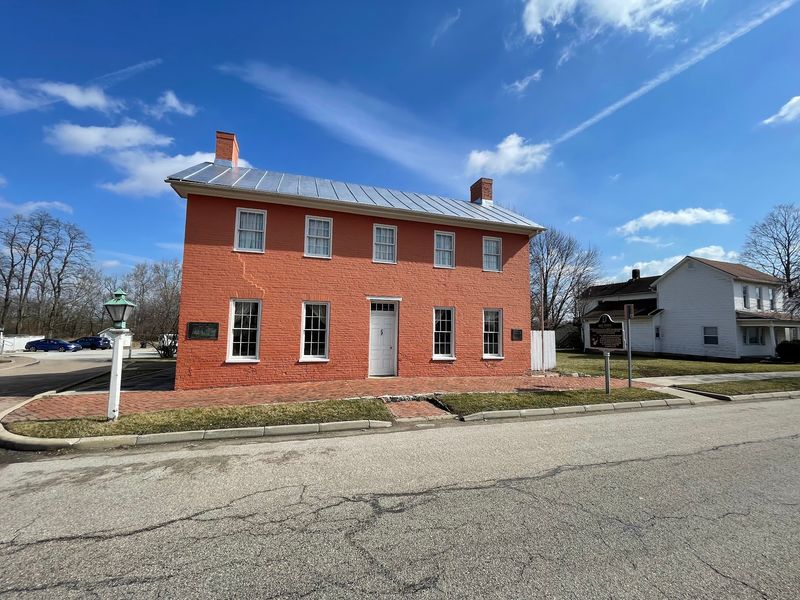
Planning is easy here, and a little preparation makes the visit much better. The site sits right on U.S. 27 north of Richmond, so it slots neatly into a drive across eastern Indiana.
Doors open Wednesday through Sunday from 10 AM to 5 PM, and it is closed Mondays and Tuesdays.
Calling ahead at 765-847-1691 is smart if you are traveling with a group or want to check tour times, since the house is seen by guided tour rather than self-guided wandering. Budget at least ninety minutes for the film, the museum, and the house together.
Wear comfortable shoes. There are stairs, including the trip down to that basement kitchen, and the historic rooms can get warm in midsummer.
If your schedule allows, look into the candlelight tours offered at certain times of year. Seeing those narrow rooms by flickering light gives the whole experience a different weight, closer to how the house actually looked at night.
Families do well here too. The exhibits are approachable for kids without softening the truth of what happened, and the hands-on pieces keep restless hands busy.
Come with time to sit afterward and think, because most people need a few quiet minutes when the tour ends.
Address: 201 US-27, Fountain City, Indiana
