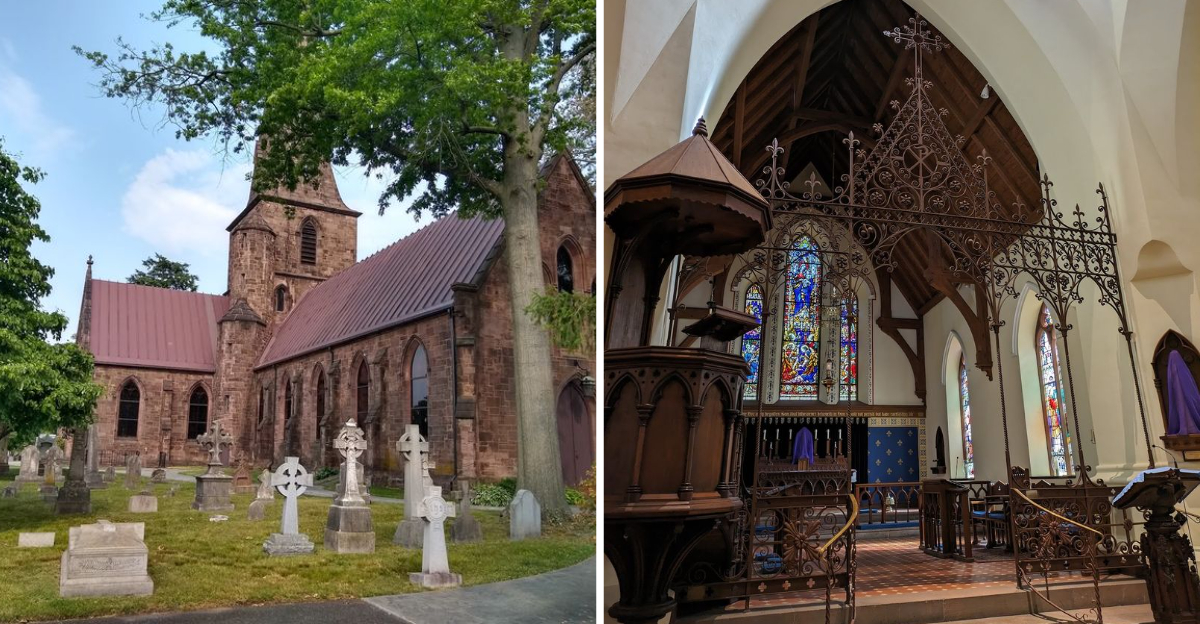
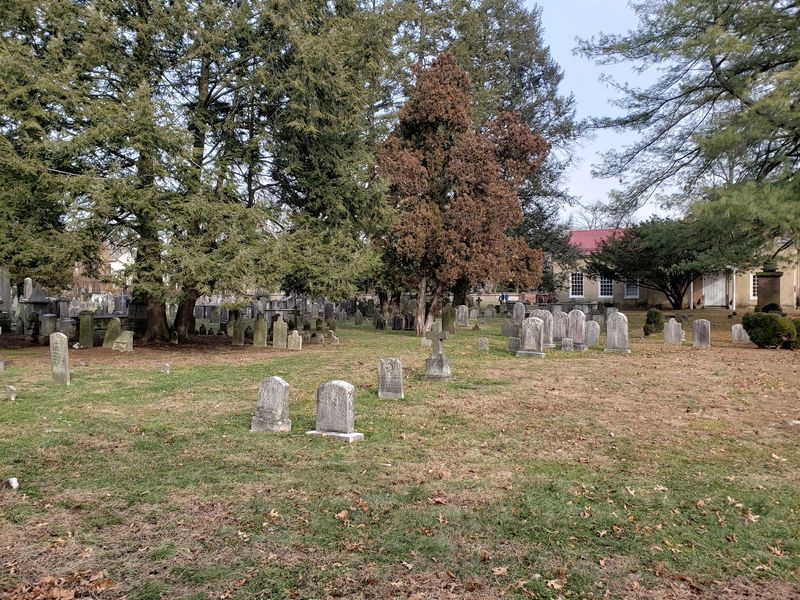
The oldest headstones tilt at gentle angles, their weathered inscriptions barely legible after centuries of rain and wind. This quiet churchyard in New Jersey holds stories that predate the American Revolution itself. Every step here feels like turning pages in a living history book.
Ancient oaks shade the grounds where colonial-era figures once walked, their final resting places marked by stones carved with names and dates from a world long gone. The church itself stands as a proud reminder of early American architecture, with its simple steeple and weathered brick walls.
The whole atmosphere hums with a peaceful, timeless energy that modern life simply cannot replicate.
Wander slowly, read the epitaphs, and let the silence speak volumes. New Jersey’s most historic churchyard offers a rare glimpse into our nation’s earliest days.
Two Buildings, Three Centuries of Faith
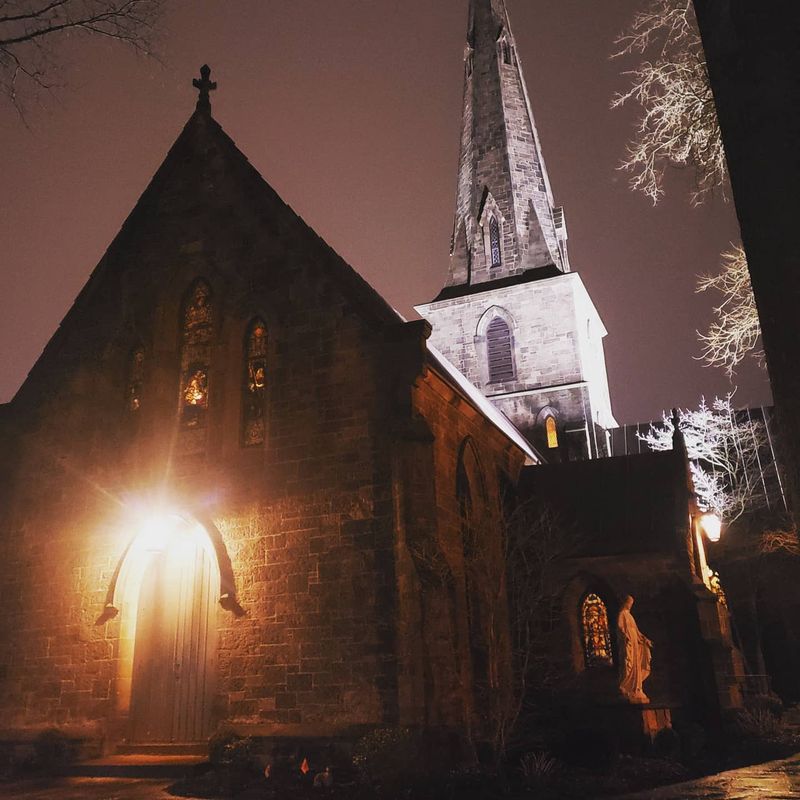
Not many religious sites in New Jersey can claim two active buildings from entirely different centuries, but St. Mary’s pulls it off with remarkable grace. The older structure dates to 1703, making it one of the earliest surviving church buildings in the entire state.
The 1855 building stands nearby, and the two complement each other in a way that feels almost intentional. One speaks to the raw, practical architecture of early colonial settlers. The other reflects the more refined Gothic Revival sensibility that swept through American church design.
Seeing both together gives you a real sense of how the congregation grew and changed over time. It’s not just two buildings. It’s two chapters of the same long story. Both structures remain in use today for regular services, which means they aren’t frozen relics behind velvet ropes.
They are working, breathing spaces that still gather people every single week. That continuity is honestly one of the most compelling things about this entire site.
The Bell Tower and the Hands That Ring It
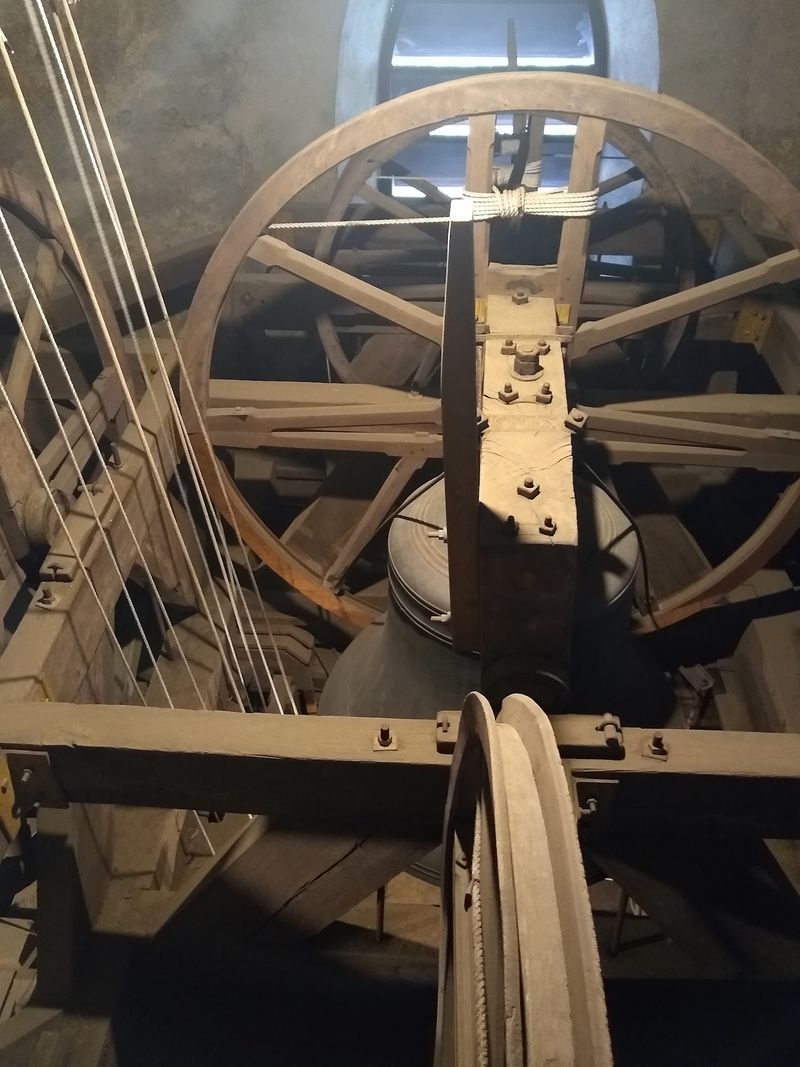
One of the unexpected highlights at St. Mary’s is the bell tower, and if you’re lucky enough to get a tour of it, don’t hesitate for a single second. The tower has its own personality entirely separate from the rest of the building.
A volunteer who plays the bells occasionally offers tours up into the tower, and the experience is the kind of thing that sticks with you. The mechanics of change ringing, where bells are rung in precise mathematical sequences, have roots going back centuries in English church tradition.
Hearing about that history from someone who actually practices it adds a completely different dimension to the visit.
From up in the tower, the view over Burlington shifts your perspective on the whole city. You see rooftops and streets that follow the same colonial grid laid out hundreds of years ago. The bells themselves are beautiful objects, heavy and resonant.
Even just standing near them, you get a sense of how much sound and ceremony they’ve contributed to the life of this neighborhood across so many generations.
Gravestones That Tell Real Stories
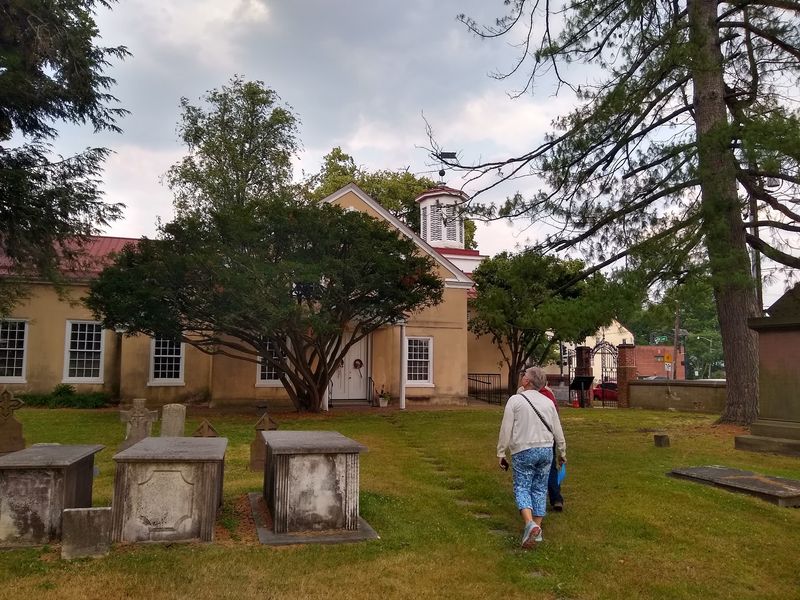
There’s a particular kind of reading you do in an old churchyard, slow, careful, leaning close to catch a name or a date half-erased by time. The gravestones at St. Mary’s reward that kind of attention more than almost anywhere else I’ve visited in New Jersey.
Some markers here date to the 1690s, which puts them firmly in the early colonial period when Burlington was still a brand-new settlement. The range of dates spans from that era all the way into the present century, creating an unbroken thread of community memory. That’s genuinely rare.
The stones themselves vary widely in style, from simple flat slabs to more ornate carved markers with symbols that were common in colonial funerary art. Winged skulls, hourglasses, and willow branches all carry specific meanings that were well understood by 18th-century mourners.
Spending time among them feels less like visiting a cemetery and more like reading a very old, very human book. Each stone is a sentence. Together, they form something remarkable.
A Churchyard That Carries Centuries on Its Shoulders
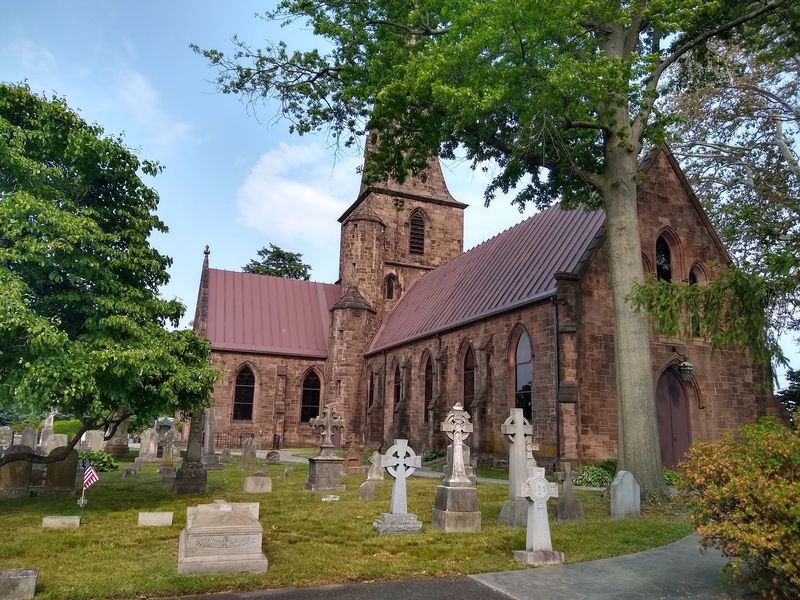
The first thing you notice at St. Mary’s isn’t the buildings. It’s the atmosphere, this quiet, layered stillness that settles over you as soon as you step through the gate. The churchyard feels genuinely old in a way that no museum recreation could replicate.
Gravestones here date back to the late 1600s and early 1700s, each one a small, weathered marker of a life once lived in colonial New Jersey. Some inscriptions are barely readable now, worn smooth by centuries of rain and frost.
Yet they remain standing, carefully maintained and treated with obvious respect.
What makes this place so striking is the contrast between its age and its vitality. The grounds are impeccably kept, the grass trimmed, the paths clear. You don’t get the sense of neglect that sometimes creeps into very old sites.
Instead, there’s a feeling of active stewardship, of a community that genuinely cares about preserving what came before. That care is visible in every corner of the yard.
The Interior, Beautiful and Quietly Reverent
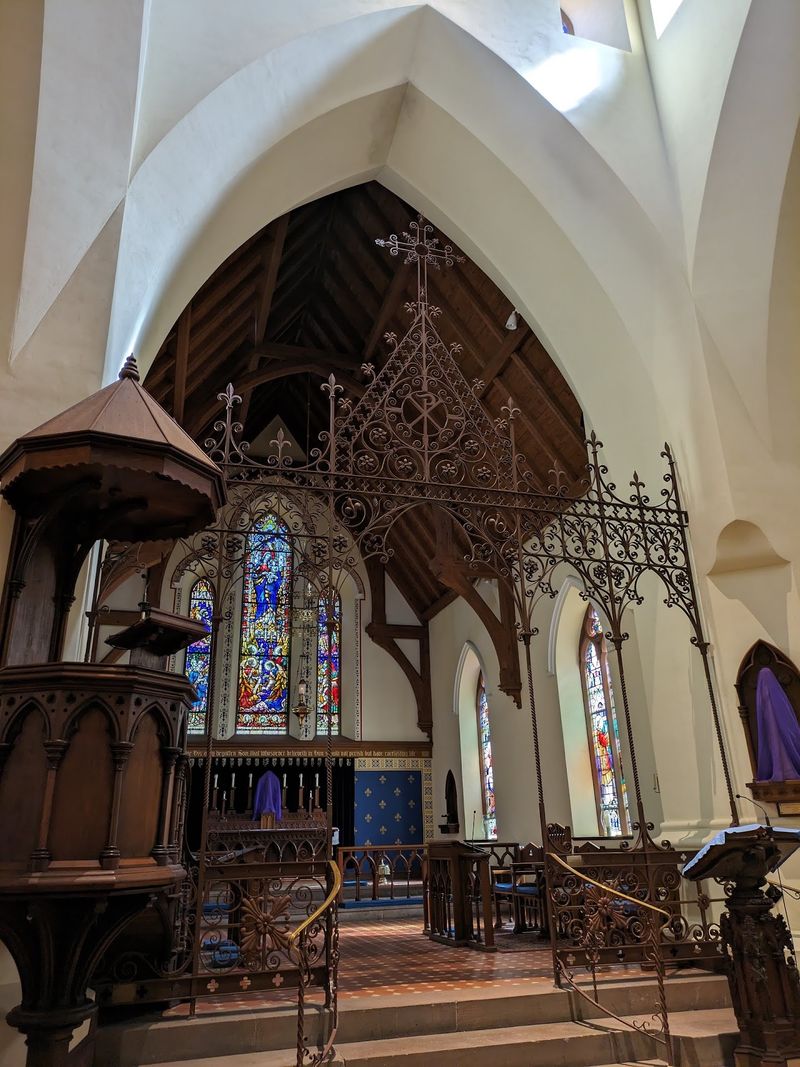
Stepping inside St. Mary’s for the first time, the word that comes to mind is reverent. The interior doesn’t shout for your attention. It draws you in quietly, with the kind of beauty that takes a moment to fully register.
The traditional language used during Mass services here gives the worship experience a distinctly old-world character. For people who grew up with modern liturgical language, hearing the older forms can feel almost like time travel. It’s deliberate and unhurried in a way that modern life rarely allows.
The church is also genuinely lovely as a physical space. Wooden pews, careful stonework, and filtered light through stained glass combine to create an atmosphere that feels both historic and deeply peaceful.
Several visitors have noted how beautiful the space would be for a wedding, and it’s easy to see exactly why. The interior manages to feel intimate even though the building is centuries old.
A Community Kitchen That Feeds the Neighborhood

History and community care go hand in hand at St. Mary’s, and the church’s food programs are a big part of what makes this place feel genuinely alive rather than just historically preserved. Every Wednesday, the church hosts a free food pantry open to anyone who needs it.
The program is non-denominational and welcoming, drawing people from across Burlington City regardless of religious background. Volunteers show up consistently, and the warmth of the people involved is something multiple visitors have commented on over the years.
It’s a simple, practical expression of the church’s values that has a real impact on real people in the neighborhood.
For a traveler or visitor, knowing this about St. Mary’s changes how you see the whole place. The churchyard holds the past, but the kitchen feeds the present. Both matter equally to the congregation here.
That dual commitment, to memory and to immediate human need, gives the church a depth that goes well beyond its architectural and historical significance. It’s the kind of thing that makes you root for a place from the moment you learn about it.
Burlington City, A Colonial Town Worth Exploring
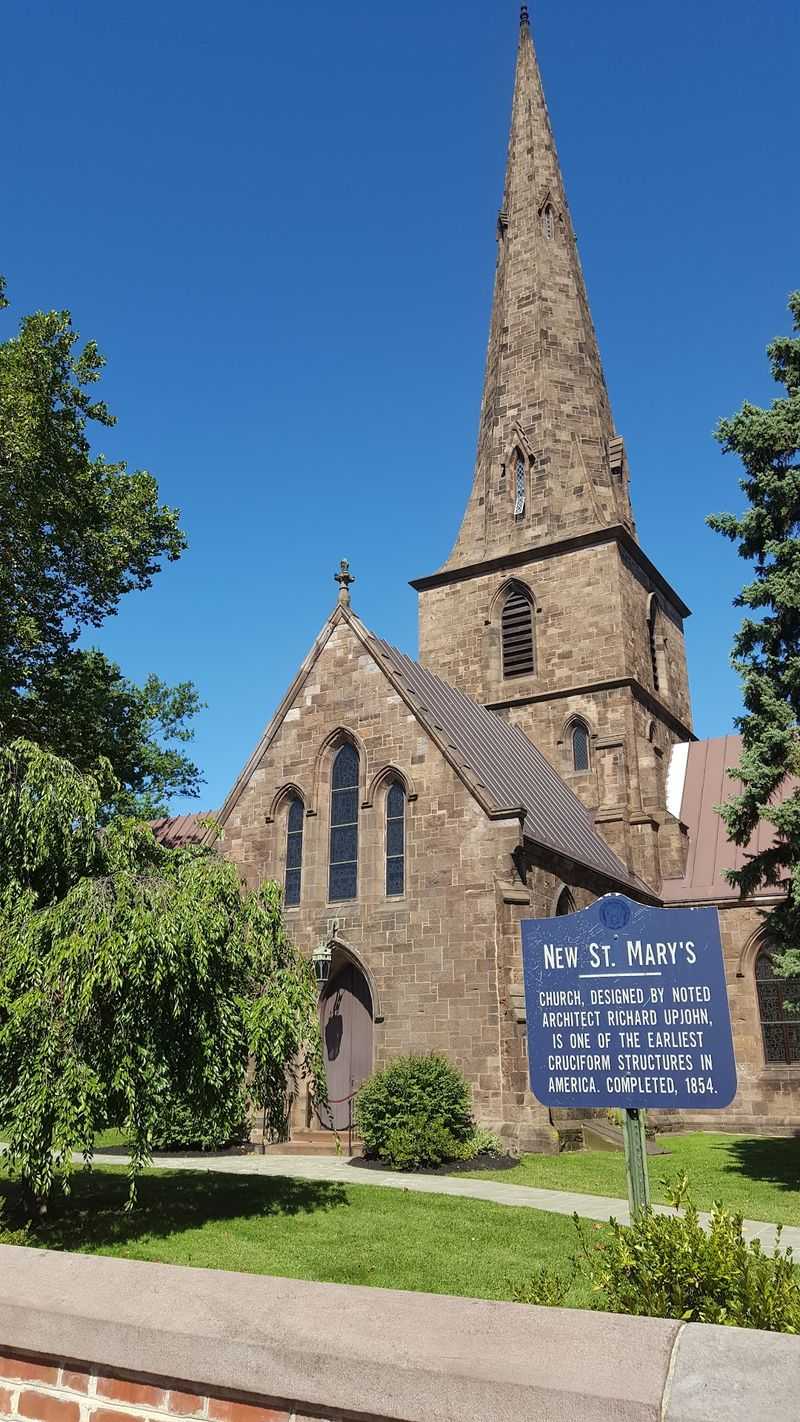
St. Mary’s doesn’t exist in isolation. It sits in Burlington City, a town that is itself one of the most historically significant in the entire state of New Jersey. Getting to know the church means getting to know a little of Burlington too.
Burlington was established in 1677 and served as one of the capitals of colonial New Jersey. The streets around St. Mary’s still follow the original colonial grid, and several other historic buildings and sites are within easy walking distance.
The whole area has a low-key, unhurried character that makes it pleasant to explore on foot.
Broad Street itself is lined with architecture from multiple eras, and the mix of old and new gives the town a layered visual quality that rewards a slow walk. St. Mary’s anchors the western end of that street with real presence.
Coming at the church from a block away and watching its tower rise gradually into view is one of those small travel moments that stays with you longer than you’d expect. Burlington deserves more visitors than it gets.
Music and Events That Bring the Space to Life
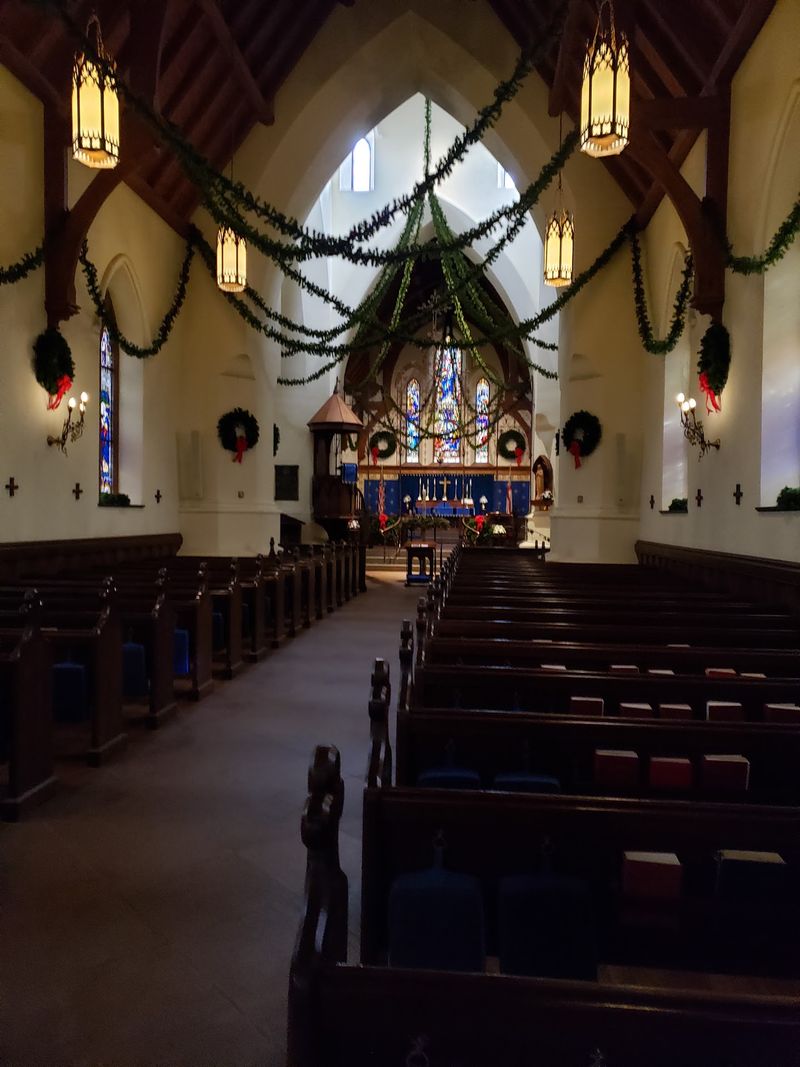
Beyond regular worship services, St. Mary’s has a history of hosting musical events that make excellent use of its remarkable acoustics. The stone walls and high ceilings create a natural resonance that suits live performance beautifully.
Past events have included brass concerts, and the combination of historic surroundings with live music creates an experience that’s hard to replicate in a modern venue. There’s something about hearing brass instruments in a centuries-old stone church that feels almost ceremonial.
The church’s schedule varies, so checking ahead before you visit is always a good idea. Services run on Sundays starting at 7 AM, with additional services on Saturdays. The office is open weekdays from 9 AM to 3 PM.
That means there are regular opportunities to visit, ask questions, and maybe even catch a tour if you arrive at the right moment. The people here are genuinely friendly and happy to share what they know about the building and its history.
The Historic Society Connection and What It Means
St. Mary’s is listed with the historic society, which is a formal recognition of what most visitors sense the moment they arrive: this place is genuinely significant, not just locally but in the broader context of American colonial history.
Historic designation means the site is documented, studied, and protected in ways that help ensure its survival for future generations. For a visitor, it also means you’re standing somewhere that scholars and preservationists have looked at carefully and concluded: this matters.
That kind of validation, from people who spend careers evaluating old places, carries real weight.
The listing also connects St. Mary’s to a network of other historic sites across New Jersey and beyond, which can be useful if you’re planning a longer heritage travel itinerary through the region.
Burlington has several other historically significant locations nearby, and St. Mary’s makes an excellent anchor for a day spent exploring the colonial roots of the Delaware Valley.
Practical Tips for Your Visit to St. Mary’s
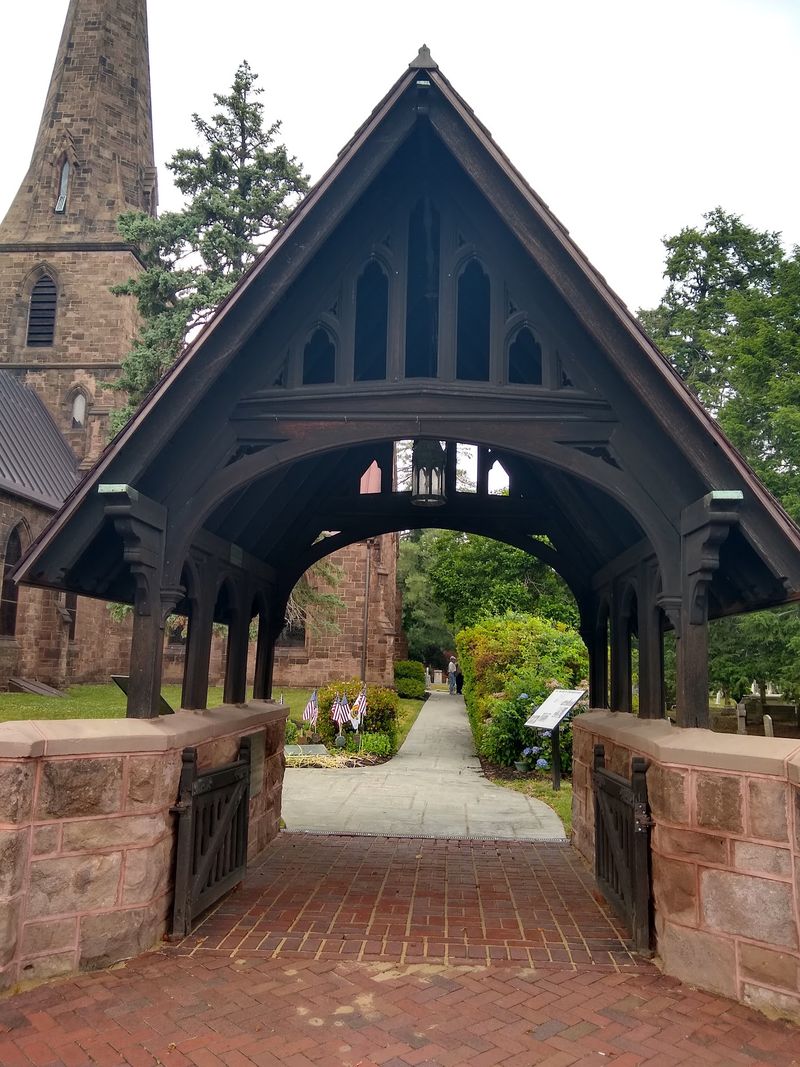
Planning a visit to St. Mary’s is straightforward, but a few small details make the experience a lot smoother. The church office is open Monday through Friday from 9 AM to 3 PM, and that’s generally the best window for dropping in or simply exploring the grounds with some guidance nearby.
The churchyard itself is one of the main draws, and spending time among the gravestones requires no special access or appointment. Just be respectful and quiet, especially if services are in session nearby.
The congregation is welcoming, but the site is first and foremost an active place of worship, not a tourist attraction. That distinction matters and shapes how you should approach the visit.
If you want to attend a service, Sunday mornings offer two options, an early service at 7 AM and later worship through mid-morning. Saturday evening has a service from 5 to 6:30 PM. Bringing a camera is fine for the exterior and grounds, but always check inside before photographing during services.
Address: 145 W Broad St, Burlington, NJ.
