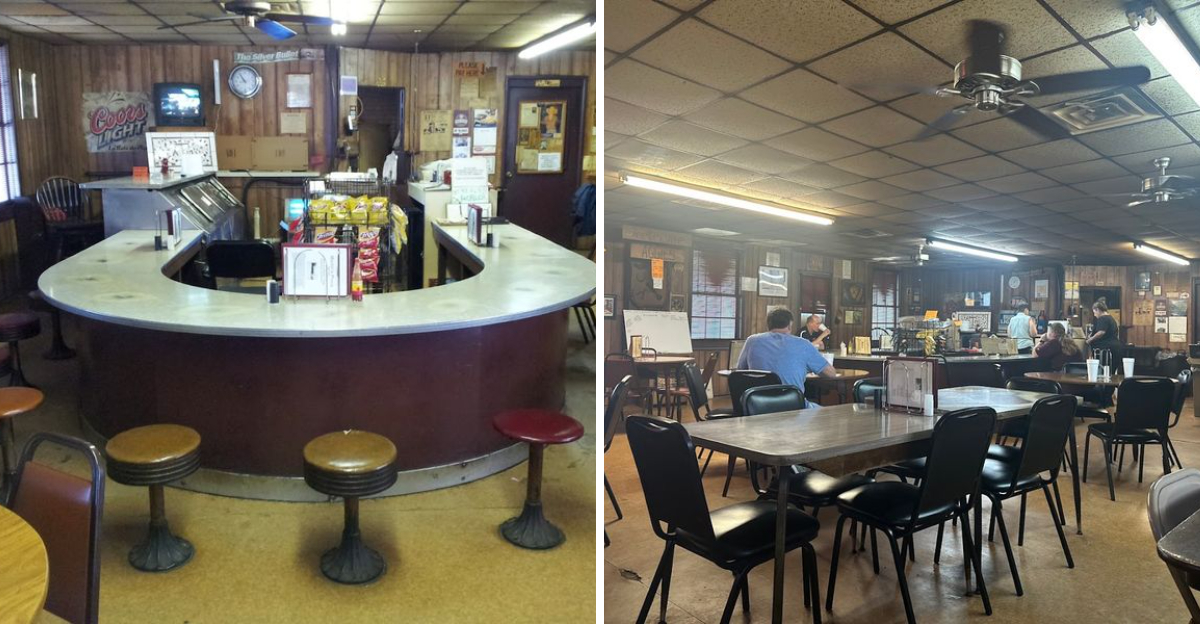
A restaurant that has barely changed in a century is not just a place to eat. It is a time capsule.
This Texas spot has been serving the same comforting dishes since the 1920s, and the regulars would not have it any other way. The burgers are classic, the pies are homemade, and the atmosphere feels like stepping into a black-and-white photograph.
The wood paneling, the old signs, the friendly faces behind the counter, it all adds up to an experience that feels increasingly rare. You do not come here for trendy food or flashy decor.
You come for the history, the consistency, and the simple pleasure of a meal that tastes like it always has. It is the kind of place where you can almost hear the echoes of conversations from decades past.
A Century of Smoke and Family Pride
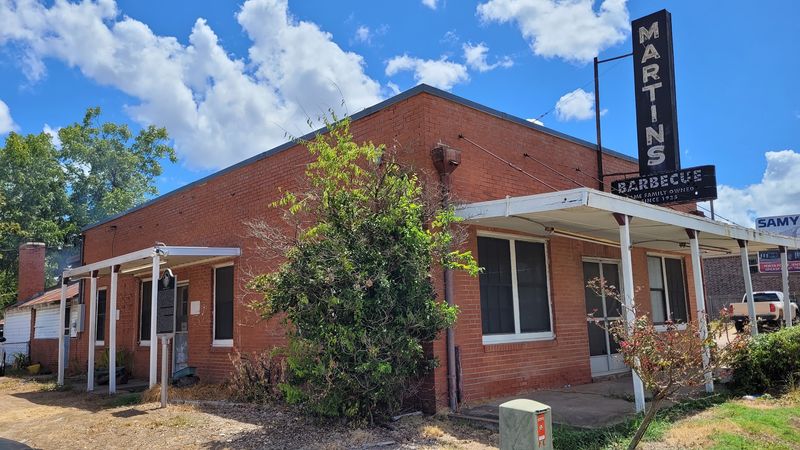
There are restaurants that claim history, and then there is Martin’s Place, which simply lives it every single day. Founded in 1925 by Martin Kapchinskie, this Bryan institution started as a roadside stop for travelers moving between town and Texas A&M University.
Back then, it offered groceries, gasoline, a public telephone, and, most importantly, barbecue cooked over an open pit.
The original structure was a humble wooden screen house with a small indoor pit and a larger outdoor pit used for events. That simplicity was not a limitation.
It was a philosophy that has carried the restaurant through nearly one hundred years of operation without losing its soul.
By 1939, the red brick building that still stands today was constructed, replacing the original wooden structure. The old building’s foundation is still visible in what is now the parking lot, a quiet reminder of where it all began.
Martin passed the business to his son Albin in 1955, and the family never looked back.
Four generations of Kapchinskies have kept the fires burning, which is no small thing in an industry where restaurants come and go constantly. The current pitmaster, Steven Kapchinskie, is Martin’s grandson.
He started cooking barbecue with his father at age twelve, and that early education shows in every plate that leaves the kitchen. This is not a restaurant pretending to have roots.
The roots are real, deep, and unmistakably Texan.
The Red Brick Building That History Forgot to Touch
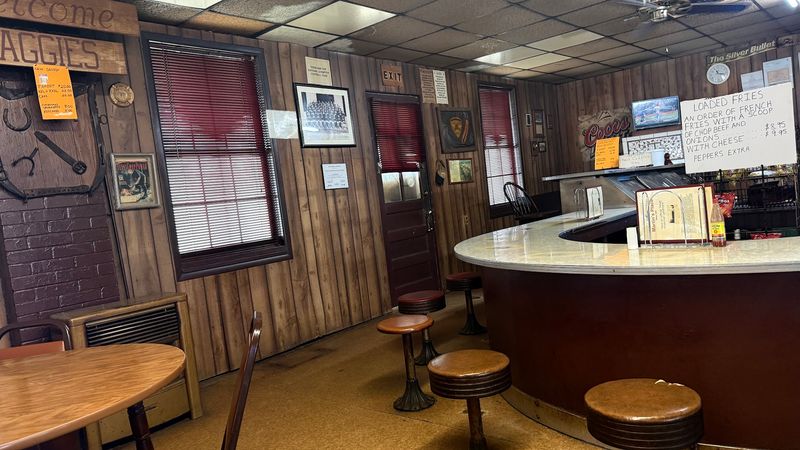
Most buildings get renovated, updated, and eventually stripped of whatever made them interesting in the first place. Martin’s Place went a different direction entirely.
The 1939 red brick structure has been deliberately preserved, not out of laziness, but out of genuine respect for what the space represents.
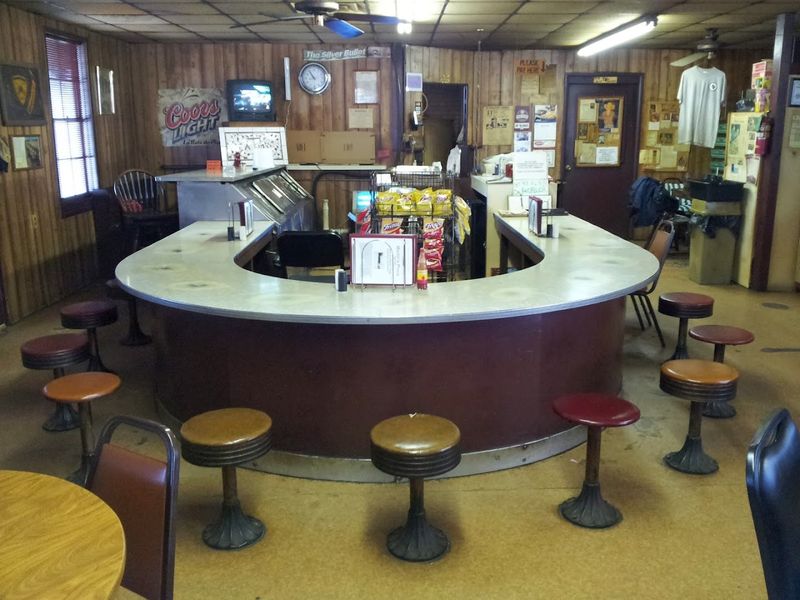
Inside, the horseshoe-shaped bar is one of the first things you notice. It replaced an earlier tall bar back in 1951 and has been a gathering point ever since.
The kitchen floor still has tiles worn down to bare cement in spots, a physical record of decades of foot traffic and daily cooking. You cannot fake that kind of wear.
Steven Kapchinskie has mentioned that making significant structural changes would trigger building code requirements, so the family has kept things as they are. That decision, practical as it sounds, has resulted in something genuinely irreplaceable.
Every scratch and scuff in this building tells a story that no renovation could improve.
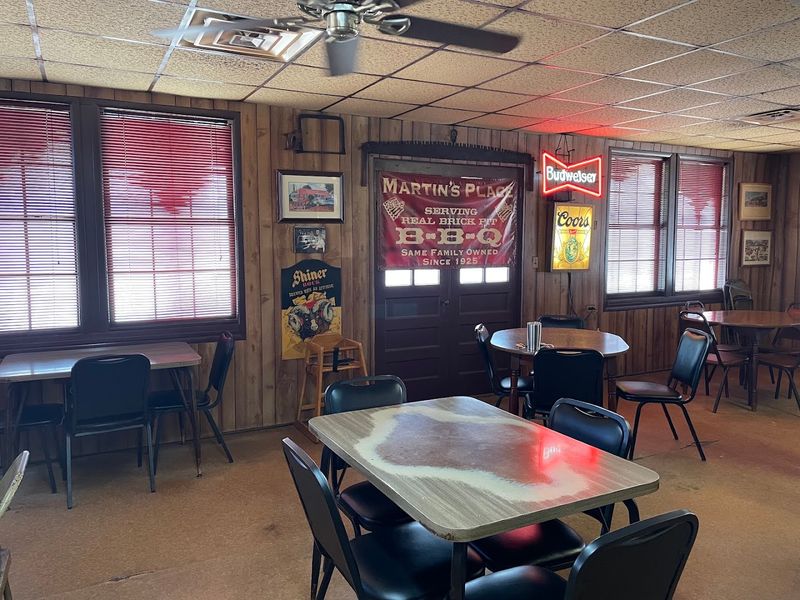
The atmosphere is simple and uncomplicated, which is exactly how the family describes their approach. There are no flat screens, no trendy design elements, and no attempt to look like something from a food magazine.
What you get instead is a room that feels honest. It feels used in the best possible way, like a favorite chair that has molded itself to the people who have sat in it longest.
That kind of authenticity is increasingly hard to find.
Oak Wood Pits and the Old-Fashioned Way
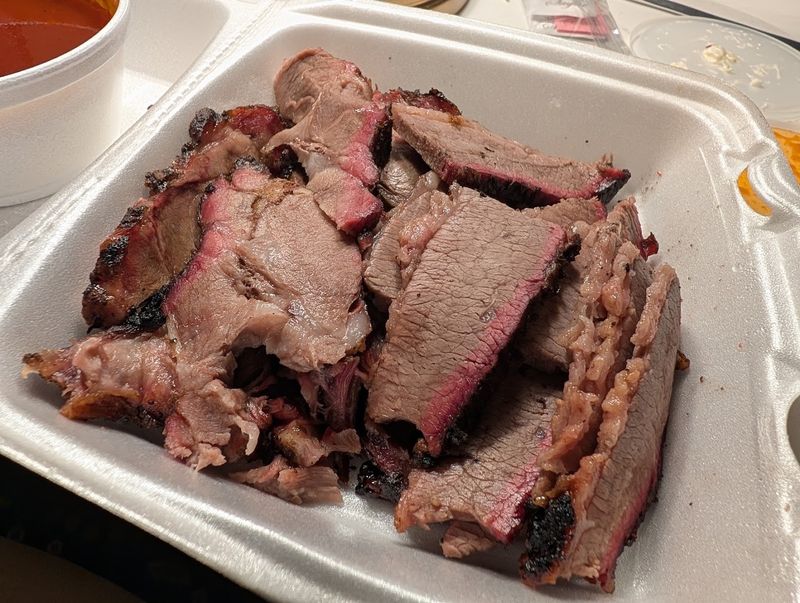
The phrase “cooked the old-fashioned way” gets tossed around a lot in barbecue circles, but at Martin’s Place it means something specific. The meat is cooked over live coals using oak wood in brick pits, the same method that has been used here since the very beginning.
No gas, no shortcuts, no compromises.
Steven Kapchinskie talks about how the wood and the pit’s natural draw work together to pull flavor through the meat without needing heavy sauces or molasses to cover anything up. The oak smoke does the work quietly and patiently, which is exactly how good barbecue is supposed to happen.
You cannot rush a pit like this.
What makes this approach so distinctive is that it requires real skill to maintain. Reading a fire, managing airflow, and knowing when the meat is ready takes years of practice.
Steven started that education as a child, and it shows in the consistency of what comes out of those pits today.
Meats and fried items are cut or prepared only when an order is placed, which means nothing is sitting under a heat lamp waiting for you. The kitchen operates at its own deliberate pace, and first-time visitors sometimes need a moment to adjust to that rhythm.
Slow down, though, and it starts to make perfect sense. This is barbecue as a craft rather than a transaction, and the difference between the two is something you taste in every single bite.
The Menu That Has Stood the Test of Time
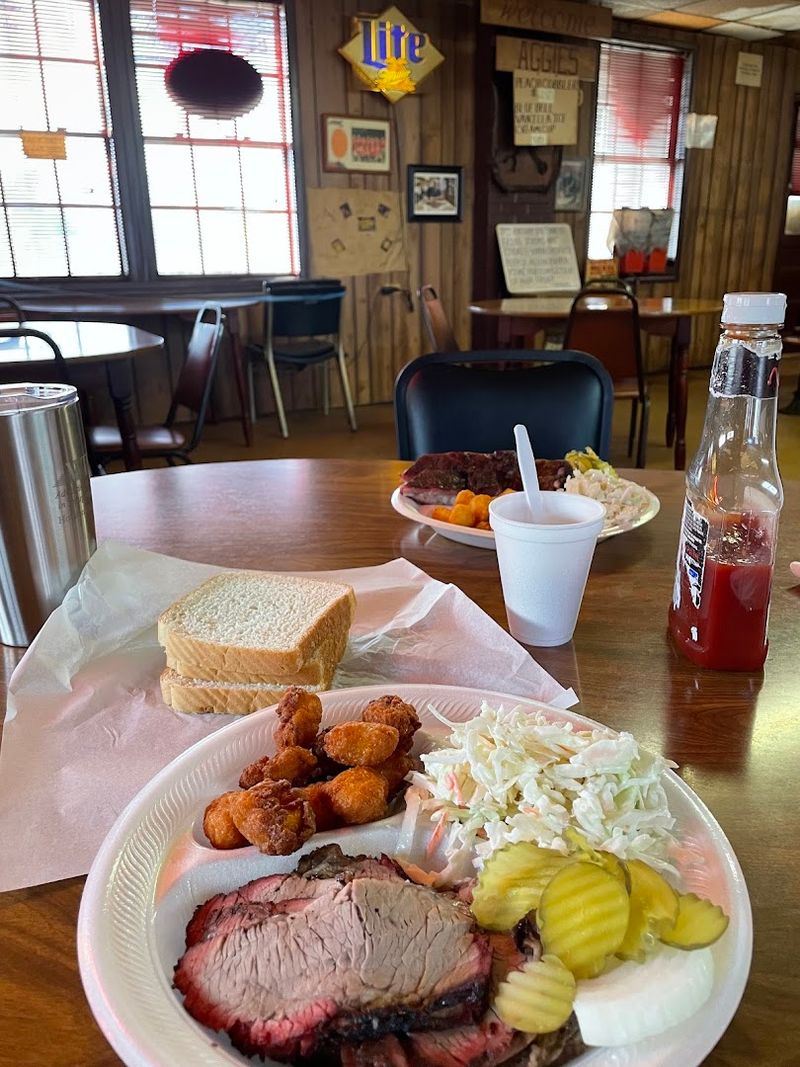
Brisket, pork ribs, and sausage anchor the menu at Martin’s Place, and they have for as long as anyone can remember. These are not reinvented or deconstructed versions of Texas classics.
They are the real thing, cooked simply and served without ceremony on a tray that gets the job done.
The chopped beef sandwich has its own loyal following, and for good reason. It is the kind of sandwich that reminds you why simple food done well beats complicated food done adequately every single time.
Fridays bring smoked chicken into the rotation, which draws its own crowd of regulars who plan their week around it.
Sides include pinto beans, coleslaw, tater tots, and the house German potatoes, which have become a signature item in their own right. The okra is another fan favorite, crispy and straightforward.
Nothing on this menu is trying to impress food critics. It is trying to feed people well, and that goal gets accomplished with every order.
What keeps people coming back is not novelty. It is the reliability of knowing exactly what you are going to get and having it be exactly right every time.
Regulars have been ordering the same things for years, sometimes decades, and that consistency is its own kind of excellence.
In a food culture obsessed with the next new thing, Martin’s Place offers something quietly radical: a menu that trusts itself completely and has earned that trust through a century of showing up.
The Community That Grew Up Around This Place
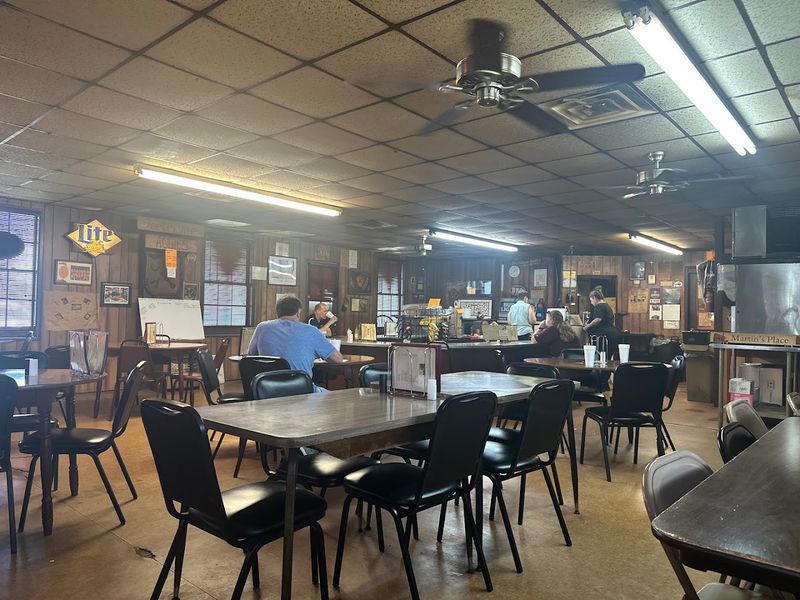
Martin’s Place has always been more than a restaurant. From the beginning, it served as a community gathering point, first as a rest stop for travelers, and eventually as a daily destination for locals who came as much for the company as the food.
Daily domino games and pool playing once filled the space with a kind of easy, neighborhood energy that is rare to find today.
Texas A&M students, known as Aggies, have been part of the fabric of this place for generations. The university sits just down the road, and students have been making the trip to Martin’s for decades, many of them returning years later as alumni with their own kids in tow.
That generational loyalty says something real about what this restaurant means to people.
One name that comes up consistently in conversations about Martin’s Place is Steve Holik, known affectionately as Uncle Steve. He served tables here from 1946 until 1987, treating every customer like family.
Four decades of that kind of warmth leaves a mark on a place that does not fade easily.
The restaurant has weathered the Great Depression, World War II, the 2008 recession, and the COVID-19 pandemic without closing its doors. Each of those challenges tested the family and the community that surrounds them, and each time the place came through.
That survival is not accidental. It reflects something genuine about the relationship between Martin’s Place and the people who consider it theirs.
Community built this restaurant as much as the Kapchinskie family did.
Four Generations of Kapchinskie Dedication
Running a restaurant for one generation is hard. Running it well for four generations is something else entirely.
The Kapchinskie family has done exactly that, passing Martin’s Place from founder to son to grandson, with the same commitment to craft and tradition moving through each handoff like smoke through oak.
Martin Kapchinskie started it all in 1925. His son Albin took over in 1955, bringing his experience as a Navy butcher to the operation and adding a meat market that served the community through the 1970s.
That butcher’s eye for quality shaped how the restaurant approached its ingredients, and traces of that influence remain in how carefully the meat is handled today.
Steven Kapchinskie, the third generation, took over in the late 1970s or early 1980s. He runs the place alongside his wife Betty and their daughter, making this a true family operation in every sense of the word.
There is something deeply grounding about watching a family treat a business as a living inheritance rather than just a source of income.
Steven started cooking at age twelve beside his father, which means he has spent more of his life at those pits than away from them. That kind of accumulated knowledge does not come from a culinary school or a cookbook.
It comes from years of paying attention, asking questions, and doing the work. The result is a pitmaster who understands his craft at a level that is genuinely difficult to teach and impossible to fake.
An Official Texas Historical Landmark Worth Visiting
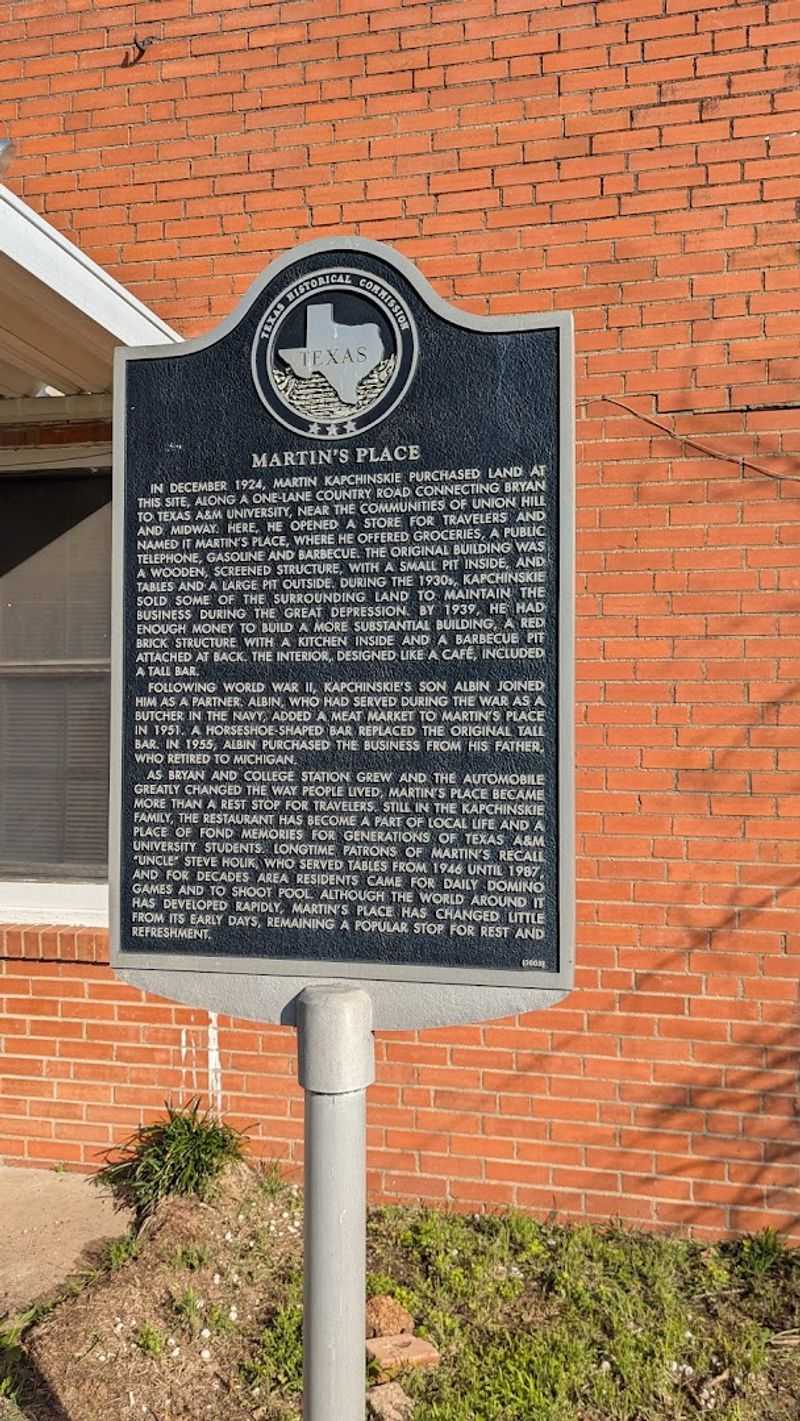
In 2005, Martin’s Place received official recognition as a Texas Historical Landmark, marking its 80th anniversary with a designation that acknowledges both its age and its cultural significance. That is not a title handed out casually.
It reflects a genuine contribution to the history of the region and to Texas barbecue culture as a whole.
The support narrative for the designation was prepared by Brian Kapchinskie, Steven’s son, which means even the process of earning that recognition was a family effort. Getting a landmark designation requires documentation, research, and a compelling case for why a place matters.
Martin’s Place had no trouble making that case.
Bryan’s longest continually operating barbecue restaurant is a distinction that carries real weight. Other restaurants have opened and closed in this city across the decades, and Martin’s Place has simply kept going through all of it.
That kind of staying power deserves recognition, and the landmark status makes it official.
For visitors traveling through the Bryan-College Station area, stopping here is not just about the food, though the food is absolutely worth the stop. It is about touching something that has persisted through nearly a century of American life, unchanged in the ways that matter most.
The landmark marker outside the building is a small thing, but it points toward something large. This restaurant is a piece of living Texas history, and it is still open for lunch, still cooking over oak, and still run by the family that started it all.
Why Martin’s Place Deserves a Spot on Your Texas Road Trip
Texas has no shortage of great barbecue, but places with this much history attached to their smoke rings are genuinely rare. Martin’s Place sits right on South College Avenue, making it an easy stop whether you are heading through Bryan or specifically making the trip to Texas A&M.
Either way, it earns its place on any serious Texas food itinerary.
The experience here is deliberately unhurried. Orders are prepared fresh, which means you wait a little, and that wait is part of the deal.
Use that time to look around the room, take in the worn tiles, the old bar, and the walls that have absorbed nearly a century of conversation and smoke. There is a lot to see if you slow down enough to look.
First-time visitors sometimes arrive expecting a polished dining experience and leave having found something better: a meal that feels connected to a real place and a real story. That connection is what separates a memorable meal from a forgettable one.
Martin’s Place is memorable in a way that sticks with you long after the drive home.
If Texas barbecue is on your list, and it absolutely should be, this is the kind of stop that resets your expectations for what a barbecue restaurant can be. It is not about the trendiest cuts or the most Instagram-worthy presentation.
It is about craft, consistency, and a family that has been doing this right for a very long time.
Address: 3403 S College Ave, Bryan, Texas.
