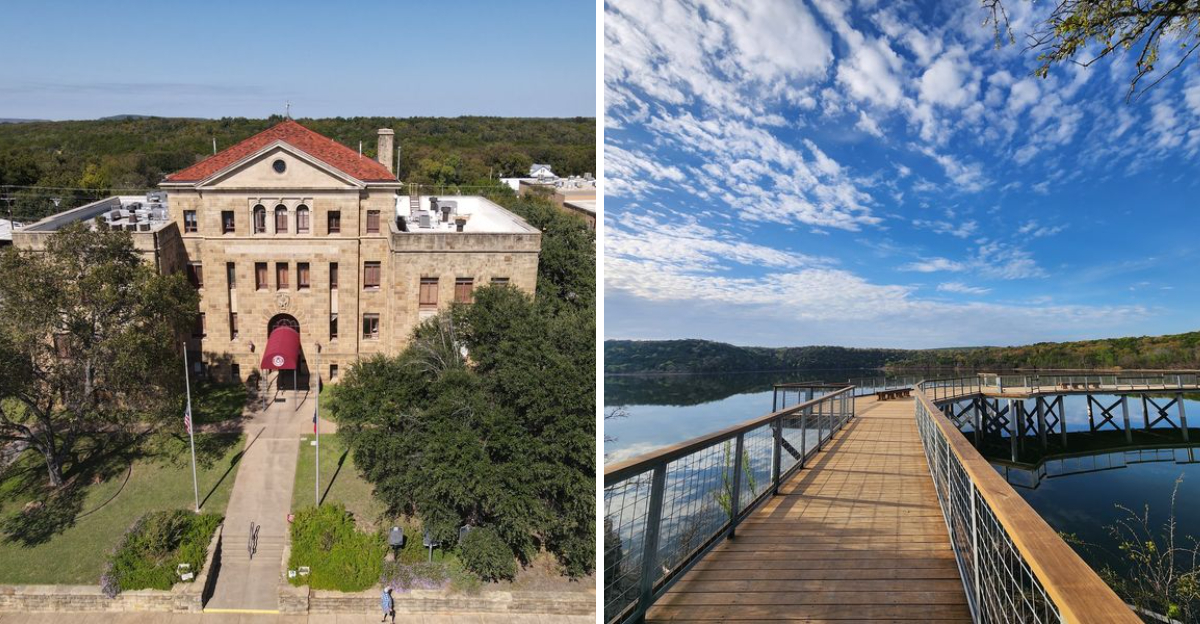
A town does not need boutique hotels, packed sidewalks, or a line outside every café to be worth a detour, and this quiet Texas community is a good example.
Established as the county seat in 1857, it began under the name Golconda, grew with the surrounding ranching country, and then watched the Texas and Pacific Railway bypass it in 1880, a twist that helped keep growth relatively modest.
Today, its history is still easy to spot in places like the old jail museum complex and the sandstone courthouse, which was built as a WPA project in the early 1940s and is listed on the National Register of Historic Places.
For travelers who like Texas towns without the polished tourist-machine feeling, this is the kind of stop where the appeal comes from what has stayed put rather than what has been added for visitors.
The Courthouse That Recycled Its Own Past
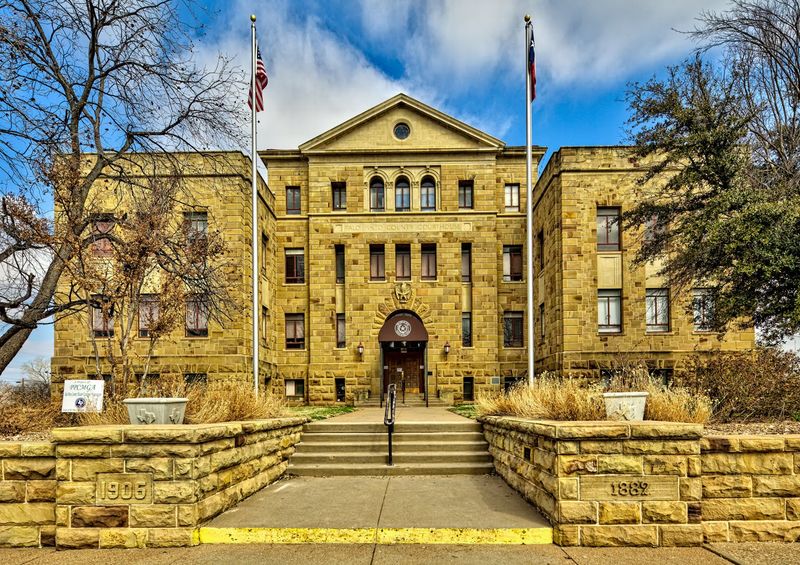
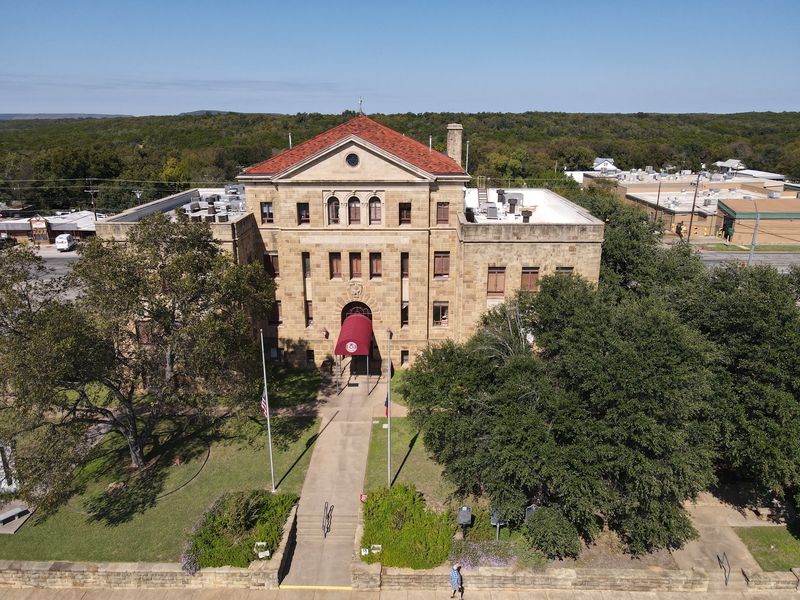
Sandstone walls do something odd in late afternoon light. They go from dull tan to a warm honey color, and the Palo Pinto County Courthouse catches that glow better than almost any building of its size in North Texas.
The current courthouse was built between 1940 and 1942 by the Work Projects Administration. Here is the detail that stuck with me: the builders used recycled sandstone from the 1882 courthouse that stood on the same ground.
So the stone in front of you is older than the building itself. Same rock, second life.
Architecturally it blends Moderne lines with Renaissance Revival touches, which sounds like a mismatch and somehow is not. The proportions are clean and slightly severe, softened by the trees crowding around it.
The building sits on the National Register of Historic Places.
Take your time on the lawn. Several historical markers and memorials are scattered across the grounds, and reading them in order gives a rough timeline of the county without a single admission ticket.
What makes the whole scene unusual is the math. Palo Pinto is smaller than several other towns in its own county, yet it has held the county seat since 1857.
Courthouses this handsome usually come with busy squares and coffee shops.
Not here. Park along the street, walk the perimeter, and listen to how quiet it is.
Photographers should aim for morning or the last hour before sunset when the stonework warms up.
Address: 520 Oak Street, Palo Pinto, Texas
An 1881 Stone Jail With Stories in Its Walls
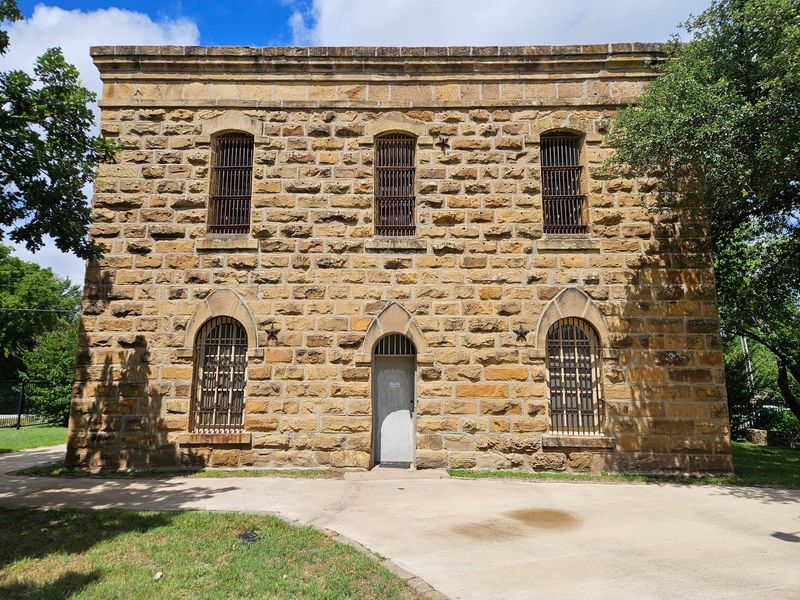
© Old Jail Museum Complex
Old jails are strange museums. The Palo Pinto County Jail, built in 1881, has the thick rough stone and narrow slit windows that tell you comfort was never part of the plan.
It anchors a small museum area near 5th and Elm, where historic structures and local artifacts are gathered together. Nothing about it feels staged or over-designed.
That plainness is the appeal.
Stand close to the masonry and you can see how the blocks were shaped by hand, with mortar lines that wander a little. Frontier construction was practical rather than pretty, and this building never pretended otherwise.
The jail dates from the decade after Palo Pinto had grown into a real ranching center. Cattle money, county business, and a rough stretch of Texas all met here, and the building was the county’s answer to keeping order.
Hours at small-town museum complexes can shift with volunteers and seasons, so calling ahead or checking locally before making the drive is smart. Even from the outside, the structure is worth the stop.
Bring water and a hat in summer. Shade is patchy and the stone holds heat like an oven.
What I appreciated most was the absence of interpretation overload. No dramatic soundtrack, no animatronics, just a solid old building and a few objects that survived.
You end up filling in the gaps yourself, which is far more memorable.
Give it twenty minutes. Then wander the surrounding lot, because pieces of local history are hidden around the grounds.
Golconda, The Name Nobody Remembers
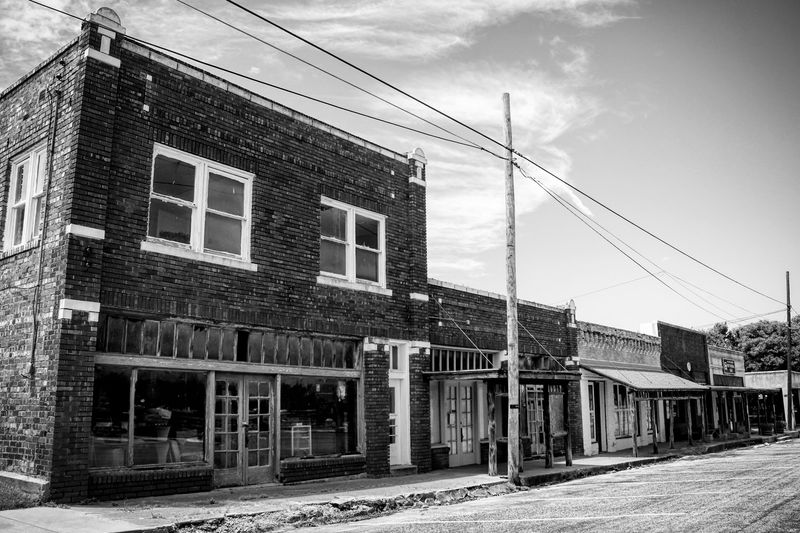
Before it was Palo Pinto, this place was called Golconda. That name showed up when the town became the county seat in 1857, and it disappeared within a few years, replaced sometime around 1858 to 1860.
Golconda was a reference to legendary wealth, which says a lot about what early settlers hoped for.
They arrived starting in 1855, drawn by the fertile soil of the Brazos River valley. Farming and then ranching followed, and by the 1870s the town had become a real center for cattle operations in the region.
Reading the markers around town, you get a sense of how fast expectations shifted. Big ambitions, then practical reality.
The name change is one of those small historical details that makes a place feel human. Somebody decided the grand name did not fit, and Palo Pinto, meaning painted stick or painted post in Spanish, stuck instead.
Local history buffs will find the layered story rewarding. Cattle drives, county government, oil that arrived in the county around 1915, and a highway designation in 1919 all left traces here.
The Bankhead Highway ran through town, which briefly connected this small settlement to a national road network.
What I like about learning this on-site rather than online is the scale. You stand in a town of roughly 166 people and try to picture it as a regional hub.
The gap between then and now is the whole point of visiting.
Read the markers slowly. They are the closest thing to a guided tour.
Why the Railroad Passing By Saved This Town
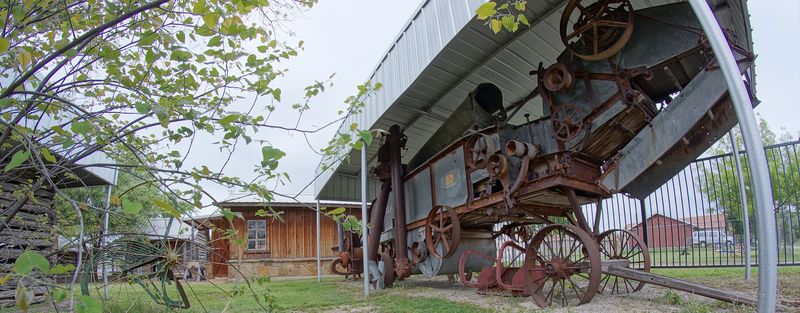
In 1880 the Texas and Pacific Railway laid its tracks and skipped Palo Pinto entirely. For a growing county seat, that was a serious blow.
Nearby towns boomed. Mineral Wells eventually grew far larger, and Palo Pinto slid into a long, quiet decline while somehow holding onto its courthouse and its title.
Bad luck then. Preservation now.
Think about what railroads brought to Texas towns: warehouses, hotels, brick commercial blocks, then decades of demolition and rebuilding as fortunes rose and fell. Palo Pinto never got that cycle.
Without the tracks, there was no oil-boom construction frenzy in the town itself, even though the county saw production begin around 1915. The growth went elsewhere.
What remains is a settlement that looks close to its own scale, surrounded by hills instead of subdivisions.
Drivers heading through today are mostly passing between lakes and parks, which keeps traffic light and the atmosphere unhurried. There are no tour buses.
No ticket booths.
I found that refreshing in a way that surprised me. Plenty of Texas small towns have been carefully rebuilt into shopping destinations, and they can be lovely, but they rarely feel accidental.
Palo Pinto feels accidental in the best sense.
Practical tip: fuel up and grab supplies in Mineral Wells or Strawn before exploring, since services in town are extremely limited.
Then take the back roads slowly and notice how little has been paved over. The bypass that hurt this town in 1880 is the reason it still looks like itself.
North Texas Hill Country Views Along Farm Road 4
Nobody warns you that this part of Texas has real hills. Farm Road 4 South out of Palo Pinto climbs and dips through limestone ridges, oak thickets, and open pasture, and the views open up in a way that feels closer to the Hill Country than to the flat prairie people expect.
Locals call this stretch of country the North Texas Hill Country. The nickname earns itself.
Rolling terrain, exposed rock layers, scattered woodlands, and creeks that cut through it all make the drive worth doing slowly. Pull-offs are informal, so watch for wide shoulders rather than official overlooks.
Spring brings the best color, with wildflowers along the fence lines and grass that has not yet turned to straw. Autumn has its own quiet appeal, when the light goes soft and the oaks shift toward rust.
Morning fog settling in the low valleys is a treat if you get up early enough.
Cell service can get patchy, so download maps before setting out. Roads are narrow in places and shared with ranch traffic, which means slowing down is not optional.
Deer are common near dusk. Keep speeds reasonable and headlights on.
What I enjoyed most was the total lack of billboards. Just fences, cattle guards, and hills stacking up toward the horizon.
Photographers should plan on stopping more than expected, because the terrain keeps changing character every few miles.
Give yourself an unhurried hour or two on this route. Rushing it defeats the entire purpose of coming somewhere this quiet.
Shade, Picnic Tables, and Nowhere to Rush
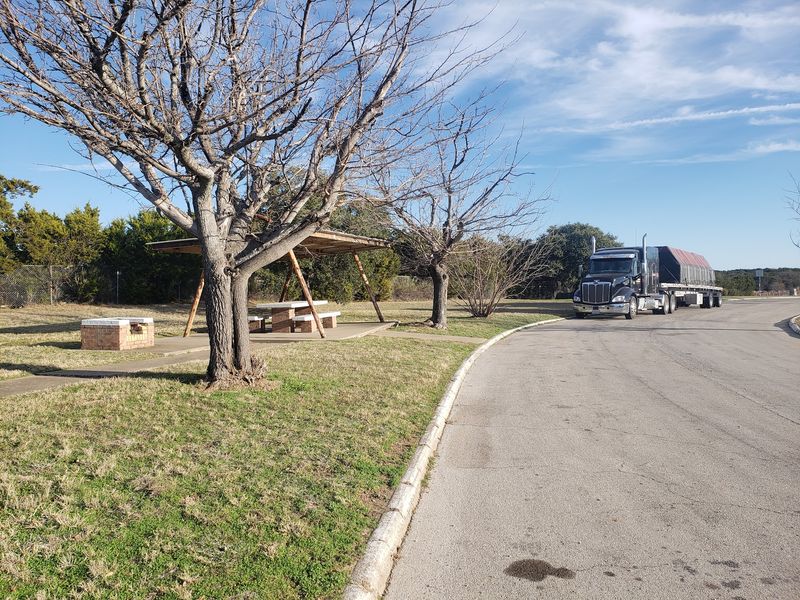
Sometimes the best amenity in a small town is a bench under a tree. The Palo Pinto Picnic Area delivers exactly that, with picnic tables, grills, and enough shade to make a midday stop pleasant instead of miserable.
It is simple. That is the charm.
Since Palo Pinto has almost no commercial services, packing a cooler is the practical move for anyone spending a day in the area. Sandwiches, fruit, plenty of water, maybe something to grill if the timing works out.
Eating outdoors here beats any drive-through on the highway.
The setting works well as a base between stops. Courthouse in the morning, jail and museum grounds after, lunch under the trees, then a drive into the hills in the afternoon.
Families with restless kids will appreciate having a place to spread out and burn energy.
Bring trash bags and carry everything out, since small facilities like this depend on visitors leaving them clean. A tablecloth is handy too, because weathered concrete tables collect dust and leaves.
Insect repellent helps in warmer months, especially near dusk.
What struck me was how little competition there was for a table. On plenty of Texas roadside stops you circle looking for space.
Here you just pick the tree you like best.
Sit long enough and the pace of the place sinks in. Birds, wind, an occasional pickup on the road, then quiet again.
That unhurried rhythm is the real souvenir from a town this size.
Ghost Towns and a Brand New State Park Next Door
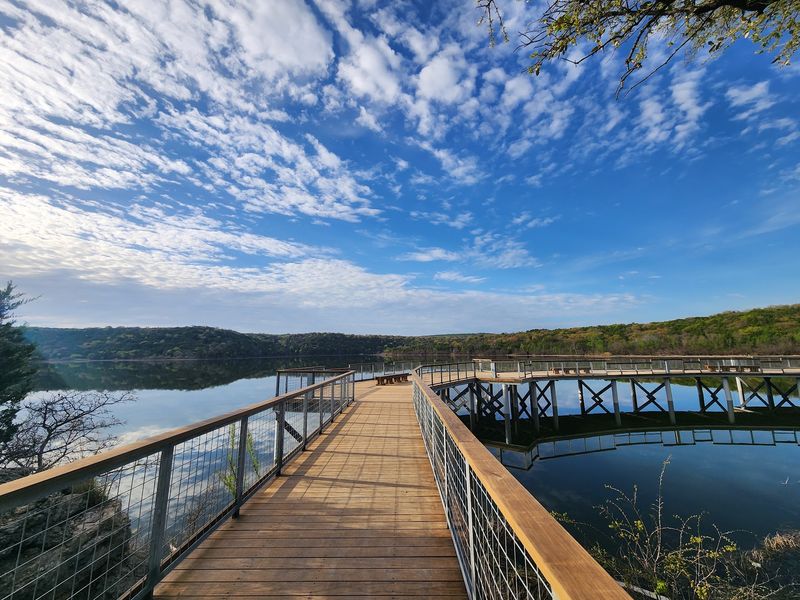
Just beyond town, the county opens up into something bigger. Palo Pinto Mountains State Park (100 Park Road #77, Strawn, TX 76475) is the first brand new Texas state park in 18 years, and it brings around 16 miles of trails, dramatic rock formations, and a 91-acre lake into the mix.
Wildlife watching is a real draw. Bald eagles have been spotted here.
The park also holds the remains of Wiles, a ghost town that sprang up during a 1915 oil boom and stood empty by 1959. Walking trails past the traces of a vanished community adds a strange weight to an otherwise sunny hike.
Elsewhere in the county sits Thurber, once a major coal and brick mining town and now a haunting collection of ruins and interpretive stops.
Water lovers have options too, with Possum Kingdom Lake and Lake Palo Pinto both drawing visitors for fishing, boating, and long lazy shoreline afternoons. Those lakes are where most county tourism concentrates, which is precisely why the town of Palo Pinto stays so peaceful.
Check park operating details before heading out, since a new park’s access, trails, and facilities can change as development continues.
Wear real hiking shoes. The terrain is rocky and unforgiving on thin soles.
Start early in warm months and carry more water than seems necessary, because shade on open ridges is scarce.
Pairing a morning in the historic town with an afternoon on these trails makes for one of the more satisfying day trips in North Texas.
Quiet history, then wide open country. Hard combination to beat.
