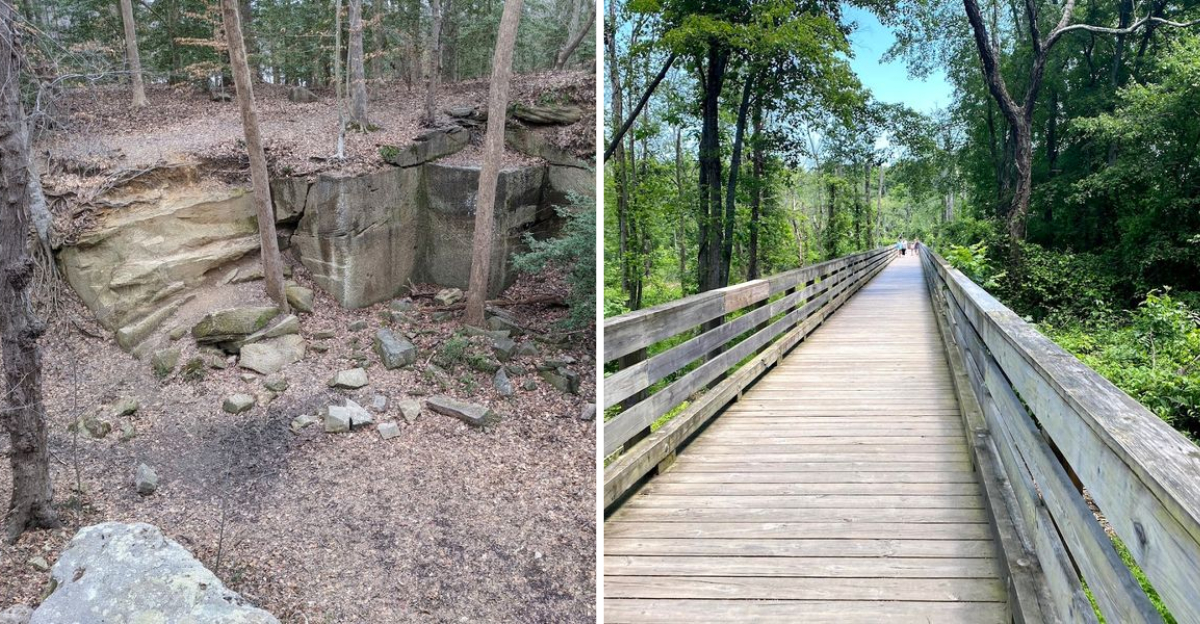
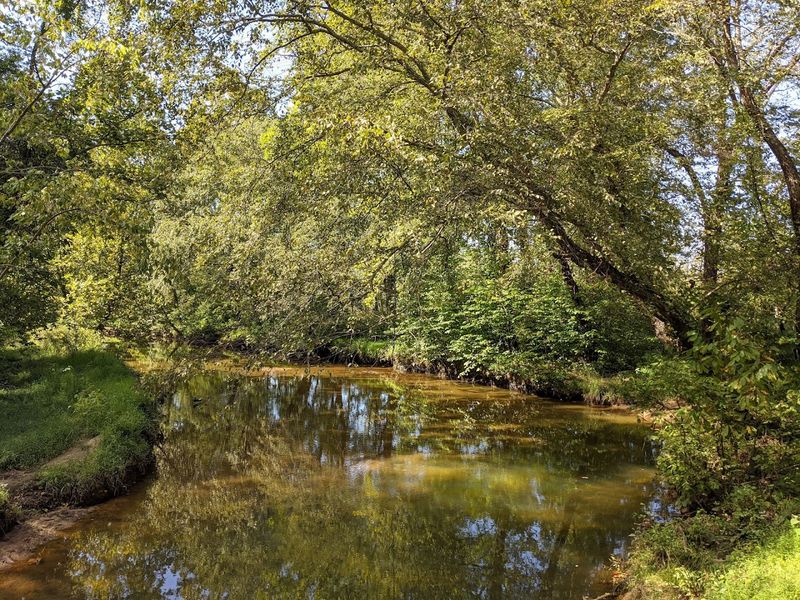
Walking along a creek in Virginia, I found a place that stopped me cold the moment I understood what I was standing on.
The ground here once supplied the very stone used to build the White House and the U.S. Capitol.
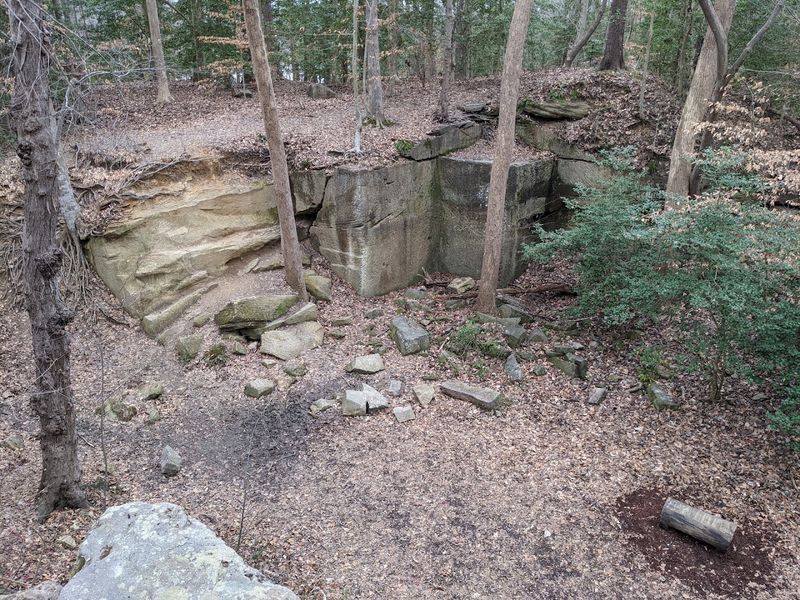
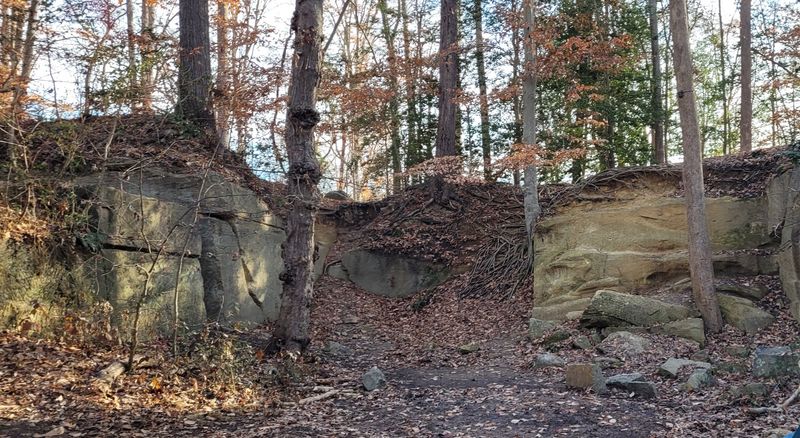
That fact takes a second to sink in. The island is small, free to visit, and quietly extraordinary. Ancient chisel marks still scar the exposed rock faces.
Birds call from the marshlands. Interpretive signs tell stories that feel too remarkable to be real.
I spent an afternoon walking those trails, running my fingers over the old quarry cuts, trying to imagine the labor that went into hauling that stone away.
The water moved slow and steady beside me, and the whole place felt like a secret the state had been keeping for centuries.
It is the kind of spot that makes you want to grab a friend and say, you have to see this.
The Echoes of a Nation’s Birth: Aquia Sandstone and the Founding of a Capital
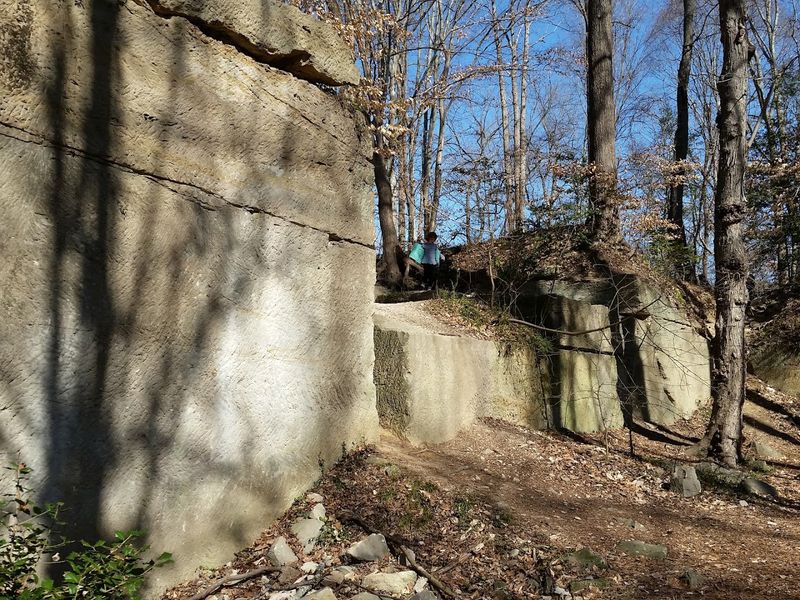
Few places in Virginia carry the kind of quiet, nation-building weight that Government Island does.
Before it ever became a public park, this 17-acre island on Aquia Creek was known by other names.
First as Wigginton’s Island, then as Brent’s Island, with a history stretching back to Native American communities who called this landscape home long before European settlers arrived.
What truly changed everything for this piece of land was a single recommendation made in 1791.
George Washington himself suggested that Pierre Charles L’Enfant, the architect tasked with designing the new federal city, acquire the island for the U.S. government.
The reason was straightforward: the Aquia Creek sandstone found here was exceptional.
This freestone was prized for its bright color and fine-grained quality, making it ideal for intricate architectural carving.
From 1791 through the 1820s, enormous quantities of this stone were extracted and transported up the Potomac River to Washington, D.C.
The original foundations and facades of both the White House and the U.S. Capitol Building were shaped from this very material.
George Washington and George Mason were also early clients, using the stone at sites like Gunston Hall and Mount Vernon.
Knowing that history makes every step on the island feel genuinely significant.
Whispers from the Quarry Face: Ancient Chisel Marks You Can Actually Touch
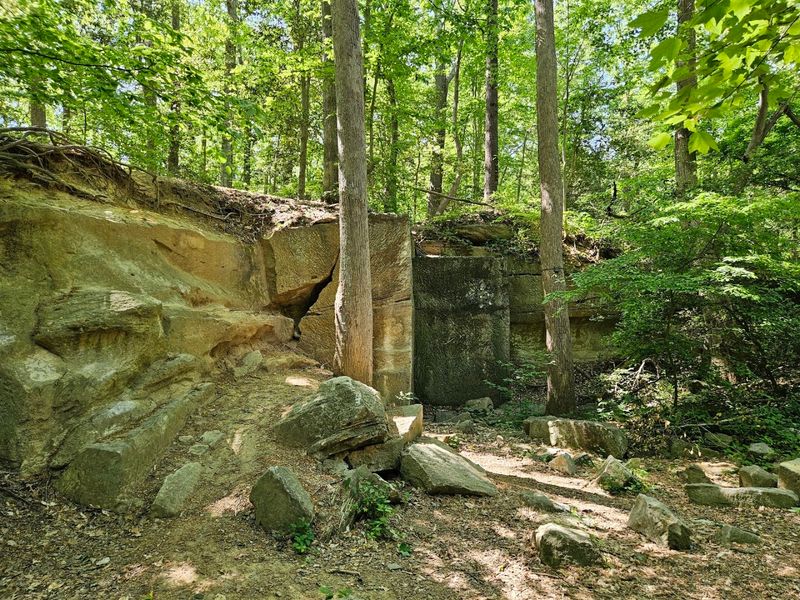
There is something almost surreal about pressing your hand against a rock face and realizing the marks you are feeling were made by someone working in the 1790s.
At Government Island, those chisel indentations are still clearly visible on the exposed stone walls, and they hit differently once you know what they represent.
These were not random carvings. Each groove and notch reflects a specific quarrying technique used by skilled masons to extract clean, workable blocks of Aquia sandstone.
The labor was intense and unrelenting, carried out in large part by enslaved individuals whose contributions are woven into the very fabric of the nation’s most iconic buildings.
After the Civil War, demand for Aquia sandstone declined as harder, more durable stone materials came into favor.
The quarry gradually fell silent, and the land was largely left to its own devices for decades.
Yet the physical evidence of all that effort never disappeared. The rock faces remain as open-air documentation of a craft and a chapter in American history that deserves to be seen up close.
Visiting this spot feels less like reading a history book and more like holding one in your hands.
A Natural Haven Reborn: Wetlands, Wildlife, and the Boardwalk Experience
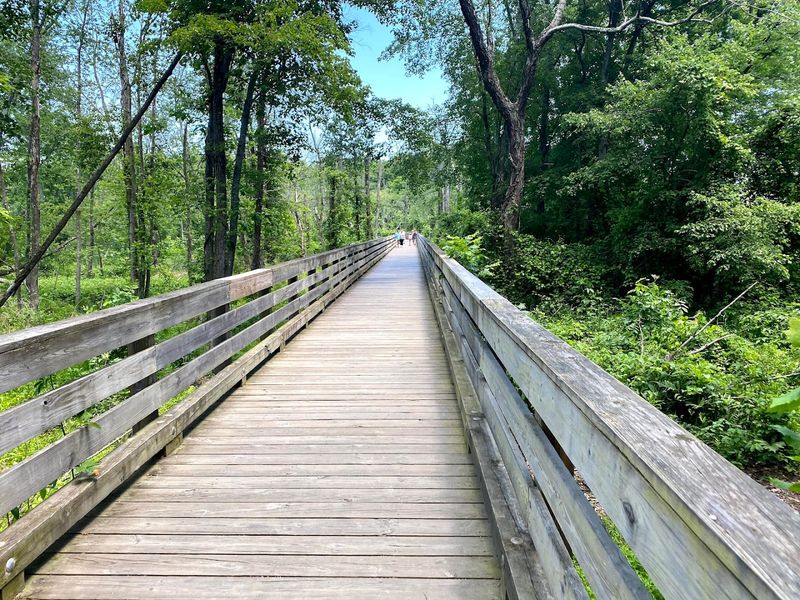
Once you move past the quarry remnants, the island shifts into something entirely different.
The landscape opens up into a rich mix of wetlands, marsh areas, and shaded woodland, and the transition happens gradually.
You barely notice until you are suddenly floating above still water on a wide, well-maintained wooden boardwalk.
That boardwalk is genuinely one of the highlights of the visit. It lifts you above the delicate wetland ecosystem, letting you peer down into the reeds and murky shallows without disturbing anything below.
Turtles bask on half-submerged logs. Native aquatic plants push up through the water in dense clusters.
The whole scene has an unhurried, almost meditative quality to it.
Wildlife spotting here rewards patience.
Carolina Chickadees are common year-round companions along the trail, while migration seasons bring colorful warblers like the Northern Parula and the Prothonotary Warbler through the canopy.
Garter snakes occasionally slip across the path, and if you are lucky, you might catch a great blue heron standing motionless at the marsh’s edge.
The park has quietly become a haven for local biodiversity, and the contrast between its industrial past and this thriving natural present is part of what makes Government Island so genuinely compelling to explore.
The Heritage Trail: A 1.5-Mile Walk Through Centuries of History
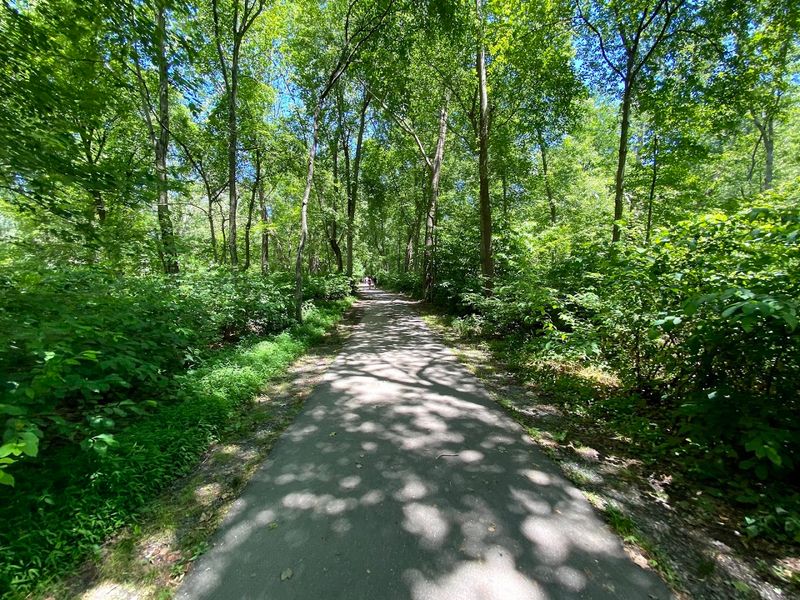
The main trail at Government Island covers roughly 1.5 miles, though some walkers clock it closer to 1.7 miles depending on their pace and how often they stop.
It follows a lollipop-style loop, beginning on a paved asphalt path, transitioning onto the elevated boardwalk over the wetlands, and eventually settling into a soft, mulched wood chip trail through the island’s forested interior.
That final stretch through the woods is something special. The ground underfoot feels almost springy, and the tree cover keeps things noticeably cooler even on warm summer days.
The trail is quiet in a way that city parks rarely manage, with the loudest sounds often coming from startled squirrels darting through the underbrush rather than anything human-made.
Interpretive signs are placed thoughtfully along the route, each one adding another layer to the island’s story without ever feeling overwhelming or lecture-like.
One particularly memorable marker points out a large stone boundary marker inscribed with the initials R.S., belonging to Robert Steuart.
He was a landowner who held a one-acre parcel that was not included in the 1791 federal purchase.
He marked his property corners with these stones, and finding one still standing today feels like a genuine discovery.
The trail is accessible enough for most visitors, with the boardwalk section being handicap friendly as well.
Saved by the Community: The Inspiring Story Behind the Park’s Preservation
Government Island almost did not survive as a public space at all.
In 1979, the Westinghouse Corporation owned the island alongside the surrounding Aquia Harbour development and had drawn up plans to subdivide it into residential lots.
What stood between that plan and what the island is today was largely one determined local resident named Jane Conner.
Conner dug into the island’s history with serious commitment, uncovering the nationally significant story of its quarry and its ties to the founding of Washington, D.C.
Her research convinced Westinghouse and local homeowners to purchase the island for a symbolic sum rather than develop it.
That early preservation effort bought the island time, but the fight was not over.
When the island came up for sale again years later, Conner stepped back in, navigating lengthy negotiations until Stafford County was finally able to purchase it in 1998.
A committee chaired by former White House Curator Rex Scouten was appointed in 2000 to develop a plan for the site.
By 2010, Government Island officially opened as a public park, free and accessible to everyone. The whole story is a reminder that places like this do not preserve themselves.
They survive because specific people decide they are worth fighting for, and that makes visiting feel like honoring that effort.
Quiet Reflection and Deep Connection: What the Island Does to You
There is a particular feeling that creeps up on you somewhere around the midpoint of the Government Island trail, a sense that the ordinary world has stepped back a little. It is not dramatic or cinematic.
It is subtle, the kind of quiet that makes you slow down without consciously deciding to.
I found myself stopping more than I expected.
Sometimes just at a gap in the trees where the creek glinted through, or at a stretch of exposed rock where the chisel marks caught the afternoon light at just the right angle.
The park invites that kind of attention without demanding it.
Government Island holds dual recognition on both the National Register of Historic Places and the Virginia Landmarks Register, and it is also part of the Potomac Heritage National Scenic Trail.
That layered significance gives the place a weight that you feel even before you read a single sign.
The interplay between what humans built here and what nature quietly reclaimed afterward is genuinely moving.
Standing at the edge of the wetlands and then turning back to look at the quarry walls, you get both stories at once, and somehow the combination says more than either one could manage alone.
Planning Your Visit: Everything You Need to Know Before You Go
Getting to Government Island Park is easy, and the experience is genuinely low-barrier from start to finish.
Admission is completely free, parking is available on site, and the park is open daily from 7 AM to 5:30 PM.
Seasonal hours can extend into the evening during warmer months, so it is worth a quick check on the Stafford Parks website before heading out, especially if you are planning a late afternoon visit.
Dogs are welcome on leashes, which makes this a popular spot for people walking their pets on weekday mornings. The parking lot is not enormous, so arriving earlier in the day on weekends tends to work out better.
A large informational kiosk at the entrance gives you a solid overview of the island before you set foot on the trail, and a portable restroom is available in the parking area.
Comfortable walking shoes are a smart call, particularly for the mulched and dirt sections of the trail toward the back of the island. Bring water and a snack since there are no concessions on site.
Fishing is also permitted along the creek banks, and some visitors bring kayaks and launch from the area to paddle out onto Aquia Creek. The park’s phone number is (540) 658-4871 if you need to confirm anything ahead of time.
Address: 191 Coal Landing Road, Stafford, VA 22554.
