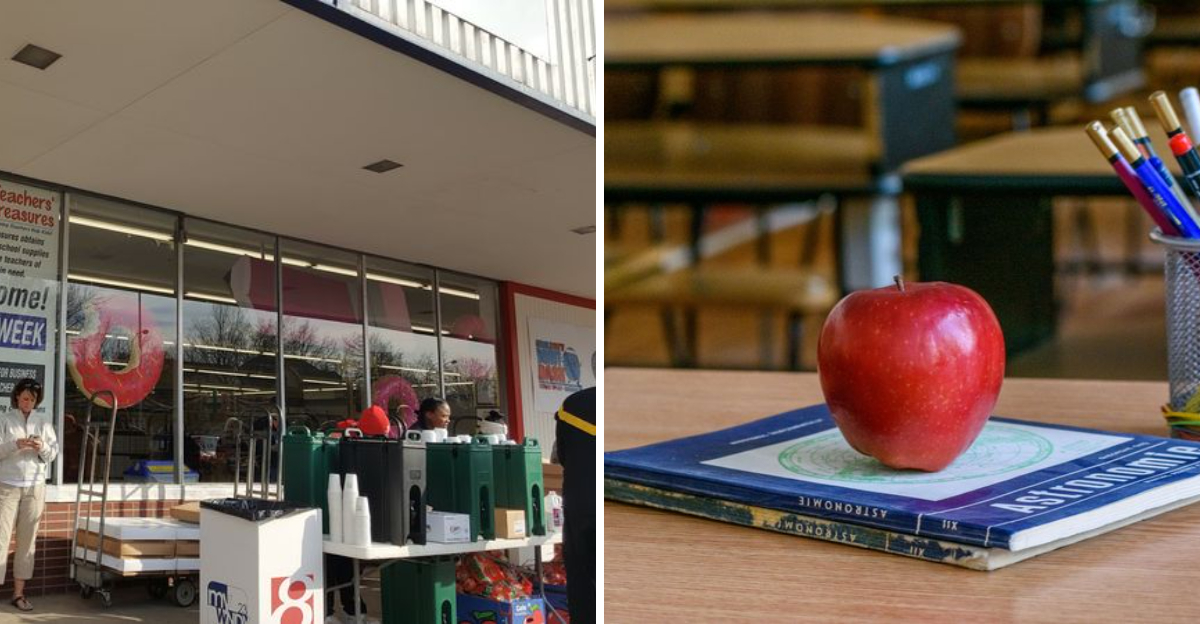
I almost did not believe my friend when she told me about it. A whole store, she said, where teachers push a real shopping cart down real aisles and walk out with everything free.
Somewhere in Indiana, tucked away from the main roads, this place exists exactly as she described. I drove out expecting a small closet of leftover pencils and a few dusty folders.
Instead I found wide aisles, tidy shelves, and volunteers moving with the calm rhythm of people who have done this for years. The building looks unassuming from outside, which somehow makes stepping in even better, like discovering your quiet neighbor is secretly a legend.
Teachers across this state talk about it the way people usually talk about a favorite hometown bakery. If you know an eligible teacher, this is the kind of place they need to hear about immediately.
An Unassuming Building With Enormous Heart
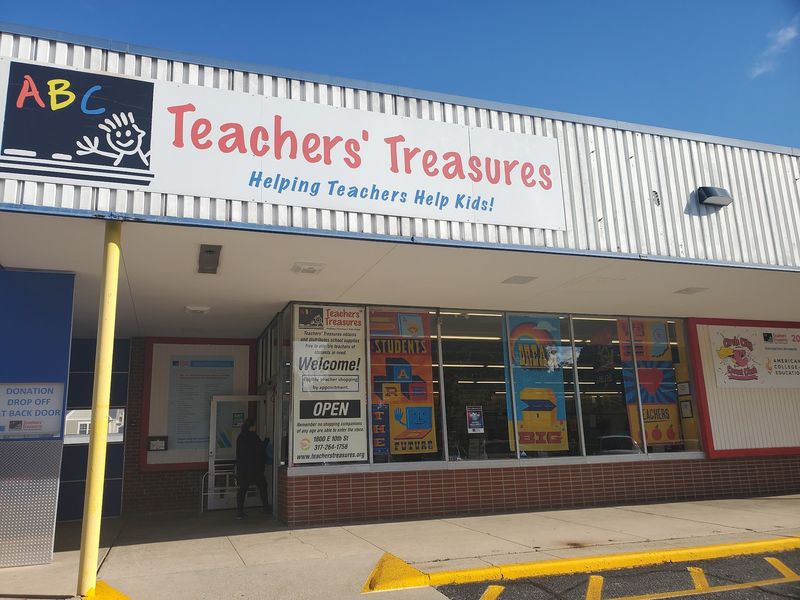
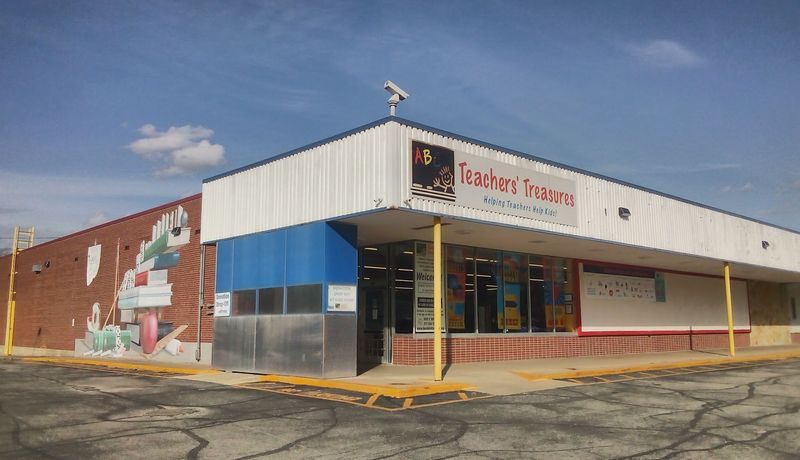
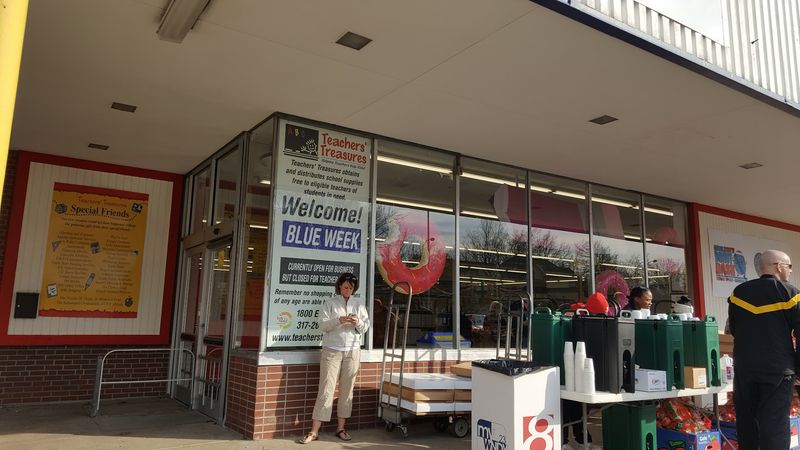
The first thing that struck me was how ordinary the building looks. Brick, wide front, a parking lot.
Nothing shouts about what happens inside.
That contrast is part of the charm. The space was once a Kroger grocery store, and in September 2007 the company made the former shop available for a nominal fee so the organization could move out of a cramped school basement.
You can still feel the grocery bones of it. Long sightlines, sturdy floors, room to push a cart without bumping elbows with someone reaching for construction paper.
What fills those bones now is entirely different. Instead of cereal boxes there are bins of markers, stacks of folders, shelves of books waiting for a reading corner somewhere in Marion County.
I liked how quietly efficient everything seemed. Volunteers restocked while teachers browsed, and nobody rushed anybody along.
There is something genuinely moving about a plain warehouse doing extraordinary work without any fuss. No flashy signage, no gift shop, no attempt to look impressive.
If you are the sort of traveler who enjoys finding the real working parts of a city rather than its postcard versions, this is your kind of stop. It sits just east of downtown, close enough that you can pair it with a morning drive through the surrounding neighborhoods.
Small building. Very large footprint.
Aisles That Feel Like a Treasure Hunt
One teacher review described going treasure hunting every month, and after seeing the aisles I get the phrase completely. The stock changes constantly, so no two visits look the same.
Pencils, folders, paper, and glue sticks make up the reliable backbone. Those essentials are almost always there, which matters more than people realize.
Then come the surprises. Books for every reading level, bulletin board trim, classroom decor, backpacks, games, calculators, globes, even furniture on lucky days.
I watched a teacher pause in front of a shelf of paperbacks and start flipping through titles the way I browse a used bookstore. That look of quiet delight is hard to fake.
The organization here deserves credit. Everything is sorted into clear categories, labeled, and kept clean, so a busy educator can move through quickly without digging through chaos.
Carts are real carts, not baskets. Teachers fill them properly, which is exactly the point of the whole operation.
There are sensible limits on quantities so the supply stretches across many classrooms, and honestly that fairness makes the place feel even better.
A small treasure chest section holds the more unusual finds, the kind of items that spark a whole new lesson idea.
If you appreciate places that reward curiosity, these aisles deliver. You genuinely never know what will be sitting on the shelf.
Who Gets To Shop and How It Actually Works
Curiosity got the better of me, so I asked how eligibility works. It turns out the system is thoughtful rather than complicated.
Educators from public, private, charter, or parochial schools in Marion County qualify when their school has sixty percent or more of students participating in free or reduced lunch programs.
The definition of educator is refreshingly wide. Instructional assistants, paraprofessionals, principals, social workers, school nurses, and guidance counselors can all shop, because supporting students takes a whole team.
Teachers register with a small annual membership, bring their school identification, and then shop on a schedule tied to their school group. Appointments are booked ahead of time, which keeps the aisles calm.
Shopping happens roughly once a month across the school year. Several teachers mentioned that monthly rhythm as something they genuinely look forward to.
Only members enter the shopping floor, so friends and children stay home for that trip. It sounds strict until you see how smoothly it keeps everything moving.
There is also a satellite location at Northwest Middle School, which spreads access across the city.
Store hours run mornings through late afternoon Monday to Friday, with weekends closed, so plan around that if you are visiting or dropping off donations.
What impressed me most was the clarity. Clear rules, clear schedule, and staff who explain everything without making anyone feel like a nuisance.
A Retired Principal, a School Basement, and a Very Big Idea
Every great local institution has an origin story, and this one starts in 2000 with a retired school principal named Phyllis Imel.
She had stepped away from her career but not from her concern for at risk children in Indianapolis. Rather than watch teachers keep buying supplies out of pocket, she started collecting donations.
The very first version operated out of an unused corner in the basement of Washington Community School. Picture a few shelves, some cardboard boxes, and a lot of determination.
Word spread among educators, as good news among teachers always does. Volunteers began chasing product donations and financial support to keep the shelves stocked.
Demand outgrew the basement fast. The 2007 move to the former grocery store on East 10th Street changed the scale of everything.
Since those early days, the organization has distributed more than one hundred million dollars worth of supplies. That number stopped me cold when I read it.
One reviewer mentioned visiting as a teacher in the early 2000s, again years later at a different school, and once more recently, watching it grow the entire time. That kind of continuity says a lot.
Twenty plus years in, it still runs on volunteers.
I find that history far more interesting than any polished museum exhibit, mostly because it is still happening.
The Volunteers Are the Real Attraction

Supplies are the reason teachers come. The volunteers are the reason they come back smiling.
Nearly every review of this place mentions friendly staff, and I saw why within about two minutes of walking in. People greeted teachers by name, asked how the school year was going, and offered help carrying heavy items to cars.
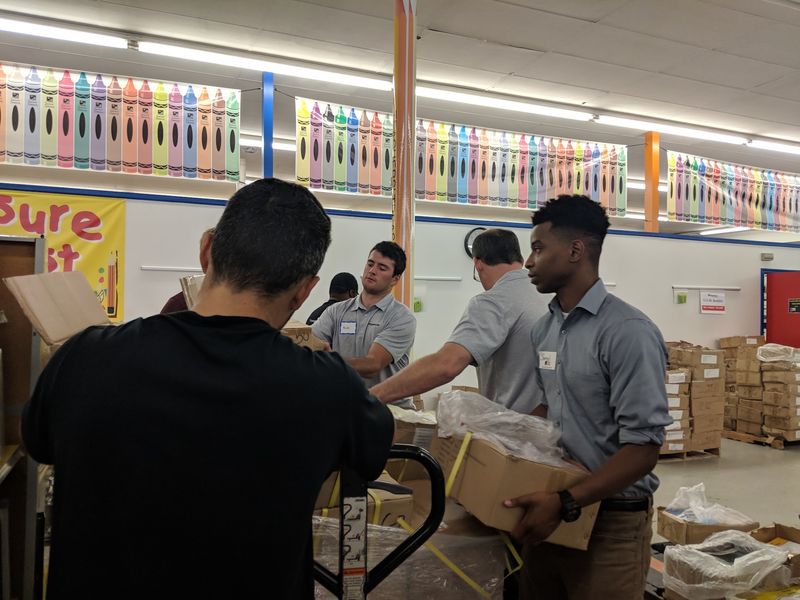
The whole operation is volunteer based. Sorting, shelving, restocking, checking teachers in, hauling boxes, all handled by people who chose to spend their morning here.
One teacher wrote about a volunteer helping wrestle a bulky item out to the parking lot, and that small kindness clearly stuck with her for a long while.
I noticed how patient everyone was with questions. Nothing felt rushed, even during a busy stretch.
There is a particular warmth to a place staffed by people with no obligation to be there. It changes the temperature of a room.
Local businesses, charitable foundations, neighborhood groups, and individual donors keep the inventory flowing, and volunteers turn that flood of donations into something usable.
Sorting thousands of donated items into clean, browsable categories is unglamorous work. Somebody does it anyway, every single week.
If you ever want to see community spirit in a very literal form, spend an hour watching this crew work. It is oddly uplifting.
Where Surplus Becomes Somebody’s Favorite Lesson

Here is the part I did not expect to enjoy so much. A good portion of what fills these shelves came from somewhere else entirely.
Businesses donate excess inventory, gently used items, and materials that no longer fit their needs. Instead of heading to a landfill, all of it gets sorted, cleaned, and shelved.
The result is a wonderfully unpredictable mix. Office supplies, paper stock, fabric, storage containers, and odds and ends that a creative teacher can spin into something clever.
One reviewer mentioned building personalized teaching tools out of whatever happened to be available that month. That is resourcefulness at its finest.
I kept thinking about how a box of leftover materials might become a science project, an art unit, or a hands on engineering challenge for a room full of curious kids.
Repurposing also stretches every donated dollar further. The organization notes that a single dollar can translate into roughly fifteen dollars worth of school supplies.
Good for classrooms, good for the environment, and satisfying in a very practical way.
Toiletries for students, bulletin board materials, and games also turn up regularly, filling needs most people never think about.
Nothing here is treated as junk. Everything gets a second chance at being useful, which is a pretty decent philosophy for a store or a city.
Why This Stop Stayed With Me Long After I Left
Driving back toward downtown, I kept thinking about the ripple effect of the place. Supplies go out the door, land in classrooms, and reach kids who never learn where any of it came from.
Over one hundred thousand Indianapolis students are affected by poverty, which makes basic pencils and paper anything but trivial.
Teachers routinely spend hundreds of their own dollars each year on classroom needs, sometimes far more. Removing that pressure lets them focus on actually teaching.
One teacher wrote about finally being able to stock books her high school students would genuinely enjoy reading. Another mentioned simply handing supplies to students who arrived with none.
That is the whole story in a nutshell.
What began in a school basement in 2000 now functions like a citywide support system, quietly holding up classrooms across Marion County.
As a visitor I could not shop, obviously, and that felt right. Some places are not built for tourists, and appreciating them from a respectful distance is enough.
Still, if you are passing through Indianapolis and want to understand what makes the city tick beyond its stadiums and museums, this east side warehouse tells you plenty.
It reminded me that generosity does not need scenery to be memorable. Sometimes it just needs shelves, carts, and people who keep showing up.
Address: 1800 E 10th St, Indianapolis, IN 46201
