A U.S. president rests on the same grounds as Public Enemy Number One. They aren’t even that far apart.
I can’t get over how strange and wonderful that pairing is.
One of the highest viewpoints in the city sits here too. A beloved poet claimed the very top spot.
From his tomb, you can see the whole downtown skyline on a clear day.
I’m fascinated by places where history’s most unlikely characters end up sharing the same stretch of land. Deer wander past monuments carved more than a century ago.
Hundreds of tree species shade winding roads that seem to go on forever.
Indiana has plenty of historic sites, but few hold this many famous names in one spot. Authors, vice presidents, and Civil War soldiers all share these hills.
I’d happily spend an afternoon following those winding paths and discovering whose stories are carved into the monuments along the way.
Welcome to One of the Biggest Cemeteries in the Whole Country
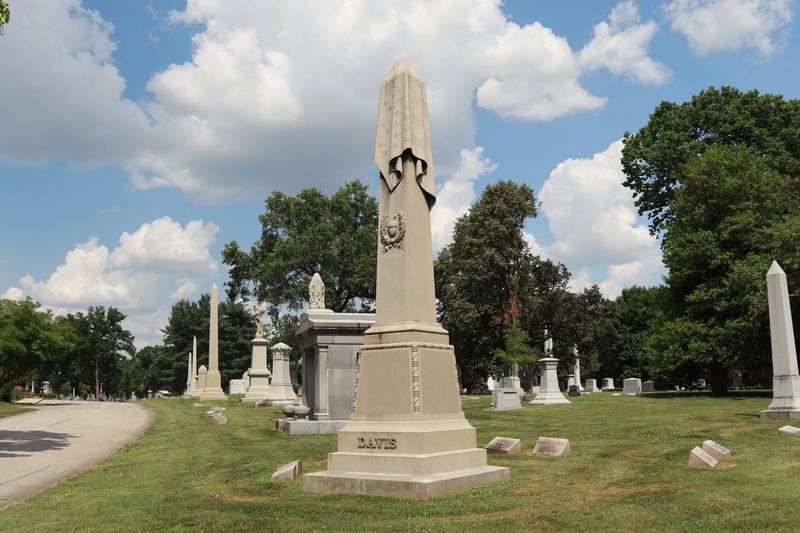
Crown Hill Cemetery covers about 555 acres of rolling ground in Indianapolis. That makes it the third-largest non-government cemetery in the United States.
The story starts in 1863, when the cemetery was founded. It was dedicated on June 1, 1864, during the Civil War years.
Crown Hill follows the rural cemetery style that was popular back then. Instead of tight rows, it was planned more like a peaceful park.
Landscape architect John Chislett Sr. of Pittsburgh shaped its early design. Adolph Strauch, a horticulturalist from Prussia, also had a strong influence.
Together, their ideas created a Victorian Romantic landscape. The winding roads follow the natural hills instead of flattening them out.
That choice still pays off today. Every curve seems to reveal a new view, a new monument, or a new name worth looking up.
Around 25 miles of paved roads loop through the grounds. Yes, that’s more road than some small towns have.
So plan on more than a quick stroll. Comfortable shoes and a little patience will help you enjoy this place properly.
Think of it as an outdoor museum where the exhibits are carved in stone. The history lessons here simply come with fresh air and plenty of shade.
Climb to the Top and Catch the Best View in the County
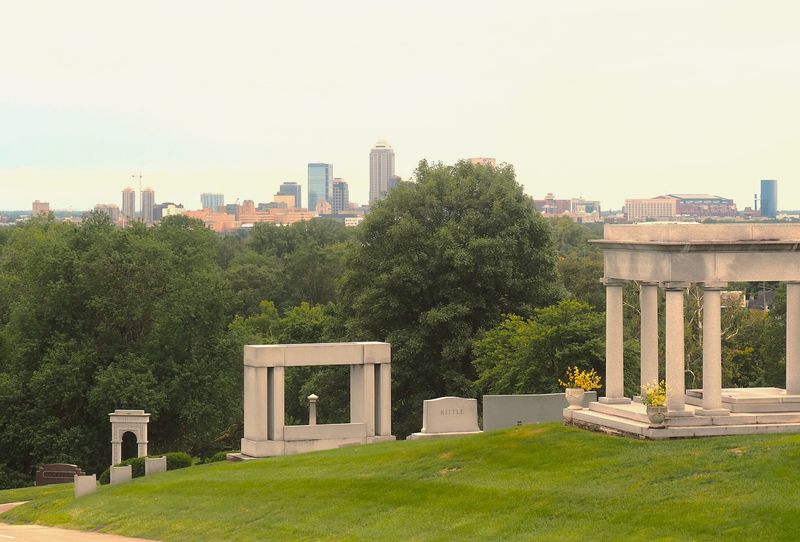
Few cemeteries come with a skyline view this good. At Crown Hill, the prize sits on a spot simply called The Crown.
From the top, you get a wide, sweeping view of downtown Indianapolis.
On a clear day, the city spreads out like a postcard. Bring your camera, because this is the most famous photo spot on the grounds.
A stairway leads up to the tomb of James Whitcomb Riley. He was known as the Hoosier Poet, and he was hugely popular in his time.
His monument at the very top makes the climb feel meaningful. You aren’t just chasing a view, you’re visiting a writer the whole state loved.
The President Benjamin Harrison gravesite isn’t far from this area. That makes it easy to see two major stops in one visit.
Here’s a simple tip for timing. Pick a bright, clear day if you want the skyline to really show off.
Hazy weather can soften the view quite a bit. Still, the peaceful hilltop is worth the walk in almost any season.
A President and Three Vice Presidents Rest on These Hills
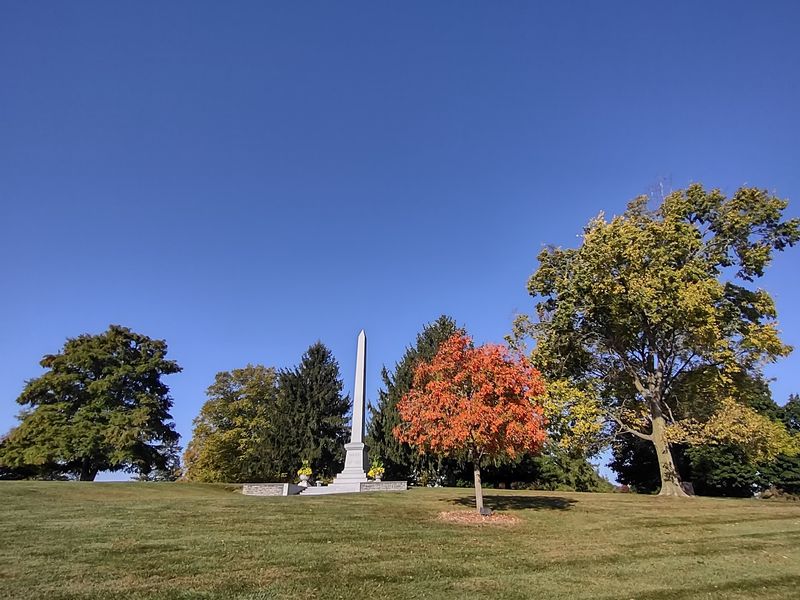
Indiana can claim only one cemetery with a U.S. president. That honor belongs to Crown Hill.
Benjamin Harrison, the 23rd President of the United States, is buried here. His first wife and his second wife rest beside him.
That alone would make most cemeteries famous. But Crown Hill keeps going with even more political history.
Three U.S. Vice Presidents are buried on these grounds too.
They are Charles W. Fairbanks, Thomas A.
Hendricks, and Thomas R. Marshall.
That’s a lot of national leadership in one Indianapolis neighborhood. It shows how important Indiana once was in American politics.
Thomas R. Marshall served under President Woodrow Wilson.
Charles W. Fairbanks served under Theodore Roosevelt, and Hendricks served under Grover Cleveland.
Visiting these graves is a fun way to make history class feel real. Kids might remember a name better after standing near the actual monument.
A little homework before you go helps a lot. Look up each leader first, then hunt for their graves with a map in hand.
Suddenly, a quiet afternoon turns into a real-life scavenger hunt. And the prize is a better understanding of how Indiana helped shape the country.
Book Lovers, Your Favorite Writers Are Waiting Here
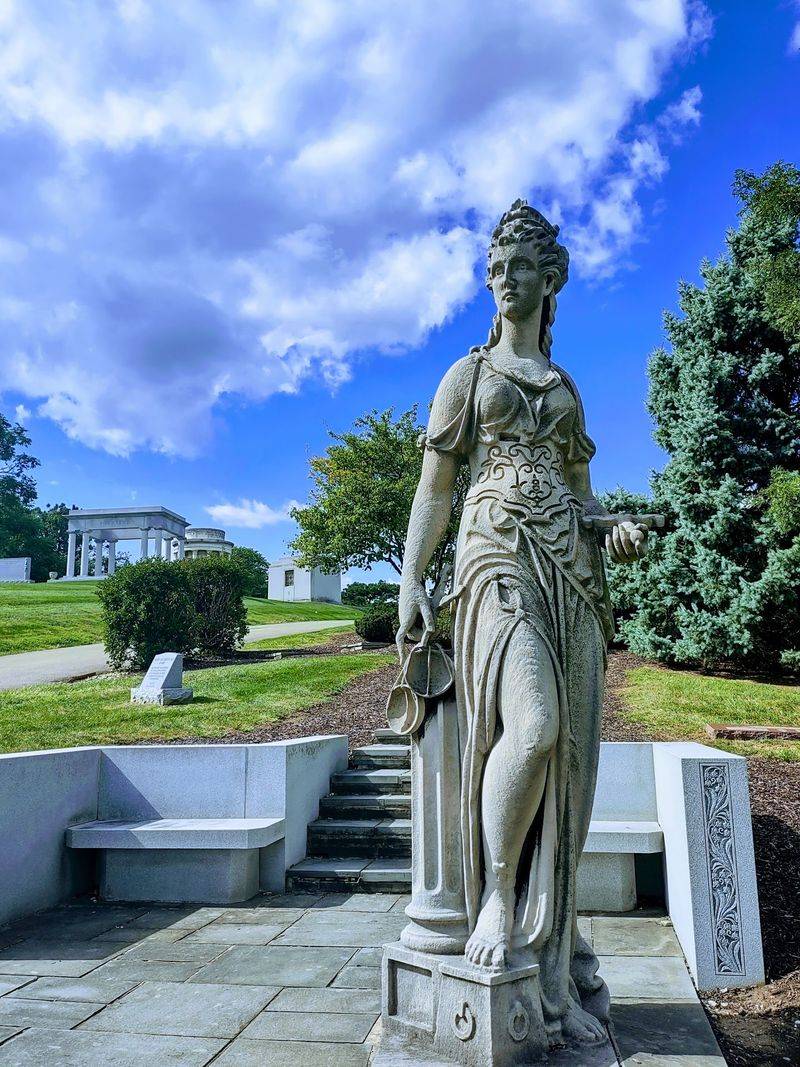
Grab your library card, because Crown Hill reads like a list of Indiana’s literary stars. Some of the state’s best storytellers rest here, making it a true haven for history-loving readers.
James Whitcomb Riley tops the list in more ways than one. His poems, like Little Orphant Annie and The Raggedy Man, created characters people still remember.
Then there’s Booth Tarkington, a novelist from Indianapolis. He won the Pulitzer Prize two times, which is a pretty big deal in American letters.
Tarkington wrote The Magnificent Ambersons and Alice Adams. Both books earned him that famous prize and cemented his status as a literary giant.
Etheridge Knight rests within these historic grounds as well. He became a major voice in the Black Arts Movement while writing his famous book, Poems from Prison.
Meredith Nicholson is buried here too, just a short walk away. He was a bestselling novelist in the early 1900s who helped spark Indiana’s golden age of literature.
Here’s a fun idea for readers. Pick one short poem or book passage from each author before your visit.
Reading a few lines near their graves makes the trip feel personal. It’s a little like having a quiet book club with the writers themselves.
Honestly, it’s one of the most unusual literary tours you could take anywhere in Indiana.
Yes, the Famous Outlaw Is Buried Here Too
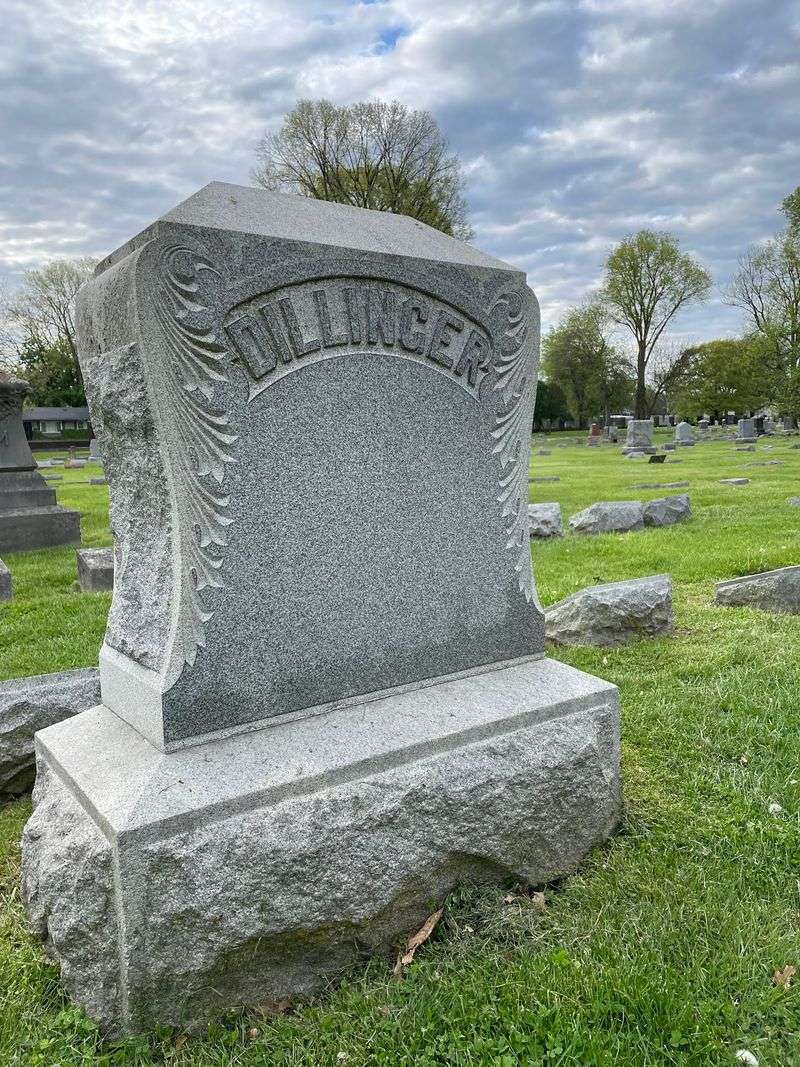
Not everyone at Crown Hill earned a gold star for good behavior. John Dillinger, once called Public Enemy Number One, is buried here.
Dillinger was a bank robber in the 1930s. He became one of the most famous outlaws in American history.
His grave is one of the most visited spots in the cemetery. People come curious about his wild life and headline-grabbing story.
The funny part is the company he keeps. A president, vice presidents, and famous poets share the same grounds as this notorious robber.
That mix makes Crown Hill feel like a giant history book with surprising chapters. You never quite know whose name you’ll find next.
Crown Hill even offers themed tours about Dillinger. They focus on his story and the times he lived in.
Please be respectful when you visit his grave. Remember that this is still a family plot inside an active cemetery.
Snap a photo, read up on his history, and move along quietly. Even an outlaw’s resting place deserves good manners from visitors.
After all, the real treasure here is the story, not anything stashed away.
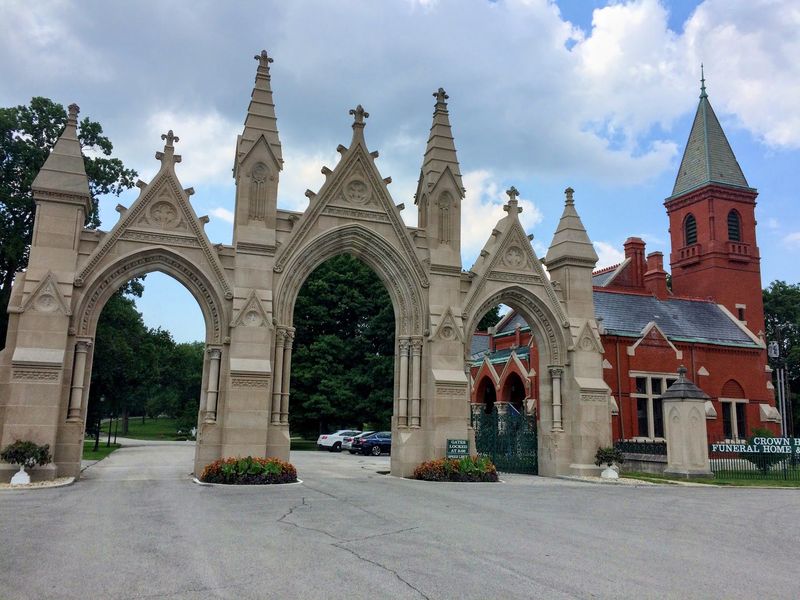
Stone Arches and a Gothic Chapel That Steal the Show
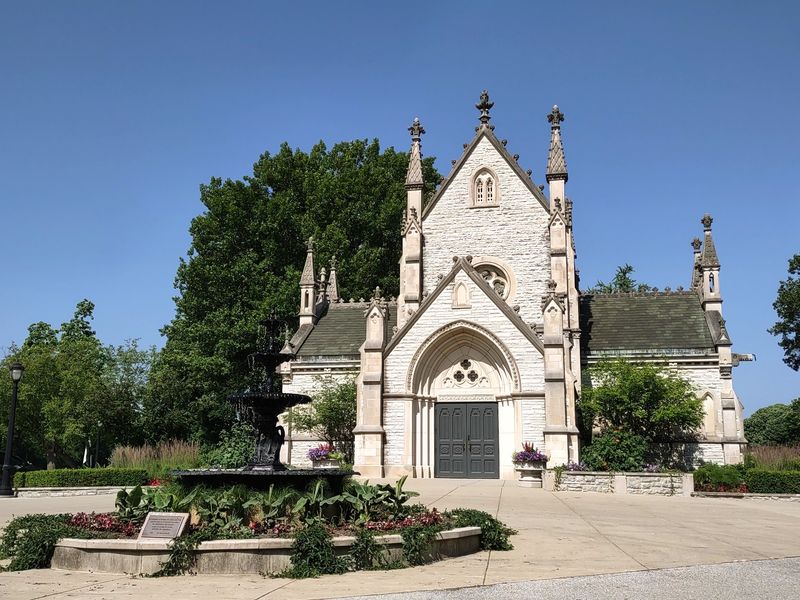
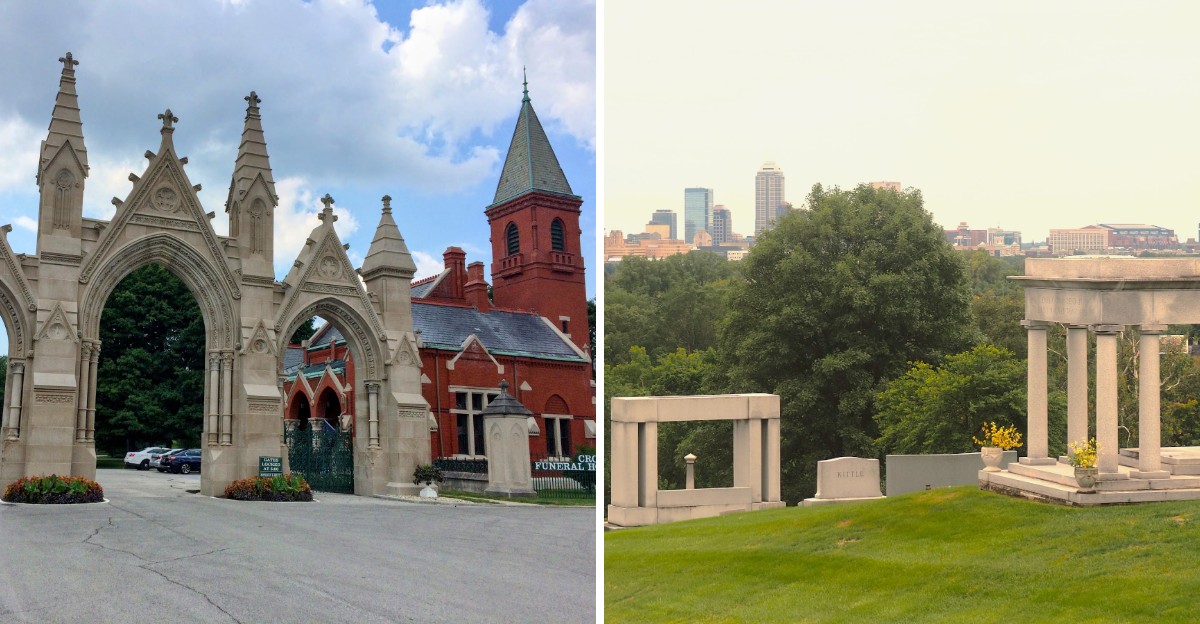
Those pointed arches look straight out of an old storybook. Crown Hill’s architecture is one of its biggest surprises.
The Gothic Chapel was built in 1875 from limestone. German-born architect Diedrich A.
Bohlen designed it.
Back then, the building served as a temporary holding vault. Today, it stands as one of the most photographed buildings on the grounds.
Then there’s the Gothic Gate at the 34th Street entrance. It was completed in 1885 along with a Waiting Station next to it.
Adolph Scherrer designed that gate and station. Scherrer also worked on the Indiana Statehouse, so he knew his way around big designs.
Beyond those buildings, the grounds are packed with private mausoleums and monuments. Many were created by well-known architects and sculptors.
Together, they show more than 150 years of American memorial art. Statues, carvings, and grand family tombs make the place feel like an outdoor gallery.
Bring a camera and look closely at the details. Angels, columns, and carved symbols often hide meaningful messages.
It’s honestly a great place to learn about design without stepping into a museum.
Spot the Deer, Admire the Trees, and Skip Feeding the Coyotes
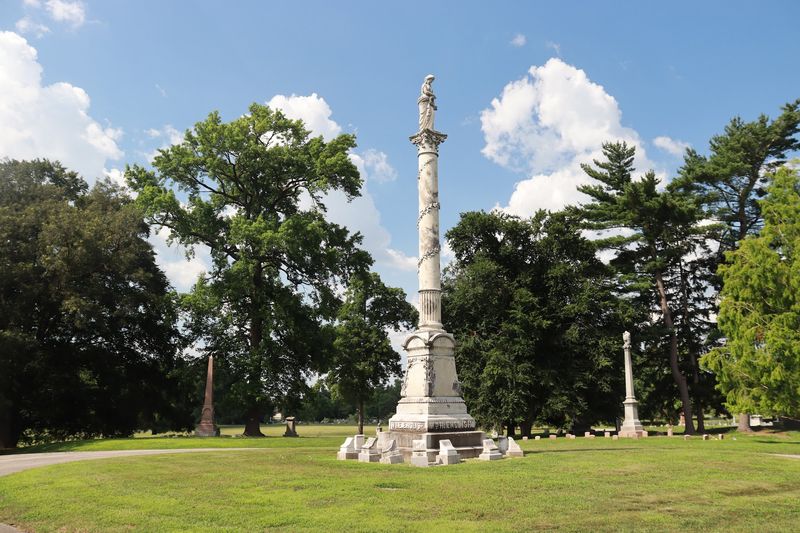
Nature lovers, this part is for you. Crown Hill isn’t only a historic site, it’s also a recognized arboretum.
Hundreds of tree and plant species grow across the grounds. Some sources count well over 100, while others count far more.
Either way, that’s a lot of green in the middle of a busy city. Spring blooms and fall colors make every season look different.
You can even download a tree map for a self-guided arboretum tour. It’s a fun way to learn the names of trees you pass every day.
Wildlife lives here too. White-tailed deer often wander through, especially around dawn and dusk.
Coyotes, raccoons, and red-tailed hawks also call these grounds home. Keep your eyes on the treetops and the tall grass.
A friendly reminder goes a long way here. Never feed the wild animals, even if they look curious.
Keep a safe distance and enjoy them from afar. Binoculars can turn a quiet walk into a great wildlife watch.
Honestly, it’s a peaceful break from city noise without leaving Indianapolis at all.
Rows of Honor for Soldiers From the Civil War Onward

Rows of white headstones line up in neat, quiet order. This section tells a very different kind of story.
A 1.4-acre U.S. National Cemetery was created inside Crown Hill in 1866.
It became the resting place for Union soldiers from the Civil War.
Another area is known as the Confederate Mound. About 1,616 Confederate prisoners of war are buried there.
Crown Hill hosts an annual Memorial Day service to honor those who served. Civil War reenactments have been part of the event.
The history didn’t stop in the 1800s, either. A Crown Hill National Cemetery Annex opened in 2022 for veterans.
That means this place still honors service members today. It connects old history with families in the present.
Visiting these sections is a meaningful lesson for kids and adults. It helps everyone understand the real people behind history books.
Walk slowly and keep voices low here. Reading a few names out loud can be a respectful way to remember them.
It’s a powerful reminder that Indiana’s story includes many quiet heroes. They deserve a moment of attention during any visit.
How to Plan Your Visit Without Getting Lost
With 555 acres to cover, a game plan really helps. Crown Hill Cemetery sits at 700 W 38th St, Indianapolis, IN 46208.
There are two main entrances. The North Gate is at 38th Street and Clarendon Road, and the Gothic Gate is at 34th Street and Boulevard Place.
Gate hours change with the seasons. The North Gate stays open later in spring and summer, so check times before you head out.
An underpass connects the sections north and south of 38th Street. It’s a safer way to walk between the two areas.
The Crown Hill Heritage Foundation offers public and private guided tours. Choices include a Heritage Tour, Civil War history, architecture, and even Dillinger.
Prefer to explore on your own? Grab a map or use a tour app to find famous graves at your own pace.
Wear comfy shoes and give yourself a few hours. Phone maps in walking mode can also guide you to specific gravesites.
Above all, remember this is still an active cemetery. Families visit loved ones here, so kindness and quiet always come first.
Follow those simple tips, and your visit should feel smooth and memorable.
