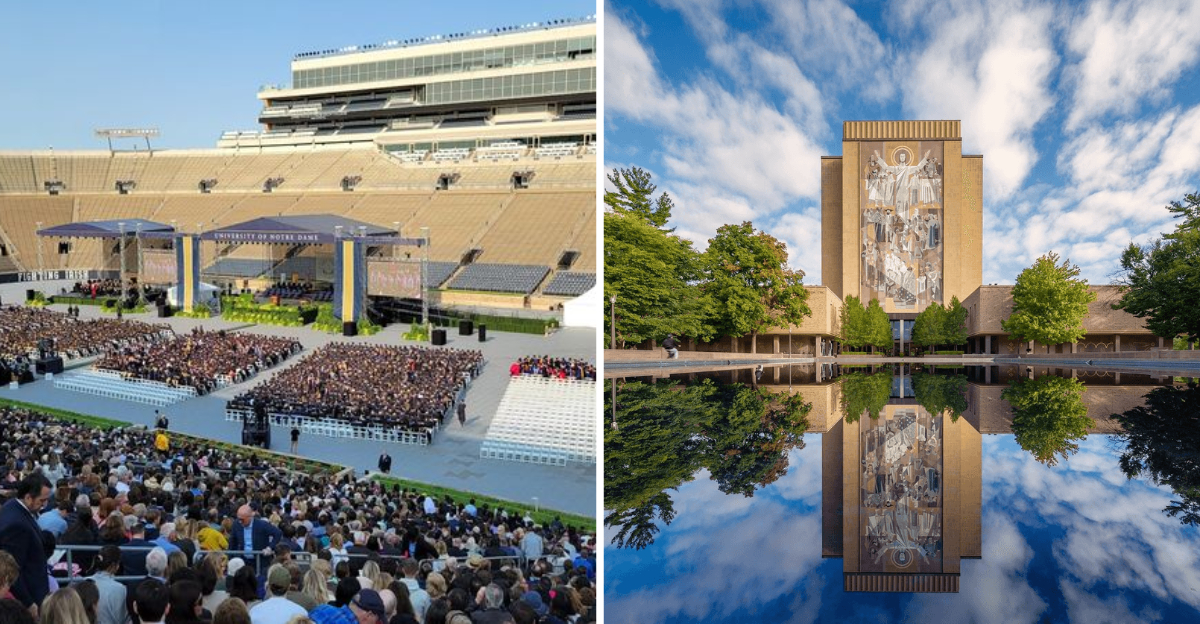
Walking into a legendary sports venue hits differently, especially when the atmosphere feels bigger than the game itself. Indiana has a special connection to college football, and places like this capture the tradition, excitement, and memories that bring fans together year after year. The roar of the crowd, the familiar rituals, and the sense of history all create an experience that goes beyond watching a matchup.
Even visitors who are not die-hard fans can appreciate the stories, pride, and unforgettable moments that have made this destination so meaningful.
The House That Rockne Built: A Stadium Born From Legend
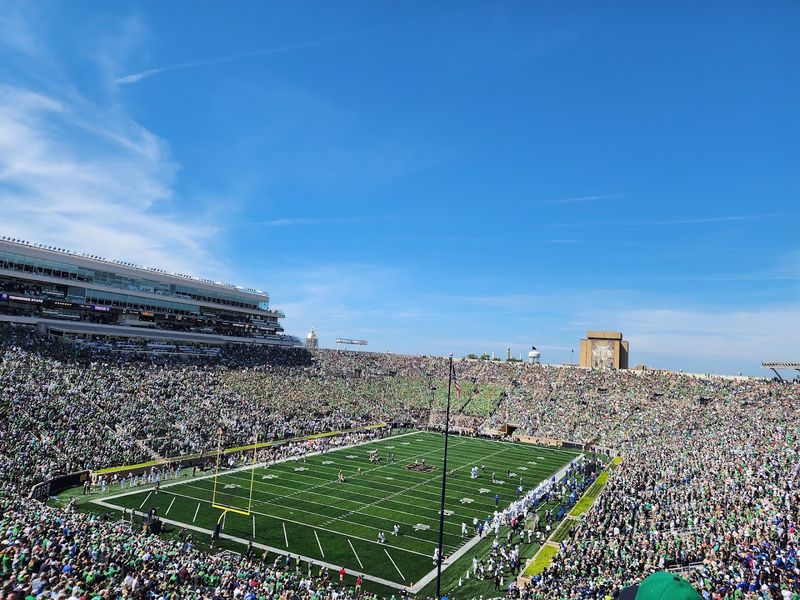
Few stadiums carry a nickname as weighty as this one. Notre Dame Stadium earned the title “The House that Rockne Built” because legendary coach Knute Rockne pushed hard for its construction, and the place opened its doors in 1930 with a victory over SMU.
The original design by Osborn Engineering seated somewhere between 54,000 and 60,000 fans, which was a massive number for its era. That first game on October 4, 1930 set the tone for everything that followed.
Rockne understood that the environment around a team shapes its identity, and he wanted Notre Dame to have a home that matched its ambitions.
The stadium has grown significantly since those early days, but the spirit Rockne poured into it has never faded. A major renovation between 1994 and 1997 added an upper bowl and pushed capacity past 80,000.
The Campus Crossroads project from 2014 to 2017 brought it to its current 77,622 seats. History is literally baked into the walls here, and every visit feels like a small connection to something much bigger than a single afternoon of football.
Sold Out Since 1964: The Streak That Defines Notre Dame Home Games
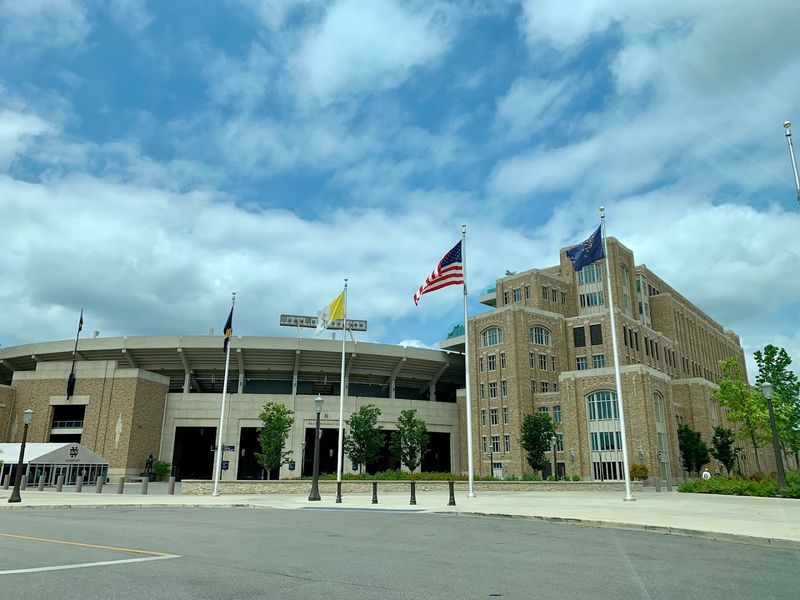
Since 1964, every single home game at Notre Dame Stadium has sold out. That streak is not just a statistic.
It is a declaration of loyalty from a fanbase that has shown up through winning seasons and tough ones alike.
Think about what that means for a moment. Generations of families have passed down their tickets, their traditions, and their love for this team across more than six decades of unbroken attendance.
No bad weather, no rebuilding year, no opponent has ever been enough to keep the stands from filling completely.
Getting a ticket to a Notre Dame home game is genuinely competitive, and that scarcity makes the experience feel even more special once you are inside. The roar of over 77,000 people in full voice is the kind of sound that rattles your chest.
I have been to plenty of large venues, but few places match the sheer collective energy of a sold-out Notre Dame game. The streak also creates a sense of responsibility among fans.
You feel like you owe it to everyone who came before you to bring your loudest voice and best spirit to every game.
Play Like a Champion Today: The Sign That Players Touch Before Every Game
There is a yellow sign with bold blue letters tucked into a stairwell between the home locker room and the tunnel leading to the field. It reads “Play Like a Champion Today,” and it has become one of the most recognizable symbols in all of college football.
Head coach Lou Holtz installed it in 1986 after spotting an old photograph of a similar sign. Since then, every Notre Dame player slaps it on the way out to the field before a game.
The gesture is quick, but the meaning behind it is enormous. It connects every modern player to every team that has come before them under those same golden helmets.
Fans who tour the stadium often seek out this sign specifically, and it is easy to understand why. There is something deeply human about a physical reminder to give your best effort.
The sign is not flashy or high-tech. It is just paint on a board, but it carries the weight of nearly four decades of belief.
Seeing it in person gives you a small shiver, the kind you get when you realize you are standing inside something genuinely historic.
Touchdown Jesus: The Mural That Watches Over Every Game
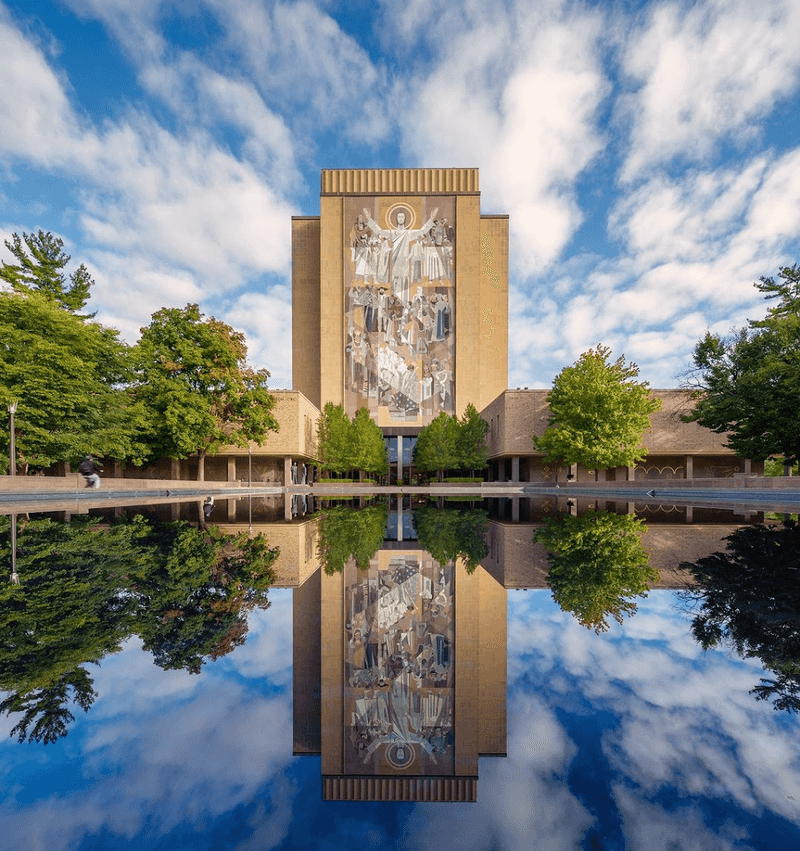
Behind the north end zone of Notre Dame Stadium stands the Theodore Hesburgh Library, and on its facade is one of the most famous murals in American sports. Officially titled “The Word of Life,” the mosaic was designed by artist Millard Sheets and completed in 1964.
It depicts Christ with arms raised skyward, a gesture that fans noticed looks exactly like a referee signaling a touchdown. The nickname “Touchdown Jesus” stuck immediately and has never let go.
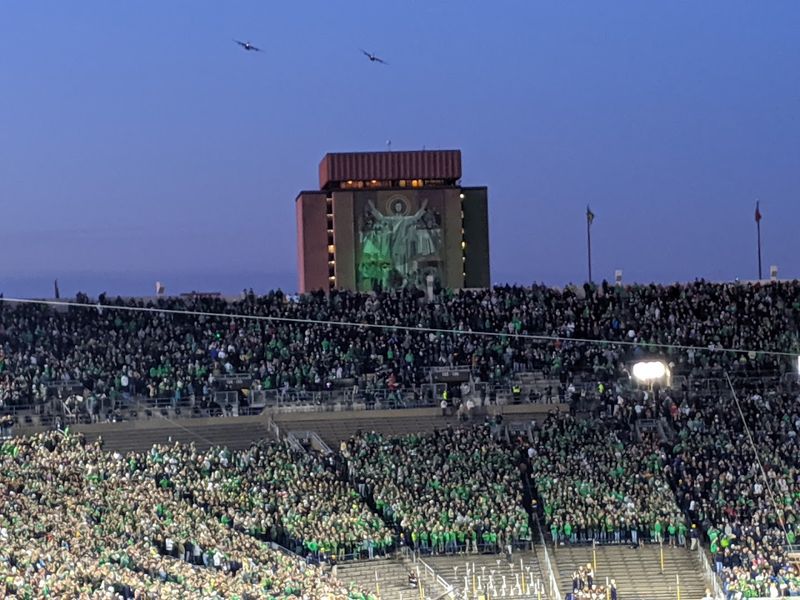
From inside the stadium, you can look up and see a portion of the mural watching over the field, which adds a layer of atmosphere that no other college stadium can replicate.
A 1997 renovation partially blocked the full view from the playing surface, but enough of the mural remains visible to make its presence felt. Visiting the Hesburgh Library to see it up close is a must before or after any game.
The sheer scale of the mosaic is something photographs do not fully capture. Standing there, looking up at it against a clear Indiana sky, you understand why so many people describe a visit to Notre Dame as something close to a pilgrimage.
Game Day Traditions That Make Saturday Feel Like a Celebration
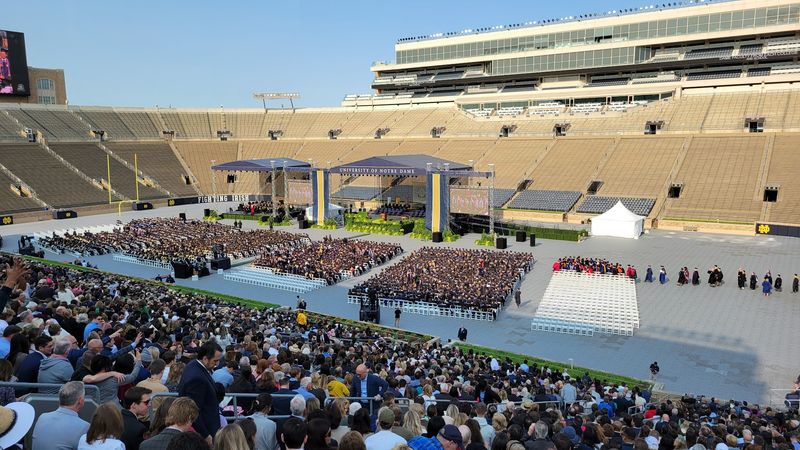
Game day at Notre Dame is not something that starts at kickoff. It begins the night before with a Friday pep rally that builds anticipation across the entire campus.
By midnight, the Midnight Drummers Circle kicks off a drumline performance that echoes through the quad and gets everyone buzzing.
On game day morning, the trumpet section of the Band of the Fighting Irish performs inside the Main Building beneath the Golden Dome in a tradition called Trumpets at the Dome. The sound carries in a way that feels almost ceremonial.
About two hours and fifteen minutes before kickoff, the team makes the Player Walk from the Guglielmino Athletics Complex to the stadium, accompanied by the band, the Notre Dame Bagpipe Band, and the Glee Club.
Fans line the route, cheering as the players pass, and the energy keeps climbing from there. After every home win, players and fans gather to sing the alma mater “Notre Dame, Our Mother” together.
The Irish Guard also performs a traditional dance called Damsha Bua, which plays after every touchdown as well. These traditions are not performative.
They feel genuinely rooted in something real and shared.
The Shirt and the Golden Dome: Iconic Symbols of Fighting Irish Pride
Every season, Notre Dame releases an official game-day shirt simply known as “The Shirt,” and the tradition has been going strong since 1990. Fans across the stadium wear it, creating a sea of unified color that adds to the visual spectacle of the crowd.
It is a small detail that somehow makes the whole experience feel more connected.
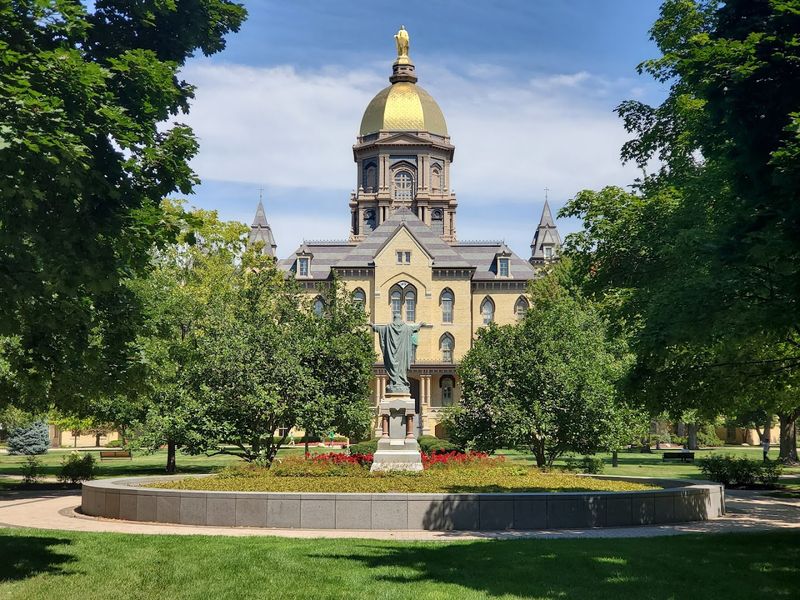
From inside the stadium, you can also catch a glimpse of the Golden Dome atop the Main Building rising against the sky. That gleaming structure has been a symbol of the university since the 19th century, and seeing it from your seat adds a layer of beauty that most stadiums simply cannot offer.
The campus and the stadium exist in a kind of visual conversation with each other.
Notre Dame does not feel like a stadium dropped into a parking lot. It feels like a living part of a campus that genuinely cares about its identity.
The Golden Dome, the brick buildings, and the green of the field all work together to create something that is hard to describe but instantly felt. Wearing The Shirt while looking out at that dome might sound simple, but it genuinely hits differently in person.
Visiting Notre Dame Stadium: What to Know Before You Go
Notre Dame Stadium offers official tours for visitors who want to experience the history up close without attending a game. The tours take you through areas like the visitor locker room and onto the field itself, which is a genuinely surreal experience for any football fan.
Before or after your stadium visit, the surrounding campus deserves plenty of your time. The Grotto, the Basilica of the Sacred Heart, the Hesburgh Library, and the Main Building are all within easy walking distance.
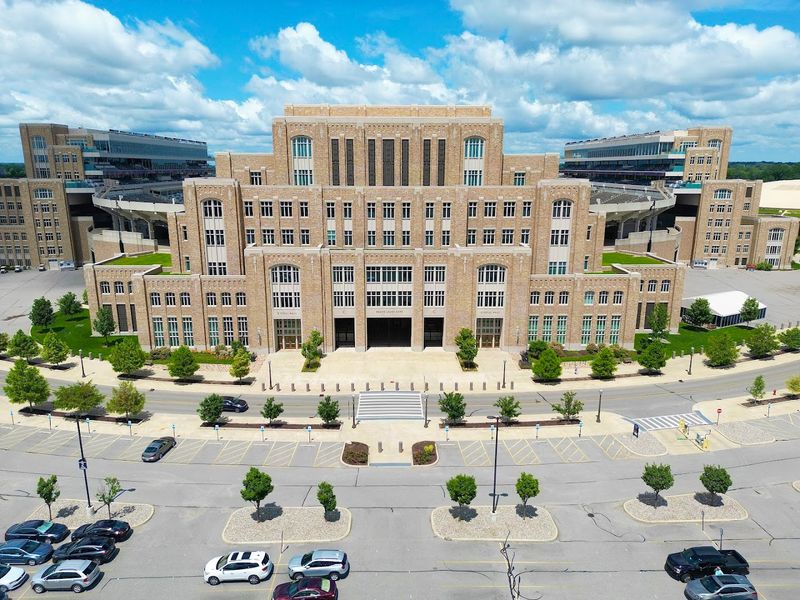
The campus is one of the most beautiful in the country, and it rewards slow, curious exploration. Pre-game activities during the season often begin at the Eck Visitors Center on Football Fridays, giving out-of-town fans a welcoming entry point into the whole experience.
Tailgating outside the stadium is a beloved part of the tradition, and the food trucks and outdoor vendors around the grounds are worth exploring before heading inside. The staff throughout the stadium is consistently praised for being organized, friendly, and genuinely helpful.
Whether it is your first visit or your tenth, Notre Dame Stadium has a way of making you feel like you are part of something that matters.
Address: 2010 Moose Krause Circle, Notre Dame, Indiana 46556
