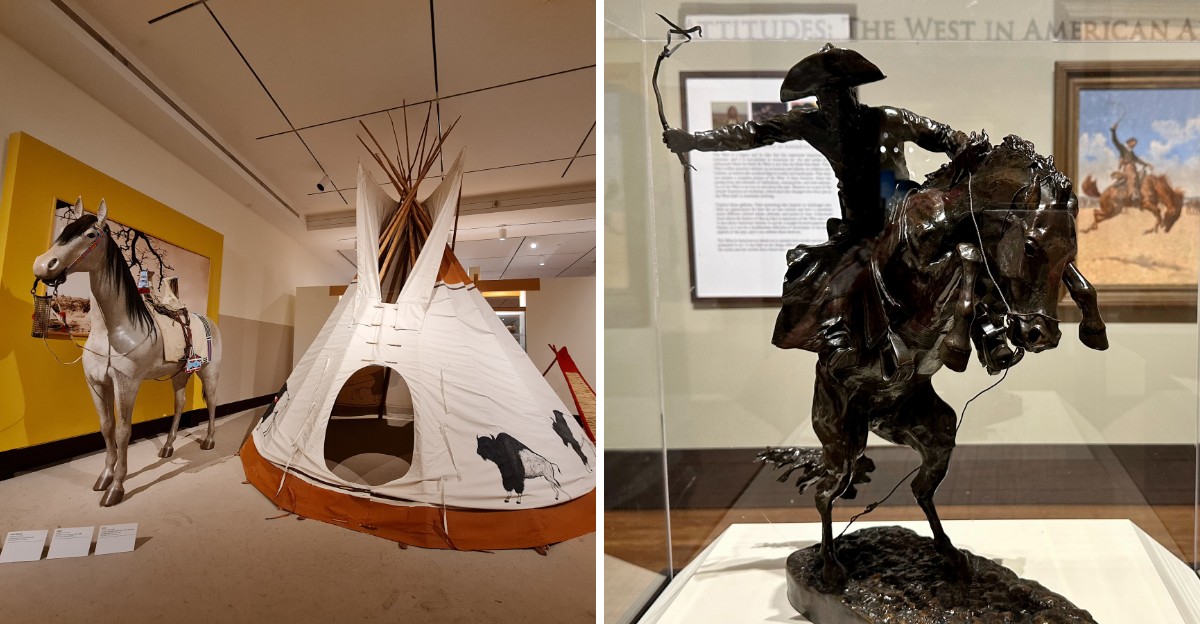
The cowboy is not actually the beginning of the story. He just makes a dramatic entrance.
This Indiana museum may have bronze cowboys and Western paintings, but its deeper story begins with Miami, Potawatomi, Delaware, and other Native peoples connected to the land long before those familiar Western images appeared.
Languages are woven into the experience, making the exhibits feel connected to living communities rather than locked in another century.
Then the details start competing for attention. A beadwork pattern.
A painted figure. A carved object.
A tiny feature you almost walked past. There is plenty here for families too, which makes the museum surprisingly easy to explore without turning history into homework.
A Building That Looks Borrowed From the Desert
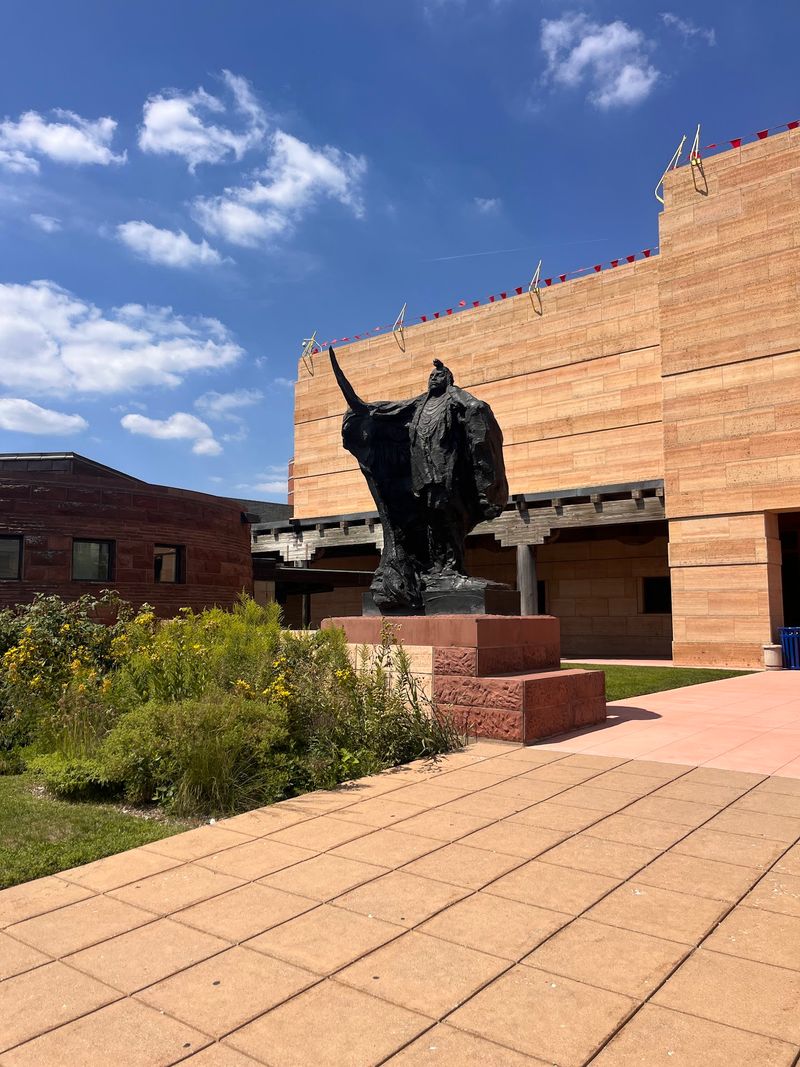
Most downtown buildings in Indianapolis are glass, brick, or steel. Then comes the Eiteljorg, glowing in shades of tan, rose, and gold, as if it wandered in from New Mexico and liked the view too much to leave.
The design draws on the adobe and pueblo homes of the American Southwest. Builders used veined Minnesota dolomite and German sandstone to match the earthy colors of that faraway landscape.
The result is big and solid, almost like a giant mesa, yet it still blends nicely with the trees and water around it.
The museum sits at 500 West Washington Street, Indianapolis, IN 46204, inside White River State Park. That location puts it close to the Central Canal, green lawns, and several other big attractions.
Planning a full day downtown becomes very easy.
Take a few minutes to circle the outside before heading in. Sculptures pop up around the grounds, and the walls change color as the sun moves across the sky.
Morning light makes the stone look soft and pale, while late afternoon turns it a deep, warm amber.
Photographers love it. Kids usually just love how different it looks from everything else on the block.
Fun fact for the road. The museum is one of only two east of the Mississippi River that shows both Native American and Western art under one roof, which makes the building itself a doorway to two big stories.
Hello in Miami, Potawatomi, and Delaware
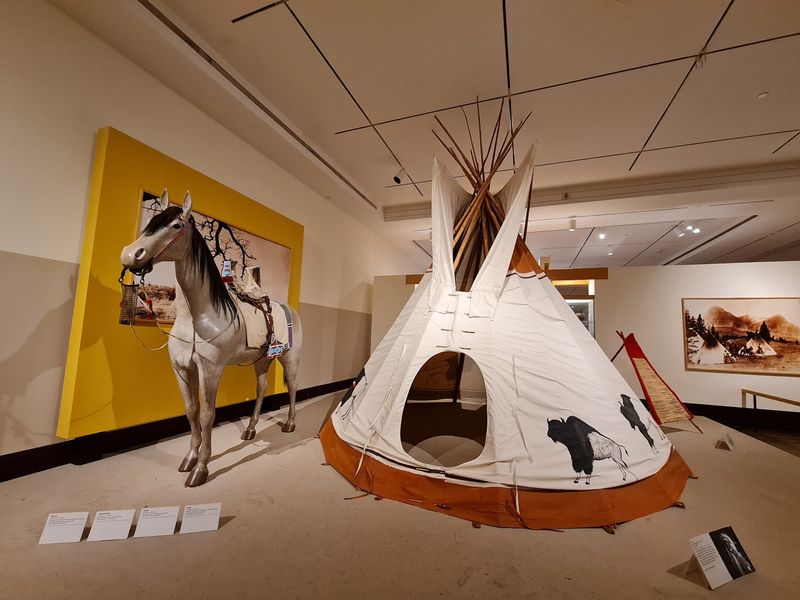
Listen closely at the entrance to the Native American galleries. Recorded greetings play in the languages of tribes tied to Indiana, including Miami, Delaware, Potawatomi, Shawnee, Peoria, and Kickapoo, and those voices set the tone for everything ahead.
The gallery called Mihtohseenionki, which means The People’s Place, focuses on the Native nations who lived in Indiana for centuries. Many of their families are still here.
That point matters, because a lot of history books talk about Native people as if they only existed long ago.
Rare objects, old photographs, and interactive displays fill the space. Audio and video clips let community members share stories in their own words.
The museum has worked to change how these histories are told, giving Native people a real voice in the telling.
Expect to see clothing, tools, and personal items that show daily life, skill, and creativity. Some pieces are delicate and beautiful.
Others carry hard memories, such as the forced removals that pushed many families out of the state in the 1800s.
Go slowly here. Reading the labels and watching the short videos gives the objects much more meaning.
Students working on school reports will find this gallery especially helpful. It turns names from a textbook, like the Miami and Potawatomi, into real people with homes, languages, and stories that continue today.
Baskets, Beadwork, and Pots From Coast to Coast
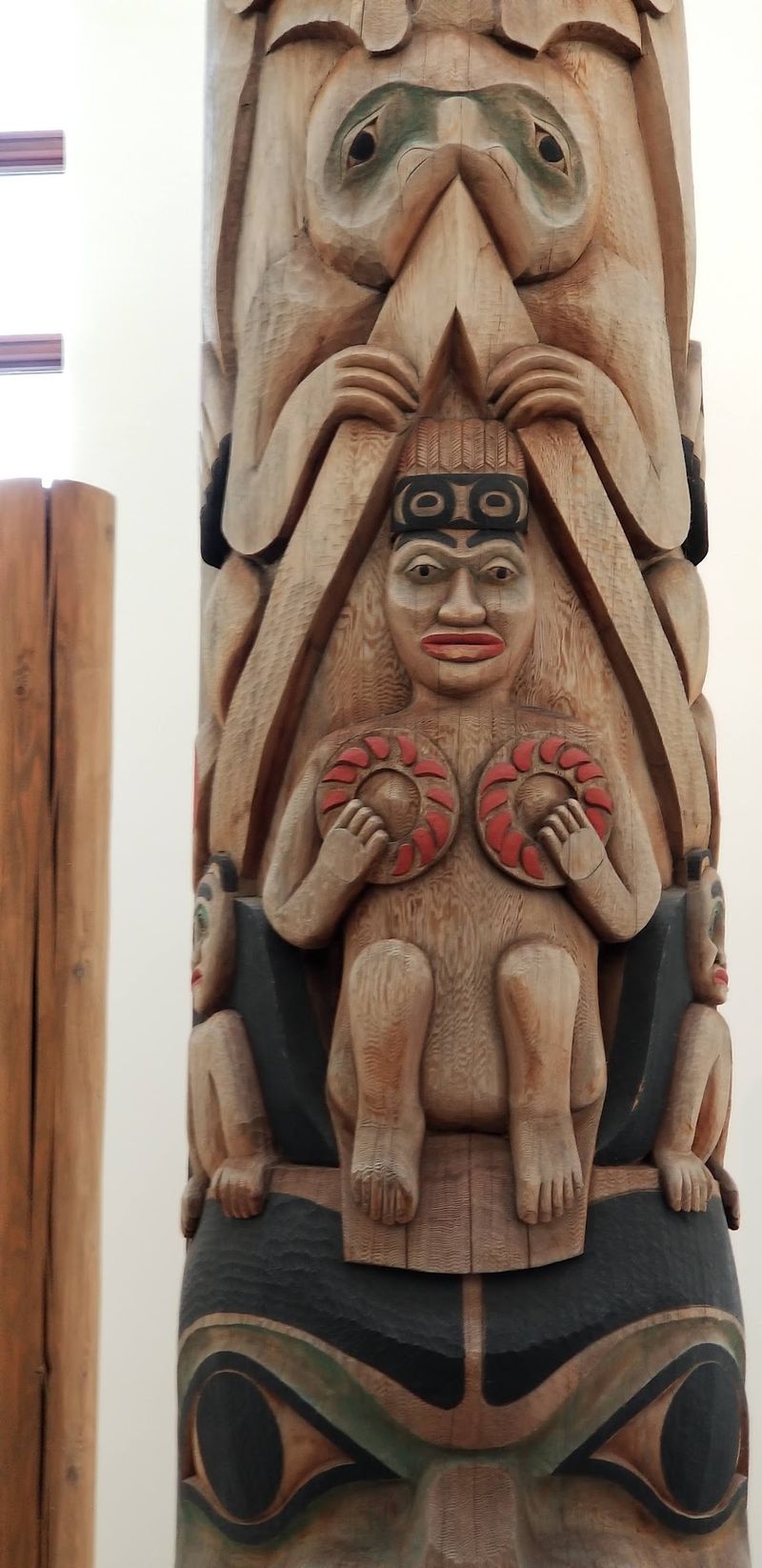
Picture a basket woven so tightly it could hold water. Now picture a whole floor of craft like that, gathered from tribes across North America, from the Pacific Northwest down to the Southwest and up into Alaska and Canada.
Upstairs, the galleries stretch far beyond Indiana. Pottery, wood carvings, beadwork, baskets, and ceremonial clothing show how each region shaped its art.
Desert pots look nothing like coastal carvings, and that variety is half the fun.
The newer galleries were rebuilt around three ideas called relation, continuation, and innovation. Instead of a straight timeline, old and new pieces sit side by side.
A beaded bag from long ago might share space with a bold modern artwork using the same skills.
All-glass cases let visitors walk all the way around many objects. Look at the backs of things too.
Hidden stitches and patterns often show up there.
A huge digital map wall of North America helps explain where each nation lives. Touchscreens and activity tables add extra details for anyone who wants to learn more.
Audio descriptions are available to download, which makes the galleries friendlier for many kinds of visitors.
A partnership with the Smithsonian National Museum of the American Indian also brings in special exhibits. That means each visit may hold a surprise, so checking the museum website before going is a smart move.
Cowboys, Bronzes, and a Bronc Rider in Trouble
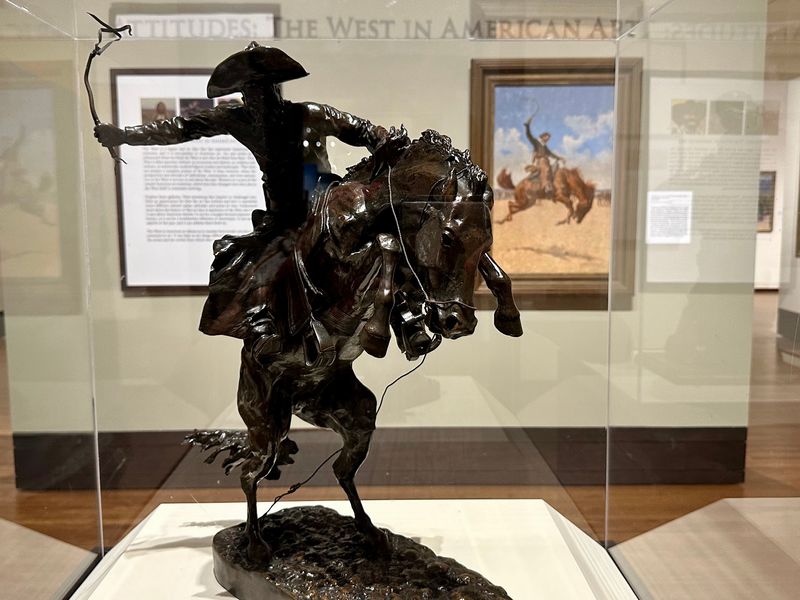
One famous bronze shows a cowboy clinging to a bucking horse. He has already lost a stirrup, and judging by the angle, he is not winning this round.
That sculpture is the work of Frederic Remington, one of the best-known artists of the American West. The Western galleries also feature Charles Russell and Georgia O’Keeffe.
Wide canyons, dusty cattle drives, and quiet desert flowers fill the walls with color and motion.
Art like this shaped how many Americans pictured the West. Some scenes feel heroic and grand.
Others show the land itself as the real star, with skies that seem to go on forever.
The museum also asks visitors to think about who is telling each story. Placing Western art near Native art invites some interesting comparisons.
How did settlers see the land, and how did the people already living there see it?
Kids tend to love the horses, saddles, and boots. Adults often get pulled into the tiny details, like a painted shadow or the texture of a bronze mane.
Here is a helpful tip. Pick one painting and spend a full two minutes on it before moving on, because the longer the look, the more little stories appear.
It turns a quick walk into a slower, richer visit that sticks in the memory.
Downstairs Is Where Kids Take Over
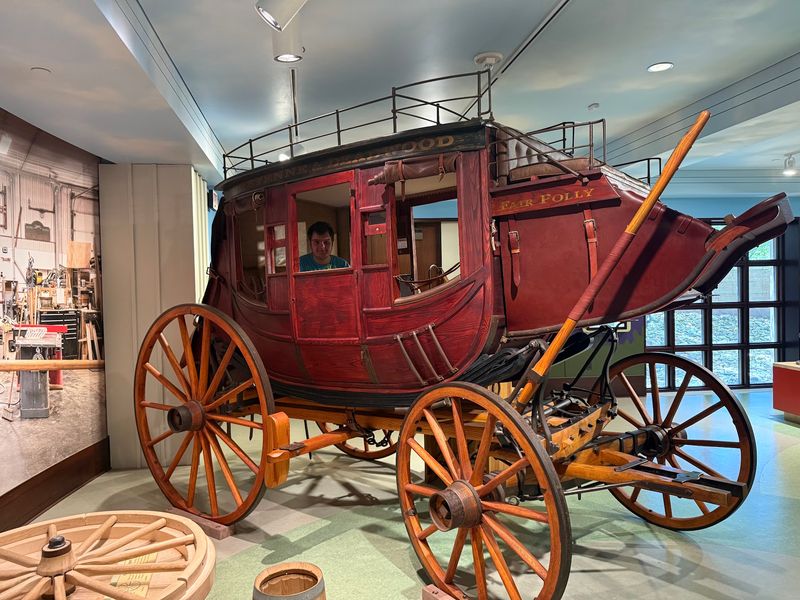
Somewhere on the lower level, a young chef is serving pretend meals while a friend brushes a play horse nearby. Welcome to the R.B.
Annis Western Family Experience, the museum’s indoor discovery zone.
Little ones can run a play restaurant, care for horses, dress up, and explore hands-on stations. It is noisy in the best way.
Parents get a break from saying do not touch.
The space connects play with real lessons about life in the West and Native cultures. Kids learn by doing, which often works better than reading signs.
Many families plan an hour here alone.
Fun does not stop downstairs either. Throughout the galleries, puzzle tables, sketching stations, and touchscreens give curious hands something to do.
Even teens find corners worth photographing, especially near the bold contemporary pieces.
Outside, the grounds sometimes offer simple games and plenty of room to stretch tired legs. Benches near the canal make a nice spot for a quick snack break.
A smart plan for families is to visit the main galleries first while energy is high. Save the discovery area for the end as a reward.
That way, everyone gets their favorite part, and nobody melts down halfway through a painting room.
Bring a small notebook for older kids. Asking them to sketch one favorite object turns the visit into a little adventure of their own.
Festival Drums in June, Tiny Trains in December
Fry bread, drumbeats, and dancers in bright regalia. That is the scene each late June when the Indian Market and Festival fills the museum grounds.
More than 100 Native artists travel from across the country to show and sell their work. Jewelry, paintings, sculpture, clothing, and moccasins line the booths.
Meeting the makers face to face adds something no gallery label can match.
Performances happen throughout the event, and food stands keep everyone fueled. It feels joyful and alive.
Bring sunscreen, comfortable shoes, and plenty of curiosity.
September brings the Quest for the West Art Show and Sale, which draws collectors looking for Western paintings and sculpture. Even just browsing is a treat for art fans.
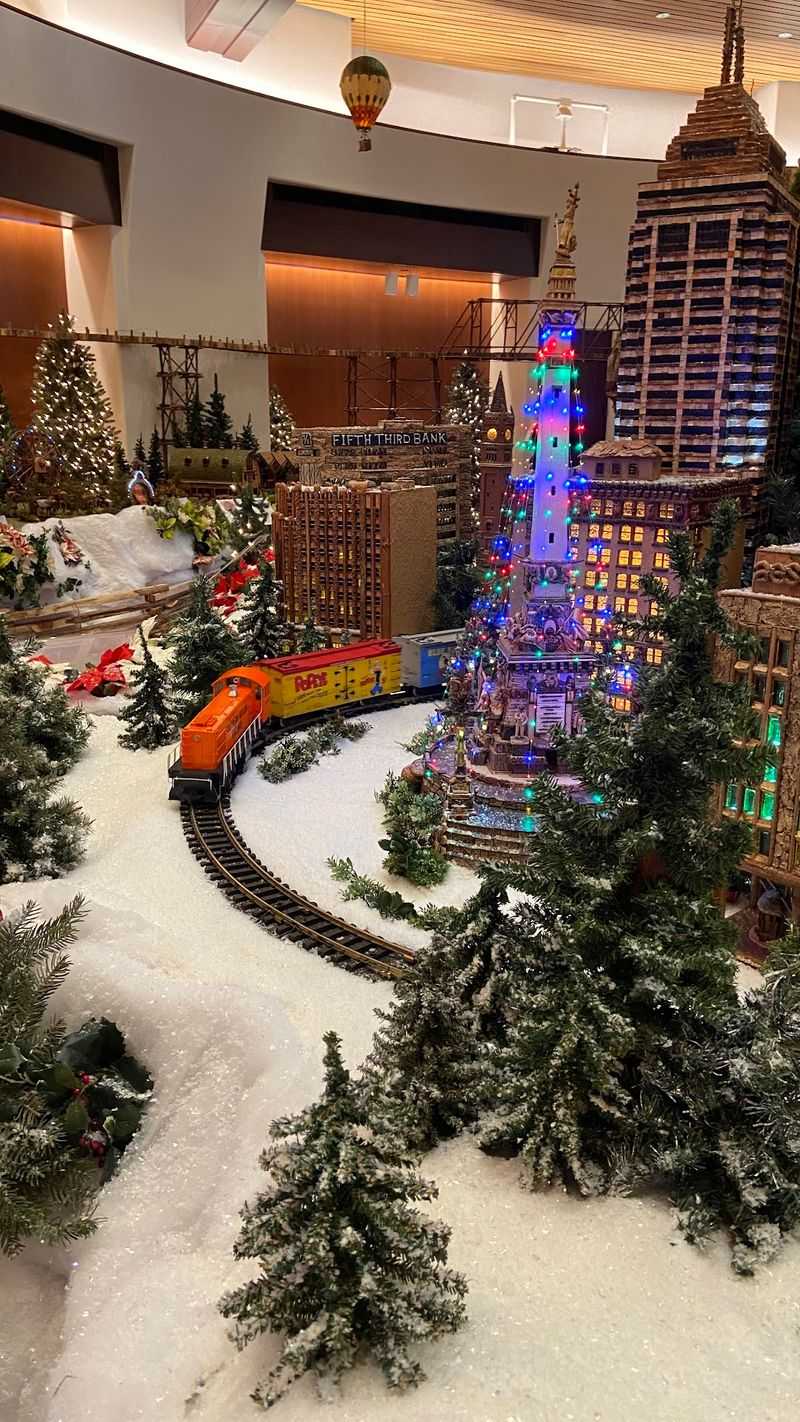
Then winter arrives, and the whole mood flips. Jingle Rails, also called The Great Western Adventure, turns part of the museum into a giant model train world.
Tiny versions of Indianapolis landmarks sit beside miniature canyons, mountains, and Western scenes, all built with natural materials and loads of detail.
Trains zip past bridges and through tunnels while little kids press close to watch. Grown-ups usually stare just as long, spotting familiar buildings shrunk down to toy size.
Fall can bring Día de Muertos celebrations as well. Checking the events calendar ahead of time helps line up a visit with one of these special moments.
Canal Breezes, Garden Corners, and an Easy Day Out
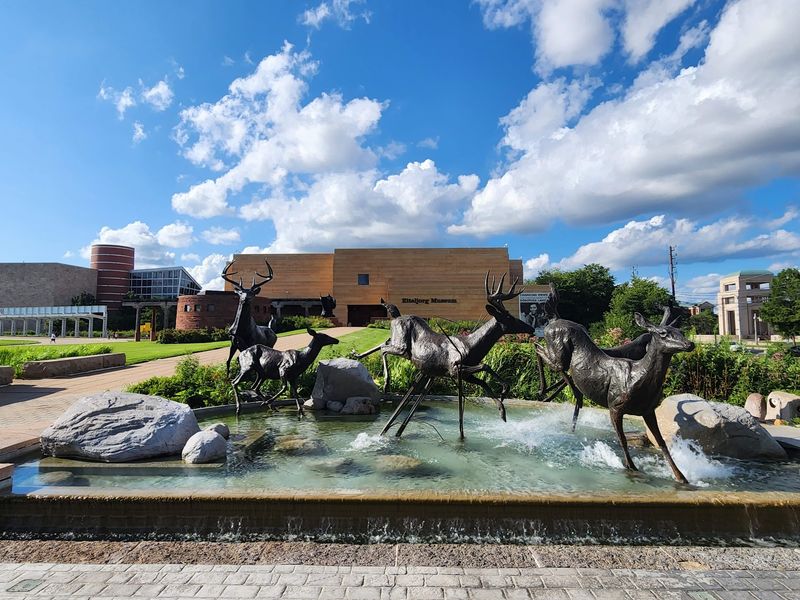
After a few hours with art and history, fresh air feels wonderful. Luckily, the Eiteljorg sits right beside the Indianapolis Historic Central Canal, where water, walkers, and bikes drift by at an easy pace.
The DeHaan Family Terrace offers a peaceful garden spot with flowers and quiet seating. It is a good place to talk over favorite pieces.
Out by the canal, white shade structures known as The Sails host concerts and make a lovely lunch spot.
The museum cafe serves fresh food with a view of the water. Parking in the main underground garage can be validated inside the museum, so ask at the front desk.
That small tip saves a lot of hassle.
Hours run 10 AM to 5 PM Monday through Saturday and noon to 5 PM on Sunday. Most visitors spend one to three hours inside, depending on interest and age.
Arriving earlier leaves time to stroll the canal afterward.
White River State Park surrounds the museum with more attractions, trails, and green space. Combining several stops makes for a full, relaxed day downtown.
The gift shop is worth a look too, with books, art, and handmade items. Leaving with a book on Indiana’s Native nations is a great way to keep learning at home, long after the canal breeze is just a happy memory.
