A giraffe leans down and takes the snack right out of your hand. Imagine that!
Just when you think that’s the highlight, a penguin waddles over the second fish appears, or a budgie lands on the stick you’re holding out. Now that’s an experience most zoos can’t offer.
At this Indiana zoo, it’s just another afternoon. Opened back in 1928, it’s the very first zoo in the state, yet it still feels more like a neighborhood treasure than a tourist machine.
More than 700 animals from 186 species live here, and a short walk carries you from steamy rainforest exhibits to open African-style plains. Paddle boats drift across a lagoon nearby, and a historic carousel spins just behind you.
If you like wildlife encounters that feel personal instead of distant, this one deserves a spot on your list.
Eye To Eye With The Giraffes
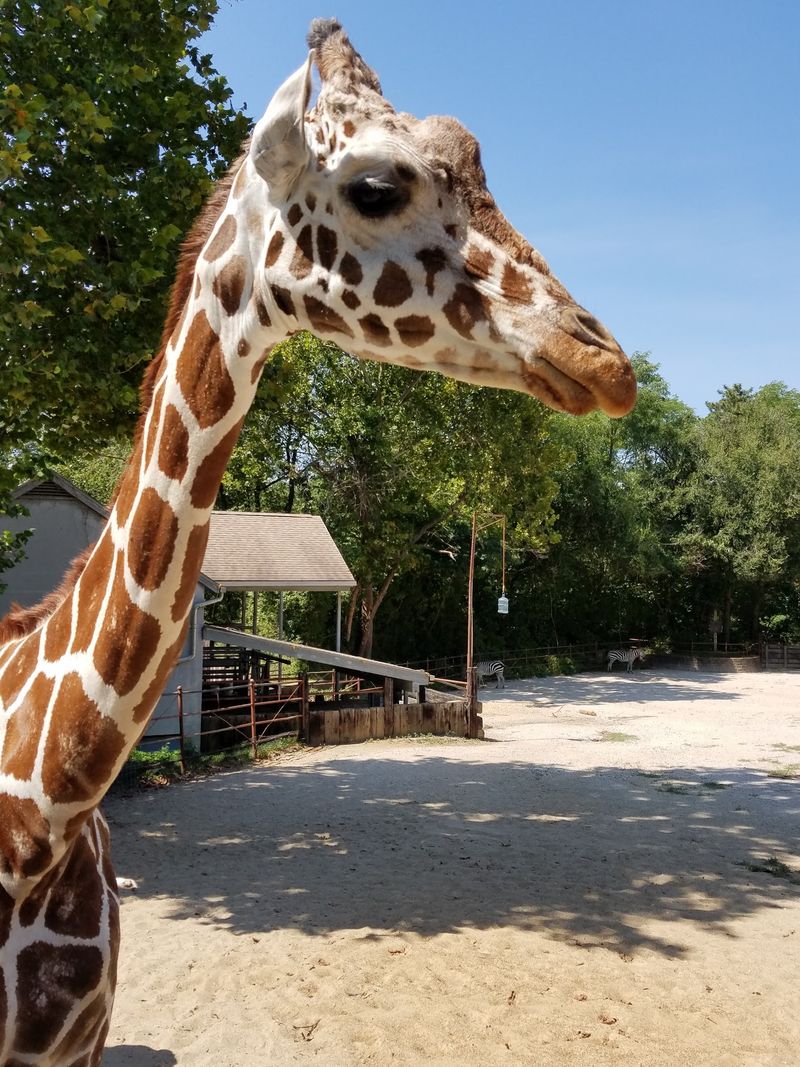
Few moments at Mesker Park Zoo draw a crowd quite like the giraffe deck. Word travels fast when keepers appear with a bucket of greens.
Guests climb a raised platform that puts them level with those long faces, and the giraffes stroll over with the calm confidence of animals who know exactly what comes next. A leaf gets taken with surprising softness.
That purple-black tongue does most of the work, curling around the snack in one smooth motion, and the sound of it makes kids laugh every single time.
Feeding sessions run on a schedule rather than all day long, so checking the daily times board near the entrance saves a lot of guesswork. Arriving a few minutes early usually means a spot at the front rail.
Adults tend to underestimate how tall giraffes really are until one is standing right there, shoulder above head height, blinking through those long lashes. The perspective changes something.
Suddenly the animal is not a photo in a textbook but a living neighbor with a personality and preferences.
Zebras share the nearby habitat, which makes the whole area feel like a small slice of savanna dropped into southern Indiana. Bring a camera, but also spend a minute just watching.
The way giraffes move, slow and deliberate and oddly graceful, is the part most visitors remember on the drive home.
Budgies That Land Right On A Feeding Stick
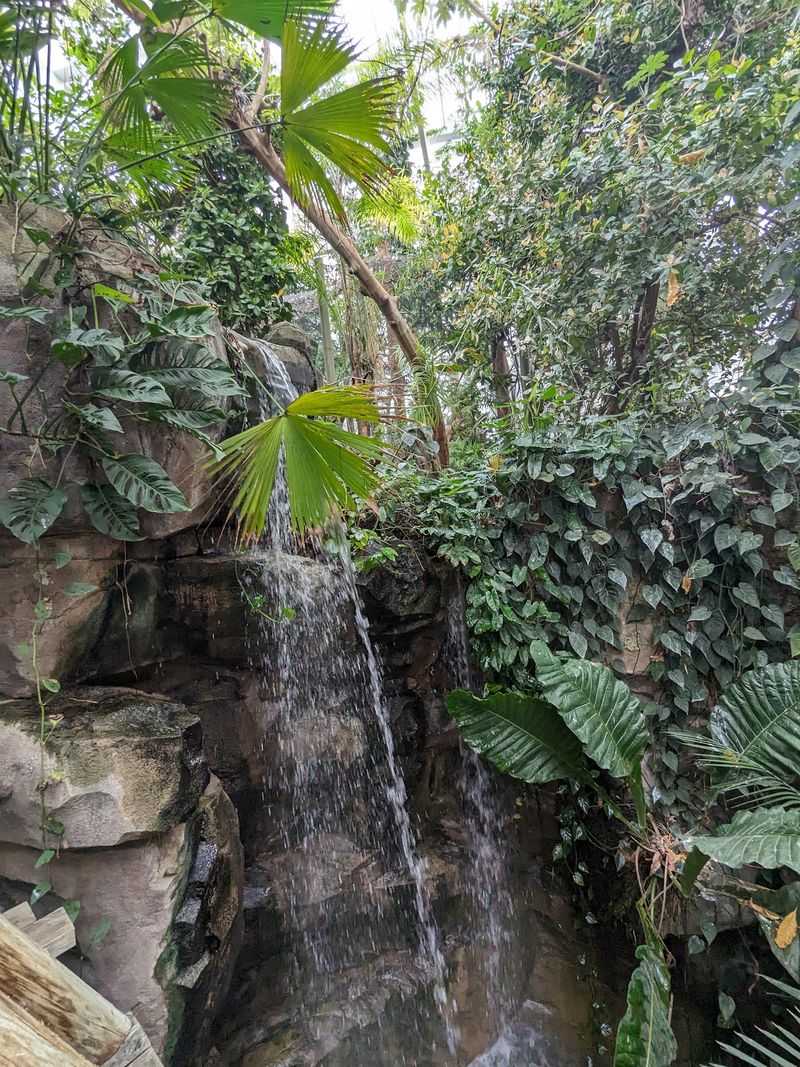
Chirping hits first, then color. The Budgie Walkabout is a walk-through aviary packed with small Australian parakeets in shades of lime green, sky blue, and buttery yellow, and they are not shy.
Seed sticks are the trick here. Hold one out flat, stand still, and within seconds a budgie or three will drop onto the stick and start cracking seeds inches from a visitor’s fingers.
Little claws grip surprisingly firmly.
Younger children sometimes need a moment to work up the nerve, which is completely normal, and staff nearby are used to coaching first-timers through it. Patience pays off.
The birds respond better to quiet arms than waving ones.
Some visitors have noted that the seed comes attached to a stick rather than loose in a palm, and that small design choice makes the whole thing easier for tiny hands to manage. Fewer dropped snacks, more successful landings.
Photos from inside the aviary tend to be the ones that end up framed later, because there is something wonderfully silly about a grown adult wearing four parakeets like living jewelry. Expect a bit of gentle chaos overhead.
Even without a stick in hand, the aviary is worth stepping into just for the sound. Hundreds of tiny voices bouncing around a leafy enclosure creates a cheerful racket unlike anything else on the grounds.
Handing A Fish To A Penguin
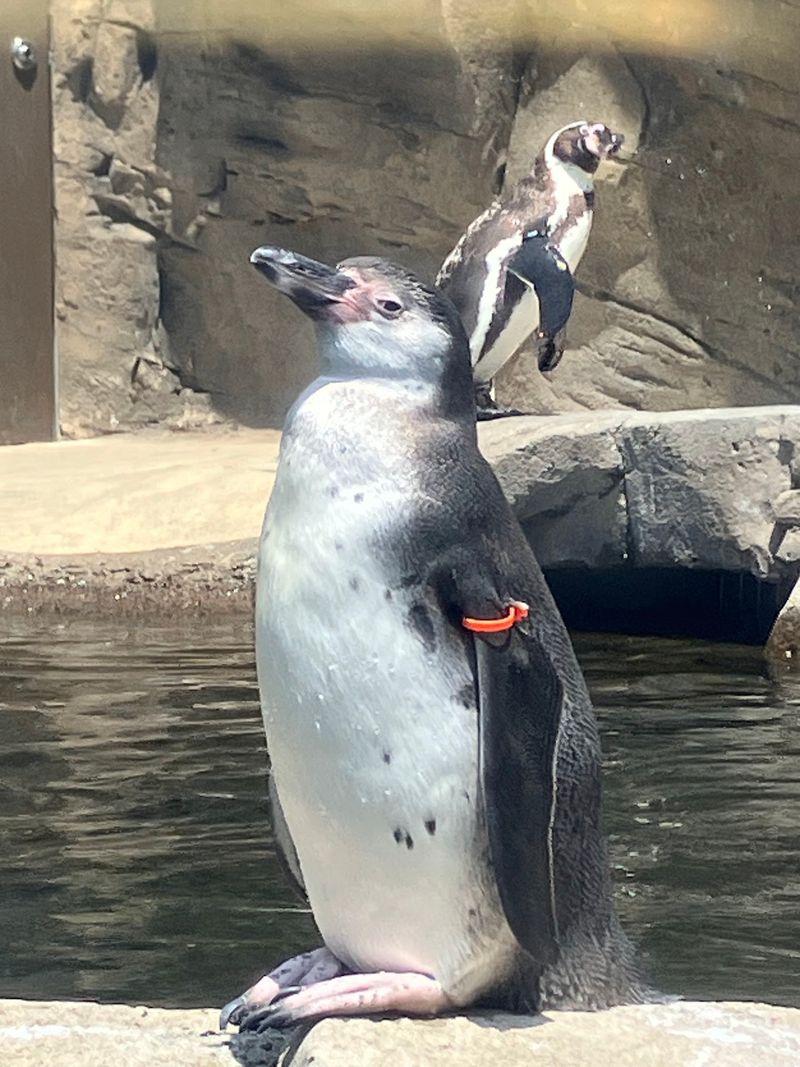
The penguin habitat is easily one of the most talked-about corners of the zoo, and for good reason. Penguins are natural comedians who have no idea they are being funny.
During scheduled feeding sessions, guests can offer a small fish while the birds waddle over with that unmistakable side-to-side gait. Beaks snap up the snack quickly.
It is fast, a little startling, and completely delightful.
Keepers usually stand right there, answering questions and tossing out details about diet, molting, and how these birds handle temperature swings. Those unplanned mini-lessons often turn out to be the most interesting part, especially for curious kids who want to know everything at once.
Multiple feeding times run throughout the day, which makes it easier to fit one in around a carousel ride or lunch. Checking times on arrival is still the smart move.
Watching the group underwater is worth lingering for too. Above the surface they shuffle awkwardly, but the second they hit the water they turn into torpedoes, twisting and darting with a speed that feels almost unfair.
Plenty of visitors mention the penguins as their single favorite stop, ranking them above the bigger, flashier residents. Something about being close enough to hear them squawk at each other makes the encounter stick, long after the fish is gone and the birds have moved on.
Amazonia Turns Up The Humidity
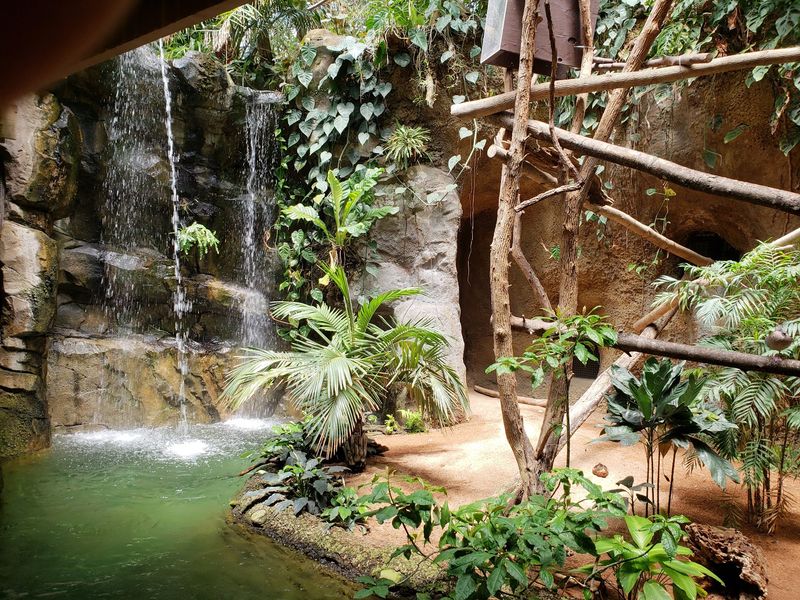
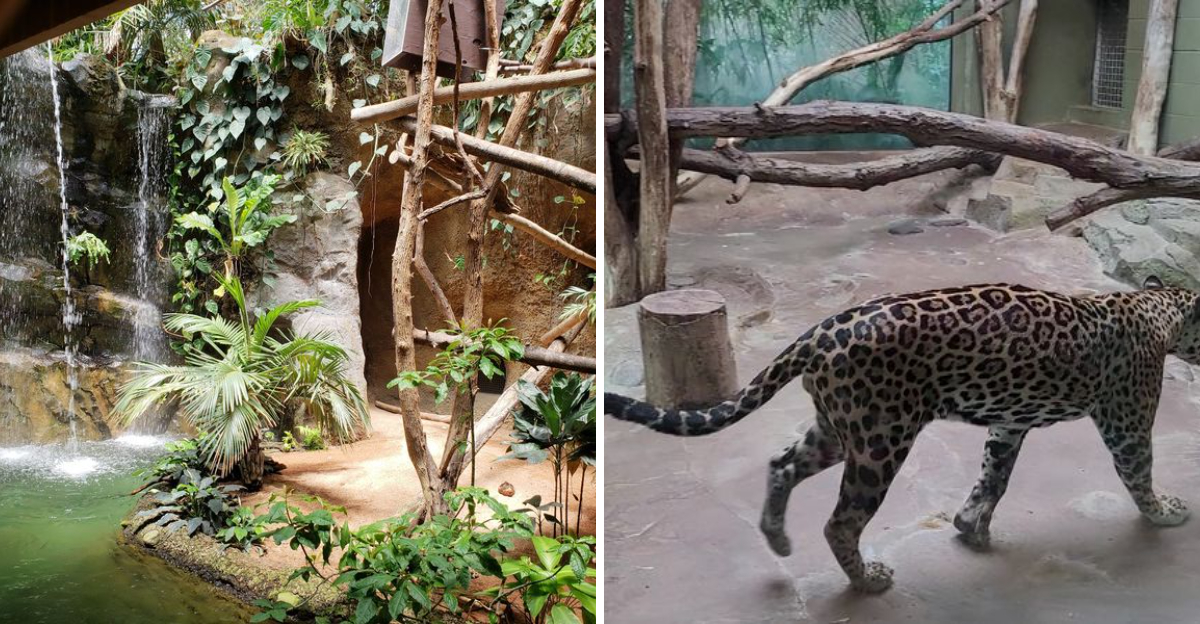
Push through the doors of Amazonia and the air changes instantly. Warm, damp, green-smelling humidity replaces Indiana breeze, and glasses fog up for a second.
This indoor rainforest is the centerpiece of the zoo’s themed regions, built to mirror the layered ecosystem of South America. Vines climb overhead.
Water trickles somewhere out of sight, and the whole space hums with the low background noise of a jungle.
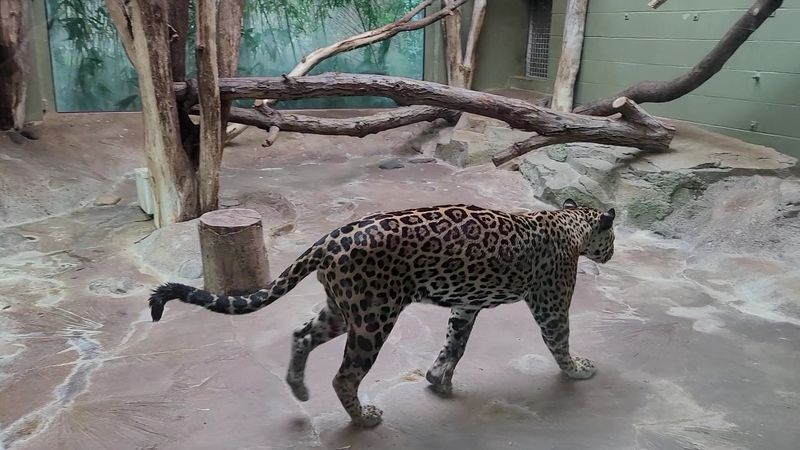
Jaguars are among the headliners here, and a well-timed visit might catch one pacing near the glass or stretched out on a rock ledge looking thoroughly unbothered. A Komodo dragon also calls the complex home, which surprises visitors who expected only birds and monkeys.
Repeat guests frequently point to Amazonia as the strongest part of the zoo, and winter visitors especially appreciate having a warm, animal-packed building to explore when outdoor habitats slow down.
Take the walkway slowly instead of powering through. Small residents hide in plain sight, tucked into branches and leaf litter, and the ones that reward patient looking are often the strangest.
Signage throughout the building connects the animals to real habitat loss and conservation work, which gives the humidity and the vines a bit of weight. It is beautiful, sure.
It is also a reminder of what disappears when rainforests shrink, delivered without a lecture.
A Trip Around The World Without Leaving Evansville
Geography does the organizing here. Instead of scattering species randomly, Mesker Park groups its residents by home continent, so the layout itself becomes a kind of travel route.
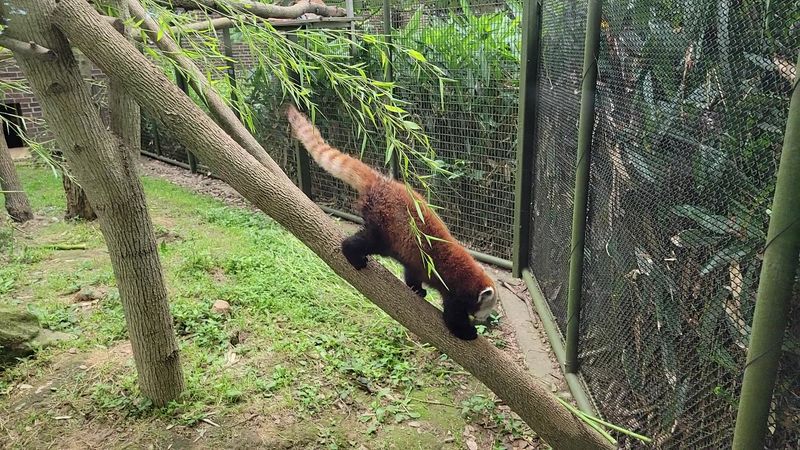
Africa brings zebras and rhinos. Asia holds red pandas that visitors love spotting curled in tree forks, and North American woodlands feel almost like a local hike with sharper teeth involved.
South America connects back to the rainforest building.
More than 700 animals across 186 species live on the property, which is a lot of variety packed into a compact footprint. Blue duikers, tiny forest antelope, have earned an unlikely fan club among guests who had never heard of them before.
The hills are real, by the way. Rolling terrain means some genuine uphill stretches, so comfortable shoes matter and a tram service runs the loop for anyone who would rather ride between stops.
Strollers and wagons handle the paths fine.
Because the zoo is historic and currently working through phased renovations, a few habitats may be off view during a visit while improvements happen. Animals also choose whether to be indoors or out, an accredited-zoo practice that gives them control over their own day.
Otters usually deliver. Their splashing, tumbling energy tends to hold small children longer than anything else on the property, and adults quietly enjoy it just as much.
Conservation Work With Real Teeth Behind It
Behind the feeding sticks and carousel music sits some serious science. Mesker Park Zoo is accredited by the Association of Zoos and Aquariums, which ties it into a network of facilities working together on Species Survival Plans.
Those plans coordinate breeding across many institutions to keep endangered populations genetically healthy. It is unglamorous, spreadsheet-heavy work that quietly keeps species from vanishing.
One of the zoo’s most striking contributions involves the Mexican gray wolf, one of the rarest wolves on the planet.
Pups born in managed care have been cross-fostered into wild dens, meaning captive-born pups get placed with wild wolf families who raise them as their own, strengthening both numbers and genetic diversity in the wild population.
The zoo also participates in a breeding program for the eastern hellbender, North America’s giant salamander, a slimy, wonderfully weird amphibian that serves as a living water-quality indicator for regional streams.
A portion of zoo revenue flows directly into wildlife conservation projects around the globe, so admission does more than open a gate.
Keepers and docents on the grounds are usually happy to talk about any of it, and stopping to ask a question often turns into the most memorable five minutes of the day. Visitors regularly comment on how clearly the staff care about the animals in their charge.
The Garden Half Nobody Expects
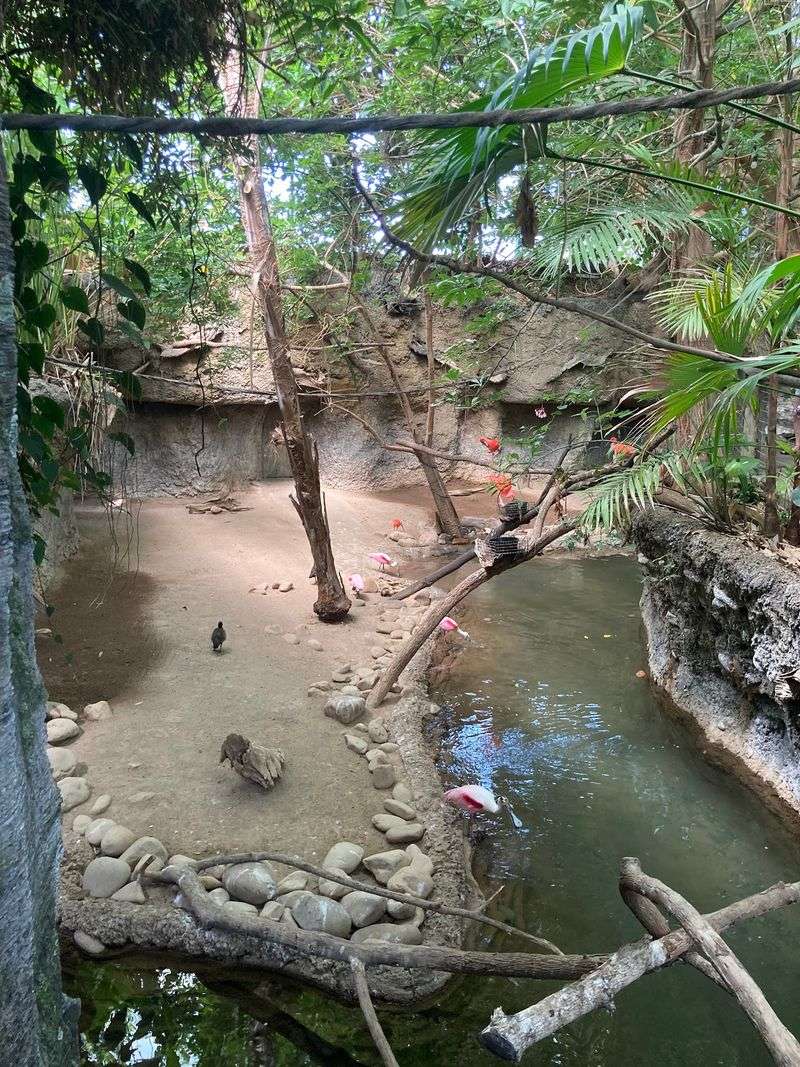
Half the ticket here is botanical, and that catches people off guard. Mesker Park is a designated botanic garden as well as a zoo, with thousands of exotic and regional plant species growing across those 45 hillside acres.
Spring and early summer are when the property really shows off. Flower beds fill in, mature trees leaf out, and pathways that looked plain in February turn into shaded green corridors worth wandering slowly.
An orchid experience has been part of the seasonal programming, drawing plant lovers who might not otherwise wander through a zoo gate. Blooms that delicate deserve a closer look.
The greenery is not just decoration either. Plantings help build naturalistic habitats for the animals, softening enclosures and giving residents shade, cover, and things to climb or hide behind.
Longtime local visitors often describe an afternoon here as a leisurely stroll rather than a checklist, which is exactly the right approach. Benches and shaded picnic tables sit along the routes for anyone who wants to sit and let the pace drop.
Between the animals, the plants, paddle boats on the water, and the historic Engelbrecht Carousel spinning near the middle of it all, the place manages to feel both old-fashioned and genuinely alive. Give it a few hours.
Address: 1545 Mesker Park Drive, Evansville, Indiana
