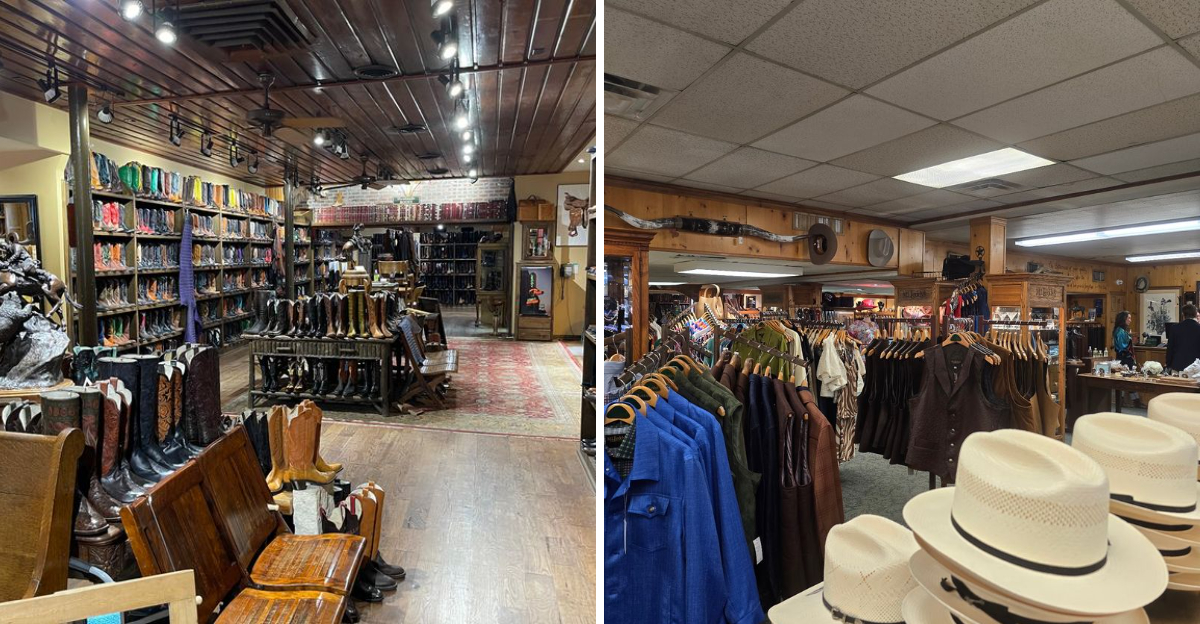
Some Texas businesses sell cowboy boots. This one has been making them long enough to have watched entire fashion trends appear, disappear, and eventually become vintage.
Founded in 1922, the fourth-generation family company still handcrafts custom boots and saddles using time-honored techniques, with each custom pair made one at a time.
The shops also carry hats, belts, buckles, jewelry, clothing, and enough Western gear to make an ordinary shoe-shopping trip feel hilariously underambitious.
More than a century of bootmaking gives this place a kind of credibility that cannot be recreated with distressed wood and a neon cowboy sign.
A Family Story That Started With Cotton And Saddles
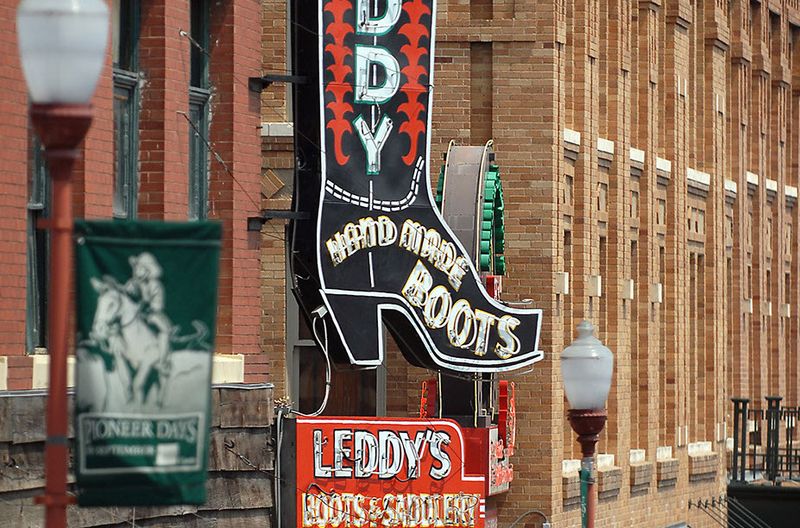
Long before the Fort Worth flagship existed, M.L. Leddy walked away from his family’s cotton farm in 1918 and started learning the saddle and bootmaking trade.
That decision turned into a business by 1922.
The first shop was in Brady, Texas, a small town where Leddy eventually bought out the very place that had employed him. Word traveled the way it does in ranching country, one satisfied cowboy at a time.
By 1936, demand had outgrown Brady, so the operation moved to San Angelo. Five years after that, in 1941, the flagship store opened in the historic Fort Worth Stockyards, which is exactly where it still stands today.
What struck me most is how unbroken the line is. Four generations of the same family have owned and operated the company, and the centennial rolled around in 2022 without much fuss or fanfare.
There is something grounding about a business that measures its history in generations rather than quarters. The New York Times once named it among the 50 best clothing stores in America, praising the craftsmanship, the selection, and the way it keeps Western tradition alive.
That kind of recognition tends to change places. Here it seems to have changed almost nothing at all.
Visitors who ask about the history usually get a straightforward answer rather than a rehearsed speech. The story lives in the building itself, in the shelves, the tools, and the boots waiting for their owners.
It feels earned, not marketed. That difference is easy to sense and hard to fake.
More Than 800 Steps To Build One Pair Of Boots
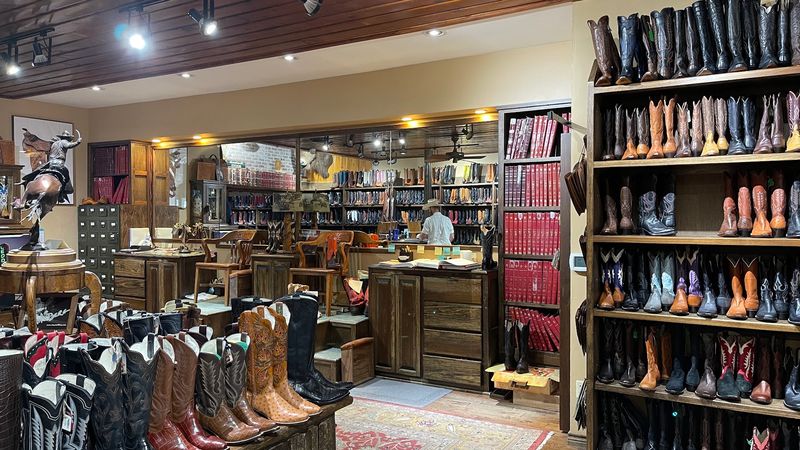
Over 800 individual steps go into a single pair of custom boots here. Not 80.
More than 800.
Every pair is cut, shaped, stitched, and finished by hand, with no assembly line and no automated shortcuts anywhere in the process. Each boot passes through the hands of several different artisans before it is finished.
Watching even a small piece of that process rearranged how I think about footwear. One person handles the cutting, another the stitching, another the shaping, and each one specializes in their part of the work.
That specialization is exactly why the output stays small. Roughly ten pairs leave the workshop on a given day, which means custom orders have historically come with a wait.
Nobody seems apologetic about it. The wait is simply part of the arrangement, and customers who understand the craft tend to accept it without complaint.
Machines could speed this up. They just would not produce the same boot, and that appears to be the whole point.
There is a quiet rhythm to the workspace, the tapping and cutting and the low hum of older equipment. It sounds like a workshop rather than a factory.
For anyone curious about how things used to be made, this is one of the rare places where the answer is still happening in real time. No reenactment required.
I left with a genuine appreciation for the patience involved. Eight hundred steps is a number you feel rather than just read.
Wooden Lasts, Some Older Than A Century
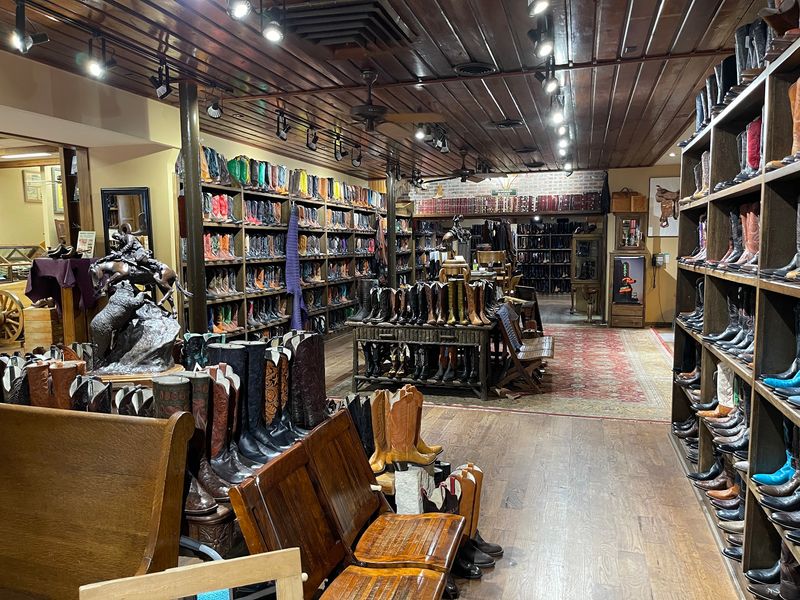
Rows of wooden foot forms called lasts fill the workshop, and each one belongs to a specific person. Their exact measurements, carved into shape and kept on a shelf.
Some of those lasts are more than a hundred years old. That means a boot made today can be shaped on a form first carved for someone’s great-grandparent.
The record keeping matches the tools. Measurements, past orders, and customer details are written by hand into large ledger books rather than typed into a database.
I found that detail oddly comforting. Pages and pencil, still doing the job.
Arch Baird, the original bootmaker, designed the basic lasts that shape these boots, and his work still influences how every pair fits. That is a long shadow for one craftsman to cast.
Keeping physical lasts also means returning customers do not start from scratch. Order a second pair years later and the form is waiting.
The shelves themselves are worth a look, stacked and labeled, each piece of wood carrying a name and a story it will never tell out loud. It is a strange kind of archive.
Nothing about it feels staged for visitors. The lasts are working tools that happen to be beautiful.
Anyone interested in traditional trades should pay attention to this corner of the operation. It explains more about the boots than any display case could.
Analog, unhurried, and completely intentional. That sums up the whole approach.
Leather Choices From Calfskin To Exotic Hides
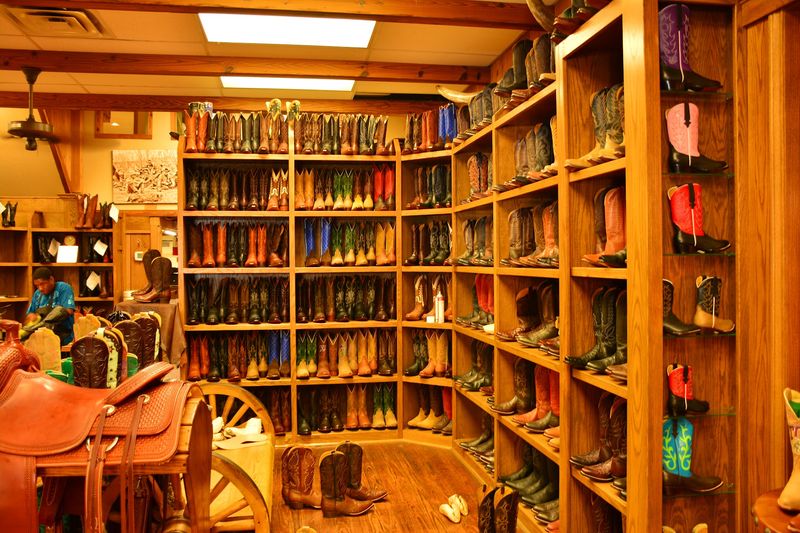
Picking leather turns out to be the fun part, and also the hardest. Classic calfskin sits alongside exotic hides like ostrich, alligator, and even elephant.
Each material behaves differently, wears differently, and ages differently, which is why the choice matters more than most people expect. Texture becomes a real decision rather than a detail.
Ostrich has those distinctive raised follicle marks that catch the light. Alligator brings structured, geometric patterns that read as formal without trying too hard.
Calfskin remains the workhorse, smooth and dependable, and honestly the option I kept coming back to while browsing. Sometimes the classic wins for good reason.
The decorative stitching that runs up many of the shafts is done on vintage machines, guided by hand rather than programmed. Experienced craftspeople steer the leather through, and the slight human variation is part of the appeal.
Patterns range from simple and clean to elaborate and layered. Both approaches get the same level of attention.
What impressed me is that durability and looks are treated as equal priorities here. A boot meant to last decades still gets stitching worth admiring.
Browsing the leather options is genuinely enjoyable even without ordering. The hides are laid out where visitors can see and compare them.
Ask questions if the staff has a moment. The explanations tend to be practical rather than sales-driven, and that makes the whole experience better.
Take your time. The leather is half the boot.
Arch Support Built Around A 40-Penny Nail
Here is a detail that stuck with me. A 40-penny nail is used for arch support inside these boots.
That single piece of hardware is part of why Leddy’s boots are famous for how they support the foot. Comfort is engineered in, not added later.
Arch Baird’s original last designs contribute to that support, which explains why the fit has a reputation among people who spend entire days standing or riding. Working cowboys are not sentimental about footwear that hurts.
Other signature details are easy to spot once you know what to look for. The narrow triple-scallop tongue is one of them.
Another is a stitch called a single bug and wrinkle, placed specifically to keep the leather from cracking when the toes flex. Small feature, big difference over years of wear.
I never thought I would find boot anatomy interesting. Then someone pointed out the tongue and the stitch, and suddenly every pair on the shelf looked different.
These are the kinds of details that separate handmade from mass produced. They exist because a person decided they mattered.
For anyone shopping seriously, learning to recognize these markers is genuinely useful. They tell you what you are holding.
Comfort claims are easy to make and hard to prove. A nail in the arch and a stitch that prevents cracking are proof you can actually point at.
Function first, always. The good looks come along for the ride.
Sitting In The Elevated Fitting Chair
The fitting starts with a chair, and not an ordinary one. Customers climb into an elevated fitting chair so their feet sit at the right working height.
From there, feet are carefully outlined and measured, with far more detail than a standard shoe fitting. Every dimension gets recorded.
Watching it happen, I realized how rarely anyone actually measures feet properly anymore. Most people just guess at a size and hope.
Those measurements then go into the ledger books, tied to a wooden last that will shape the finished boots. The whole system connects.
The clientele over the years has been remarkably varied. Working cowboys who live in the saddle, U.S. presidents, entertainers, musicians, and plenty of public figures have all had boots made here.
What matters more is that the craftsmanship does not change based on who is ordering. A ranch boot gets the same care as a dress boot.
That consistency is probably the most impressive thing about the place. No tiered effort, no shortcuts for smaller orders.
Anyone considering a custom pair should plan for the fitting to take a while. It is not a quick stop between other errands.
Wear or bring the socks you actually intend to use. Small thing, but it affects the fit.
The process feels personal in a way retail rarely does. Someone is paying attention to your feet specifically, and it shows in the result.
Saddles, Buckles, Hats And Tailored Western Wear
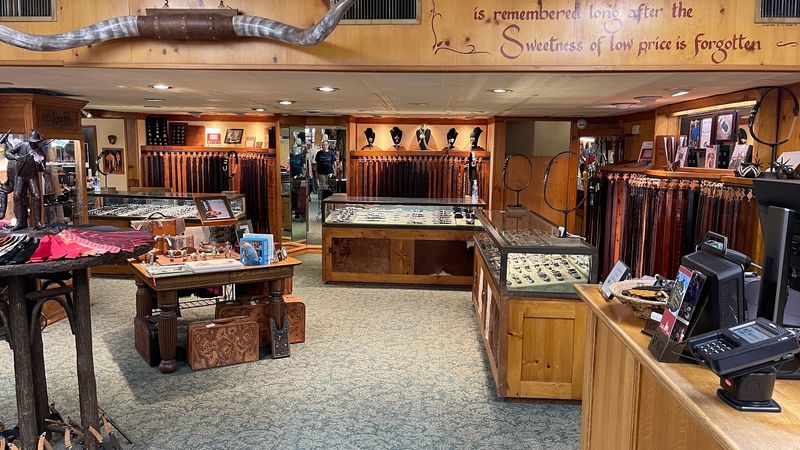
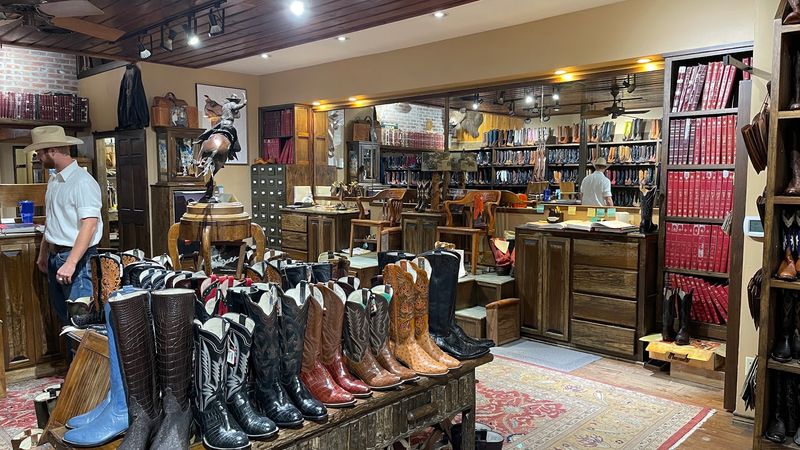
Boots get the headlines, but the rest of the store deserves attention too. Custom saddles and hand-tooled belts sit alongside an impressive display of sterling silver and gold belt buckles.
The buckle case alone kept me busy longer than expected. The detail work on them is genuinely striking.
Custom hats are part of the offering as well, shaped to the wearer rather than pulled off a rack in a standard size. Clothing, jewelry, and a wide range of accessories fill out the floor.
There is a full line of high-end Western wear for both women and men. Nothing about the selection feels like an afterthought.
Tailored and fitted clothing comes from serious names, including Hickey Freeman, Oxxford Clothiers, and Ermenegildo Zegna, plus the store’s own private label. That mix of Western tradition and fine tailoring is unusual, and it works.
I did not expect to find a saddle and a tailored jacket under the same roof. Fort Worth apparently sees no conflict there.
For visitors not in the market for custom boots, this is where browsing gets satisfying. Belts, buckles, and hats are easier entry points.
The leather goods reward close inspection. Tooled patterns show the same hand-finished quality as the footwear.
Give yourself extra time if you enjoy craftsmanship of any kind. One case leads to another, and suddenly an hour has vanished.
Consider it part of the experience rather than a detour.
The Feel Of The Place In The Stockyards
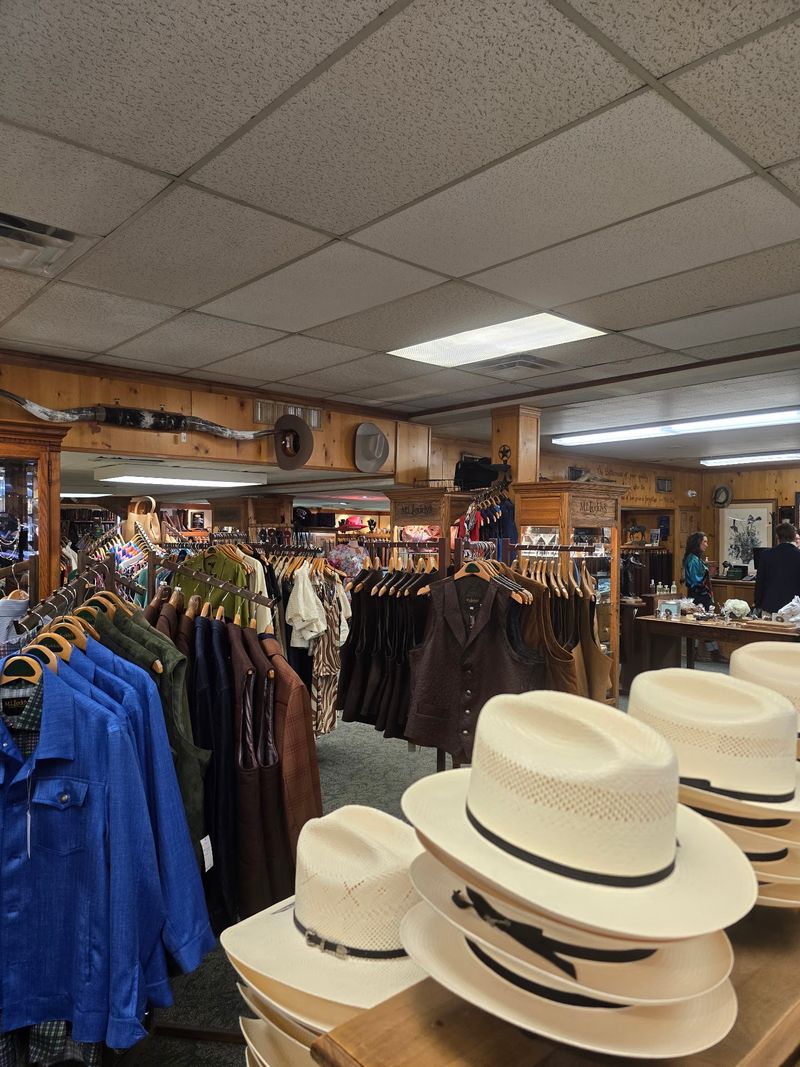
Some places just have a texture to them, and this one has it in abundance. Hand-laid brick streets lead to the door, and inside there is rough-hewn knotted pine and a pressed tin ceiling overhead.
The leather smell is the first thing anyone notices. It is unmistakable and it follows you through the entire store.
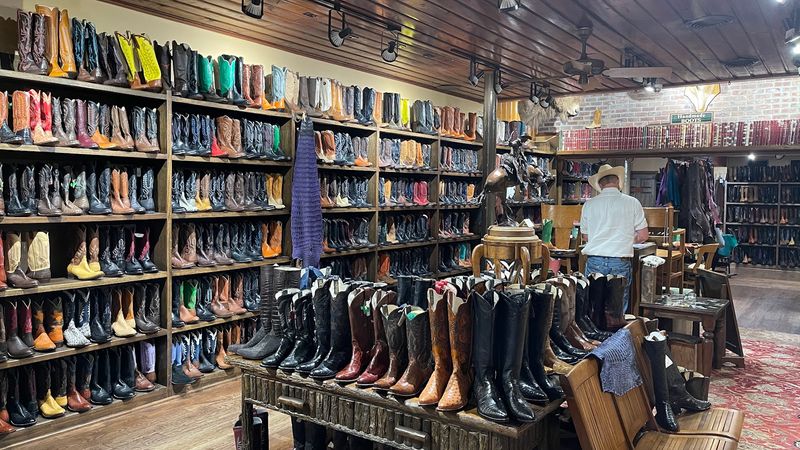
Thousands of handmade boots are arranged toe to heel along time-worn wooden shelves, forming rows that stretch across the interior. Seeing them all together is a genuine visual moment.
The building is spacious but never sterile. Every surface has a bit of history worn into it.
What comes across most is the philosophy behind the operation. The stated commitment is simple, the finest products and unmatched customer service, and that has turned the Leddy standard into a lasting tradition.
A handshake here carries the weight of a formal agreement. Old-fashioned, and refreshingly so.
The Fort Worth Stockyards surround the store with cattle pens, brick lanes, and Western history, which makes the visit feel bigger than one address. Plan to wander before or after.
My advice is to slow down once inside. Look at the shelves, notice the ceiling, breathe in the leather.
Customers come from all over the world for these handmade goods, yet the atmosphere stays unhurried and welcoming. That balance is rare.
Over a century in, the place still feels alive rather than preserved.
Address: 2455 N Main St, Fort Worth, TX 76164
