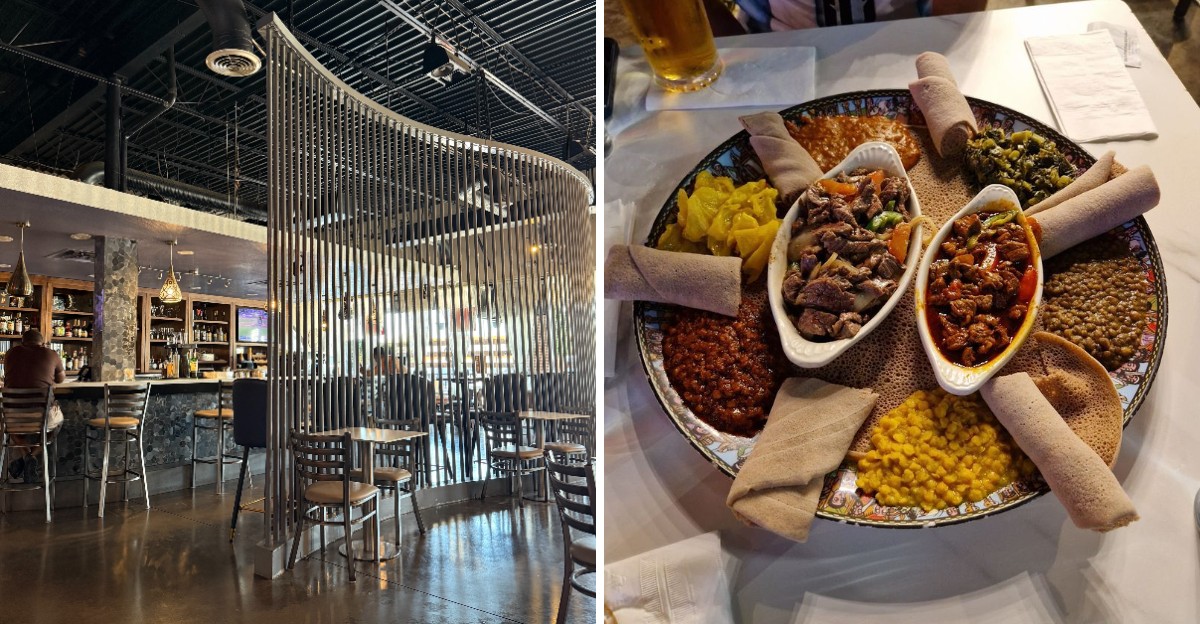
Sharing a meal is a tradition in many cultures. This Texas restaurant takes that idea and serves it on a giant platter.
Ethiopian food is all about coming together, and the experience here is no different. The platters arrive piled high with colorful stews, lentils, vegetables, and meats, all served on injera, a spongy flatbread that doubles as your utensil.
You tear off a piece, scoop up a bite, and pass the platter along. It is hands-on, interactive, and genuinely fun.
The flavors are bold, the spices are complex, and the portions are generous. It is the kind of meal that brings people together, whether you are with friends, family, or someone you just met.
No forks required. Just good food and good company.
Worth trying if you are ready for something different. And bring an appetite.
Injera, the Bread That Doubles as Your Plate and Fork
Ask anyone who has eaten Ethiopian food what sticks with them, and injera usually comes up first. It looks like a giant pale pancake, soft and full of tiny holes, and it covers the whole platter like a tablecloth made of bread.
Made from teff flour and left to ferment, injera carries a mild sour tang that balances the rich, spicy stews piled on top of it. That slight sharpness is the point.
Without it, the heavier dishes would feel one-note.
Here is how it works at the table. Tear off a piece with your right hand, pinch up some stew, and eat the whole bundle in one bite.
Extra rolls of injera usually come on the side, so nobody runs short.
The best part often comes last. By the end of the meal, the base layer of injera has soaked up every sauce and drip on the platter, and it becomes almost custardy with flavor.
Regulars save that part on purpose.
For anyone nervous about eating with their hands, relax. Servers at Desta are used to newcomers and will happily walk through the basics without making a fuss about it.
Wash up before you sit down, since the meal is genuinely hands-on.
Reviewers frequently mention how soft and fresh the injera tastes here, calling it the ideal canvas for scooping. That description fits.
One bread, one platter, no cutlery, and somehow it works beautifully.
Why One Giant Platter Beats Eight Separate Plates
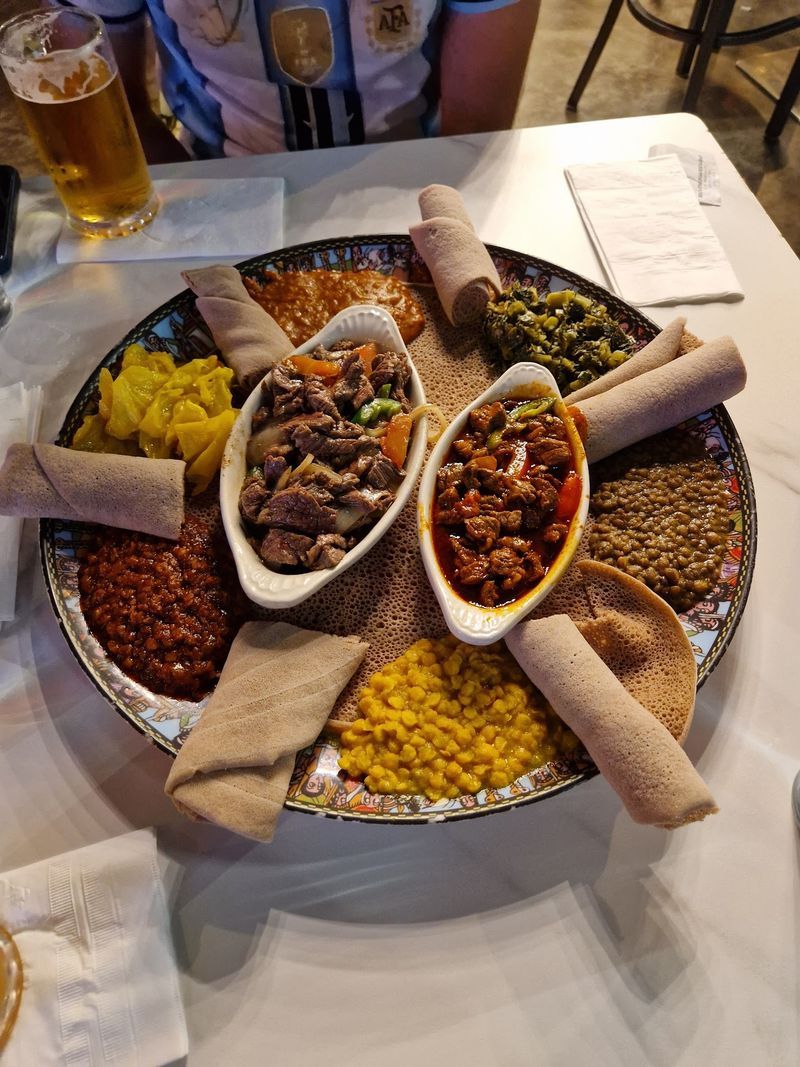
Something shifts at a table when there is only one plate. Conversation loosens up, elbows get closer, and people who barely know each other start pointing out their favorite corner of the platter.
Ethiopian dining is built on that idea. Sharing from a common dish is a sign of trust and friendship, not just a serving style, and it turns a meal into a group activity rather than eight private dinners happening side by side.
The unspoken rule is simple. Eat from the section of the platter directly in front of you rather than roaming across the whole thing.
It keeps the spread tidy and gives everyone a fair shot at the good stuff.
There is also gursha, a lovely custom where one person wraps a bite in injera and feeds it to someone else at the table. It reads as affection, respect, or a welcome to a guest.
Nobody will pressure you into it, but knowing what it means adds something.
Practically speaking, sharing also solves the ordering problem. Instead of committing to one dish and wondering about the rest, a combo platter lets a table taste eight or nine things at once.
Groups seem to figure this out fast. Families, friend groups, and coworkers all end up doing the same thing, hovering over the platter and debating which lentil dish is best.
That debate never really gets settled.
Doro Wat and the Deep Red Power of Berbere
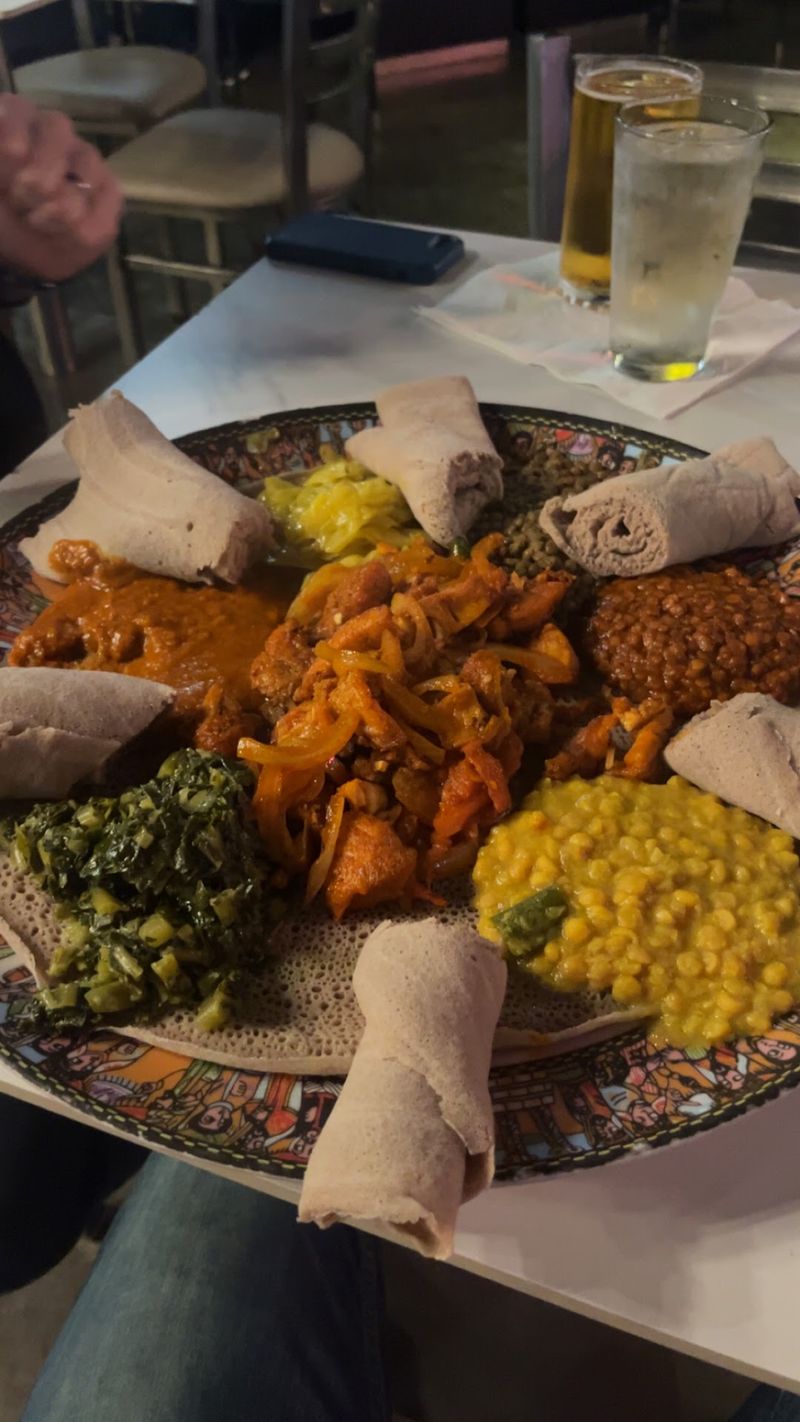
Doro wat is the dish Ethiopian cooks are judged by. It is a slow-cooked chicken stew, dark red from berbere spice, enriched with niter kibbeh, the spiced clarified butter that gives so many Ethiopian dishes their distinct perfume.
Onions do a lot of the heavy lifting. They get cooked down for a long time until they practically melt, which is why the sauce has that thick, velvety body instead of feeling watery.
A hard-boiled egg usually sits in the middle, soaking up sauce from every side. Splitting that egg among the table is its own small ritual.
Heat level catches some people off guard, though it is more of a warm, layered spice than a sharp burn. Berbere blends chili with things like fenugreek, ginger, cardamom, and garlic, so the flavor keeps unfolding instead of just hitting hard and quitting.
If you are ordering for a first visit, doro wat belongs on the platter. It gives newcomers the clearest sense of what Ethiopian cooking is actually about, and it pairs well with milder lentils and greens that cool things down between bites.
Pace yourself. Scoop a little sauce, add a bit of the cabbage or split peas alongside it, and let the flavors mix on the injera.
That combination is where the meal really clicks.
Leftovers, if any survive, travel well as carryout.
Lamb Ribs, Goden Ribs, and the Case for Ordering Meat
Plenty of diners at Desta swear the meat dishes are the main event, and the ribs get mentioned again and again. Goden ribs show up in review after review with the same phrase attached: fall off the bone.
Lamb ribs earn similar praise. Juicy, tender, heavily seasoned, and rich enough that a few pieces go a long way on a shared platter.
Then there are tibs, which are sautéed cubes or strips of beef or lamb tossed with onions, peppers, and spices. Tibs bring a completely different texture to the table, browned and slightly chewy rather than saucy and soft.
Chicken tibs come up often too, and some versions arrive with roasted root vegetables alongside the meat, which makes the plate feel hearty in an almost rustic way.
Kitfo deserves a mention since it is one of the most talked-about items here. Traditionally it is finely minced beef seasoned with mitmita and niter kibbeh, and it can be ordered cooked to different degrees depending on preference.
Ask your server about the options.
A smart move for a group is balance. Pair one rib dish with one tibs order and a pile of vegetables, so the platter has crispy edges, saucy pockets, and fresh greens all at once.
Meat lovers rarely leave disappointed. That part seems to be the most consistent praise the kitchen receives.
The Veggie Combo That Even Teenagers Request
Vegetarians tend to have a rough time at Texas restaurants. Not here.
The veggie combo is one of the most requested things on the menu, and it is not a consolation prize hidden at the bottom of the page.
Picture a wheel of little mounds: red lentils spiced with berbere, gentle yellow split peas, collard greens cooked soft, cabbage with carrots and potatoes, and often a beet salad for color and sweetness.
Each portion tastes different from the one beside it. That contrast is what makes the platter interesting, since you can go from earthy to mild to tangy in three consecutive bites.
Ethiopia has a long fasting tradition in which many people eat plant-based meals for extended stretches of the year, which explains why the vegetarian cooking is so developed. These are not side dishes turned into a main course.
They are recipes with centuries behind them.
Families mention bringing kids and teenagers who genuinely look forward to the veggie combo, which says something. The flavors are bold without being aggressive, and the hands-on eating makes it fun for younger diners.
Portions run generous enough that two people can comfortably share one platter, sometimes with bread left over.
A good strategy for mixed groups is ordering one vegetarian combo and one meat combo, then pulling from both. Nobody feels left out, and the table gets maximum variety.
Bright Rooms, High Ceilings, and a Name That Means Happiness
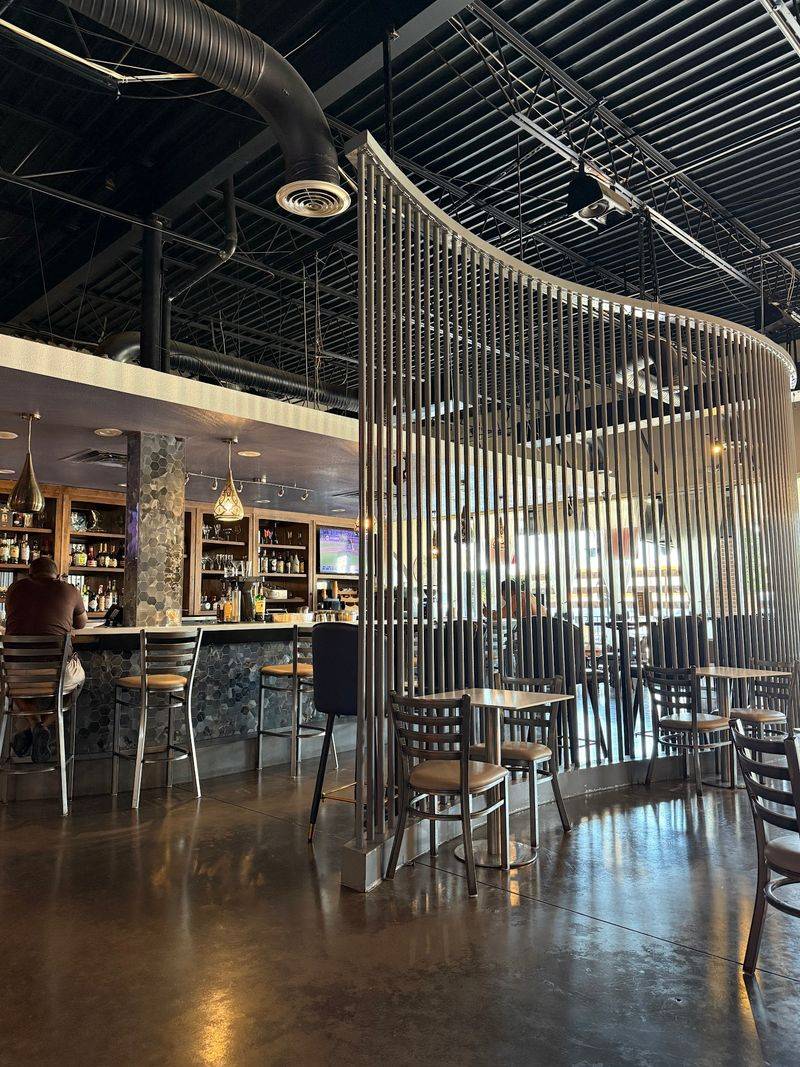
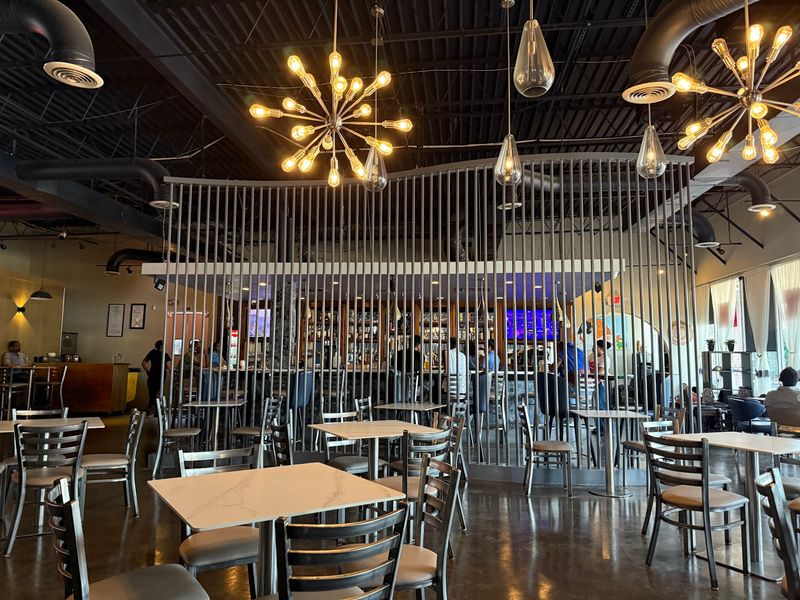
The setting surprises people who expect something dim and heavily decorated. The dining room is airy and modern, with high ceilings, a palette of whites and dark wood, and a tiled bar that anchors the space.
Cultural touches appear throughout without turning the room into a theme. It reads as contemporary Dallas with Ethiopian roots showing at the edges.
Both indoor and outdoor seating are available, which matters on those mild Texas evenings when sitting outside beats sitting under air conditioning.
Brightness changes the whole experience of eating with your hands. You can actually see the colors on the platter, the deep red of the wat against the green of the collards, and that visual moment is half the appeal of Ethiopian food.
Guests frequently note how welcoming the staff is, with the owner and family members known for stopping by tables to check in and chat. That personal touch shows up over and over in visitor accounts.
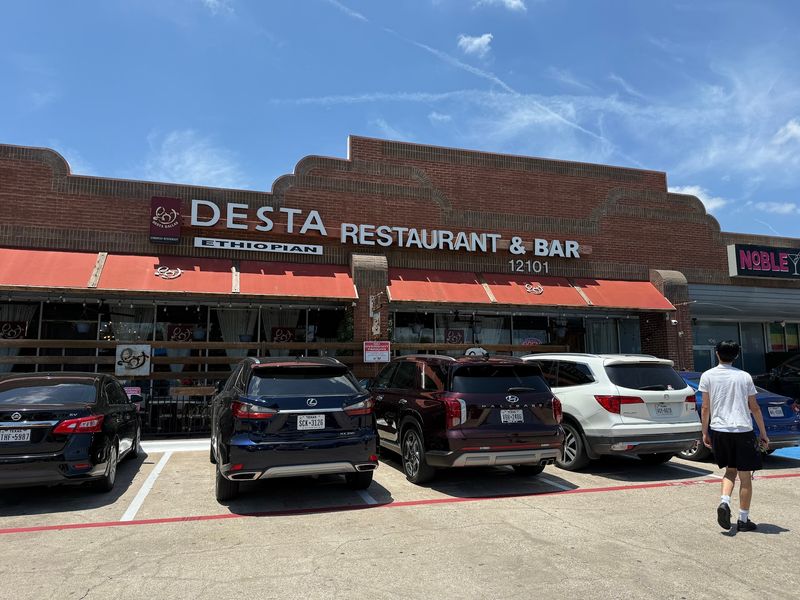
You can find the restaurant at 12101 Greenville Ave #105, Dallas, TX 75243, United States, hiddenThis Little Texas Restaurant Serves Ethiopian Food On Giant Platters Made For Sharing into a shopping strip that gives no hint of what is inside.
Tables fill up on weekend evenings, so a group arriving without a plan may wait. Come a little early or a little late if timing matters.
Overall the room feels relaxed. Not fancy, not casual, somewhere warm in between.
Coffee, Spiced Tea, and Mango Smoothies Worth Saving Room For
Ethiopia is where coffee began, and drinking it there is closer to a ceremony than a caffeine errand. Beans are roasted, ground, and brewed in a clay jebena, then poured in small cups with a long stream from above.
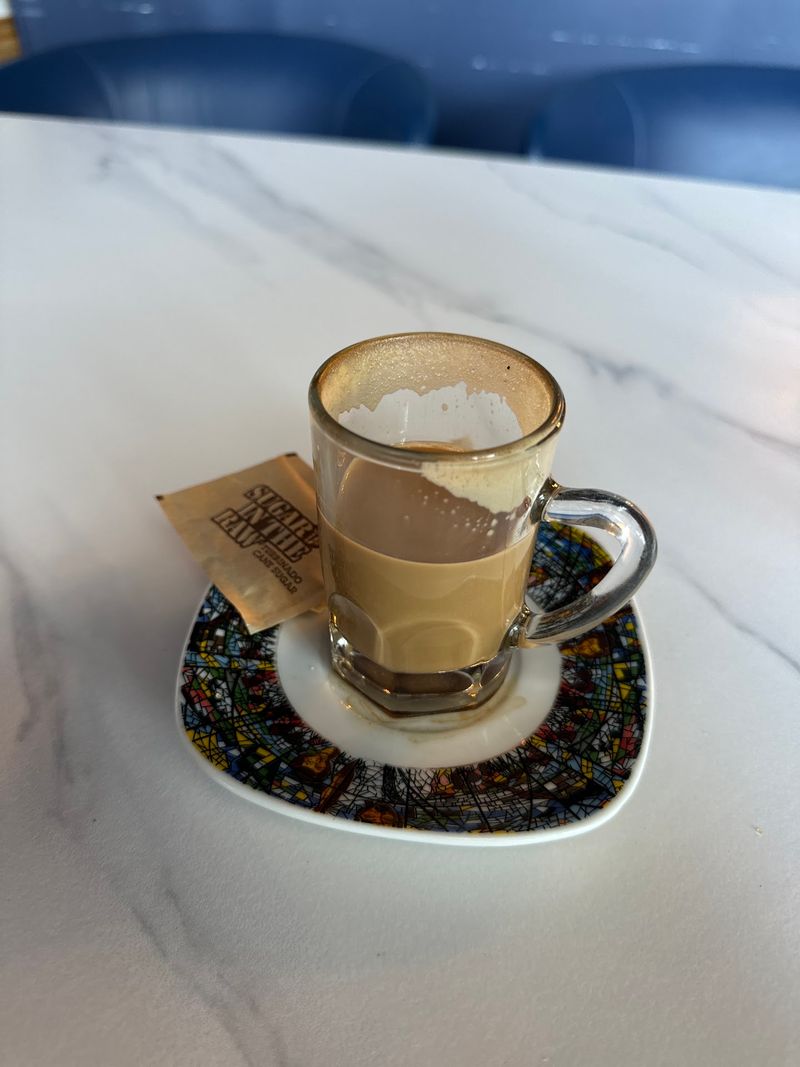
At Desta, the coffee is strong and aromatic, and the macchiato gets singled out often by guests who make a point of ordering one after the meal.
Tea deserves equal attention. The unsweetened tea here comes laced with cinnamon and cloves, and more than one visitor has described it as unlike anything they have had elsewhere.
Ginger chai is another comforting option, especially after a spicy platter when your mouth could use something warm and soothing rather than icy.
For something cold and sweet, the mango smoothie is a frequent favorite, thick and bright and a nice contrast to berbere heat.
Dessert exists too. Tiramisu turns up on the menu and gets mentioned by guests, which is a fun little crossover on an Ethiopian menu and a nod to Italian influence in Ethiopian cafe culture.
A practical tip: order the coffee or tea after the platter rather than with it. The flavors are strong enough to compete with the food, and they work better as a slow finish while the table talks.
Breakfast is served starting at 10 am daily, so morning visits are an option too.
How to Order Like You Have Been Before
First-timers often freeze at the menu, staring at unfamiliar names and wondering what half of it means. Easiest fix in the world: order a combination platter and let the kitchen decide for you.
Combos are designed exactly for this. They gather several stews, vegetables, and meats onto one injera-covered platter so you can taste widely instead of gambling on a single dish.
A solid starting lineup for a group of three or four would be doro wat for the deep spiced chicken flavor, a vegetarian combo for the lentils and greens, and an order of tibs or lamb ribs for texture.
Sambusas make a good opener if the table wants something to nibble before the main platter lands.
Ask questions. Servers here are generally happy to explain the difference between the various wots, describe how kitfo is prepared, or steer you toward milder options if heat is a concern.
Timing is worth knowing in advance. Food is cooked fresh and platters take a while to assemble, so this is not the spot for a rushed lunch break.
Show up with time to spare and treat the wait as part of the evening.
Doors open at 10 am every day, with later closing on Friday and Saturday nights.
Carryout is available for anyone who wants the flavors without the full sit-down ritual, though sharing at the table really is the better version.
