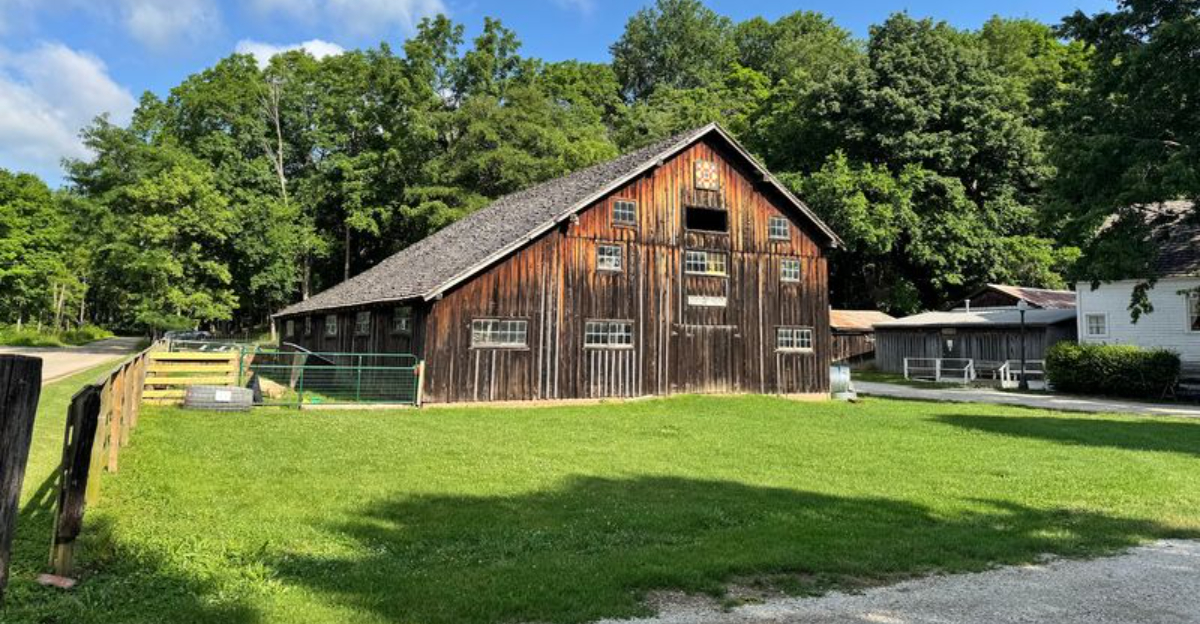
Somewhere in Indiana, seventy acres hold more than thirty buildings that were not born here. They were moved, piece by piece, from wherever they used to stand.
An 1830s log cabin sits near a one-room schoolhouse, desks still lined up in rows. A working blacksmith shop rings out from somewhere behind the trees.
Three covered bridges connect it all, close enough to walk between without much effort. You expect glass cases and velvet ropes.
Instead, most doors stand open, inviting a closer look. A small cafe fills the air with coffee, and a creek traces the property’s edge like it has always belonged there.
I find myself thinking about how rare it is to walk through history instead of just reading about it. This state holds onto its past in a way that rewards anyone willing to slow down and look closely.
Three Covered Bridges Within One Short Walk
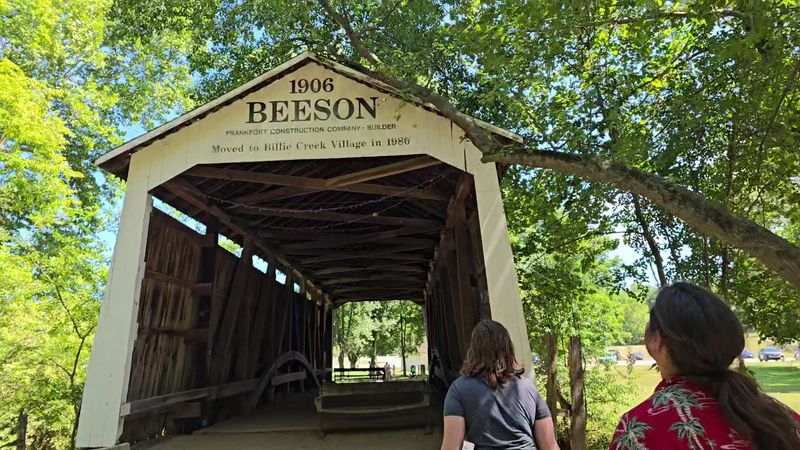
Most people chase covered bridges one country road at a time. Here, three of them stand close enough to visit in a single afternoon stroll, which is almost unheard of anywhere else.
The Billie Creek Covered Bridge, built in 1895, crosses Williams Creek and gave the village its name. Beeson Covered Bridge dates to 1906, and Leatherwood Station Covered Bridge was raised in 1899.
All three carry the Burr Arch design, an early American engineering method that pairs a truss with a curved timber arch for extra strength. All three also appear on the National Register of Historic Places.
They were moved to the grounds specifically so they could be protected rather than lost, and the effort shows in the thick, sun-bleached timbers overhead. Step inside one and the temperature drops a few degrees, sound softens, and the far opening frames the countryside like a picture.
Parke County holds more than thirty covered bridges in total, which explains the Covered Bridge Capital of the World title. Photographers tend to linger longest in early morning or late afternoon, when light angles through the portals and stripes the wooden floor.
During certain village events, wagon rides pass through the bridges, turning them from scenery back into working structures. That small detail changes everything about how they feel.
Bring a wide lens and expect to use it more than once.
Over Thirty Historic Buildings, Doors Actually Open
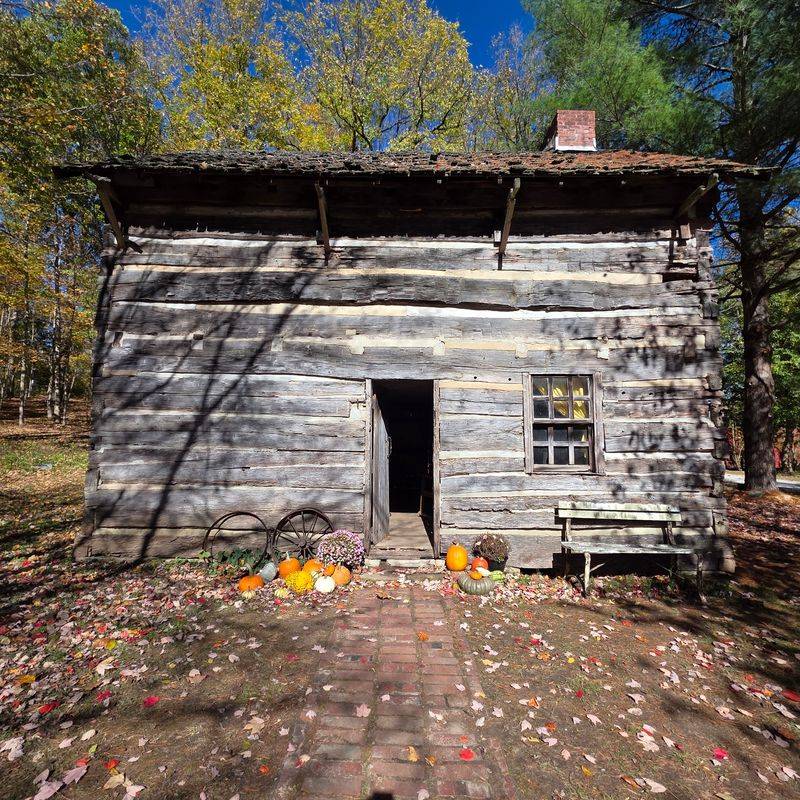
Open doors change a museum visit completely. Instead of peering through roped-off entryways, visitors here can step across worn thresholds and stand in rooms furnished as though the residents stepped out an hour ago.
Spread across roughly seventy acres, the collection includes more than thirty authentic structures relocated from around the region and restored piece by piece. The Beeson-DePlanty Cabin, a log home from the 1830s, is among the oldest and shows just how small early shelter really was.
A one-room schoolhouse from 1913 sits nearby with its desks and chalkboard intact. Two churches anchor the grounds, St. Joseph’s Catholic Church from 1886 and Union Baptist Church, both reminders of how rural communities gathered.
One residence once belonged to Joseph A. Wright, who served as Indiana’s governor from 1849 to 1857.
Other stops include a blacksmith shop, the Burr Mill where grain was ground into flour, a doctor’s office, a bank building that also handled mail, and a Chautauqua Pavilion built for talks and performances.
Farmstead outbuildings, a log barn, and a refreshment stand fill in the everyday details. Period tools, furniture, and household objects sit inside many of them.
A tip worth remembering: restrooms are tucked behind the log cabin. Renovation work continues in places, so some buildings look rougher than others, part of an ongoing revival.
Blacksmiths, Candle Makers, and the Sound of Real Work
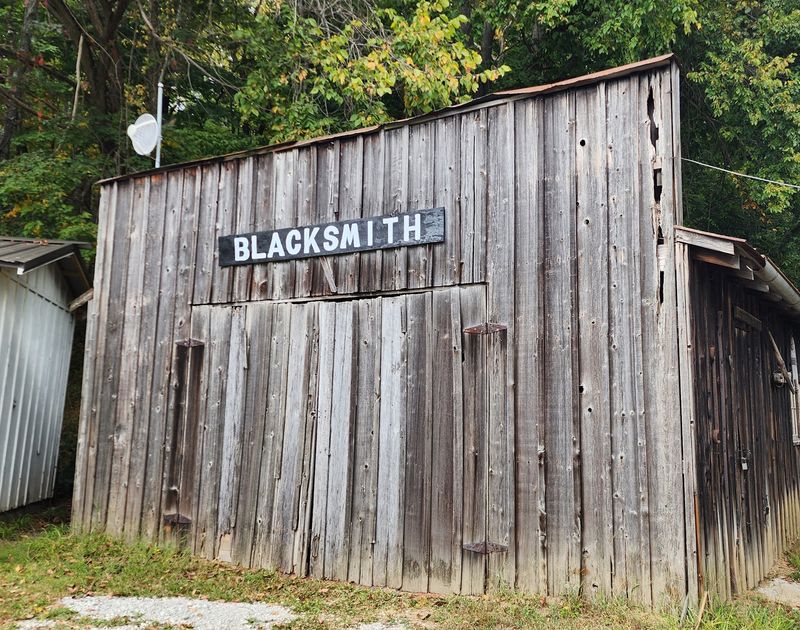
Ring, ring, pause. That rhythm carries across the grounds whenever the forge is lit, and it pulls visitors toward the blacksmith shop faster than any sign could.
Craft demonstrations are a regular part of village life, and they turn abstract history into something noisy and warm. Blacksmithing sits at the center, with glowing iron drawn from the fire and shaped by hammer while onlookers stand close enough to feel the heat.
Candle making shows up too, along with milling, a process that once fed entire communities. Woodworking and broom making appear at various times, each one a lesson in patience.
Craftspeople often set up around the property to create and sell handmade goods, so the mix of activity shifts from one visit to the next. That unpredictability is part of the appeal.
Watching someone shape a hook or twist bristles into a broom head explains resourcefulness better than a plaque ever could. Everything took time, skill, and a decent set of arms.
Many artisans are happy to explain what they are doing, which makes the experience feel like a conversation rather than a performance. Kids tend to stare at the forge for ages.
Preserving the skills alongside the buildings is what earns the living-history label here. Check the village schedule before arriving to catch specific demonstrations.
A General Store Packed With Old-Fashioned Sodas
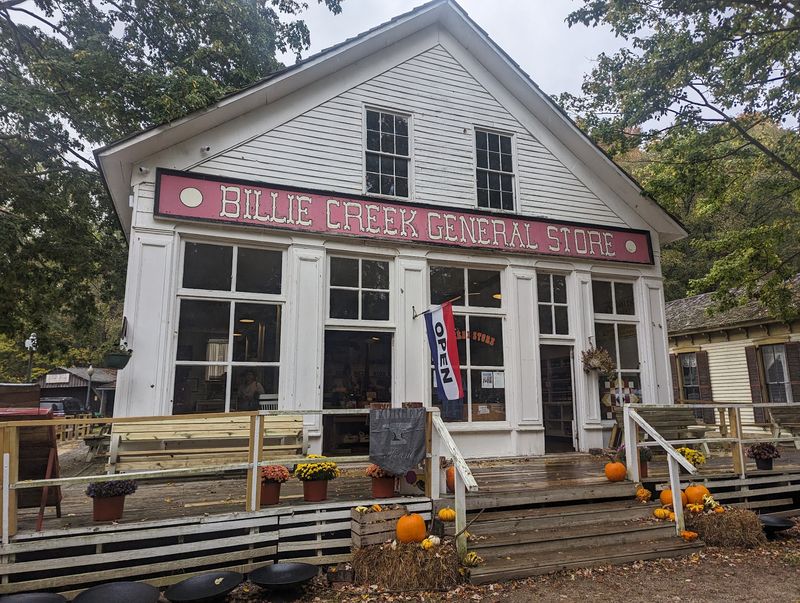
More than a hundred kinds of old-fashioned soda line the shelves inside the Billie Creek General Store, and choosing just one becomes a genuine problem.
Glass bottles with hand-lettered labels sit next to jars of classic candy, the kind that grandparents recognize instantly. Prairie bonnets hang nearby, unexpected and oddly charming.
Local artists and artisans supply much of the rest, meaning the inventory rotates and repeat visitors keep finding something new. Amish treats add a taste of the surrounding countryside.
The wooden floors and stocked shelves give the whole space a genuine mercantile feel, less gift shop and more working store. Take a slow lap before deciding what comes home.
A short walk away, The Gaebler Cafe handles the coffee. Handcrafted drinks, teas, and fresh-baked goods come out of a small, comfortable room built for lingering.
Board games and a quiet corner make it easy to stay longer than planned, especially if weather turns. Visitors frequently rank the coffee among the best surprises of the trip.
Then there is the Tintype Studio, set up in the old Village Bank building. A photographer works there using nineteenth-century tintype techniques, producing a metal portrait unlike any phone snapshot.
Sitting still for one of those exposures is its own small history lesson. It also makes a keepsake that will outlast most souvenirs by a very long stretch.
Festival Season Turns the Whole Place Loud and Lively
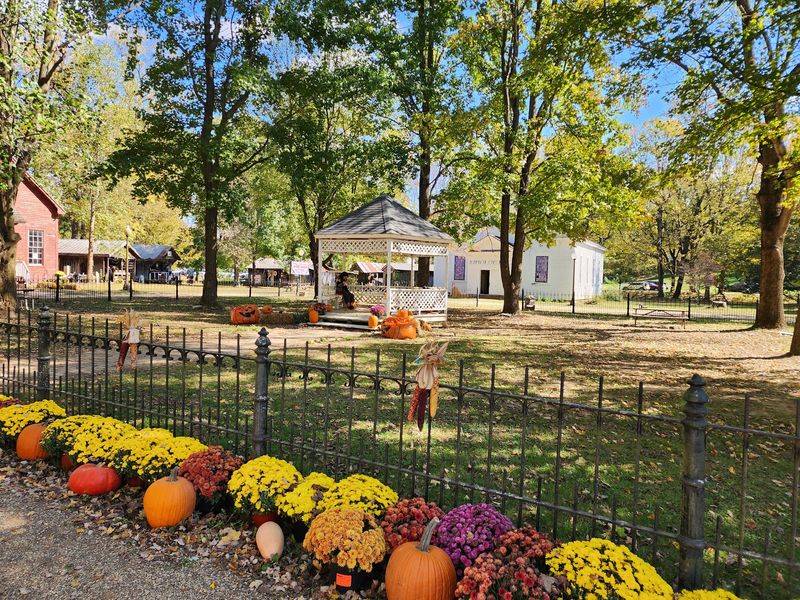
Autumn is when the village stops being quiet. During the Parke County Covered Bridge Festival, usually held in October, Billie Creek serves as a key location with craft vendors, festival food, and complimentary wagon rides linking the grounds to downtown Rockville.
Fall color, three bridges, and a shuttle running back and forth make it one of the busiest and best times to show up. Arrive early if parking matters.
Civil War Days brings a different energy entirely. Union and Confederate reenactors build authentic encampments, historians share context, and battle demonstrations play out on the southern field.
An evening ball often closes the event, offering a glimpse of 1860s social life complete with period music and dancing. The Battle for Billie Creek reaches even further back, staging a mid-eighteenth-century reenactment on the same grounds.
Summer has its own oddball highlight in Dog Days of Summer, a day built around four-legged visitors with pet vendors and treats on hand. Leashes required, tails guaranteed.
When December arrives, Christmas at the Village dresses the buildings in lights and seasonal decoration, and the historic structures take on a completely different mood after dark.
Smaller gatherings and workshops, including a program called 2nd Tuesday at 2, fill in the calendar between the big weekends. Checking dates ahead of a trip pays off, since no two events feel alike.
After Dark, the Village Belongs to Ghost Hunters
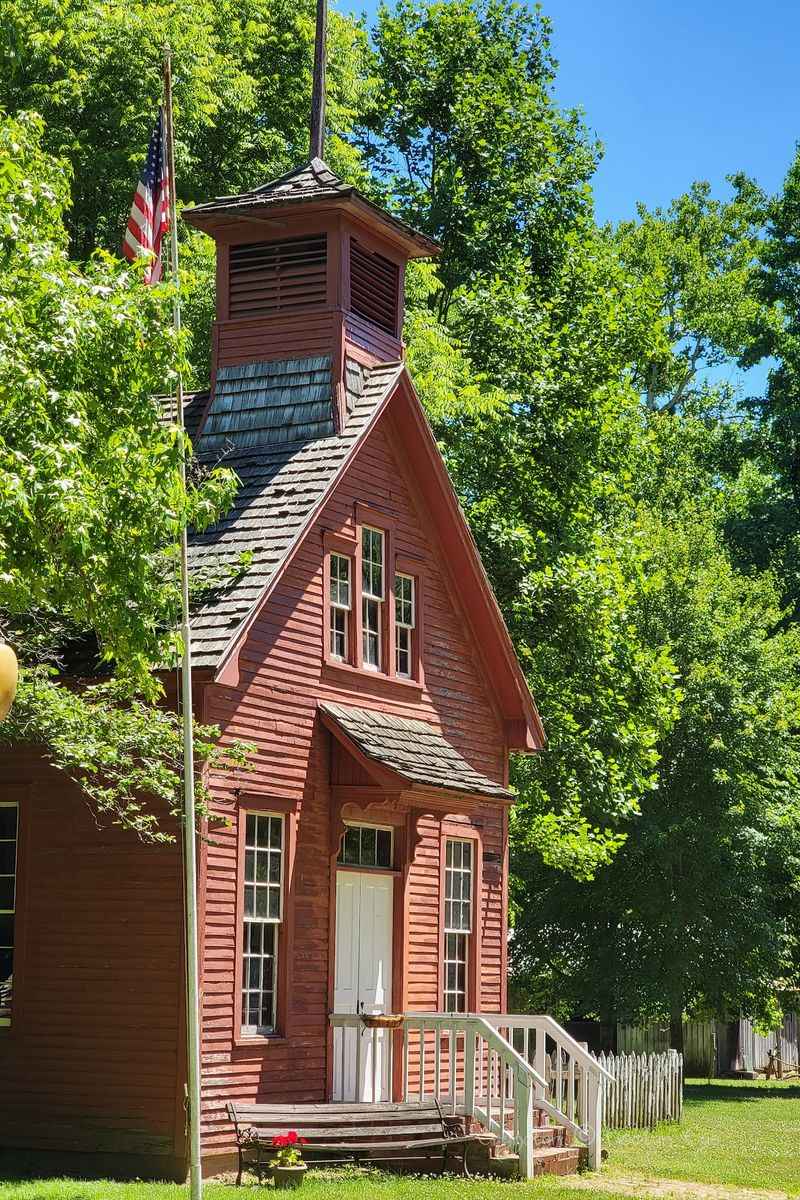
Buildings from the 1800s and early 1900s tend to collect stories, and Billie Creek has collected plenty. Reports over the years mention apparitions, shadows that move at the edge of vision, and footsteps in rooms that appear empty.
Rather than shy away from that reputation, the village leans into it with organized paranormal investigations. Groups can book overnight access, which means the grounds and buildings become theirs alone once the public day ends.
Investigators receive a tour, then keys, then hours of freedom to explore at their own pace. Sitting inside an 1830s log cabin at two in the morning is a very different experience from touring it at noon.
The schoolhouse, the churches, and the old barn each carry their own atmosphere after sunset. Sleeping quarters above the General Store give overnight groups a comfortable base, air conditioned and clean, so nobody has to drive home exhausted.
Not every night produces activity, and visitors who have gone through their recordings afterward often report finding nothing dramatic. Most say the experience was worth it anyway.
Having an entire historic village to wander through in the dark is memorable on its own terms. Bring flashlights, warm layers, and patience.
Skeptics and believers both tend to leave with a story, which is the point.
Seventy Acres of Rolling Countryside and a Creek
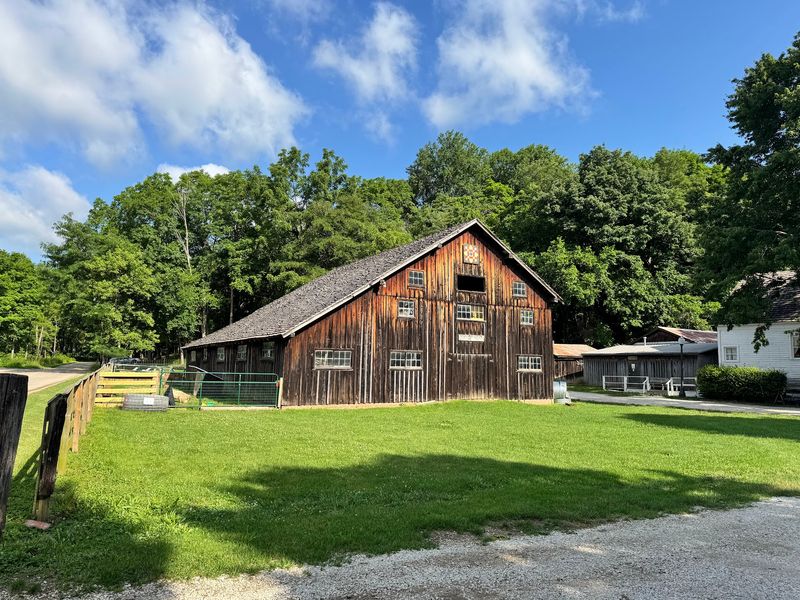
Scenery does a lot of quiet work here. Roughly seventy acres of rolling countryside surround the buildings, with mown paths, open fields, and mature trees that shade most of the walking routes.
Williams Creek meanders along the eastern edge of the property, adding the steady sound of moving water to the background. On calm mornings, it is the loudest thing around.
Photographers get plenty to work with. Weathered timber against a bright sky, fence lines running toward the horizon, and rustic outbuildings tucked into grass all frame up well without much effort.
The unhurried pace is the real feature. Nothing about the layout pushes visitors from one stop to the next, so lingering happens naturally.
Picnic spots are easy to find, and a bench in the shade makes a fine place to look at photos or simply watch the fields. Wildlife wanders through, and resident animals have been known to charm guests thoroughly.
Summer thunderstorms roll in fast in this part of Indiana, so packing a rain layer is smart. The cafe makes a good shelter if the sky opens up.
Wear shoes that handle grass and gravel, since the grounds are wide and mostly unpaved. History and open country blend here in a way that suits both museum lovers and anyone who just wants a peaceful walk.
Address: 65 South Billie Creek Rd, Rockville, IN 47842
