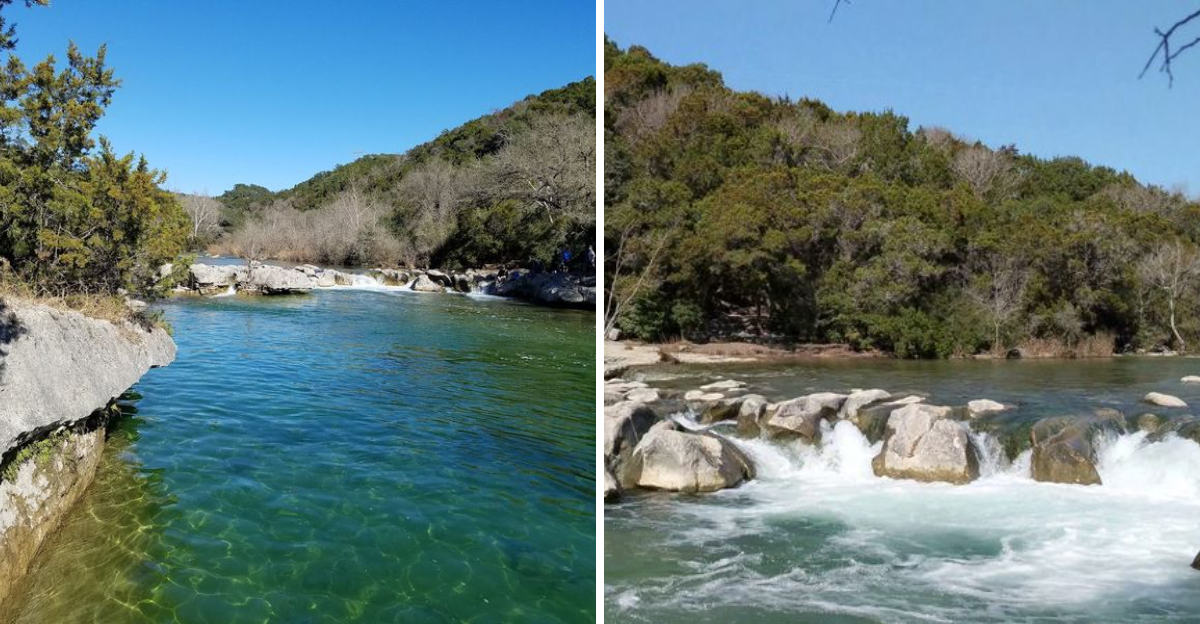
A 3.2-mile hike that ends in a waterfall is the kind of adventure that makes you feel like you have discovered a secret. This Texas trail does exactly that.
The path winds through the Greenbelt, offering shade, rock formations, and the sound of water growing louder as you get closer. At the end, you are rewarded with a cascading waterfall and a swimming hole that is perfect for a cooling dip.
It is not a difficult hike, but it feels like an accomplishment. The scenery is stunning, the water is refreshing, and the whole experience is pure magic.
You can sit by the falls, take a swim, or just soak in the fact that you found this place. It is the kind of spot that makes you want to keep it to yourself.
The Trail That Feels Nothing Like a City Hike
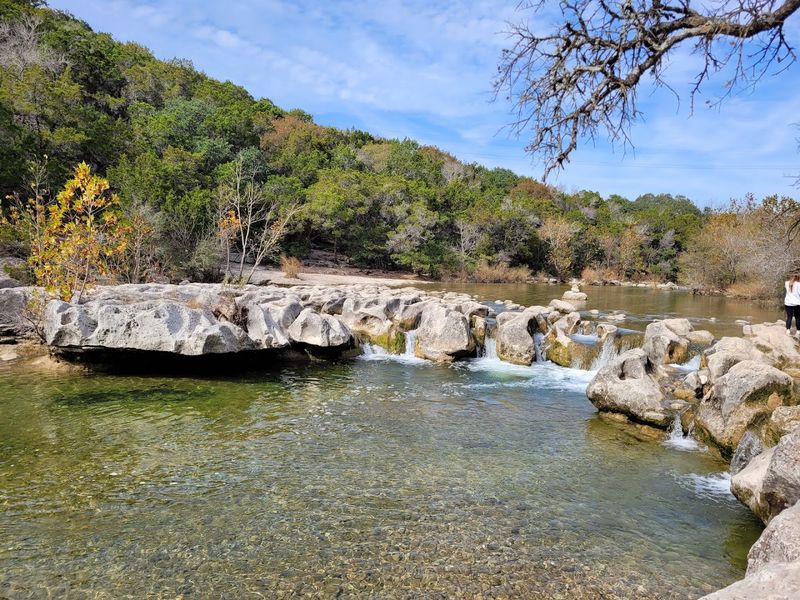
Most urban trails feel like parks dressed up as wilderness, but Barton Creek Greenbelt does not play that game.
From the moment you step past the trailhead at the Twin Falls access point off 3918 S MoPac Frontage Rd, the city noise fades in a way that feels almost deliberate, like nature pulling a curtain closed behind you.
The path itself is a mix of rocky stretches, exposed tree roots, and shaded dirt sections that keep you paying attention to your footing. It is not a trail you can scroll your phone through.
The terrain demands a little respect, and that is honestly part of the charm.
Limestone cliffs appear on both sides as you move deeper into the canyon, and the dense canopy overhead creates a kind of tunnel effect that feels immersive rather than claustrophobic. Birds call from somewhere up in the branches.
Lizards dart across sun-warmed rocks. The whole atmosphere shifts from urban to wild within about ten minutes of walking.
Sturdy hiking shoes are not optional here. The rocks can be slippery, especially near the creek crossings, and the trail surface changes frequently enough that sandals will leave you frustrated before you even reach the falls.
The Greenbelt covers roughly 7.6 to 7.9 miles in total, but the 3.2-mile round trip to Sculpture Falls is a sweet spot that feels satisfying without being punishing. It is the kind of trail that makes you wonder why you do not do this every weekend.
Limestone Cliffs and the Canyon Atmosphere Along the Way
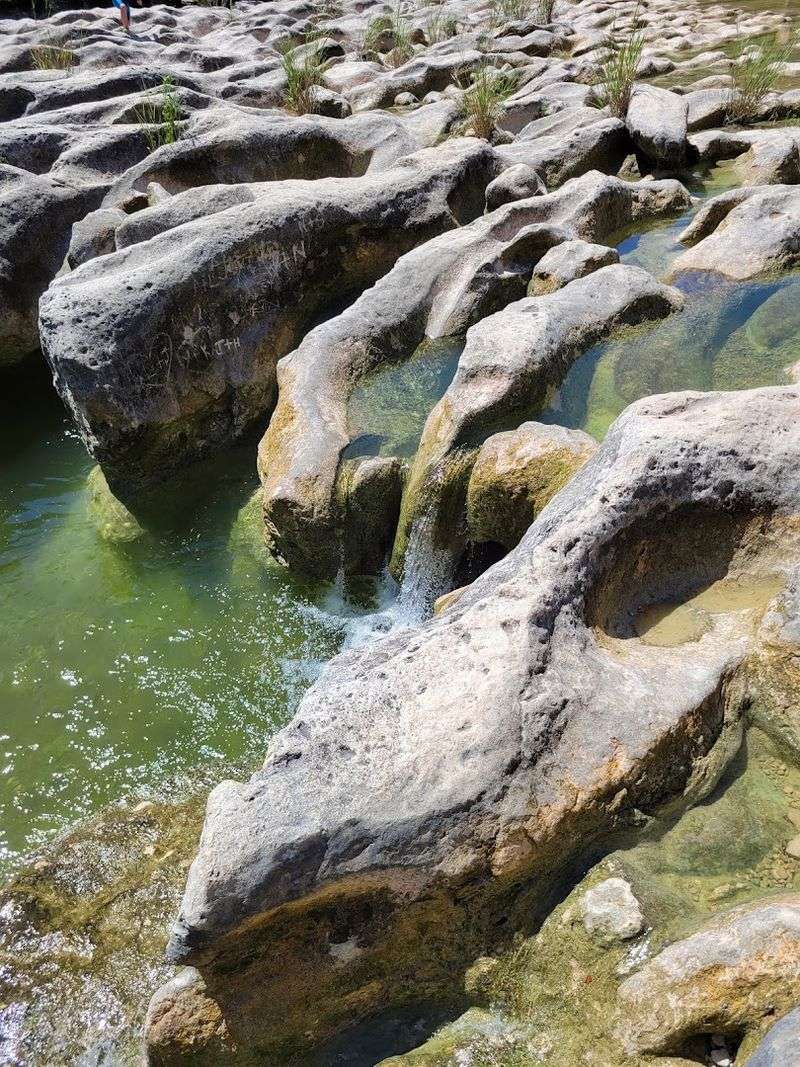
One of the things that catches most people off guard on this hike is how geological it feels.
The trail runs through a limestone canyon carved by Barton Creek over thousands of years, and the rock walls that rise on either side of the path have a presence that is hard to describe until you are actually standing next to them.
The limestone here has this warm, almost golden color in the afternoon light. It layers in horizontal bands that tell a quiet story about time and water pressure and ancient geology that most of us only vaguely remember from middle school science class.
I found myself stopping more than once just to look at the texture of the rock face.
The creek itself runs along the trail for much of the route, and depending on recent rainfall, it can range from a gentle trickle to a confident flow. After a good rain, the sound of moving water follows you the entire way.
During drier stretches, the creek may be quieter, but the canyon walls and the dense canopy still create an atmosphere that feels genuinely removed from everyday life.
Wildflowers push up through rocky crevices in spring, adding splashes of color against the pale stone. Native birds dart between the trees above the cliffs.
The whole corridor has an energy that feels ancient and alive at the same time, which is a combination that does not come around often on a trail this close to a major city.
Picking the Right Trailhead Makes All the Difference
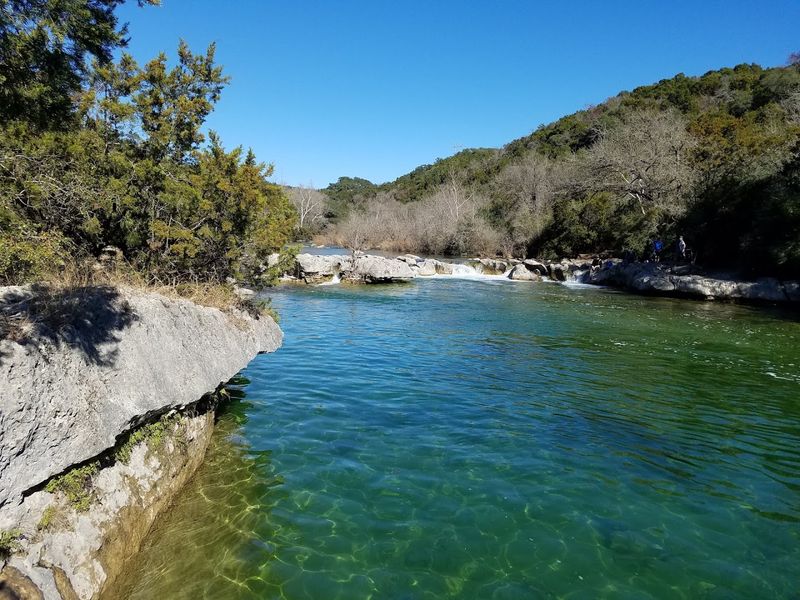
Not all trailhead choices are created equal, and this hike is proof of that.
The Twin Falls and Gaines Creek entrance at 3918 S MoPac Frontage Rd in Austin is widely considered one of the best starting points if your goal is reaching Sculpture Falls without tackling a brutally steep climb known locally as the Hill of Life.
Skipping that hill is a genuinely good idea, especially in summer. The Hill of Life is a notorious incline that greets hikers coming from other access points, and it earns its dramatic name on the way back when your legs are already tired and the Texas sun is doing its worst.
Parking at the MoPac access point is typically free, which is a welcome bonus in a city where parking costs can sneak up on you. That said, spots fill up fast on weekends and holiday mornings, so arriving early is not just a suggestion, it is a strategy.
Car break-ins have been reported at some trailhead lots, so leaving valuables locked out of sight or simply leaving them at home is the smarter move.
From this trailhead, Sculpture Falls sits about 1.2 miles down the trail, which translates to roughly 30 to 45 minutes of relaxed walking. That distance feels just right.
You get enough trail to feel like you earned the destination without the hike becoming an all-day commitment. It is accessible enough for most fitness levels while still feeling like a real outdoor adventure.
Sculpture Falls, the Emerald Heart of the Greenbelt
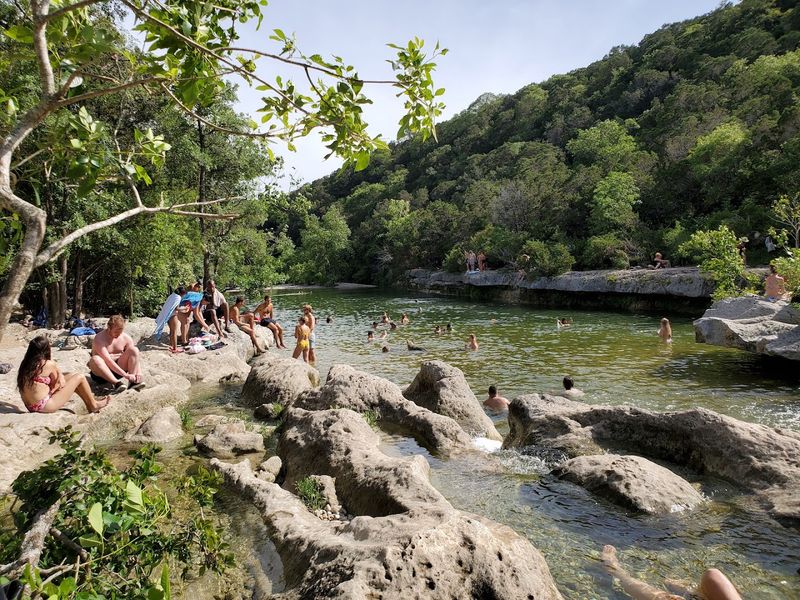
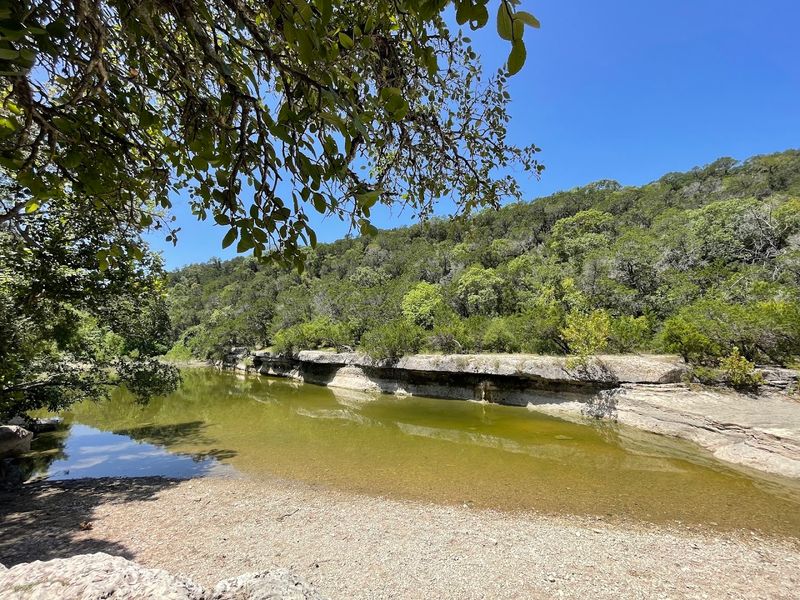
Arriving at Sculpture Falls for the first time feels like the trail has been building to something, and then suddenly you are there. The water is a shade of green that looks almost artificially vivid, the kind of color you associate with tropical destinations rather than central Texas.
But it is completely real, and it is completely worth the walk.
The falls themselves are not a single dramatic drop but rather a series of cascading ledges where water moves over and around sculpted limestone formations.
The rocks have been shaped by centuries of water flow into smooth, rounded forms that create natural pools and channels throughout the swimming area.
Some of the flat limestone surfaces have earned the nickname rock recliners, and once you stretch out on one with the sun on your face, that name makes perfect sense.
Water temperature at Sculpture Falls hovers around 70 degrees Fahrenheit in summer, which is refreshing without being shocking. It is the kind of cool that makes you want to stay in longer than you planned.
The pools vary in depth, and checking conditions before jumping from the ledges is genuinely important, as rainfall can shift water levels significantly.
The secluded feel of the spot is one of its most remarkable qualities. Despite being within Austin city limits, the canyon walls and surrounding trees create a natural enclosure that muffles the outside world almost completely.
It is easy to spend an hour here and feel like you have been somewhere much farther from home.
Swimming and Rock Jumping, What You Need to Know First
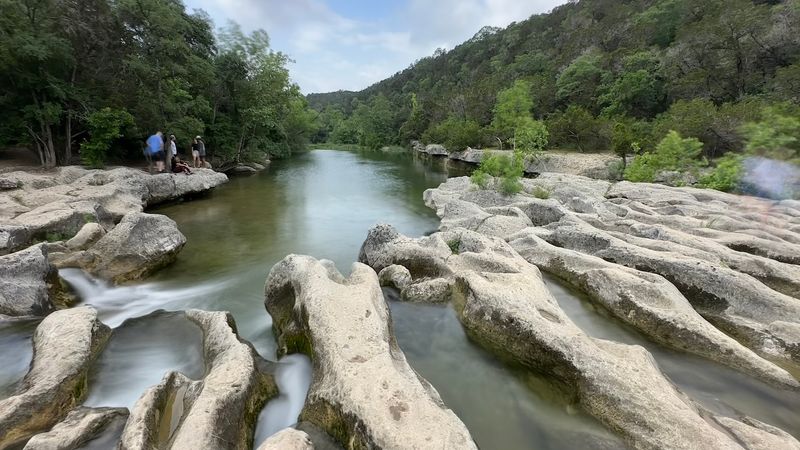
The swimming at Sculpture Falls has a reputation that precedes it, and that reputation is mostly earned.
The clear, cool water and the natural rock ledges make it one of the more memorable swimming spots in the Austin area, and on a hot Texas afternoon, getting into that water feels like a genuine reward for the hike out.
Rock jumping is popular here, and the ledges above the pools attract plenty of brave souls on summer weekends. That said, jumping safely requires checking the water depth first, every single time.
Water levels fluctuate based on recent rainfall, and a pool that was deep last weekend might be significantly shallower today. This is not a place to skip that step.
Water shoes are a smart addition to your pack. The rocks in and around the swimming area are slippery in a way that feels deceptively manageable until it is not.
Regular sneakers take forever to dry and tend to get ruined. Purpose-built water shoes handle both problems neatly.
There are no restroom facilities at Sculpture Falls or along most of the Greenbelt trail, so planning accordingly before you leave the trailhead is worth the extra few minutes.
Bringing enough water and snacks is equally important, particularly in warmer months when the Texas heat does not ease up just because you found a shady canyon.
The hike back out is the same distance as the hike in, and your body will remind you of that if you did not hydrate properly on the way out.
The Best Time of Year to Visit and Why It Matters
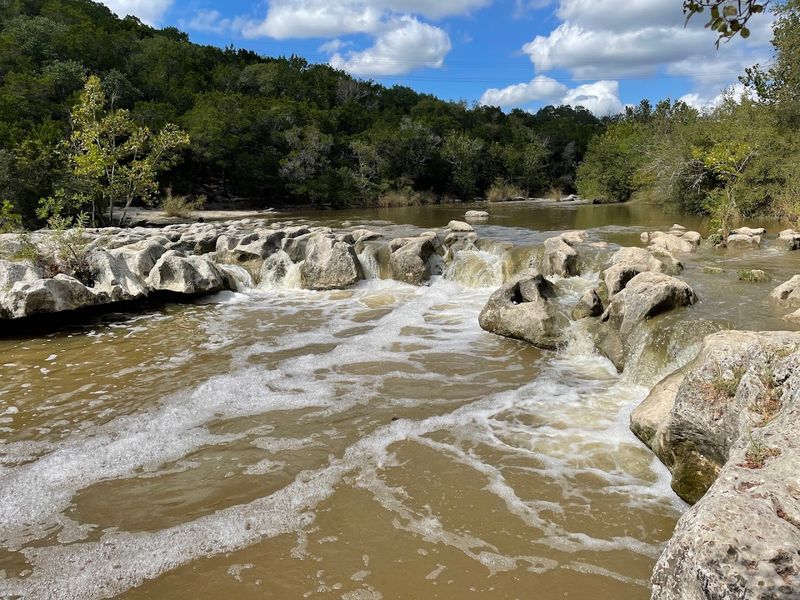
Timing a visit to Sculpture Falls is not just about weather preference, it genuinely affects what you will find when you get there. The falls depend entirely on Barton Creek’s water levels, which are driven by rainfall rather than a consistent source.
During prolonged dry spells, the falls can slow to a trickle or disappear entirely, leaving behind beautiful rock formations but no flowing water.
Spring, roughly March through May, is widely considered the sweet spot. Temperatures sit comfortably in the 70 to 80 degree Fahrenheit range, wildflowers are blooming along the trail, and the creek typically has good flow after winter and spring rains.
It is also when the Greenbelt looks its most lush and photogenic.
Fall and early winter are solid alternatives for hikers who want to avoid the summer heat without risking dry conditions. The trail is gorgeous when the light changes in autumn, and cooler temperatures make the rocky terrain much more manageable.
Summer visits are absolutely possible, but starting early in the morning before the heat peaks is genuinely important rather than just a casual recommendation.
For the best waterfall experience specifically, checking recent rainfall in the Austin area about two to four days before your visit gives you a reliable sense of what to expect. A good rain followed by a few days of settling tends to produce the best flow at the falls.
Weekday visits avoid the heavier weekend crowds, which makes the experience feel more peaceful and personal regardless of the season.
Wildlife, Plants, and the Living Trail Around You
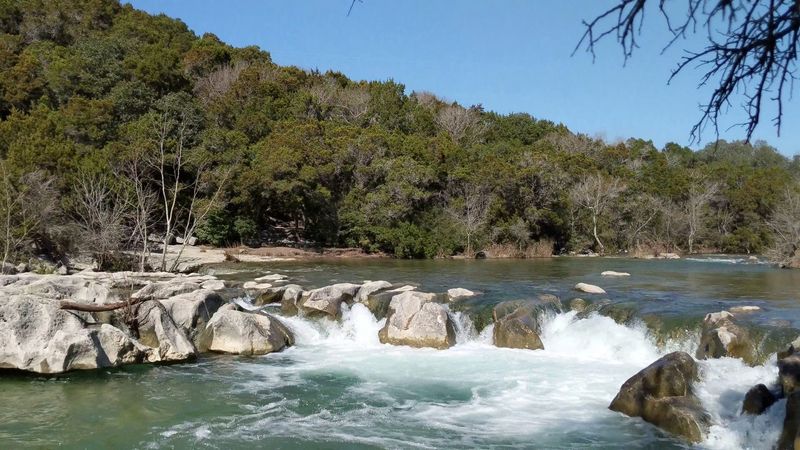
The Barton Creek Greenbelt is not just a path through pretty scenery. It is a functioning natural corridor that supports a surprisingly rich variety of wildlife for an urban environment.
Paying attention to what is moving around you on this hike adds a whole different layer to the experience.
Lizards are everywhere, especially on sun-warmed limestone surfaces. Green anoles and fence lizards seem completely unbothered by passing hikers and will hold their ground on a rock until you get genuinely close.
Frogs are harder to spot but easy to hear, particularly near the slower sections of the creek where the water pools in quieter eddies.
Bird activity along the trail is steady throughout the day. The canyon environment and dense tree cover attract a range of species, and if you slow down and listen, the variety of calls is more interesting than you might expect from a city trail.
Spring brings the loudest and most active period for bird watching along this stretch.
The plant life shifts noticeably as you move through different sections of the trail.
Dense cedar and oak canopy dominates much of the route, but limestone outcroppings support a different set of plants altogether, including native grasses, mosses, and small flowering plants that thrive in the thin soil between rocks.
In spring, patches of color appear in unexpected places. Dogs are welcome on the trail but must stay on a leash, which is both a park rule and a genuine courtesy to the wildlife that calls this canyon home year-round.
Why Sculpture Falls Stays With You Long After the Hike
Some places are easy to visit and easy to forget. Sculpture Falls is not one of them.
There is something about the combination of the canyon walls, the cool water, the sound of the falls, and the fact that you walked there through a living trail that makes the whole experience feel earned in a satisfying way.
The urban oasis quality of the spot is real, not just a phrase people use to describe it. Austin is a city full of energy and noise and activity, and finding a pocket of genuine quiet within it feels increasingly rare.
The Greenbelt and Sculpture Falls offer that quiet reliably, even when other visitors are around, because the canyon absorbs sound in a way that flat parkland simply cannot.
I think what sticks with me most is the texture of the place. The warmth of the limestone under your hands.
The specific shade of green in the water that you cannot quite photograph accurately. The way the trail smells different after rain, earthy and sharp and alive.
These are the kinds of details that photographs do not fully capture but that the body remembers without being asked.
Returning visitors often say the trail feels different each season, and that tracks with how the Greenbelt actually changes throughout the year. Spring floods reshape the creek bed.
Summer dries and concentrates the pools. Fall brings different light and color.
It is a trail that rewards coming back, not just visiting once and checking it off a list.
Address: Barton Creek Greenbelt Trail, Austin, TX 78746.
