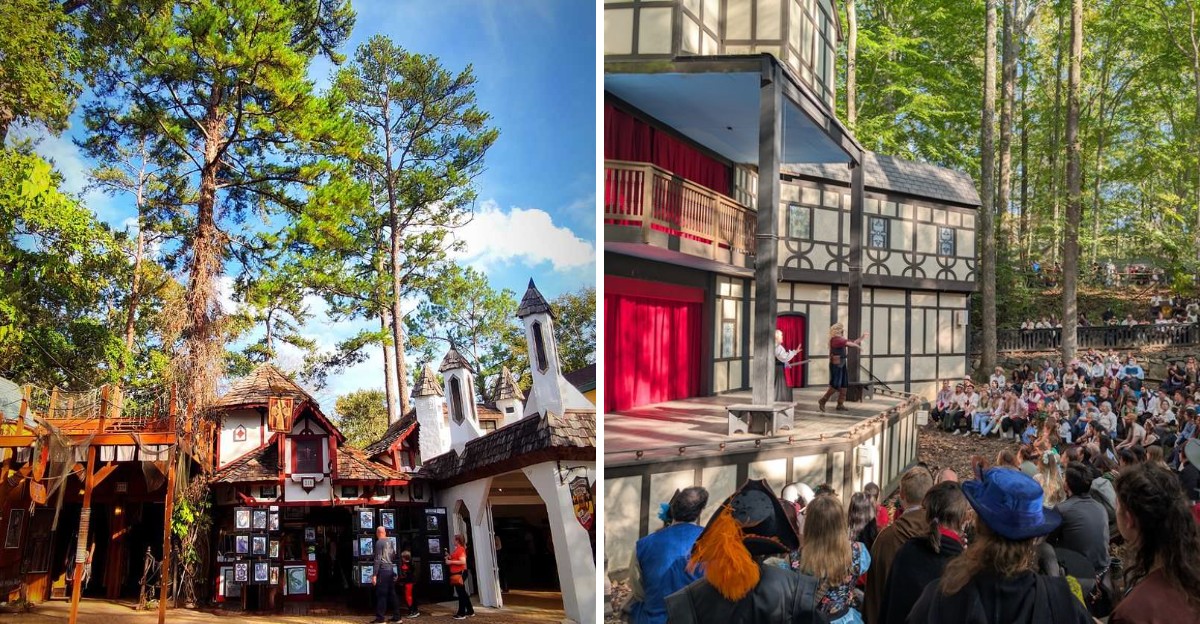
There is a stretch of Maryland woodland that spends most of the year quietly minding its own business, and then, right as the summer heat starts loosening its grip, it wakes up as a 16th-century English village. Wooden shops lean into the trees.
Lute music drifts down dirt lanes. Somebody in full armor rides past on a very large horse, and nobody blinks.
That is Revel Grove, the permanent village home of the Maryland Renaissance Festival, and in 2026 it opens its gates again for nine autumn weekends of jousting, comedy, craftwork, and storytelling that stretches from one season to the next.
What makes it stick with people is not just the spectacle, though there is plenty of that.
It is how thoroughly everyone commits, from the performers who never break character to the visitors who show up in velvet and chainmail and clearly spent months sewing. Kids chase jesters.
Grandparents settle into the joust arena early to get good seats. Over 27 acres, more than 200 daily performances, and roughly 140 artisan shops, the place feels less like an event and more like a town that only exists on weekends.
Here are nine layers of it worth knowing before going.
Revel Grove, The Village That Never Quite Leaves The 1500s
Most festivals get built up and torn down. Revel Grove does not work that way, and the difference hits within the first few minutes past the gate.
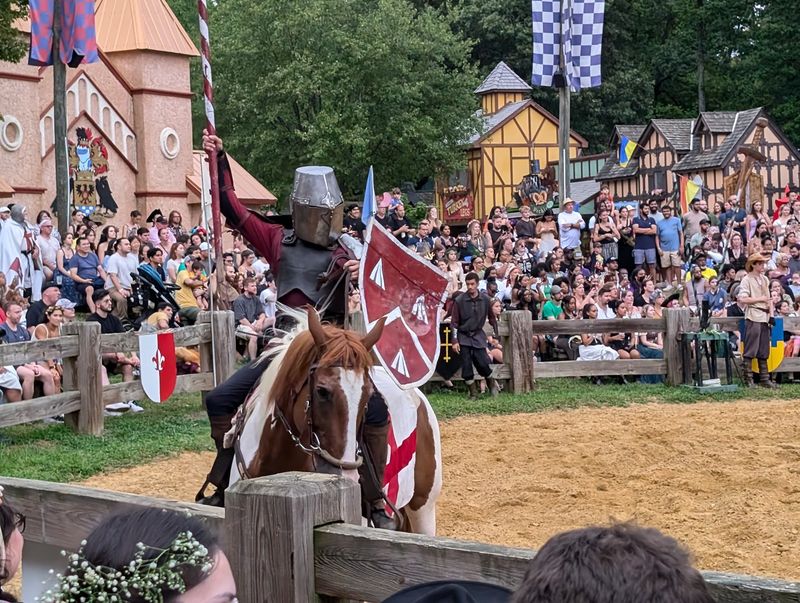
Permanent timber buildings sit tucked among mature trees, some of them constructed by the shopkeepers themselves over the years. Paths wind rather than run straight, which means the village unfolds in pieces instead of all at once.
The grounds stretch across 27 acres, laid out as a fictional Tudor village rather than a row of booths. Roofs sag in charming ways.
Signs swing on iron hooks. There is enough shade that a warm September afternoon stays bearable.
One practical note worth taking seriously: the terrain is genuinely uneven. Mulch, loose gravel, packed soil, straw, and a few steep slopes make up most of the walking surface.
Closed-toe shoes with real support beat sandals every single time here. Strollers and wagons are possible but awkward, and visitors with mobility concerns should plan routes carefully and pace the day.
The layout rewards wandering without a fixed plan. Turn down a side lane and there might be a hammer dulcimer player, a glassblower mid-demonstration, or a hermit mumbling philosophy at passersby.
Maps and daily show schedules are handed out at the entrance, and they are worth grabbing even for casual explorers.
Arriving early makes the village feel almost peaceful, with morning light filtering through the canopy before the crowds thicken. By midday the lanes hum.
Both versions are good, just different.
Jousting Knights And A Three Thousand Seat Arena
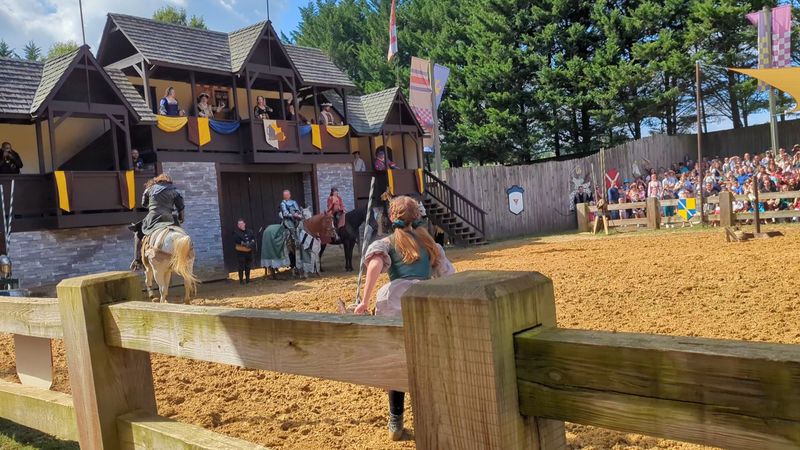
The sound gives it away before the sight does. Hooves, then a crack of lance on shield, then three thousand people yelling at once.
Three combat jousts run daily in the festival’s main arena, and they are the closest thing Revel Grove has to a headline act. Riders in full armor take the field in scripted matches that tie directly into the season’s larger royal storyline.
Seating fills fast, especially for the afternoon jousts. Showing up at least half an hour early is the difference between a decent view and squinting over three rows of hats.
A small tip from people who have sat through many of these: middle rows beat front rows. The horses kick up serious clouds of dirt, and the front benches catch most of it.
The arena does more than joust. Trick riding displays fill some time slots, with riders standing, hanging, and vaulting off galloping horses in ways that look physically improbable.
Birds of Prey shows also use the space, featuring European eagle owls and pale barn owls that swoop low over the crowd. Wingbeats at close range are surprisingly quiet, which is half the thrill.
Because the festival avoids amplified sound, performers project their voices the old-fashioned way. Sitting closer helps with dialogue, so balance that against the dust factor.
Anyone sensitive to dust might want a light mask or a scarf. The spectacle is worth a little grit.
Following King Henry VIII And The Year 1540
Here is the detail that separates this festival from many others: the story actually continues year to year, like a very long historical soap opera.
The 2026 season is set in the year 1540, coinciding with the 50th Harvest Festival at Revel Grove. The court is celebrating King Henry VIII’s marriage to his fourth wife, Anne of Cleves.
Celebrating publicly, anyway. Behind the banners and toasts, the King is reportedly unhappy with the match, and gossip travels fast through the village lanes.
Chief minister Thomas Cromwell catches most of the royal frustration, which anyone who knows their Tudor history will recognize as an ominous position to hold. The tension plays out in scenes scattered across the day.
Court characters process through the streets, hold audiences, argue, scheme, and occasionally pull visitors into the moment. Every performer stays in character, so asking a courtier about mobile phones gets a genuinely baffled reply.
Following the storyline across a single day takes some planning. The schedule marks the main court scenes, and catching three or four in order turns a day of wandering into something with actual narrative shape.
Returning visitors often track the saga across seasons, watching wives come and go according to history’s grim rhythm. It gives regulars a reason to come back beyond the food and shopping.
Even skipping the plot entirely, running into the King mid-argument is memorable. The costumes alone are worth the detour.
Street Performers, Stages, And Over Two Hundred Daily Shows
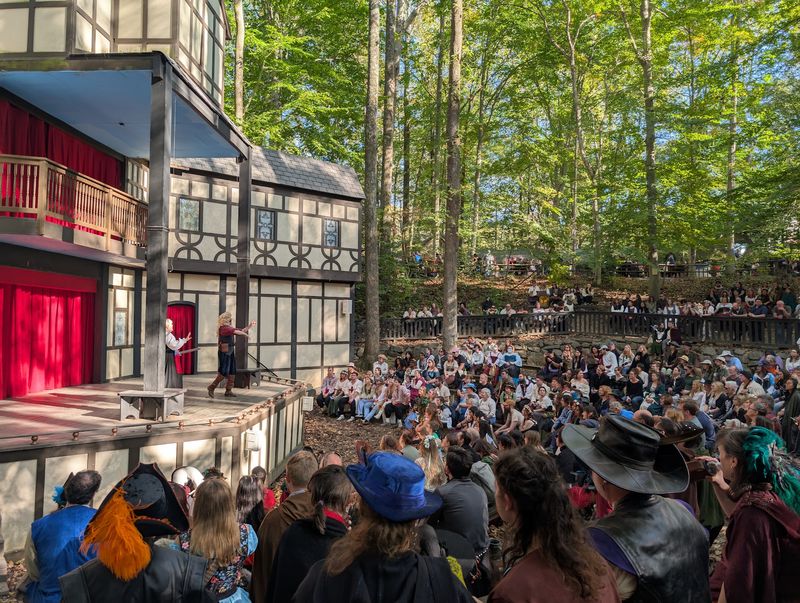
Two hundred performances a day sounds like marketing exaggeration until the schedule sheet comes out and the columns just keep going.
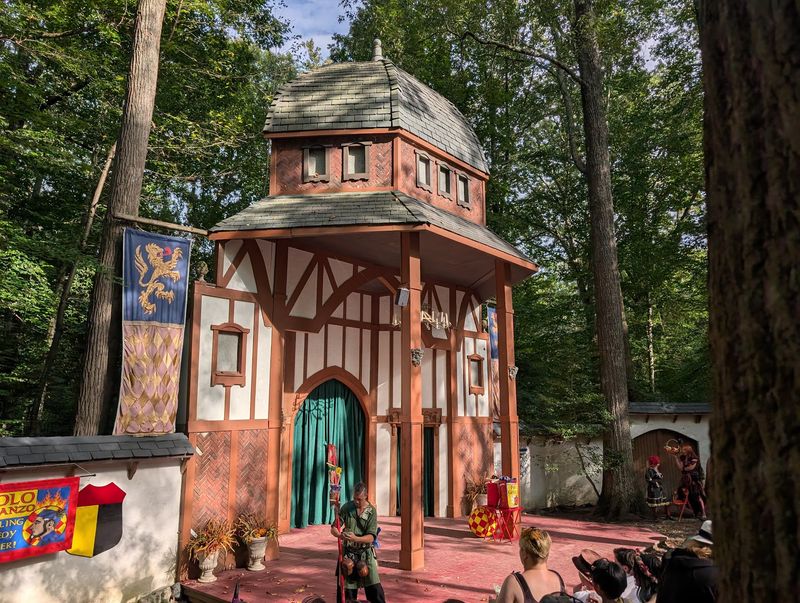
Eight major theaters and four smaller tavern stages run near-continuously from opening to close. Content ranges from magic and juggling to comedy acts and abridged Shakespeare that moves fast enough to keep restless kids seated.
Juggler Paolo Garbanzo is a longtime favorite for high-energy routines. The London Broil mix quick-witted banter with genuinely impressive physical stunts.
Beyond the stages, the streets carry their own show. Stilt walkers tower over the crowd, while rogues, wenches, and wandering oddballs strike up conversations with anyone making eye contact.
Those unscripted encounters often end up being the moments people talk about afterward. A quick exchange with a character in the middle of a dirt path has a charm no stage can quite match.
Some acts lean toward adult humor, so families with younger children may want to check the schedule notes. Plenty of shows are built squarely for kids, including animal acts and slapstick comedy.
Seeing everything in one visit is impossible. Most people pick four or five must-sees, then let the rest happen by accident.
The festival sits at 1821 Crownsville Rd, Annapolis, MD 21401, with free parking in the surrounding fields directed by attendants. Getting there early also secures a shorter walk from the car.
Artisan Shops Where The Maker Is Usually Behind The Counter
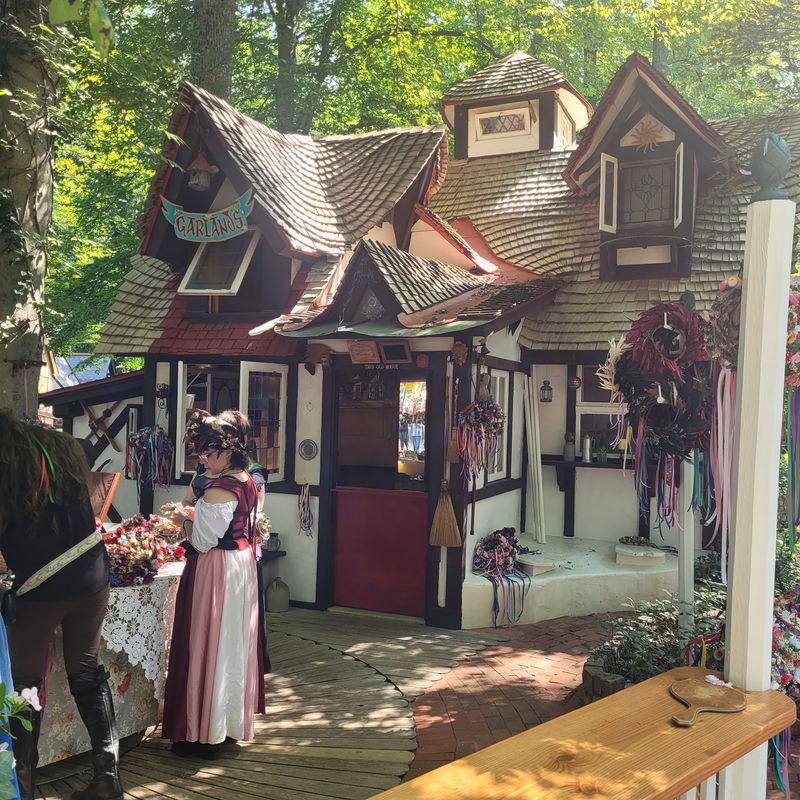
Shopping here is less retail and more workshop tour. Over 140 artisans set up in Revel Grove, and most of the goods on display were made by hand.
Woven wool garments hang beside hand-thrown pottery. Leather moccasins sit near trays of dragon-shaped metalwork and forged jewelry.
Glassblowers work in open-front studios where visitors can stand and watch molten glass turn into something delicate. Blacksmiths hammer away nearby, sparks and all.
What makes it different from a typical craft fair is ownership. Many vendors own their shop buildings outright, some having constructed them themselves over past seasons.
That means conversations tend to go deeper than a sales pitch. Ask about a technique and there is a decent chance the person answering has been doing it for twenty years.
Prices reflect handmade work, so budgeting ahead helps. Several vendors and smaller stalls operate cash only, and while ATMs exist on the grounds, bringing bills saves time and hassle.
Costume pieces, crowns, horns, and mugs are popular grabs for first-timers. Serious collectors tend to hunt the quieter side lanes where the crowds thin out.
A useful strategy: walk the whole marketplace once without buying anything, then circle back for the piece that stuck in mind. Impulse purchases in the first twenty minutes usually get outclassed by something better down the path.
The shops alone could eat an entire day. Many people let them.
Turkey Legs, Crab Cakes, And Everything Served On A Stick
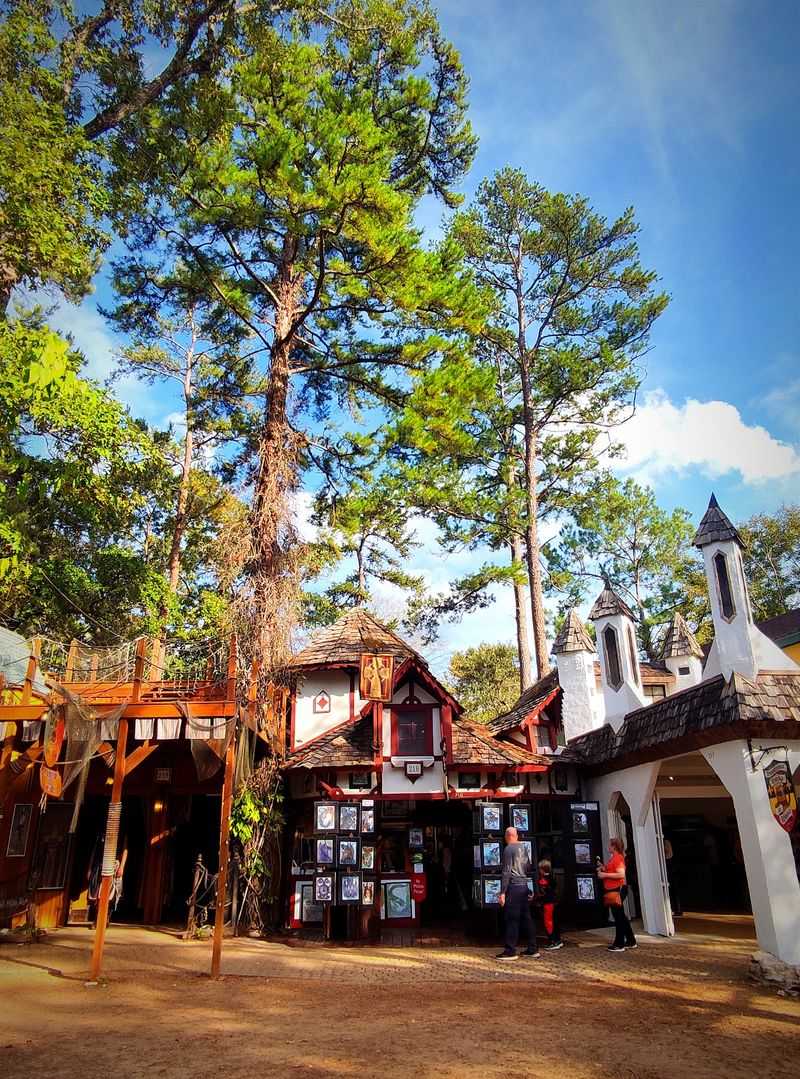
Food strategy matters here, mostly because there are more than 42 food outlets and only so much stomach capacity.
The giant roasted turkey leg is the unofficial mascot of the whole operation. People carry them down the lanes like clubs, and honestly, that is part of the fun.
Funnel fries, corn on the cob, crepes, and gyros cover the classic fair territory. Then comes the stick category, which includes mac and cheese, steak, cheesecake, and pickles.
Maryland asserts itself too. Crab cakes and crab dip show up on menus, a regional nod that feels right for a festival twenty minutes from the Chesapeake.
Seating is limited across the grounds, which is precisely why so much of the menu is handheld. Eating while walking is the norm, not a compromise.
Many vendors take cards, but smaller stalls and game booths often prefer cash. Carrying a mix removes a lot of friction.
Hydration deserves a mention since early-season weekends can get hot. Free water bottle filling stations are available on the grounds.
Each visitor may bring one manufacturer-sealed bottle of water through the gate. Coolers and other outside beverages are not permitted.
A reasonable plan is to eat light in the morning, snack across the afternoon, and save room for something fried near closing. Cold fruit ice is a genuinely underrated pick on a warm day.
Music Drifting Through The Lanes Without A Single Speaker
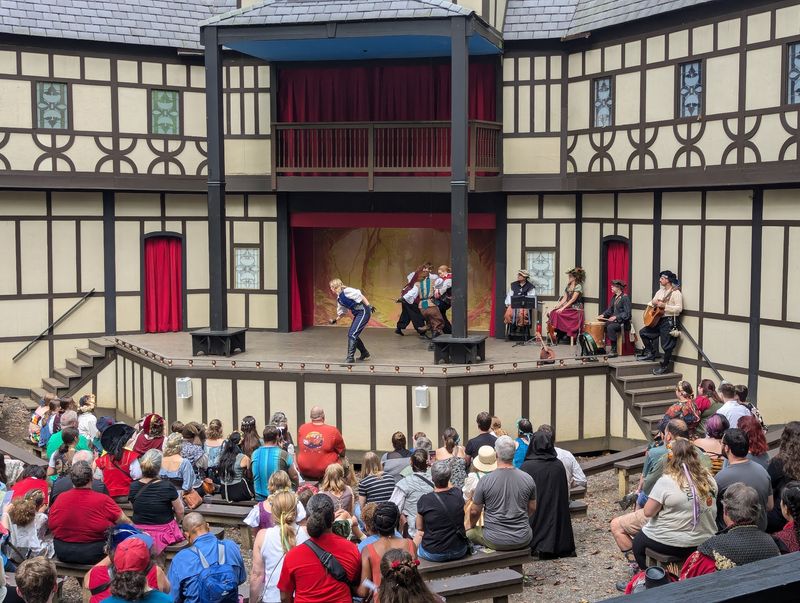
No amplifiers. That single choice shapes the entire sound of Revel Grove.
Music comes from actual instruments carried by actual people, which means it fades as you walk away and swells as you approach. The village develops an audio geography.
Celtic tunes turn up on one stage while traditional madrigals float from another. Drums, fiddles, pipes, and the shimmering ring of a hammer dulcimer all compete gently for attention.
Groups such as the Piper Jones Band and The Hooligans are among the acts known to perform. Roving musicians also work the pathways, stopping wherever a small crowd gathers.
Dancers add movement to the mix, spinning through open areas in bright skirts and ribbons. Audience members occasionally get pulled in, usually with more enthusiasm than coordination.
The lack of amplification has one trade-off worth knowing. Standing at the back of a big crowd means missing lyrics, so moving closer pays off.
Tavern stages tend to have the most relaxed atmosphere for music. They are smaller, shaded, and good for resting tired legs between bigger shows.
Sitting still for twenty minutes with a drink and a fiddle tune going is one of the more underrated pleasures of the day.
People often arrive focused on jousting and armor, then leave humming something they heard in passing. The soundtrack sneaks up on you.
Archery, Axe Throwing, And Games That Test Patience
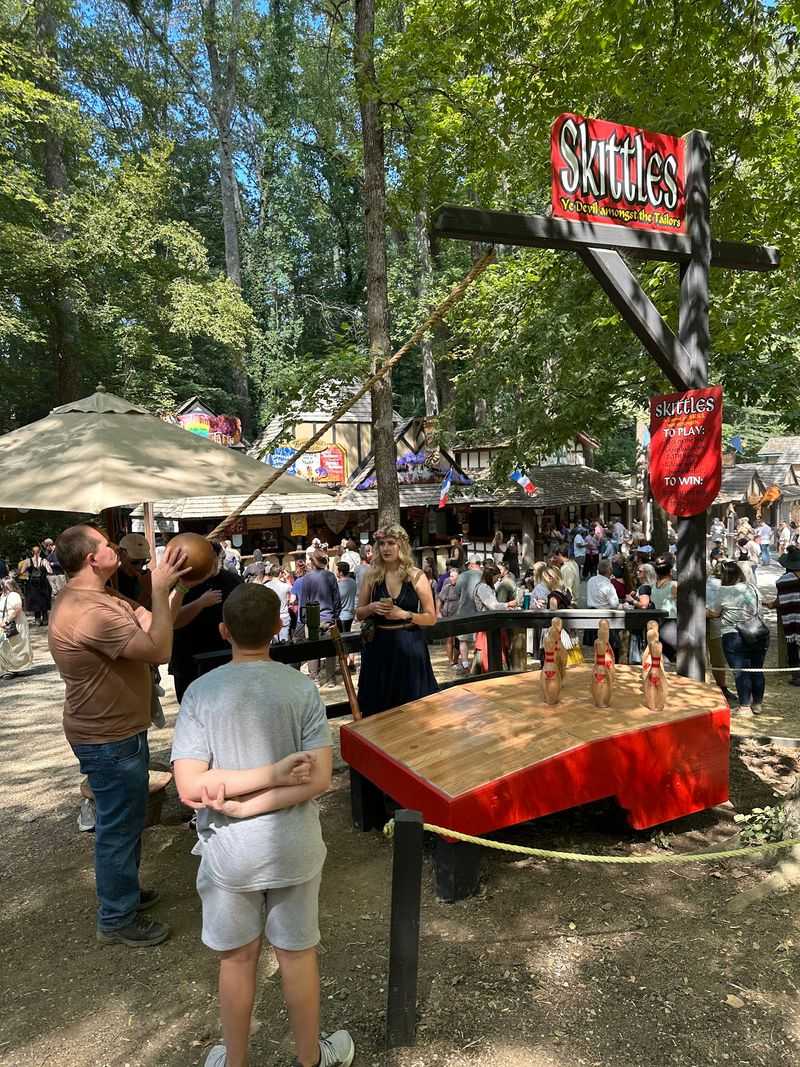
Somewhere between the third show and the second turkey leg, the urge to actually do something kicks in. That is what the games area is for.
Archery ranges let visitors test their aim with real bows, and the staff running demonstrations often share solid technique tips along with historical background. Axe throwing draws steady lines all day.
Frog throwing is exactly as ridiculous as it sounds, involving a lever, a rubber frog, and a target that seems much easier to hit than it is. Darts and other skill games round out the selection.
A rock climbing wall gives kids and competitive adults something to burn energy on. Giant wooden slides offer a quick rush for a small additional fee.
Most games carry a modest cost per play, typically a dollar or two, and cash is the smoothest way to pay. Budget a small stack specifically for this section.
Fair warning: some of these games are stubborn. Winning is possible but not common, which is part of the old-fashioned carnival charm.
There is also a playground area for younger children who need a break from crowds and shows. It tends to be quieter than the main lanes.
Watching strangers cheer each other on at the axe lanes captures the festival’s mood pretty well. Everyone is a little goofy here, and nobody minds.
Costumes, Crowds, And Planning The Perfect 2026 Weekend
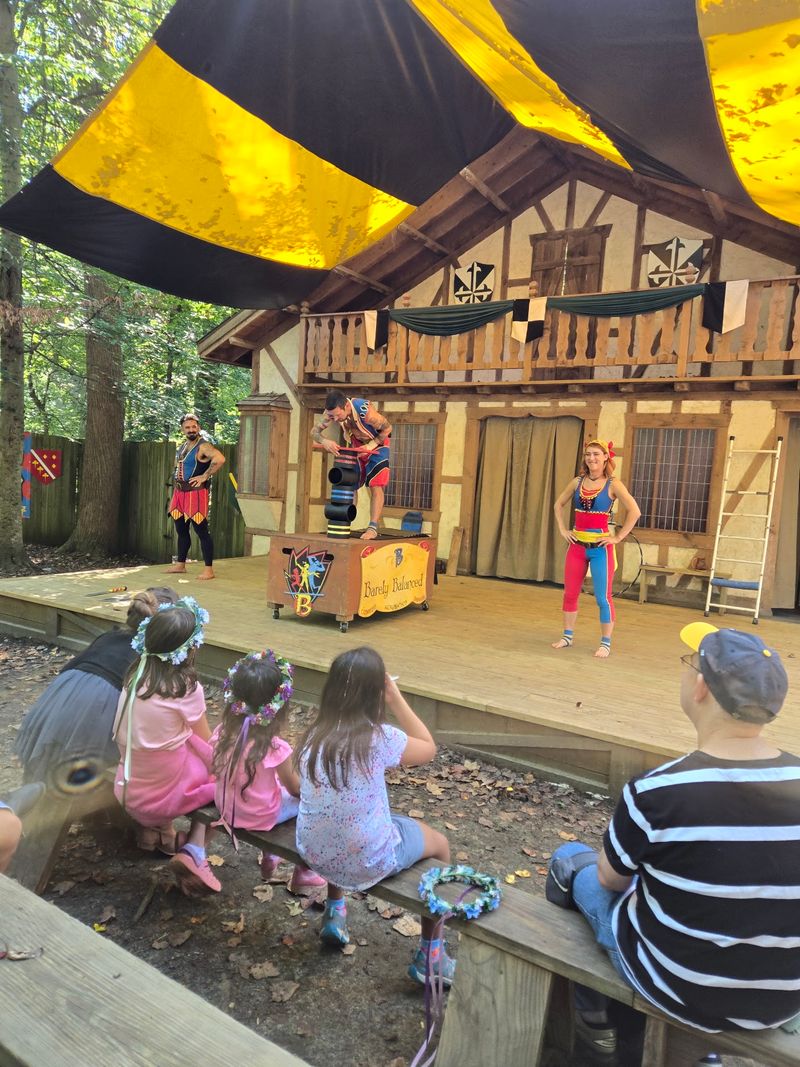
Roughly half the crowd shows up in costume, and that statistic changes everything about the atmosphere.
Knights, princesses, jesters, fairies, and creatures of uncertain origin wander the same paths as people in jeans. Nobody is out of place either way.
Costume rentals sit just inside the main gate for anyone who wants to join in without committing to a wardrobe project. Options cover men, women, and children.
One rule to remember: weapons are not permitted, including wooden and plastic props. Leave the swords at home and admire the ones for sale instead.
Footwear deserves repeating because the ground is rough. Comfortable closed-toe shoes will carry a visitor much further than decorative boots.
The 2026 season runs weekends plus Labor Day Monday, from August 29 through October 25, with gates open 10:00 AM to 7:00 PM. Tickets are sold in advance and dates regularly sell out, so buying early is not optional advice.
Arriving before opening is the single best crowd-management move. Lines form well ahead of 10:00 AM, and leaving mid-afternoon on a busy Saturday can mean sitting in traffic.
Parking is free in the surrounding fields, with attendants directing cars. Downloading tickets ahead of time is smart since cell signal on the grounds is unreliable.
Restrooms are portable units, so hand sanitizer earns its place in a bag. Small preparations, big payoff.
