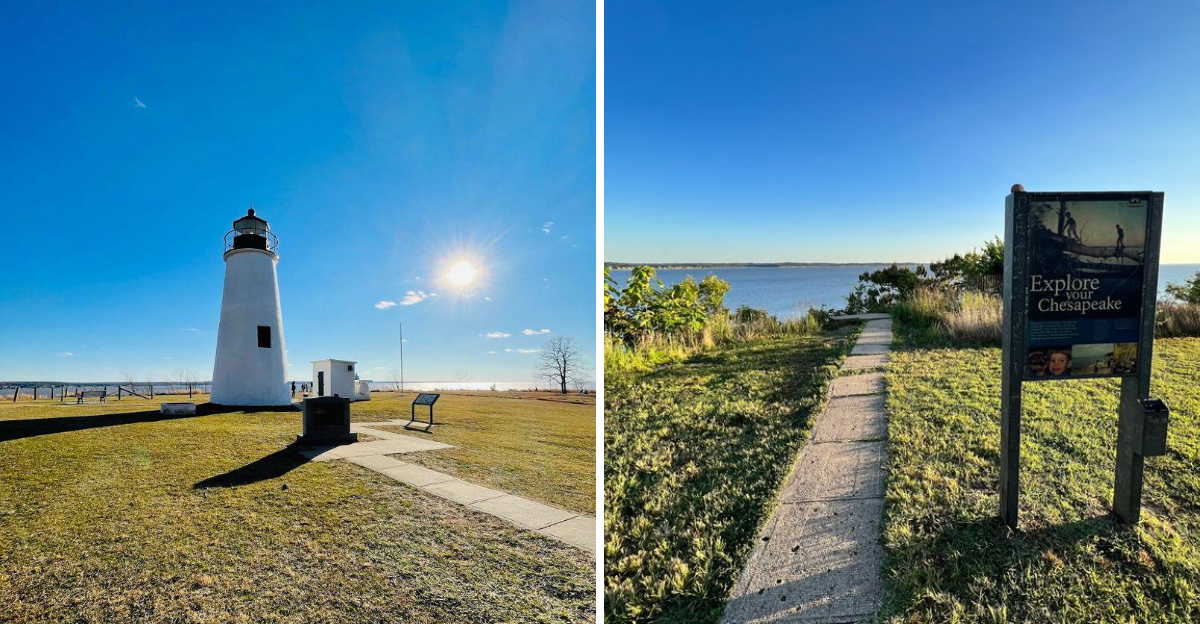
A lighthouse perched above the Chesapeake already sounds like a pretty good reward for a hike, and Maryland makes this one pleasantly easy to reach.
The historic tower stands on a roughly 100-foot cliff overlooking the bay, with sweeping water views waiting after an easy 0.4-mile out-and-back trail from the parking area.
The lighthouse once projected its beam 13 miles down the Chesapeake to help guide ships away from dangerous shorelines, while today the surrounding point is also known for spotting hawks and eagles.
Parking can fill quickly on weekends, but the walk itself asks for very little compared with the scenery at the end.
For Maryland day trippers who prefer maximum view for minimum mileage, this one has the ratio figured out.
The Bluff That Does All the Work
Most lighthouses earn their height by stacking bricks. Turkey Point cheated, in the best possible way.
The tower measures only around 35 feet from base to lantern, which sounds modest until you learn what it stands on.
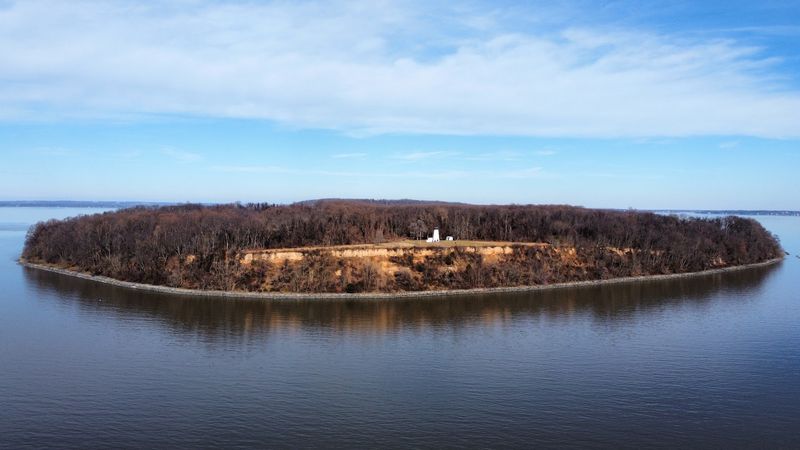
A bluff rising roughly 100 feet above the water lifts the beam to a focal plane of about 129 feet above mean high tide, placing it among the highest lights on the entire Chesapeake Bay.
That elevation changes everything about the visit. Water wraps around the point in a wide arc, with the Elk River on one side and open Bay stretching south until the horizon blurs.
Captain John Smith noticed these same bluffs during his explorations in the early 1600s, long before anyone thought to put a light up there. Sailors used the pale cliffs as a marker on their own, which makes the lighthouse feel less like an invention and more like a confirmation.
Wind hits differently up here. Even on a calm day, there is a steady push coming off the water that tugs at hats and jackets.
One warning worth taking seriously: several stretches near the cliff edge have no railings, and the drop is real. Keep children close, watch your footing near crumbling soil, and resist the urge to inch forward for a better photo.
The view from a safe distance is already generous. No angle gained by stepping closer is worth the risk, and honestly, the wide shot is the better picture anyway.
Brickwork From 1833 That Still Holds
Construction wrapped up in 1833, and the tower has been standing ever since through storms, salt air, and nearly two centuries of Chesapeake weather.
Credit goes to John Donahoo, a builder whose name shows up again and again around the Bay. He put up a string of lighthouses across Maryland, and Turkey Point shares clear family resemblance with his Concord Point Lighthouse in Havre de Grace.
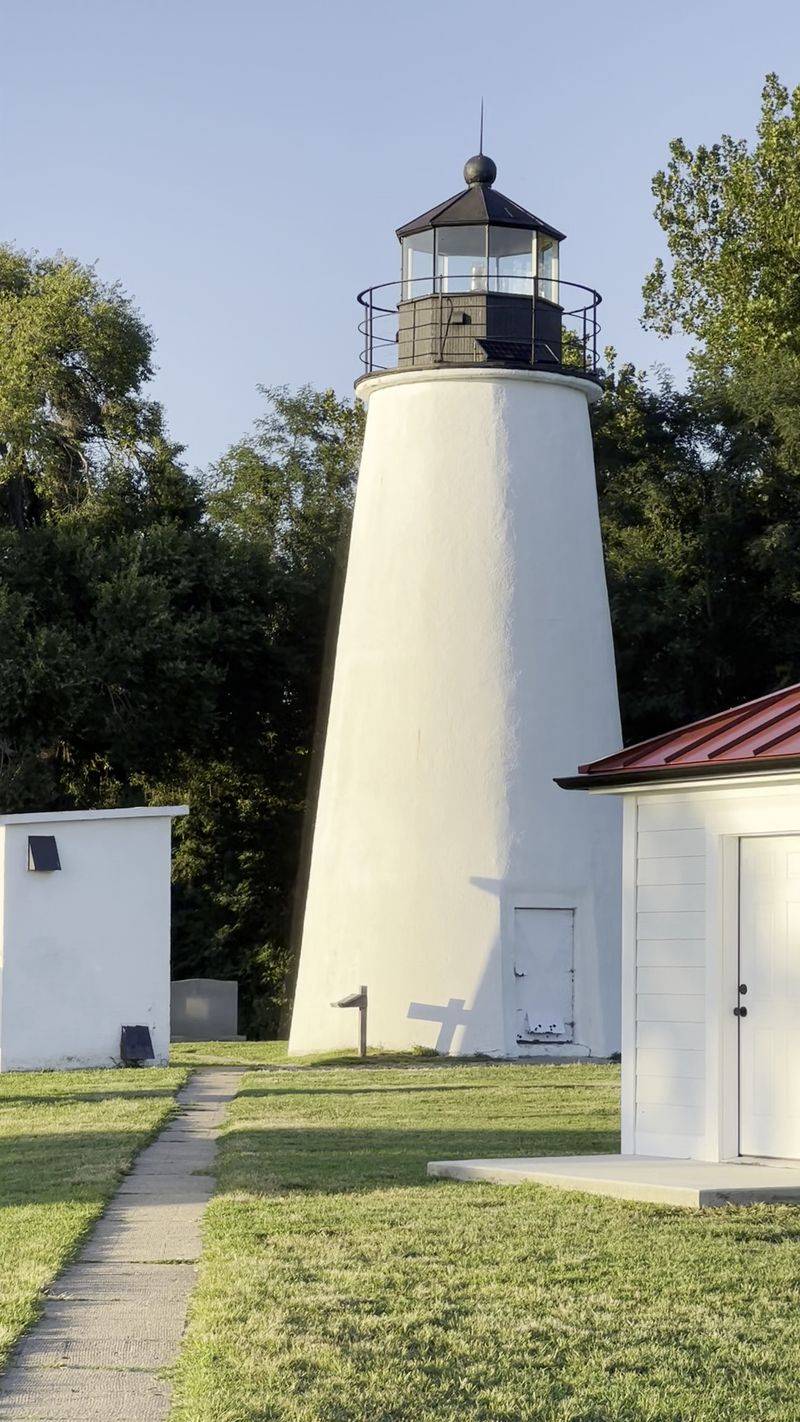
The design is a conical brick tower, which means it is wider at the bottom and tapers as it climbs. The base measures sixteen feet across, with walls that thin out gradually toward the lantern room.
That shape is not decoration. It is physics, giving the structure a low center of gravity and enough mass at the foundation to shrug off wind that comes tearing across open water.
The whole project, including a keeper’s dwelling, came in at a total of $4,355. Reading that figure while standing next to something that has outlasted generations is a strange little jolt.
Up close, the surface tells its own story. Layers of coating, patched sections, and the faint outlines of old repairs are all visible if you slow down and actually look.
Photographers tend to shoot the tower against the sky, and that works. But a tight shot of the curved wall, with the taper running out of frame, captures something the wide angle misses.
Craftsmanship like this rarely announces itself. It just keeps standing.
Women Who Kept the Light Burning
Here is the detail that surprises almost everyone who reads the signage at the top.
Turkey Point hosted more female keepers than any other lighthouse on the Chesapeake Bay. Four women served in the role, tending the light through weather that would keep most people indoors.
Fannie Mae Salter is the name that carries the most weight. She was the last keeper at Turkey Point and, remarkably, the last female lighthouse keeper in the entire United States, retiring in 1948.
The very first flame was lit on August 13, 1833, by Keeper Robert C. Lusby.
From that night forward, someone had to be present, awake, and reliable, night after night, for more than a century.
The keeper’s dwelling started as a single-story house and was expanded to two stories in 1889. It was eventually torn down before 1972, so nothing remains where the family life happened.
That absence is part of what makes the site quietly moving. You stand on grass where a kitchen once was, where children were raised, where oil was hauled up a hill by hand.
Volunteers inside the tower share pieces of this history when the lighthouse is open, and asking a question usually gets you more than you expected.
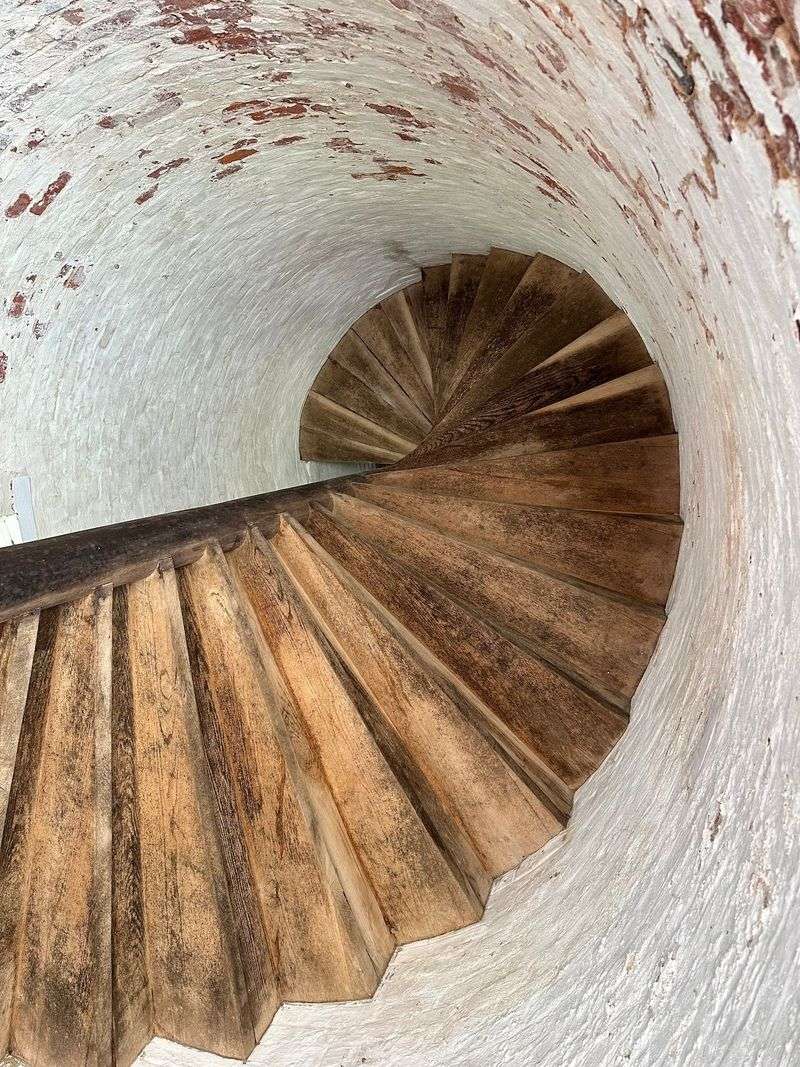
Take a minute at the top to think about a keeper climbing those same stairs in a January gale. The job was not romantic.
It was relentless, and somebody did it anyway.
From Whale Oil Wicks to a Modern Beam
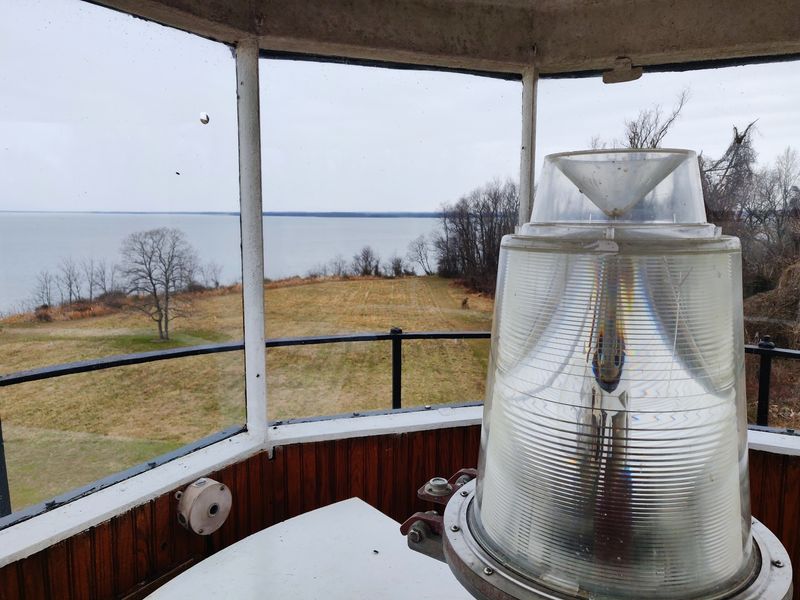
The technology inside this tower has been swapped out more times than the building has been painted.
When the light first went into service in 1833, it ran on a system of eleven wicks paired with reflectors. That arrangement threw a workable beam, though it demanded constant attention and produced plenty of soot.
A serious upgrade arrived in 1855 with the installation of a Fourth Order Fresnel Lens. Those lenses are engineering marvels, using concentric rings of glass to bend scattered light into one tight, far-reaching beam.
Electrification came in 1943, which ended the era of hauling fuel and trimming wicks. Automation followed in 1947, and with it, the slow disappearance of the keeper’s job.
The light was officially decommissioned in 2000. For a couple of years it went dark, and the Bay lost a marker it had relied on for generations.
Then, in 2002, it was relit as a private aid to navigation. Boaters can see it again, which feels like the right ending to that particular chapter.
Standing in the lantern room, the glass and metal seem almost simple. But that simplicity took two centuries of tinkering to arrive at.
Ask a volunteer about the lens history if the tower is open during your visit. The technical details are genuinely interesting, and they explain why lighthouse design changed so quickly during the 1800s.
Old tools, same job. Still working.
A Walk Short Enough to Do in Sandals, Though Do Not
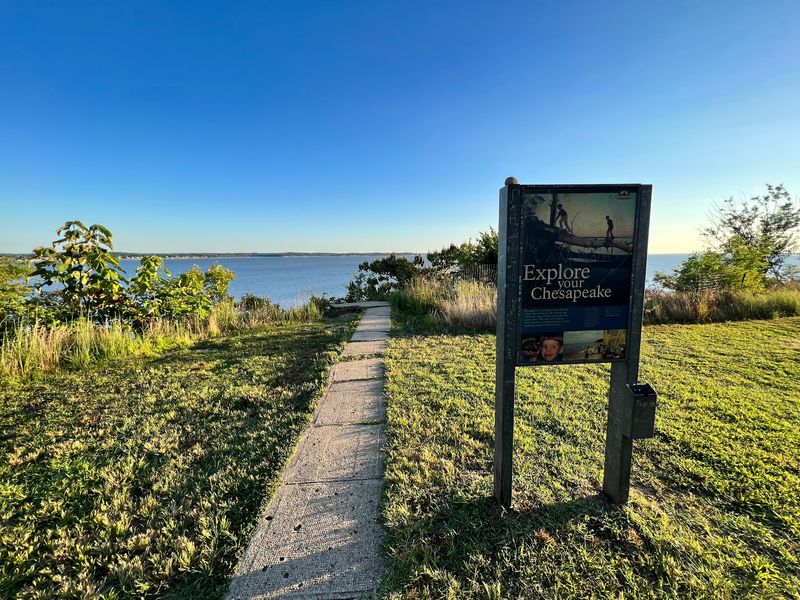
The trail from the parking area runs roughly 0.8 to 1 mile each way, making the round trip somewhere near 1.6 miles.
It is flat. Genuinely flat, not trail-guide flat that secretly means rolling hills.
Most people of average fitness handle it without breaking stride.
Surface is gravel and packed dirt, which is where the footwear advice comes in. Loose stones and exposed roots have tripped up plenty of visitors wearing flip-flops, so closed-toe shoes with some grip make the walk much more pleasant.
Trees line most of the path, so shade is plentiful in summer. That canopy also means mosquitoes and ticks show up in warm months, and insect repellent earns its place in your bag.
Bring water. There is no fountain at the lighthouse, and the return leg always feels longer than the walk out.
Parking sits at the end of Route 272 inside Elk Neck State Park, and the lot is not huge. Weekends fill up fast, especially on clear afternoons in spring and fall.
Arriving early solves that problem and gives you softer light for photos as a bonus. Mid-morning on a weekday is close to ideal.
The walk builds a little anticipation, which I think is part of why the payoff lands so well. You cannot see the tower until you are almost on top of it.
Then the woods open, the sky widens, and there it is.
Where the Elk River Meets the Bay
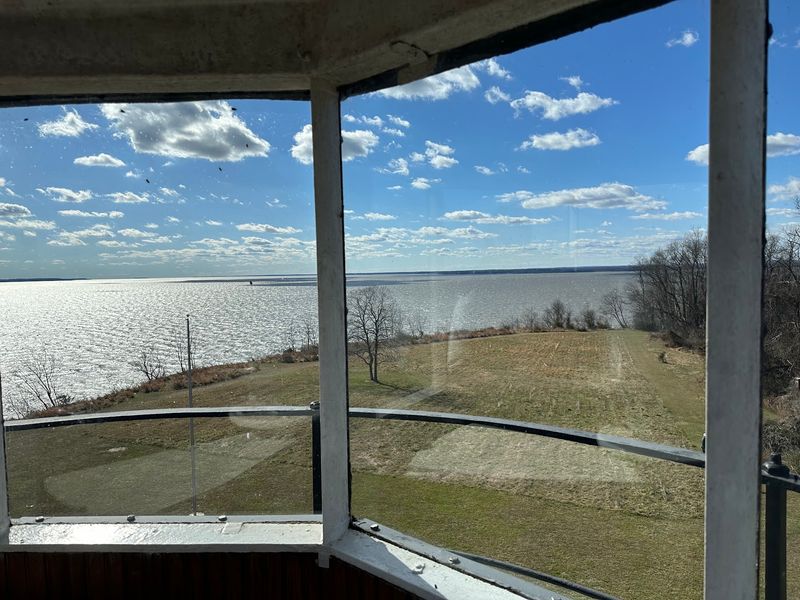
Geography is the whole reason a light was ever built on this spot.
Turkey Point marks the junction where the Elk River pours into the head of the Chesapeake Bay. For mariners, that meant a turn, and turns in unfamiliar water are exactly where things go wrong.
Ships heading north up the Bay needed to swing east into the Elk River to reach the Chesapeake and Delaware Canal. The light told them precisely where to make that move.
That canal route remains a busy commercial artery, so the water below still carries real traffic. Watching a cargo vessel slide past from a hundred feet up gives a nice sense of scale.
The landscape around the confluence is unusually varied. Marshland gives way to thick woods, and pale white clay cliffs break up the shoreline in ways you do not expect in Maryland.
Fresh water and salt water mix here, which makes the head of the Bay ecologically rich and constantly changing with the seasons.
From the bluff, all of it is visible at once. Two waterways, several types of terrain, and a horizon line that goes soft in humid weather.
Binoculars are worth packing if you have a pair. Distant shorelines and passing boats become much more interesting when you can actually make out detail.
Few places let you read a map with your own eyes like this one does. The geography explains itself.
Elk Neck State Park Deserves More Than a Drive-Through
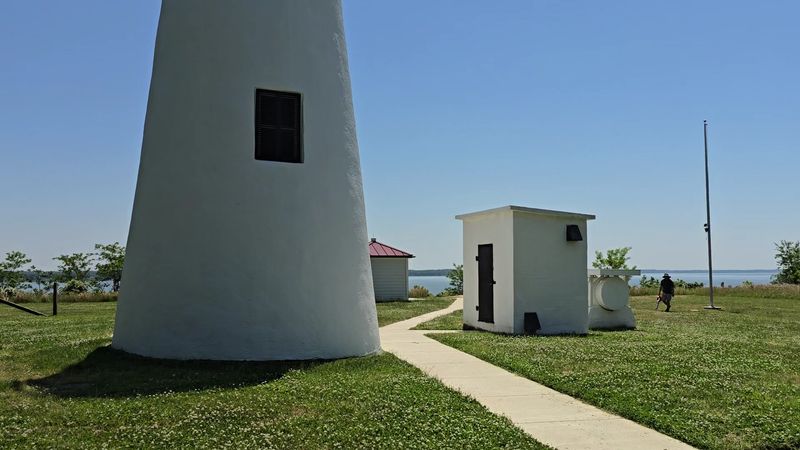
Treating the lighthouse as the only reason to come here means missing about 2,370 acres of good ground.
Elk Neck State Park spreads across a peninsula with a genuinely mixed personality. Marshes, deep woods, and those striking white clay cliffs all sit within a short drive of each other.
Birdwatchers know this place well. The Raptor Viewing Field draws hawks and eagles, particularly during migration seasons, and patient observers tend to be rewarded.
Beyond hiking, the park supports canoeing, kayaking, and fishing. Water access opens up an entirely different angle on the same shoreline.
Several trails branch out from various points in the park, each with its own character. Some hug the water, others push inland through hardwood forest, and none of them take a full day.
Pairing a lighthouse walk with one more trail turns a quick stop into a proper outing. Even an extra hour changes the feel of the trip.
Fall brings color to the wooded sections, while spring fills the understory with green so bright it looks artificial. Winter strips things bare and opens up sightlines you cannot get in summer.
Restrooms and picnic areas exist within the park, though not at the lighthouse itself. Plan accordingly before starting the walk out to the point.
Pack a lunch and use one of the tables afterward. Eating outside with Bay air moving through the trees is a solid way to close out the visit.
The Quiet Payoff at the Edge of the Bay
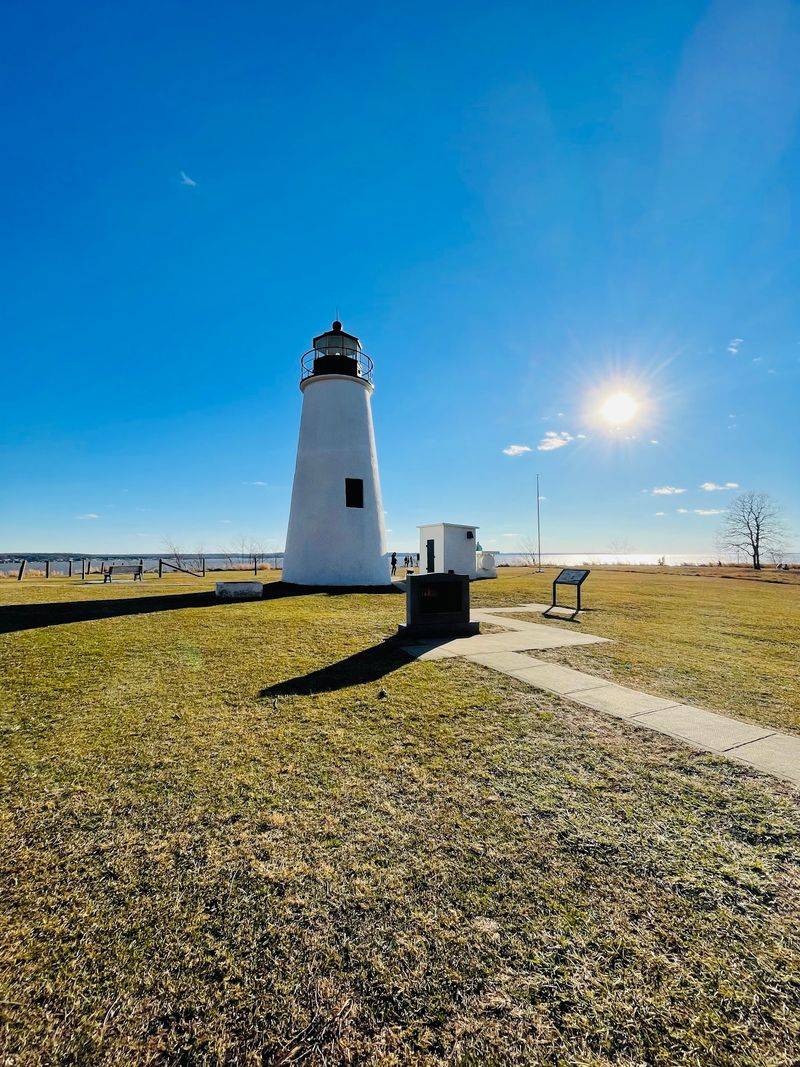
Something settles once you reach the end of the point and stop walking.
The noise drops away. Wind, water, and the occasional gull replace whatever was on your mind during the drive in.
Grass covers the open area around the tower, and there is room to sit without feeling crowded by other visitors. People tend to spread out naturally here.
Watching the Bay from a hundred feet up has a slowing effect. Boats crawl, clouds drift, and time gets a little loose.
The short walk plays a real part in that. Effort, even small effort, changes how a place lands when you arrive.
History adds another layer. A tower that guided ships for well over a century, tended by keepers who never got to leave, sits right beside you doing nothing in particular now.
Late afternoon is my favorite window. Light softens, the water turns metallic, and the white tower picks up a warm tone that midday sun flattens out.
Bring a jacket even in mild weather, because exposed bluffs stay breezier than the sheltered trail suggests.
Leave time to simply sit. Rushing back to the car undercuts the whole reason to come.
Plenty of destinations demand a full day and give back less than this hour and a half. Turkey Point keeps things simple and somehow generous at the same time.
Address: Elk Neck State Park, 4395 Turkey Point Rd, North East, MD 21901
