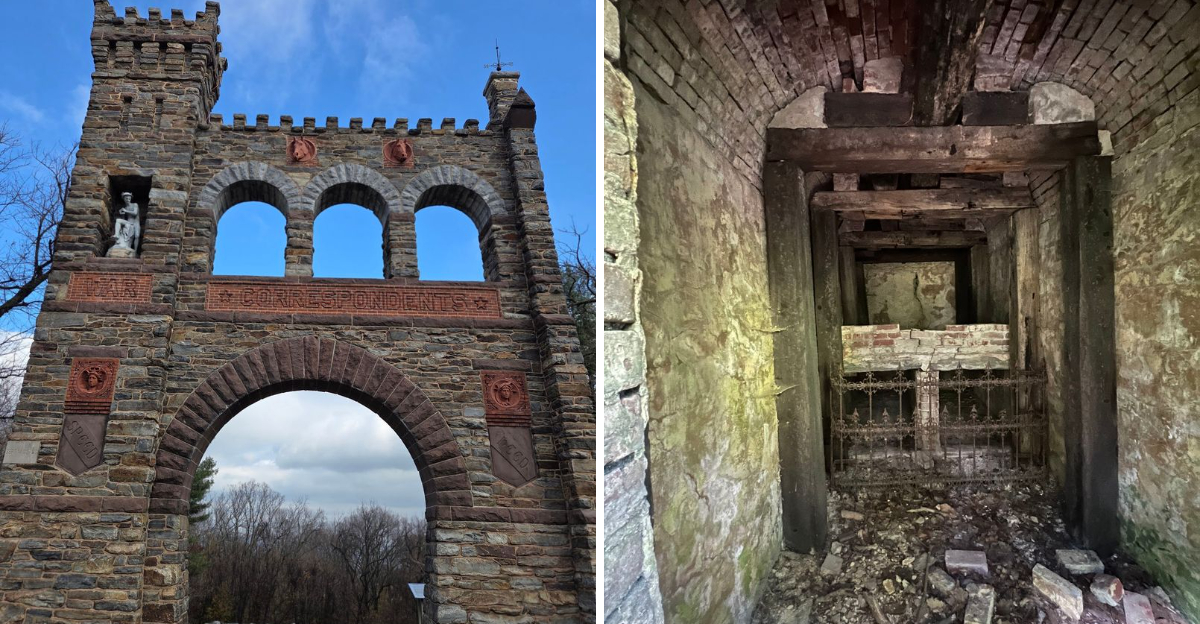
Maryland has plenty of parks where the main attraction is scenery, but this one throws abandoned-looking stone remnants and a seriously unusual backstory into the mix.
The land was once the mountain estate of a prominent Civil War journalist, and visitors today can still find remains from his elaborate property, including remnants of a library and den, barn, gardens, and an unfinished mausoleum.
Add a massive stone memorial dedicated to war correspondents and a section of the Appalachian Trail passing directly through the park, and an ordinary woodland walk suddenly has quite a lot going on.
It is the sort of Maryland destination where history keeps appearing between the trees, making it almost impossible to simply walk past without wondering what used to stand there.
The Man Behind Gathland, George Alfred Townsend
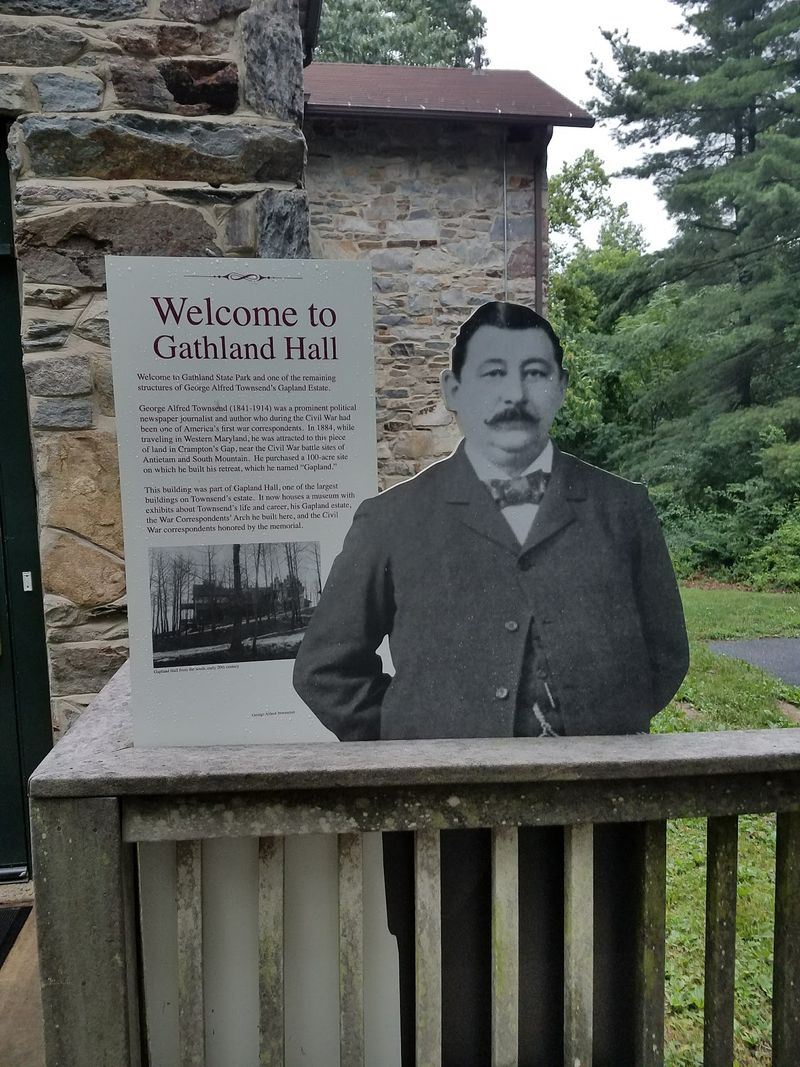
Not many people build their own estate on a Civil War battlefield, but George Alfred Townsend was not exactly a typical person.
Born in 1841, he became one of the most recognized war correspondents of his era, reporting for the New York Herald during the Civil War and later covering the assassination of President Abraham Lincoln in 1865.
His pen name was “Gath,” and that name stuck so firmly that he eventually named his entire mountain retreat after it. By 1884, Townsend had purchased land at Crampton’s Gap on South Mountain, the very ground where a bloody battle had been fought just over two decades before.
He poured his energy, creativity, and earnings into building something unlike anything else in Maryland.
What makes Townsend fascinating is how he mixed journalism with architecture and history in such a personal way. He designed quirky stone buildings, wrote prolifically from his mountain retreat, and even planned a mausoleum for himself on the property.
The mausoleum was never actually used for burial, but it still stands with the inscription “Good Night Gath” carved into the stone.
Learning about him transforms a walk through the park from a simple nature stroll into something much richer. Every crumbling wall and mossy foundation has a story attached to it.
Townsend was eccentric, ambitious, and deeply connected to American history, and Gathland State Park is essentially his biography written in stone.
The War Correspondents Memorial Arch, a Monument Unlike Any Other
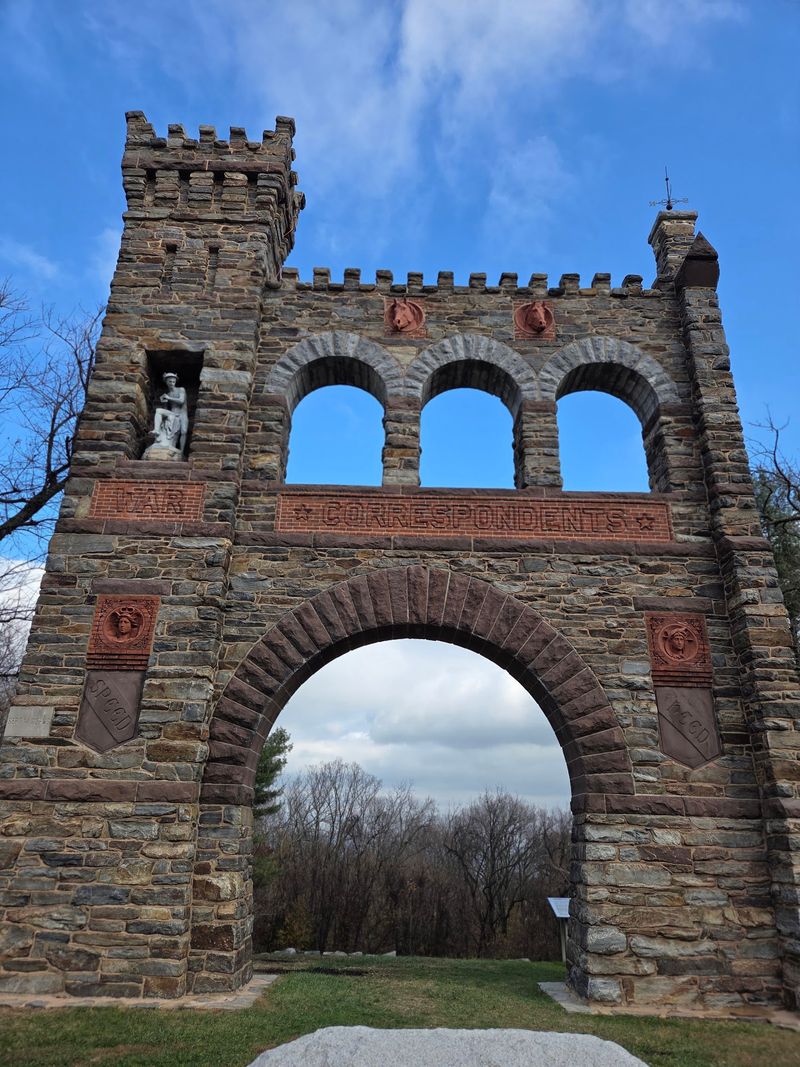
The first time you see the War Correspondents Memorial Arch, it genuinely catches you off guard. It rises out of the treeline like something from another world, massive and ornate, built from native South Mountain stone.
Completed in 1896, it holds the distinction of being the world’s first monument dedicated to journalists who lost their lives covering armed conflict.
Townsend designed and funded the arch himself as a tribute to his fellow correspondents. Three open arches anchor the base, and a square tower rises above them, all inscribed with “War Correspondents” in bold lettering.
The names of correspondents, artists, and photographers who covered the Civil War are engraved across its surface.
What hits differently here is the context. You are standing on a mountain gap where soldiers actually fought and died, looking at a monument built by a man who watched that war unfold firsthand and then spent the rest of his life making sure it was not forgotten.
That combination of personal history and public tribute gives the arch an emotional weight that photographs really cannot capture.
The Appalachian Trail passes right by the base of the arch, which means hikers from all over the country walk past it every year, often without realizing what they are looking at.
Spending a few minutes reading the inscriptions and taking in the scale of the structure makes the whole experience feel genuinely moving.
It is the kind of monument that deserves far more attention than it gets.
Gapland Hall, Where History Lives Inside Stone Walls
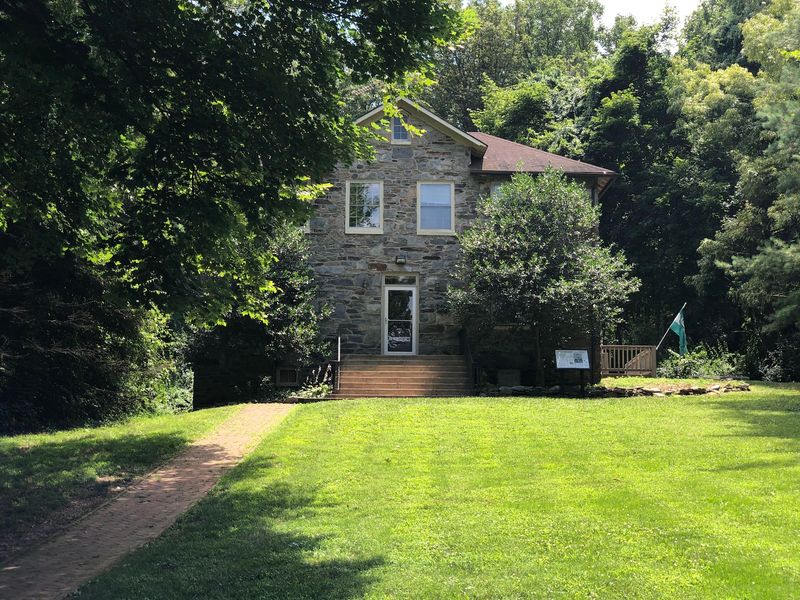
Gapland Hall does not look like a typical visitor center. Built in 1885 from local stone, the eleven-room structure has thick walls, small windows, and the kind of solid, deliberate craftsmanship that you just do not see in modern buildings.
It was Townsend’s main residence on the estate, and today it serves as the park’s visitor center and a museum dedicated to his life and work.
Inside, the exhibits walk you through Townsend’s career as a journalist, his personal quirks, and the long, creative process of building Gathland. There are artifacts, photographs, and documents that paint a surprisingly detailed picture of who he was.
For a park that does not get the tourist traffic of some bigger Maryland destinations, the museum is genuinely well put together.
Stepping inside the hall after wandering through the overgrown ruins outside creates an interesting contrast. One moment you are looking at crumbling foundations barely visible through the brush, and the next you are in a carefully preserved room full of 19th-century history.
That back-and-forth between decay and preservation is honestly one of the most interesting things about visiting Gathland.
The museum is typically open on weekends from April through October, so timing your visit matters if you want to get inside. Even when it is closed, the exterior of the hall is worth a close look.
The stonework alone tells a story about the kind of ambition Townsend brought to this remote mountain ridge. It is a building that earns your respect just by existing.
Gapland Lodge and the Battle of Crampton’s Gap Museum
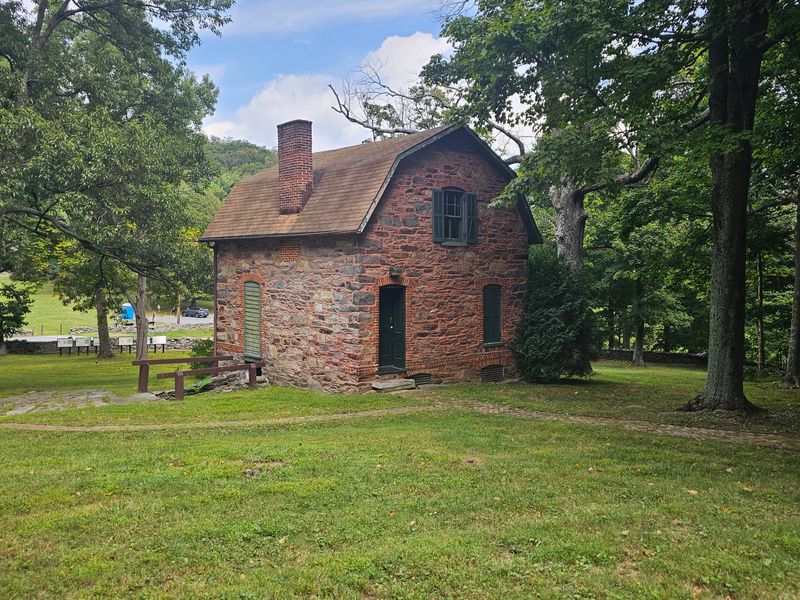
A short walk from Gapland Hall brings you to Gapland Lodge, another stone structure built in 1885 that originally served as servants’ quarters on Townsend’s estate.
Today the lodge houses a museum focused on the Battle of Crampton’s Gap, the Civil War engagement fought on this very ground in September 1862, just three days before the Battle of Antietam.
The battle itself often gets overshadowed by Antietam, which is one of the most studied engagements of the entire war. But Crampton’s Gap had real strategic importance.
Union forces pushed through the mountain pass in an effort to relieve a besieged garrison at Harpers Ferry, and the fighting here was fierce and costly for both sides. The museum brings that story to life in a focused, readable way.
What I found most striking was how the landscape outside the lodge windows still looks like it could have been a battlefield. The wooded ridgeline, the narrow gap, the uneven terrain, all of it makes the historical exhibits feel grounded in something real and physical rather than abstract.
Periodic Civil War living history encampments are held at the park, which adds a whole other layer to the experience if your timing lines up. Volunteers in period uniforms demonstrating camp life and equipment bring the 1862 setting into sharp focus.
Even without the encampments, the lodge museum is a compact but surprisingly rich stop. Like the hall, it is typically open on weekends between April and October, so plan accordingly.
Ruins, Foundations, and Fragments Hidden in the Forest
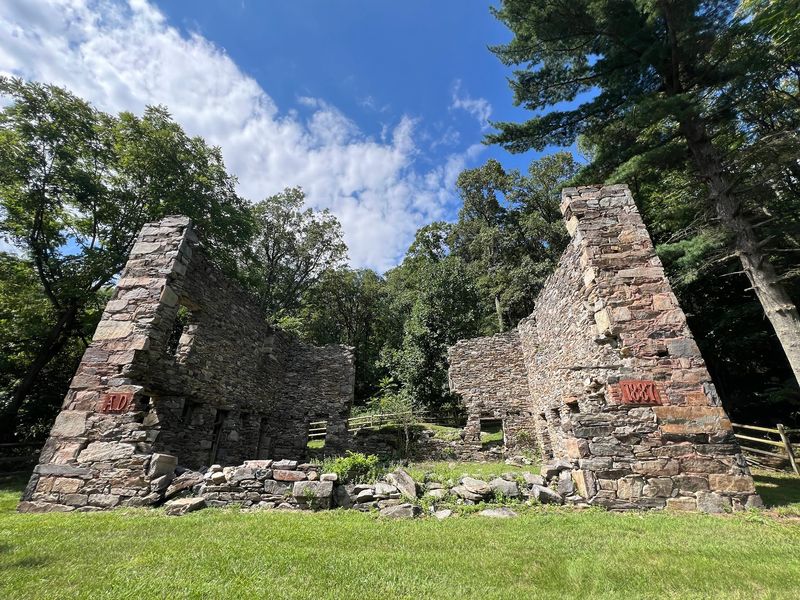
One of the strangest and most compelling parts of visiting Gathland is discovering how much of the original estate has been swallowed by the forest.
Beyond the hall and lodge, the grounds are dotted with stone fragments, partial walls, and sunken foundations that hint at just how ambitious Townsend’s building project really was.
The ruins of his large Den and Library Building are still visible, though nature has done considerable work reclaiming the site. Tree roots push through old mortar, vines drape over stone ledges, and in some spots the forest floor has completely buried what were once finished floors.
There is something genuinely eerie and beautiful about it, like the land is slowly digesting the past.
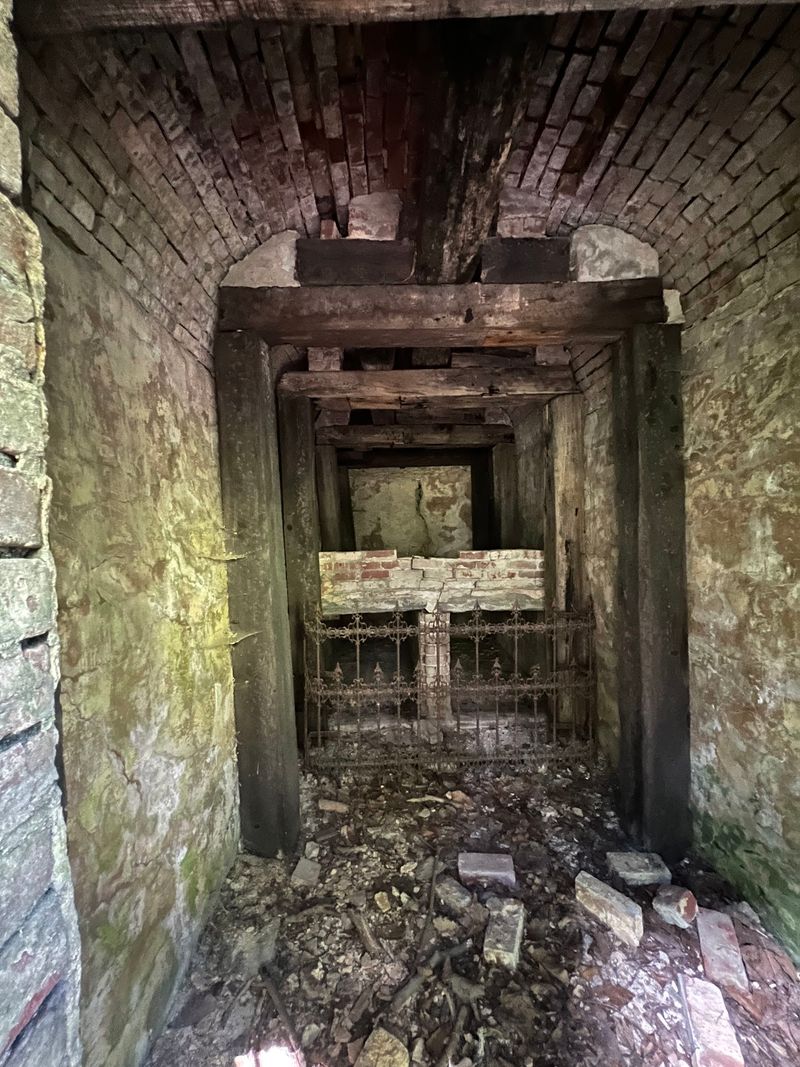
The mausoleum Townsend built for himself adds a particularly atmospheric note to the grounds. He had it constructed with the intention of being buried there, but that never happened.
The structure still stands, carved with “Good Night Gath,” and surrounded by trees that have grown up close around it over the decades. It is quiet, a little melancholy, and oddly poetic.
Self-guided walking tours help you find and interpret these scattered remnants. Without the tour map, it would be easy to walk right past some of the most interesting spots without realizing what you are looking at.
Picking up a guide at the visitor center before you start wandering is genuinely worth it. The ruins are not dramatic in a Hollywood sense, but they carry a quiet power that stays with you long after you leave.
Hiking the Trails at Crampton’s Gap on South Mountain
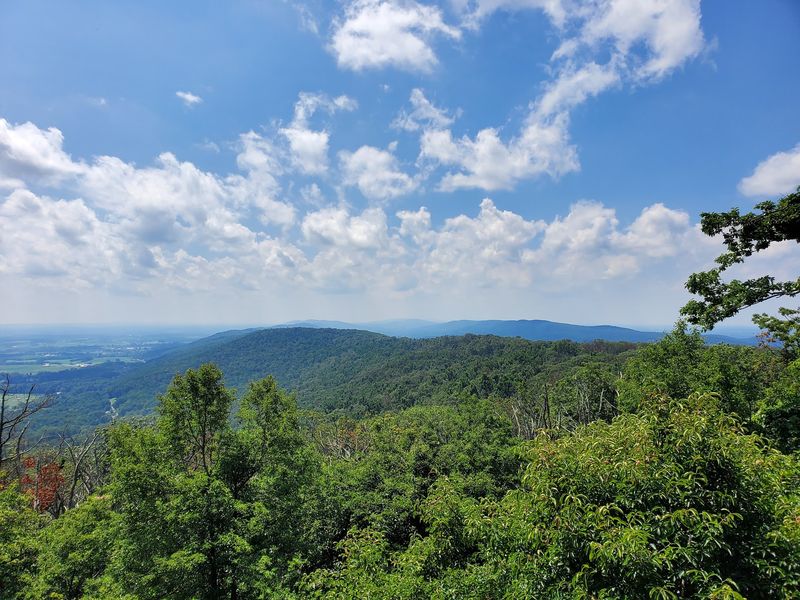
Gathland State Park covers 144 acres of wooded mountain terrain, and the trails here offer a genuinely satisfying mix of history and nature. The hiking is moderate, meaning it is accessible for most families and casual hikers without being so easy that it feels like a walk around the block.
The elevation changes are real, but so are the views when you get to the right spots.
The Appalachian Trail runs directly through the park, passing right by the War Correspondents Memorial Arch. That connection to one of America’s most iconic long-distance trails gives Gathland a kind of quiet prestige.
You might share the path with through-hikers who have been walking for weeks, and there is something energizing about that mix of day-trippers and serious trail veterans sharing the same ground.
The forest itself is dense and green in a way that feels genuinely immersive. In spring and summer, the canopy fills in completely and the light comes through in shifting patches.
Fall brings a color show across the ridgeline that rivals anything in the region. Even in winter, the bare trees open up long views across the valleys below that you cannot get in warmer months.
Leashed dogs are welcome on the trails, which makes it a solid option for pet owners looking for somewhere interesting to take a longer walk. Picnic areas are available if you want to make a full day of it.
The combination of good trail conditions, historical stops along the way, and scenic mountain terrain makes Gathland one of the more underrated hiking destinations in the whole state.
The Appalachian Trail Connection Through the Park
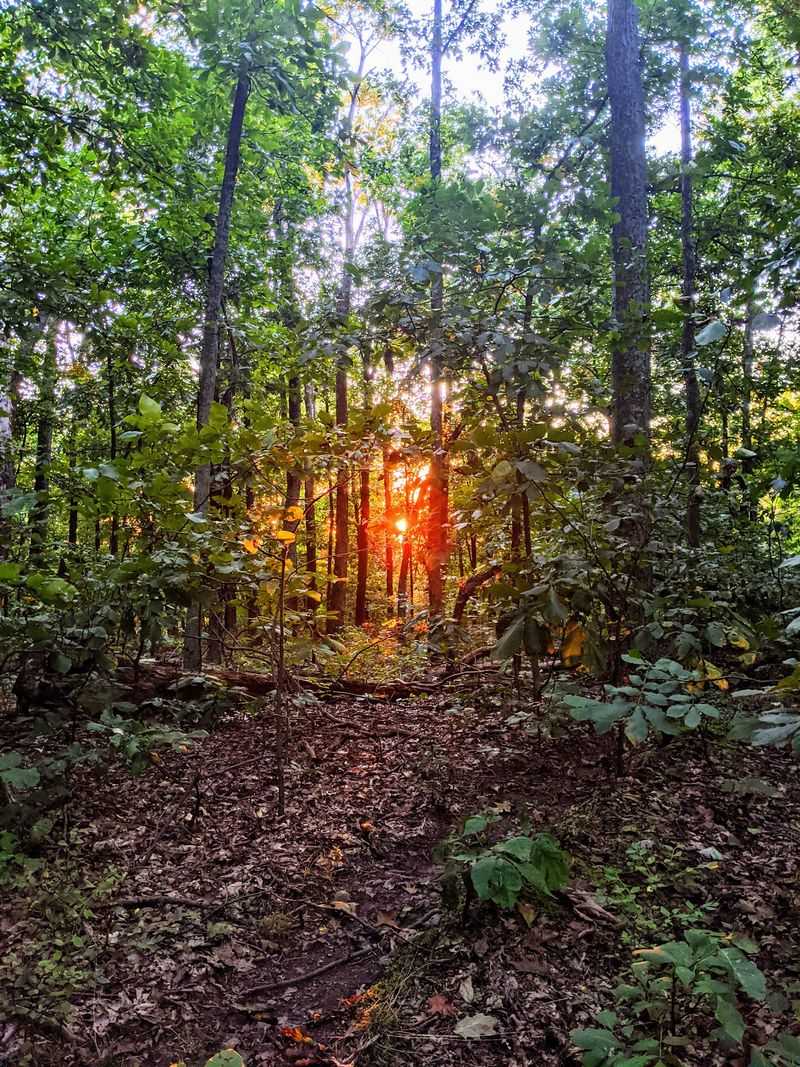
Few things add to a park’s reputation quite like having the Appalachian Trail pass through it.
At Gathland, the AT cuts right across Crampton’s Gap and passes directly by the base of the War Correspondents Memorial Arch, making this one of the more historically loaded sections of the entire 2,000-plus-mile trail.
For through-hikers making their way from Georgia to Maine, or southbound from Maine to Georgia, Gathland represents a brief but memorable pause in the Maryland section of the trail.
Maryland’s stretch of the AT is known for being relatively flat compared to other states, but the gap at South Mountain gives it a bit more character and elevation change than most of the state’s portion offers.
Day hikers can use the AT to connect Gathland to other nearby points on the trail, creating loops or out-and-back routes that cover more ground than the park’s own trail network alone.
The trailhead access at Gathland is easy and well-marked, which is a nice bonus for anyone who is not deeply familiar with AT logistics.
There is something quietly thrilling about walking the same path that thousands of long-distance hikers have walked, especially when it leads you past a stone arch built in 1896 by a Civil War journalist.
The overlap of American history and American outdoor culture feels very specific to this spot.
Not every park gets to claim that kind of layered identity, and Gathland wears it naturally, without making a big production of it.
Civil War History Woven Into Every Corner of the Park
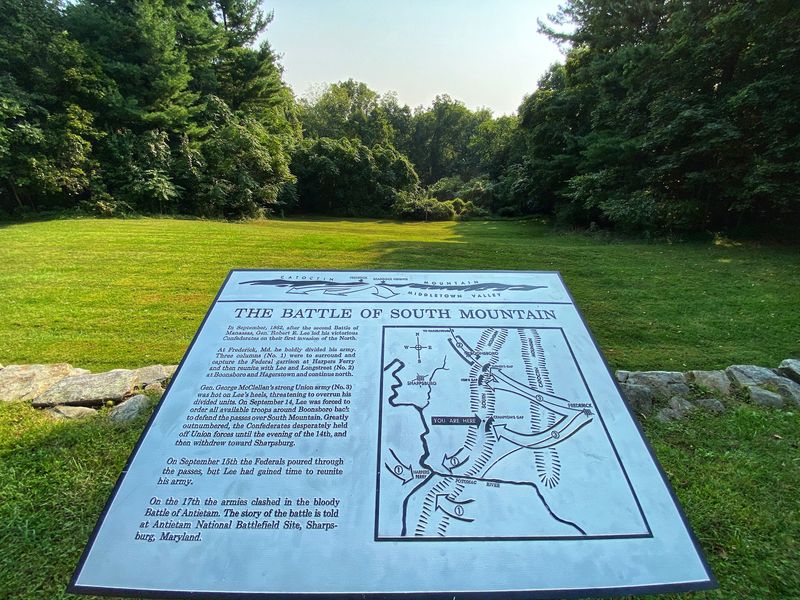
You cannot spend time at Gathland without feeling the weight of the Civil War pressing in from all sides. The Battle of Crampton’s Gap was fought here in September 1862, and the landscape has not changed so dramatically that you lose the sense of what it must have been like.
The narrow gap, the steep wooded slopes, the open ground below, all of it reads like a tactical map come to life.
The Union Army pushed through this gap as part of a broader campaign during the Maryland Campaign of 1862. The fighting was intense and the losses were significant.
Three days later, the Battle of Antietam became the bloodiest single day in American military history. Crampton’s Gap was a prelude to that catastrophe, and understanding that sequence makes the park feel much heavier than a casual visit might suggest.
Interpretive exhibits throughout the park help connect the battlefield history to the physical landscape around you.
The placement of the museums inside Townsend’s own buildings adds an interesting layer, because Townsend himself covered the war and then chose to build his life’s work on this particular piece of ground.
That choice was not accidental. He was deeply tied to the war’s meaning and memory.
Civil War living history encampments are held at the park periodically, and if you can time a visit to coincide with one, the experience becomes genuinely immersive. Volunteers bring the 1862 period to life in ways that static exhibits simply cannot.
Even on a quiet weekday with no events scheduled, the battlefield history is present in every rock and ridge.
Planning Your Visit to Gathland State Park in Jefferson Maryland
Getting to Gathland State Park is straightforward, and the address, 900 Arnoldstown Rd, Jefferson, MD 21755, puts you right at the heart of the park.
It sits in the foothills of South Mountain in Frederick County, roughly an hour from both Baltimore and Washington DC, making it a very doable day trip from either city.
The park is open from 8 a.m. to sunset between April and September, and from 10 a.m. to sunset between October and March. The museums inside Gapland Hall and Gapland Lodge are typically open on weekends from April through October, between noon and 5 p.m.
If museum access is important to your visit, a weekend trip during those months is the way to go.
Parking is free and available at the park entrance. The trails are well-maintained and suitable for most fitness levels, though some sections have noticeable elevation changes.
Comfortable walking shoes are a better choice than sandals, especially if you plan to explore the more overgrown areas near the ruins.
Leashed pets are welcome throughout the park, so bringing your dog along is a perfectly good idea. Picnic tables are available if you want to pack lunch and make a longer afternoon of it.
There are no food vendors on site, so coming prepared matters. The park does not charge an admission fee, which makes it one of the better free historical experiences in the state.
Honestly, for the amount of history, scenery, and quiet that Gathland delivers, it is hard to think of a better way to spend a free day in Maryland.
