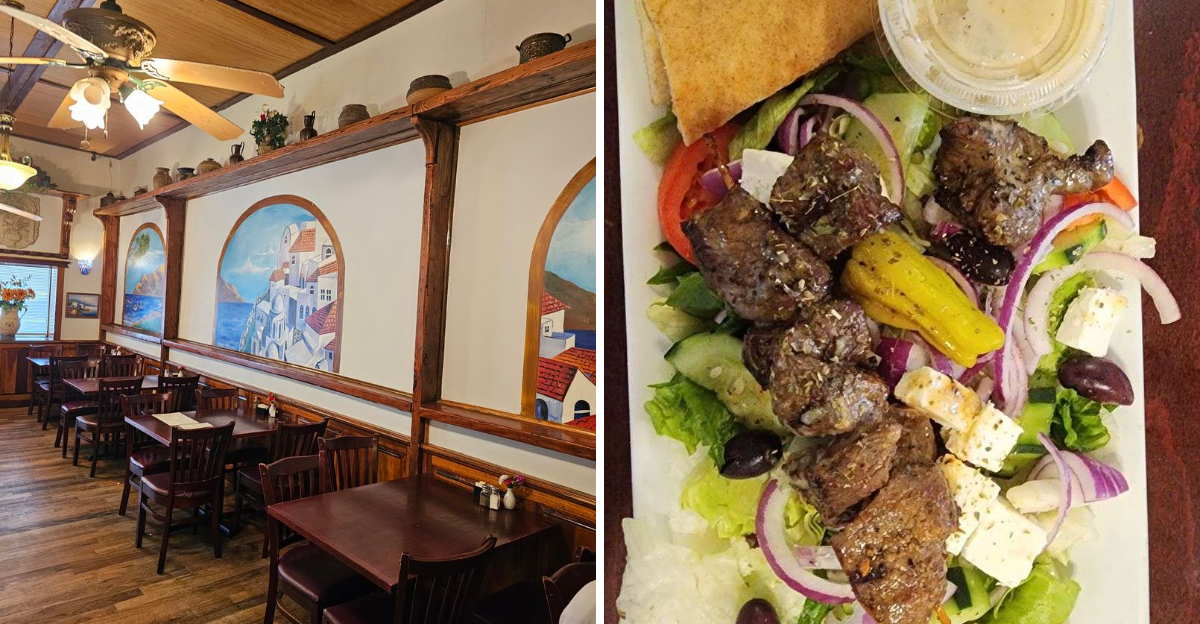
Maryland diners have had nearly half a century to decide whether this old-school Greek restaurant deserves a repeat visit, and apparently plenty of them made up their minds a long time ago.
Since 1977, the same founder and head chef has been behind the kitchen, serving generations of customers the Greek dishes and recipes that helped establish the restaurant’s reputation.
There is something refreshingly uncomplicated about a place that has survived decades of food trends without suddenly deciding every plate needs foam, tweezers, or an elaborate backstory.
Instead, the appeal comes from familiar Greek cooking, a long history, and the kind of staying power restaurants cannot manufacture overnight.
In Maryland, where new restaurants arrive constantly, keeping people hungry for the same kitchen for almost 50 years is a pretty impressive accomplishment.
A Greektown Corner With Real Roots
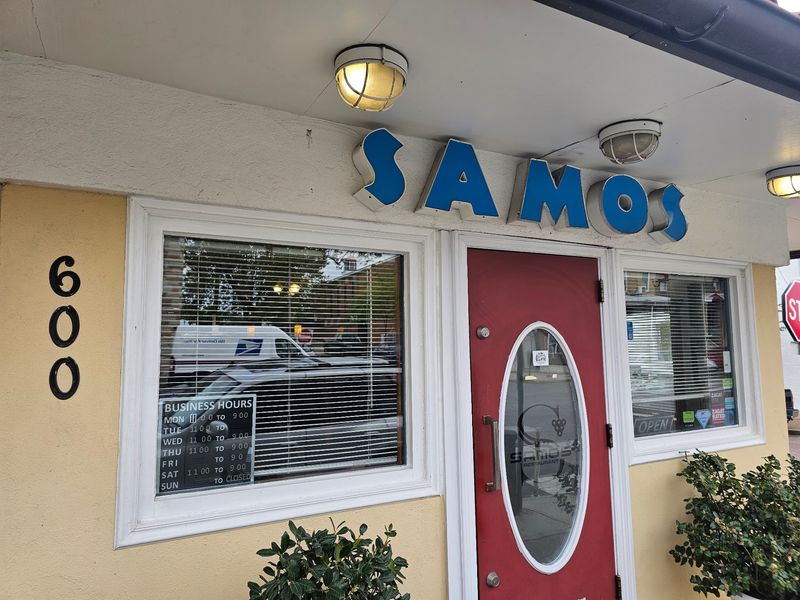
This location surprised me. Instead of a flashy restaurant row, there are rowhomes, parked cars, and a corner building that could easily be mistaken for a neighborhood shop if you were driving too fast.
Greektown has been the heart of Greek-American life in Baltimore since the 1930s, and the neighborhood still carries that history in quiet ways. St. Nicholas Greek Orthodox Church anchors the area, and Samos sits a short walk away, surrounded by houses rather than hotels.
What makes the setting work is how unpretentious it feels. Nobody is trying to sell you an experience out front.
Parking took a few laps around the block, which felt like a very Baltimore introduction. Street parking is the norm here, so plan on walking a block or two, and treat that stroll as part of the visit since the surrounding streets show off the neighborhood’s practical, hardworking character.
For travelers used to waterfront districts like Fells Point or Harbor East, Greektown offers a different flavor of the city. Bakeries, markets, and small storefronts share the area, and a few of them are worth a quick detour before or after eating.
Getting here from downtown takes roughly fifteen minutes by car, depending on traffic on Eastern Avenue. Rideshares run fine too.
The location matters because it explains the food. A restaurant that grew up serving its own community tends to cook honestly, and that is exactly the impression Samos leaves once you step through the door.
Nearly Five Decades Under One Chef
Restaurants rarely last five years, let alone forty-plus. Samos opened in 1977, and Nicholas Georgalas has been both owner and head chef the entire time, which is the kind of detail that changes how you taste a meal.
Longevity like that is not luck. Recipes get tested thousands of times, and the ones that survive are the ones people keep coming back for.
Sitting in the dining room, I kept thinking about how many birthdays and after-church lunches have happened at these tables. Multiple generations of Baltimore families have eaten here, and some regulars now bring grandchildren of their own.
The kitchen expanded its dining room in 2000 to handle the crowds, and that growth says more than any advertisement could. Demand simply outgrew the original space.
There is also a spinoff worth knowing about. Samos Greek Island Grill launched in 2013 as a faster, more casual version, with spots at Canton Crossing and McHenry Row for anyone who wants a quicker meal.
Practical tip for visitors who care about food stories: come with a little curiosity about Greek cooking traditions, because the menu reads like a greatest-hits list of dishes brought over by immigrant families.
Eating here feels less like dining out and more like being handed a piece of neighborhood history on a warm plate.
A Taverna Feel Without the Fuss
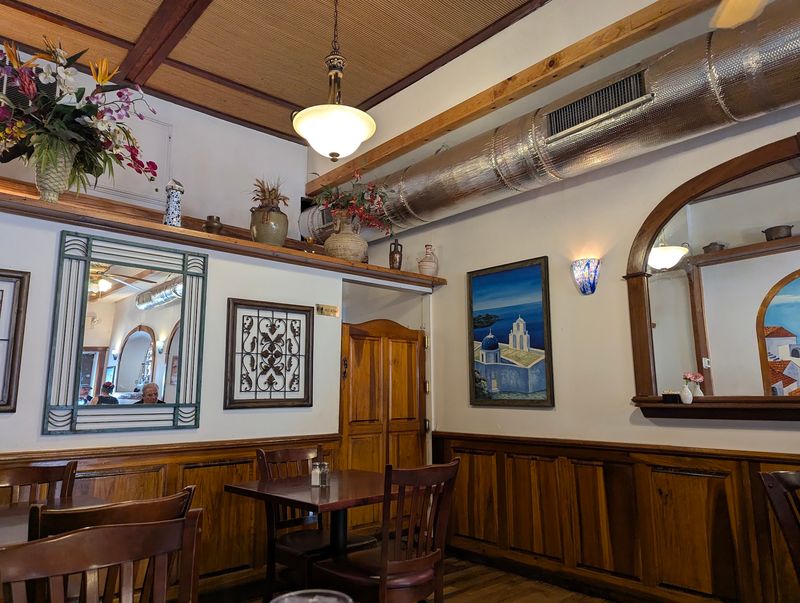
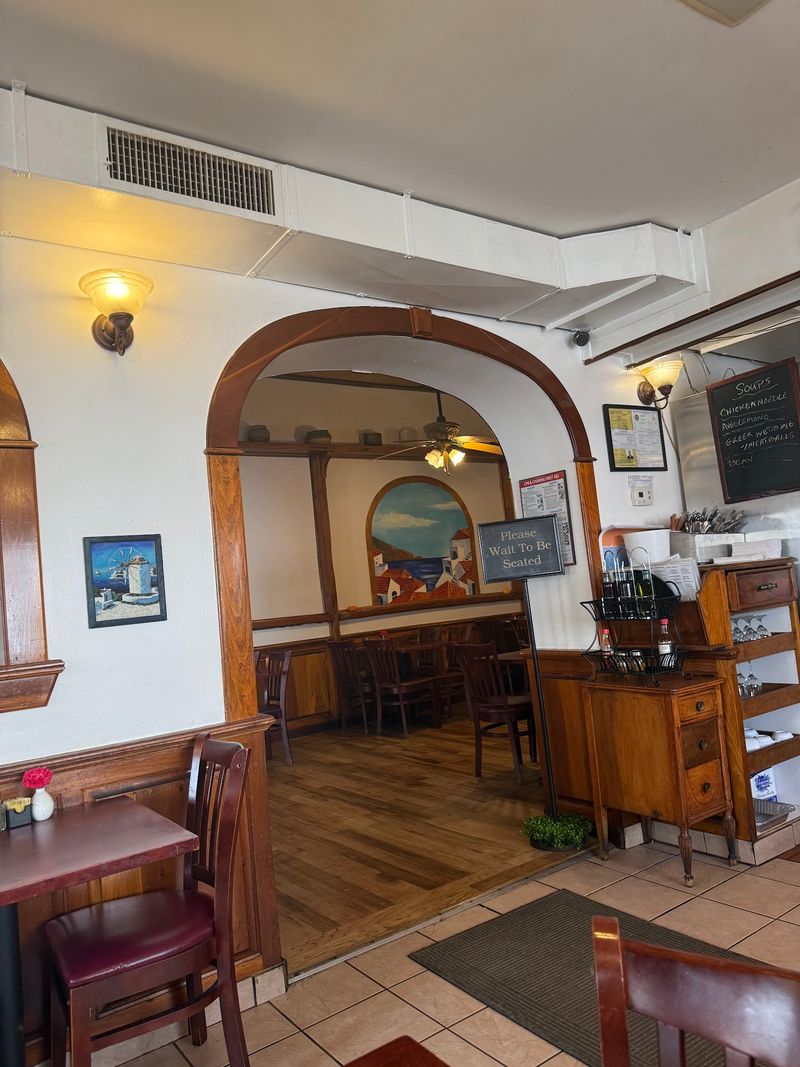
Loud, cheerful, and packed. That was my first read on the dining room, and I mean all three as compliments.
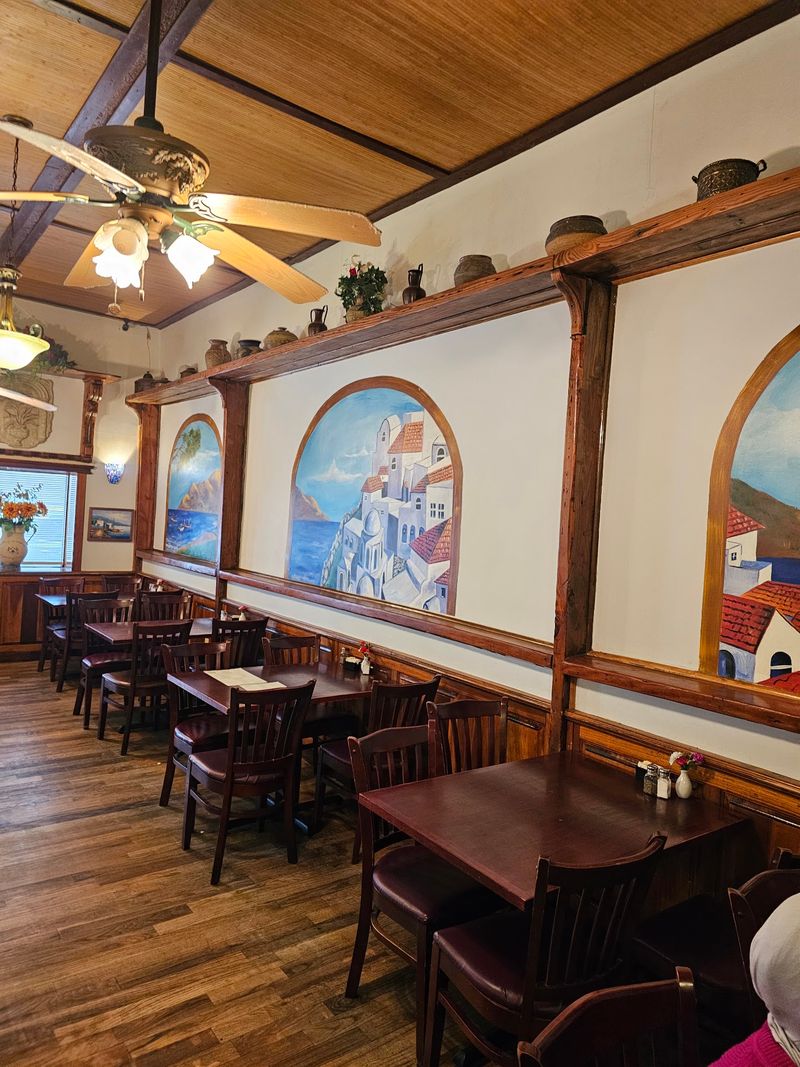
Wooden furniture fills the space, and paintings hang on the walls, giving off an old-time vibe that nobody bothered to modernize. Tables sit close together, conversations overlap, and plates land fast.
Formality is not the point here. No one performs a long speech about the specials, and nobody folds your napkin when you stand up.
What you get instead is speed and warmth. Food arrives quickly, water glasses stay full, and the whole room moves with a rhythm that regulars clearly understand.
Families make up a big share of the crowd, which keeps the energy friendly rather than stiff. Kids are perfectly at home, and high chairs get put to work.
For anyone hoping for a hushed, candlelit evening, the volume might be a surprise. Bring that expectation and adjust it, because the noise is honestly half the fun.
I liked sitting where the front door was visible, watching plates go by on their way to other tables. It doubles as a menu preview.
The room feels homey in a way that is hard to fake. Decades of use have softened the edges, and the atmosphere carries the comfortable feeling of a place that stopped worrying about trends a long time ago and focused entirely on feeding people well.
Fire, Olive Oil, and Salt Do the Heavy Lifting
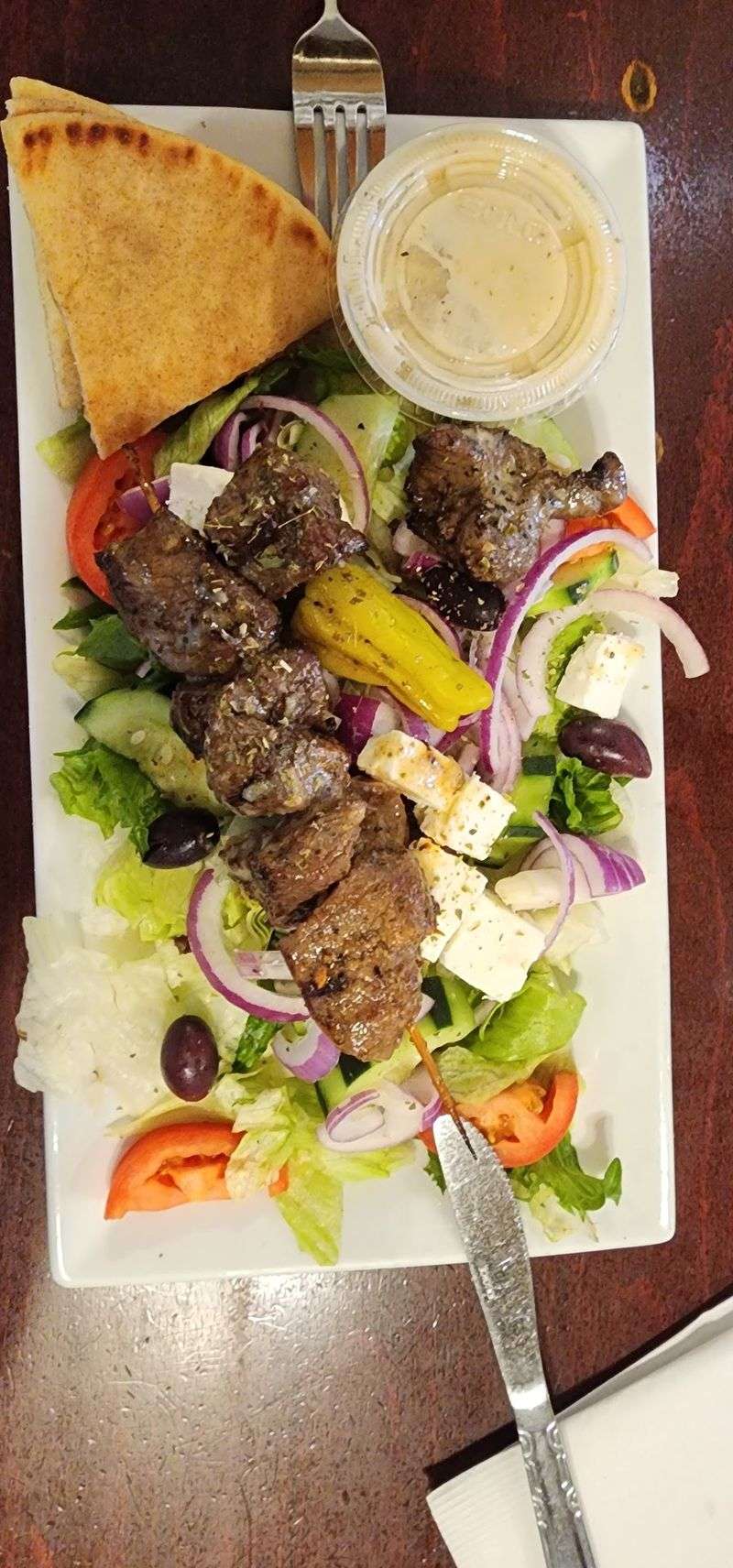
Simplicity takes confidence. The cooking here leans on good olive oil, an open flame, lemon, and salt instead of heavy sauces, and that approach shows up in almost everything that leaves the kitchen.
Grilled octopus gets mentioned constantly by people who eat here, and after tasting it, the reputation makes sense. Charred edges, tender bite, a squeeze of lemon, done.
The lamb souvlaki platter is another standout, arriving hot off the grill with that unmistakable smoky finish. Whole grilled Bronzino shows up on plenty of tables too, served in a way that lets the fish speak for itself.
Freshness backs all of it up. Produce, seafood, and meat come in daily, which is exactly why the grill can stay this straightforward.
Mezze plates are worth building a meal around if sharing sounds appealing. Tzatziki, spanakopita, and dolmathes travel around the table quickly, and ordering a few at once turns dinner into something more social.
Moussaka deserves a mention for anyone who prefers something baked and hearty instead of grilled. There is a vegetarian version layered with eggplant, potato, and a creamy ricotta topping.
Greek Fries topped with feta, lemon, and oregano became my unexpected favorite. Salty, bright, and impossible to stop eating.
Skip the urge to over-order on the first visit. Portions run generous, and the kitchen rewards restraint with plates that actually taste better when there is room left to finish them.
Desserts That Close the Meal Properly
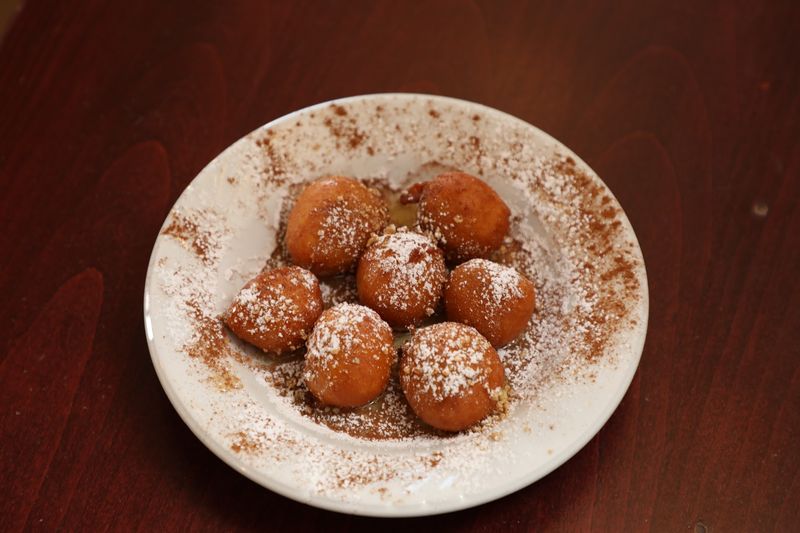
Room for dessert should be planned, not discovered. Learned that the hard way after a platter of grilled lamb left barely any space for what came next.
Baklava is the obvious pick, layered phyllo with nuts and honey, sticky in the best way. It holds up as a classic because it never needed improving.
Galaktoboureko is the one to order if baklava feels too familiar. Custard wrapped in phyllo, warm and soft in the middle, crisp along the edges.
Honeyballs make a good shared option for a table that cannot agree. Small, sweet, and gone in about ninety seconds.
Traditional Greek desserts tend to be sweeter than what many diners expect, so splitting one between two people works well. A coffee alongside balances things nicely.
What I appreciated was that the desserts feel homemade rather than shipped in. Phyllo work takes patience, and the results here show it.
Timing matters a little. Since the dining room moves fast, ordering dessert right when the plates get cleared keeps the momentum going.
For travelers exploring Greektown afterward, a walk around the neighborhood pairs surprisingly well with a honey-heavy finish. The area has bakeries and markets nearby, so anyone still curious about Greek sweets has options.
Ending a meal on baklava in a restaurant that has served it since the seventies feels fitting. Some traditions earn their place by simply never disappointing.
No Reservations, So Timing Is Everything
Here is the practical part. Samos does not take reservations, which means the plan is simple: show up, and be ready to wait if the timing is unlucky.
Peak hours bring lines, especially on weekend evenings. Nothing dramatic, but the wait is real.
My strategy on the second visit worked much better. Arriving on the early side, before the main dinner rush, meant walking straight to a table.
Weekday lunches tend to be calmer, and that is a good window for anyone who wants a slower meal. Late afternoon can also be a sweet spot between rushes.
Bringing a larger group requires a bit of patience, since tables get pieced together as space opens up. Smaller parties of two or three move through much faster.
The upside of no reservations is fairness. Everyone stands in the same line, whether they live around the corner or drove in from out of state.
Checking hours before heading over saves frustration, especially around holidays. A quick look at the restaurant’s own information is the safest bet.
Cash and card questions are worth sorting out ahead of time too, simply because it speeds things along in a room that moves quickly.
Waiting outside gives a decent look at the neighborhood, which is not a bad consolation prize. Greektown rewards a few minutes of standing around, and by the time a table opens, the appetite has usually caught up with the anticipation.
Why the Trip to Oldham Street Is Worth It
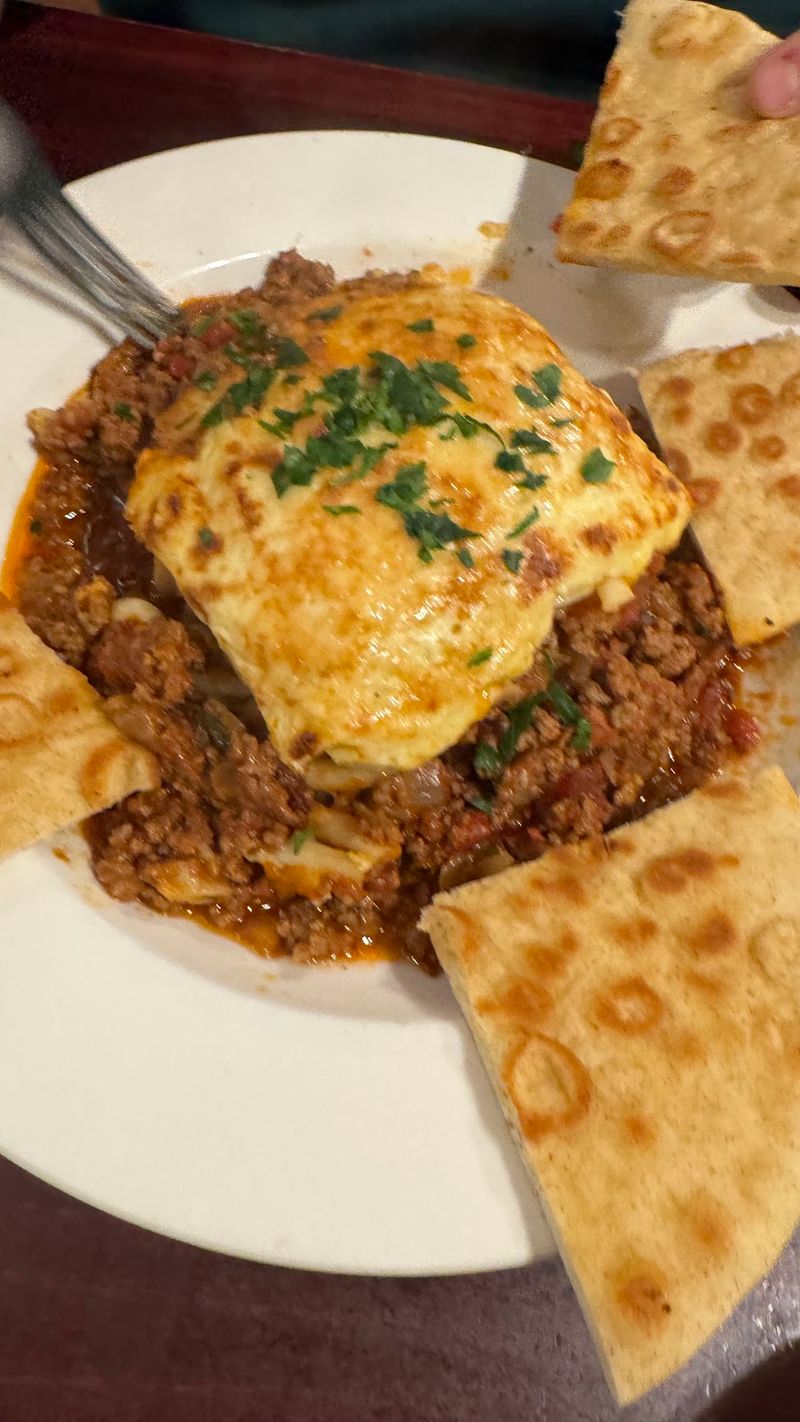
Some restaurants are destinations because of the view. Samos is a destination because of the cooking, and that is a much rarer thing.
Baltimore has plenty of polished dining rooms with harbor views and long menus. Greektown offers something different, and the contrast is refreshing.
Leaving Oldham Street, I found myself already thinking about the next order. That is usually the clearest sign a meal landed.
For a food-focused trip, pairing this stop with a walk around Greektown makes a solid half-day plan. The neighborhood’s shops and the presence of St. Nicholas Greek Orthodox Church give the area a real sense of identity.
Budget-wise, the value holds up well. Portions are hearty, sharing is easy, and a table of mezze plus one grilled platter can feed several people comfortably.
Bring people who like to share. Greek food tastes better spread across a table.
A few dishes are worth building a return visit around, including the Roasted Chicken Oreganato, the savory cheese pie, and the Samos Special Salad. Gyro fans will find plenty to like too.
What lingers most is the feeling that this place never chased attention. It simply kept cooking, kept feeding the neighborhood, and let word travel on its own.
Anyone building a Maryland food itinerary should pencil this one in early, because a restaurant with this much history and this little pretense deserves more than a rushed lunch.
Address: 600 Oldham St, Baltimore, Maryland
