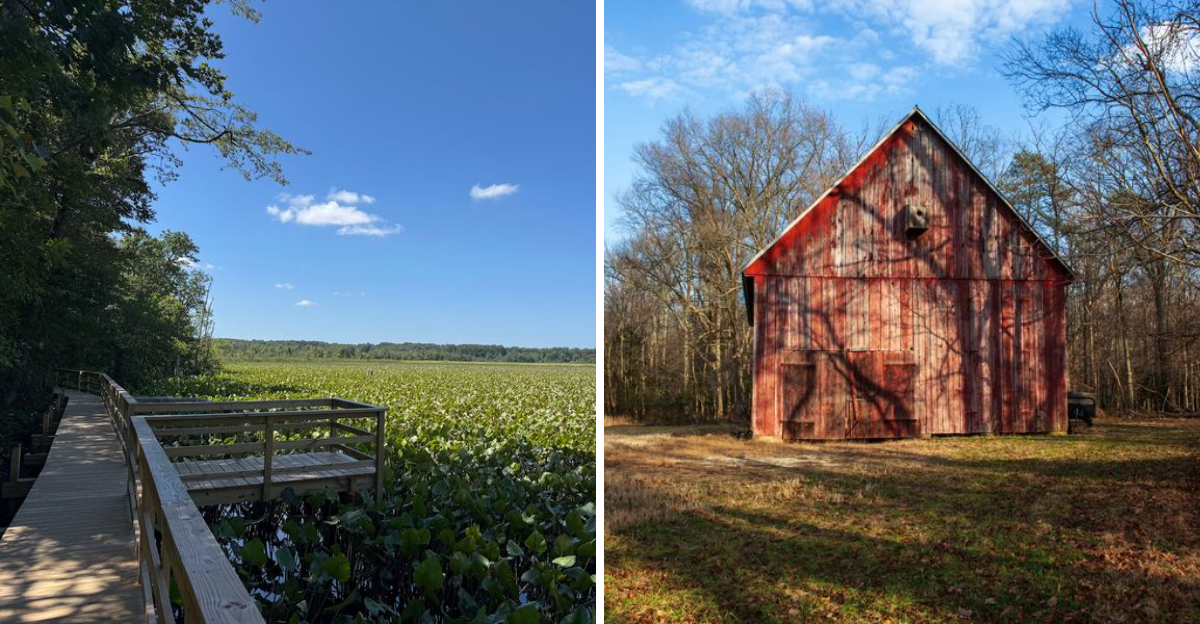
Maryland can feel surprisingly untamed when a boardwalk carries you straight into a tidal marsh and the usual soundtrack of traffic gets replaced by birds, frogs, and whatever just moved in the reeds.
This protected sanctuary covers more than 1,700 acres of wetlands, woodlands, and meadows along the tidal Patuxent River, with miles of trails and marsh boardwalks for hiking and wildlife watching.
More than 300 bird species have been recorded around the sanctuary, giving even casual walkers a perfectly good excuse to stop every few minutes and stare into the trees. It is the kind of Maryland escape where the scenery does most of the entertaining and nobody needs an elaborate itinerary.
Bring comfortable shoes, slow down, and suddenly wandering around a swamp sounds like an excellent use of the day.
Nearly 11 Miles of Trails in the Sanctuary Proper
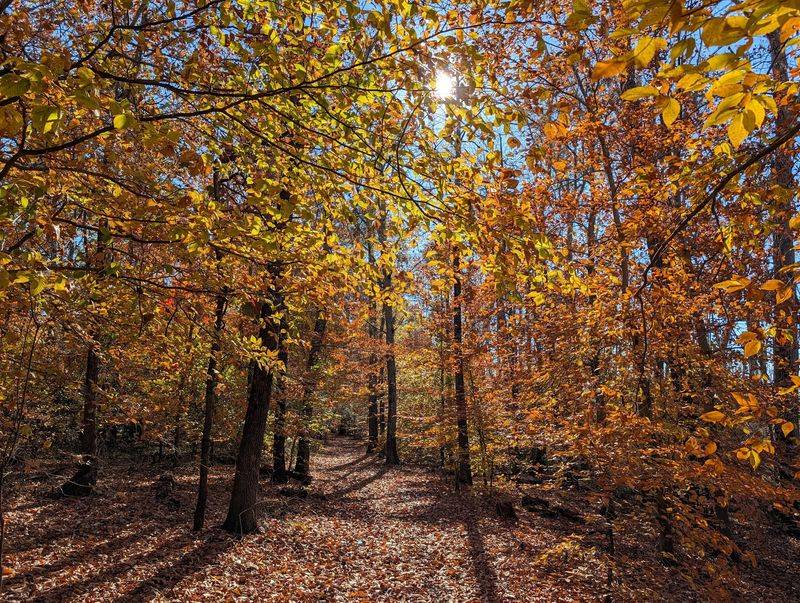
Boots hit soft sand within the first hundred feet, and that texture underfoot says a lot about what makes this place unusual. The main section, known as the Sanctuary Proper, holds close to 11 miles of trails and boardwalks stitched together across ridges, hollows, and marsh edges.
Add in the sanctuary’s other properties and the total climbs toward 17 miles, with some counts reaching higher still. Plenty of room to spread out.
What surprised me most was the variety packed into short distances. One stretch runs along a river overlook with wide water views, then the path drops into shaded upland forest, passes a beaver pond, and pops out onto a wetland boardwalk minutes later.
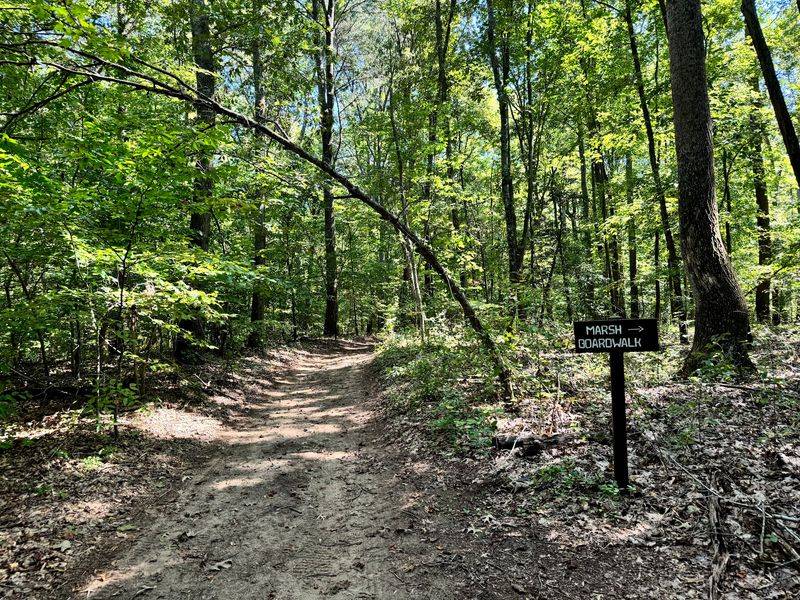
Trail junctions are marked clearly, though grabbing a paper map at the start saves guesswork later. Loops can be linked for a two hour ramble or stretched into a half day depending on energy levels.
Footwear matters here. Sandy sections drain fast after rain, but low areas near the marsh can stay soft and slick, especially in spring.
Benches appear at useful spots, usually right where the view opens up. Families with younger kids often stick to the shorter marsh loops, which deliver the biggest payoff for the least effort.
Serious walkers can chain trails together and barely repeat a single section. Either way, the ground keeps changing, and that constant shift in scenery is what keeps the miles from feeling like work.
The Railroad Bed Trail and Its Long River Pier
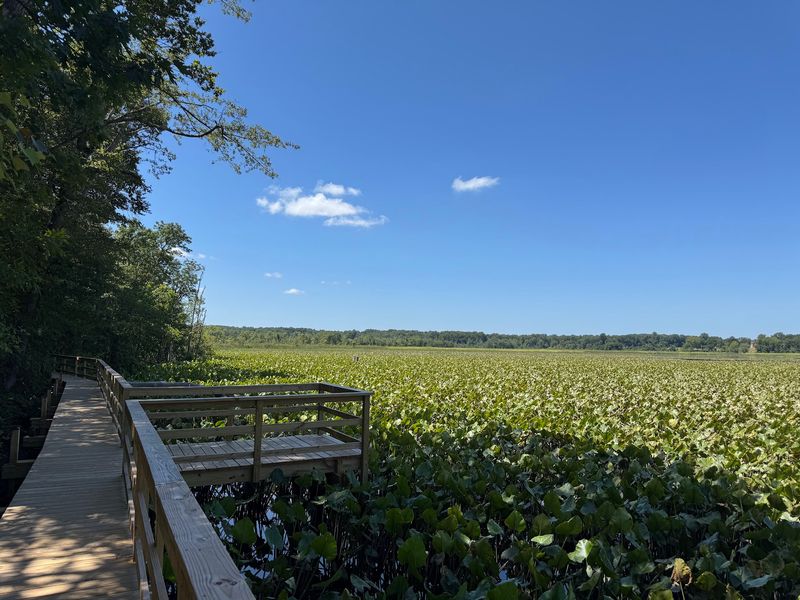
Old railway corridors make excellent walking paths, and the Railroad Bed Trail proves it with a wide, level route that once carried trains. The grade stays gentle, which makes it one of the easier ways to reach the water without much climbing.
At the end sits a long pier stretching out over the Patuxent River. That pier is the reward.
Standing water on both sides changes the feeling entirely, since the marsh suddenly gives way to open river and a horizon of trees on the far bank. Tide movement is visible from up there, pushing and pulling at the vegetation along the shoreline.
Ospreys tend to work the channel, and patient visitors often spot turtles surfacing near the pilings. The pier also serves as a designated stop on the Patuxent Water Trail, connecting paddlers to the broader river system.
Seeing a kayak glide past while standing above it adds a nice sense of scale to the whole place. Morning light here is soft and low, and late afternoon turns the water a warm bronze color.
Wind can pick up over open water, so a light layer helps even on mild days. Binoculars earn their keep on this stretch more than almost anywhere else in the sanctuary.
Walking back through the shaded railbed feels like a decompression chamber after all that brightness, with birdsong replacing the wide open hush of the river.
A 460 Foot Boardwalk Through Tidal Marsh
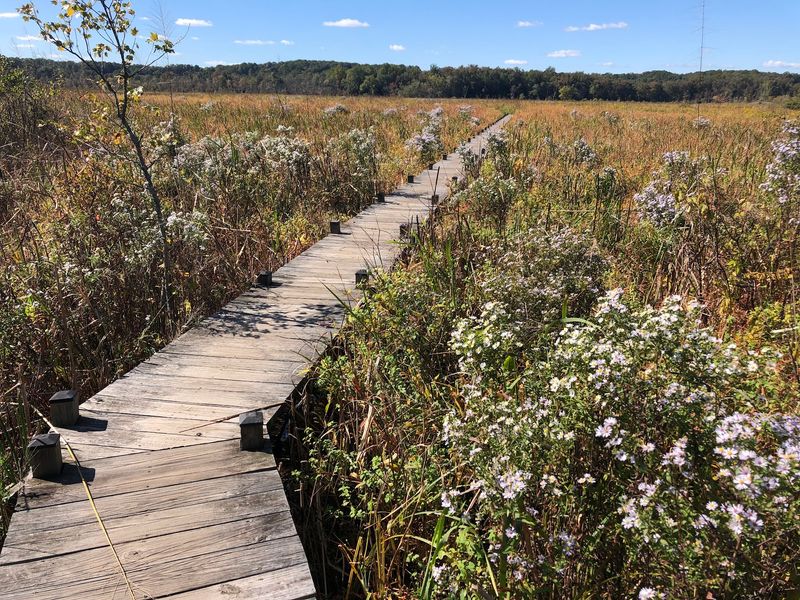
Marsh walking is usually impossible without waders, which is exactly why a boardwalk this long feels like a gift. The 460 foot span carries visitors straight through wetland vegetation toward Old Galloway Creek, opening into a view of the Patuxent River.
Planks sit low, close to the water. That closeness changes everything.
Wild rice grows tall on either side in late summer, sometimes high enough to feel like walking through a green corridor. Cattails, pickerelweed, and yellow pond lily fill the gaps, and crimson centered rose mallow blooms show up along the edges during warmer months.
Frogs announce themselves constantly, usually before they are seen. Small fish dart in the shallow channels beside the boards, and dragonflies patrol the railings like tiny security guards.
Tides matter here in ways that surprise first time visitors, since this is a freshwater tidal system where water levels shift through the day. Low tide exposes mud flats where wading birds probe for food, while high tide floods the marsh and brings different activity.
Checking a tide chart before visiting can shape the whole experience. Boards can be slippery after rain or heavy dew, so a steady pace beats rushing.
Photographers tend to linger where the boardwalk bends and the marsh opens up. Beyond it, tidal shrublands and swamp forest take over, giving the walk a layered progression from open water to dense green shade.
Wildlife Blinds Built for Patient Watching
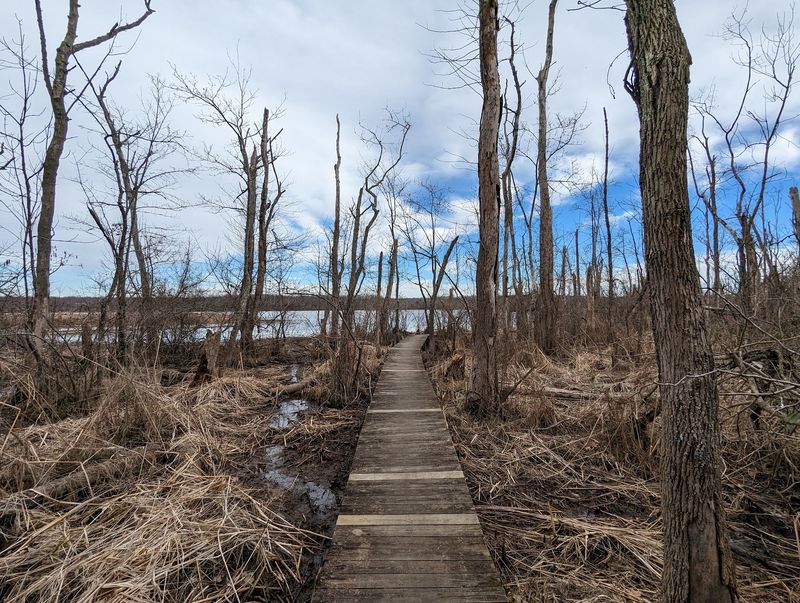
Sitting still is an underrated skill, and Jug Bay rewards it generously. Wildlife blinds are hidden along several trails, positioned where marsh, pond, and open water meet, so animals carry on without noticing an audience.
Viewing slots frame the scene like a window. Ten quiet minutes usually changes what appears.
Herons and egrets stalk the shallows with unhurried steps, and rails move through dense stems where they are far easier to hear than see. Least bittern, sora, and Virginia rail all use these tidal wetlands, and the rare American bittern shows up too for those with real patience.
Bald eagles and ospreys cruise overhead often enough that looking up becomes a habit. Beaver activity is visible in chewed stumps and lodges near the ponds, while muskrats leave neat trails through the vegetation.
River otters are the jackpot sighting, playful and fast when they do surface. Deer drift along forest edges at dawn and dusk.
Bringing binoculars is the single best piece of advice for this part of the sanctuary. A small notebook helps too, since the species count adds up quickly once attention sharpens.
Keeping voices low genuinely improves the odds, and kids often get into the challenge of staying quiet. Sitting in a blind while the marsh hums along at its own pace is one of those simple pleasures that sticks in memory longer than any big view.
Birding Along the Atlantic Flyway
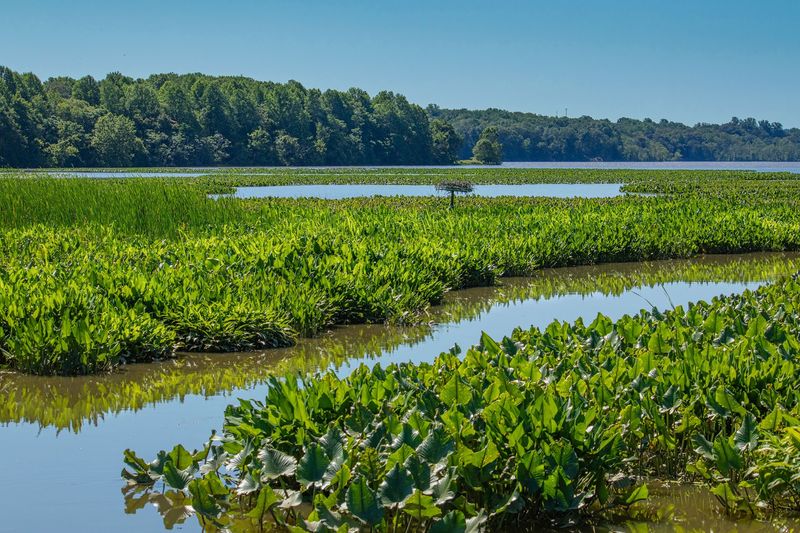
Serious birders talk about Jug Bay with a certain glow, and the reasons stack up fast. Audubon Maryland-DC designates the sanctuary as an Important Bird Area, recognized for statewide conservation value.
Its position within the Atlantic Flyway makes it a genuine crossroads. Migration turns the marsh into a rest stop.
Well over 100 species have been recorded, with some accounts pushing toward nearly 300 across the years and seasons. Waterfowl arrive to feed on the wild rice stands, which is why late summer and fall bring some of the busiest activity.
Songbirds fill the upland woods in spring, and raptors work the open water and field edges through much of the year. Ospreys nest visibly, and eagle calls carry across the river.
Timing shapes results more than luck does. Early morning delivers the most sound and movement, while overcast days can keep birds active longer.
Marsh species need slow walking and frequent pauses, since many are heard before spotted. A field guide app with bird calls helps sort out the tangle of voices in the reeds.
Different habitats produce different lists, so combining a boardwalk stretch with a forest loop covers more ground biologically. Even casual visitors with no birding background tend to leave impressed, mostly because the sheer volume of activity is impossible to ignore once the ears tune in.
Vernal Pools and the Fall Salamander Migration
Some of the most remarkable things at Jug Bay happen in puddles. Vernal pools sit in pockets of wet woods, filling with water through fall and winter, then drying out by late spring or summer.
No fish can survive that cycle. That absence is the whole point.
Without fish to eat their eggs, amphibians get a safe nursery, which makes these seasonal pools critical breeding grounds.
Marbled salamanders take advantage in dramatic fashion, and the sanctuary has documented a mass migration each fall as they travel from upland forest down to the pools to lay eggs.
Bullfrogs, tree frogs, and other species add their own layers of noise to the equation. Spring evenings can get genuinely loud.
Walking near these pools calls for a light touch, since the surrounding soil holds burrows and the pools themselves are fragile. Staying on marked trails protects far more than it might seem.
Damp, cool nights after rain tend to be the most active periods for amphibian movement. Anyone curious about this side of the sanctuary should watch for the education programs, since guided sessions offer the best chance to see it responsibly.
Even in dry months, spotting a leaf filled depression and knowing what unfolds there in autumn changes how the forest reads. Eastern box turtles also wander these woods, adding another slow moving resident worth watching for on the path ahead.
Glendening Nature Preserve and Its 622 Acres
Anyone who finishes the main sanctuary and still wants more should know about Glendening. The preserve adds over 8 miles of trails across 622 acres, extending the Jug Bay experience into different terrain.
Habitat variety is the draw. Fields, forest, and wetland all appear.
Meadows here buzz with insects in summer, and butterflies work the wildflowers along trail edges. Forest sections shift between moist bottomland and drier slopes, with towering white oaks and tulip trees setting the canopy.
Sassafras saplings release that unmistakable root beer scent when leaves get crushed underfoot. Virginia bluebells bring a wash of soft color in early spring.
Longer trail distances make this a good choice for visitors wanting a real hike rather than a stroll. Carrying water is smart, since open meadow stretches offer little shade during warm months.
Insect repellent belongs in the pack from late spring onward. Trail conditions vary more than in the main sanctuary, so checking current access information before heading out saves frustration.
Quieter than the boardwalk areas, Glendening tends to feel more solitary, which some visitors specifically prefer. Deer sightings are common in the transitional zones between field and woods.
Pairing a Glendening hike with a shorter marsh walk elsewhere in the sanctuary makes for a full and satisfying day, showing just how much ecological range fits inside this stretch of the Patuxent watershed.
The McCann Wetland Study Center, Plummer House, and Observation Deck
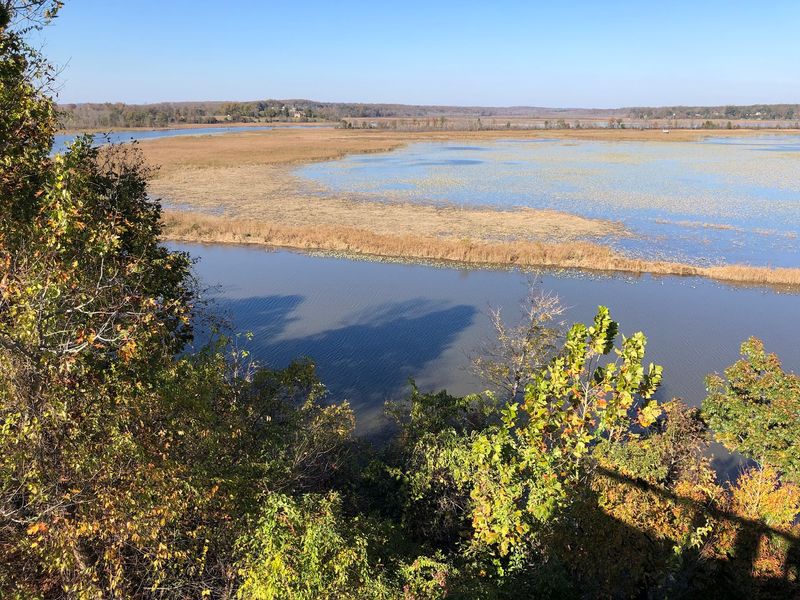
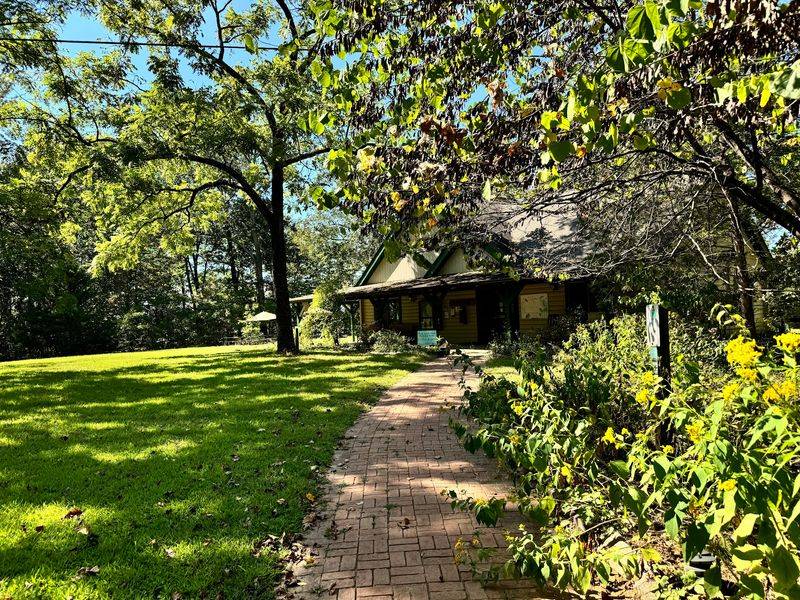
Facilities at Jug Bay lean educational rather than commercial, and that suits the setting. The McCann Wetland Study Center holds an exhibit room where the ecology of the marsh gets explained in plain terms.
Nearby, an observation deck delivers the panoramic payoff. Wetlands stretch out toward the broad Patuxent.
From up on the deck, the scale finally makes sense, with channels threading through marsh grass and the river opening beyond. Scanning with binoculars from that vantage point often turns up birds impossible to see from ground level.
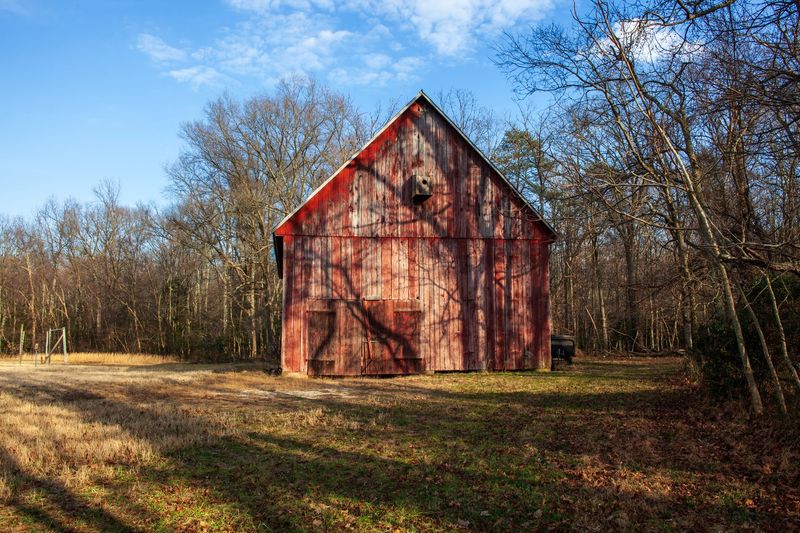
The restored Plummer House, an old farmhouse, serves as a space for meetings and public education programs. Its presence adds a human layer to a landscape that otherwise feels entirely wild.
Families will appreciate the nature play space, which gives younger visitors somewhere to burn energy that is not a boardwalk. Research runs deep here too, since the sanctuary functions as a field station with studies spanning more than 40 years.
That long record makes Jug Bay one of the best studied wetland ecosystems in the Mid-Atlantic. Over 80 archaeological sites have been identified across the property, with evidence of human presence reaching back roughly 11,000 years.
Reading about that history while looking out over the same water is a strange and moving thing. Starting a visit at the exhibits and deck gives useful context before the trails take over.
Planning a Visit, Hours, Rules, and What to Expect
A little planning goes a long way at Jug Bay, mostly because the gates keep their own schedule. The main Sanctuary Proper is generally open Wednesdays, Fridays, Saturdays, and Sundays from 9:00 a.m. to 5:00 p.m., with Sunday closures from December through February.
Checking current hours before driving out is wise. Schedules can shift seasonally.
Managed by the Anne Arundel County Department of Recreation and Parks since its establishment in 1985, the sanctuary is run with conservation first. Fires, grills, and amplified music are not permitted, which keeps the soundscape intact.
Leashed dogs are allowed in some areas of the main sanctuary, though confirming where is worthwhile. Packing out everything brought in is standard practice.
Layers help, since marsh edges catch wind while forest interiors stay still and humid. Sturdy shoes, water, sun protection, and insect repellent cover most situations from spring through fall.
Fall brings wild rice and waterfowl, spring delivers wildflowers and birdsong, and winter strips the marsh down to bare structure and wide views. Each season looks like a different park.
Allowing three hours minimum gives time for a boardwalk, a forest loop, and a stop at the overlook without rushing. The sanctuary sits within the Chesapeake Bay National Estuarine Research Reserve system, protecting a vital Patuxent River tributary that feeds the larger Bay.
Address: 1361 Wrighton Road, Lothian, Maryland
