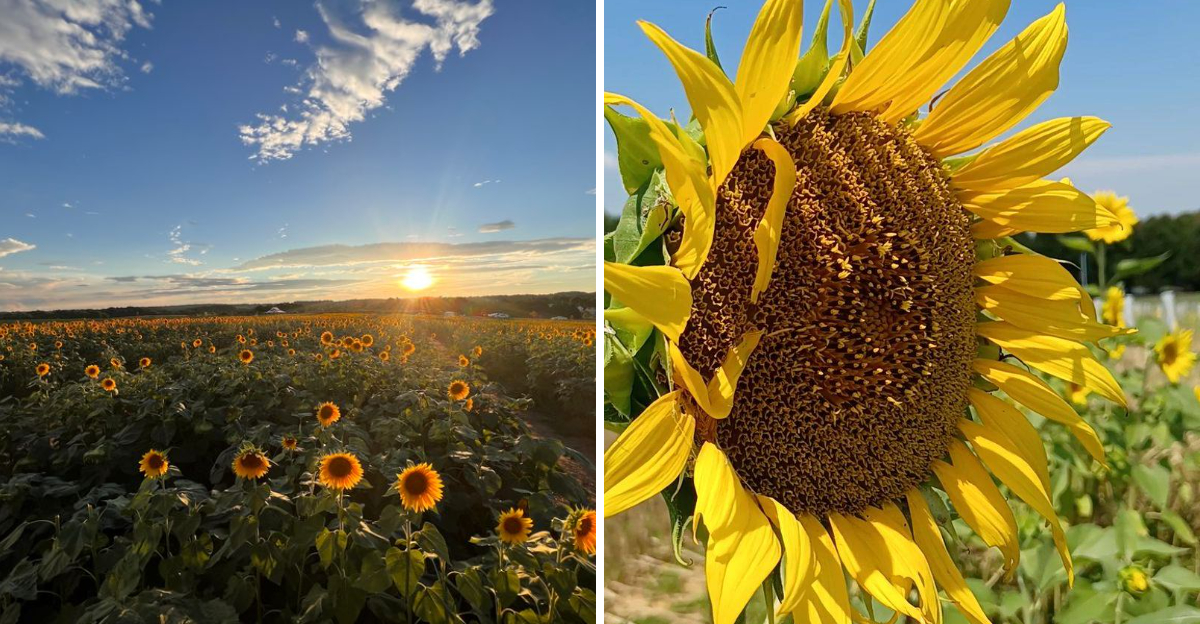
Late summer gets considerably harder to complain about when an entire field decides to turn bright yellow at once.
This seasonal Maryland attraction has become known for rows of sunflowers visitors can wander through and cut, turning an ordinary farm stop into equal parts flower hunt, photo opportunity, and excuse to bring home a bouquet you definitely did not grow yourself.
Recent 2026 guides continue to list the operation among the region’s sunflower destinations, although individual field openings depend on bloom timing and should be checked before heading out.
That little bit of unpredictability is part of dealing with actual flowers instead of a scheduled attraction.
For anyone trying to squeeze one more cheerful Maryland outing out of summer, acres of sunflowers make a pretty convincing finale.
Ten To Fourteen Acres Of Gold In Howard County
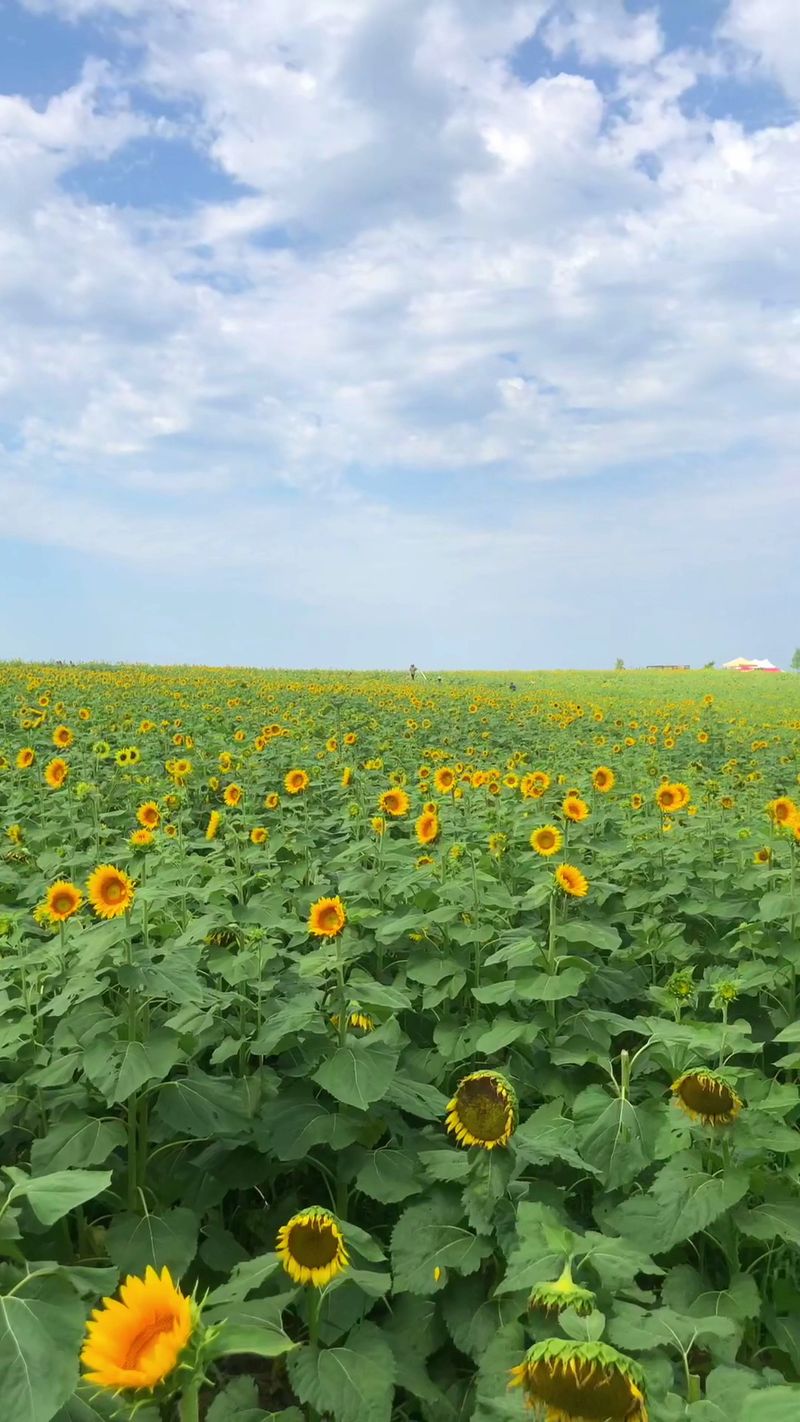
Nothing quite prepares a first-time visitor for the sheer scale of the field. Somewhere between ten and fourteen acres of sunflowers stretch out here, making it the largest sunflower planting in Howard County.
The rows run long and straight, cut with mowed walking lanes so guests can wander deep into the middle without trampling anything. Once a person is thirty steps in, the road disappears and the world narrows to green stalks and gold petals.
Heights vary depending on the week and the weather, but many blooms rise well above eye level. Shorter visitors sometimes need a lift to see over the tops, which makes for some genuinely funny family photos.
What surprised me most was the sound. Wind moving through that many broad leaves creates a soft papery rustle, and underneath it there is a constant low hum of bees working the flower heads.
Sunflowers famously track the sun when young, and mature heads generally settle facing east. That means the entire field tends to look uniform from one direction and slightly shaggy from the other, so it pays to walk the perimeter before choosing a spot.
Give yourself more time than expected. A quick stop turns into an hour easily, especially once curiosity kicks in about what is around the next bend of the path.
Comfortable shoes help, since the ground between rows can be uneven, dusty, or soft after rain. The scale is the whole point, and it deserves to be walked.
Timing The Bloom Before It Slips Away
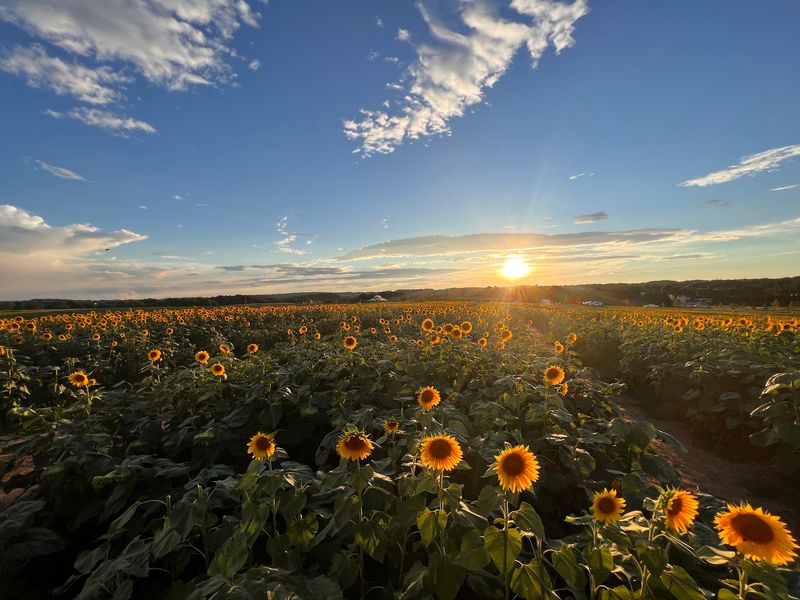
Bloom windows here are short, and that is honestly part of the charm. The Woodbine field opened daily on June 21 in 2026 and stayed golden until around July 11, with peak color landing in late June.
Sunflowers at this location typically hold their bloom for roughly two to three weeks. Heat, storms, and humidity can shorten or stretch that stretch by several days.
Planning ahead saves disappointment. Checking the farm’s own updates before driving out is the smartest move, because a field that looked perfect one weekend can start drooping by the next.
Late June tends to be the sweet spot for the Woodbine rows, when heads are wide open and petals still hold that clean, unbruised yellow. Early July still delivers, though some blooms begin bowing forward.
Here is the good news for anyone who misses the window. Sunflowers of Lisbon plants additional fields in Glenwood and Maple Lawn that open later in the summer, pushing bloom opportunities into early and mid August.
That staggered planting means the season effectively runs longer than any single field suggests. Locals often visit twice, catching Woodbine first and one of the later fields afterward.
Mid-July usually marks the close of the primary Woodbine location for the summer. Marking a rough window on the calendar in spring is the easiest way to avoid arriving to a field of seed heads instead of petals.
Flexibility beats a fixed date every single time.
Cutting A Bouquet To Carry Home
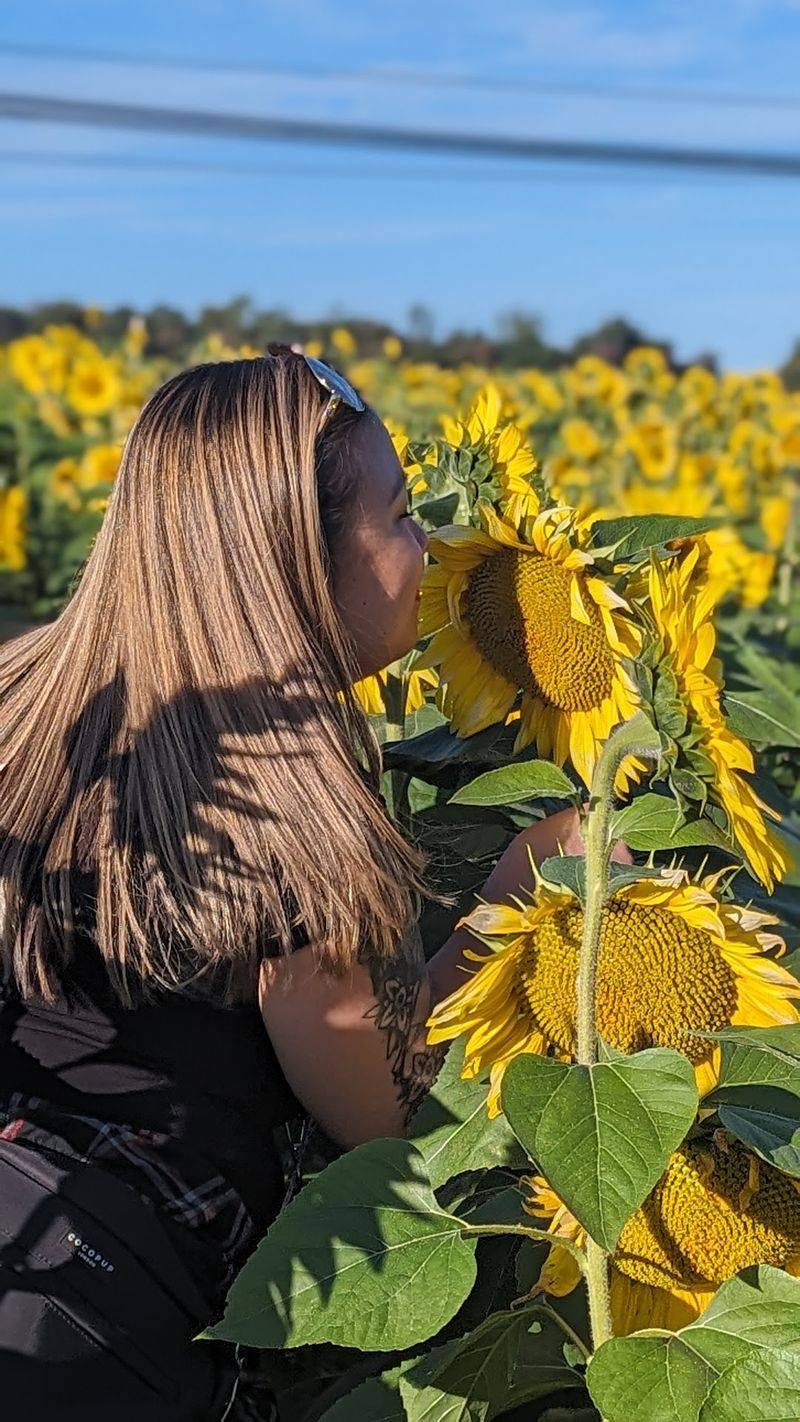
Leaving with an armful of flowers turns the visit into something that lasts past the drive home. Guests are welcome to cut their own sunflowers straight from the field and build a bouquet exactly the way they want it.
Choosing takes longer than expected. Some heads are enormous and heavy, others sit smaller and tidier on slim stems, and each row seems to hide one that looks slightly better than the last.
A practical tip: cut stems longer than seems necessary. Trimming down at home is easy, but adding length is impossible.
Sunflower stalks are thick and fibrous, so a sturdy pair of clippers or garden shears makes the job far cleaner than trying to snap them by hand. Gloves are not a bad idea either, since the leaves can feel scratchy against bare arms.
Bringing a bucket with a few inches of water in the car keeps the blooms perky on the ride back. Maryland summer heat inside a parked vehicle is unforgiving to fresh-cut flowers.
Once home, recut the stems at an angle and change the water every couple of days. A well-treated sunflower bouquet can hold up beautifully for a week or more on a kitchen table.
Watching kids pick their own single stem is one of the sweeter parts of the whole experience. They carry it around the rest of the afternoon like a trophy, petals flopping with every step.
Tractor Swings, Slides, And Corn Pits For Younger Visitors
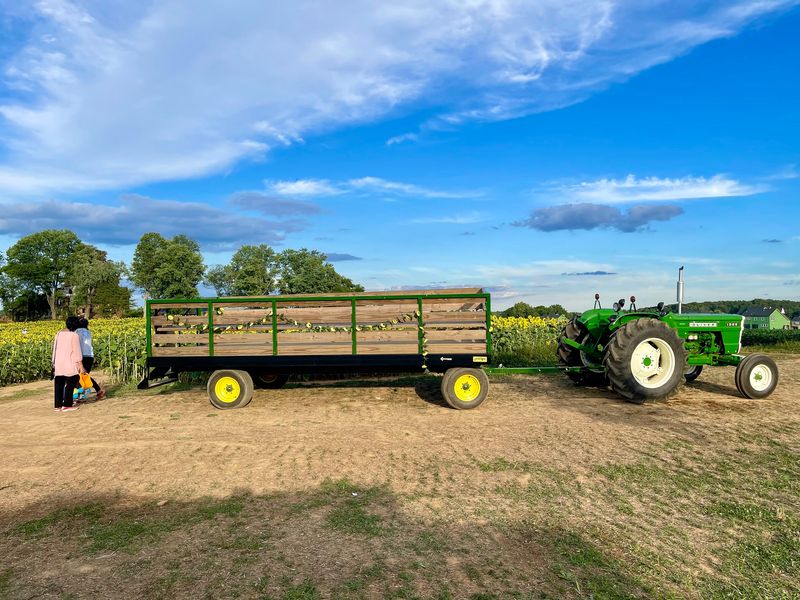
Parents, take note, because the flowers are only half the draw for anyone under ten. A playground on site features a tractor swing set and slides, giving kids somewhere to burn off energy after the walking is done.
Corn pits are the real magnet, though. Dried kernels behave a bit like sand, only cooler to the touch and far more entertaining to scoop, pour, and bury toys in.
Plan on finding corn in shoes, pockets, and car seats for days afterward. It is a small price for twenty minutes of uninterrupted quiet.
Because admission covers the whole day, families can bounce between the field and the play area without watching a clock. Wander the rows, come back for a slide session, then head out again for photos when the light softens.
The playground sits close enough to the field that supervising adults can keep an eye on things while still enjoying the view. That balance is rarer than it should be at seasonal farm attractions.
Younger children sometimes find the tall stalks a little overwhelming at first, and having a familiar swing set nearby helps ease them into it. Some warm up quickly and end up leading the way down the rows.
Bring a change of clothes if the kids are small. Between corn dust, farm dirt, and general enthusiasm, nobody comes back looking exactly the same as when they arrived.
Weekend Hayrides And Food Truck Afternoons
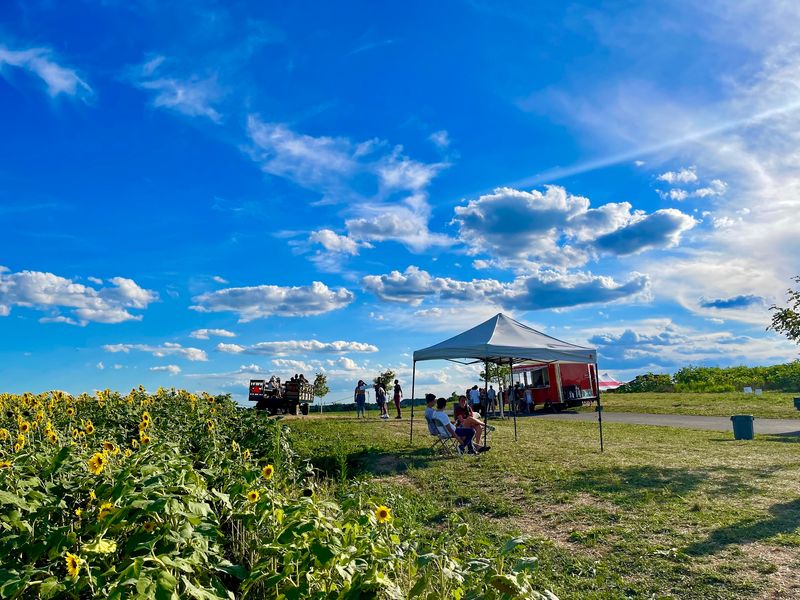
Saturdays and Sundays bring a different energy to the property. Hayrides run on weekends, and the slow rumble of a tractor pulling a wagon full of families past the blooms is a genuinely lovely way to see the field from a new angle.
Riding rather than walking gives a better sense of just how far the rows extend. It also gives tired legs a break, which matters after an hour of picking flowers in July heat.
Food trucks and ice cream vendors often set up on weekends too. Cold treats after standing in an open field under Maryland sun rank among life’s simpler pleasures.
Offerings vary from week to week, so treating the trucks as a bonus rather than a guaranteed lunch plan is wise. Anyone with a tight schedule or picky eaters should pack a backup.
Weekends naturally draw more people, and the parking area fills faster. Arriving earlier in the morning helps sidestep the busiest stretch.
That said, the crowd adds something. Laughter drifting across the rows, kids racing between stalks, and cameras clicking everywhere create a cheerful, communal feeling that a quiet weekday visit does not quite replicate.
For visitors who prefer calm over buzz, weekdays deliver noticeably less foot traffic and easier photo angles. Both versions of the farm are worth experiencing, and choosing between them really comes down to mood.
Weekend visits simply pack more into a single afternoon.
Picnic Spots Among The Rows
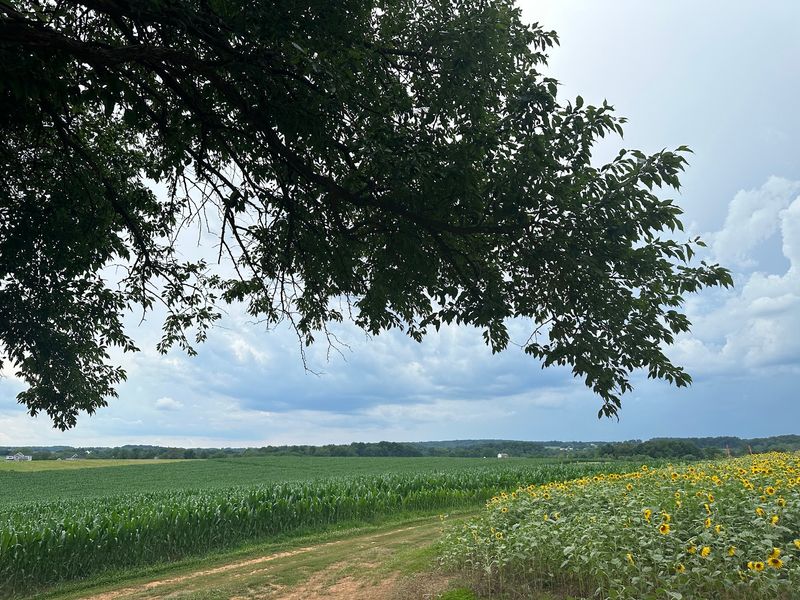
One of the most underrated things about this farm is permission to bring your own food. Guests can pack a picnic and settle in among the scenery instead of rushing off to find lunch somewhere else.
A blanket, a cooler, and a shady edge of the field turn a quick stop into a proper afternoon. All-day admission makes lingering feel natural rather than rushed.
Shade is limited out in the open rows, so packing an umbrella or claiming a spot near the treeline helps. Midday sun in July does not negotiate.
Foods that hold up in heat work best. Sandwiches, cut fruit, crackers, and plenty of cold water beat anything that melts or wilts within twenty minutes.
Bringing a small bag for trash is both courteous and practical. Working farms depend on visitors leaving the grounds as clean as they found them, and there is no reason to make that harder.
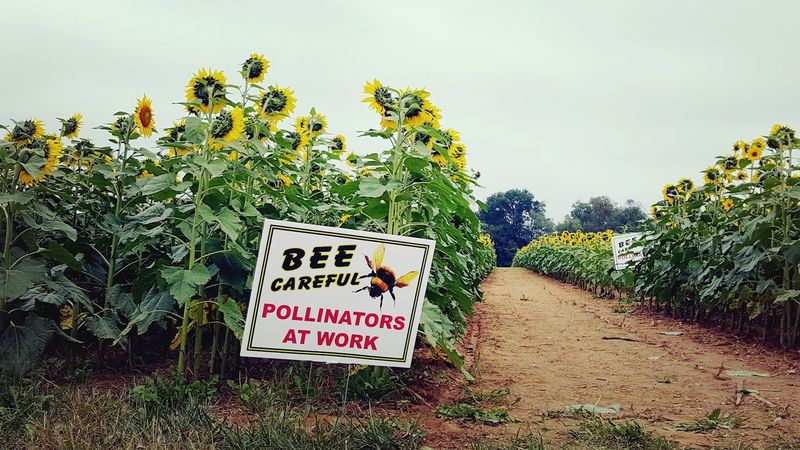
Eating outdoors here comes with company. Bees are busy in the blooms nearby, so keeping sweet drinks covered saves a bit of frantic waving later.
What sticks with me about picnicking at a place like this is how unhurried it feels. No reservations, no waiting, just a patch of grass and a wall of yellow in every direction.
Late afternoon is my favorite window for it, when the heat starts to ease and the light turns warm across the field.
Bringing The Dog Along For The Walk

Dog owners, good news. Leashed dogs are welcome in the fields, and plenty of them show up looking thrilled about it.
The farm has even hosted special dog nights in past seasons, which speaks to how seriously they take four-legged guests. Watching a small terrier disappear entirely between two rows never gets old.
Mowed paths make walking manageable for most dogs, though the ground can be warm on paws during peak afternoon hours. Morning or evening visits are kinder in that respect.
Water matters more than people expect. Bringing a collapsible bowl and a full bottle prevents a happy outing from turning into an overheated one.
Keeping the leash short in the rows helps avoid tangled stalks and startled bees. Sunflowers are sturdy but not indestructible, and pollinators are working hard out there.
Cleaning up after pets is basic courtesy on a working farm. Pack bags, use them, and carry everything out.
Photos with dogs framed by sunflowers are, predictably, excellent. Getting a dog to look at the camera instead of the nearest interesting smell is a separate challenge entirely.
Some dogs love the whole experience and trot ahead like tour guides. Others get overwhelmed by the height and the buzzing and would rather stay near the parking area.
Reading your own dog’s comfort level makes the difference between a great memory and a stressful one. When it works, it really works.
Golden Hour And The Art Of Better Photos
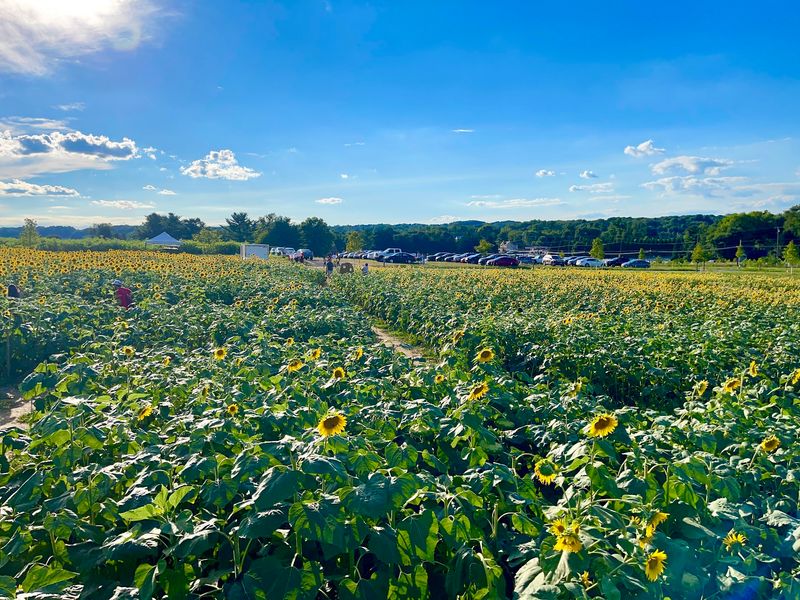
Cameras come out within about four seconds of arrival, and honestly, the field earns it. Early morning and late afternoon deliver the softest light, with long shadows and that warm glow that makes petals look almost lit from inside.
Harsh midday sun flattens everything and creates squinting faces. Shooting during the first or last couple of hours of the day solves both problems at once.
Backlighting works beautifully here. Positioning the sun behind the blooms makes the petals glow translucent, and the effect is far more striking than a straight-on shot.
Since mature sunflower heads generally face east, morning visits put the flowers looking toward the camera when shooting from that direction. Afternoons mean photographing the backs of heads unless the angle is planned carefully.
Weekday visits offer fewer people wandering into frames. Weekends are lively but require patience for a clean shot.
Wearing colors that contrast with yellow helps subjects stand out. Blues, whites, and deep greens photograph especially well against the field.
Getting low changes everything. Crouching down and shooting slightly upward makes the stalks tower and turns an ordinary snapshot into something with real depth.
A phone camera handles this scene fine, so there is no need to haul professional gear. The light does most of the work.
Bringing a small bag for a spare battery, water, and lens cloth keeps hands free while navigating the rows. Dust travels here.
Getting There, Parking, And What To Pack
Location works in this farm’s favor. Woodbine sits roughly thirty minutes from Baltimore and about forty-five from Washington D.C. and Frederick, which makes it a realistic half-day trip from three different directions.
Parking is free, which removes one small headache from the day. Arriving early on weekends secures a closer spot and a cooler walk.
During the season, gates stay open daily from 9:00 a.m. to 8:30 p.m., leaving plenty of room to choose a time that suits the schedule. Admission covers the full day.
Porta potties with hand washing stations are available on site. Basic, but genuinely helpful when traveling with kids.
Packing smart makes the difference. Water tops the list, followed by sunscreen, a hat, and insect repellent for the buzzier corners of the field.
Closed-toe shoes or sneakers beat sandals every time. Farm ground gets dusty in dry stretches and muddy after rain, and nobody enjoys picking dirt out of flip-flops.
Expect bees, and expect a lot of them. They are pollinators doing exactly what they should be doing, and calm movement keeps everyone comfortable.
A small bag for personal items and trash rounds out the kit. Clippers and a water bucket belong in the car if bouquets are the plan.
Woodbine’s fields close for summer after mid-July, so aim for late June through early July.
Address: 15875 Frederick Rd, Woodbine, MD 21797, United States
