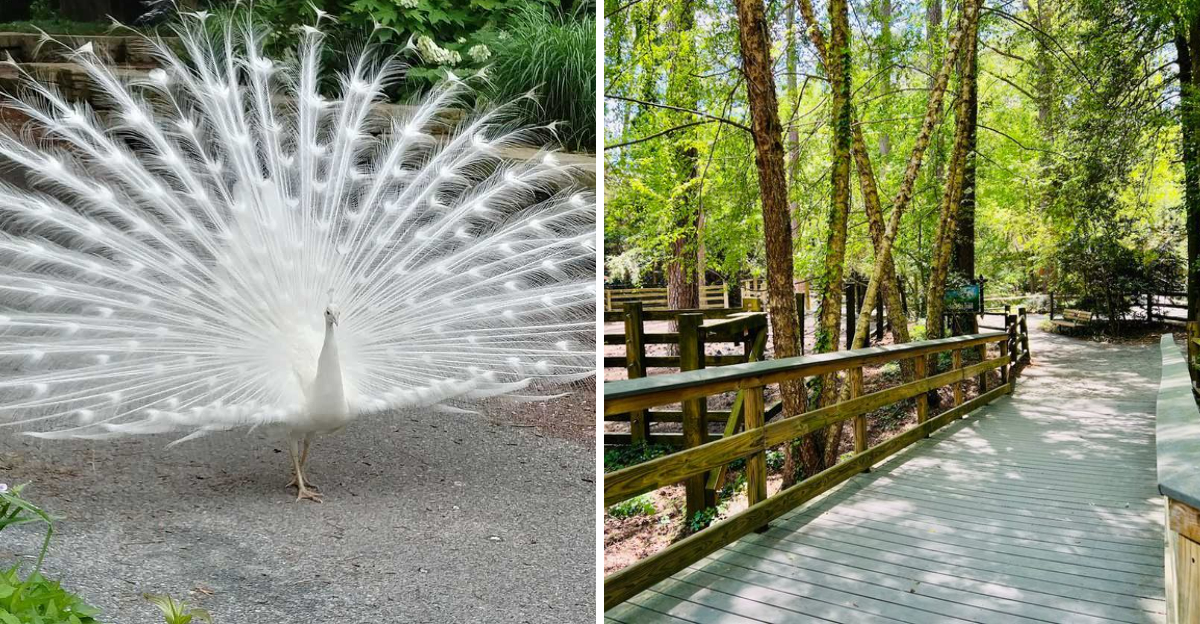
Family outings become considerably more attractive when the admission total for everyone is exactly zero dollars.
This Maryland zoo currently offers both free admission and free parking, with more than 100 animals living across roughly 12 acres of naturalistic habitats representing North America, South America, and Australia.
Paved paths and ramped boardwalks make the grounds easy to explore, while free drop-in educational programs can occasionally add animal encounters, hands-on displays, and other surprises to the visit.
The zoo relies heavily on donations to keep that free-admission model going, but there is no required ticket price just to walk through the gates.
For Maryland families tired of calculating attraction prices per child, this is the wonderfully rare day trip where seeing wildlife does not require putting the household budget on an endangered-species list.
Pathways That Wander Instead of Marching in Straight Lines
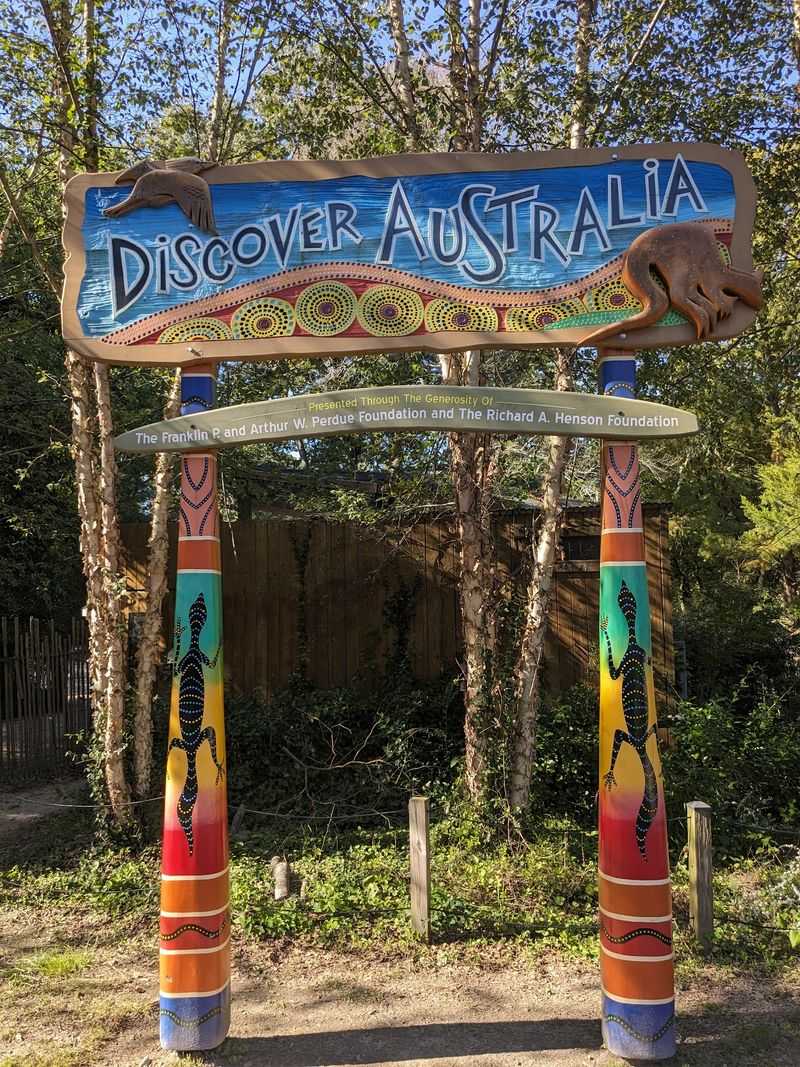
My favorite thing about this place has nothing to do with the animals. It is the way the paths curve.
Instead of a grid of concrete lanes, the walkways loop and bend through thick greenery, so the next exhibit is usually hidden behind a wall of leaves. That means the whole visit feels like discovery rather than a route you tick off.
Twelve acres sounds small on paper, yet the layout stretches the experience considerably.
Everything is paved and wide, with ramped boardwalks over the low areas near the water. Strollers roll easily.
Wheelchairs and walkers have no problem, which matters more than most people realize until they need it.
Shade is generous here, thanks to mature trees that arch over much of the route. On a warm July afternoon that shade turns a potentially sweaty walk into something genuinely pleasant.
Bring water anyway, since the summer humidity on the Eastern Shore does not negotiate.
The enclosures themselves lean naturalistic, built to echo the landscapes these species come from rather than to look tidy. Grasses grow tall.
Logs stay where they fell.
Plan on roughly an hour to move through at a relaxed pace, longer if young kids stop at every railing. Many visitors circle back a second time, catching animals that were napping on the first pass.
That second loop often turns out to be the better one, especially near feeding times when the whole park seems to wake up at once.
Andean Bears and a Legacy That Runs Deep
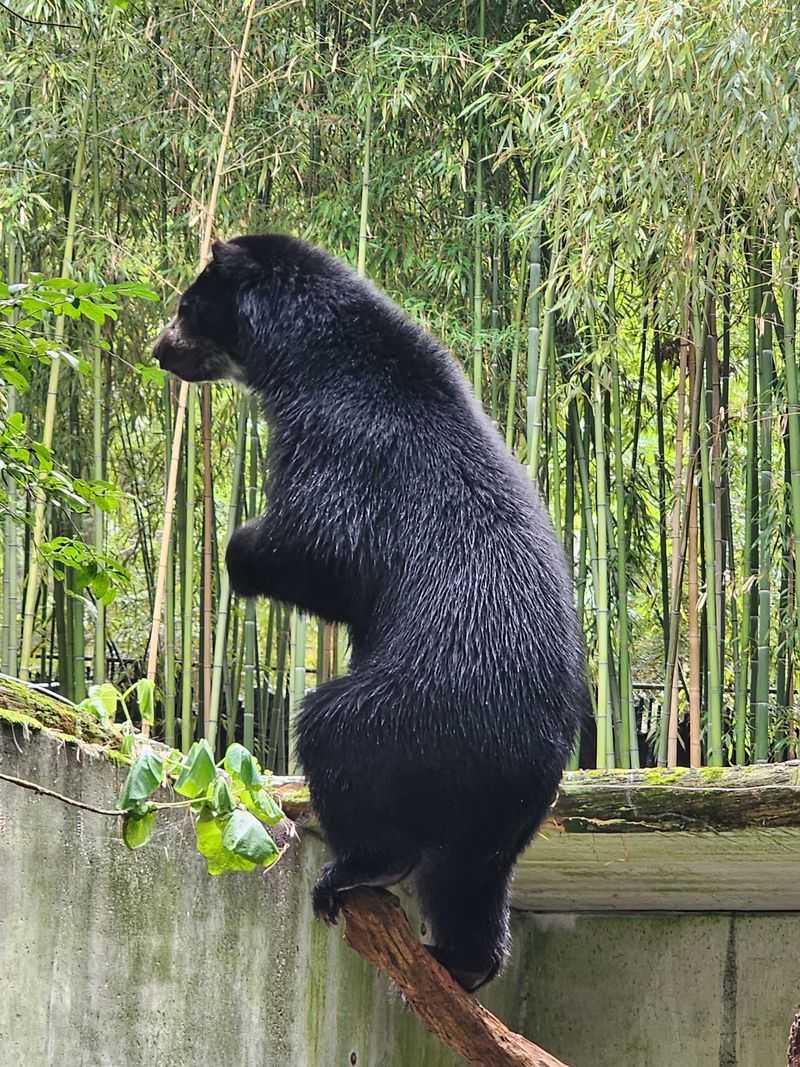
South America has exactly one native bear species, and it lives here. The Andean bear, sometimes called the spectacled bear for the pale markings ringing its eyes, is one of the headliners at this zoo.
Salisbury has a genuinely long history with them. A bear named Poopsie became the oldest Andean bear in captivity back in 2011, a record that says a lot about the veterinary care and daily attention happening behind the scenes at a facility this size.
Watching them is a patience game. Andean bears spend a good deal of time lounging, climbing, and rooting around, and the habitat gives them room to disappear into the greenery when they feel like it.
Early mornings usually offer better odds.
What struck me was how quiet the crowd got at this exhibit. People lean on the railing and just watch, murmuring instead of shouting.
In the wild these bears face shrinking cloud forest habitat across the Andes, which makes seeing one up close feel less like entertainment and more like an introduction. Signage nearby explains the pressures they face without lecturing anybody.
Stop by twice if the schedule allows. Bears that seemed permanently asleep during a first visit have a habit of pacing, climbing, or investigating something new an hour later.
Even a brief look at those distinctive cream markings is worth the wait, and it is the kind of sighting kids talk about on the drive home.
Sloths, Ocelots, Spider Monkeys and Other Slow Motion Stars
Nobody rushes past the sloths. That is just a fact of life at this zoo.
The two-toed sloths move with a deliberateness that borders on comedy, shifting one arm at a time while a small crowd gathers to see whether anything happens next. Something usually does, eventually.
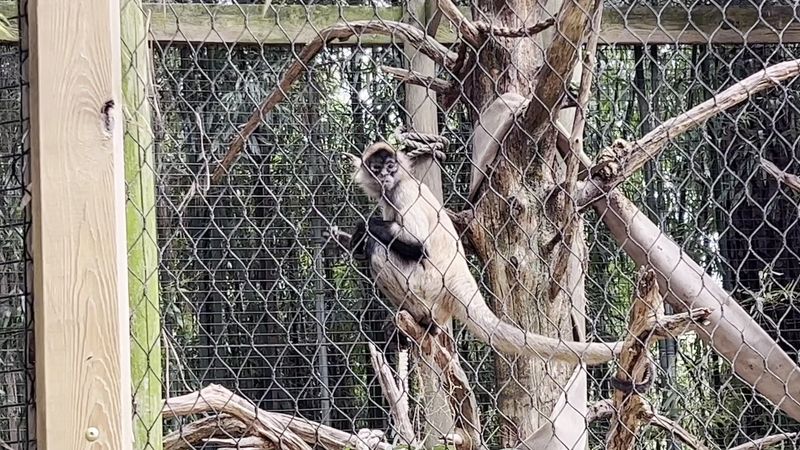
A few steps away, the spider monkeys provide the opposite energy entirely, swinging and climbing with an agility that makes the sloth exhibit look like a still photograph. Watching both within a couple of minutes is a lesson in how differently animals solve the same problem of getting around.
Then there is the ocelot, a small spotted wild cat that seems to specialize in not being seen. Spotting one curled in the shade felt like a genuine reward, and the enclosure gives it plenty of hiding spots by design.
American alligators hold court in their own pool, motionless in that unnerving reptile way until they are suddenly not. Kids press their faces to the viewing area for that exact reason.
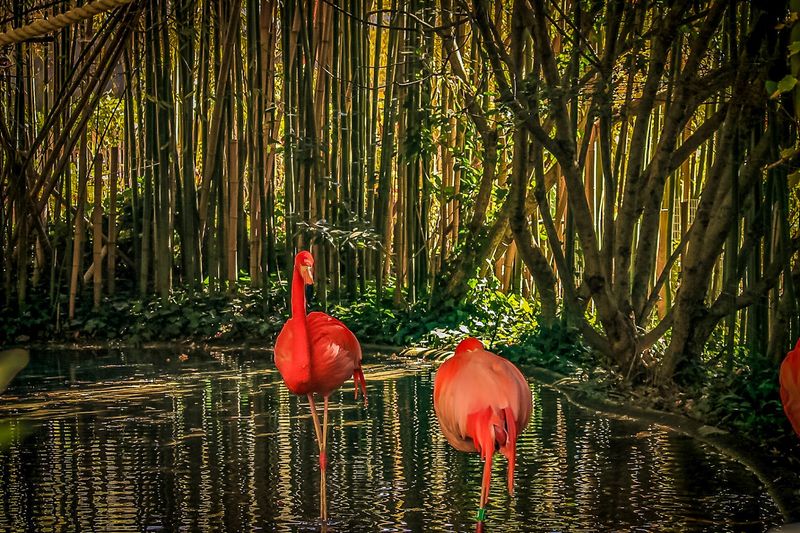
The flamingos are the visual anchor of the whole zoo, an unmissable splash of pink that photographs beautifully on an overcast day. Their chatter carries across the grounds.
Australia gets a mention too, thanks to the wallabies bouncing around their space. Between the Americas and that Australian corner, the collection covers a surprising amount of ground for a twelve acre park, and every stop offers something different to watch.
Bison, Red Wolves and the Weight of Conservation Work
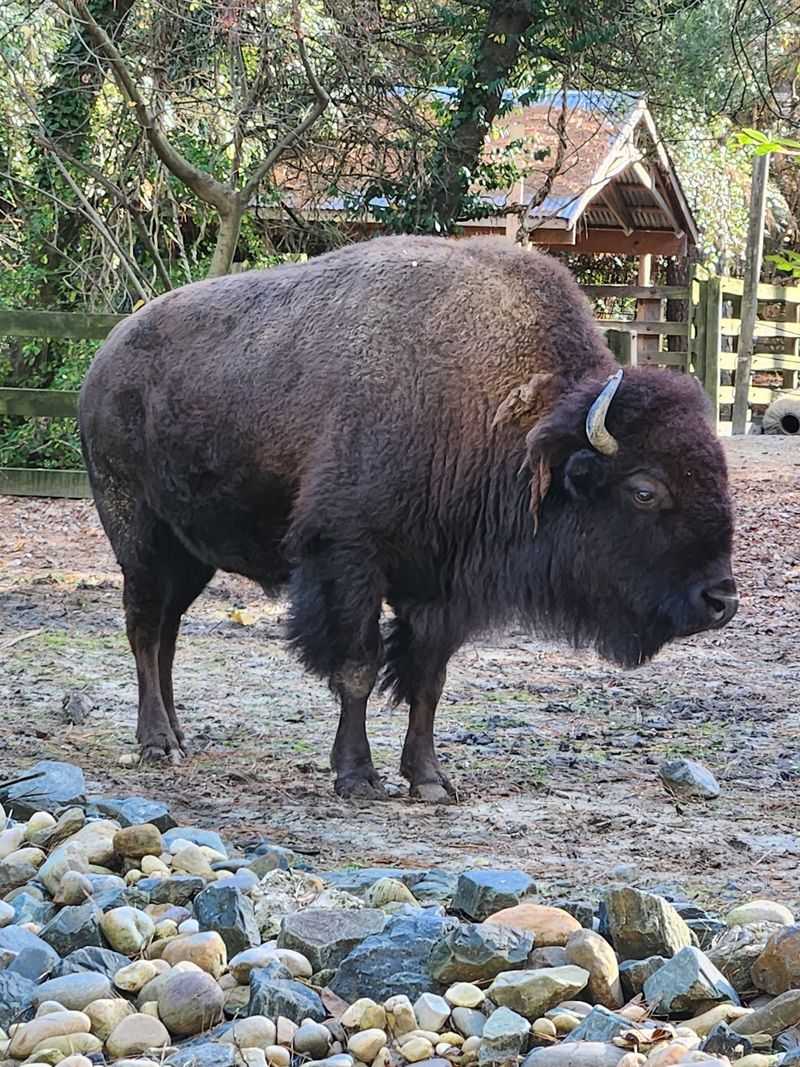
Bison stop conversations. There is something about the sheer bulk of them, standing in a grassy paddock while shifting their weight from one side to the other, that makes people go quiet.
They represent North America at its most iconic, and seeing one at close range on the Eastern Shore of Maryland feels slightly out of place in the best possible way. Photographs never quite capture the scale.
The red wolves nearby carry a heavier story. Critically endangered in the wild, they are part of a Species Survival Plan, a coordinated breeding program that spreads across accredited institutions to keep the genetic line viable.
That means the animals here are not simply on display. They are participants in an active effort to keep a species from vanishing.
Salisbury has expanded that role in recent years, welcoming a herd of endangered Chacoan peccaries for the first time and contributing to their long term survival. Small zoos taking on species like these matters more than their acreage suggests.
Conservation messaging is woven into the signage throughout, though never in a heavy handed way. The zoo supports broader efforts as well, including initiatives aimed at saving the critically endangered vaquita porpoise.
Standing at the red wolf enclosure and reading how few remain in the wild changed the tone of my visit. It stopped being a pleasant stroll and became something closer to a reminder, which is probably exactly the point the staff hope visitors take home with them.
The Delmarva Trail and the Wildlife Next Door
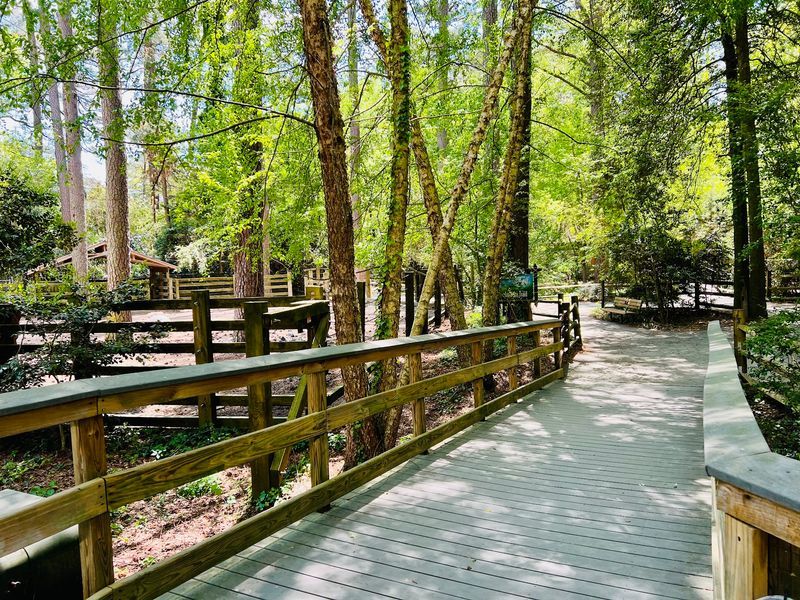
Somewhere along the Delmarva Trail the whole tone of the visit shifted for me.
These are not exotic imports. These are neighbors.
The trail focuses entirely on species native to the Delmarva Peninsula and the surrounding region, which means beavers, white-tailed deer, and wild turkeys instead of tropical rarities. Anyone who has driven the back roads of Wicomico County has probably glimpsed a deer at dusk.
Seeing them stationary and up close is different. A beaver busy with something in the water held my attention longer than expected, all that quiet industriousness on display.
The enclosures along the trail lean into the local landscape, with plantings and water features that mirror what exists just beyond the zoo fence. It creates a strange doubling effect, since the actual Wicomico River branch runs right alongside the park.
Wild turkeys, for the record, are far more impressive in person than their reputation suggests. The iridescence on their feathers catches light in ways that surprise most people.
What this trail does well is close the distance between conservation as an abstract idea and conservation as something happening in your own county. Protecting habitat sounds distant until it means the woods down the road.
Families with young children tend to linger here, partly because the animals are easier to spot than the shy tropical species. It also gives parents an easy conversation starter about what lives in the backyard, which is arguably the most useful thing a zoo can hand anybody.
Ben’s Red Swings, Where the Kids Take Over
Kids hit a wall at zoos. Every parent knows the moment when the animals stop being interesting and legs start dragging.
Ben’s Red Swings solves that problem entirely. Hidden near the west entrance, this playground area comes loaded with swings, a jungle gym, slides, tunnels, and sandboxes, built in memory of Ben Layton.
The location is smart. Placing it at an entrance means families can burn off energy before starting the animal loop, or use it as a reward at the end when patience runs thin.
Shade trees cover much of the area, which turns it into a reasonable place to sit even on a hot afternoon. Benches nearby let adults catch a breath while the kids sprint between structures.
Sand in shoes is basically guaranteed, so factor that into whatever plans follow the zoo. A change of socks in the car is not a bad idea.
What I noticed is that the playground never feels like an afterthought bolted onto a zoo. It fits the park atmosphere, sitting comfortably within the larger green space of Salisbury City Park that surrounds the whole zoo.
Families often turn a zoo visit into a half day here by combining the two, walking the exhibits and then letting kids loose on the equipment. Since nothing costs a thing, that flexibility is worth a lot for anyone traveling with restless small children who need to move every twenty minutes.
Pollinator Gardens Buzzing Between the Exhibits
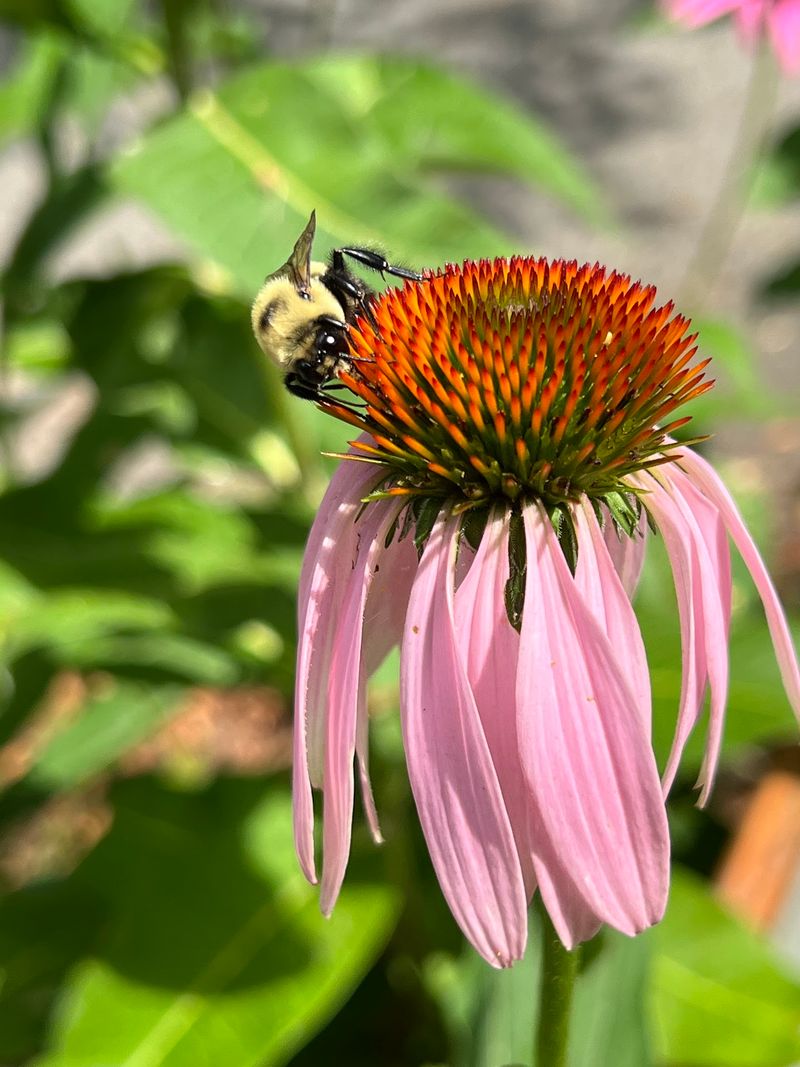
Some of the most active wildlife at this zoo lives in flower beds. Nobody puts that on a brochure, but it is true.
Pollinator gardens are planted throughout the property, filled with native flowering species that supply nectar, pollen, and shelter for bees, butterflies, and hummingbirds. Late spring through early fall, these patches practically hum.
Monarchs drift between blooms. Bumblebees work methodically from flower to flower, completely indifferent to the people standing three feet away.
The gardens serve a real purpose beyond looking pretty, since pollinators face steep declines and every patch of native habitat helps. Signage explains what each plant does and why it matters, which makes it easy to copy a few ideas at home.
Honestly, these beds became my unexpected favorite part of the walk. Watching a hummingbird hover and dart is a small thrill that costs nothing and happens on its own schedule.
The zoo has also built its Animal Health Facility to LEED standards, a detail that fits the same philosophy of doing things in an environmentally responsible way. Small choices like that add up across an institution.
Anyone visiting with a camera should slow down here. Butterflies are more cooperative subjects than sloths, and the color combinations of native blooms against green foliage make for good photographs.
Gardeners in particular tend to linger, jotting down plant names for their own yards, which might be the quietest form of conservation education happening anywhere on the grounds.
Learning That Sneaks Up on You
Education here does not feel like homework. That is probably why it works.
The zoo runs an Education Center that serves as the hub for programming, digging deeper into wildlife topics than a sign on a railing ever could. Formal programs and casual encounters alike carry a conservation message about how human choices ripple outward.
Community events fill out the calendar throughout the year. The annual Earth Day celebration brings educational booths, hands-on activities for children, and presentations from local environmental groups.
Events like that transform the grounds. What is normally a peaceful walk becomes something livelier, with tables and demonstrations hidden along the pathways.
Checking the zoo calendar before planning a trip is worth the two minutes it takes. Timing a visit around an event adds a whole layer without changing the cost of the day.
Keeper talks and informal chats are often where the best information comes from, since staff tend to share details that never make it onto interpretive panels. Asking a question usually gets a genuinely enthusiastic answer.
The stated mission centers on inspiring appreciation for wildlife and encouraging conservation of the natural world, and that shows up in small consistent ways rather than grand gestures.
Kids absorb more than adults expect. Mine would not be the first to come home repeating facts about red wolves or peccaries, and that ripple effect is exactly the sort of outcome a place like this is aiming for over the long run.
Practical Details That Make the Whole Thing Easy
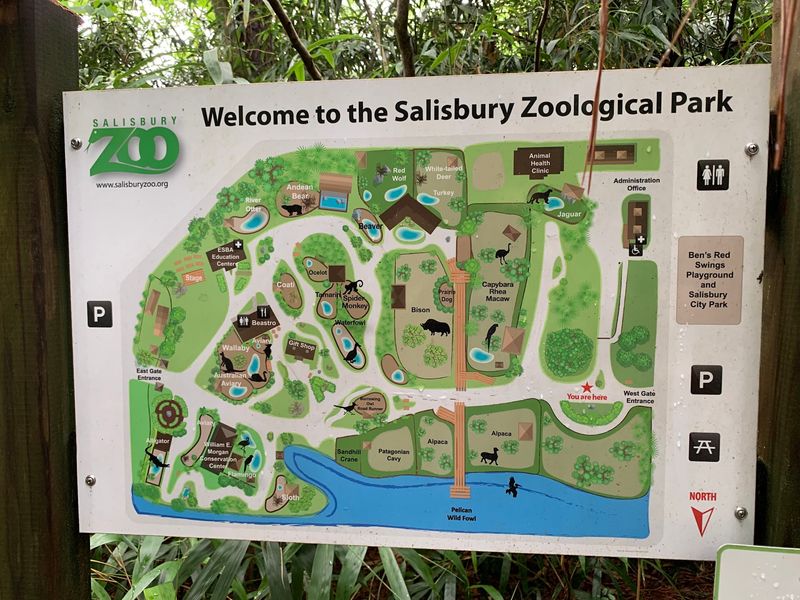
Logistics can ruin a good outing. Here they barely register, which is the highest compliment available.
Gates open daily from 9 a.m. to 4:30 p.m., closing only for Thanksgiving and Christmas. Parking is free and sits right beside the entrance, so nobody circles a lot hunting for a space.
Restrooms include changing tables and are built to ADA standards. Paved paths and ramped boardwalks make the entire park accessible from end to end.
A small gift shop handles souvenirs, and purchases there help support operations at a place that charges nothing at the gate. Donation boxes appear along the route for anyone wanting to contribute.
Weekday mornings tend to be quietest, with animals more active before the midday heat settles in. Weekends bring families, which changes the atmosphere without making it crowded.
Because the zoo sits inside Salisbury City Park along a branch of the Wicomico River, the surrounding green space extends the visit naturally. Bring a picnic and the afternoon stretches out on its own.
Comfortable shoes matter more than anything else packed. So does water in summer, since Eastern Shore humidity does not mess around.
Free admission, free parking, over a hundred animals, and real conservation work happening behind it all. For anyone driving toward Ocean City or exploring the Delmarva Peninsula, this stop earns a spot on the itinerary without touching the budget.
Address: 755 S Park Dr, Salisbury, MD 21804.
