I stopped at one of the old brick walls and found myself wondering how many hands had touched the clay before it became part of a building. Then came the part that made the whole place hit differently: students made those bricks themselves, including people who had been born into slavery.
What started as a tiny one-room shanty school grew into a nationally recognized institution in just one generation. The students were not simply learning inside these buildings.
They were helping create them, brick by brick. Today, you can walk past old dormitories, visit a museum, see a hilltop home, and wander through quiet grounds where generations of students left their mark.
The entire Alabama campus is also a National Historic Site, making it the only college in the country with that distinction. There are plenty of places where history sits behind glass.
Here, you can actually walk across it, with the bricks still standing to tell the story.
A School Born From A Handshake And A Promise
Back in 1881, an educational institution in Tuskegee started with something surprisingly simple. A deal.
Lewis Adams, a former enslaved man who worked as a tinsmith, shoemaker, and harness maker, had never sat in a formal classroom. He still understood exactly what his community needed.
Adams gathered African American voter support for a local white politician, W. F.
Foster, on the condition that a school for Black students be created in Tuskegee.
Foster won his Alabama State Senate seat and kept his word. Legislation passed, and a small appropriation of two thousand dollars was set aside for teachers’ salaries.
There was no land. There were no buildings.
The doors opened on July 4, 1881, inside a one-room shanty near Butler Chapel AME Zion Church. A twenty-five-year-old teacher named Booker T.
Washington arrived from Hampton Institute in Virginia to run things, and within months he had secured one hundred acres of an abandoned plantation.
That land became the campus visitors walk today. Reading the founding story on site, with the actual grounds spread out in every direction, hits differently than reading it in a textbook.
Rangers and exhibits explain the timeline clearly, so even younger visitors follow along. Start here before exploring anything else, because every later chapter of the story grows out of this one modest agreement between neighbors.
Bricks Made By The Very Students Who Studied Here
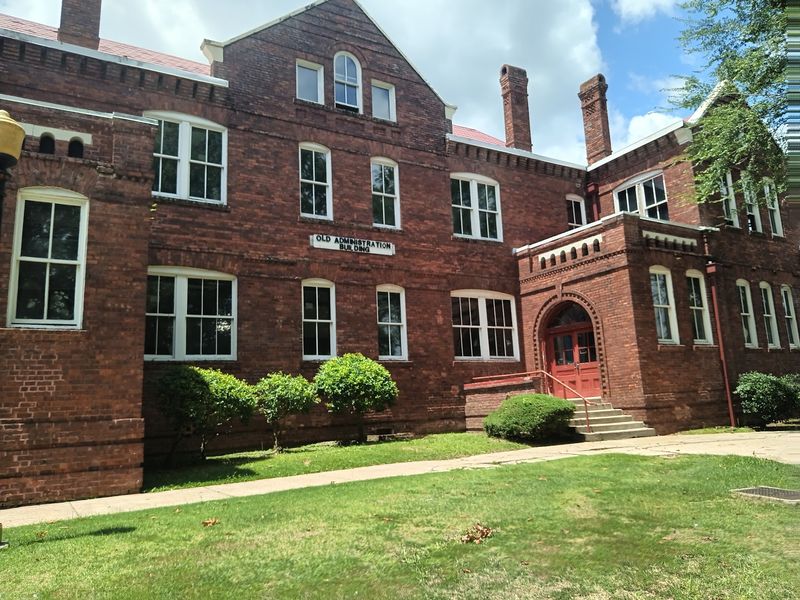
Run a hand along one of the older walls and the bricks feel slightly irregular. There is a reason for that.
Students fired those bricks themselves, using clay dug from the surrounding Alabama land. Washington built his entire teaching philosophy around the idea that learning a trade and learning from books belonged side by side.
Carpentry, bricklaying, printing, and farming all counted as coursework.
The results were not practice projects tossed aside at the end of a semester. They were dormitories, classrooms, and workshops that are still standing more than a century later.
Robert Robinson Taylor shaped much of what visitors see. He became the first African American graduate of the Massachusetts Institute of Technology, and Washington recruited him in 1892 to serve as campus architect.
Taylor designed over twenty of the early buildings.
Students then constructed what he drew. That partnership between a trained architect and a workforce of young learners produced a campus with real architectural character, not just utility.
Look for the variation in brick color across different structures. Different clay batches and different firing days left their marks.
Guides often point out these details, and once noticed, they are impossible to unsee. Few campuses anywhere can claim their students literally manufactured the walls around them, which makes a slow walk through the district worth the extra time.
Inside The George Washington Carver Museum
Peanut butter jokes aside, the man behind these exhibits was doing serious science.
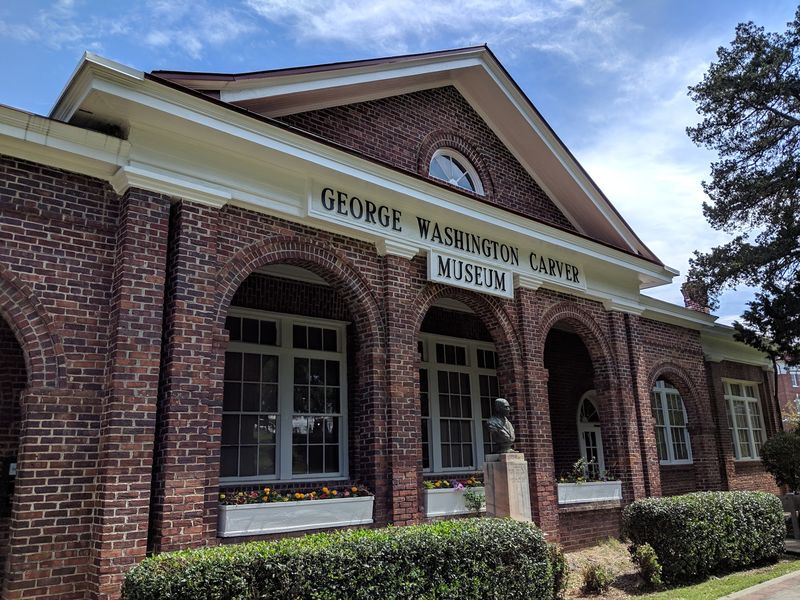
The George Washington Carver Museum sits inside a building that started life as the school laundry. It was dedicated as a museum in 1941, with support from industrialist Henry Ford, who admired Carver’s work enormously.
Today it doubles as the visitor center for the national historic site.
Carver joined the Tuskegee faculty in 1896 as an agricultural chemist. Southern soil had been drained by decades of cotton, and he pushed farmers toward crop rotation with nitrogen-rich plants like peanuts and sweet potatoes.
Better cotton followed. So did a brand new problem, since farmers suddenly had piles of peanuts and no market for them, and Carver spent years inventing uses to solve exactly that.
Display cases hold plant specimens, minerals, bird collections, pottery, and pigments he created from Alabama clay. Fibers from local plants show up woven into everyday objects.
Two introductory films play here, one on Carver and one on Washington, and watching both first makes the rest of the campus make more sense. Plan roughly an hour inside.
Note that campus access requires stopping at the security building for a visitor pass before driving in, so build a few extra minutes into the schedule. Rangers on duty are generous with directions and background.
The Oaks, Where Booker T. Washington Actually Lived
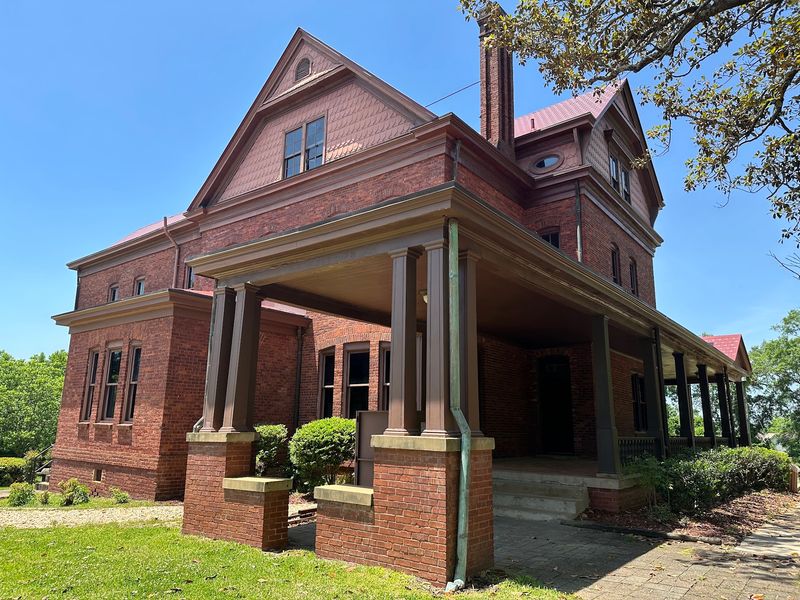
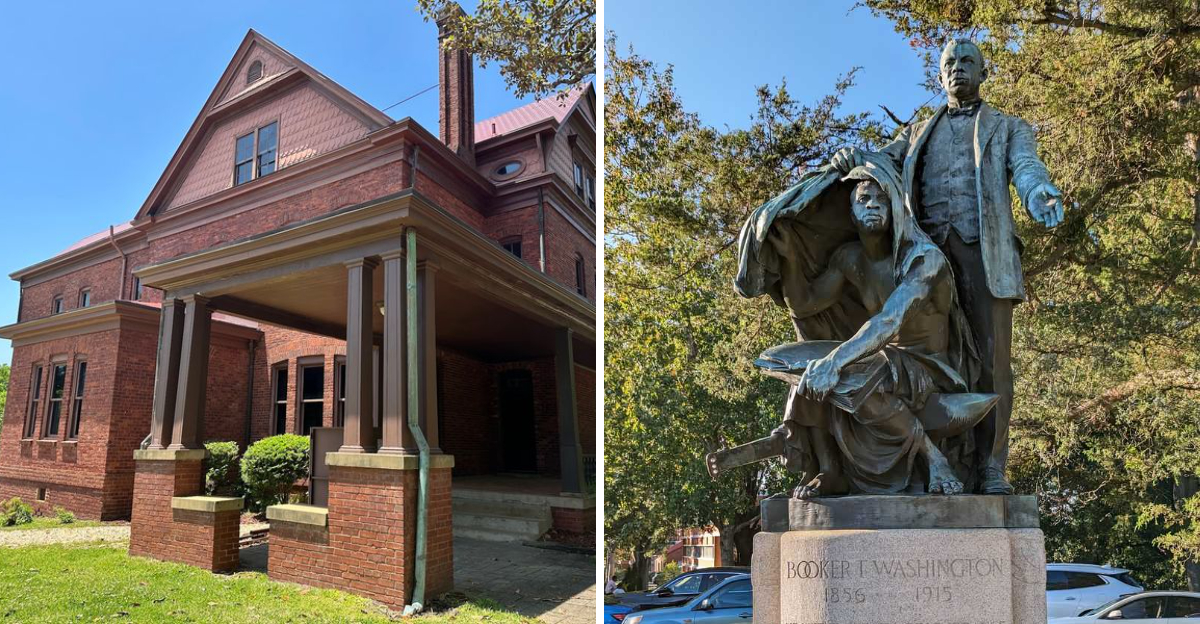
Down the hill from the main campus sits a two-story brick house with a wide porch and a distinctly Victorian silhouette. That is The Oaks.
Faculty designed it. Students built it in 1899.
Washington lived there with his family until his death in 1915, and the house served far more purposes than a simple residence.
Rooms here hosted benefactors, visiting dignitaries, and staff meetings. Portions functioned as office space, and the building has also been used as a student dormitory over the years.
Original fixtures remain, including the gas lighting, which surprises most first-time visitors. The craftsmanship on the woodwork was intentional, meant to prove that students trained in the trades could produce work equal to anything built elsewhere.
Ranger-led tours are the only way inside, and reservations are required. Calling ahead is genuinely worth it, since the interpretation ties the house directly to the philosophy taught in the classrooms uphill.
The Oaks feels lived-in rather than staged. Furniture placement, personal items, and the layout of the family rooms give a sense of daily rhythm inside a household that carried enormous public pressure.
Visitor parking sits nearby on West Montgomery Road, which makes this a practical starting or ending point for a campus visit depending on the tour schedule.
An Entire Campus With National Historic Site Status
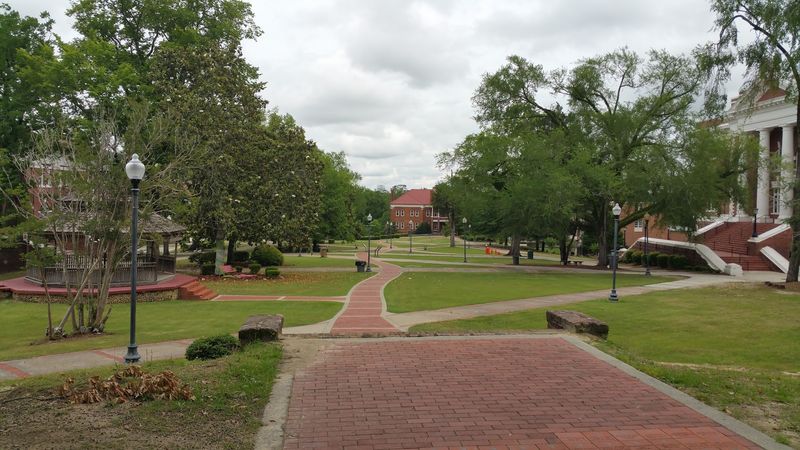
Here is a distinction no other college in the United States holds. The whole working campus is the national historic site.
Classes run. Students cross the quad with backpacks.
History is not roped off behind velvet cord, it is simply part of the scenery.
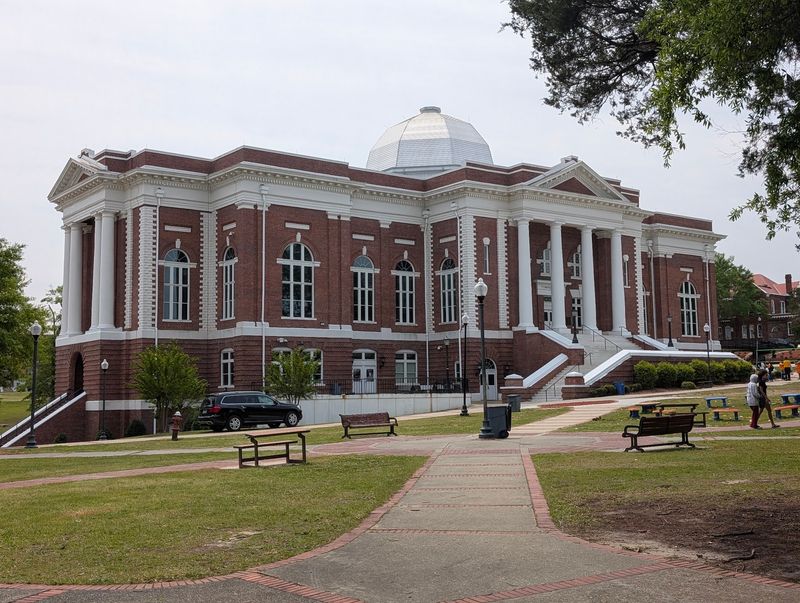
The Historic Campus District includes dormitories such as Tantum Hall and Sage Hall, along with academic buildings that carry their own stories about student life.
Many were Taylor designs, and the layout reflects a philosophy where every structure represented forward motion for the community that built it.
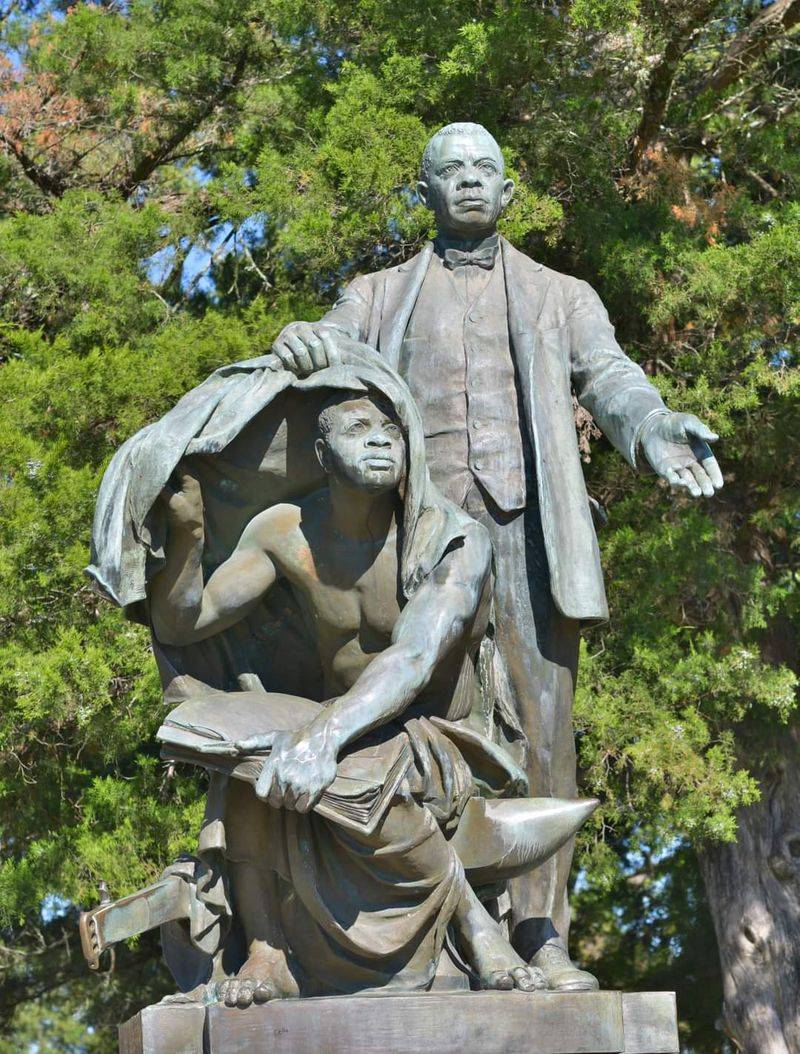
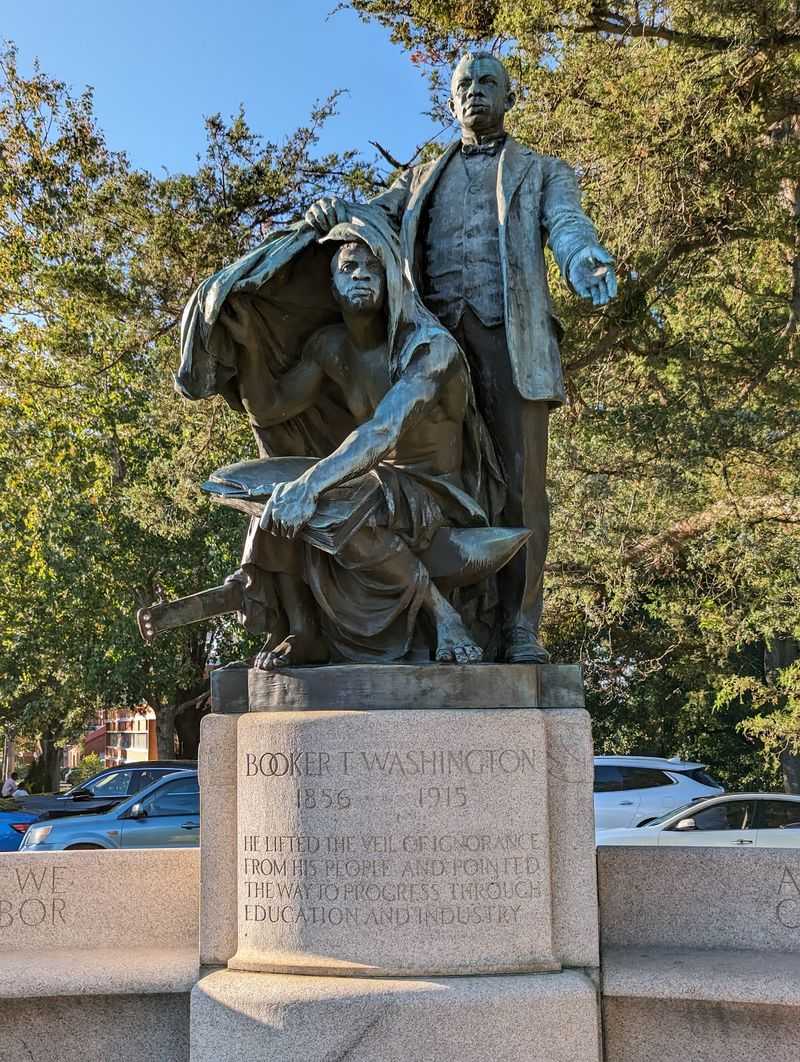
The Booker T. Washington Monument anchors one part of the grounds.
It was funded by contributions from African Americans across the country, which makes it a monument built the same way the school was, through pooled effort.
Near the University Chapel lies the Tuskegee Cemetery. Booker T.
Washington rests there alongside his wife Margaret, and George Washington Carver is buried only a few feet away.
Visitors often describe standing between those graves as the quietest moment of the whole trip. Bring comfortable shoes, because covering the district properly means a fair amount of walking.
Guided campus tours can be requested in advance, and student guides tend to fold in details about traditions and buildings that signs alone do not cover.
Learning What The Tuskegee Idea Really Meant
Exhibits across the site keep circling back to one phrase. The Tuskegee Idea.
Washington argued that mastering a trade and modern farming methods gave African Americans a path to economic independence in the post-Reconstruction South. Skills meant income.
Income meant land, homes, and leverage.
Classroom study never disappeared from the plan, but it shared space with workshops and fields. Students ran the school as they learned, growing the food served in the dining hall and constructing the buildings they slept in.
Training covered carpentry, bricklaying, printing, tailoring, and agricultural science, among other trades. Graduates were expected to head back into rural plantation districts and share what they had learned, bringing fresh farming techniques along with support for community and civic life.
That ripple effect is what turned a small Alabama school into a nationally recognized name. Reports of its training quality traveled well beyond the state.
Reading about the philosophy while surrounded by its physical results changes the experience. The walls, the fields, and the surviving workshop spaces are the evidence.
Interpretive panels explain the debates of the era in plain language, including how Washington’s approach fit into a much larger conversation about Black progress. Younger visitors follow it easily, and adults usually leave with more questions than they arrived with, which is exactly the point.
The Airfield Legacy Just Down The Road
Aviation history and this campus are tied together more tightly than most people expect.
During the late 1930s, African Americans interested in flying faced closed doors across military aviation.
Tuskegee Institute became a hub for the Civilian Pilot Training Program, and its results were strong enough that the Army Air Corps selected the school to host an airfield and flying school for African American aviation cadets.
Pre-flight instruction happened right on campus, in dormitories and classrooms students already used daily. Flight training moved to Moton Field, a short distance away.
The pilots, navigators, bombardiers, mechanics, and support crews who came through that program became known as the Tuskegee Airmen. Their combat record during World War II dismantled long-standing arguments used to keep Black servicemembers out of the cockpit.
Moton Field is preserved as the separate Tuskegee Airmen National Historic Site, with restored buildings, aircraft displays, and audio interpretation inside original hangar spaces. Pairing both sites in one day works well and shows how education on this hill led directly to those runways.
An active airstrip nearby still trains young aspiring pilots, which keeps the story going rather than freezing it in the past.
Allow a full day for both stops, and check operating hours before setting out.
Address: 1212 W Montgomery Rd, Tuskegee, AL 36088
