Fall is a great time for a road trip. The leaves are changing, the air is crisp, and the open road feels inviting.
But a road trip is even better when there is a destination worth reaching. This massive Maryland thrift store is that kind of place.
The bargains are so good, they justify the drive. Aisles packed with clothes, furniture, books, and household items at prices that feel like a steal.
You can spend hours digging through the racks and still find something new. The inventory changes constantly, so every visit is different.
A spot that rewards patience and a willingness to explore. The kind of trip that combines the joy of the season with the thrill of a good deal.
The Sheer Scale That Swallows Your Afternoon
Most thrift stores can be scanned in twenty minutes. Second Chance operates on a different math entirely.
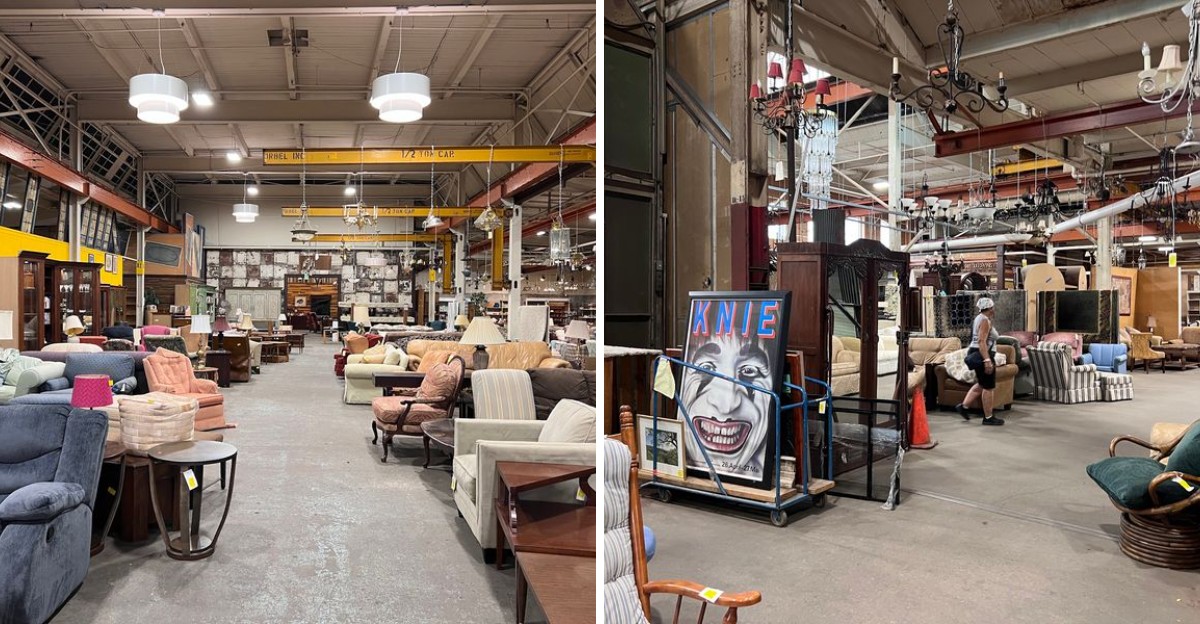
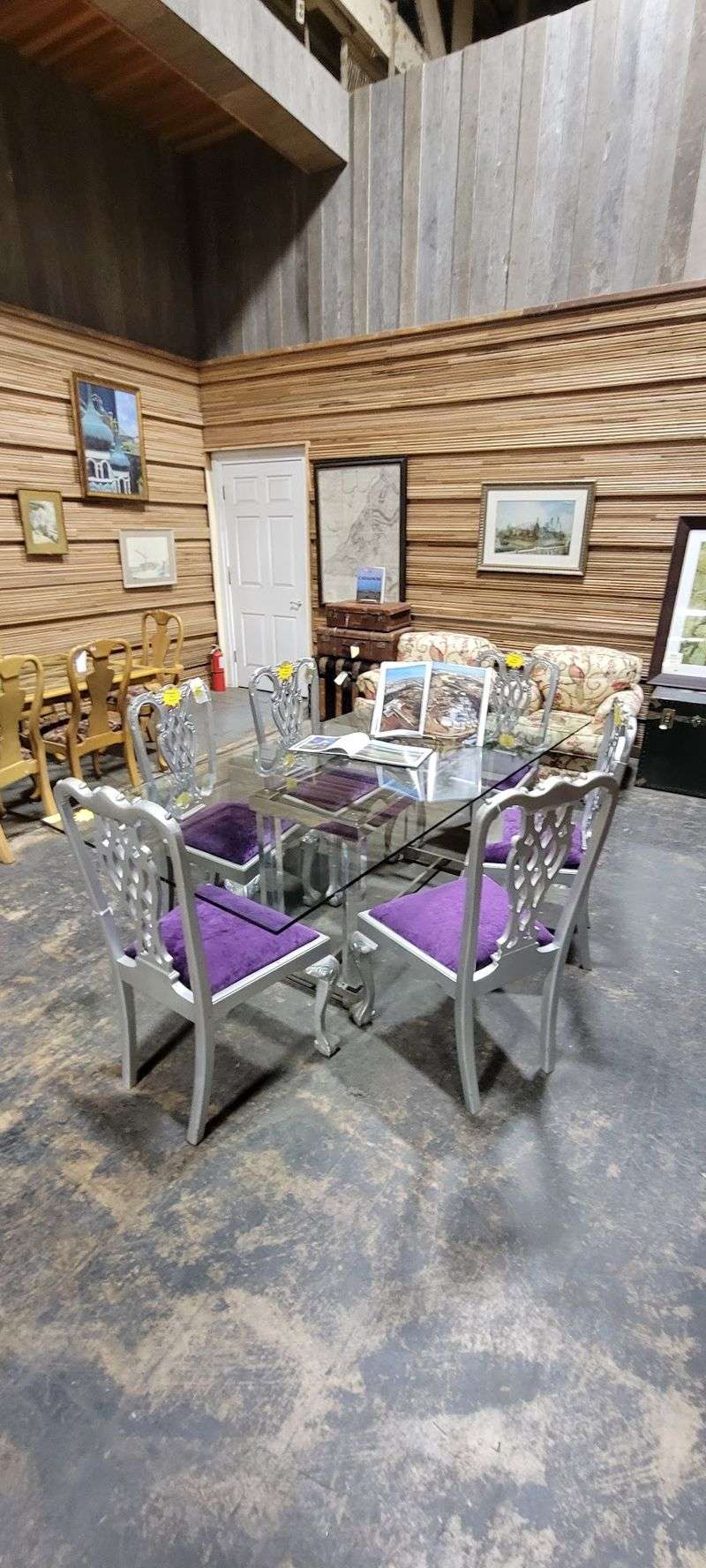
The retail floor covers well over 200,000 square feet, with some counts putting it closer to 250,000, and it has grown into the largest reuse store in the country. Shoppers frequently compare it to three Home Depots or four grocery stores parked side by side.
That size changes how you shop. There is no quick loop, no single glance that catches everything, and people regularly report spending three or four hours inside without reaching the far corners.
The organization also picked up two additional buildings nearby, on W. Hamburg Street and W.
Ostend Street, which tells you something about the volume of material moving through.
Practical advice: start at one end and commit to a direction. Wandering randomly through a space this large means circling back over ground already covered and missing entire sections.
Fall weather makes the marathon much easier. The warehouse runs on fans rather than climate control, so a cool October morning beats an August visit by a wide margin.
Comfortable shoes matter more than you would expect. Concrete floors and long distances add up fast, and there is genuine walking involved between the furniture zones, the lumber racks, and the hardware bins.
Give yourself permission to come back another day rather than rushing. Regulars treat it as an ongoing relationship instead of a one-time errand, and the inventory turns over often enough to reward repeat trips.
Architectural Salvage With Real History Behind It
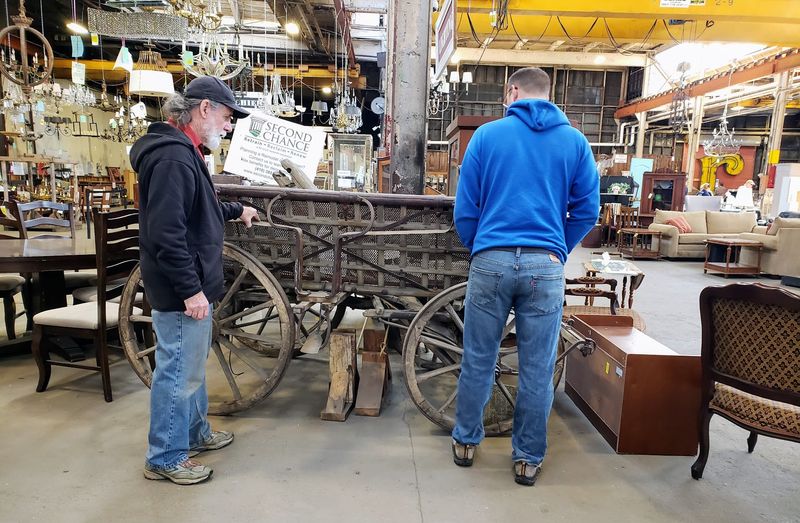
Old houses leave behind beautiful bones, and this is where a lot of Baltimore’s bones end up. Doors, windows, mantels, railings, bricks, pavers, tile, and historic hardware all get sorted and shelved here after crews carefully take buildings apart.
Deconstruction is the key word. Rather than demolishing a structure and hauling everything to a landfill, teams remove materials by hand so they can live somewhere else.
Some pieces carry remarkable provenance. Inventory has included a chandelier from the Lord Baltimore Hotel, a scale from the Baltimore Colts locker room, and wood flooring salvaged from St. Peter’s Basilica.
Stained glass turns up often enough that it has become one of the things shoppers mention most. Panels lean against posts and catch whatever light makes it through the high windows, which is a nice surprise in a building full of concrete and steel.
For anyone restoring an older home, this section is the main event. Matching original trim profiles, period doorknobs, or the right vintage of subway tile is nearly impossible at a big-box store.
Bring measurements written down, not remembered. Door openings, window frames, and mantel widths are unforgiving, and a tape measure in the car saves a second trip.
Photograph what you are trying to match before leaving home. Comparing a picture to an actual piece under warehouse lighting works far better than trusting memory on color and grain.
Furniture Finds From Vintage To Very Practical
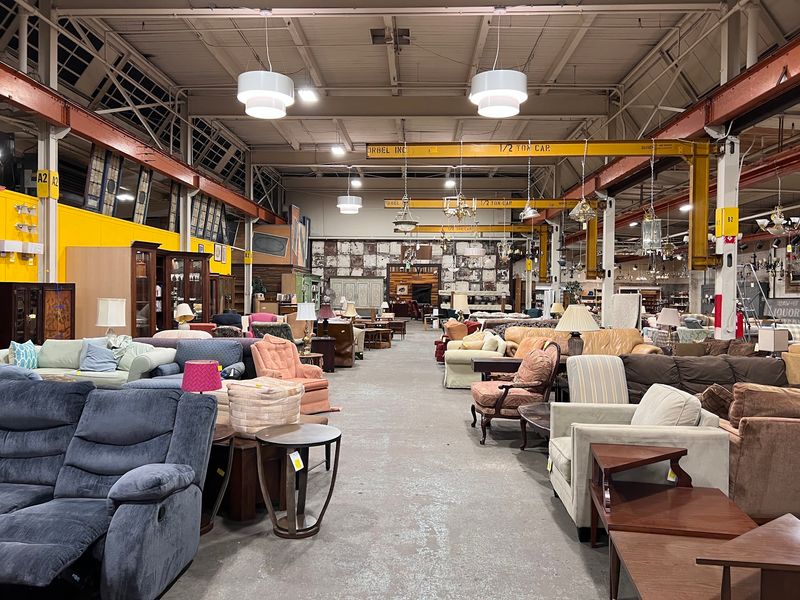
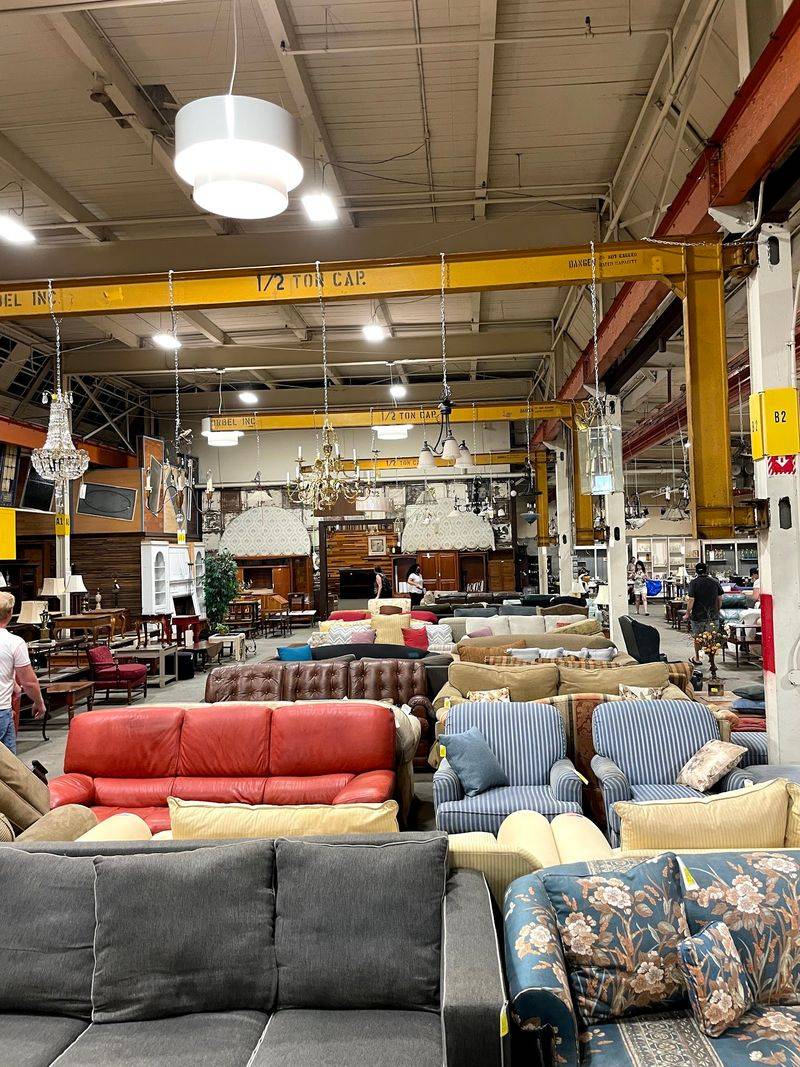
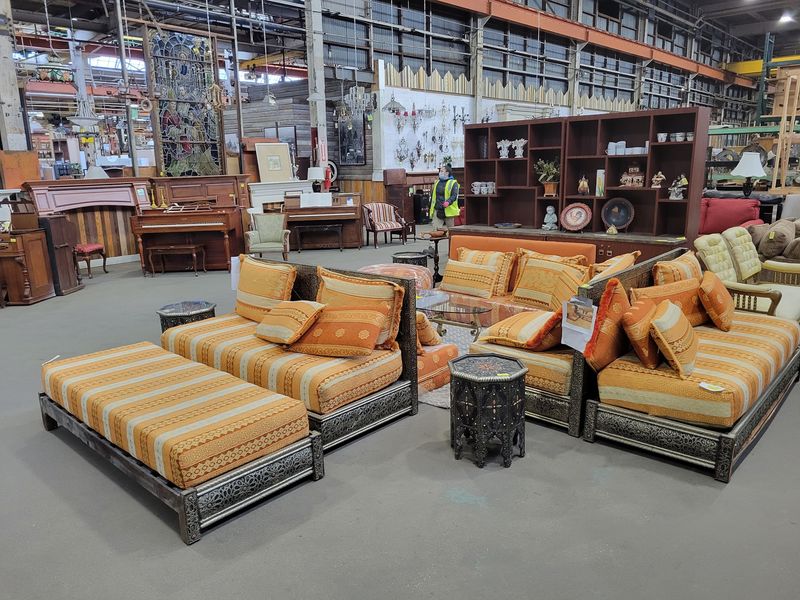
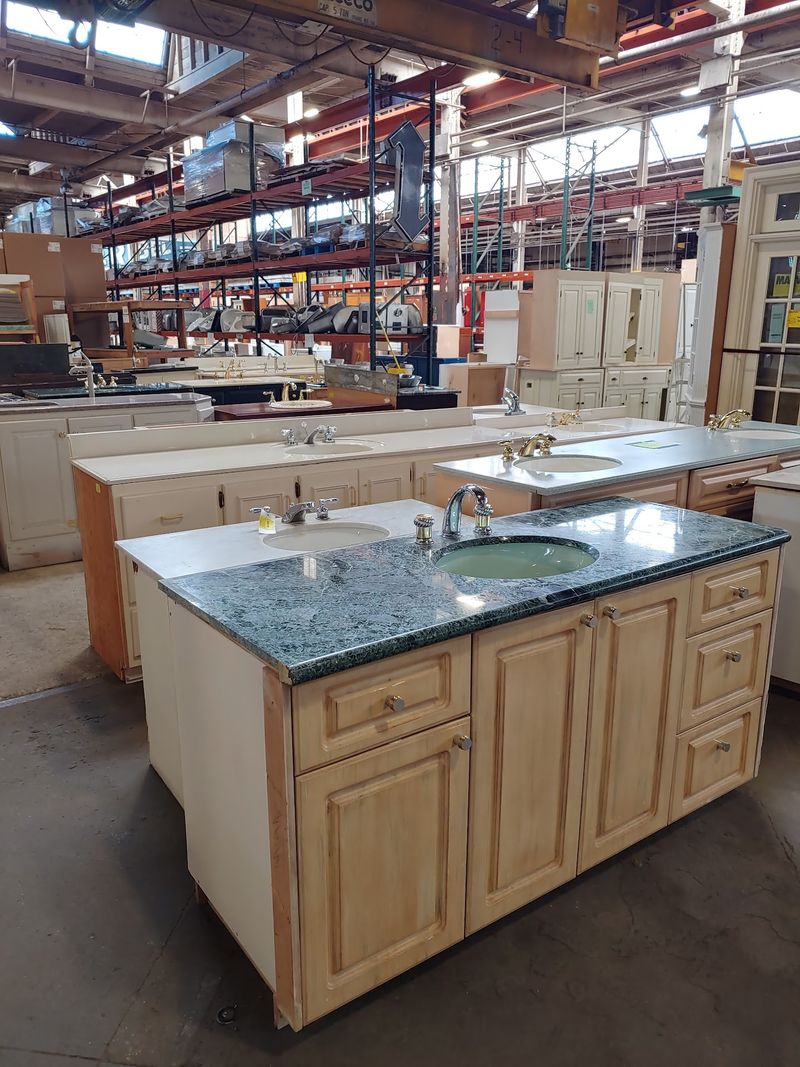
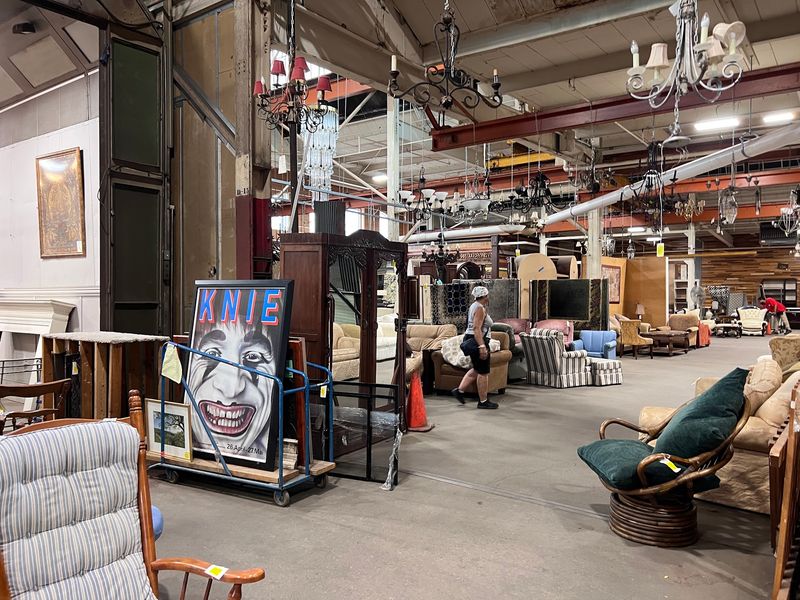
Someone furnishing a first apartment and someone hunting a Victorian settee can shop the same aisle here, which is a strange and wonderful thing. Chairs, dining tables, bookcases, desks, dressers, and bathroom vanities fill enormous stretches of the floor.
Staff arrange parts of the space into little room vignettes rather than endless rows. A dining table gets set with chairs, a lamp lands on a side table, and suddenly the piece makes visual sense.
Stock arrives from homes, estates, and businesses clearing out offices, so the mix swings wildly. Mid-century pieces sit near heavy carved antiques, and gently used sofas turn up alongside claw-foot tubs and vintage stoves.
Condition varies, which is exactly what you would expect from reclaimed goods. Checking drawers, testing joints, and looking underneath a tabletop takes thirty seconds and prevents regret.
Holds are available, and shoppers mention how simple it is to tag an item and return for it later. That flexibility matters when the car is already full.
In-house delivery exists for an extra fee, which solves the classic problem of falling for a bed frame that will never fit in a sedan. Staff in different colored shirts handle sales versus moving and loading, so there is always someone to flag down.
Best approach: photograph the room at home before you go. Visualizing scale is the hardest part of secondhand furniture shopping.
How The Pricing System Actually Works
Here is the detail that separates casual browsers from people who leave with real bargains. Items carry tags showing the current price along with upcoming dates when that price drops.
Markdowns happen on a schedule as pieces sit longer. Something that feels ambitious in September might be considerably friendlier a few weeks later, which turns patience into a legitimate strategy.
Negotiation is also part of the culture. Staff have room to move on inventory that needs to keep moving, and asking politely is neither rude nor unusual here.
Expect variety in what things cost. Rare antiques and historically significant pieces are tagged accordingly, while ordinary chairs, cabinets, and hardware land much closer to typical thrift territory.
That range surprises first-timers. The trick is knowing what a comparable new item would cost, because the real savings show up in flooring, lumber, doors, and appliances where new retail pricing is steep.
There is also a free room, stocked with things like cabinets and exercise equipment, which is worth a look before you leave.
Practical move: photograph the tag of anything you are considering but not ready to buy. The markdown date gives you a concrete reason to plan a return trip, and holds are easy to arrange if you decide sooner.
Employees explain the system readily when asked. Several shoppers note that having someone walk them through the tags changed how productive the visit felt.
The Mission That Gives The Place Its Name
Second chances here apply to more than furniture. Founded in 2001 by Mark Foster, the nonprofit runs on a philosophy of retraining, reclaiming, and renewing, and the retail floor funds all of it.
Revenue from sales supports job training and workforce development for people who face barriers to employment, including individuals who were formerly incarcerated or are working through low-income circumstances. Training covers deconstruction, warehousing, retail, and customer service.
The organization describes its approach as a triple-bottom-line focus, balancing environmental responsibility, social impact, and financial sustainability. Seeing all three operating in one building is genuinely unusual.
Staffing reflects that. Shoppers consistently mention how helpful employees are, and the color-coded shirts make it clear who handles sales questions versus who moves and loads heavy items.
Environmental impact runs parallel to the human side. Diverting millions of pounds of material from landfills while preserving architectural heritage from buildings slated for demolition is a rare combination.
Donations feed the inventory, and pickup service extends beyond Baltimore into the DC area for larger items. Anyone clearing out a house can contribute to the cycle rather than filling a dumpster.
Worth knowing before you go: understanding the mission changes how the warehouse reads. What might look like a chaotic pile of secondhand goods is actually a working system with people learning trades inside it, and that context makes browsing feel different.
Lighting, Mirrors And Decor Worth Digging For
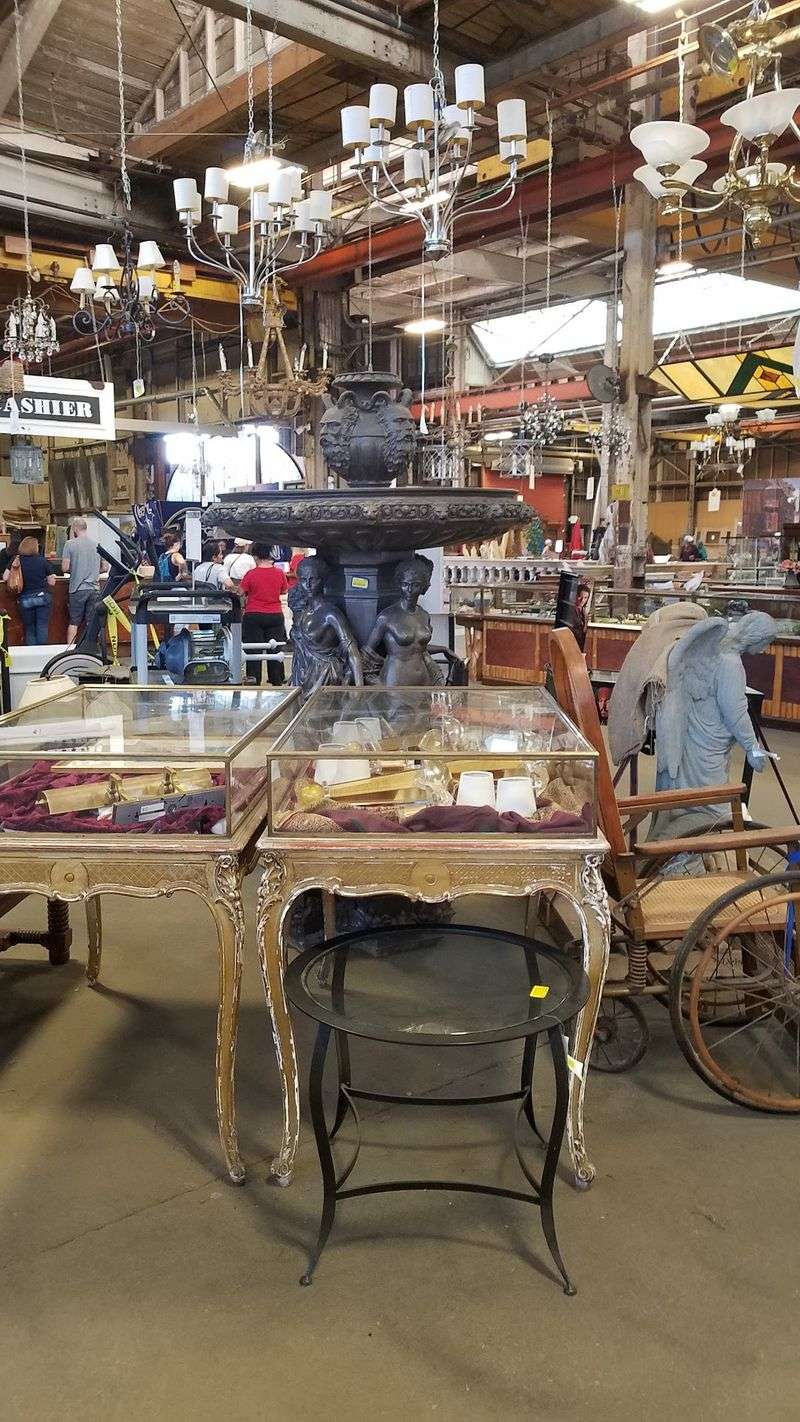
Chandeliers dangling overhead in a warehouse make for an odd and charming sight. Lighting gets real estate here, with sconces, lamps, pendants, ceiling fans, and fixtures salvaged from homes and commercial buildings alike.
Mirrors are another strong category, from plain functional pieces to heavily framed antiques that would cost a fortune reproduced. Rugs, carpets, artwork, and assorted decor round out the mix.
Selection in this area fluctuates more than furniture or lumber. Some visits turn up an impressive spread, others feel thinner, which is simply how donated inventory works.
That unpredictability is the fun of it. Anyone who enjoys the hunt will appreciate that no two trips produce the same results, and returning after a few weeks often reveals a completely refreshed section.
Check wiring on vintage fixtures before committing. Many pieces are perfectly usable, but older lighting sometimes needs rewiring, and factoring that into your plans avoids surprises.
Frames deserve a second look even when the art inside does not appeal. Swapping a print out of a solid wood frame is one of the cheapest ways to upgrade a wall.
Designers and stylists treat this floor as a resource, and it earns comparisons to a playground for anyone building rooms with character. Bring an open mind rather than a rigid list, since the best finds are usually the ones nobody went looking for.
Getting There And Timing The Visit Right
The warehouse sits at 1700 Ridgely Street, Baltimore, MD 21230, tucked into South Baltimore close to M&T Bank Stadium. Drivers on the nearby highway can see the building long before they figure out what it is.
Hours run Wednesday through Sunday, 9 AM to 5 PM, and the doors stay closed Monday and Tuesday. Planning around that schedule prevents a wasted drive.
Parking is generally described as decent, which matters when hauling out a dresser or a stack of boards. Phone contact is 410-385-1700 for questions about inventory or delivery.
Early fall is the sweet spot for a road trip here. Without air conditioning, summer visits get warm despite the fans, and winter shoppers routinely advise wearing a coat indoors.
Arriving near opening gives the most daylight and the calmest aisles. Sundays before closing can still deliver, though five hours of browsing time beats one.
Combine the stop with a stadium-area stroll if the timing works out, since the neighborhood puts you close to plenty of South Baltimore. Just keep the return drive in mind if the car fills up.
For anyone who cannot make the trip, an online marketplace carries a selection of reclaimed products. Nothing replaces walking the floor, but it helps for out-of-state shoppers who fall for something specific and want another look.
Smart Tactics For A First Visit
A little preparation turns an overwhelming warehouse into a productive one. Regulars tend to arrive with a rough list, a tape measure, room photos, and a realistic sense of what their vehicle can carry.
Sizing up the space first helps. A quick orientation lap reveals where furniture, lumber, appliances, hardware, and decor live, so the serious digging happens with a mental map in place.
Ask questions early rather than late. Employees explain the pricing tags, point out where similar items are grouped, and often know what recently came in.
Imagination does a lot of work here. Something dusty and unremarkable on the floor can transform with cleaning, new hardware, or a coat of paint, and shoppers who see potential consistently walk away happiest.
Flexibility beats specificity. Anyone arriving determined to find one exact item may strike out, while those open to alternatives rarely leave empty-handed.
Hold and delivery options remove a lot of pressure. Tagging something and arranging transport later means you can commit to a great find without solving logistics on the spot.
Snacks and water are not a bad idea for a long session. Concrete floors and fifty thousand things to look at are more tiring than they sound.
Above all, treat the visit as an experience instead of an errand. The building rewards curiosity, and even a browse-only trip through this much reclaimed history makes the drive worthwhile.
