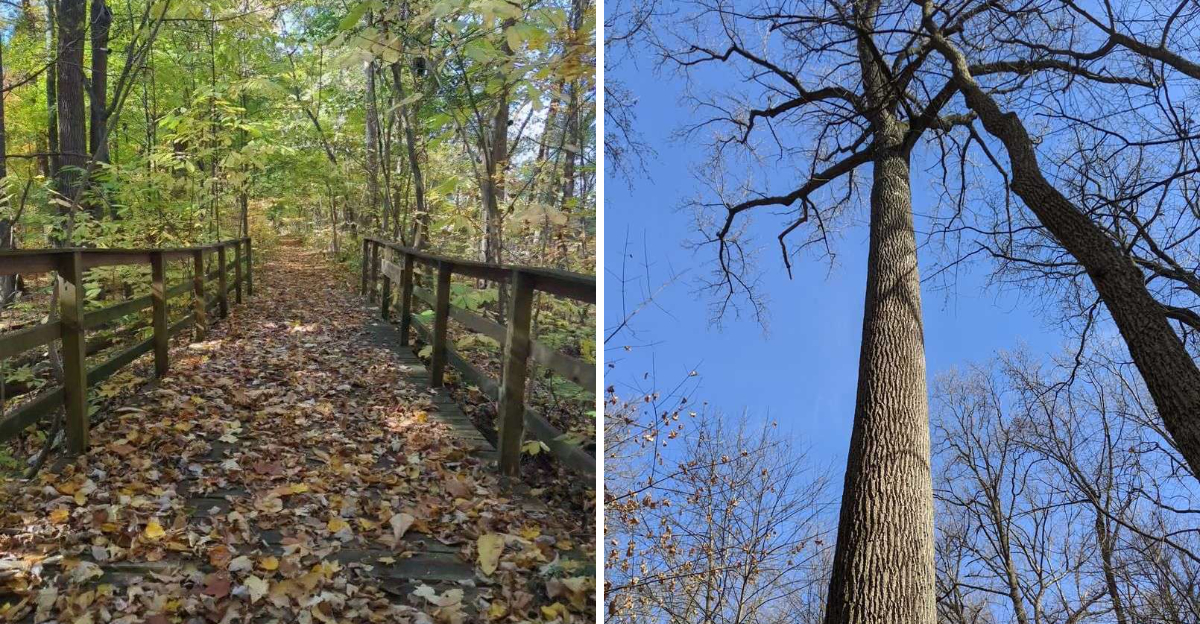
What if you could step off a city street and suddenly find yourself surrounded by centuries-old trees? It is easy to assume that truly wild forests are far removed from busy communities, but one Indiana nature preserve offers a remarkable exception.
Inside the city, a rare stretch of old-growth woodland gives visitors a chance to walk beneath towering trees and experience a landscape that has remained remarkably intact over generations.
The contrast between the surrounding city and the quiet forest makes the experience even more surprising.
If you enjoy discovering natural places that seem completely out of place, this is one destination worth exploring.
A Forest That Has Never Been Cut Down
There are forests you visit, and then there are forests that make you feel genuinely small in the best possible way. Wesselman Woods belongs firmly in the second category.
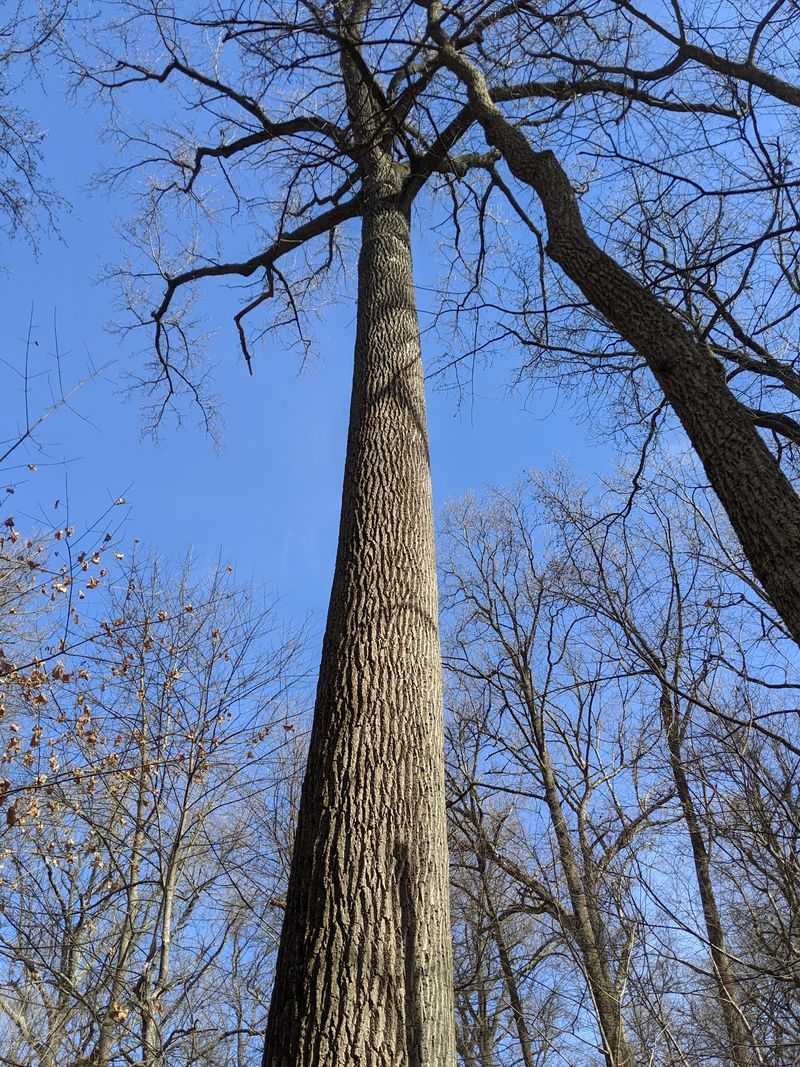
The trees here were never logged, never cleared, never replanted. What you see is what Indiana looked like roughly 400 years ago, before settlements changed the landscape forever.
The canopy soars well above 100 feet in places, and some individual trees are older than the United States itself. Tulip trees, oaks, and cottonwoods of staggering size line the trails, their roots sprawling across the ground like something out of a fantasy novel.
One tulip tree on the property stands 147 feet tall with an 81-foot canopy, making it one of the tallest in the entire state.
What makes this even more remarkable is the setting. You are surrounded by a fully functioning American city the whole time.
Roads, neighborhoods, and businesses sit just beyond the tree line, yet inside the woods the air is noticeably cooler and the atmosphere is completely different. Old-growth forests like this one are extraordinarily rare in the Midwest.
Visiting Wesselman Woods is not just a nice afternoon out, it is a chance to experience something that most people will never find in their own backyard.
Wildlife Around Every Corner

The biodiversity packed into these 200 acres is genuinely hard to wrap your head around. Wesselman Woods supports over 300 species of wildflowers, more than 150 species of birds, and a healthy population of mammals including gray foxes, coyotes, raccoons, and whitetail deer.
Snakes, turtles, and amphibians round out an ecosystem that thrives despite being completely surrounded by urban development.
Spring is a particularly magical time to visit. The forest acts as what birders call a migrant trap, pulling in thrushes, warblers, tanagers, and grosbeaks as they move through the region.
Barred Owls and Great Horned Owls nest here year-round, and Wood Ducks can often be spotted near the seasonal ponds. Woodpeckers are almost a constant soundtrack on any given morning walk.
The Nature Center adds another layer to the wildlife experience. Inside, you can observe rehabilitated animals up close, including bald eagles, turtles, and snakes, alongside a dedicated bird feeding area that makes spotting species easy even for younger or less experienced visitors.
Whether you are an avid naturalist with a life list or just someone who genuinely loves spotting a fox trotting through the undergrowth, the wildlife here delivers something fresh every single time you visit.
Have You Ever Climbed Into the Forest Canopy
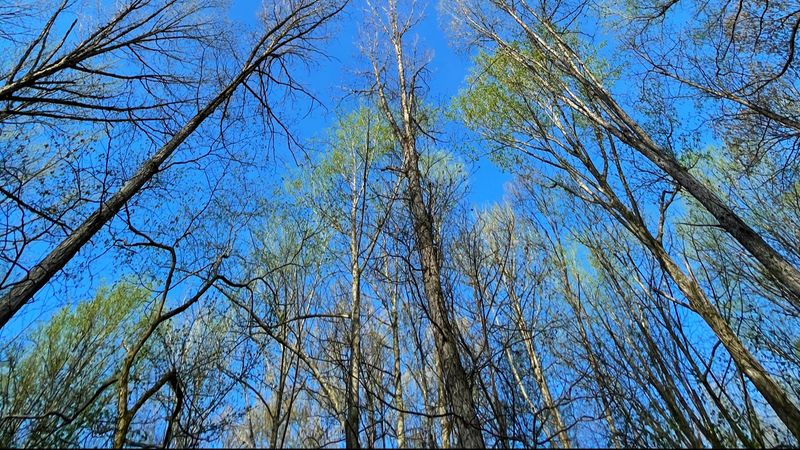
Most visits to a forest keep you firmly on the ground, but Wesselman Woods offers something a little different. The Arwood Family Treehouse rises 12 feet into the air, placing you right at the mid-canopy level of the surrounding forest.
It is a surprisingly perspective-shifting experience, and kids absolutely lose their minds over it in the best way.
The treehouse is part of the 5-acre Nature Playscape, which holds the title of the largest nature playscape in the entire United States. This is not your standard plastic playground.
The whole space is designed to connect children and families with the natural environment in hands-on, exploratory ways. Kids can dig, climb, splash, build, and generally run wild in a setting that feels both safe and genuinely wild.
The Bernhardt Family Bird Sanctuary is also located within this area, adding a quieter, more contemplative counterpoint to all the energetic play happening nearby. Adults tend to enjoy the playscape just as much as the little ones, even if they pretend otherwise.
Portions of the trail leading to the treehouse are surfaced with firm crushed gravel, making it accessible for a range of mobility levels. If you have not yet looked out over a forest from 12 feet up with a kid next to you pointing at a woodpecker, you are genuinely missing out.
Champion Trees That Deserve Your Attention
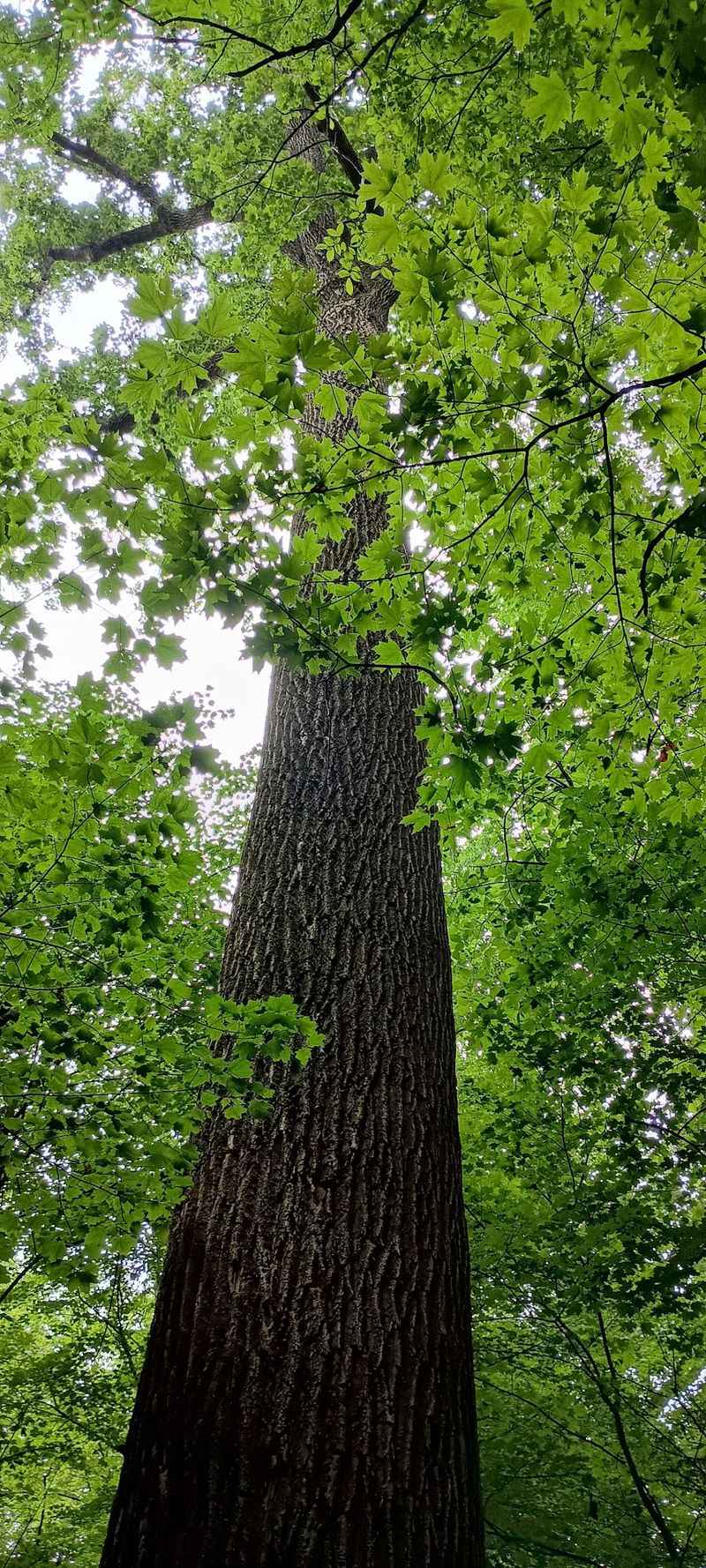
Champion trees are officially recognized as the largest known specimens of their species within a given area, and Wesselman Woods has several.
The tulip tree mentioned earlier, at 147 feet tall with an 81-foot canopy spread, is one of the most impressive living things you will encounter anywhere in Indiana.
Seeing it in person is a very different experience from reading the numbers on a page.
There is something oddly moving about standing next to a tree that has been growing for centuries. These champions have survived storms, droughts, and the complete transformation of the landscape around them.
They predate every road, every building, and every generation of Evansville residents currently alive. That kind of quiet permanence is hard to find anywhere, let alone inside a city.
The preserve contains both state and county champion trees, and the trail system brings you close to many of them. Interpretive signage throughout the woods helps visitors identify species and understand what makes each one significant.
Even if dendrology is not exactly your hobby, it is hard not to feel a genuine sense of awe when a tree is so large that you cannot get your arms halfway around the trunk. Bring a camera with a wide-angle lens, because standard shots simply will not do these giants justice.
Trails That Fit Every Kind of Explorer
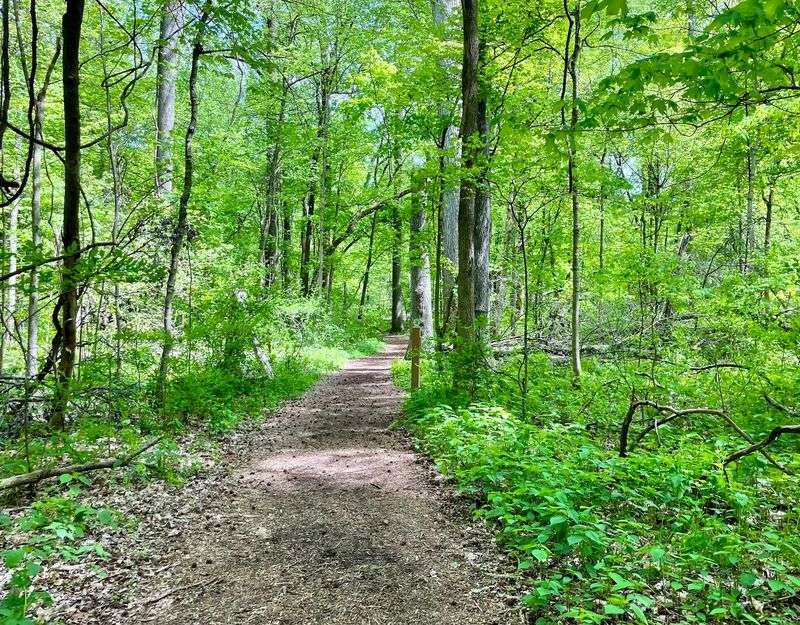
Over four miles of trails wind through Wesselman Woods, covering a surprisingly diverse range of habitats. Old-growth forest, secondary-growth areas, open meadows, wetlands, and seasonal ponds all show up within a relatively compact footprint.
Each section of trail has its own personality, which makes a full loop feel like several different walks rolled into one.
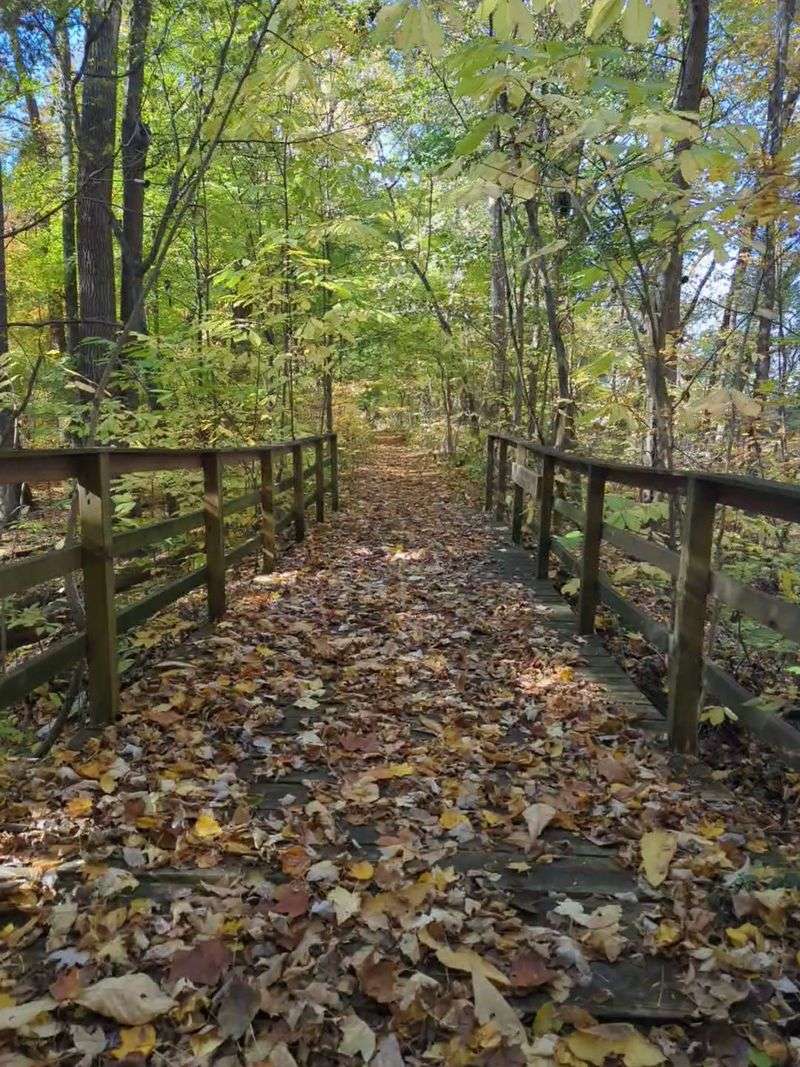
Accessibility is genuinely well thought out here. Concrete paths and boardwalks make portions of the trail system usable for wheelchairs and strollers when conditions are dry.
The crushed gravel path leading to the treehouse also offers a firm, navigable surface for visitors who need more stable footing.
One visitor noted that the trails were easy to navigate even for someone who is not always steady on their feet, which speaks to how thoughtfully the space has been maintained.
The trail markings are clear and consistent, so getting turned around is unlikely even for first-time visitors. Shade is abundant throughout most of the route, which matters a great deal on a hot Indiana summer day.
Temperatures inside the forest can run several degrees cooler than the surrounding city, making it a genuinely refreshing escape when the heat is at its worst. Flat terrain across most of the trail network also means you can focus entirely on what is around you rather than watching your footing.
Ready to Discover a Hidden Piece of American History
Not everyone who visits Wesselman Woods realizes they are also walking through a piece of American transportation history. Hidden within the preserve are remnants of the Wabash-Erie Canal, which was once the longest canal ever constructed in North America.
The canal era was a defining chapter in how the Midwest developed, and traces of that era are still visible here if you know where to look.
The contrast is striking. You are surrounded by some of the oldest trees in Indiana, and beneath your feet is evidence of a massive 19th-century engineering project that shaped commerce across the region.
The forest has slowly reclaimed much of the old canal infrastructure, softening its edges and weaving it into the natural landscape over many decades. It gives the whole preserve an extra layer of depth that goes beyond just trees and wildlife.
History enthusiasts will find this aspect of Wesselman Woods particularly rewarding. It is one of those details that makes a place feel genuinely layered rather than just scenic.
Pairing the ecological significance of an old-growth forest with a tangible connection to early American infrastructure is unusual, and Wesselman Woods pulls it off without even trying to make a big deal of it. The woods simply hold the story quietly, waiting for curious visitors to notice.
The Nature Center Makes Everything Click
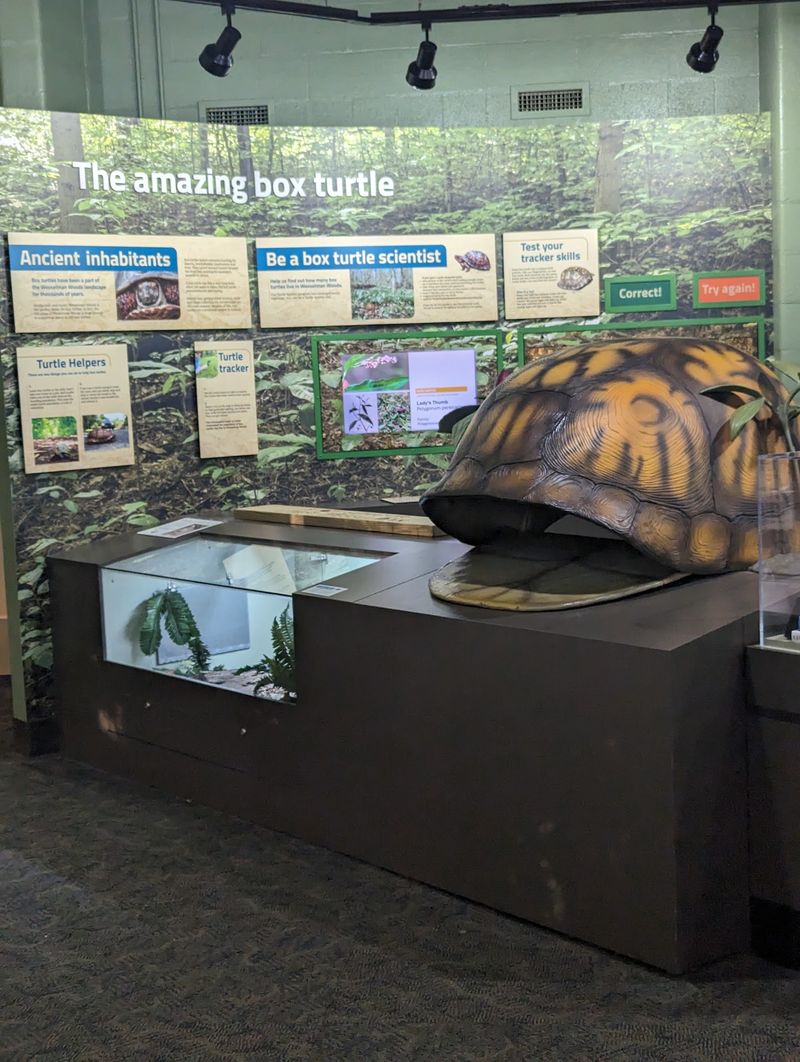
A forest this significant deserves a proper introduction, and the Wesselman Woods Nature Center delivers exactly that. Before heading out on the trails, most visitors spend time inside exploring interactive exhibits that cover the ecology, history, and wildlife of the preserve.
It sets the stage beautifully, especially for younger visitors who benefit from a little context before they start spotting things in the wild.
Live animals are a genuine highlight. Rehabilitated bald eagles, turtles, and snakes are on display, giving visitors an up-close look at species that call the surrounding forest home.
The bird feeding area just outside the center draws in a steady stream of local species throughout the day, making casual wildlife watching easy and rewarding without requiring any special equipment or expertise.
The staff consistently earn praise for being welcoming, knowledgeable, and genuinely enthusiastic about the preserve. That kind of human warmth makes a real difference, particularly for families visiting for the first time.
Educational programs run throughout the year, covering topics that range from seasonal ecology to specific animal behavior.
Whether you are a curious adult, a school-age kid, or a grandparent looking for a meaningful afternoon activity, the Nature Center gives the whole visit a sense of purpose and discovery that lingers well after you have driven back into the city.
Address: 551 North Boeke Road, Evansville, IN 47711
