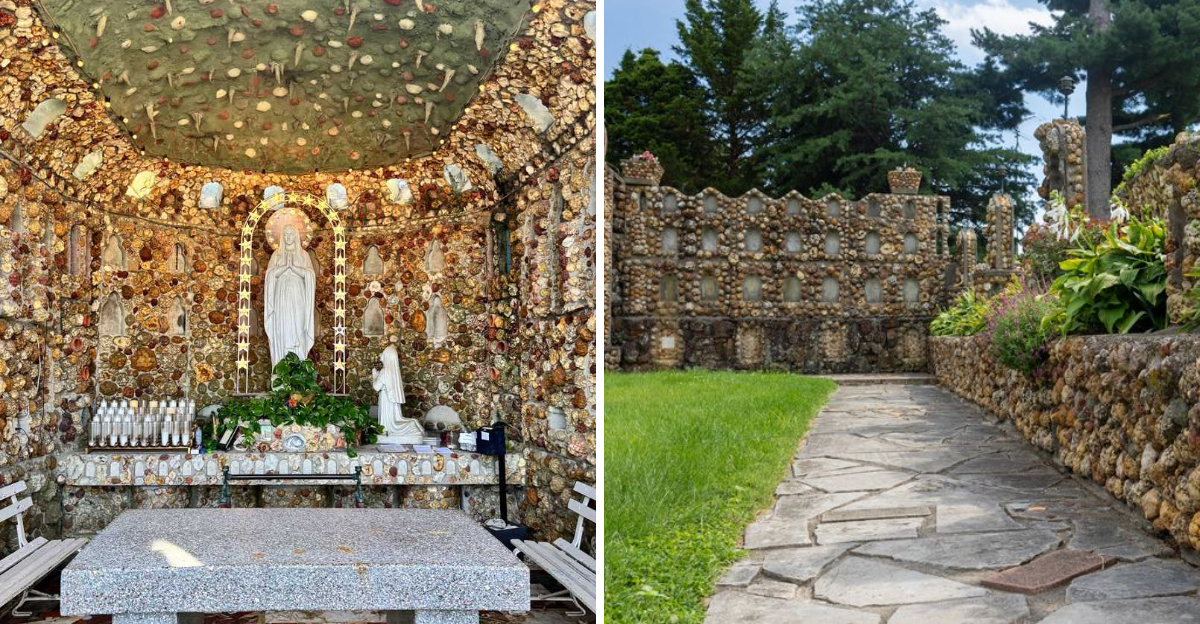
The most memorable places are often the ones that make you stop and ask, “How did someone build this?”
That sense of curiosity follows visitors throughout this remarkable Indiana attraction, where millions of geodes and crystals have been transformed into an extraordinary grotto unlike anything else in the region.
Every wall, corner, and carefully designed feature reflects years of dedication, proving that imagination can turn natural materials into something truly unforgettable.
Whether you are interested in geology, folk art, or simply enjoy discovering places that defy expectations, this destination rewards every moment spent exploring.
A Story That Will Move You Before You Even See the First Crystal
Before you even notice the glittering walls, the story behind this grotto has a way of pulling you in completely. Father Philip Ottavi was born in Messina, Italy, and as a young child, he survived the catastrophic 1908 earthquake that killed more than 100,000 people.
He was trapped beneath rubble, orphaned, and later raised in an orphanage run by Saint Luigi Orione, the founder of the Sons of Divine Providence, an order Father Ottavi eventually joined.
That backstory matters because it explains everything about this place. The rocks that once buried him as a boy became the very material he chose to create something beautiful with.
Building the grotto from 1960 to 1970 was his way of confronting that old wound and transforming it into something meaningful for others.
No formal blueprints guided his hands. He worked alongside volunteers and residents of the Providence Home, shaping the space through instinct, faith, and sheer determination.
Reading about his life on the plaque inside the grotto is one of those moments that quietly hits you harder than you expect. It reframes everything you see around you.
Suddenly the crystals are not just pretty rocks. They are proof that a person can take the worst thing that ever happened to them and turn it into something that brings strangers comfort decades later.
Thousands of Geodes That Honestly Look Like They Are Glowing
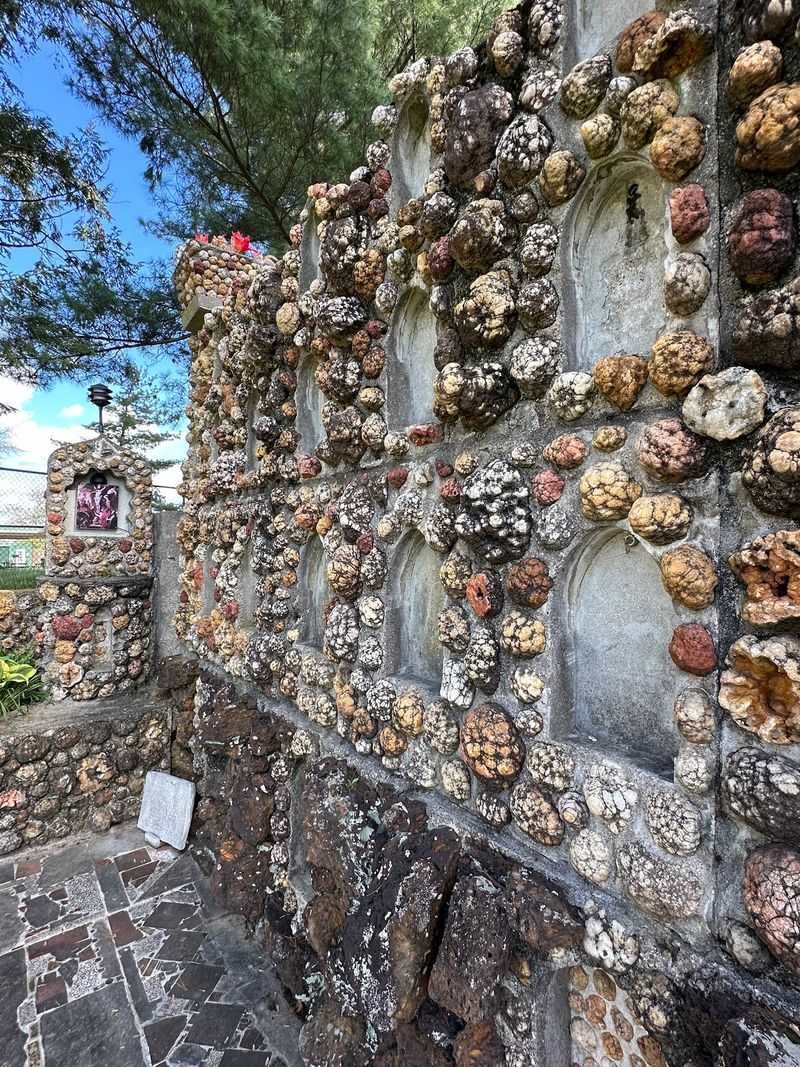
The geodes here come from Heltonville, Indiana, a region known as the Geode Belt, and the sheer volume of them packed into every surface is genuinely hard to wrap your head around.
Each one has been cracked open to reveal the crystal formations inside, and when sunlight hits them at the right angle, the whole wall seems to pulse with color.
Blues, whites, grays, yellows, oranges, pinks, lavenders, deep purples, and rich golds all compete for your attention at once.
It is the kind of thing you photograph obsessively and then realize no image really captures it. The crystals have a depth and a shimmer that a camera lens just cannot fully translate.
You find yourself leaning in close to study individual stones and then stepping back to take in entire walls at once.
What makes it even more impressive is the scale. These geodes are not sprinkled decoratively here and there.
They are the primary building material, embedded by the thousands into poured concrete across planters, walls, benches, lampposts, and shrines spanning four full city blocks. Some of the flowerpots alone weigh up to 2,500 pounds, packed dense with stones.
The effect is somewhere between a natural cave and an elaborate mosaic, and it is unlike any outdoor space you have likely visited before.
Two Stunning Shrines That Each Feel Like Their Own World
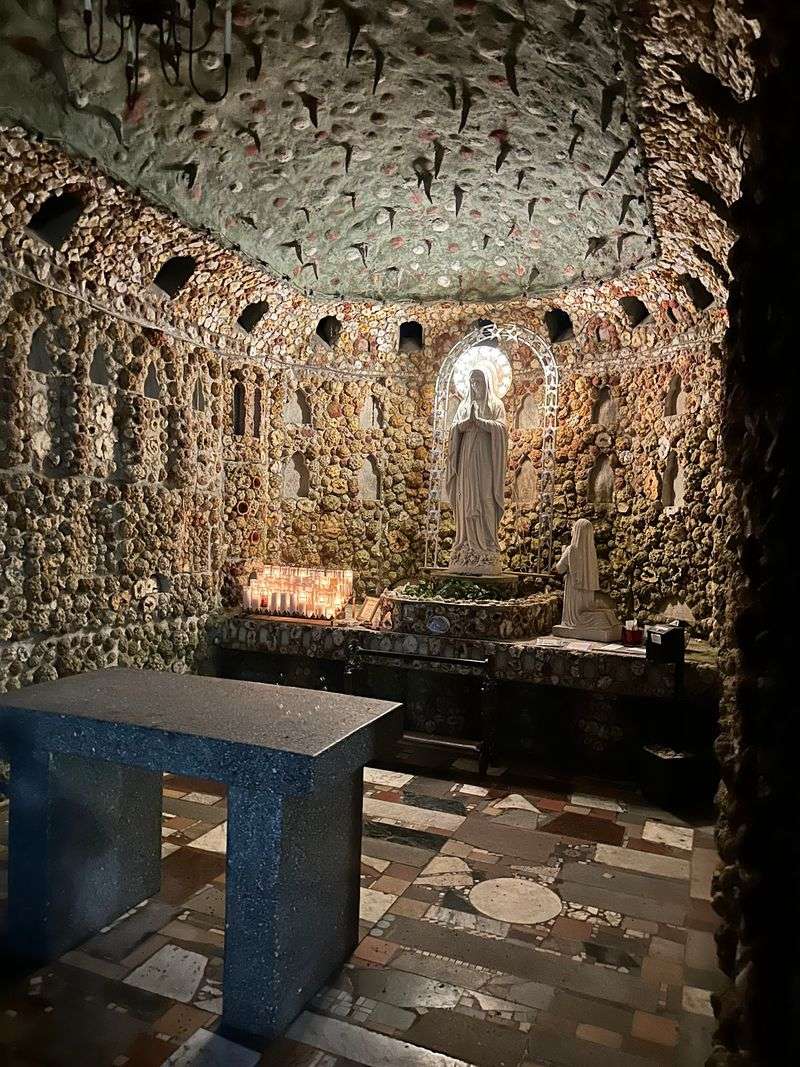
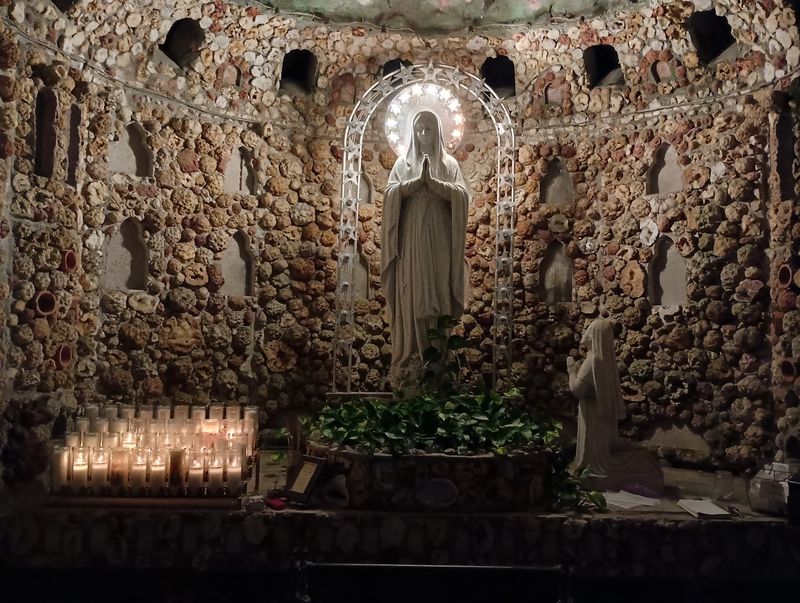
The grotto is anchored by two main shrines, and visiting both of them feels like experiencing two completely different moods within the same space. The Mother of God Shrine sits on the south end and is designed to feel like the inside of a cave.
Its ceiling is lined with faux stalactites, and the combination of dim shelter and glittering geode walls creates an atmosphere that is genuinely hard to describe without sounding overdramatic.
The St. Joseph Shrine anchors the north end with its own distinct character. Moving between the two gives the whole visit a sense of journey rather than a simple walk-through.
Each shrine features life-size statues carved from white Carrara marble, imported specifically from Italy to honor the grotto’s spiritual purpose.
Those marble figures have a quiet dignity that contrasts beautifully with the rough, crystal-studded surfaces surrounding them. One visitor described feeling an unexpected wave of emotion upon entering the chapel, and that reaction is not unusual here.
The space has a way of settling something inside you without asking permission. Whether you are deeply religious or simply someone who appreciates artistry and atmosphere, both shrines offer something worth pausing for.
They are not just decorative endpoints. They feel like the emotional heart of the whole four-block experience.
Have You Ever Walked Through Four City Blocks of Hand-Built Devotion
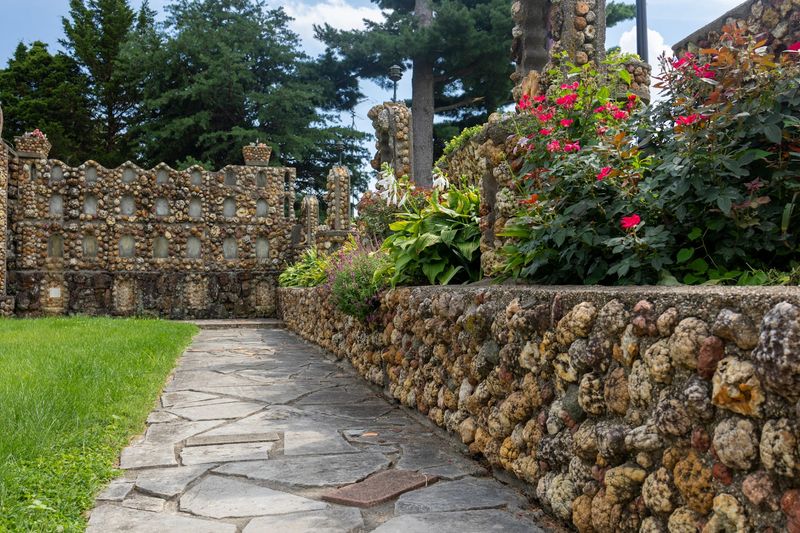
Most outdoor religious sites you visit feel contained, a small shrine here, a garden path there. This one keeps going.
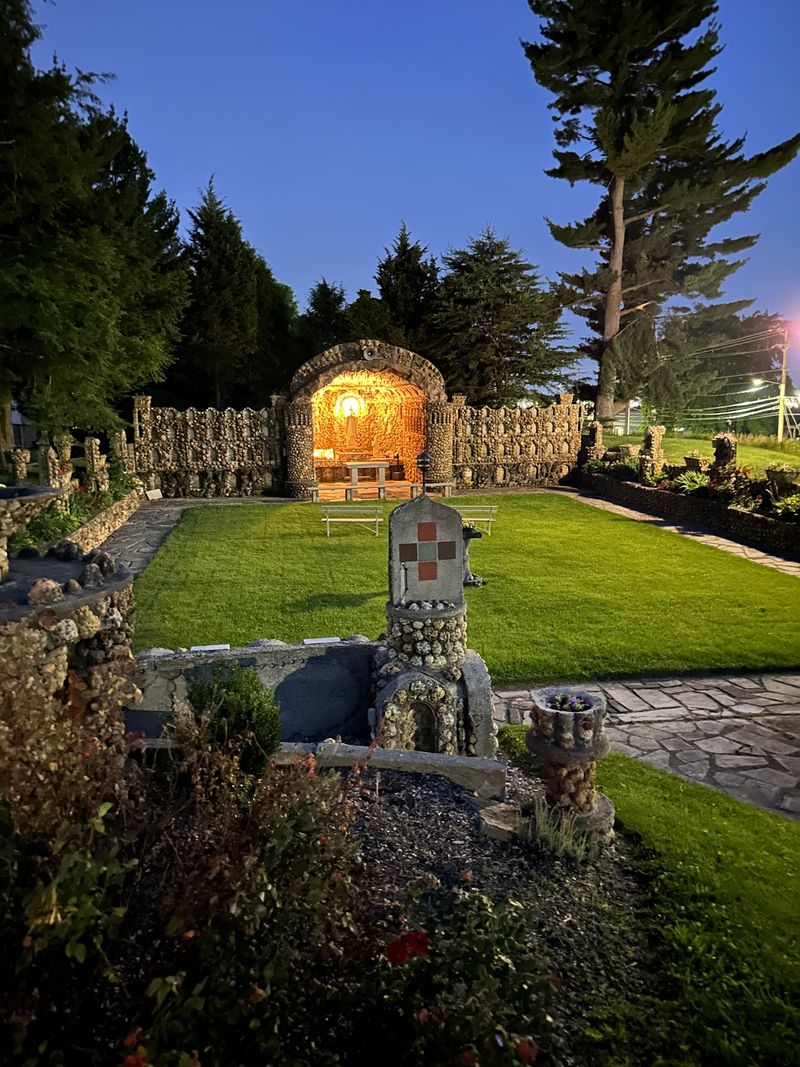
The Father Philip Ottavi Geode Grotto spans four full city blocks along Bartley Street between 9th and 13th streets, and walking the full length of it is a genuine experience rather than a quick glance.
Along the way, you pass fountains, planters overflowing with flowers, birdbaths, benches, and lampposts, all covered in that same mosaic of geodes and embedded materials. Flower-lined walls depict the mysteries of the rosary in a way that feels artistic rather than purely instructional.
The gardens are well kept and clearly maintained with care, which makes the whole space feel alive rather than like a museum piece.
Beyond the geodes, the grotto incorporates marble, granite, seashells, carved limestone, old tiles, religious artifacts, and various found objects, all pressed into poured concrete with a kind of joyful abundance. Parking along Bartley Street gives you easy access to the full stretch.
Plan to take your time, because rushing through would genuinely be a shame. Each section reveals a new detail, a shell pressed into a corner, an unexpected carving, a color combination in the stones you did not notice the first time.
The scale of it only becomes impressive once you are actually inside it.
The Quiet Here Is a Rare Kind of Gift
There is something about this place that immediately lowers your shoulders. Maybe it is the way the walls enclose you without feeling cramped, or the sound of a fountain somewhere nearby, or simply the fact that most visitors arrive already in a reflective mood.
Whatever the reason, the grotto has a stillness to it that feels earned rather than manufactured.
Visitors regularly mention spending twenty to thirty minutes just sitting and breathing. That might not sound like much, but in a world where most attractions are designed to move you through quickly, a place that invites you to slow down is genuinely rare.
The benches are positioned thoughtfully, offering spots to sit and look without feeling like you are in anyone’s way.
There are always candles, paper, pens, and wood lighting sticks available for anyone who wants to leave a prayer or a thought. That small practical detail says a lot about how the space is maintained and who it is meant for.
The non-profit Friends of the Grotto organization keeps everything in good condition, and it shows in every maintained garden bed and clean pathway. Even if you arrive with no spiritual intention at all, the quiet has a way of offering something useful.
Calm is hard to find. This place has it in abundance, and it asks nothing of you in return.
Free, Open to Everyone, and Completely Worth the Detour
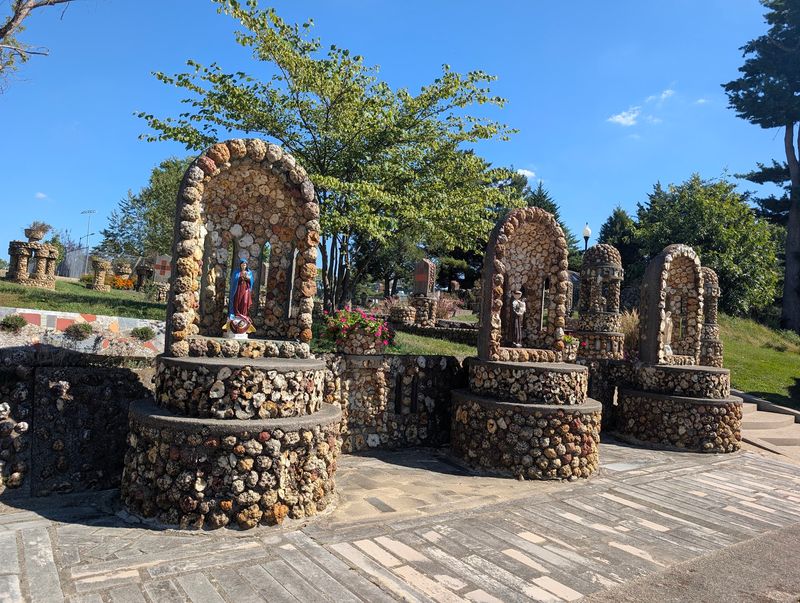
Not every remarkable place is easy to access, but this one genuinely is. The Father Philip Ottavi Geode Grotto is free and open to the public during daylight hours, which means there is no ticket line, no reservation required, and no reason to talk yourself out of stopping.
If you are passing through southern Indiana on your way to Holiday World or Marengo Cave, this is an easy and rewarding detour.
Parking along Bartley Street is simple enough, and the layout of the grotto means you can enter from multiple points along its four-block stretch.
Families with kids find it genuinely interesting, though it is worth noting that there are some steps involved, which may require extra care for visitors with mobility limitations.
The groundskeeper is often around and known to be friendly and approachable. Having someone there who can answer questions or point out details adds a personal touch that a lot of free attractions lack.
The combination of no cost, easy access, and sheer visual impact makes this one of those places that delivers far more than you expect from a roadside stop. It never feels touristy or overcrowded.
Most visits feel almost private, even on a busy day, which is a rare quality for any attraction worth talking about.
Are You Ready To Discover One of Indiana’s Most Unexpected Hidden Gems
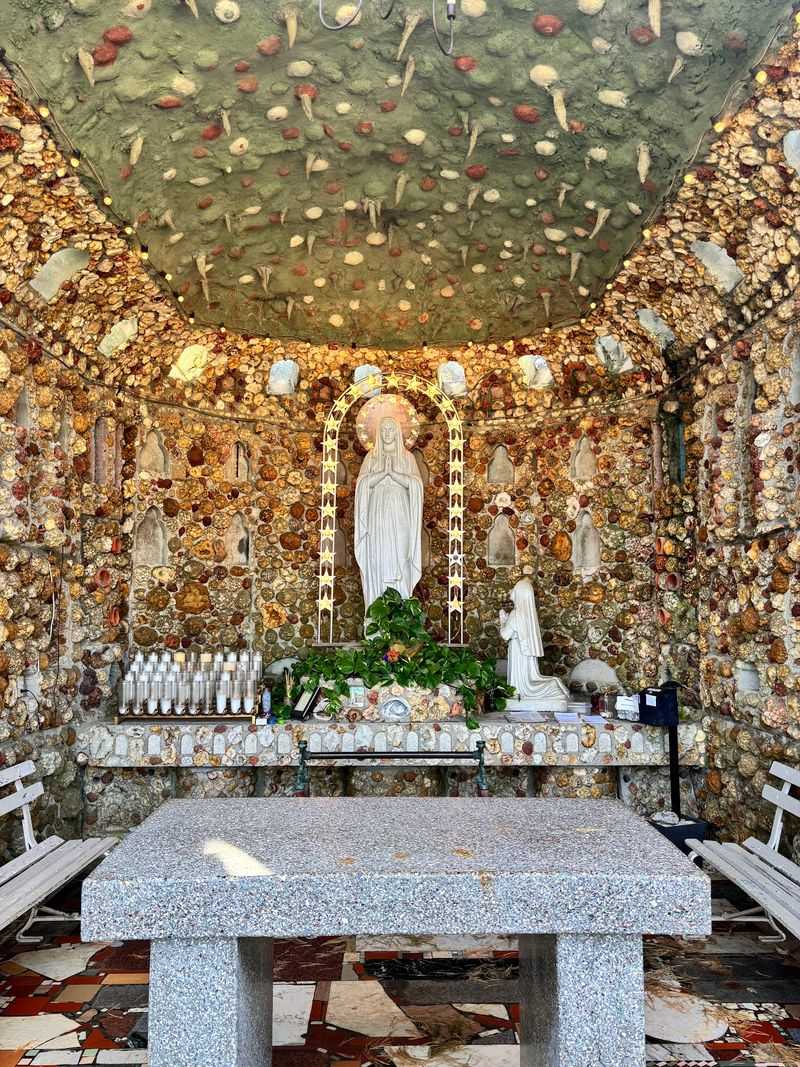
Southern Indiana holds a lot of surprises, but few of them are quite as specific or as singular as this one. The Father Philip Ottavi Geode Grotto does not fit neatly into any single category.
It is part religious site, part folk art installation, part garden, and part memorial to one man’s extraordinary resilience. That combination is exactly what makes it worth seeking out.
People who stumble upon it by chance tend to describe the experience with the same kind of surprised enthusiasm. You park the car expecting a quick look and end up staying much longer than planned.
The details keep pulling you in, a seashell pressed into a concrete wall, a marble figure catching the afternoon light, a cluster of amethyst-colored crystals you almost walked past.
It is the sort of place that works on you quietly. You leave feeling like you have seen something genuinely rare, not because it is flashy or famous, but because it exists at all.
The fact that one person built this without blueprints, over ten years, using stones that once symbolized his deepest fear, is the kind of story that stays with you. Jasper, Indiana, might not be on every travel list, but this grotto alone gives it a reason to be.
Come see it for yourself and decide what it means to you.
Address: 520 West 9th Street, Jasper, Indiana, 47546
