You know that moment when you see something so wonderfully absurd that you can’t help but smile? That’s the whole experience at this Minnesota park.
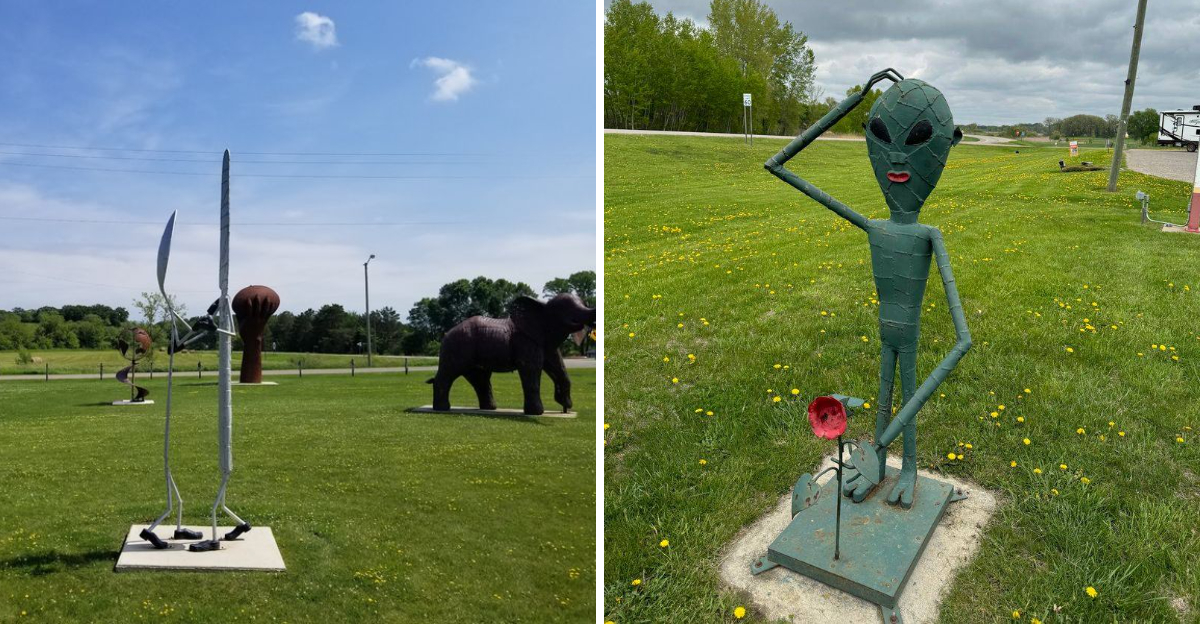
Scattered across the landscape, towering sculptures made entirely from scrap metal transform what looks like a junkyard into a full-blown outdoor art gallery.
The artist started as a hobbyist, welding discarded materials in his spare time. Now, dozens of larger-than-life creations dot the open fields – a giant Big Foot, a metal elephant made from lawnmower blades, and even an astronaut tribute.
The whole place feels like a treasure hunt, and the best part? Admission is completely free for everyone.
Pull off the highway and let your curiosity run wild. Minnesota’s most unconventional art gallery is proof that beauty often hides in the most unexpected places.
The Giant Foot That Stops Traffic
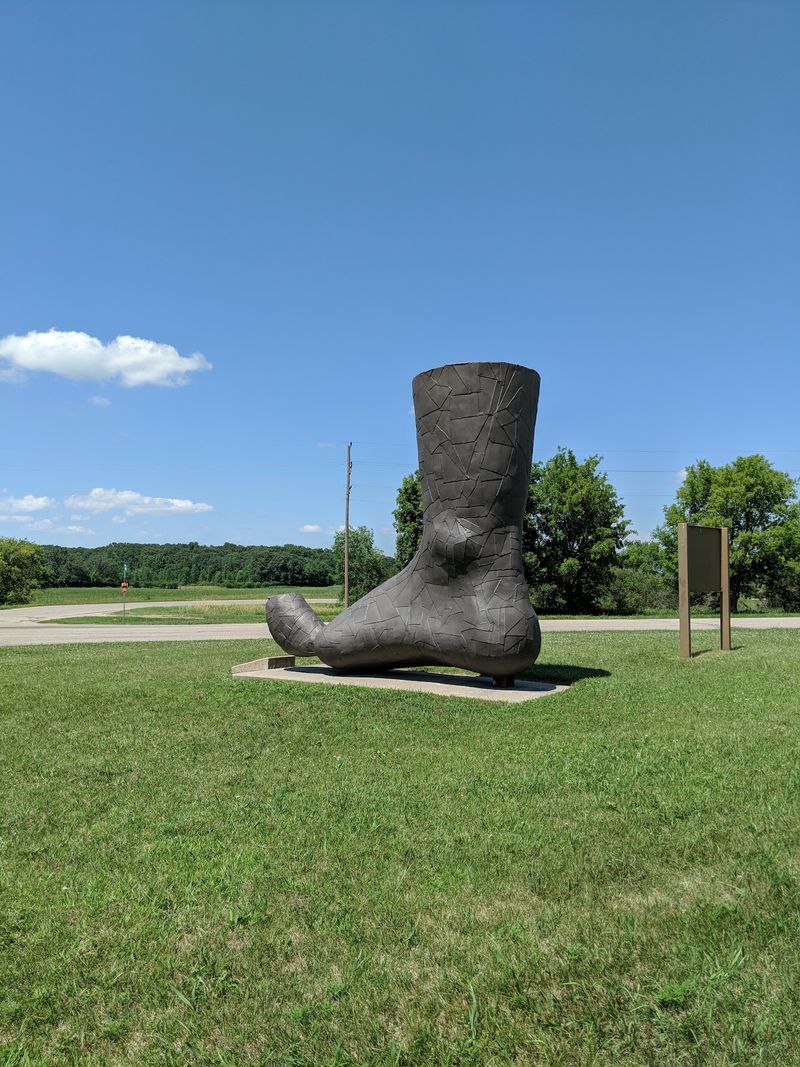
That enormous metal foot is usually the first piece drivers notice, and it does its job perfectly. Toes curl slightly, the arch is shaped with real care, and the scale is so silly that people slam on the brakes just to look.
Up close, the welds show. You can see the seams where sheets of steel were bent and joined, which somehow makes the whole thing more impressive rather than less.
Kids tend to run straight to it and try to hug a single toe, and honestly, adults do the same thing after pretending not to want a photo. Standing beside the heel gives you a real sense of the size, since the top of the foot reaches well above waist height on most visitors.
A tip worth remembering: shoot your photo from a low crouch. The perspective makes the foot look even more massive against the open sky, and the flat prairie horizon behind it adds to the effect beautifully.
A Watermelon Slice Bigger Than Your Car
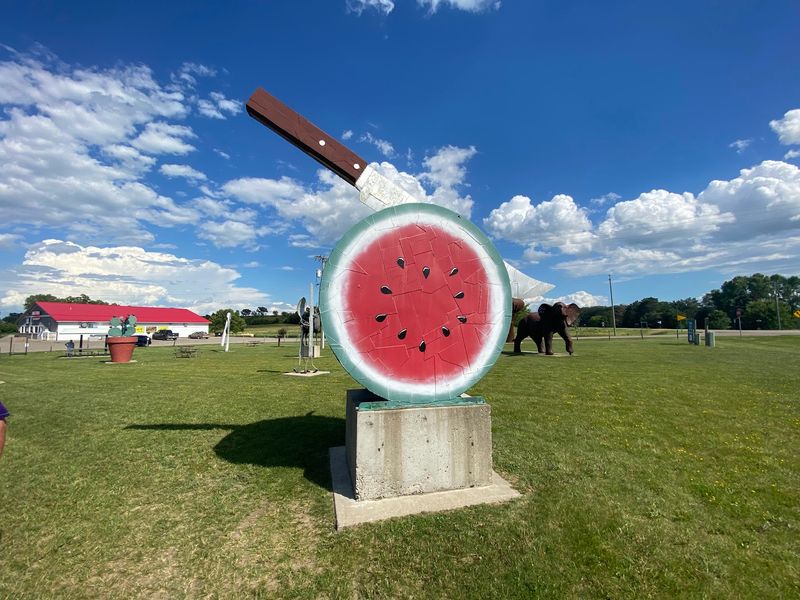
Everyone seems to pick a favorite here, and the watermelon slice wins a lot of votes. It leans in the grass with black seeds welded across the pink surface, looking like a snack dropped by a giant mid picnic.
Summer light makes the colors pop, and the shape casts a curved shadow across the lawn that photographers love.
What gets me is the small stuff. The rind has a proper thickness to it, the seeds are spaced unevenly like real ones, and the curve of the bite line feels natural instead of stiff.
Little details like that show someone thought carefully about how a watermelon actually looks, not just how to weld one together.
Bring your own snacks if you visit around midday, because looking at a two ton fruit sculpture tends to make people hungry. Picnic tables sit nearby, so the timing works out well for a quick roadside lunch under open sky.
The Elephant Made From Lawnmower Blades
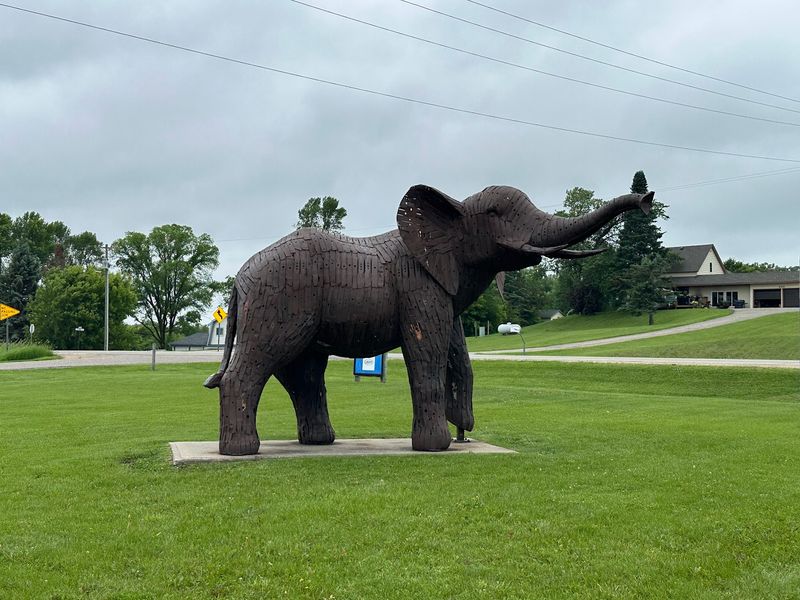
Rusty lawnmower blades. That is what the elephant is built from, hundreds of them layered like scales to form the animal’s thick hide.
Step close and the illusion breaks apart into individual pieces of scrap, each one curved and overlapping the next, and then you step back and the elephant returns.
Trunk, ears, tusks, and legs all read correctly from a distance, which is a strange kind of magic when you know the raw material came from farm sheds and junk piles.
The reddish brown rust actually helps, giving the surface a leathery, wrinkled look that painted steel never could.
Plenty of visitors name this one their top pick, and it is easy to understand why. Sculpture that recycles broken machinery into something living feels clever without shouting about it.
Walk a full circle around the base and check the belly and back legs, since the layering pattern changes and the craftsmanship is easiest to appreciate from the sides.
Meet the Artist Behind the Metal, Ken Nyberg
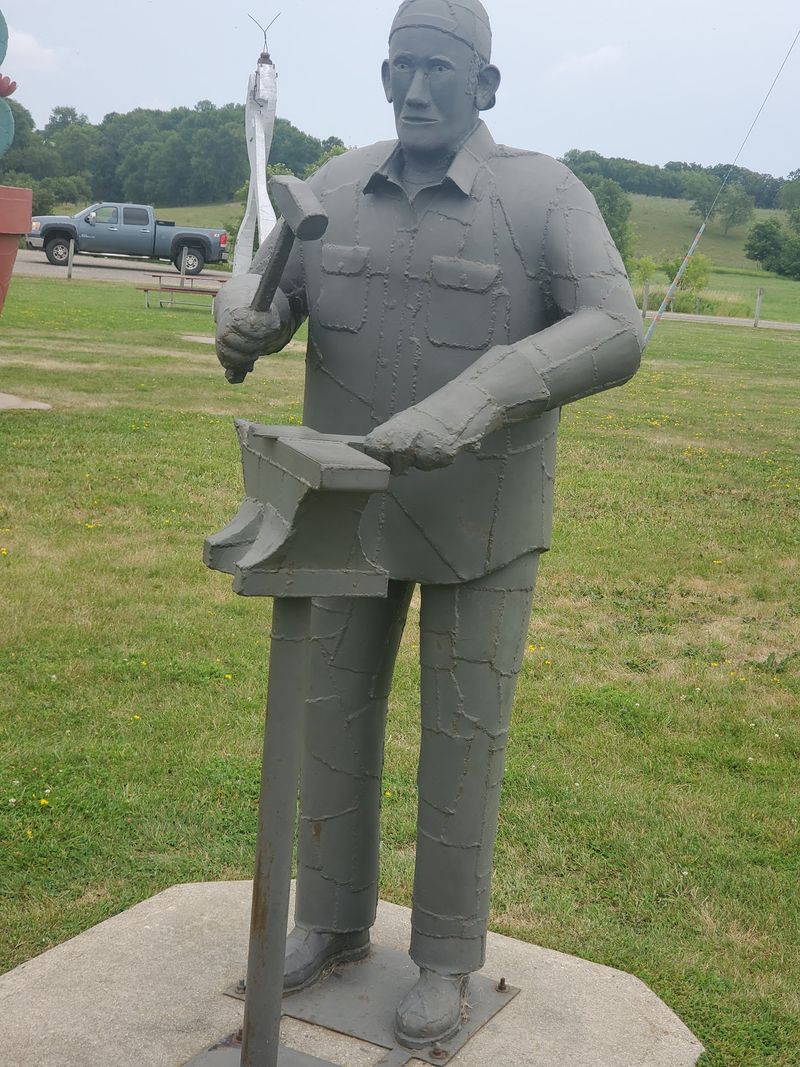
All of this came from one self taught welder named Ken Nyberg, whose name appears on many of the pieces scattered across the grass. He worked with concrete and construction locally, and the sculptures grew out of that hands on background rather than any art school training.
Some lucky visitors have run into him around town, which adds a nice personal layer to the stop.
Knowing a single person built the whole collection changes how you look at it. Each figure carries the same sense of humor and the same fondness for oversized ordinary objects.
There is no gift shop, no admission booth, and no gallery lighting, just a field and a lifetime of welding projects put out where anyone driving by can enjoy them.
Signs near several sculptures mention a guest book, so if you find one, add your name. Small gestures like that keep a free community attraction feeling appreciated by the people who wander through it.
An Astronaut Tribute With a Family Connection
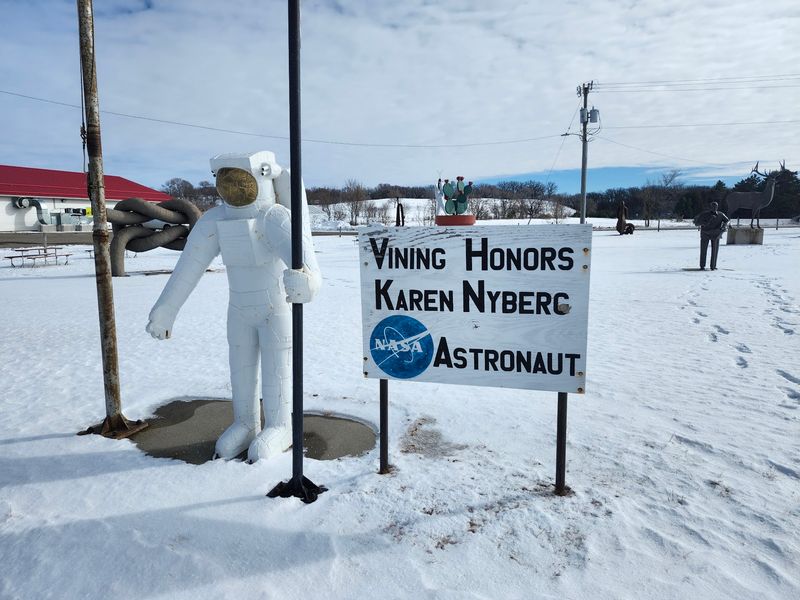
Here is the detail that turns a quirky roadside stop into something genuinely touching. Karen Nyberg, the artist’s daughter, became a NASA astronaut, and there is a sculpture in the park honoring her.
An alien figure stands nearby, which suggests the tribute was made with a grin rather than solemn ceremony.
A faded sign in the park also explains the size ratio between the earth, moon, and sun as represented by certain sculptures. That kind of science themed touch fits a family with a space traveler in it. Kids who like rockets tend to linger at this corner longer than anywhere else.
Think about that combination for a second. A small Minnesota town of roughly seventy people produced both a prolific metal sculptor and someone who orbited the planet.
Read the signage while you are there, even the weathered parts, because the astronaut piece makes far more sense once you understand the family story attached to it.
The Tipping Coffee Cup Across the Lot
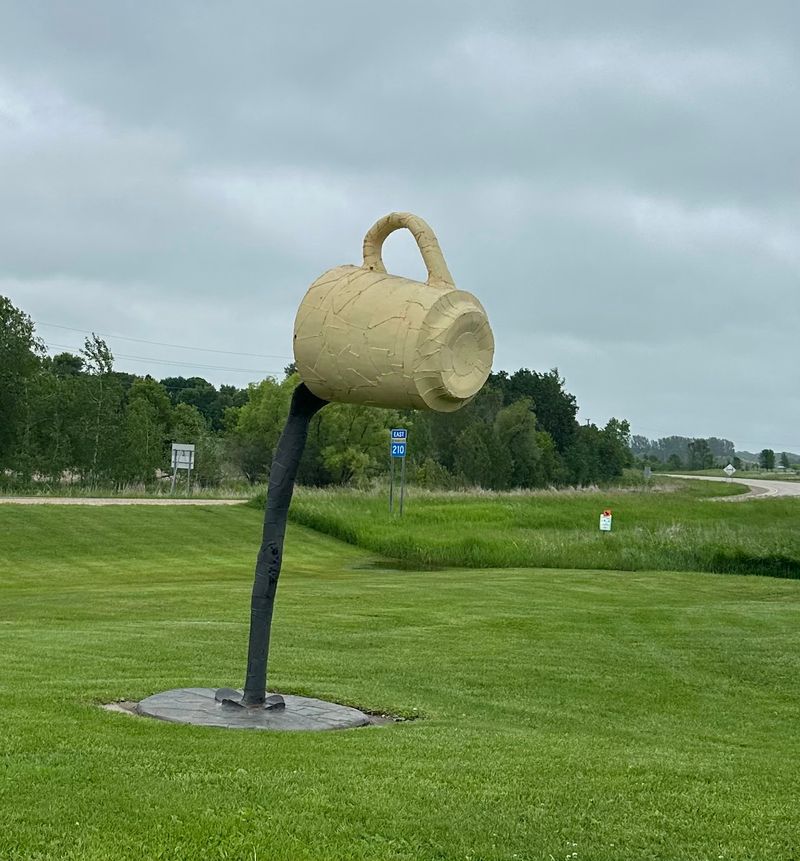
Do not leave without walking to the other side of the gas station. A gigantic coffee cup sits there, tipped over with a solid steel stream of coffee frozen mid pour, spilling toward the ground. It is the kind of visual joke that works instantly, no explanation required.
Because it stands apart from the main cluster of sculptures, a lot of visitors miss it entirely and drive off thinking they saw everything. Take the extra two minutes and cross the lot. The pour itself is the best part, shaped so the liquid looks like it is still moving.
Photographers get creative with this one, holding a real cup underneath the stream for a forced perspective shot. Simple trick, always fun.
Morning is a good time to catch it, since the light hits the cup from a flattering angle and you can grab an actual hot drink at the station next door before wandering back over for another look.
Why This Park Works So Well as a Road Trip Break
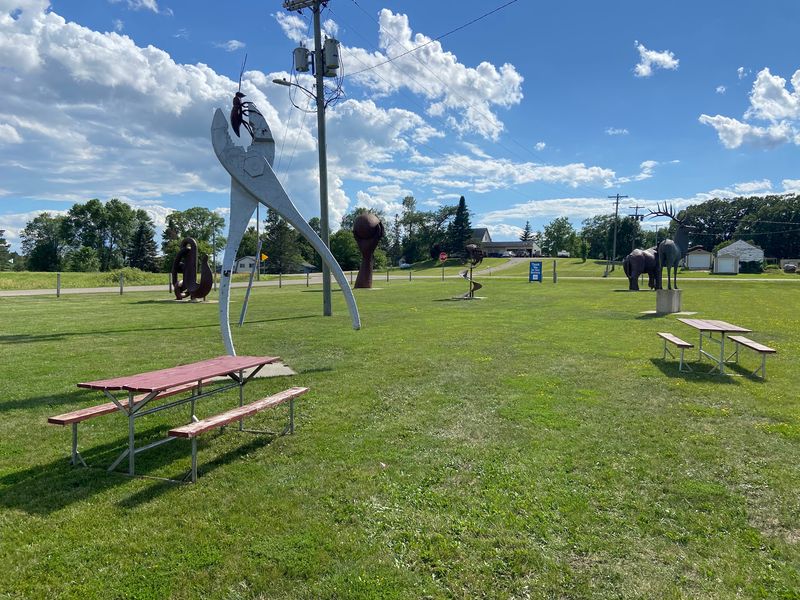
Long drives across Minnesota get monotonous, and Vining sits about twenty five minutes north of Interstate 94, which makes it a genuinely useful detour. You stretch your legs, see something odd, and get back on the road within an hour.
Picnic tables give families a spot to sit while kids burn off energy running between sculptures.
The gas station right beside the park is clean and stocked with real food, so a bathroom stop and a meal can happen in the same visit. Several travelers discover the park purely by accident this way.
Nobody plans it, and then they end up staying longer than expected.
It is open around the clock and costs nothing, which removes every excuse. Plan for thirty to sixty minutes, longer if you photograph everything, and treat the detour along county roads as part of the appeal since the farmland scenery beats highway pavement any day.
Photo Tricks That Make the Sculptures Even Better
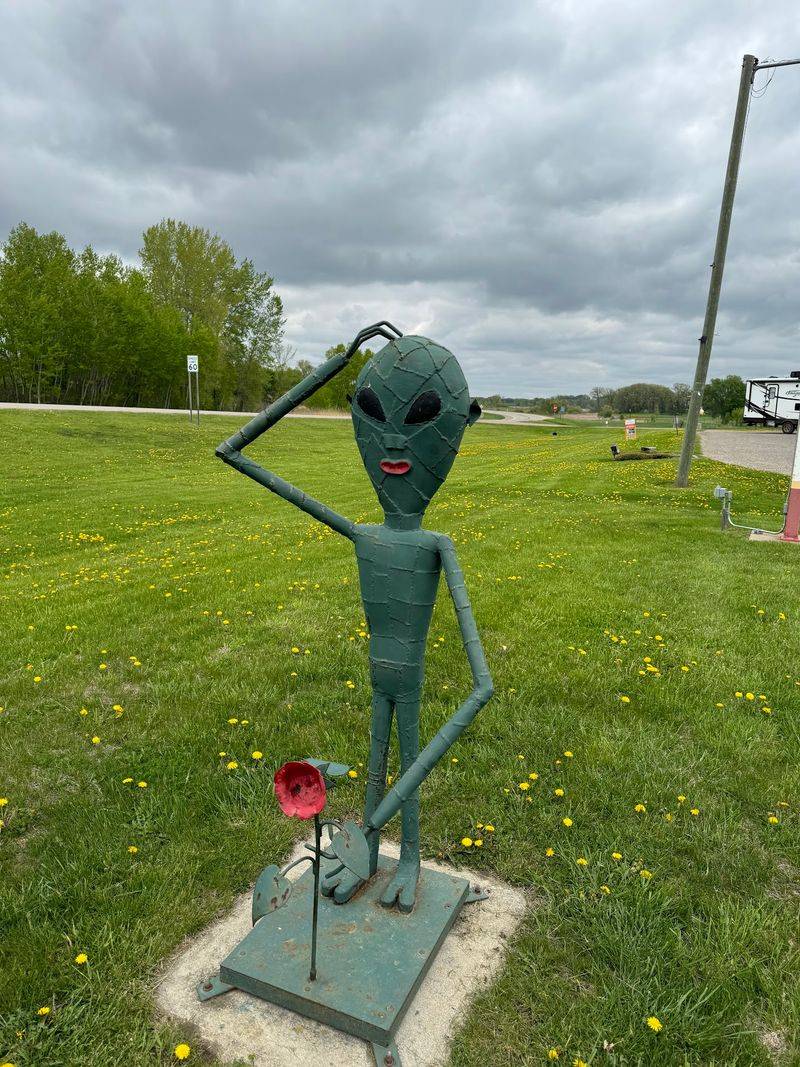
Forced perspective is basically the unofficial sport of this park. Because the sculptures are so much larger than life, standing at the right distance lets you pretend to lift a foot, bite a watermelon, or shake hands with an alien.
Have someone crouch low with the camera and the results look better than you expect.
Golden hour helps enormously. Late afternoon sun brings out the rust tones and casts long shadows across the grass, while harsh noon light flattens everything into gray.
Overcast days work surprisingly well too, since the soft light shows surface texture clearly.
One thing worth keeping in mind is the open sky background. With no trees crowding the field, you can frame a sculpture cleanly against clouds, which makes even a phone photo look intentional.
Walk the whole lawn before shooting so you know what is here. The best angles often come from behind a piece rather than the obvious front view facing the road.
Small Town Vining and the Diners Nearby
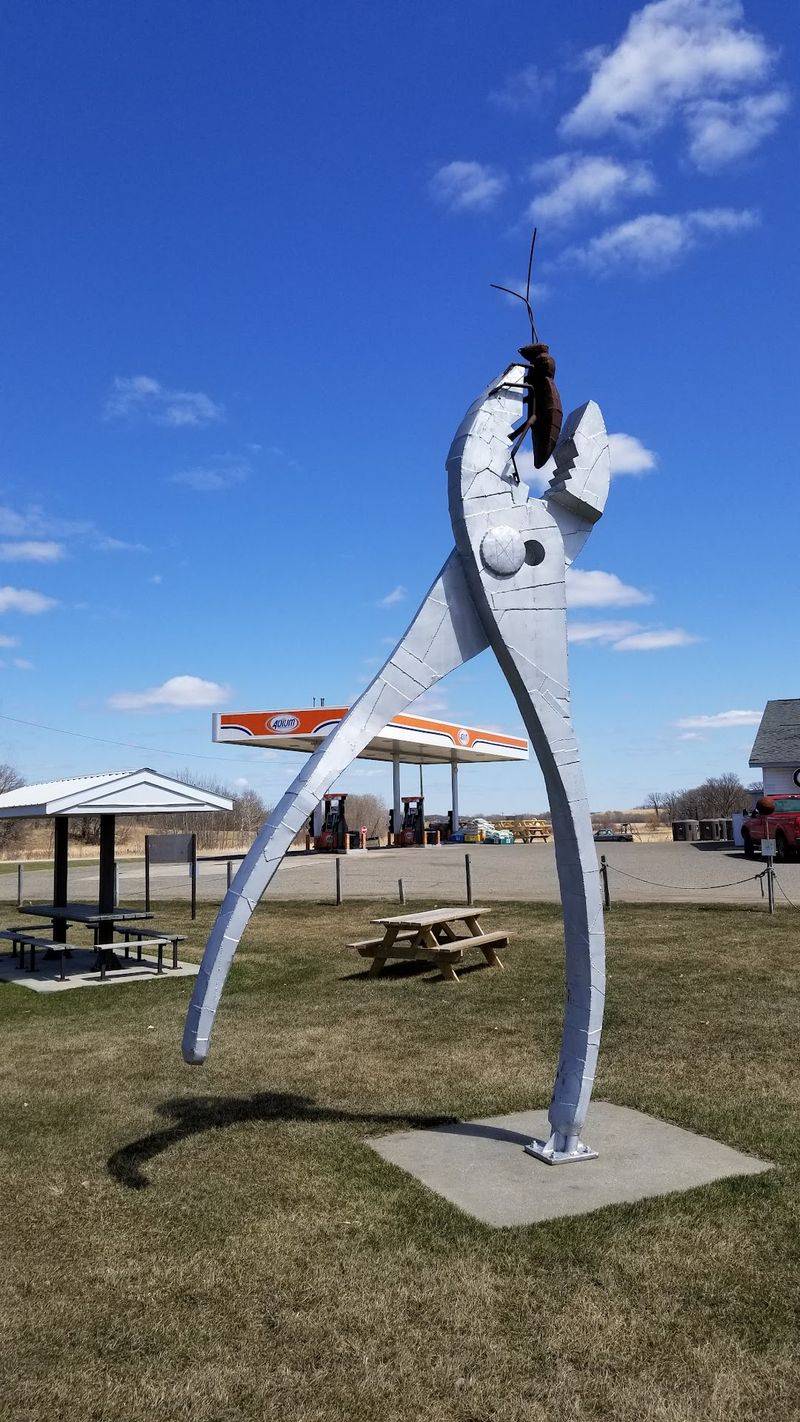
Vining is tiny, with a population of roughly seventy, and that smallness is part of the charm. There is no crowd, no ticket line, and no parking hassle, just a quiet grassy lot and a couple of places to eat.
Locals mention pie and burgers with real enthusiasm, which usually means the food is worth trusting.
Pairing the sculptures with a meal turns a quick photo stop into an actual outing. Sit down, eat something warm, then wander back for a second lap around the metal menagerie.
That combination fills an afternoon nicely.
Car shows and community events occasionally pop up in the area during summer, which adds unexpected color to a visit. Nothing is guaranteed, but arriving on a weekend improves the odds of catching something extra.
Fuel up while you are here too. Gas stations thin out considerably on the county roads heading toward Alexandria, and the one beside the park is the most convenient option around.
Practical Notes Before Pointing the Car North
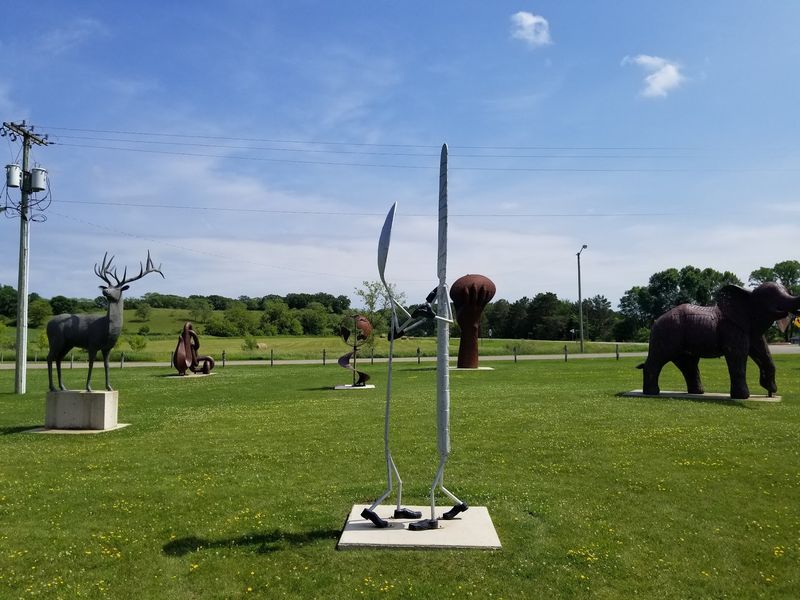
Comfortable shoes matter more than you would guess, since the whole park is grass and can be soft after rain. Bug spray helps on humid summer evenings, and a hat is smart because shade is basically nonexistent out on that lawn.
Nothing here is fenced, so the sculptures are all viewable from every angle.
Late spring through early fall is the easiest window for a visit, though the park never closes and winter snow gives the steel figures a completely different mood.
Expect a compact space rather than a sprawling museum. Managing that expectation is the key to enjoying it, because the appeal comes from personality and surprise instead of size.
Bring water, keep an eye on kids near the road, and let yourself be amused by the sheer oddness of a life sized elephant welded from mower blades in a town most people have never heard of.
Address: 6001 E Front St, Vining, MN 56588, United States
