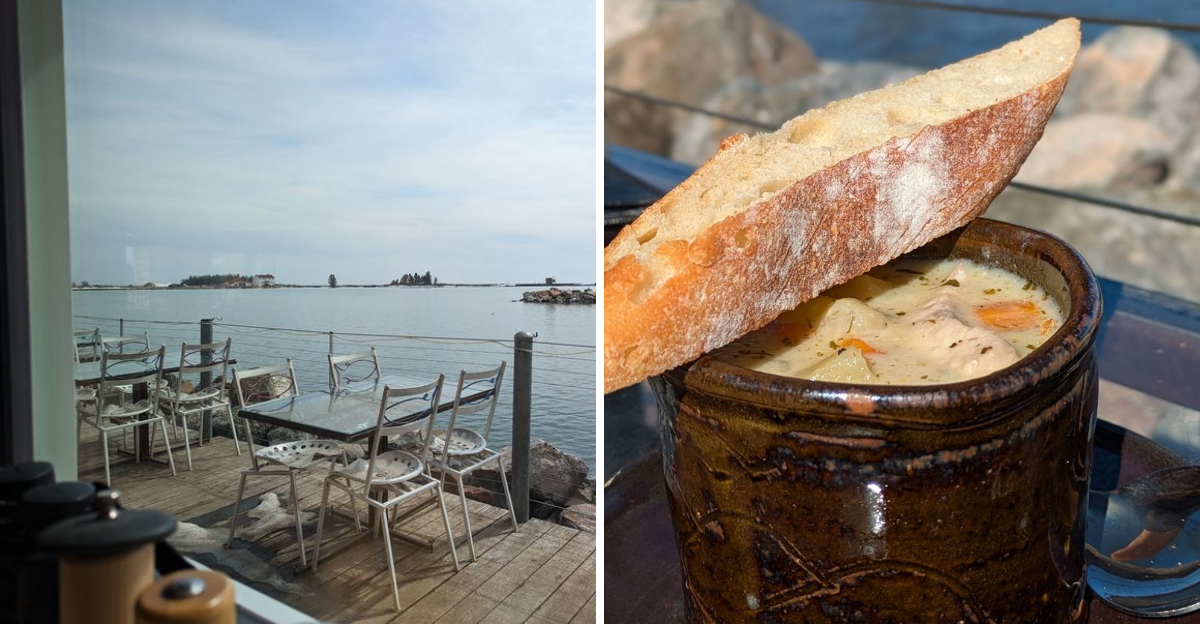
Some meals stick with you not just because of the taste, but because of the way they’re served. This Minnesota spot understands that. The fish chowder here is legendary – rich, creamy, and packed with fresh local catch – but it arrives in something that makes it even more memorable.
The bowls are handmade by local potters, each one slightly different in shape and glaze. It’s a small touch, but it transforms a simple bowl of soup into something that feels crafted and personal.
You hold it in your hands, notice the weight, the texture, and suddenly the meal becomes about more than just eating. It becomes about place and care.
Come for the chowder, stay for the bowls, and leave with a story. Minnesota’s most thoughtful dining experience is waiting to warm you up.
A Harbor Building That Looks Like It Grew There
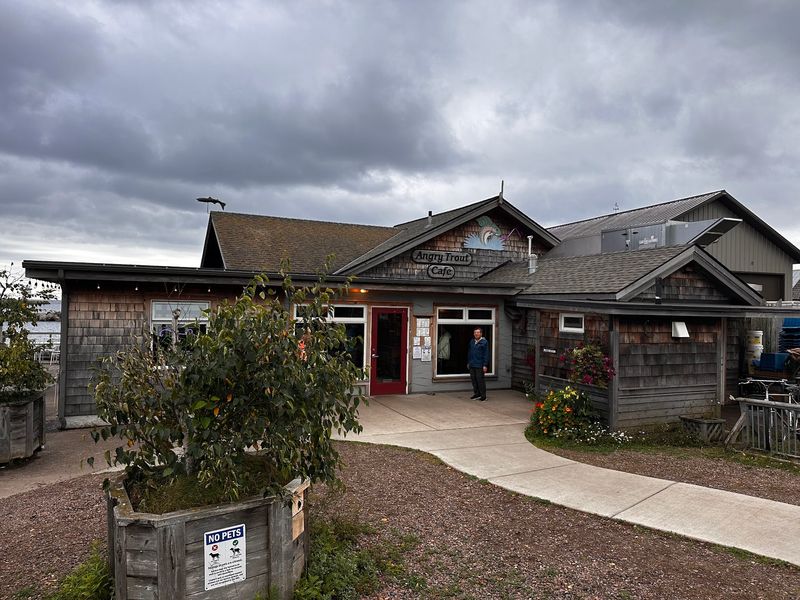
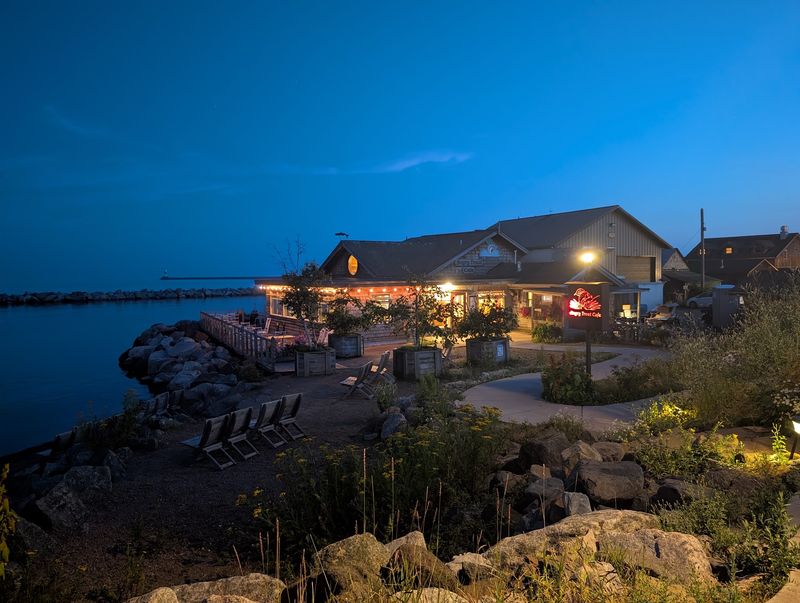
My first impression came from outside, before any food arrived. The building sits low against the harbor, wood siding softened by years of lake wind, with that famous painted fish greeting everyone at the door.
Nothing about it feels designed for photos, which is exactly why it photographs so well. The structure once served as a fishing shack area near the working docks, and it still carries that honest, salt-worn character.
Gravel crunches underfoot on the short walk down from Highway 61. Gulls patrol overhead like they own the parking area.
What surprised me most was how small it seems from the road and how much space opens up once you step around toward the water. Tables spill outward toward the harbor, and the whole place tilts its attention toward Lake Superior.
Arrive a few minutes early and simply stand near the shoreline. That short pause sets the tone for everything that follows.
Pottery Bowls Made By Hands Nearby
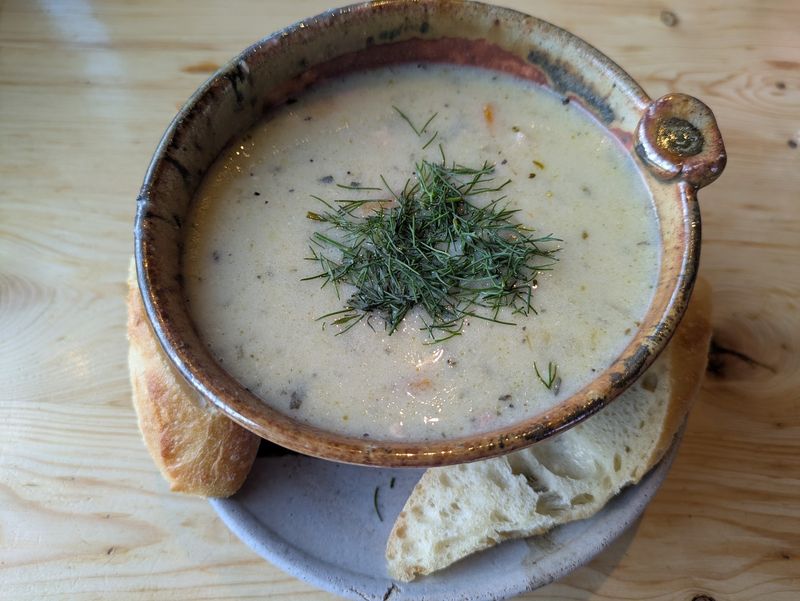
Holding the chowder bowl was the moment the whole meal clicked for me. It has weight. The glaze shifts in color, the rim isn’t perfectly round, and you can feel where a potter’s thumb pressed the clay.
Serving soup in handmade stoneware sounds like a small detail until you experience it. Heat holds longer, the spoon makes a softer sound, and the food somehow tastes more considered.
The cafe leans hard into local craft, listing the artisans and makers behind the dishes and furnishings right on the menu. That transparency is charming. It turns lunch into a low-key gallery visit.
If pottery interests you, take a slow look at the tables, doors, and chairs too, since much of the woodwork comes from regional hands as well. Grand Marais has a strong art community, and this dining room quietly showcases it without any fuss.
Chowder That Tastes Like The Lake It Faces
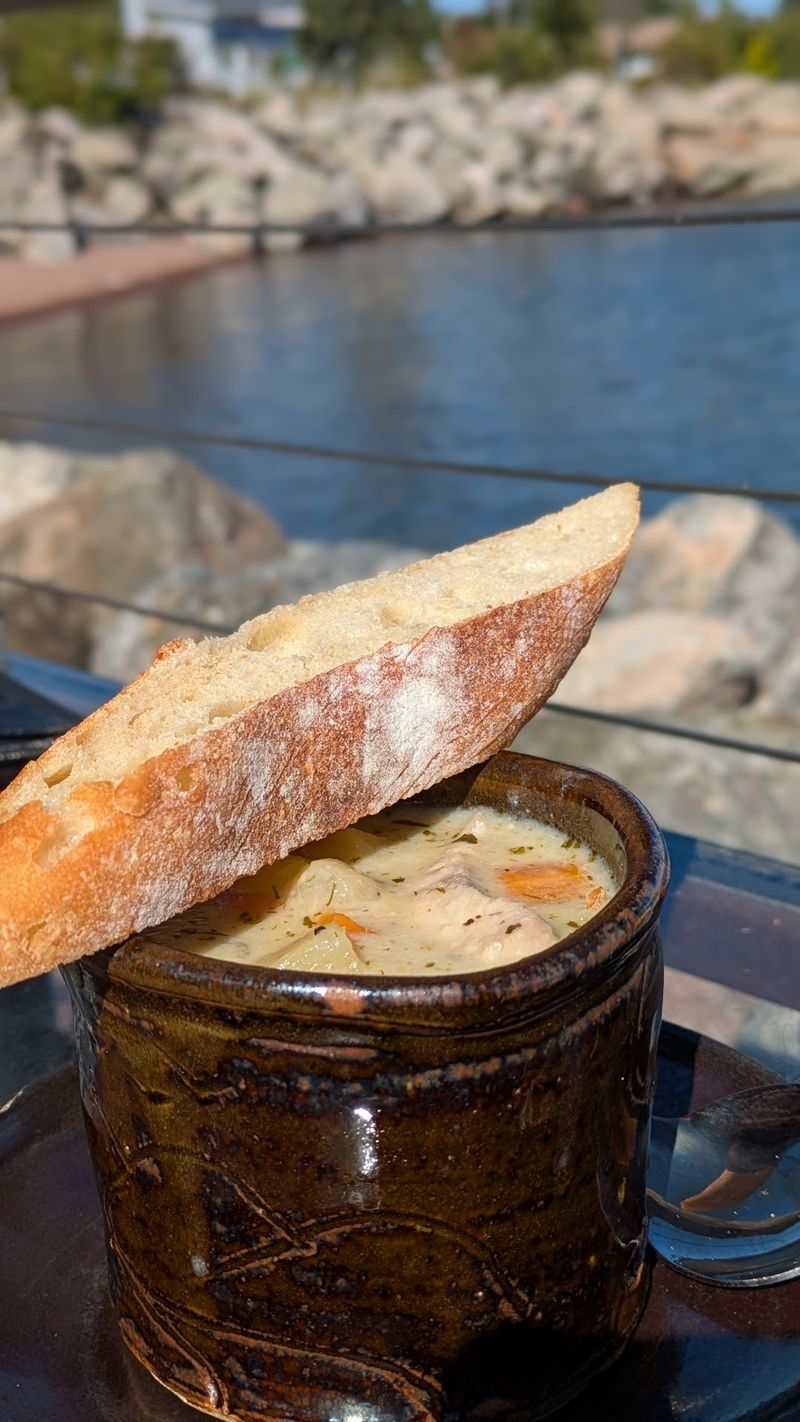
Let me talk about the reason most people make the detour. The chowder here leans lighter than the heavy, flour-thick versions found elsewhere, letting the smoked and fresh fish flavor come forward instead of hiding under cream.
Trout and salmon show up depending on the day. Bits of vegetable soften into the broth, and a little pepper wakes everything up nicely.
Ordering a cup rather than a full bowl leaves room for other things, which I recommend on a first visit. Fish sourced from Lake Superior waters gives it a genuine sense of place, and that connection matters more than any fancy technique.
Eating it while the actual lake laps against rocks a few steps away creates a strange, satisfying loop. Cold wind outside, warm bowl inside. Simple math that works every single time on the North Shore, spring through late autumn.
Deck Seating Right At The Water’s Edge
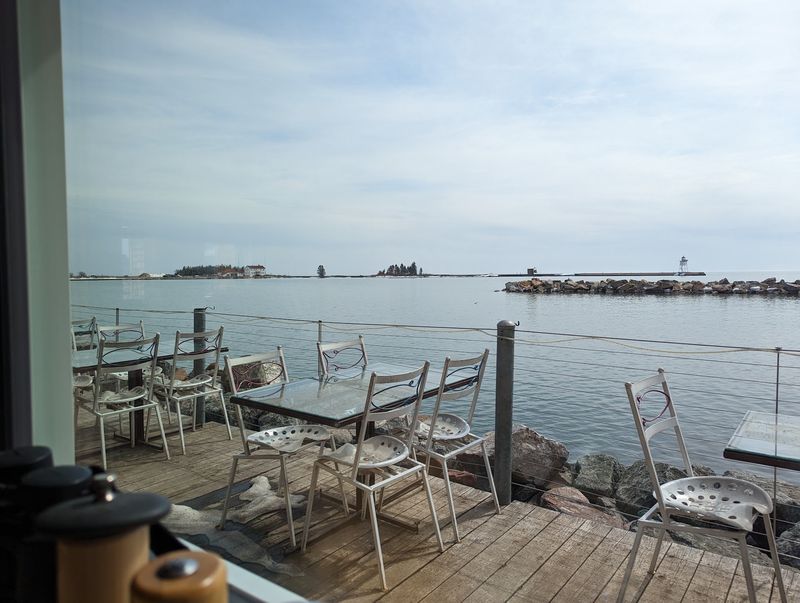
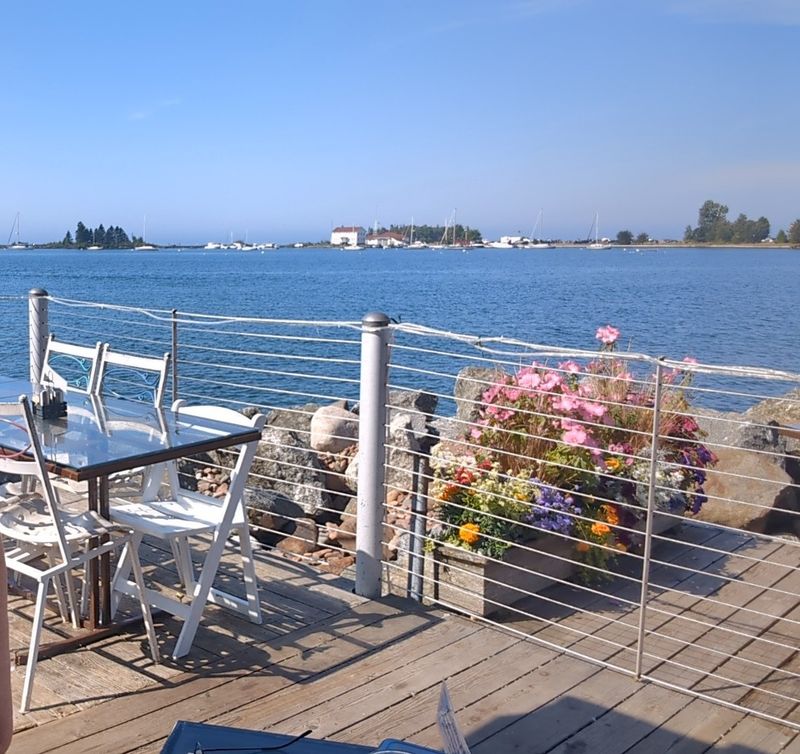
Given the choice between inside and outside, I picked the deck without hesitation. Tables sit close enough to the water that ripples are visible between the boards, and sailboats drift past while you eat.
Breezes off Lake Superior keep things cool even in July, so a light jacket is a smart move. Sunshine can be deceptive up here. Sailboat masts, the harbor lighthouse, and the long rocky breakwater fill the view in every direction. Kayakers paddle by occasionally and wave. Nobody rushes.
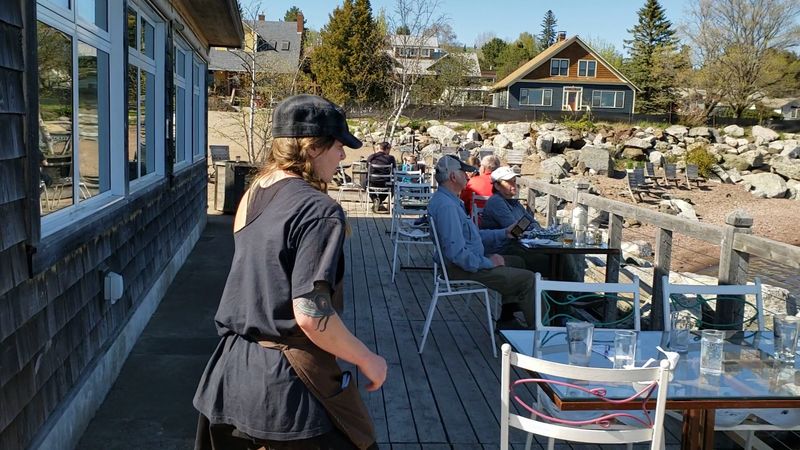
Staff move easily between indoor and outdoor tables, and they were happy to shift seats when shade crept across the deck during my visit. Chairs and tables are handcrafted from local wood, which adds to the pleasantly rustic feel underneath your elbows.
For anyone traveling with a camera, the golden hour light bouncing off the harbor from this deck is remarkable.
Local Art Covering Nearly Every Surface
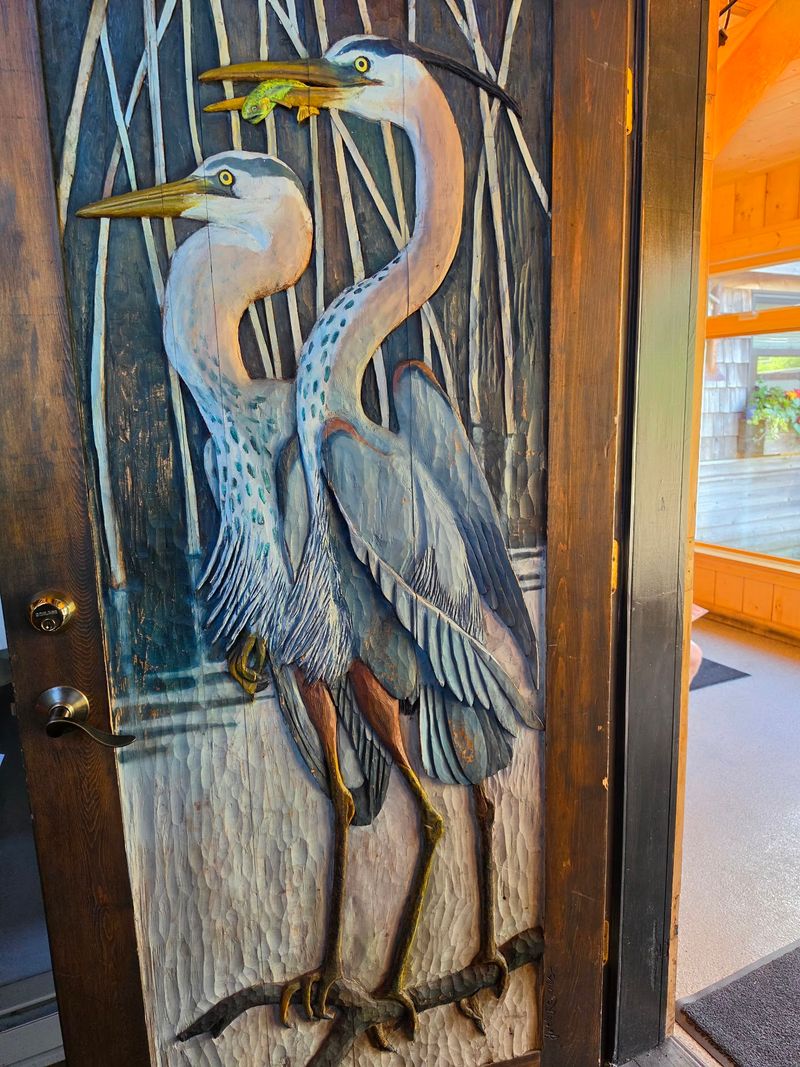
Inside, my eyes kept wandering upward and sideways instead of staying on the plate. Paintings, carvings, and mixed media pieces cover the walls, and the frames themselves often look handmade.
Doors, light fixtures, and even hardware carry the mark of regional artisans. The menu doubles as a credit list, naming who made what. That approach makes the space feel personal rather than decorated by a corporate designer.
Bay windows frame the harbor like living artwork, and the seat beside one is worth requesting if available. Wood grain glows under warm lighting once evening settles in. Grand Marais has long attracted painters, potters, and woodworkers, thanks partly to the nearby folk school tradition.
Eating surrounded by that creative energy adds something you can’t quite put on a receipt. Take a slow lap around the dining room before leaving. Small surprises hide in corners.
A Living Wage Policy Built Into The Menu
Something unusual happens with the bill here, and I appreciated knowing about it upfront. A twenty percent gratuity is already built into the listed menu prices, supporting a living wage approach for the staff. No mental math at the end. No awkward pen hovering over a receipt.
Prices look higher at first glance because of it, so factor that in before comparing to other spots along the shore.
The policy reflects a broader philosophy visible throughout the cafe, from local sourcing to composting and careful energy use. Sustainability language appears on the menu alongside the dish descriptions.
Reading it while waiting for food gave me a better sense of why the place operates the way it does. Budget travelers should plan accordingly and maybe share an appetizer plus a cup of chowder. The setting alone justifies the stop, and the transparency is refreshing.
Timing Your Visit Around The Wait
Popularity has consequences, and a short wait is normal during peak summer months. Hosts hand out a text-message system, which meant I could stroll the harbor instead of standing in line.
Fifteen minutes disappeared quickly while walking toward the breakwater. Best waiting room in Minnesota, honestly. Doors open at eleven in the morning, with closing times shifting slightly between weekdays and weekends, so a quick check ahead helps.
Early lunch around opening or a dinner before the evening rush both worked well for me. Weekday visits feel noticeably calmer than Saturday afternoons in July. Fall brings cooler air, fewer crowds, and spectacular color along the Superior Hiking Trail nearby.
Parking sits close by but fills fast, so patience pays off. A quick phone call to confirm seasonal hours saves disappointment, particularly during shoulder season when North Shore schedules can shift.
Plates Beyond Fish For Every Appetite
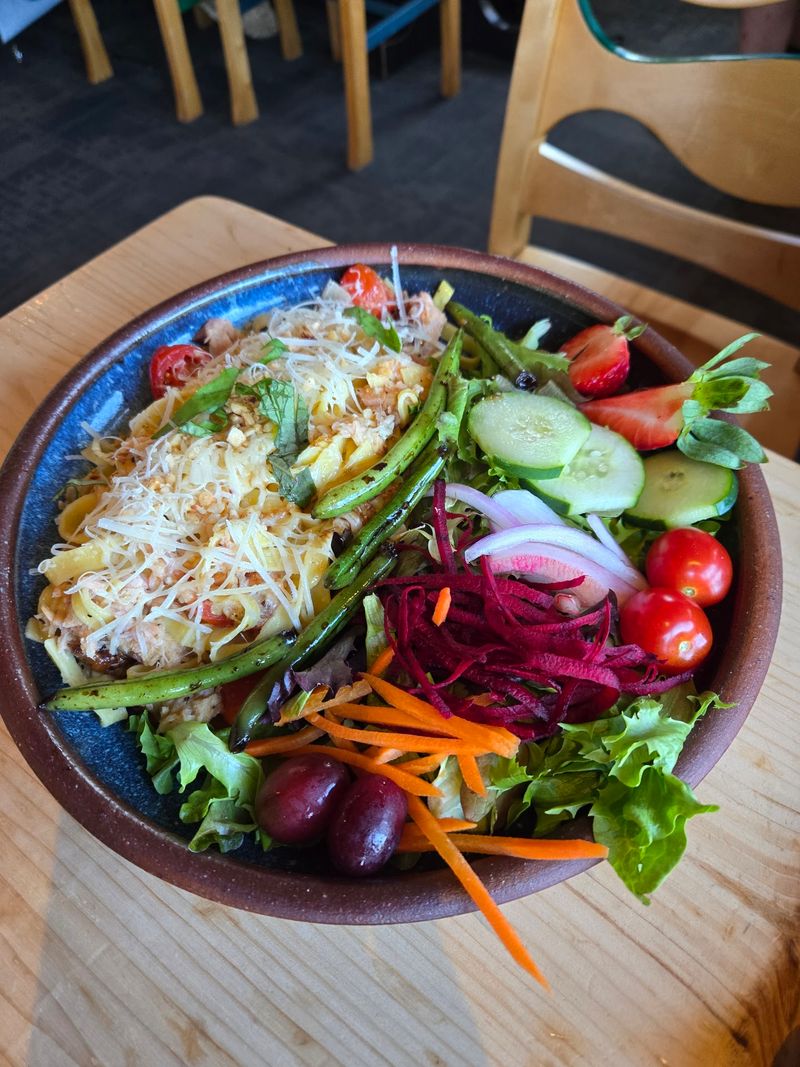
Traveling with someone who skips seafood? No problem here. Salads arrive loaded with fresh produce, wild rice shows up in several forms, and mushroom tacos have earned a devoted following among regulars.
Dressings are made in house, which makes a real difference in a simple bowl of greens. Pasta dishes lean garlicky and generous. Waffle fries deserve a mention because they come out light rather than heavy, and the house tartar sauce gets talked about constantly.
Kids have their own options, so families won’t struggle at the table. Desserts like salted maple pie are genuinely rich, and sharing one is a reasonable strategy. Portions run large enough that leftovers happen often.
Wild rice deserves special respect in Minnesota, being a traditional food harvested in the region for generations, and seeing it woven through the menu felt appropriate rather than trendy.
The Short Walk To The Breakwater And Lighthouse
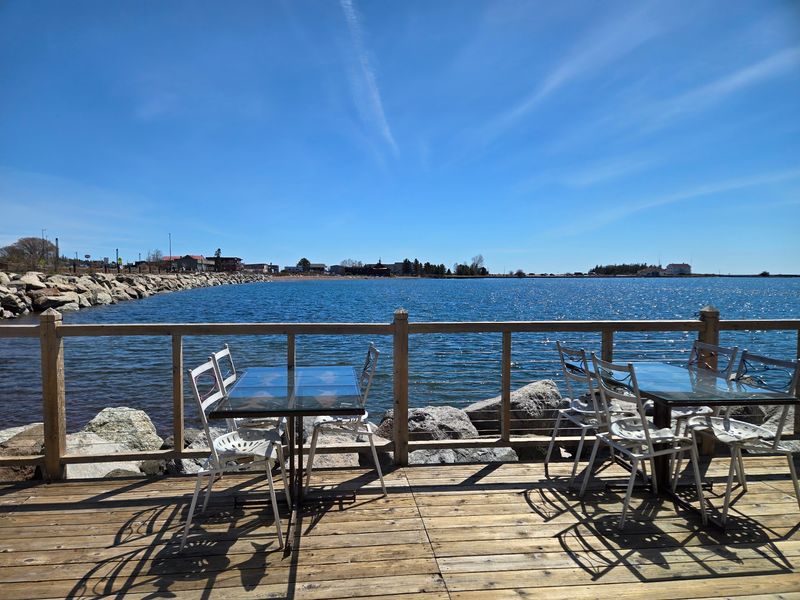
After eating, my legs wanted movement and the harbor obliged. The breakwater stretches out from the shoreline toward a small lighthouse, and the walk takes maybe fifteen minutes each way.
Waves slap against the rocks below. On calm days, the water turns an almost unbelievable shade of blue. Footing can be uneven and slippery when wet, so sturdy shoes beat sandals here.
From the end, the cafe looks tiny against the treeline, which gives a nice sense of scale to the whole village. Artist studios, a bakery, and shops sit within easy strolling distance along the main streets. Pairing a meal with that walk turns a quick stop into a proper afternoon.
Grand Marais itself is compact enough to explore without a car once parked. Sunset from the harbor rocks is a fitting end, especially in late summer when the light lingers.
Why This Stop Anchors A North Shore Road Trip
Road trips collect a lot of forgettable meals, and this one refuses to blend in. Between the pottery, the harbor breeze, and fish pulled from nearby waters, the whole experience feels stitched to its location in a way chain restaurants never manage.
Grand Marais sits near the end of the paved North Shore route, close to the Gunflint Trail and the Boundary Waters. That geography makes the cafe a natural pause before heading deeper into wilderness or turning back south.
Bring a jacket, expect prices that reflect the wage policy, and give yourself time to linger rather than rushing to the next overlook. My advice is simple. Order the chowder, sit outside if weather allows, and let the lake do most of the entertaining.
Address: 408 W Hwy 61, Grand Marais, Minnesota
