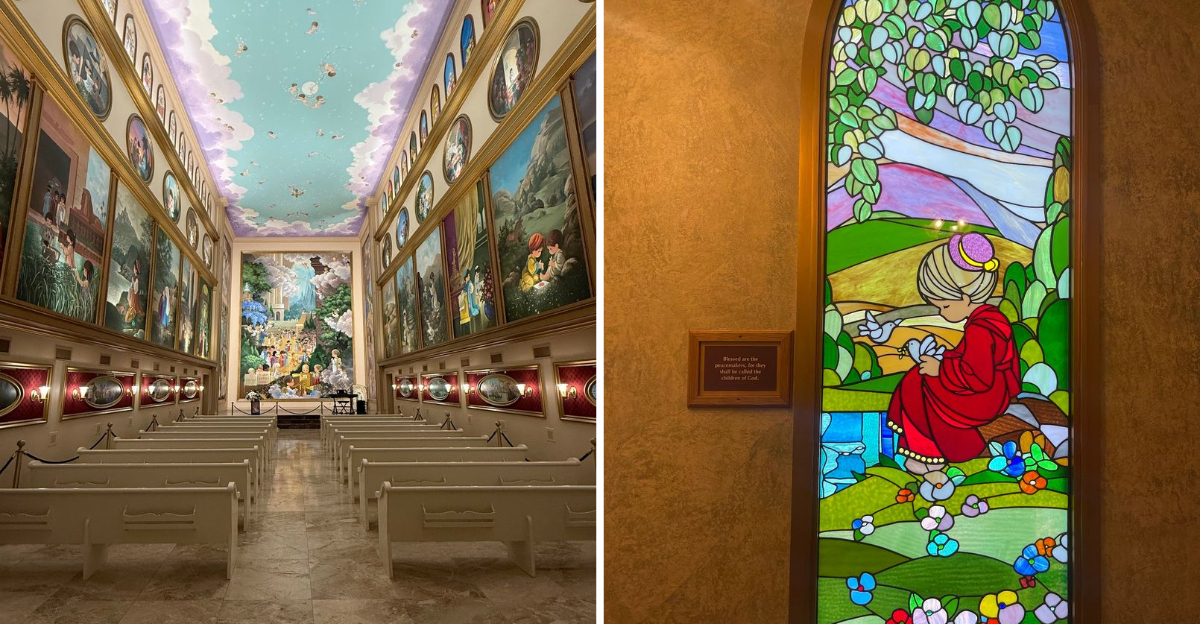
Painted angels, bronze fountains, and stained glass stretched across a property in southwest Missouri where I expected nothing more than a quick stretch of the legs. I had pulled off a quiet stretch of road expecting a photo or two, and instead I ended up spending nearly three hours wandering the grounds.
The chapel at the center of it all is wrapped in hand-painted murals that climb from the baseboards all the way to the ceiling, and I honestly stopped mid-step when I walked in.
The artist behind those teardrop-eyed figurines spent years up on scaffolding painting every inch of it himself, spending countless hours on his back atop a tall scaffold to paint angels on the ceiling alone.
The murals tell stories from the Bible, and the faces in them carry that same sweet, gentle expression you see in the figurines. Some people call it the American Sistine Chapel, and after seeing it in person I understand why the nickname stuck.
I walked out feeling like I had stumbled into something far bigger than a roadside curiosity. That stop turned into the highlight of the whole drive.
The Gates and Doors That Set the Mood
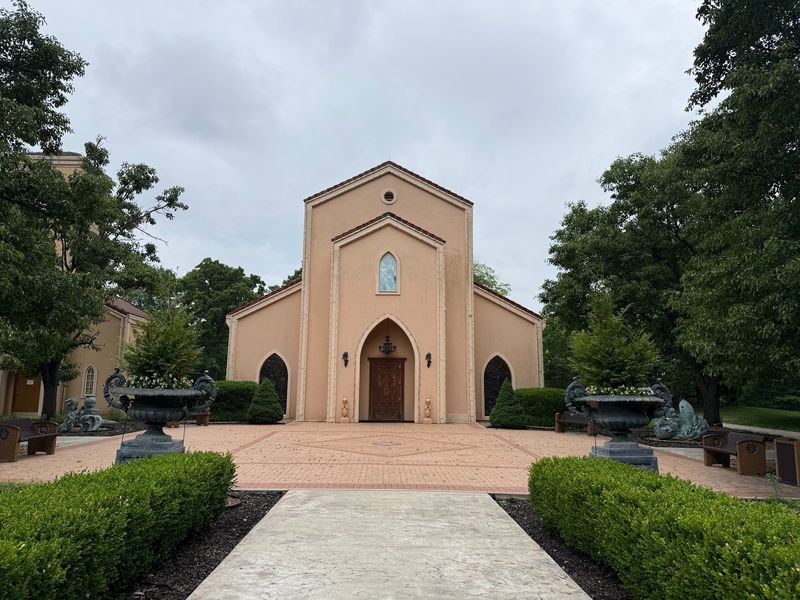
Before I ever saw a single mural, the entrance already had my attention. Ornate wrought-iron gates and fencing stretch across the front of the property, and the detail in that metalwork is genuinely surprising for a roadside stop.
Here is the part I loved learning: Samuel Butcher first sketched those gate designs on paper napkins. They were later forged in the Philippines and shipped across the ocean to Missouri.
Flanking the doorway are two bronze relief panels, each one nine feet tall and weighing 850 pounds. The east panel tells Old Testament stories, the west panel handles the New Testament, and both started as napkin drawings too.
Then comes the front door itself, carved from Narra wood, nearly seven feet high and around 350 pounds. Three angels with bowed heads sit inside a tangle of vines and Christian fish symbols.
A line from Habakkuk 2:20 is carved into the wood, asking visitors to be silent before entering. I found myself reading it twice.
My advice is simple. Do not rush this part.
Give yourself five minutes outside the doors, look at the bronze work up close, and notice how much detail hides in the corners before you step inside.
Hallelujah Square Steals the Room
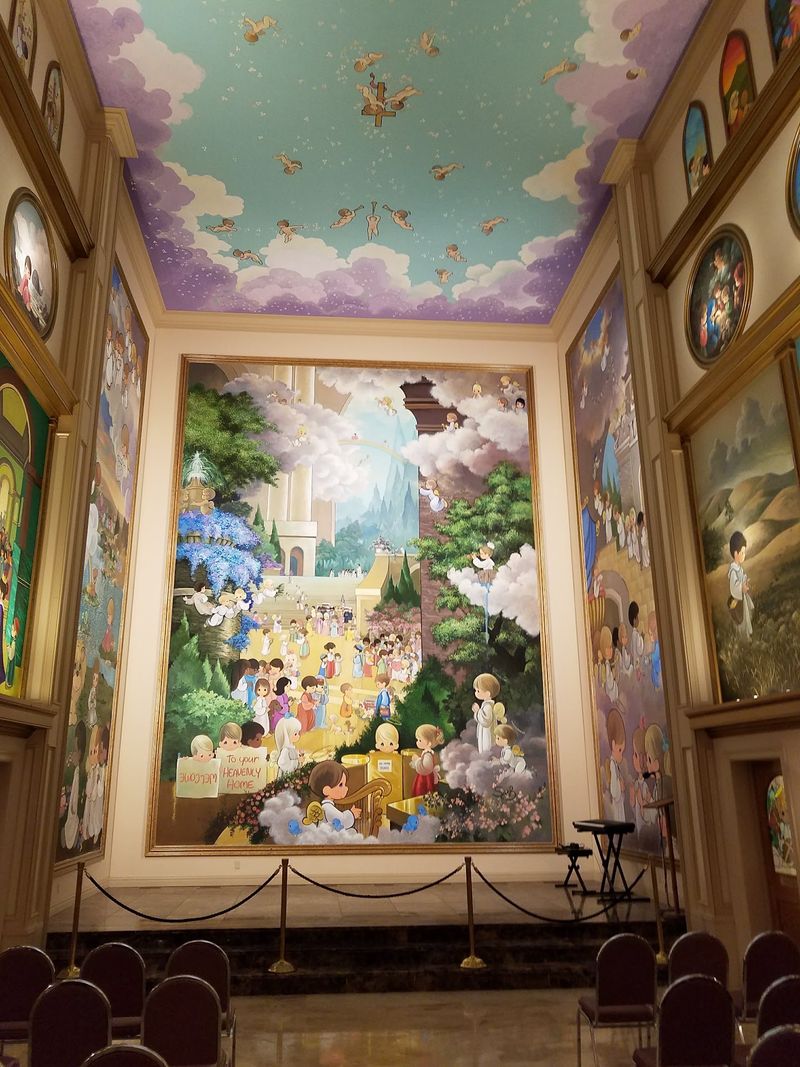
One mural pulls your eyes forward the second you step in, and it does not let go. Hallelujah Square commands the far end of the sanctuary, rising a full 26 feet from floor to ceiling.
Butcher spent two years just working out the idea for it before he ever picked up a brush. He knew this single painting would shape how everyone remembered the chapel.
The scene shows a child’s vision of heaven, crowded with joyful figures. Many of them represent real people who mattered in the artist’s life.
His mother, Evelyn Mae, appears with jet-black hair and a lavender robe. His brother Ray shows up in the bottom right corner, quietly scrubbing a wall, a nod to Ray’s years working as a school janitor.
Jesus sits at the heart of the composition, surrounded by children. That placement was intentional and matched Butcher’s hope that Jesus would be centered in everything he made here.
Here is a detail I would have completely missed without a guide. Hallelujah Square is the only painting in the entire chapel that Butcher signed, and it reportedly took him three tries to get the signature right.
Look for it.
Murals Wrapping Every Wall, Floor to Ceiling
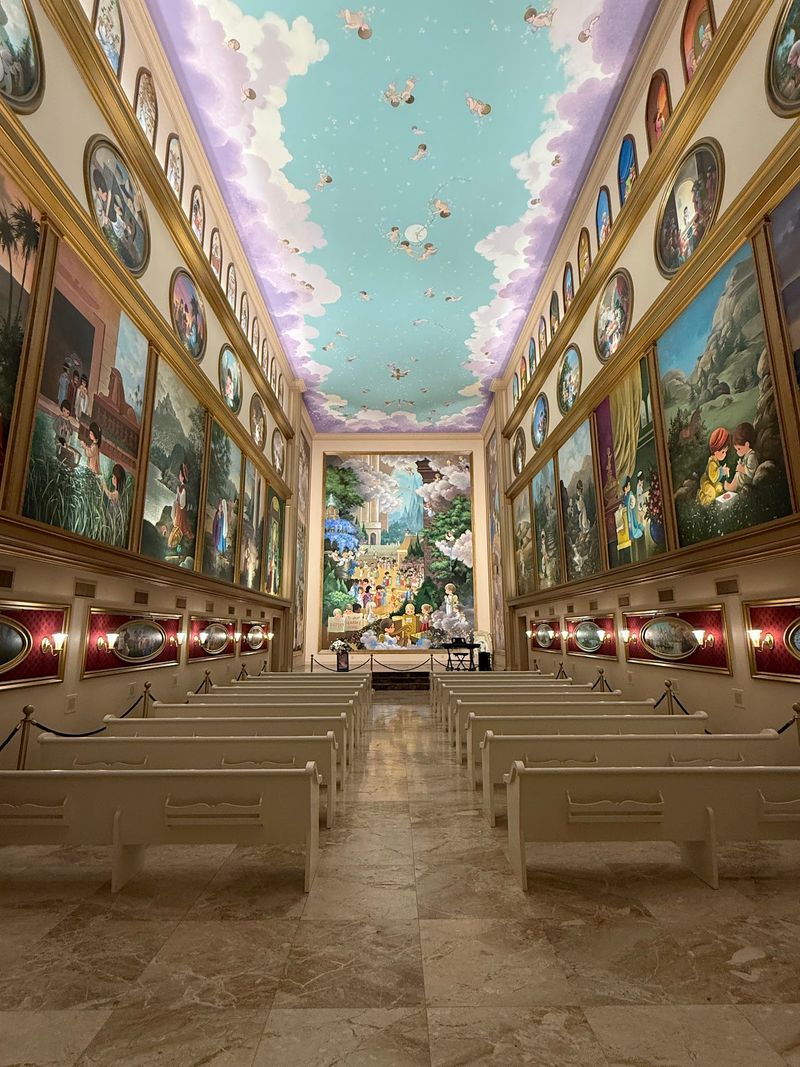
The moment the door closed behind me, the room swallowed me in color. Pastel murals cover every wall and stretch overhead, so there is nowhere to look that is not painted.
Eighty-four hand-painted murals fill this space, spread across more than 9,000 square feet of interior surface. Butcher painted them himself, spending years working from scaffolding.
Every scene pulls from the Old and New Testaments, but they are told through those familiar wide-eyed children with the soft, rounded faces. Familiar Bible stories suddenly feel like picture-book pages you can walk around inside.
What struck me most was how quiet it stays in there. Sound seems to soften, and people naturally lower their voices without anyone asking them to.
I sat in a pew for a while and kept spotting things I had missed on my first pass. A small animal here, a tucked-away figure there.
Butcher kept returning over the years to refine and add to the paintings, which is why staff describe it as a living masterpiece. Bring patience and maybe a neck stretch, because you will be looking up a lot.
Twenty minutes inside is not nearly enough.
Stained Glass, Carved Wood, and Cast Bronze
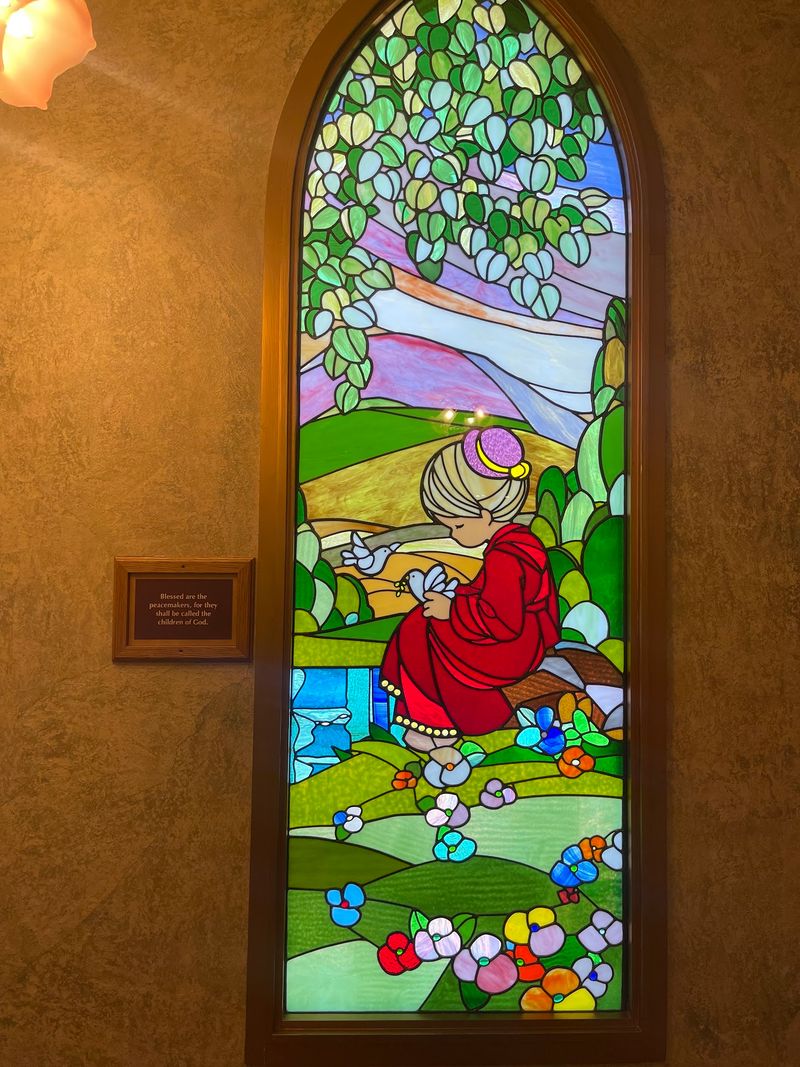
Paint is only part of the story here, which caught me off guard. Thirty stained-glass windows line the chapel, and Butcher designed every one of them personally.
Together they walk you through the entire 23rd Psalm, verse by verse, using those same round-faced figures. Reading scripture as a series of windows instead of a page is a strange and lovely experience.
Timing matters more than you would think. When I visited in the late morning, sunlight poured through and scattered colored shapes across the floor and pews.
The woodwork deserves a look too. Hand-carved wooden doors lead from the vestibule into the main sanctuary, and Butcher worked alongside skilled artisans in the Philippines for over a year to complete them.
Add the bronze entrance reliefs and you get four different crafts working together in one building. Paint, glass, wood, metal.
What ties it together is that none of it feels like an afterthought or a filler. Each medium carries the same soft style and the same message.
My tip: walk the perimeter of the sanctuary slowly and read the windows in order. It changes how the whole room reads, and it only takes a few extra minutes.
Philip’s Room and Its Quiet Weight
Off the main hall sits a smaller room that changes the tone completely. It honors Philip, Butcher’s son, who died in a car accident.
A mural here shows Philip entering heaven. Below that scene, his empty bed is surrounded by grieving family members, and the honesty of it hit me harder than anything else on the property.
Remembrance books are kept in the room, and visitors are welcome to sign one in memory of someone they have lost. Several people were doing exactly that while I was there, taking their time with it.
Nobody hurries you along. There is no sign telling you how to feel or how long to stay.
That is what shifts this place from an art attraction to something more personal. Grief and hope sit side by side on the same wall, painted in the same gentle style as everything else.
I would suggest saving this room for after you have seen the main sanctuary. Coming in fresh from the bright colors makes the contrast land differently.
Even if you have no connection to the figurines or the artist, the room is worth a few silent minutes. It is easy to miss if you are moving fast.
Gardens, Fountains, and the Avenue of Angels
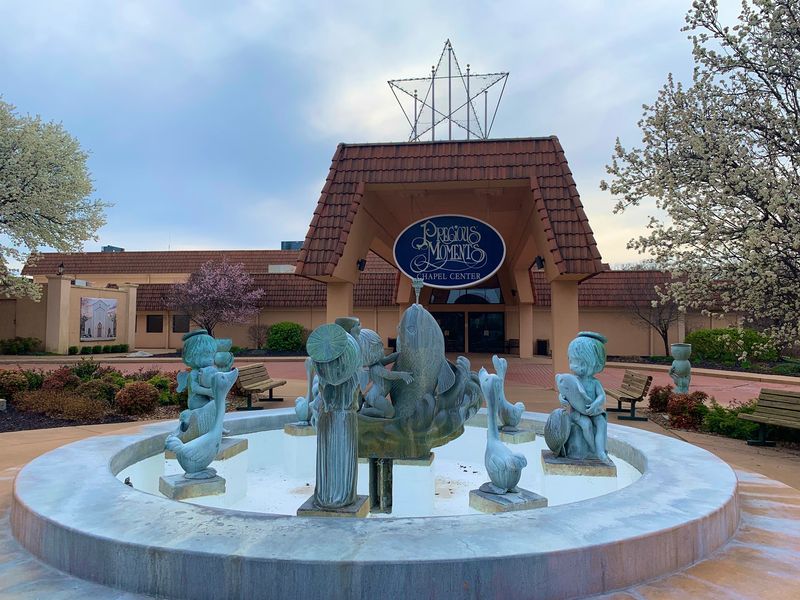
Stepping back outside after all that color felt like exhaling. The grounds are wide, green, and kept in beautiful shape, with paved paths that make wandering easy.
Bronze fountains dot the landscape, and the Avenue of Angels lines a walkway with angelic figures. Life-size sculptures pop up in unexpected spots, some half hidden behind shrubs, which turns the stroll into a low-key scavenger hunt.
On the east side of the property is Resurrection Cave, marked by a wooden cross and a hand-sculpted bronze angel. Butcher considered this spot so meaningful that it influenced where he built the chapel in the first place.
Farther along, Grandpa’s Island sits in the stream overlooking Center Creek. Butcher built a playhouse there for his grandchildren, which is one of those details that makes the whole place feel like a family project rather than a monument.
Practical note from experience: there is real walking between buildings, so check the forecast and wear shoes you can cover ground in.
Shade is available in spots, and there are benches near the chapel if you want to sit with the view. I lingered longer out here than I planned to.
Planning the Visit, Tours, Museum, and Gift Shop
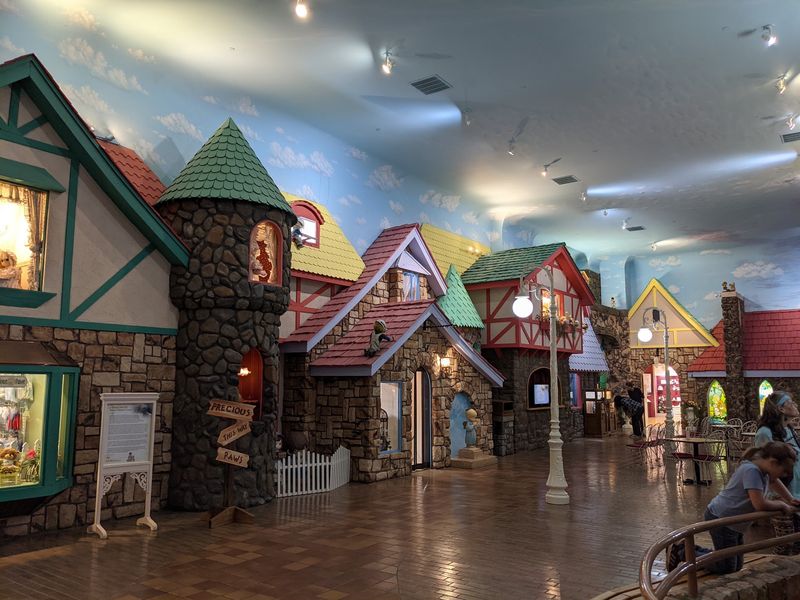
Give yourself more time than you think you need. I met people who planned on forty-five minutes and stayed for hours.
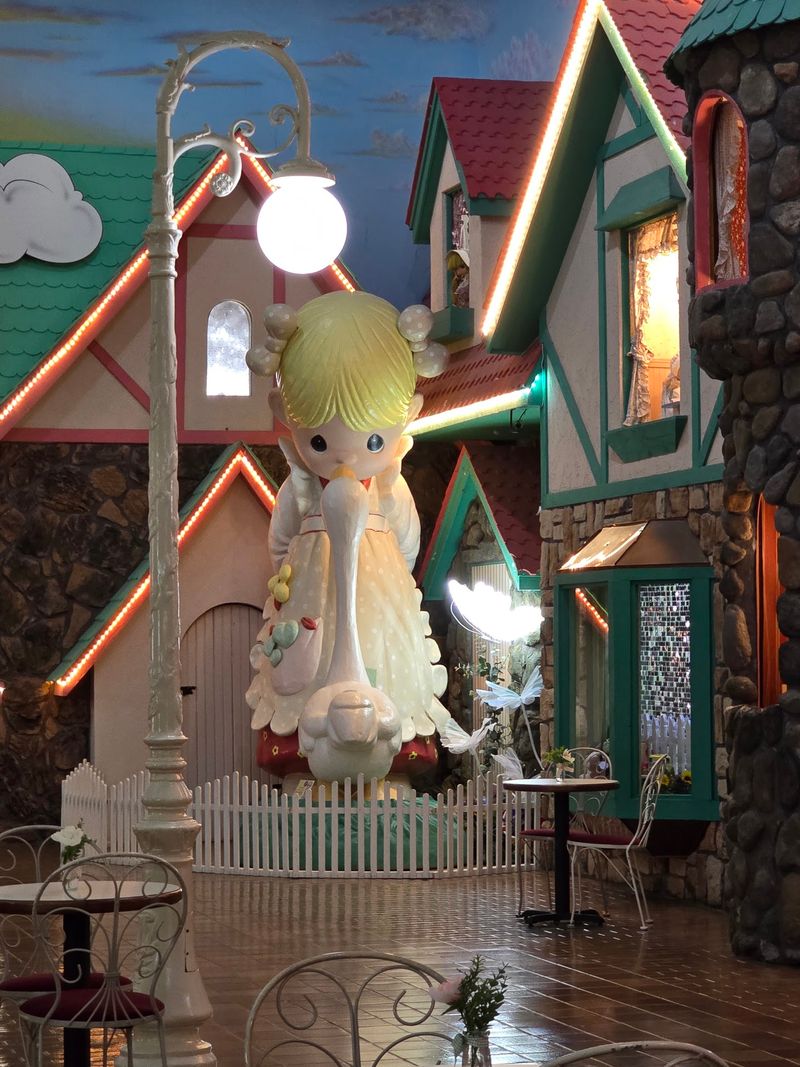
Start in the entrance building, where a painted sky ceiling arches over a miniature indoor village of tiny buildings and figures. It reads like a giant dollhouse, and it is genuinely charming.
A gift shop sits on one side and a cafe on the other. The shop is packed with figurines, and even if collecting is not your thing, browsing it is part of the fun.
A garden path connects the entrance area to the on-site museum, which digs into Butcher’s life and how the chapel came together. The museum is denser with information than I expected, so pace yourself.
Take the guided tour if the timing works out. Guides point out details in the murals that you would walk right past on your own, including the hidden tributes in Hallelujah Square.
Doors open at 9 AM daily and close at 5 PM, and you can reach the office at (800) 543-7975 with questions. The whole operation runs through a nonprofit foundation that maintains the property.
Address: 4321 Chapel Road, Carthage, Missouri.
