Every single machine is still inside. That’s the claim to fame of one three-story brick mill, the only 19th-century American woolen mill that kept all its original equipment intact.
The doors opened for business in the summer of 1861. The machines spun and wove at full speed until 1886.
Then the whole operation simply went quiet, and nobody hauled the gear away for scrap.
I love that this Missouri treasure sits in a peaceful park instead of a crowded city museum. You get the factory, a family home with a carved walnut staircase, and an eight-sided schoolhouse nearby.
I can’t imagine a better way to see how rural America met the Industrial Revolution.
How did one farm family build a factory empire in the countryside? The answer starts with sheep.
The Only Mill In America That Still Has Every Original Machine
Most old factories lost their machines long ago. Watkins Woolen Mill State Historic Site is the exception that made history buffs cheer.
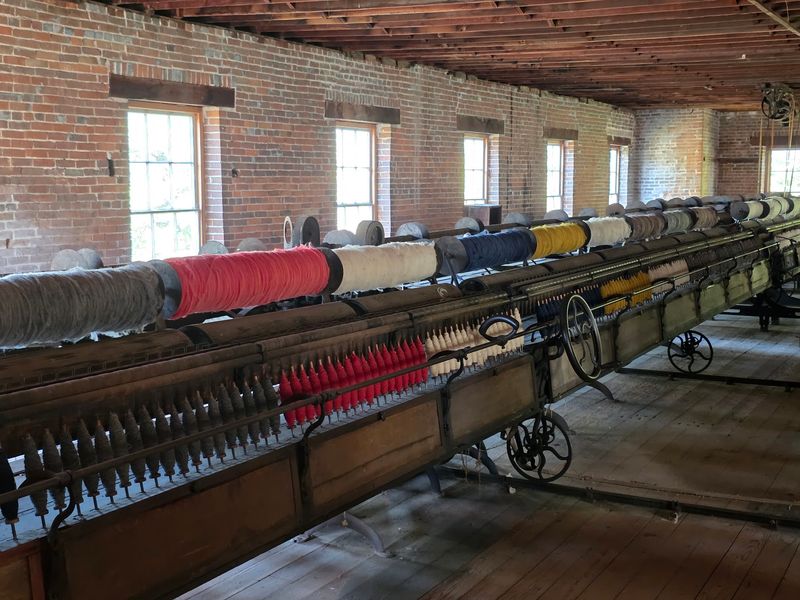
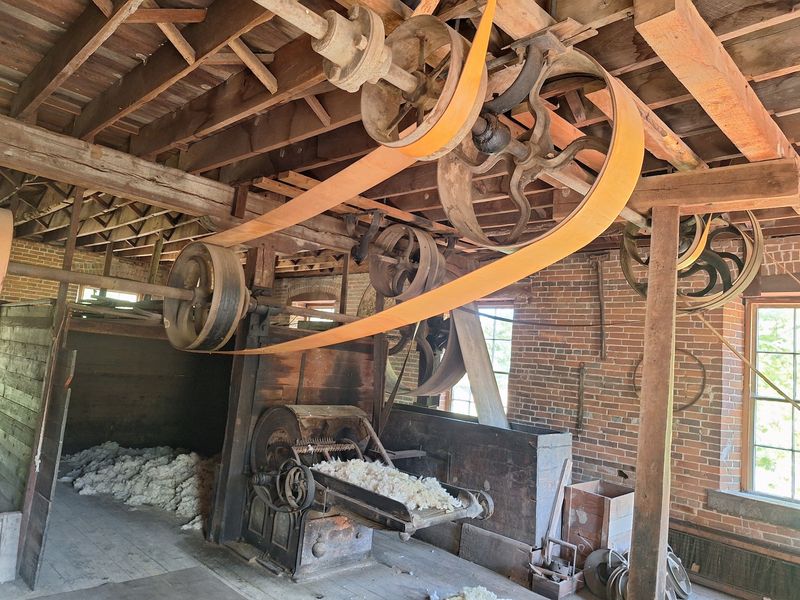
The three-story mill is the only 19th-century American woolen mill with all its original machinery still intact. That’s not a replica room or a few borrowed parts.
It’s the real equipment the Watkins family put to work.
Construction ran from 1859 to 1860, and the mill opened in the summer of 1861. It ran at capacity until 1886.
After that, the machines stayed put, almost like the workers clocked out and never returned.
That frozen moment is what makes the place so rare. You get to see how raw wool moved through a working factory, step by step.
It’s a clear look at the Industrial Revolution in rural America, not just in big East Coast cities.
Engineers noticed, too. In 1980, the site was named a National Mechanical Engineering Historic Landmark.
It had already earned National Historic Landmark status back in 1966.
Here’s a tip for curious kids and grown-ups alike. Bring your questions about how each machine worked.
The guided mill tour runs about an hour, so there’s time to ask.
A Sheep Farm That Grew Into A Massive Business
Eighty acres. That’s how small the story began when Waltus L.
Watkins started Bethany Plantation in 1839.
He began with a livestock farm in rural Missouri. Over the next three decades, it grew in a big way.
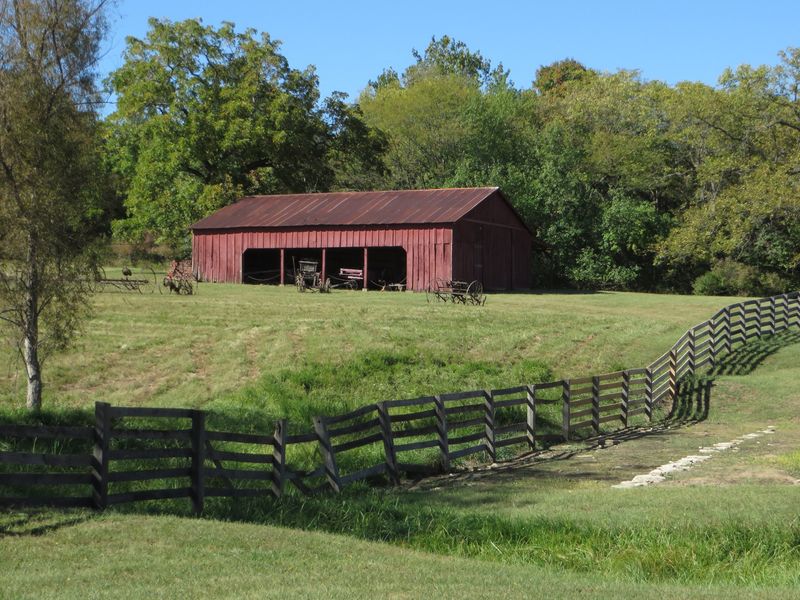
By 1870, Bethany had become a 3,660-acre agricultural and industrial enterprise.
Think about that jump for a second. One family turned a modest farm into a mini economy with a factory at its heart.
The woolen mill was the crown jewel, but it wasn’t the only moneymaker.
The family raised livestock, grew crops, and processed goods right on their land. That meant fewer trips to faraway markets and more control over their own success.
It was smart planning for the 1800s.
The visitor center lays out the whole Bethany story. Exhibits cover the Watkins family, their farm, the mill, and how 19th-century industrialization changed daily life.
There’s also a miniature model of the mill inside the museum.
Start your visit there if you can. Admission to the grounds and visitor center is free.
Learning the backstory first makes every building on the tour feel more connected, like chapters in one big book.
Three Staircases And A Whole Lot Of Carved Walnut
Some families argue over one bathroom. The Watkins household had three staircases to choose from.
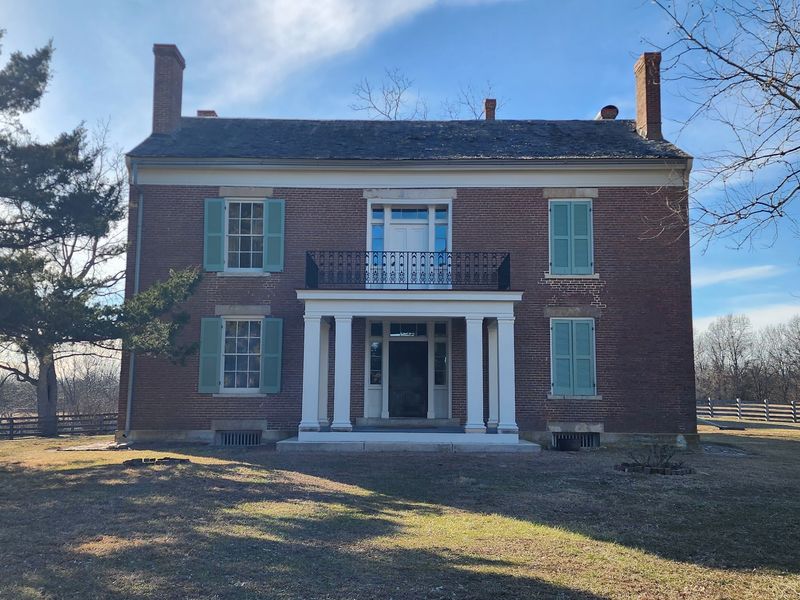
Their home was built in 1850 in the Classic Revival style. It stands two and a half stories tall and holds twelve rooms.
The main staircase shows off detailed carved walnut, and it’s easily the showstopper.
The best part might be what stayed behind. Many original furnishings remain in the house.
That gives the rooms a lived-in feel rather than a staged one.
The family called this place home for a long time. It stayed a family residence until 1945.
That’s almost a century of meals, chores, and conversations under one roof.
Guided tours of the house last about an hour, just like the mill tour. Doing both gives you the full picture.
You see where the family worked and where they rested at night.
A quick heads-up for anyone with limited mobility. The tours involve some walking and stairs, so plan accordingly.
The site is partially wheelchair accessible.
Pay attention to the small details as you move through each room. Old homes hide fun surprises in furniture, woodwork, and layout.
The Steam Engine Shed Holds The Mill’s Original Muscle
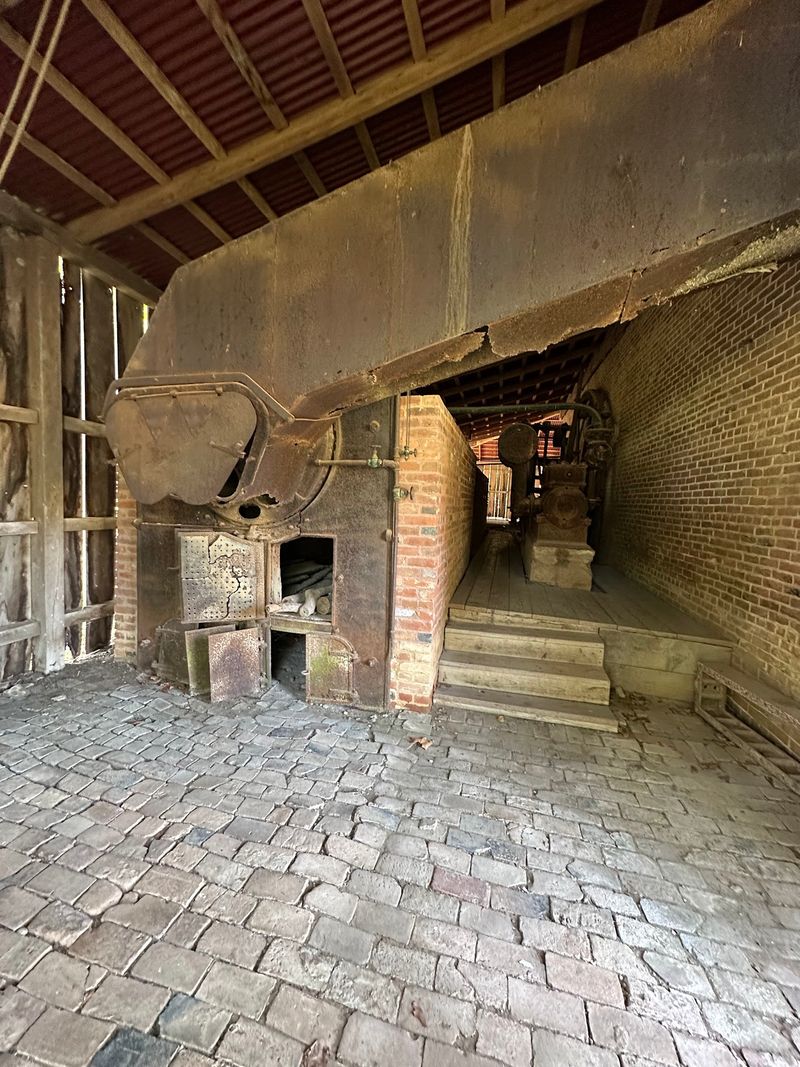
Every factory needs a power source. At this mill, that job belonged to a steam engine, and the original one still sits in its engine shed.
That’s a big deal. Plenty of historic mills lost their engines to scrap drives or upgrades.
Here, the heart of the operation is still in place.
Nearby, you’ll also find a gristmill. Grinding grain was another part of the busy Bethany operation.
Between the gristmill and the woolen mill, this corner of the property was the family’s industrial hub.
Seeing the engine helps the whole system make sense. Machines upstairs didn’t run by magic.
Power had to travel from somewhere, and this is where it started.
Kids who love trains, tractors, or anything with gears will probably light up here. It’s a hands-off look, but the size and design tell their own story.
Grown-ups who never thought about textile production might find themselves surprisingly into it.
Take a moment to look at how the buildings sit together. The layout shows how practical this family was.
Everything needed for production was close, connected, and ready to work.
Smokehouse, Icehouse, And Other Old-School Kitchen Helpers
Refrigerators didn’t exist back then. So how did a big farm family keep food fresh?
The answer is scattered around the grounds.
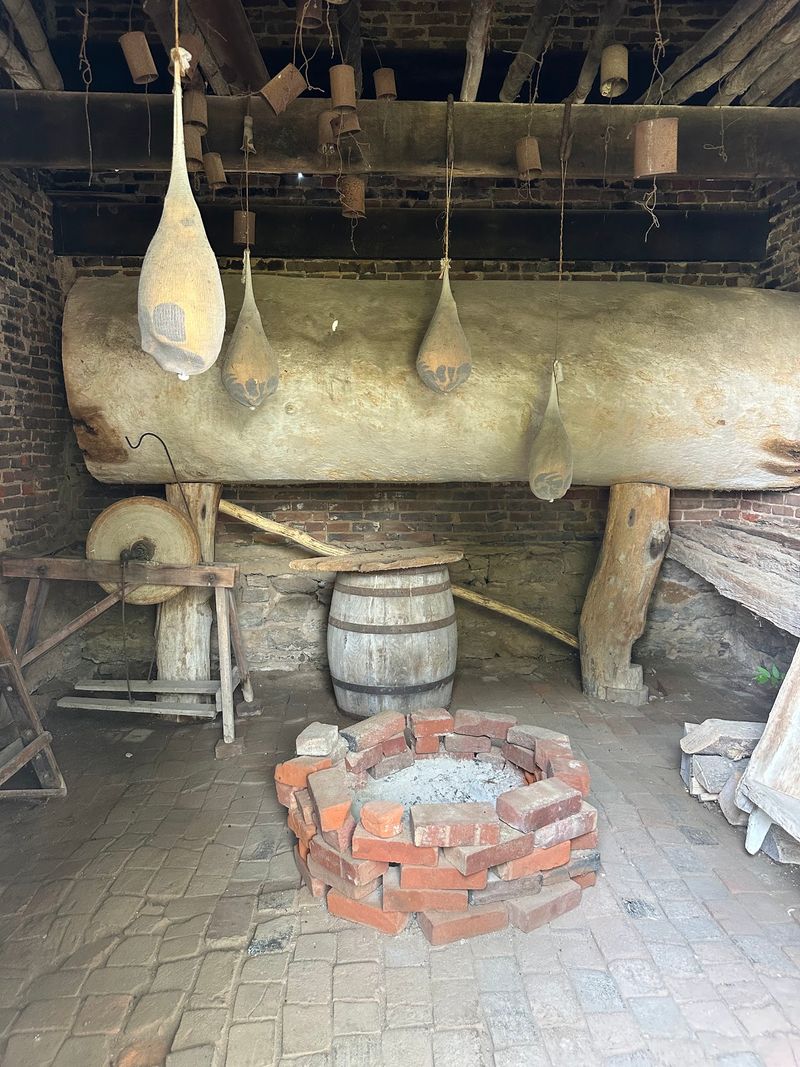
The site includes a summer kitchen, smokehouse, icehouse, and fruit dry house. Each one had a clear job.
Together they show how much planning went into feeding a household in the 1800s.
A summer kitchen kept cooking heat out of the main house during hot months. An icehouse stored ice for cooling.
The smokehouse and fruit dry house helped preserve meat and fruit for later.
It’s a little humbling. Today you open a freezer door.
They needed whole buildings and serious effort.
The Living History Program adds even more color. It features an heirloom garden and minor breeds livestock.
These touches help the farm feel active instead of frozen.
Costumed interpreters have appeared during spring and fall weekends, so those seasons may be extra lively. Check ahead before you go for current programs.
Pets are welcome outdoors on a leash, which helps if the dog is along for the ride. Just stay on paths and respect the historic structures.
An Eight-Sided Schoolhouse Is Waiting Down The Road
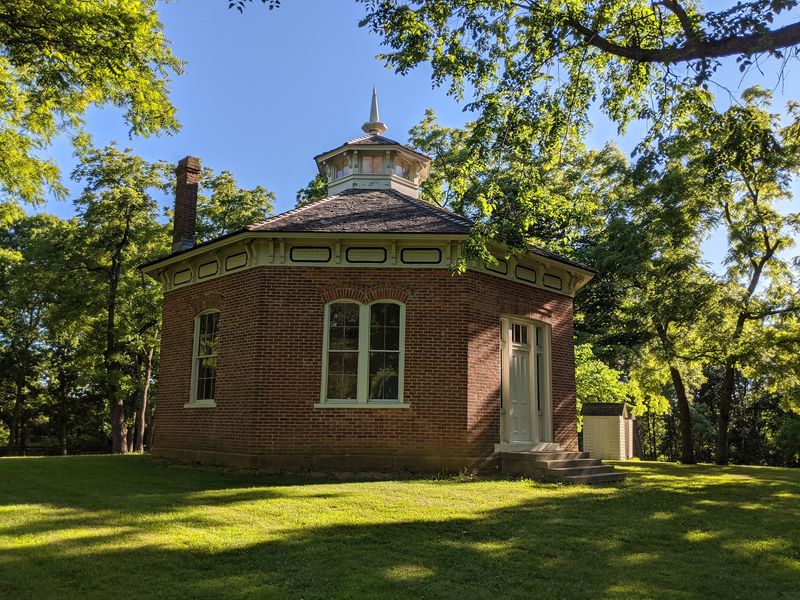
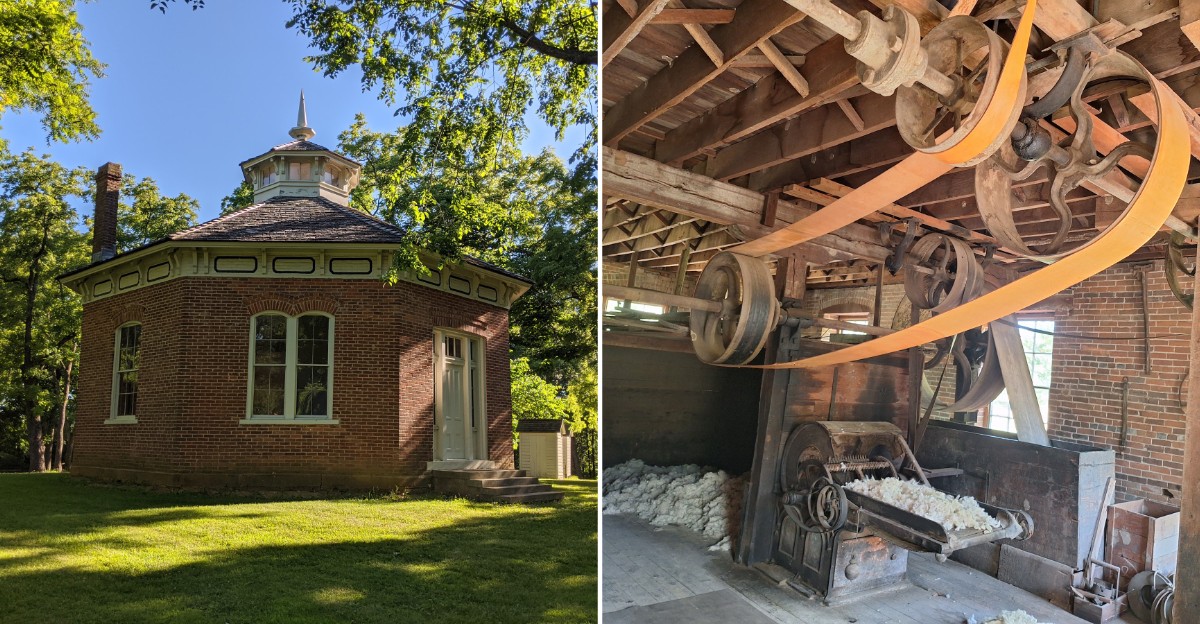
Octagons aren’t just for stop signs. In 1856, someone built a schoolhouse with eight sides, and it still stands.
Franklin Academy was the school the Watkins family attended. It has been restored and is open to the public.
The unusual shape makes it one of the most memorable buildings on the property.
Not far away stands Mount Vernon Church, built in 1871. The Watkins family attended there, too.
It has also been restored for visitors.
These two buildings round out the story nicely. A family’s life wasn’t only about work.
School and faith shaped their community just as much as wool did.
For kids, the schoolhouse can spark fun comparisons. Ask them how their classroom differs from a one-room school.
It’s a quick way to make history feel personal.
Leave time in your schedule for these stops. The site suggests planning two to three hours for the full experience.
Rushing past the schoolhouse and church would mean missing two of the coolest pieces of the puzzle.
Bring a camera. That eight-sided shape practically begs for a photo.
Plan Your Timing So You Catch A Guided Tour
Timing matters here. The buildings open for guided tours on a seasonal schedule, and missing the last tour would be a bummer.
From April 15 through October 31, hours run 9:30 a.m. to 5 p.m. Monday through Saturday.
Sunday hours are 10:30 a.m. to 5 p.m. From November 1 through April 14, closing time moves to 4:30 p.m.
The site sits at 26600 Park Road North, Lawson, MO 64062. It’s open year-round, though buildings close on several holidays.
Those include Thanksgiving, Christmas Eve, Christmas Day, New Year’s Eve, and New Year’s Day.
It also closes on Martin Luther King Jr. Day, Lincoln’s Birthday, and Presidents Day. Bad weather can cause closures, so check the site’s Facebook page before heading out.
Tours of the mill and house each last about an hour. Fees apply for tours, with lower youth rates and free entry for little ones with a paying adult.
Group rates are available as well.
Reservations are encouraged but not required. Booking ahead is a smart move for busy weekends.
Arrive early, browse the museum, then join your tour feeling ready.
After The History Lesson, The Lake Is Calling
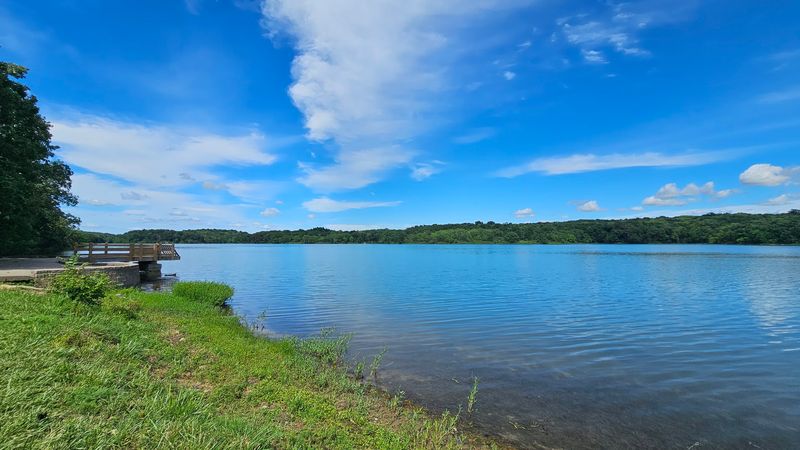
History can make a person hungry for fresh air. Luckily, Watkins Mill State Park surrounds the historic site with plenty of room to roam.
Williams Creek Lake covers about 100 acres. A paved trail loops around it for roughly 3.75 miles.
It’s great for walking, jogging, or biking with the family.
Anglers have options, too. The lake is stocked with bass, catfish, crappie, and sunfish.
There’s an accessible fishing dock plus a boat-launching area.
Warm days call for the sandy swim beach with a change house. Kayak rentals are available on-site if paddling sounds better.
Kids can burn off leftover energy at the playground.
There’s no restaurant on the historic grounds. So pack a lunch and grab a picnic spot in the park.
It’s an easy way to stretch your visit into a full day.
Keep an eye out for wildlife. White-tailed deer and wild turkeys live throughout the park.
Spotting one near the trail feels like a bonus prize for choosing this Missouri outing.
Stay Overnight And Make It A Weekend Of Wool And Woods
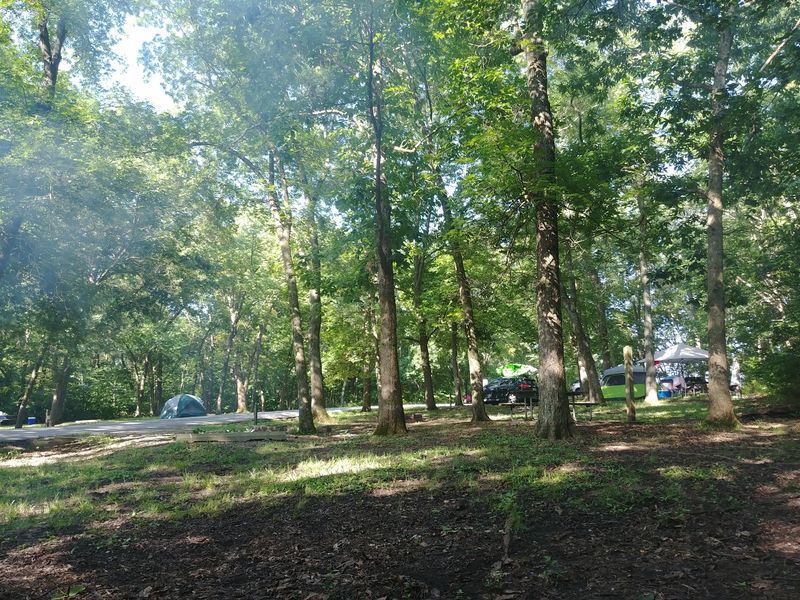
One day might not feel like enough. Camping in the state park turns a quick history trip into a full getaway.
The park offers a campground, hiking, and equestrian trails. That mix works for tent fans, horse lovers, and anyone who likes waking up near a lake.
You can tour the mill one day and paddle the next.
Watkins Woolen Mill State Historic Site joined the Missouri state park system in 1964. Before that, the Watkins Mill Association bought the mill and house in 1958.
Their work helped open the property to the public.
That preservation effort deserves a little applause. Without it, those original machines might have vanished.
Instead, families can still see them today.
The site is ADA fully compliant and partially wheelchair accessible. That makes planning easier for groups with different needs.
Ask staff at the visitor center if you need help mapping a route.
Before leaving, stop by the Mill Store gift shop in the visitor center. It’s a fun final stop for a small souvenir.
After all, few weekend trips include sheep, steam, and an eight-sided school in one place.
