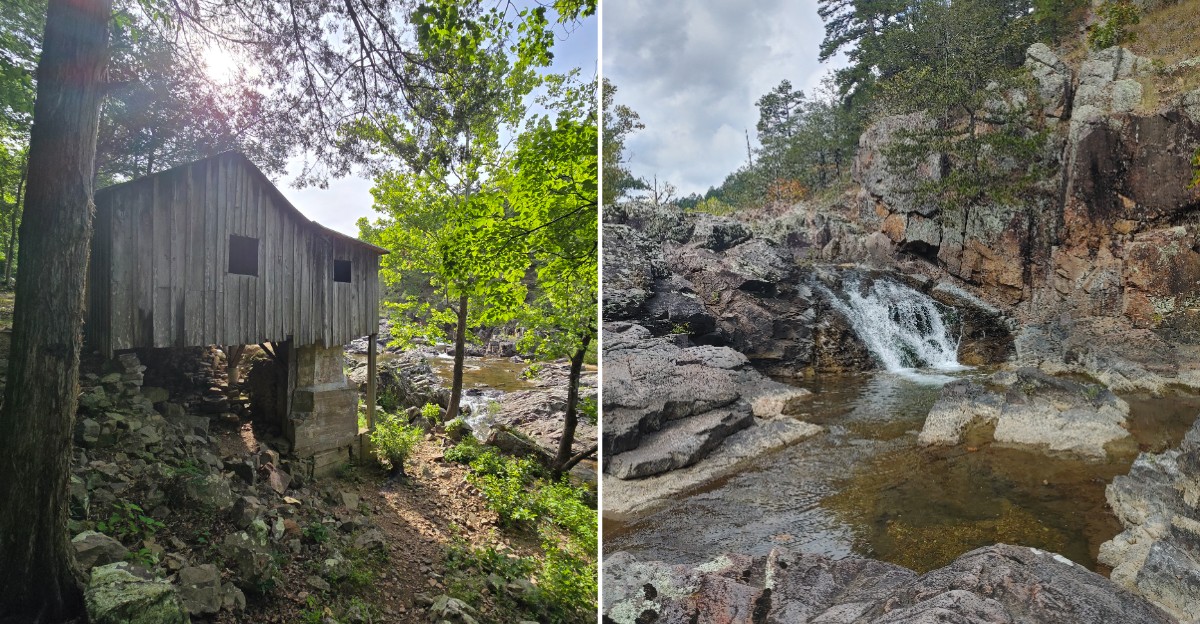
You really do have to go looking for this one. A narrow backroad winds into the Missouri Ozarks, and near the end sits an old mill beside rushing water and exposed rock.
The mill dates to 1928 and still has machinery visible inside, which makes the stop feel much more real than a simple photo op. Right beside it, Rocky Creek squeezes through a rugged shut-in and tumbles over the stone.
The road can be rough and muddy, so getting there is part of the adventure. Once you arrive, though, the place is quiet, simple, and easy to enjoy.
It feels like one of those Missouri stops you only find because someone told you exactly where to look.
A Mill That Never Needed To Shout
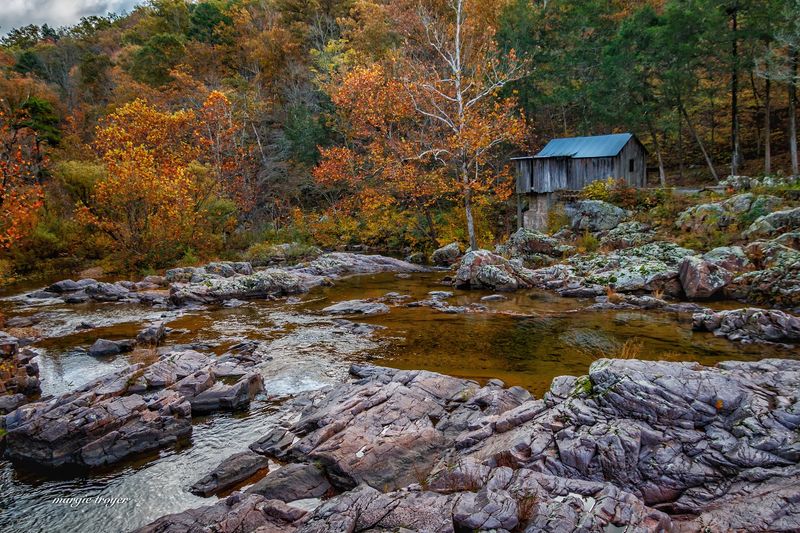
You know how some places practically wave their arms at you from the highway, while others just wait patiently for the folks who bother to look? Klepzig Mill is definitely the second kind, sitting quietly along Rocky Creek in the Missouri Ozarks without a gift shop or a flashy sign anywhere in sight.
The mill is part of Ozark National Scenic Riverways, which means the National Park Service looks after it and the land around it. That also means you get to wander the grounds freely, as long as you treat the old building and the creek with a little respect.
Pack out whatever you bring in, and try to leave the place looking just the way you found it.
What makes the spot feel so special is the mix of human history and wild scenery packed into one small clearing. You have a humble wooden mill on one side and a rugged canyon of rock and rushing water on the other, and they seem to fit together like they grew up side by side.
If you like places where you can sit on a rock, listen to the water, and let your mind wander for a while, you are going to feel right at home here.
Finding The Road That Leads Back There
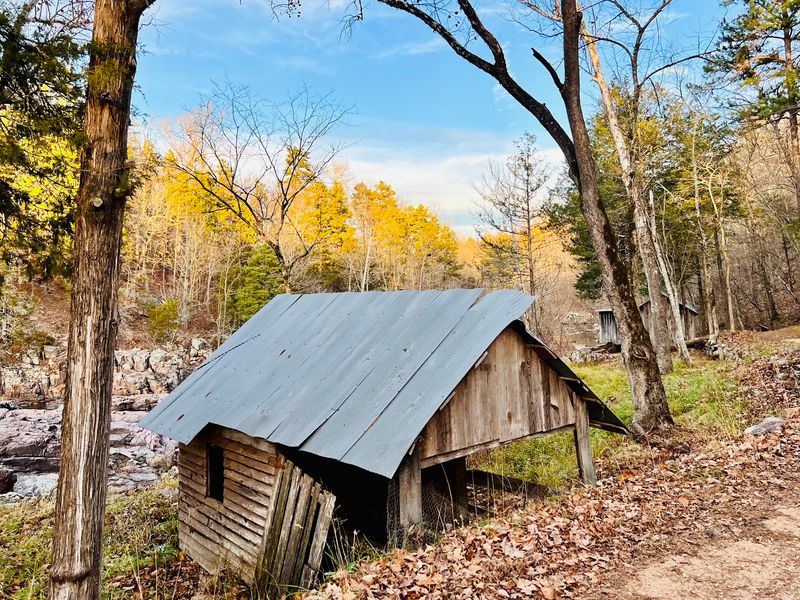
Okay, so here is the part where your car earns its keep, because reaching the mill takes a little patience and a decent set of tires. You will want to plug in County Road 522, Winona, MO 65588, and then follow the gravel as it winds deeper into the hills of Shannon County.
The last stretch turns into a dirt road that can get muddy and rutted after a good rain, so a vehicle with higher clearance makes life a lot easier. If the weather has been soggy for a while, it might be smart to check road conditions with the park before you head out.
Cell service can be spotty back in these hills, so downloading your map ahead of time is a really good idea.
Try to give yourself plenty of daylight for the drive, since those backroads are much less fun to figure out after dark. Bring water, a few snacks, and maybe a towel if you think you might want to dip your feet in the creek later.
Once you pull up and hear the water rushing over the rocks, all that bumping along the road will feel completely worth it, and you will probably forget about the mud in about a minute.
Meet Walter Klepzig, The Neighbor With Big Ideas
Imagine being the neighbor everybody watched to see what new thing you would try next, because that seems to be exactly who Walter Klepzig was. He built this mill himself, and folks around Shannon County remembered him as a forward-thinking farmer who liked to bring fresh ideas home to the hills.
Local history credits him with introducing things like barbed wire and better breeds of milk cows to the area, which were a pretty big deal for families trying to make a living off rocky Ozark land. He also had a generous streak, since he reportedly ground corn for free for neighbors who were going through hard times.
That kind of kindness tends to stick in a community’s memory for a long, long time.
When you stand in front of the mill, it helps to picture him figuring out how to harness the creek’s energy with the tools and know-how he had on hand. He was not a big company or a wealthy investor, just a hardworking guy with a creative mind and a stubborn streak.
Knowing his story makes the old building feel less like a relic and more like a little monument to one person who really cared about the people living around him.
Grinding Corn, Cutting Boards, And Making Power
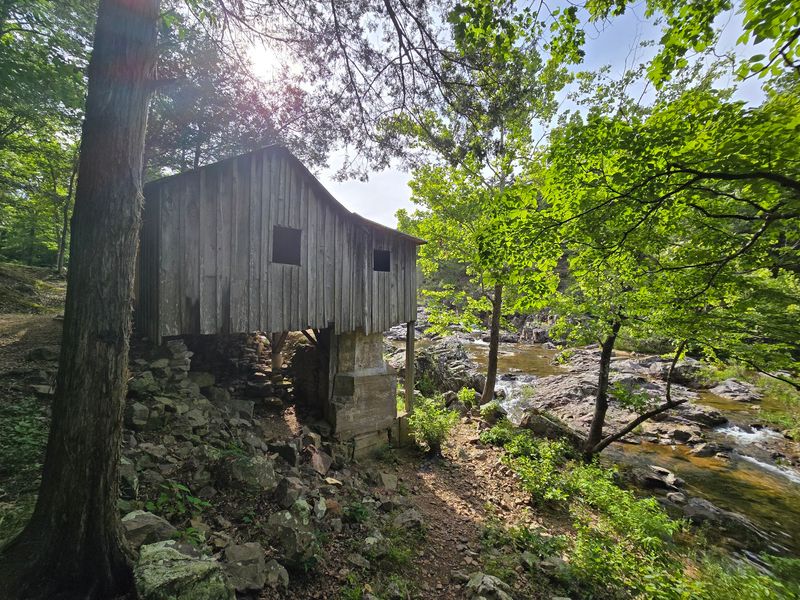
Here is something that surprises a lot of people, which is that the mill was never a one-trick pony. Sure, it ground corn into meal, but it also ran a sawmill that turned logs into lumber the family and neighbors could actually build with.
The mill used a water turbine rather than a big old-fashioned waterwheel, so the power came from creek water spinning a wheel tucked down low where you might not notice it right away. Later on, the same setup was used to generate electricity for the Klepzig farm, which must have felt like pure magic in a remote hollow like this one.
Think about how rare electric lights were out in the backwoods back then, and you start to see just how clever that move really was.
The building itself is what folks call a sawmill house, meaning it was built with sawn boards instead of the hand-hewn logs that earlier settlers relied on. That shift says a lot about how life in the Ozarks was changing as new tools reached the hills.
So when you look at those plain wooden walls, you are actually seeing a small chapter in the story of how rural Missouri grew up and moved forward.
Pink And Purple Rocks You Will Want To Photograph
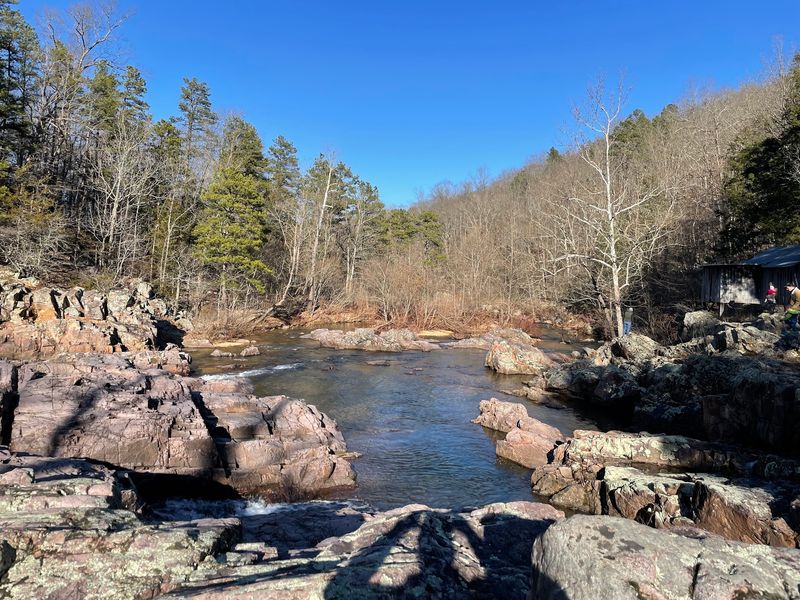
Let me tell you about the rocks, because honestly they might steal the show from the mill itself. The shut-in is made of rhyolite, a volcanic stone that formed deep in the earth ages ago and now shows up in shades of pink, rose, and even soft purple.
The colors tend to glow the most when sunlight hits wet stone, so the edges of the creek can look almost painted on a bright day. Early morning and late afternoon light usually bring out the warmest tones, which is great news if you like taking photos with your phone or camera.
Try getting low near the water so you can frame the weathered mill with that colorful rock in the foreground.
It is tempting to pocket a pretty stone as a souvenir, but since this is protected park land, the rocks need to stay right where nature put them. A picture works just as well, and it lets the next visitor enjoy the same view you did.
If you have kids along, turning it into a color hunt can be a fun way to keep them curious, like seeing who can spot the pinkest boulder or the deepest purple streak along the creek bank.
Stepping Inside The Weathered Walls
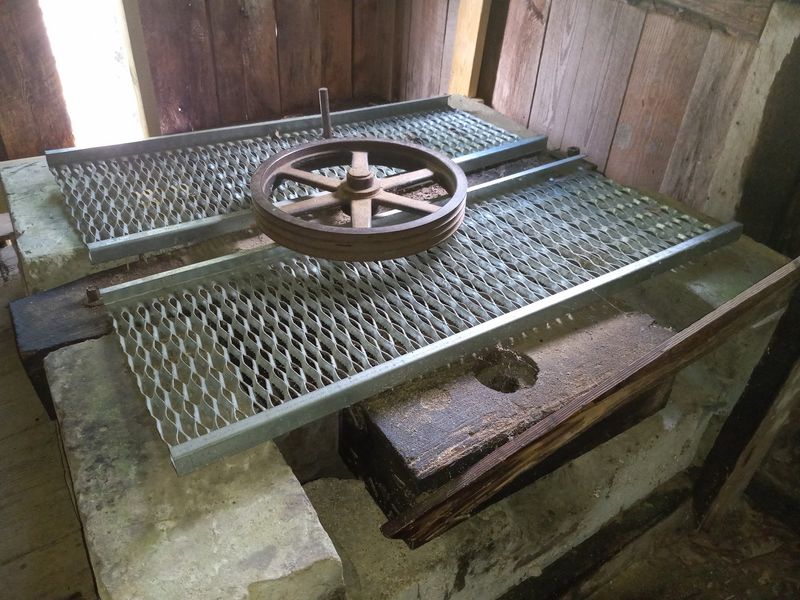
Good news for the curious crowd, because the mill building is generally left open so visitors can step inside and look around. That is not something you get at every historic site, and it makes the whole visit feel a lot more personal and hands-on.
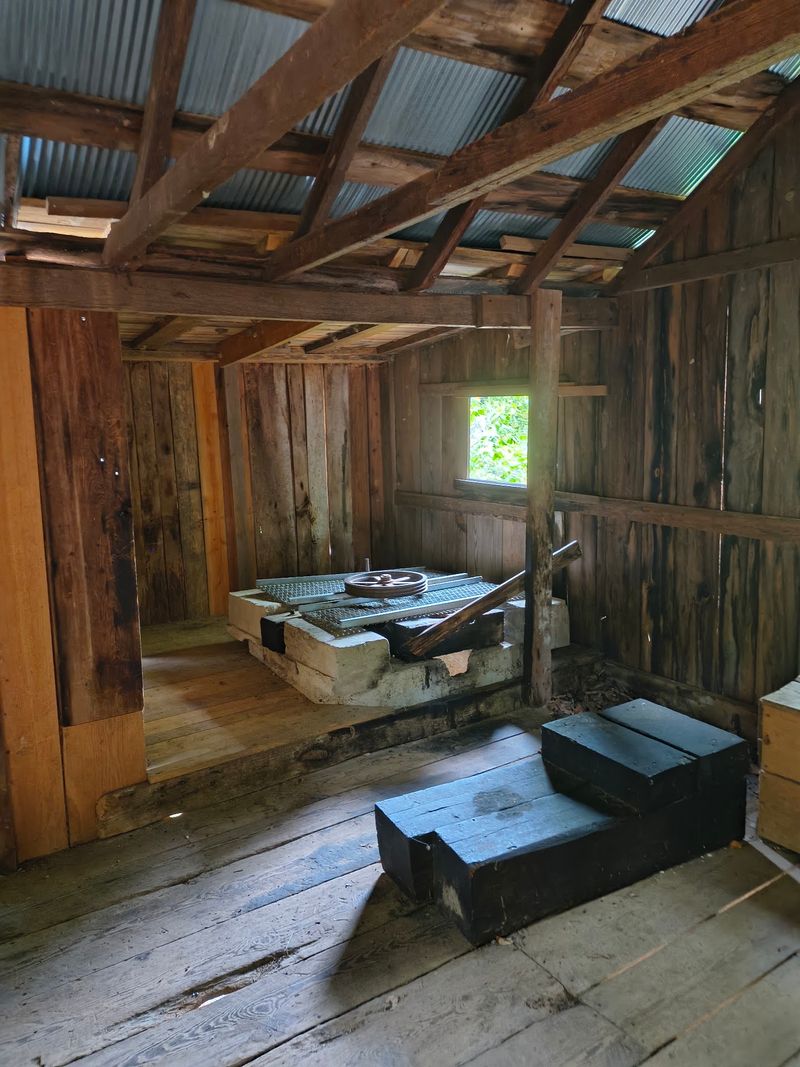
Inside, you can still spot pieces of the old machinery, which gives you a real sense of how the mill worked when it was humming along. The wooden floors, rough beams, and worn walls show plenty of age, so it is best to move slowly and watch your footing.
Let your eyes adjust to the dim light for a moment, and you will start noticing little details you might have missed at first glance.
The building has definitely seen better days, and that weathered look is part of its charm rather than something to be sad about. Keep in mind that it is a historic structure, so touching gently and leaving everything in place helps it last for future visitors.
Kids usually love peeking into old spaces like this, so it can be a great chance to talk about how people lived and worked before modern gadgets came along. Just remind everyone that this is a look-but-do-not-take kind of place.
Hiking In On The Ozark Trail
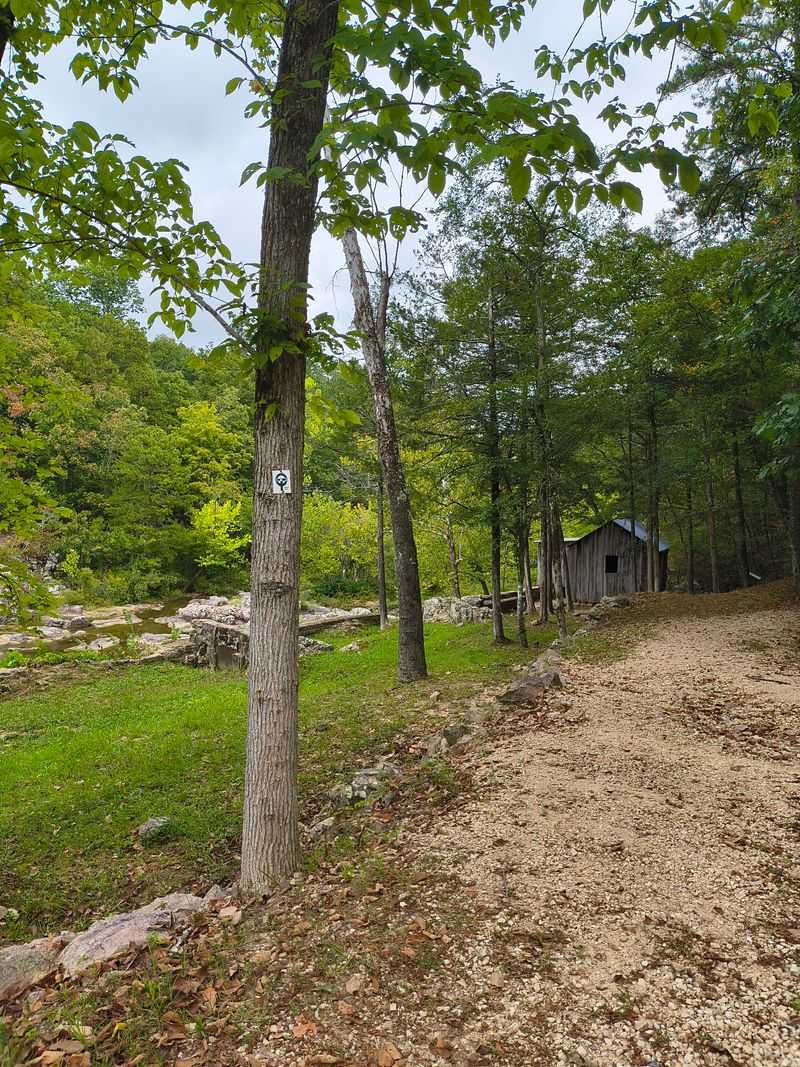
Feel like earning the view on foot instead of just driving up to it? A section of the Ozark Trail connects Rocky Falls to Klepzig Mill, so you can leave the car behind and hike in through classic Ozark woods instead.
The trail winds through oak and hickory forest, over rocky ground, and past spots where you can catch glimpses of the surrounding hills. It is a moderate walk for most folks, but the terrain can be uneven, so sturdy shoes and a good water bottle are a must.
Spring wildflowers and fall color both make the trip extra pretty, while summer can get warm and a little buggy.
Before you go, grab a trail map from the park or download one, since trail markers can be easy to miss in thick foliage. Plan your hike as an out-and-back or arrange a ride at the other end so you are not stuck guessing how to get home.
Keep an eye out for ticks during the warmer months, and do a quick check when you finish. There is something really satisfying about stepping out of the trees and seeing that old wooden mill waiting beside the creek, like it has been expecting you all along.
Rounding Out Your Day At Rocky Falls
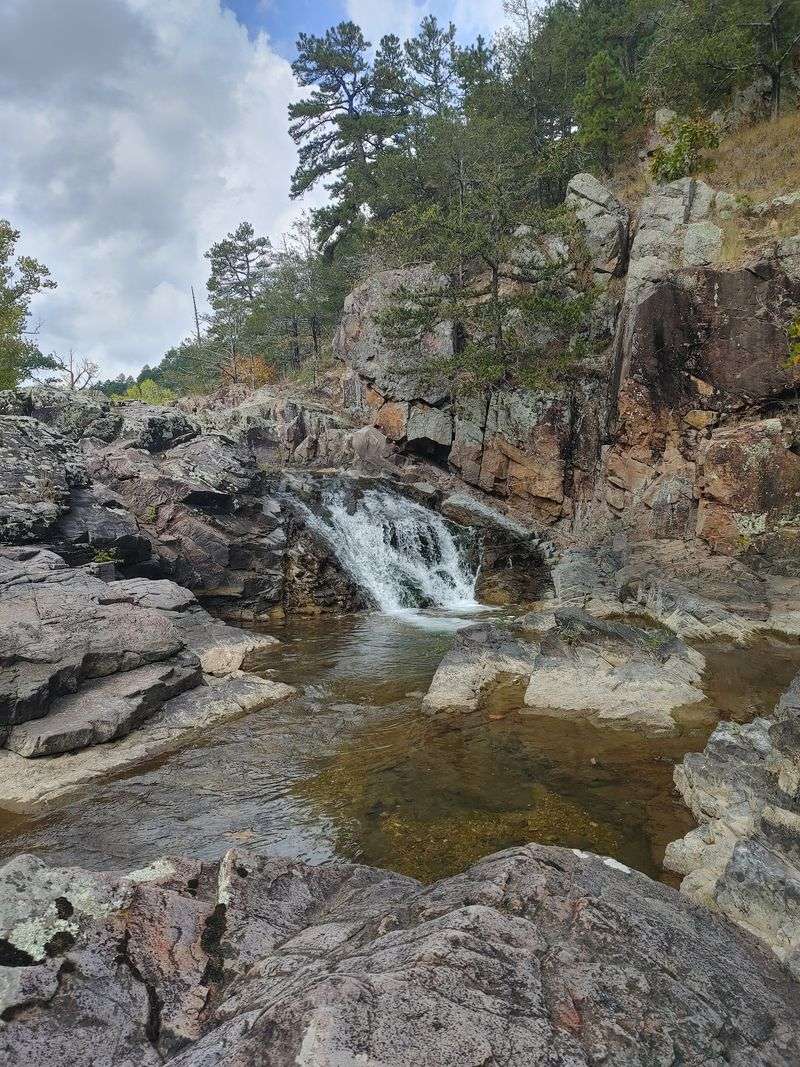
Since you already drove all the way out here, it would be a shame to skip Rocky Falls, which sits just down the road from the mill. It is another beautiful shut-in on Rocky Creek, where water spills down a wide face of that same pinkish rhyolite into a big swimming hole below.
On warm days, Rocky Falls is a favorite spot for families who want to cool off, splash around, or just sit on the rocks and watch the water. There is a small parking area and picnic spots nearby, which makes it easy to spread out lunch and rest a bit.
The rocks around the falls can be very slippery, so walk carefully and keep an eye on younger swimmers.
Pairing the mill and the falls gives you a really well-rounded taste of what makes this corner of Missouri so memorable, with a little history in one spot and a lot of splashing in the other. You could easily spend a whole relaxed day bouncing between them without ever feeling rushed.
By the time you head back toward the highway, you will have seen a side of the Ozarks that a lot of travelers never even hear about, and that feels pretty great.
