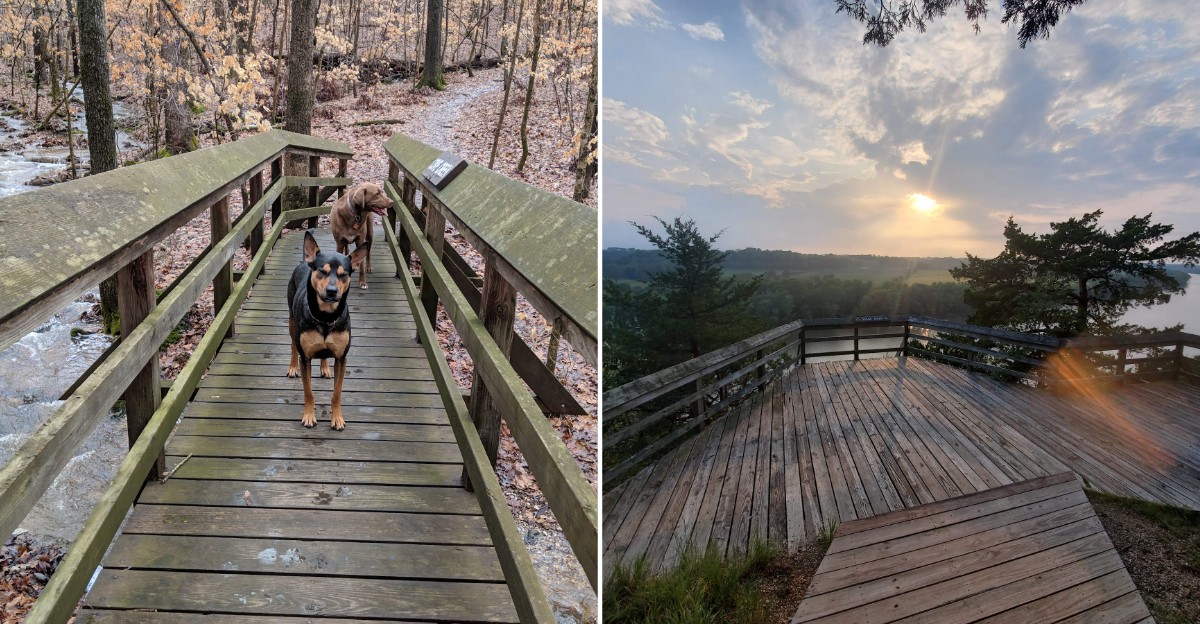
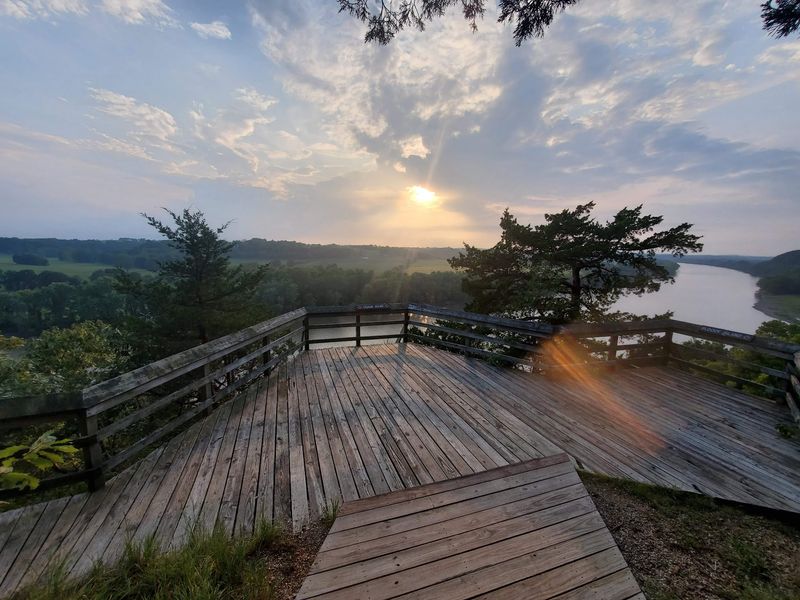
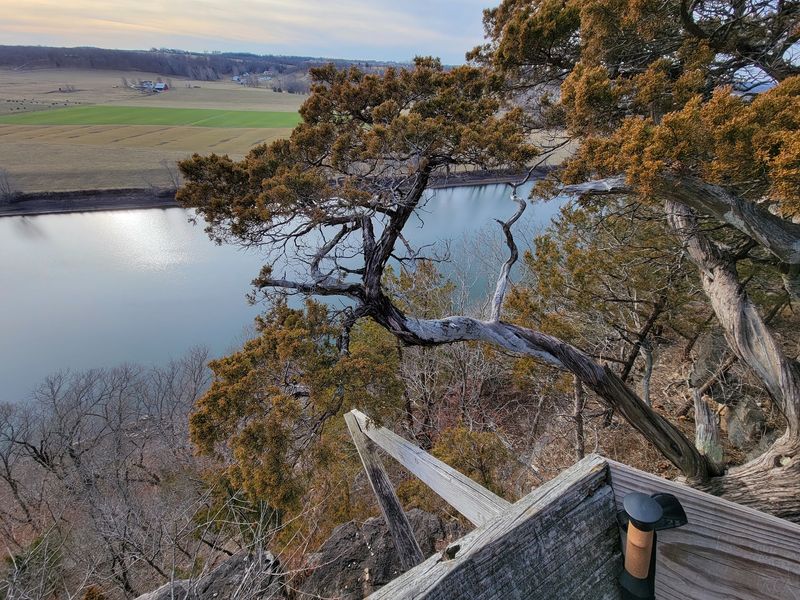
A wooden viewing platform here sits 140 feet above a river. That’s a long way down, and the view makes every step worth it.
The trail also passes a burial cairn built 500 to 1,500 years ago. Nearby, an Eastern red cedar has been dated at more than 600 years old.
I can’t imagine how much river traffic that tree has watched drift by.
This corner of Missouri packs ancient history, rugged bluffs, and quiet fishing water into one easy day trip. I like how a short loop can feel this big.
The benches along the way help, too.
So what else is hiding along those bluffs? Quite a lot, as it turns out.
Lace up your shoes and let’s take a closer look.
Two Boardwalks Hang Over The River Like Front-Row Seats
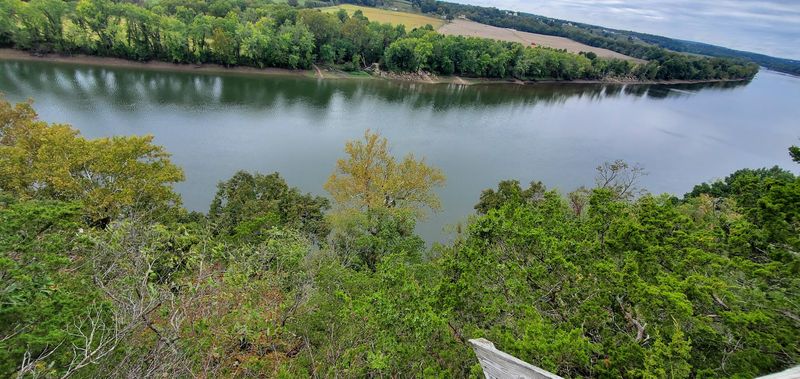
Painted Rock Conservation Area saves its biggest wow moments for the Osage Bluff Scenic Trail. Two separate boardwalks stretch out along the bluffs, giving you wide-open looks at the Osage River below.
The southern viewing platform stands about 140 feet above the water. That height turns the river into a long, shiny ribbon curling through the trees.
Bring a camera, because your phone screen won’t do it justice.
Other overlooks pop up along the loop, too. That means you don’t have to cram all your gazing into one stop.
Spread it out and enjoy each angle.
Wooden benches sit at the overlooks, which feels like a thoughtful gift from the trail builders. Sit down, sip some water, and let the breeze do its thing.
Nobody’s timing you.
The river runs along the western edge of the property. Afternoon light can make the bluffs and water glow, so later visits may reward you.
Kids usually love the boardwalks most. Keep little ones close near the edges, though.
A 140-foot drop is no joke, even with railings and good sense on your side.
Short Loop, Real Climb, Plenty Of Places To Catch Your Breath
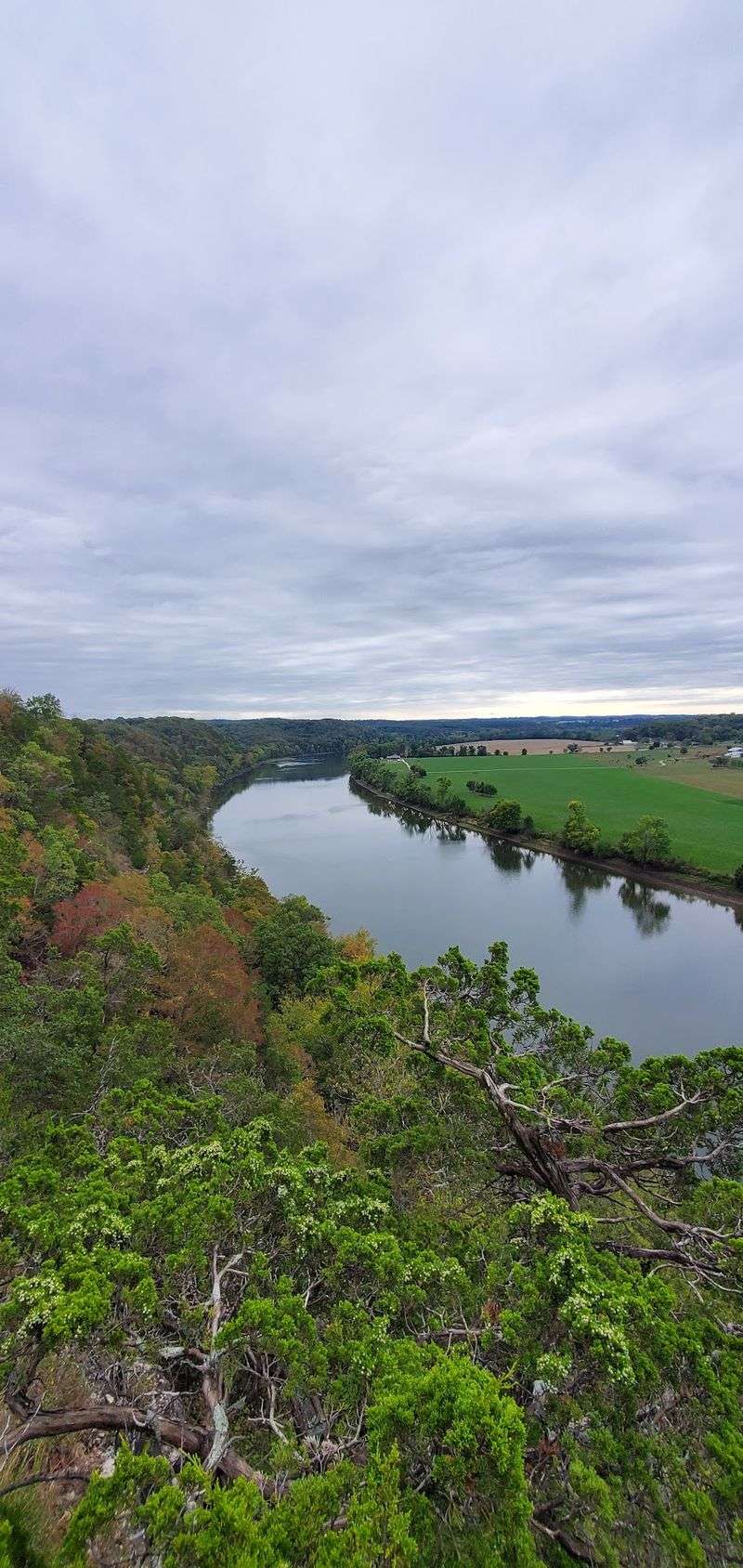
Numbers first, since hikers love numbers. The Scenic Trail is a loop, and sources list it at either 1.6 or 2 miles.
Either way, it’s short enough for a morning stroll.
Short doesn’t mean flat, though. Parts of the path stay fairly level, but other stretches get rocky with real elevation changes.
Your calves will notice.
Thankfully, switchbacks soften the steeper grades. Instead of charging straight uphill, the trail zigzags back and forth.
It’s the hiking version of taking the stairs one at a time.
The descent toward the river views comes with a climb back up. Pace yourself on the way down so you still have energy for the return.
Your future self will thank you.
Sturdy shoes are a smart call here. Sneakers with good grip handle the rocky bits much better than sandals.
Bring water, especially on hot Missouri summer days.
Portions of the area aren’t wheelchair accessible, so plan with that in mind. Strollers may struggle on the rocky sections too.
For most hikers, though, this loop hits a sweet spot between easy outing and honest workout.
A Burial Cairn Reminds You Who Walked Here First
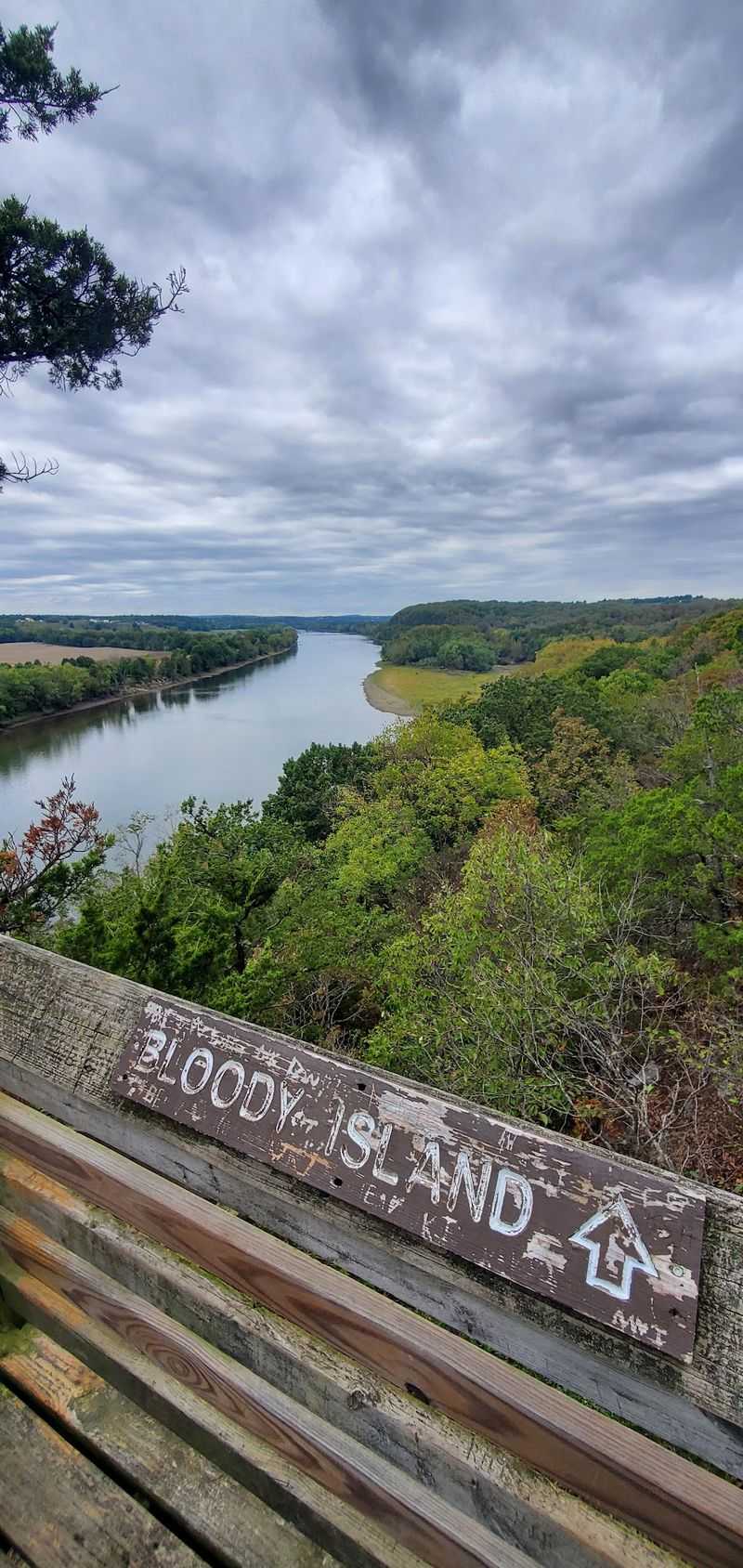
Long before trail signs and benches, people lived on these bluffs. Evidence shows Native Americans occupied this land as far back as 9,000 years ago.
That’s a mind-bending stretch of time.
Along the Osage Bluff Scenic Trail, you’ll pass a Native American burial cairn. It was built somewhere between 500 and 1,500 years ago.
The stones sit right on the bluff, high above the river.
Treat this spot with real respect. It’s a sacred site, not a climbing structure or a photo prop.
Stay on the trail, keep hands off the rocks, and let kids know why it matters.
Standing near it changes how the whole hike feels. Suddenly the river views carry more weight.
People chose this place on purpose, and you can see why.
The cairn makes a great teaching moment for families. Ask kids what they think life looked like here centuries ago.
You might get some fun answers.
History doesn’t always come with a museum and a gift shop. Sometimes it’s just a quiet pile of stones under the oaks, asking you to slow down and pay attention.
The Name Comes From Paintings You Won’t Actually See
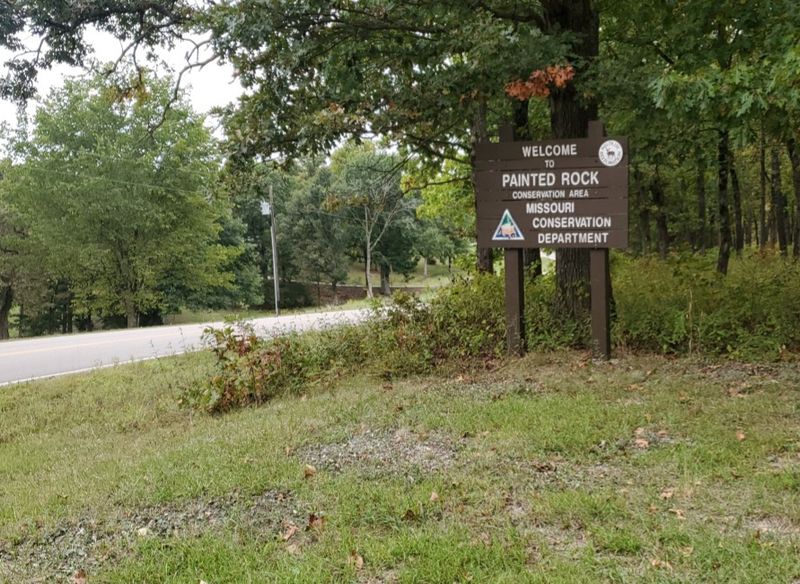
Here’s a fun twist. The place is named for red pictographs, but the trails don’t take you to them.
Talk about playing hard to get.
Native Americans painted the images between 1200 and 1300 A.D. on bluffs overlooking the Osage River. One shows a buffalo, along with other symbols.
Explorer Zebulon Pike noted these Painted Rocks back in 1806.
Pike was busy mapping the West, so his mention counts for something. These paintings caught a famous explorer’s eye more than 200 years ago.
That’s a pretty solid endorsement.
Today, the pictographs aren’t reachable from the current trail system. That actually helps protect them from wear and curious fingers.
Some treasures last longer when left alone.
You can still enjoy the story while hiking the same bluffs. Look across the rock faces and think about artists working with red pigment centuries ago.
It adds a little mystery to every overlook.
So the name is a bit of a tease. Still, knowing the paintings are out there somewhere makes this Missouri spot feel richer.
Not every secret needs a trail sign pointing straight to it.
Meet A Cedar Older Than Most Castles
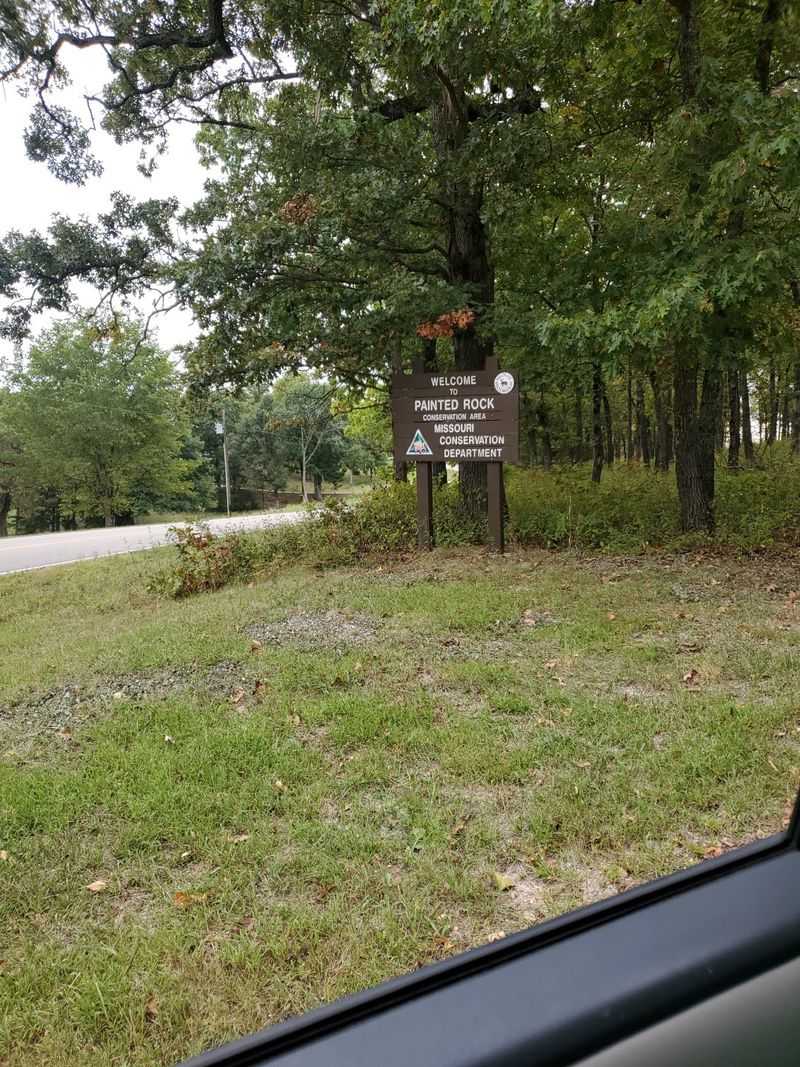
Some trees are tall. One cedar here is just seriously old.
Near the Osage Bend Overlook, an Eastern red cedar has been dated at more than 600 years old.
Do the math, and it was already growing before Columbus sailed. It has weathered centuries of storms, droughts, and Missouri winters.
Not bad for a tree clinging to a bluff.
Bluff-top cedars often grow slowly in thin, rocky soil. That slow pace can help them last a remarkably long time.
Patience, it turns out, pays off.
When you reach the Osage Bend Overlook, take a moment for this senior citizen of the forest. Give it some space and skip the bark carving.
Six centuries deserves good manners.
The overlook itself serves up a wide look at the river’s curve. Pair that with the ancient tree, and you get a scene that feels almost storybook-like.
It’s a natural spot for a photo break.
Kids might enjoy guessing the tree’s age before you tell them. Most will guess way too low.
Watching them process six hundred years is half the fun.
From Fancy Country Club To Public Playground
In 1877, a group of Jefferson City dignitaries bought this land. They created the Painted Rock Country Club, a private getaway on the bluffs.
Fancy folks clearly knew a good view.
The property stayed in private hands for decades. It sold in 1946, and then the story took another turn.
In 1981, the Missouri Department of Conservation acquired the land.
That last purchase is great news for everyone else. What was once an exclusive retreat now belongs to the public.
No membership card or secret handshake required.
You can still spot a hint of that past in the name Clubhouse Lake. It’s a small nod to the old country club days.
History has a funny way of sticking around in names.
Painted Rock Conservation Area now covers 1,480 acres. That’s plenty of room for hiking, fishing, camping, and wildlife watching.
The Jefferson City crowd would probably be jealous.
Next time you sit on a bench enjoying the river, remember that view once had a guest list. Now the only requirements are good shoes and a little curiosity.
Cast A Line At Clubhouse Lake
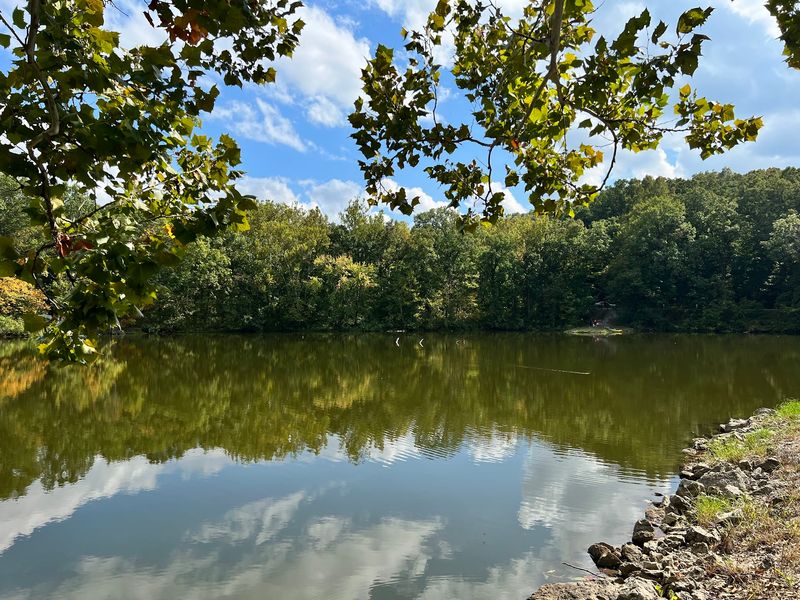
Fishing fans, this one’s for you. Clubhouse Lake is a popular family fishing spot within the area.
It’s a relaxed place to teach kids how to cast.
The water holds sunfish, catfish, and black bass. Sunfish are great for beginners because they bite readily.
Catfish and bass give more experienced anglers something to chase.
Boaters should know a key rule. On lakes and ponds under 70 acres, only electric motors are allowed.
That keeps things quiet and calm for everyone.
Six more ponds dot the property, mostly managed for wildlife. They add habitat for critters and make the landscape more varied.
Keep an eye out for visitors at the water’s edge.
Restrooms sit near the primitive camping area at Clubhouse Lake. That’s handy if you’re spending a few hours fishing with kids.
They aren’t at the hiking trailhead, so plan accordingly.
Remember to bring a valid Missouri fishing permit if you need one. Pack snacks, bug spray, and patience.
Fish run on their own schedule, and they don’t care about your lunch plans.
Eagles, Herons, And Wildflowers Steal The Show
Look up often on this hike. Turkey vultures, bald eagles, and great blue herons all make appearances here.
The bluffs give you a rare chance to see big birds at eye level.
Bring binoculars if you own a pair. A bald eagle gliding over the Osage River is the kind of sight that stops conversation.
Herons tend to work the shoreline below.
The forest itself is mostly oak and hickory. Down along the river, bottomland hardwoods take over.
That mix creates different homes for different animals.
Small glades are scattered throughout the property. From May through October, they show off wildflowers.
These open, rocky patches add bursts of color between the trees.
The rocks underfoot tell their own tale. They belong to the Gasconade Formation, with sandstone, chert, and dolomite.
These layers were deposited more than 400 million years ago.
Bird watching is one of the area’s listed activities, so you’re in good company. Move quietly, pause at the overlooks, and scan the sky.
Nature rarely sticks to a script, which keeps every visit a little different.
Plan Your Trip Like A Pro Before You Go
Getting here is pretty simple. You’ll find Painted Rock Conservation Area at State Highway 133, Westphalia, MO 65085.
It’s roughly seven miles west of Westphalia in Osage County, Missouri.
The area opens daily from 4 a.m. to 10 p.m. Some activities, like fishing, hunting, and boating, allow 24-hour access where permitted.
Early birds and night anglers both get a fair shot.
A gravel parking lot serves visitors. Remember, restrooms are by the Clubhouse Lake camping area, not at the trailhead.
A quick stop first might save you some squirming later.
Camping options include designated sites plus walk-in, float-in, and backpack camping. A boat ramp also offers public access to the Osage River.
Paddlers and anglers, take note.
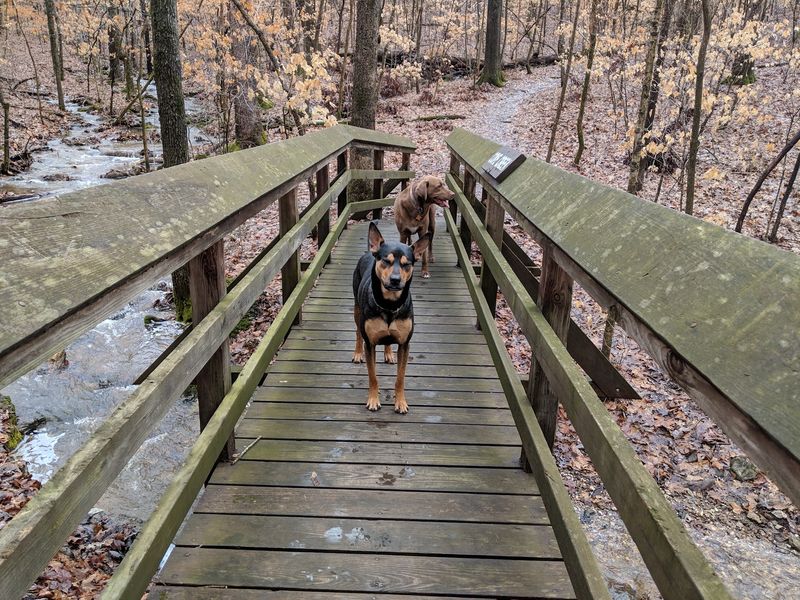
Dogs are welcome, but keep them leashed. Horseback riding is allowed on roads open to vehicles or multi-use trails marked for horses.
Hunting for deer, turkey, and squirrel happens here too, so wear bright colors during seasons.
Pack water, snacks, and good shoes. Then head out and claim your spot on those bluff-top boardwalks.
The river view is waiting.
