The past is not a quiet museum here. It is alive and loud.
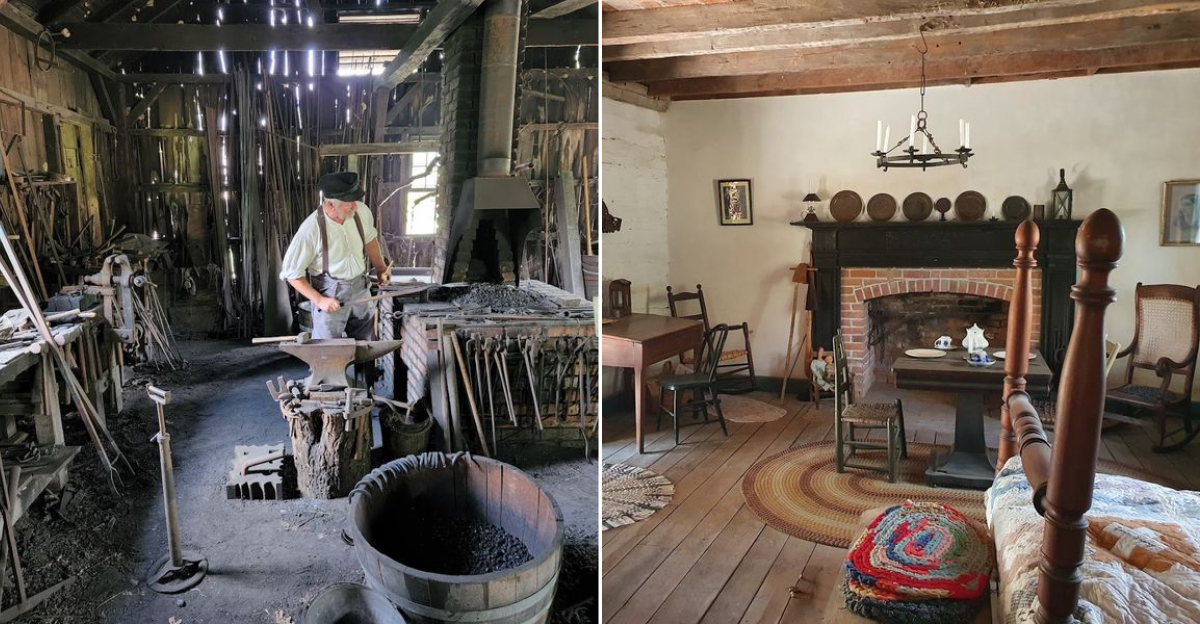
A hammer clangs at the blacksmith shop. A schoolmarm rings a bell. Smoke rises from a cabin chimney.
A living history village in Missouri has recreated daily life from the eighteen hundreds, and you can walk right into it.
More than two dozen original buildings have been moved here from across the state. Costumed interpreters go about their work, and heirloom crops grow in the fields.
You can ask a farmer about his tools, watch wool being dyed, or step inside a cabin that has stood since before the Civil War. The buildings are filled with period furnishings and equipment.
The past feels immediate and real. You will leave feeling like you have stepped into an 1850s photograph.
The First Walk Down The Lane
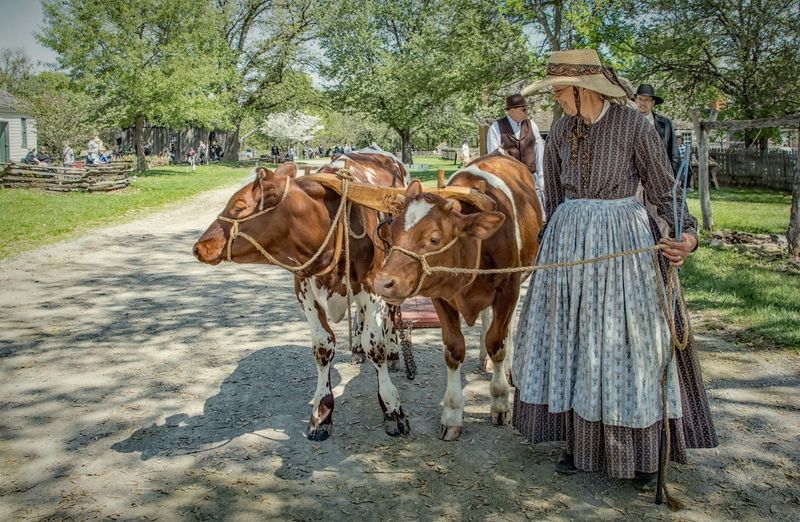
The first thing that got me was the road into the village, because it immediately stops feeling like a normal outing and starts feeling like you slipped into another rhythm entirely. You are not hit with flashy signs or staged drama, and that calm is exactly why the place works so well.
It eases you in gently, which somehow makes the whole experience feel even more convincing.
As you start walking, the layout feels open and lived in instead of packed tight like an exhibit hall, and that gives your brain room to settle down and really notice things. I kept catching little details like fence lines, patches of grass, and the way the buildings sit in the landscape as if they belong there.
That sense of space matters more than you might expect, because it helps the village read like a community rather than a display.
What I liked most right away was how the setting does not beg for your attention, because it trusts you to meet it halfway. You look around, breathe a little slower, and suddenly you are imagining wagons, chores, meals, and conversations happening all around you.
Before you even step inside a house, Missouri starts feeling very far away from the present.
Where You Actually Find It
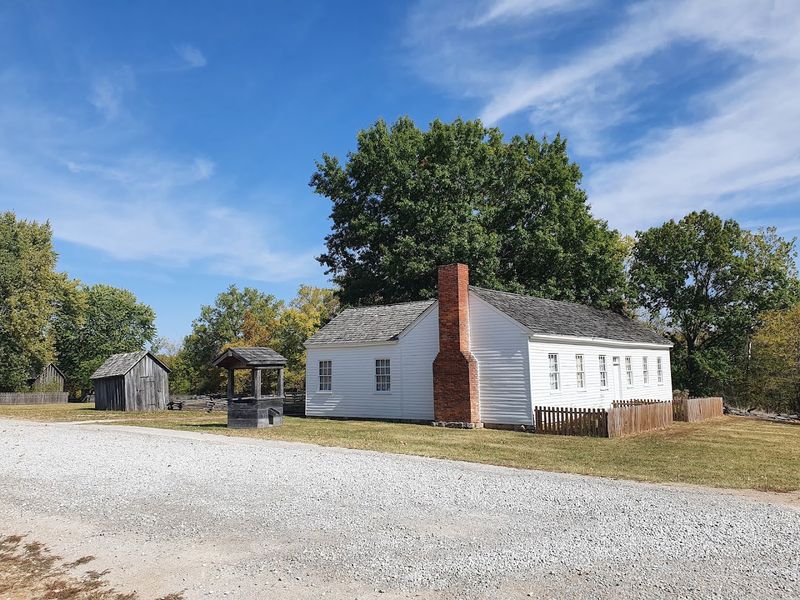
Let me make this easy, because the museum is at Missouri Town Living History Museum, 8010 East Park Road, Lee’s Summit, Missouri, and it somehow feels tucked away without being annoying to reach. I always appreciate a place that lets you leave the everyday behind without needing a complicated plan.
By the time you pull in, the mood has already started shifting.
There is something funny about how quickly the modern world falls off once you arrive, because you are still close enough to regular life to pop over on a casual day, yet the grounds feel intentionally separate. That little bit of distance does a lot of work.
It gives the visit a sense of entering somewhere instead of merely stopping by.
If you have ever gone somewhere historic and still felt like you were basically standing in a parking lot with costumes nearby, this is not that feeling at all. The setting helps the story before anyone says a word.
Missouri really knows how to surprise you when a place lets the landscape do part of the talking.
Why The Buildings Feel So Convincing
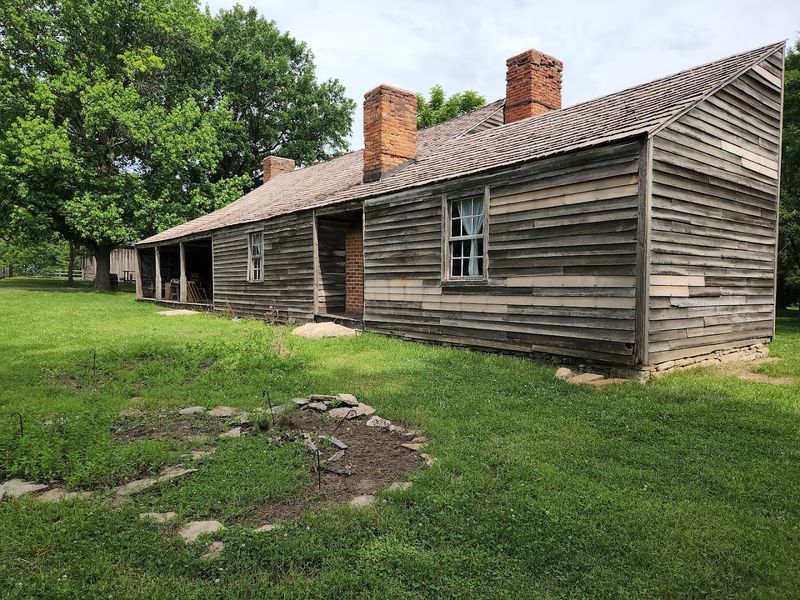
Honestly, the buildings are what make the whole thing click, because they do not feel like replicas trying too hard to convince you. They have that uneven, practical look that old places tend to keep, where every board and doorway suggests somebody built it for use first and beauty second.
That grounded feeling makes you trust what you are seeing.
As you move from house to house, you start noticing how different each structure feels in scale, purpose, and mood, and that variety quietly tells you a lot about village life. Some spaces feel domestic and close, while others feel built around labor, trade, or storage.
Instead of one big historical statement, you get many smaller truths sitting side by side.
I kept thinking about how much effort it must have taken to shape a whole community from timber, tools, weather, and necessity, and that thought stays with you as you wander. Nothing feels abstract once you are standing there looking at rooms where every object had a job.
In Missouri, these buildings do more than survive as scenery, because they still explain how people made a life out of daily work.
The People Who Bring It To Life
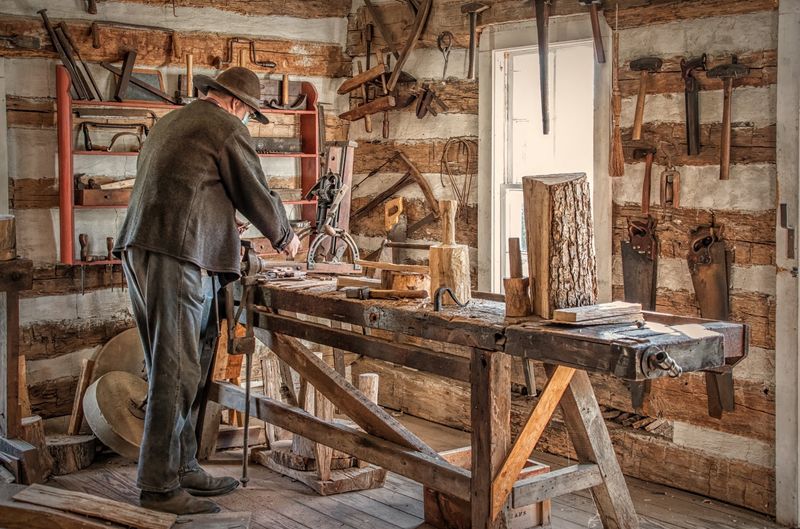
Here is where the place really stops being a collection of old structures and starts feeling alive, because the interpreters make the village breathe in a very natural way. They are not performing at you from a distance, and that makes such a difference.
When you talk with them, the past starts sounding less like a chapter and more like a real day somebody had to get through.
I loved that the conversations never felt stiff or memorized, because people were willing to explain practical details that usually get skipped over. You hear about chores, meals, fabric, weather, routines, and all the tiny decisions that shaped a household.
Those details are what pull history down from the big picture and put it right in front of you.
If you are the kind of person who learns best by asking a question the moment it pops into your head, this place is especially fun. You can be curious without feeling rushed, and that keeps the visit relaxed instead of overly managed.
Missouri history lands much harder when somebody standing beside a cookstove or workshop bench helps you imagine what the work actually felt like.
The Homes Feel Surprisingly Personal
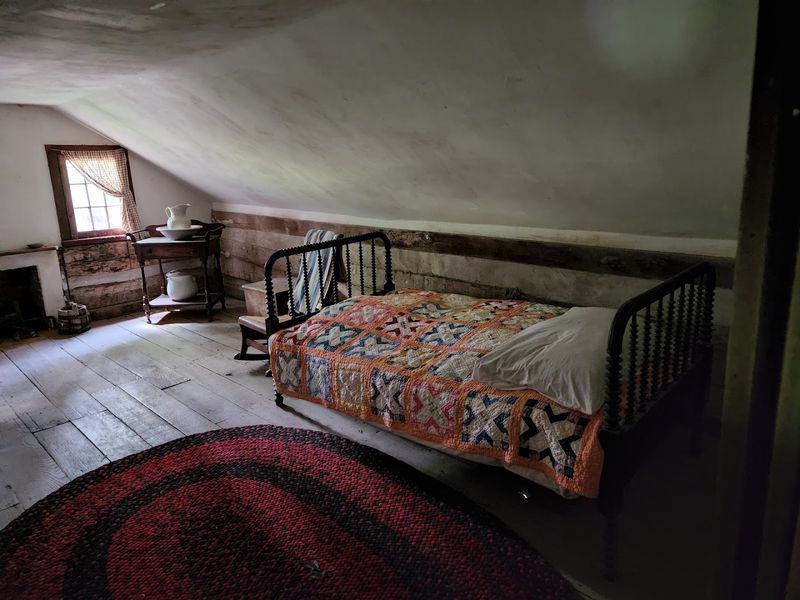
What surprised me most inside the homes was how quickly the rooms stopped looking old and started looking personal. You can almost sense the habits that would have shaped each space, from where someone cooked to where someone sat, stitched, or rested at the end of the day.
That ordinary quality is exactly what makes the experience stick.
There is not much separating you from the realities of daily life when you are standing in a small room with simple furnishings and very little extra comfort. You start imagining heat, cold, noise, laundry, meals, and the constant effort it took to keep a household running.
Suddenly history is not decorative anymore, because it is asking you to think about work you cannot postpone.
I found myself slowing down in these spaces more than anywhere else, probably because homes make the past feel intimate in a way public buildings do not. Even without knowing individual stories, you start filling in the blanks with your own sense of family routines and shared responsibilities.
In Missouri, these rooms give you a plainspoken reminder that everyday life has always been built from repetition, care, and a lot more labor than most of us are used to.
Farm Life Gets Very Real Out Here
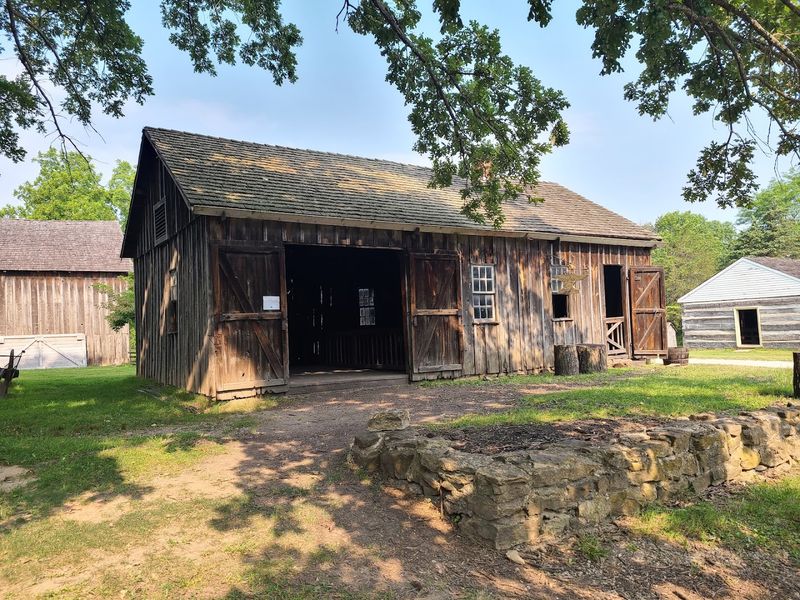
You really cannot understand a place like this without looking beyond the houses, because the farming side of the village explains how everything else kept going. The land, animals, and growing spaces are not just background scenery, and you feel that almost immediately.
They show you what survival actually depended on from one season to the next.
Seeing livestock and cultivated plots in the same landscape as the homes changes the whole story, because it connects labor directly to food, clothing, trade, and routine. It is one thing to know in theory that people were self reliant, and it is another to see the systems that made that possible.
The village makes those connections in a way that feels clear without turning into a lecture.
I kept thinking about how little room there would have been for laziness, delay, or waste when so much of life depended on timing and steady effort. Even a quiet walk past a fence or garden can make you imagine the noise, smells, and tasks that filled the day.
Missouri feels especially grounded here, because the agricultural side of the museum reminds you that communities were built not just by neighbors, but by constant physical work.
Watching Work Happen Changes Everything
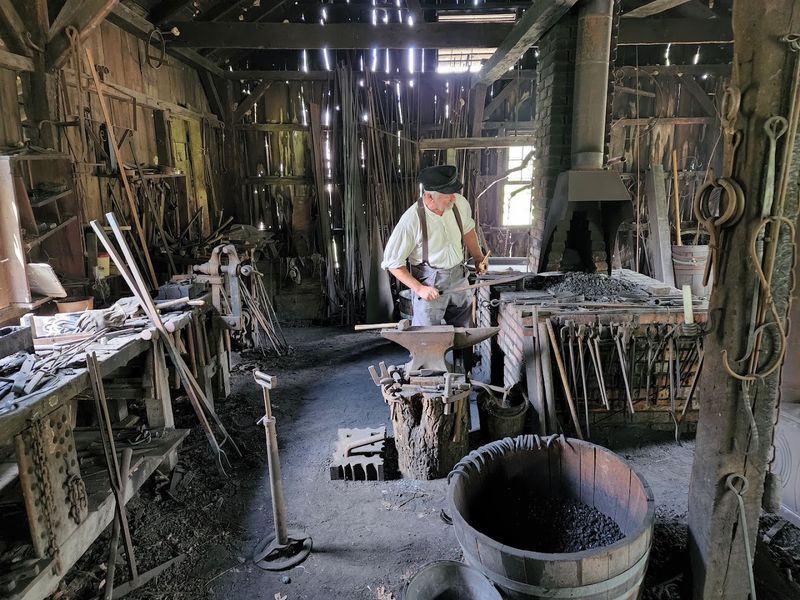
There is something about seeing skilled work happen in front of you that cuts through all the vague ideas you might have carried in. A demonstration turns history from information into motion, sound, and effort, and that shift is powerful.
You stop thinking in broad eras and start paying attention to hands, tools, and repetition.
Whether it is cooking, sewing, smithing, or another practical task, the real takeaway is how much knowledge used to live in ordinary daily actions. Nothing feels automatic once you see how much patience and control even a basic job can require.
It gives you a different respect for the kind of competence people had to build simply to keep life moving.
I liked that these moments never felt flashy for the sake of entertainment, because the work itself is interesting enough when it is shown honestly. You can imagine the heat, the fatigue, the timing, and the consequences of getting something wrong.
In Missouri Town, the demonstrations do not just show you what people made, because they quietly reveal the discipline, stamina, and practical intelligence that shaped a whole way of living.
The Little Details Do The Heavy Lifting
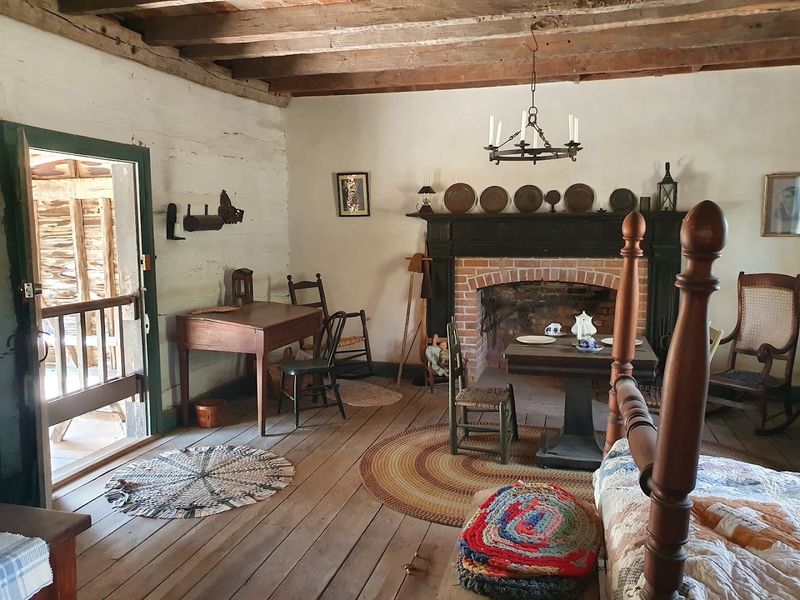
What stayed in my head afterward was not one giant dramatic moment, but a pile of smaller details that kept adding up while I walked. A doorway sits differently when you know it was built for daily use, and even a plain fence starts saying something about labor, boundaries, and livestock.
That is the kind of place this is, where quiet details keep doing the storytelling.
You start noticing textures, distances, worn surfaces, and the practical logic behind how things are arranged, and all of it helps the village feel honest. Nothing seems added just to look quaint, which I deeply appreciate.
The atmosphere comes from usefulness first, and that usually creates a stronger sense of the past than anything overly polished ever could.
I think a lot of us are used to rushing past environments without really reading them, and this museum gently breaks that habit. The longer you stay, the more the village teaches you to look at ordinary things like they matter, because for the people living there, they absolutely did.
In Missouri, that kind of close looking becomes its own reward, and it leaves you feeling more connected to history than you expected.
Why This One Stays With You
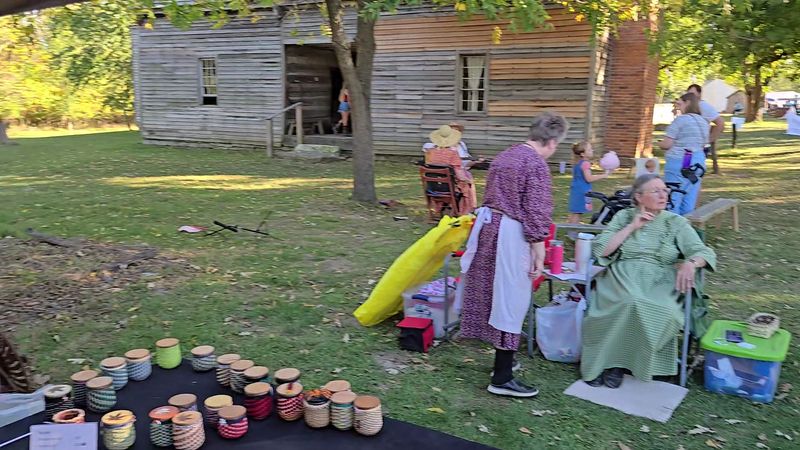
By the time you are heading out, the place does not feel like somewhere you simply visited for a little history and then checked off a list. It feels more like you spent time inside another version of daily life, one that was harder, slower, and far more physical than our own.
That difference lingers in a way that is both thoughtful and oddly comforting.
I think the reason it sticks is that the museum never relies on spectacle to impress you. It trusts the buildings, the landscape, the work, and the ordinary routines of village life to carry the whole experience, and they absolutely do.
When a place is that confident in its own texture, you tend to remember it more clearly.
If you are wondering whether Missouri Town Living History Museum is worth making time for, I would say yes without doing that exaggerated travel writer thing where everything has to sound life changing. It is simply absorbing, specific, and refreshingly human from start to finish.
Missouri gives you plenty of ways to spend a day, but this one has a rare ability to pull you out of the present just enough that you return to it seeing familiar life a little differently.
