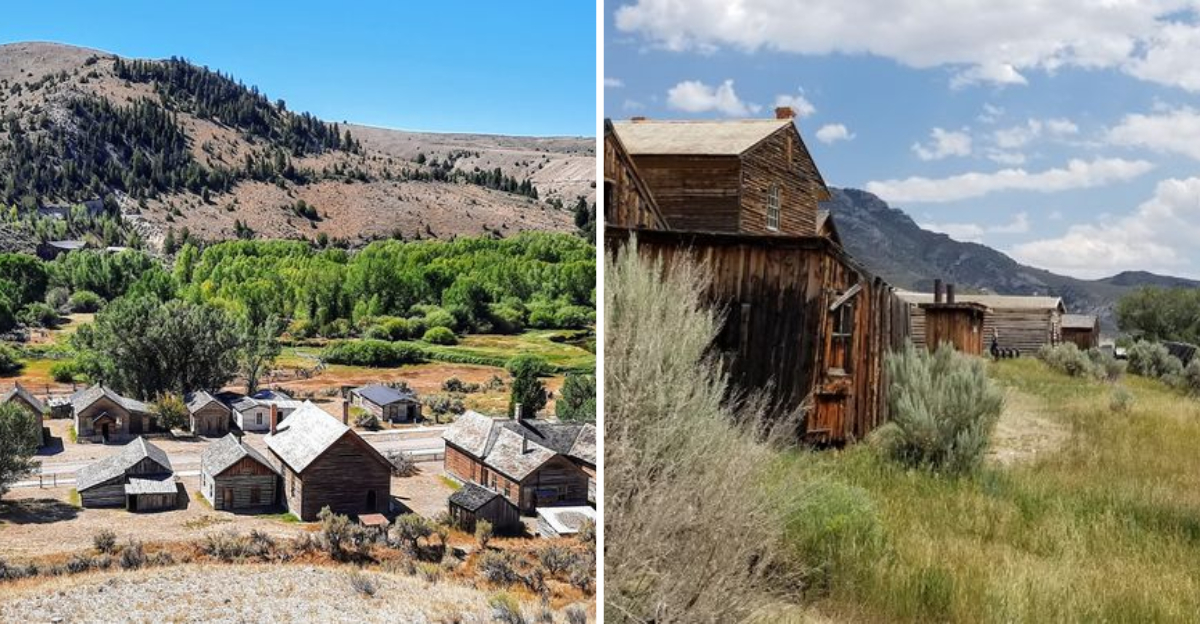
Montana holds some of the American West’s best-preserved reminders of the gold rush, where abandoned settlements still stand against a backdrop of open hills and endless sky.
Weathered wooden buildings line quiet dirt streets much as they did more than a century ago, preserving the atmosphere of a once-thriving frontier community.
Former businesses, homes, and public buildings remain remarkably intact, offering an unusually complete glimpse into everyday life during the mining era.
Stories of fortune seekers, frontier justice, and territorial politics continue to shape the site’s legacy long after the last residents moved on.
Montana ghost towns like this preserve an extraordinary chapter of Western history through architecture, landscape, and enduring silence.
The Ghost Town That Time Refused to Erase
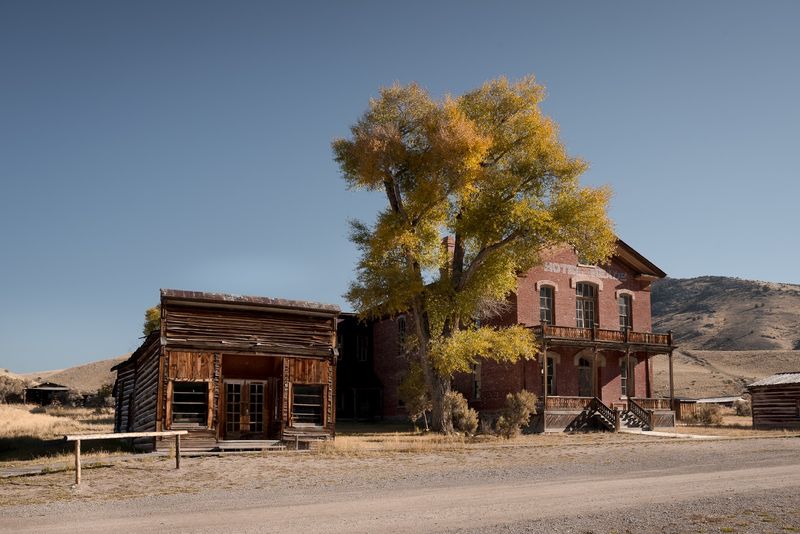
There is something quietly remarkable about a place that has been empty for decades yet still feels like it has a heartbeat. Bannack is that kind of place.
The buildings are not replicas or reconstructions. They are the real thing, original structures from the 1860s gold rush era, still holding their shape against Montana winters and summer heat.
More than 60 structures survive here, from homes and hotels to a church and a schoolhouse. Each one has its own story layered into the walls, the floors, and the peeling wallpaper.
Visitors can borrow a numbered guidebook from the visitor center and match each building to its history as they walk the boardwalk.
Bannack was founded in 1862 after gold was discovered in Grasshopper Creek. Within months, thousands of prospectors flooded in.
By 1864, it had become Montana Territory’s first capital, though that status did not last long. The last full-time residents left in the 1970s.
Montana Fish, Wildlife and Parks took over management, and what they have preserved here is genuinely extraordinary. Plan to spend at least two hours exploring.
Henry Plummer and the Sheriff Who Never Stopped Being Controversial
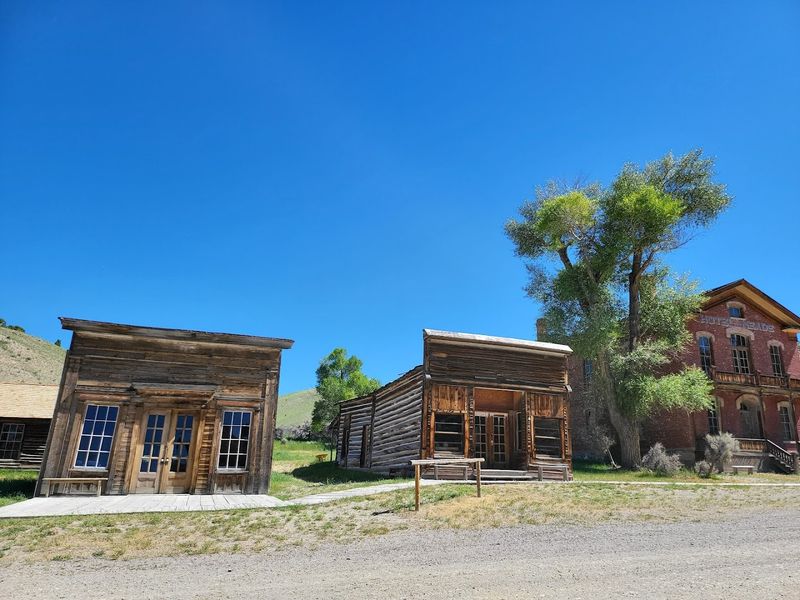
Henry Plummer is probably the most talked-about figure in Bannack’s history, and his story is genuinely hard to pin down. He was elected sheriff of Bannack in May 1863, which on paper sounds like a straightforward thing.
But Bannack in 1863 was anything but straightforward.
Plummer was accused of secretly leading a gang of outlaws called the Innocents, a group of road agents blamed for dozens of robberies and endings across the region. Vigilantes, fed up with the violence and convinced of his guilt, apprehended Plummer and two of his deputies.
On January 10, 1864, all three were hanged on the very gallows Plummer himself had ordered built.
Whether he was actually guilty has been debated by historians ever since. Some argue the evidence was thin and the vigilante justice was rushed.
Others say the pattern of crimes pointed directly at him. Either way, it makes for one of the most gripping chapters in Montana history.
The old jail still stands in Bannack, and walking past it knowing that story gives the place a very different kind of weight. History here is not just interesting.
It is genuinely unsettling.
Exploring the Buildings Up Close
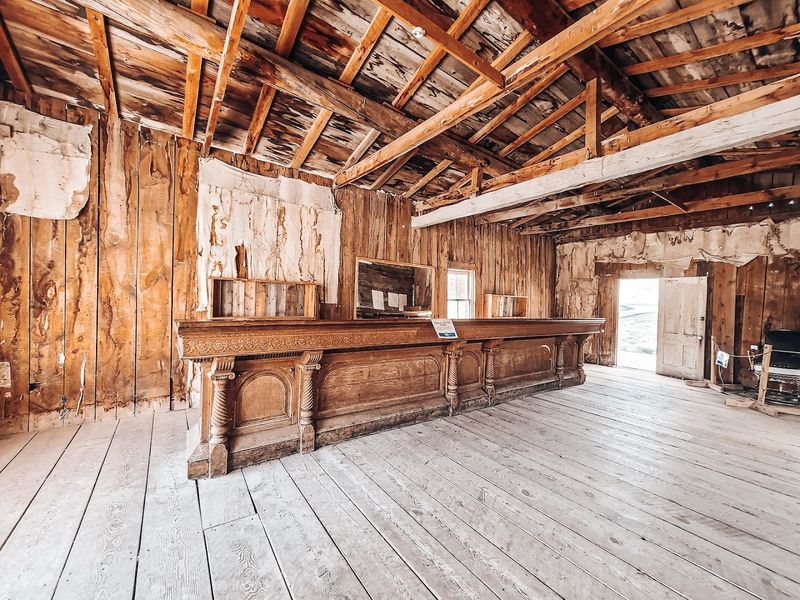
One of the best parts of visiting Bannack is that you are actually allowed inside many of the buildings. That is not something you get at every historic site.
Here, you push open an old wooden door and step into rooms that have not changed much since the 1800s.
The wallpaper is one of the unexpected highlights. Multiple layers of old paper cling to the walls, each one representing a different era of the building’s life.
The flooring creaks underfoot, and the windows are original glass, slightly wavy, giving the outside world a rippled, dreamlike quality when you look through them.
Wear boots or sturdy shoes if the weather has been wet. Mud is a real factor, and some of the floors inside are uneven.
Bring gloves too, since there is a lot of old wood with rough edges throughout the site. The visitor center staff are genuinely helpful and happy to point out which buildings are currently accessible.
Some are locked for preservation, but you can still peer through those original glass windows and get a real sense of how people lived here. It is a surprisingly hands-on experience for a place this old.
The Gold Rush That Started It All
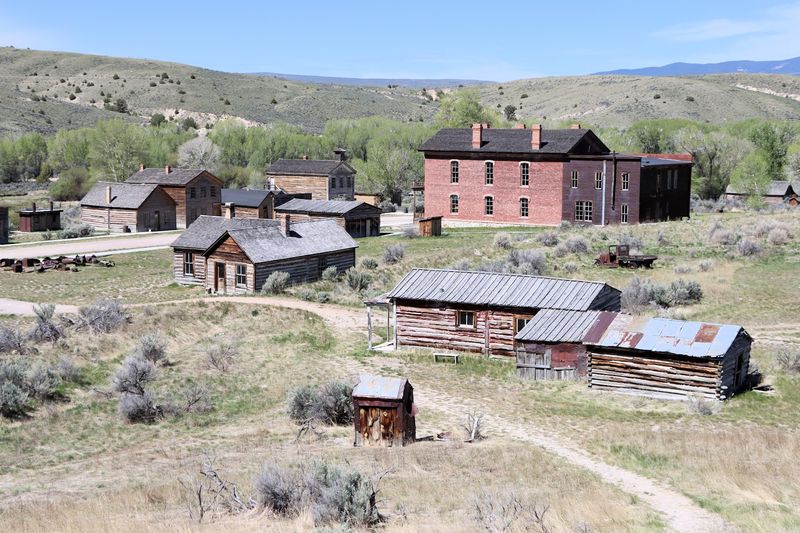
Gold changed everything in this corner of Montana. John White’s discovery in Grasshopper Creek in July 1862 set off a rush that brought thousands of people to a remote valley that had seen almost no permanent settlement before.
Within a year, Bannack had a population in the thousands and enough political weight to become Montana Territory’s first capital.
The gold did not last forever, and neither did the boom. As richer deposits were found elsewhere, including the famous strike at Alder Gulch, people drifted away.
Bannack never fully recovered its peak population, but it held on as a working community for over a century before finally going quiet in the 1970s.
Today, visitors can actually try gold panning at the park. It is one of those unexpected activities that turns a history lesson into something genuinely fun, especially for kids.
Finding even a tiny fleck of gold in the creek gives you a small but real connection to what drove so many people to upend their entire lives and travel to the middle of nowhere. The creek is still there, still running, and still holding a few surprises for anyone patient enough to look.
Bannack Days and the Town Coming Back to Life
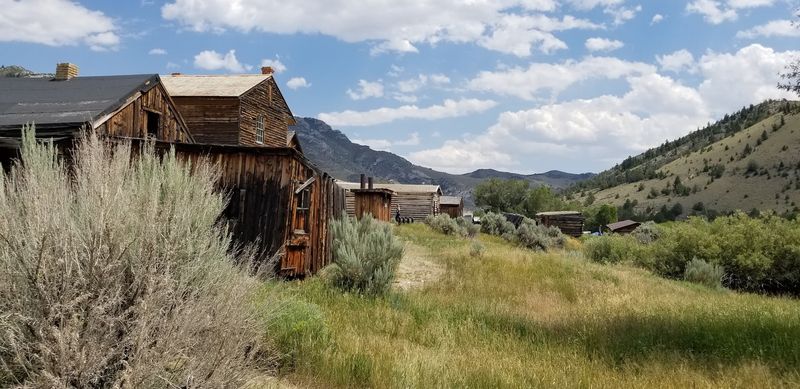
Once a year, Bannack does something remarkable. It comes back to life.
Bannack Days is an annual event held in July that fills the ghost town with people in period costumes, live demonstrations, and activities that make the history feel immediate and real. It is one of the most unique festival experiences in the state.
Gunfight demonstrations, blacksmithing, and old-time crafts bring the 1860s into sharp focus. Vendors set up around town, and the energy is completely different from a quiet weekday visit.
Families come from all over Montana and beyond, and the contrast between the normally silent streets and the sudden crowd is striking in the best way.
If you prefer a quieter experience, a regular weekday visit is genuinely peaceful and allows you to move at your own pace without feeling rushed. Both versions of Bannack have their appeal.
The Bannack Days crowd gives you a sense of what the town might have felt like during its peak years. A solo wander on a calm Tuesday gives you something harder to describe, a kind of stillness that feels both comfortable and slightly eerie.
Either way, the place delivers something memorable.
Camping Under Montana Stars at the Edge of History
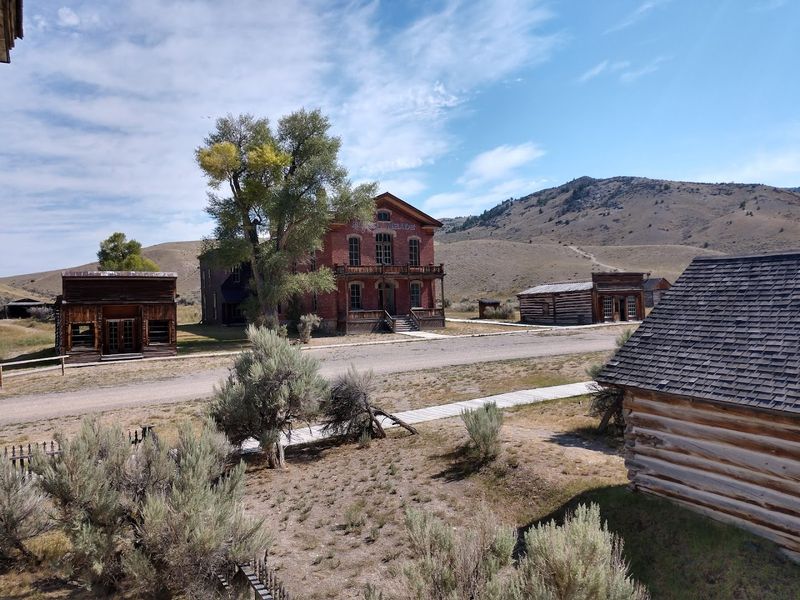
Spending the night at Bannack is a completely different experience from a day visit, and honestly, it might be the better one. The park has two campgrounds within walking distance of the ghost town, and once the day visitors head home, the place gets very quiet very fast.
At night, the wooden buildings take on a different character. The shadows are deeper, the sounds are smaller, and the sky above is the kind of dark you only get far from city lights.
Montana skies at night are genuinely stunning, and the campsite location makes stargazing effortless. You do not need any special equipment, just a blanket and a willingness to lie back and look up.
The campgrounds are well maintained and have received consistently positive feedback from visitors. RV parking is available, and the sites are spacious enough to feel private even when the park is moderately busy.
Some visitors make a point of exploring the ghost town after dark, and the experience is reportedly very different from a daytime visit. The park is open from 8 AM to 8 PM for day use, but overnight campers get to experience something the day crowd never quite sees.
Planning Your Visit to Bannack State Park
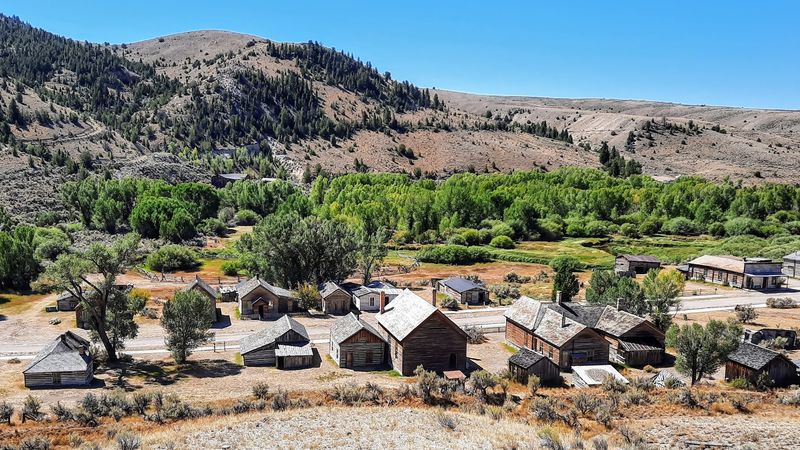
Getting to Bannack takes a little planning, but that is part of the charm. The park is located about 25 miles southwest of Dillon, Montana, down a gravel road that winds through open ranch land.
The drive itself is scenic, and you start to feel the remoteness well before you arrive.
The park is open daily from 8 AM to 8 PM. There is a small entry fee per vehicle, and the visitor center staff are known for being friendly and knowledgeable.
They will lend you a numbered guidebook that matches each building to a description, which makes the self-guided tour much more rewarding. Give yourself at least two hours, though many visitors end up staying longer.
There is water and some snacks available on site, but no fuel or restaurants nearby, so plan accordingly. Bring layers since the weather in this part of Montana can shift quickly.
The park has a 4.8-star rating from over 1,200 reviews, which is not an accident. People leave genuinely impressed, and many come back.
It is the kind of place that earns its reputation quietly, through real experience rather than marketing.
Address: 721 Bannack Rd, Dillon, MT 59725
