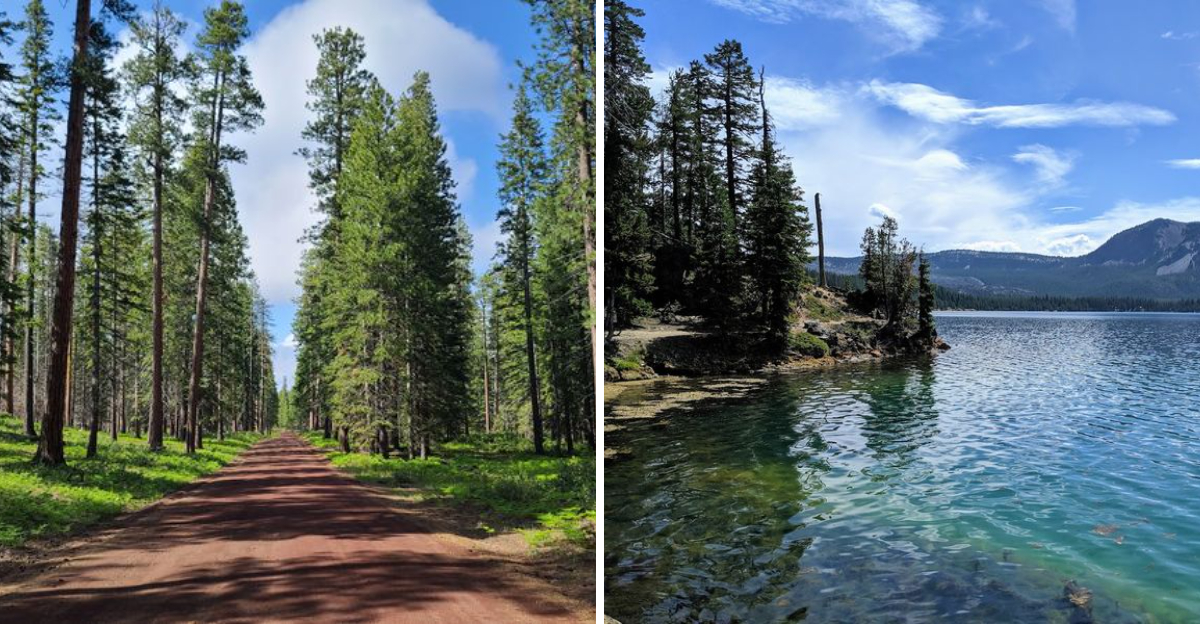
Some places are so vast that you could spend a lifetime exploring and still never see it all. This is one of those places, stretching across mountains, rivers, and valleys like nature decided to show off just a little.
Whether you are strapping on snowshoes in February or lacing up hiking boots in July, the terrain is always ready for you. Trails wind through towering pines and open meadows, each turn offering a view that makes you stop and just breathe for a moment.
Anglers cast their lines into crystal clear lakes while mountain bikers zip down dusty paths with grins plastered across their faces. Campers gather around crackling fires as the sun dips behind volcanic peaks, painting the sky in shades of orange and pink.
In winter, cross country skiers glide through silent, snow covered wonderlands that feel completely untouched by the modern world. Wildlife is everywhere, from deer grazing at dawn to eagles circling overhead, reminding you that you are just a guest in their home.
Oregon knows how to do outdoor adventure right, and this massive playground proves that every season brings something worth celebrating.
Hiking the Tumalo Falls Trail
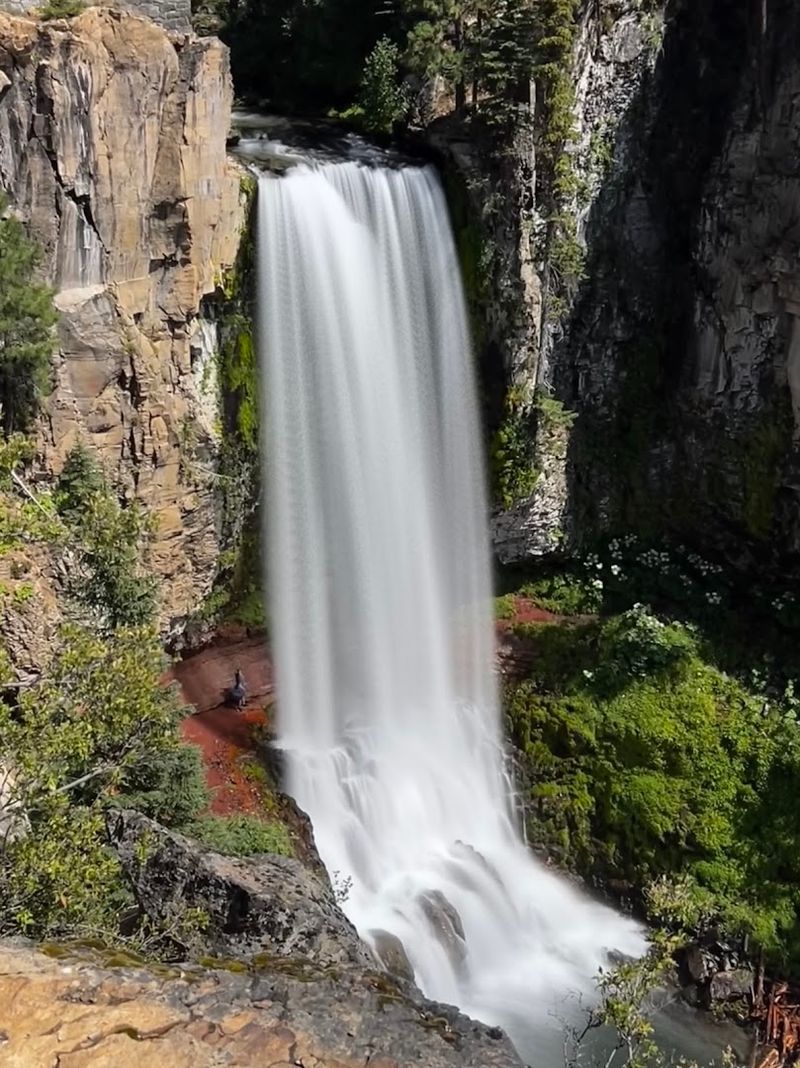
The first time I rounded the bend on the Tumalo Falls trail, the waterfall hit me like a surprise standing ovation. Water crashes nearly 97 feet down a basalt cliff face.
The roar alone is enough to make your jaw drop open.
The trail itself runs about six miles total, going out and returning the same way. It stays mostly flat, with clear markers guiding you along the path.
Families with kids handle it well, and the scenery never gets boring.
About halfway in, a second, quieter waterfall appears almost out of nowhere. You can rest near the water and just listen to the forest breathe.
That moment always feels oddly peaceful and oddly exciting at the same time.
The trailhead sits close to Bend, making it an easy morning adventure. Getting there early means fewer crowds and better light for photos.
A Northwest Forest Pass is required, so grab one before you head out.
Camping at Jack Lake Campground
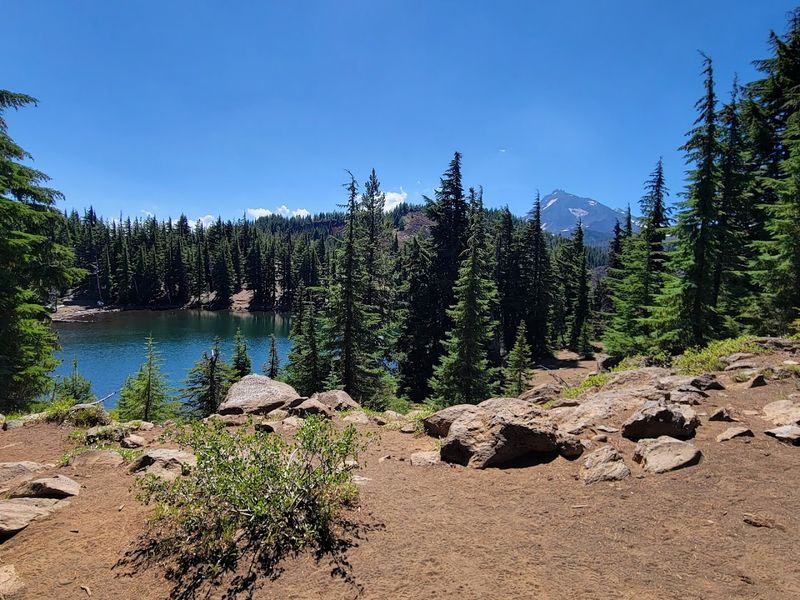
Jack Lake campground sits in one of those spots that feels like it was designed just for you. Mountains wrap completely around the campsite in every direction.
Three Sisters, Mount Jefferson, and Mount Washington all stand visible from camp.
The camping here is free, which somehow makes the whole experience feel even better. Sites are first-come, first-served, so arriving early on weekends is a smart move.
There are no hookups or amenities, just pure forest and open sky.
I spent two mornings there drinking coffee and watching the peaks change color with the rising sun. The forest roads around camp are rideable and walkable, great for exploring slowly.
You feel genuinely far from city noise out here.
Nights get cold even in summer, so pack layers and a solid sleeping bag. A 4×4 vehicle or a slightly raised truck handles the roads much more comfortably.
The deeper you push into this area, the more rewarding the scenery becomes.
Exploring Sparks Lake
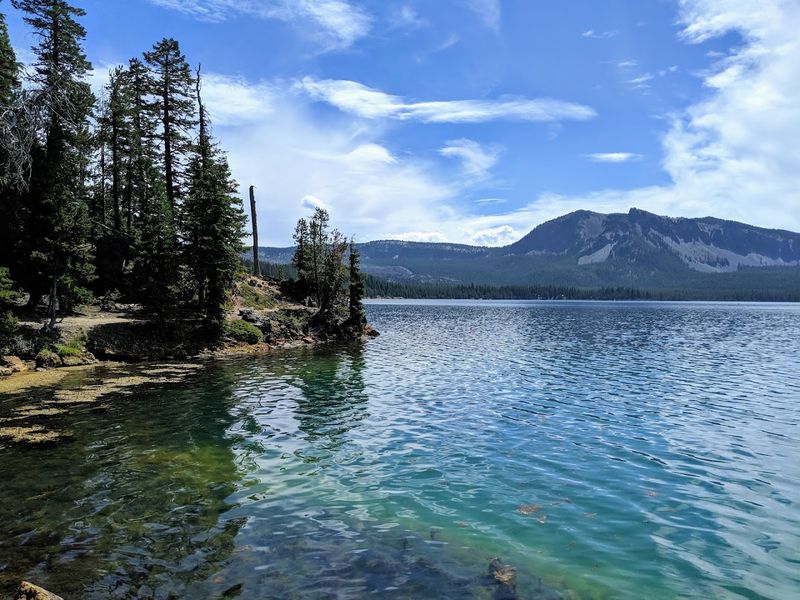
Sparks Lake has a way of making you feel very small in the best possible sense. The reflection of South Sister volcano on the still water is almost unreal.
I arrived just before sunrise once, and the whole scene glowed like something from a painting.
Getting there early is the real trick to enjoying this spot fully. By late morning, the parking lot fills fast during summer weekends.
The rocky shoreline offers hidden nooks where you can sit in total quiet.
Kayaking and canoeing work beautifully on the calm, shallow water here. Paddling slowly toward the mountain reflection feels meditative and completely worth the effort.
Fishing is also popular, with rainbow trout known to frequent these waters.
The area sits along the Cascade Lakes Scenic Byway, making it easy to combine with other stops nearby. Bring a picnic and plan to stay a while.
Sparks Lake is the kind of place that quietly becomes your favorite spot in Oregon.
Off-Road ATV and Quad Trail Adventures
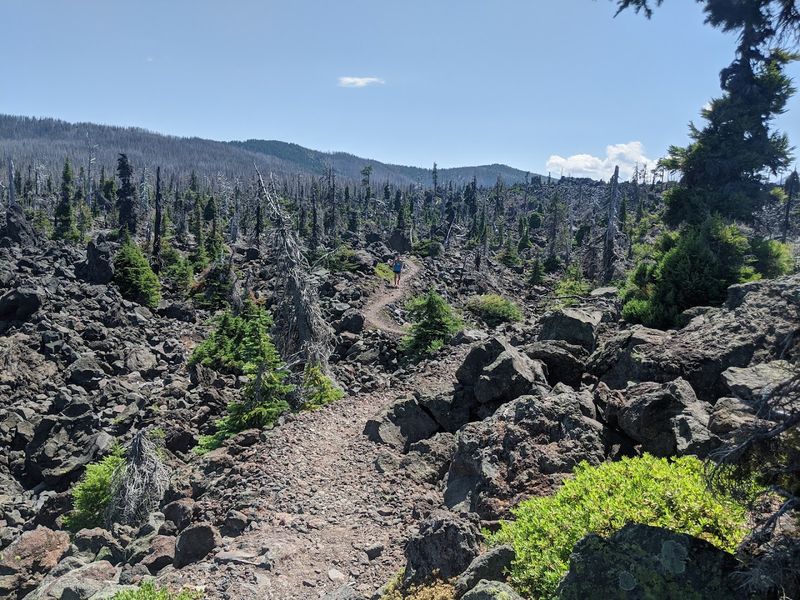
For those who prefer their adventure with a little engine noise, Deschutes delivers in a big way. The forest maintains hundreds of miles of designated off-road vehicle trails.
They are well-groomed and clearly marked throughout the entire system.
The trails wind through dense pine forests and open volcanic terrain alternately. That variety keeps every ride feeling fresh and genuinely exciting.
Quad riders come back year after year, and it is easy to understand exactly why.
Staging areas have vault toilets and are checked regularly for cleanliness and safety. There are no water hookups or power connections at these spots.
Bringing your own supplies is part of the self-sufficient culture here, and people embrace it.
The sheriff patrols the area daily, which adds a layer of comfort for families. Riding rules are posted clearly and riders are expected to follow them closely.
Respecting the trails keeps this incredible off-road system available for future visitors to enjoy.
Swimming and Playing at Forest Rivers
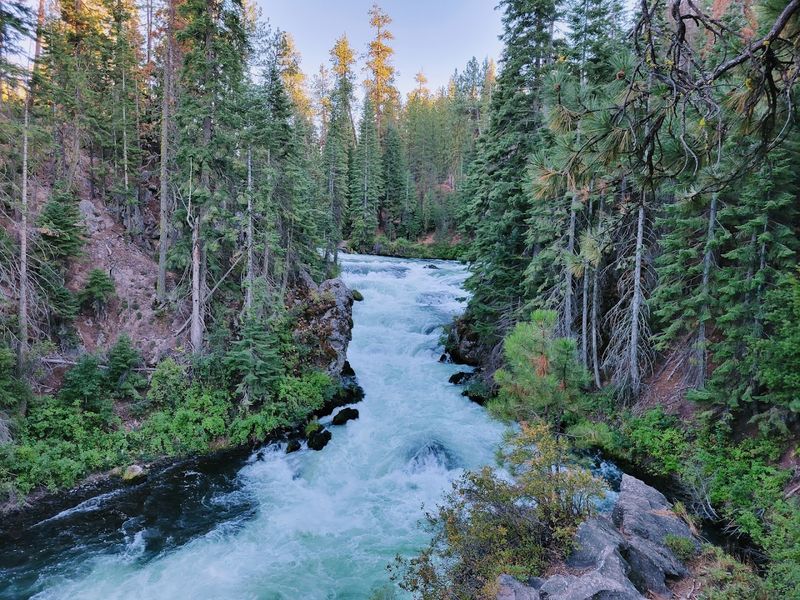
On a scorching Central Oregon afternoon, stumbling onto a cold forest river feels like winning a small lottery. The water runs crystal clear and shockingly cold, even in July.
Kids absolutely love it, and honestly, so do most adults.
Several rivers and streams thread through Deschutes National Forest at various spots. Some areas allow dogs off-leash, which makes the whole outing feel even more joyful.
Watching a dog charge into cold water never gets old.
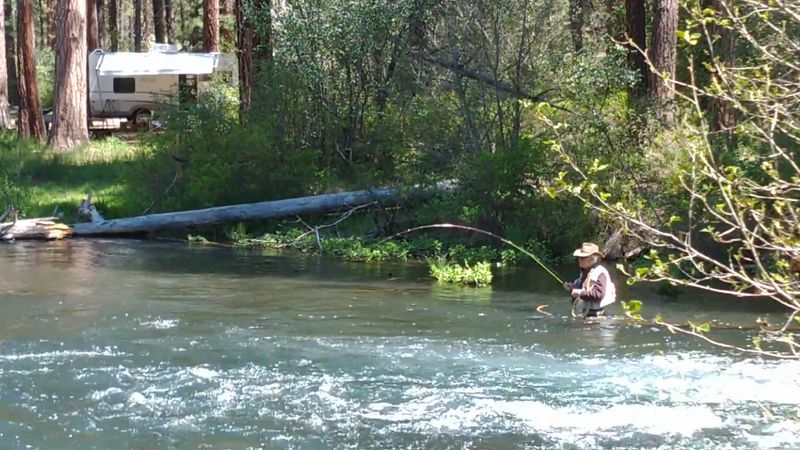
The Deschutes River itself is one of the most beloved waterways in all of Oregon. Fly fishing, swimming, and simply sitting riverside are all equally valid ways to spend an afternoon.
The sound of moving water has a way of slowing everything down beautifully.
Keep in mind the water stays cold enough to take your breath away on first contact. Wading shoes are a practical choice for rocky riverbeds underfoot.
Spending even just an hour beside one of these rivers resets something deep inside you.
Winter Snowshoeing and Cross-Country Skiing
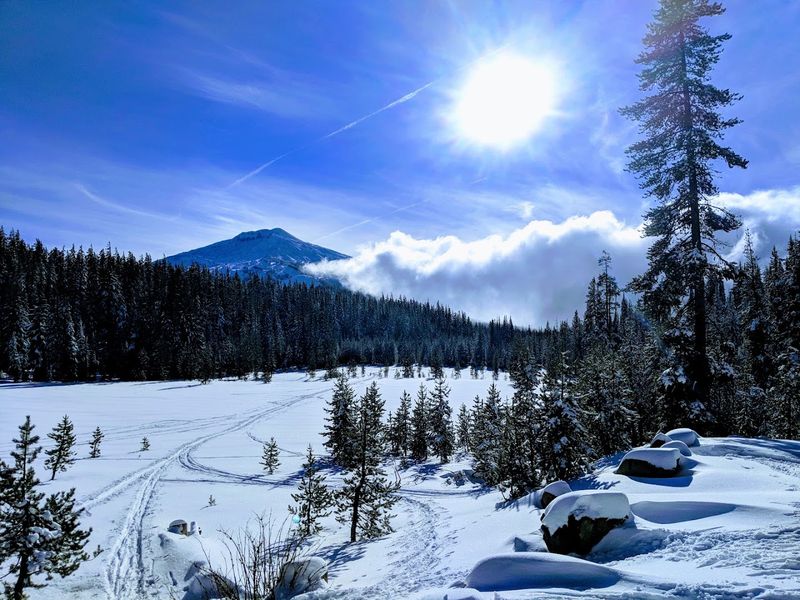
Most people think of Deschutes as a summer destination, but winter here has its own quiet magic. Snow blankets the forest floor and transforms familiar trails into something completely different.
The silence of a snowy pine forest is genuinely hard to describe.
Cross-country skiing and snowshoeing are both popular once the snowpack builds up. Groomed trails exist near the Cascade Lakes area for skiers of multiple skill levels.
Beginners find plenty of gentle terrain, while experienced skiers can push deeper into the backcountry.
I went snowshoeing one January afternoon and had an entire trail entirely to myself. The tracks I left in fresh powder felt weirdly satisfying and a little poetic.
The forest looked almost architectural with snow sitting on every branch perfectly.
Layering properly is the most important preparation for a winter outing here. Waterproof boots and warm gloves make the difference between a great day and a miserable one.
Renting snowshoes near Bend is easy and affordable if you lack your own gear.
Scenic Drives Along the Cascade Lakes Highway
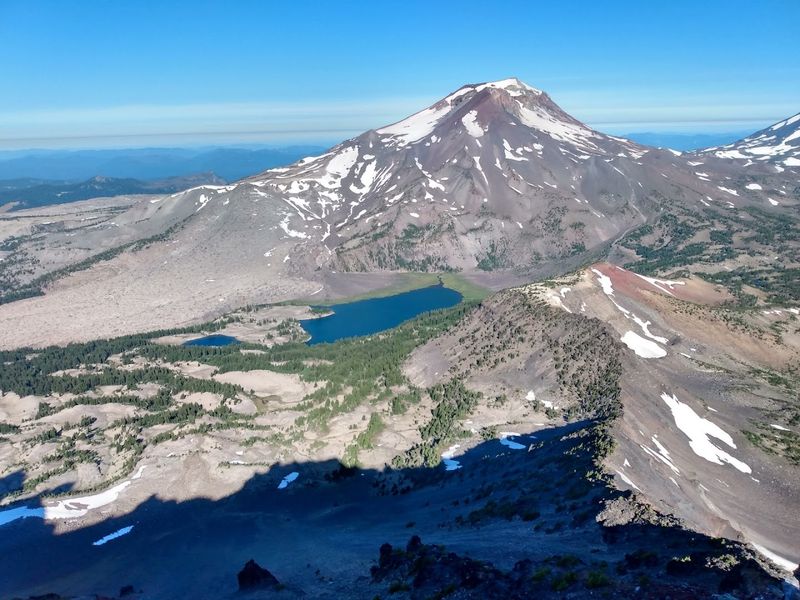
Not every adventure requires leaving your car, and the Cascade Lakes Scenic Byway proves that point beautifully. This iconic highway rolls through some of the most dramatic scenery in all of Oregon.
Volcanic peaks, alpine lakes, and old-growth forest take turns filling your windshield.
The byway stretches roughly 66 miles and connects Bend to the forest interior. Dozens of pullouts let you stop, stretch, and take in views at your own pace.
I pulled over at least eight times on my first drive through.
Each season changes the mood of the drive entirely and memorably. Spring brings wildflowers along the roadside, summer opens up every lake access point, and fall turns the landscape amber and gold.
Even a cloudy day produces dramatic, moody views worth photographing.
The road closes in winter due to snowfall, so plan accordingly if visiting between November and May. Summer and early fall are the prime windows for the full experience.
Packing snacks and a full tank of gas before starting is always a smart plan.
Birdwatching and Wildlife Spotting
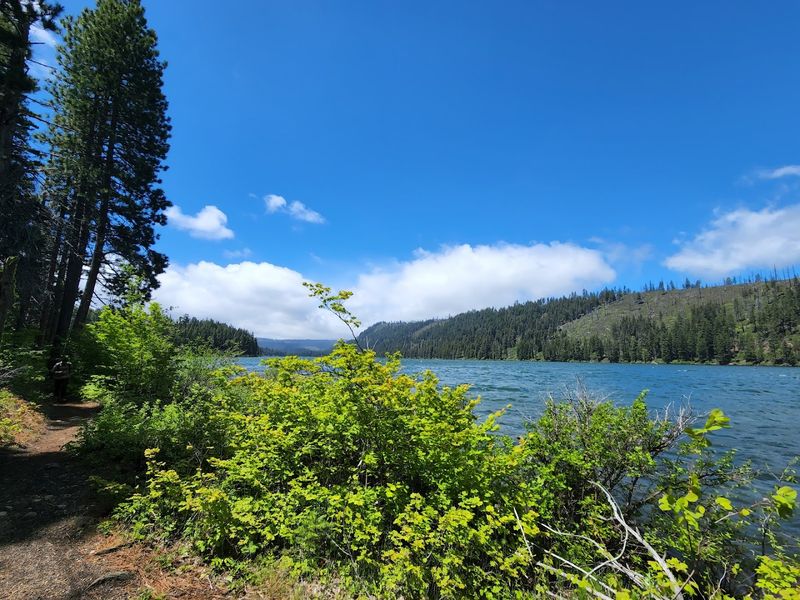
Deschutes National Forest quietly ranks among the best wildlife-watching destinations in the Pacific Northwest. The forest hosts an impressive variety of bird species throughout the year.
Osprey, bald eagles, and great gray owls are all spotted with some patience and luck.
Walking softly along trail edges in the early morning gives you the best chance of encounters. Deer appear frequently near meadow clearings, especially around dawn and dusk.
Black bears also live in the forest, so knowing basic bear awareness is genuinely useful.
I once watched a great blue heron stand motionless at a lakeside for nearly twenty minutes. It was one of those moments that makes you stop thinking about everything else entirely.
Nature has a way of commanding your full attention when you least expect it.
Binoculars and a field guide to Pacific Northwest birds make the experience significantly richer. Some trees along South Twin Lake even feature bat houses mounted on their trunks.
The whole ecosystem here hums with quiet, constant, remarkable life.
Mountain Biking Through Forest Trails
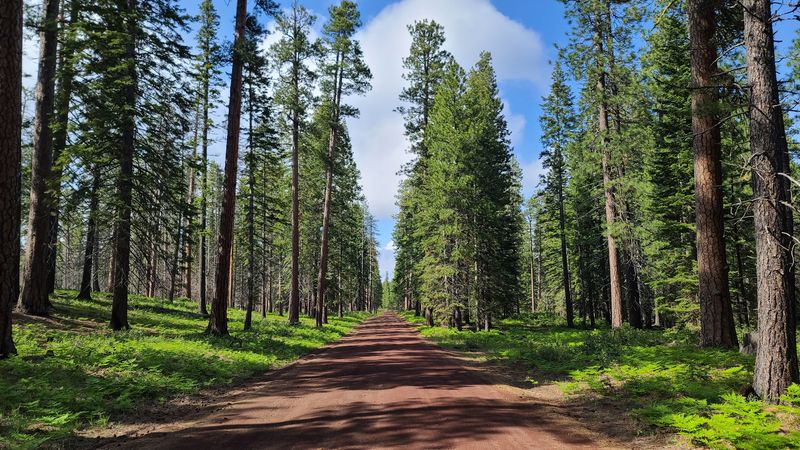
Bend and its surrounding forest have earned a serious reputation among mountain biking communities across the country. The trail network here is extensive, well-maintained, and genuinely thrilling to ride.
Beginners and experts both find exactly what they are looking for.
Hundreds of miles of single-track weave through ponderosa pines and volcanic rock formations. The varied terrain keeps every ride feeling like a new challenge worth accepting.
Flowy descents and technical rocky sections exist within the same trail systems.
I rented a bike in Bend on a whim one afternoon and ended up riding for four hours straight. The trails are so well-signed that getting lost feels almost impossible.
That confidence lets you focus entirely on the riding and the scenery.
Bike shops in Bend offer rentals, maps, and friendly local advice for first-timers. Helmets are non-negotiable and knee pads are strongly recommended for rockier sections.
The mountain biking culture around Deschutes is welcoming, enthusiastic, and deeply community-driven.
Getting a Forest Materials Permit at the Ranger Station
One of the most underrated parts of visiting Deschutes is stopping at the ranger station before heading into the forest. The staff there are knowledgeable, genuinely helpful, and clearly love where they work.
They can point you toward trails, campgrounds, and hidden spots worth your time.
A Forest Materials Permit allows visitors to collect certain natural items from the forest legally. Fallen branches, specific plants, and permitted trees can be gathered with the right documentation.
It turns a hike into something interactive and meaningful for curious visitors.
The permit system also helps protect the ecosystem from over-harvesting and careless collection. Knowing the rules before you explore shows respect for the forest and other visitors.
Rangers are happy to walk you through exactly what is and is not allowed.
Picking up a current trail map at the station is another smart first move. Fire conditions, road closures, and permit requirements change seasonally and sometimes weekly.
Starting your visit informed makes every hour in the forest more relaxed and enjoyable.
