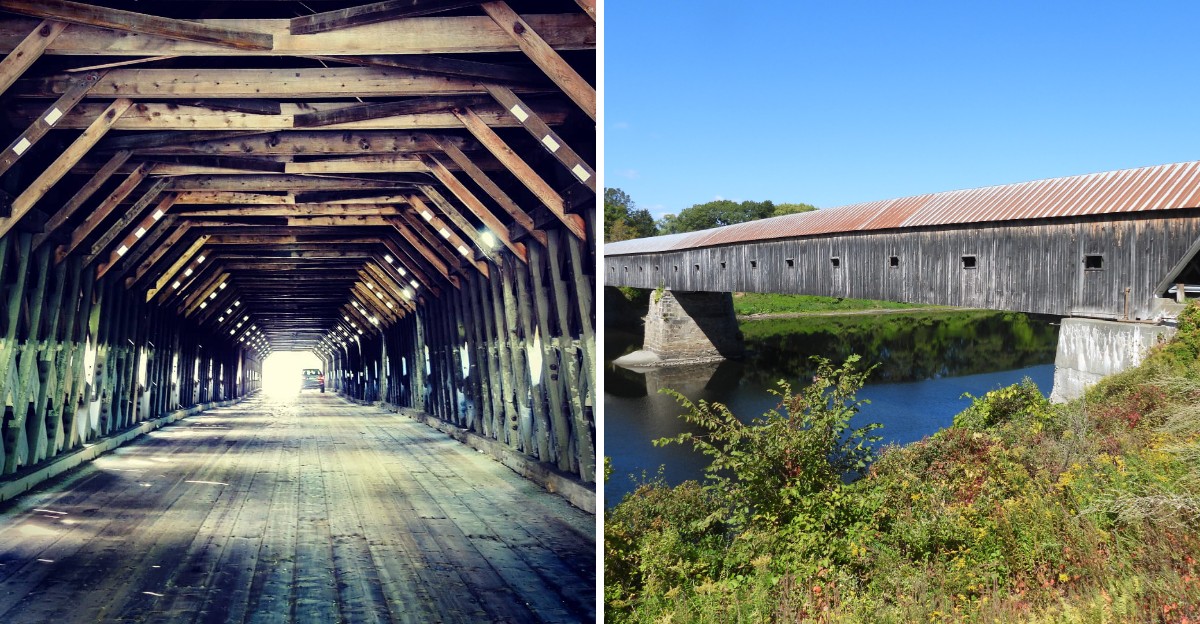
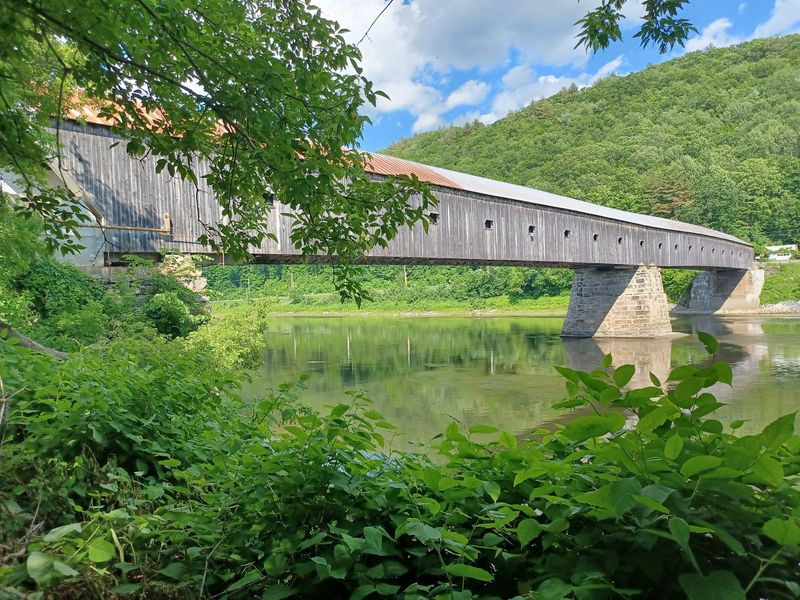
Length is not usually the first thing people notice about a covered bridge, but in this case, it is impossible to ignore. This New Hampshire covered bridge stretches four hundred and sixty feet across a wide river, making it the longest two-span covered bridge in the world and the longest wooden covered bridge in the United States.
It was built in 1866 using a Town lattice truss design, and it has survived floods, ice jams, and more than a century of traffic. The bridge was originally a toll crossing, and it remained privately owned for over a hundred years before the state took it over.
Walking or driving across it, you can feel the weight of that history in the timbers. The river below is wide and steady, and the surrounding valley is quiet.
That is the thing about this New Hampshire bridge. It is not just long.
It is a piece of engineering that has outlasted almost everything around it.
A World Record Built From Wood
Records usually belong to steel giants and shiny skyscrapers. Here, a humble wooden bridge snatched one of the coolest titles around.
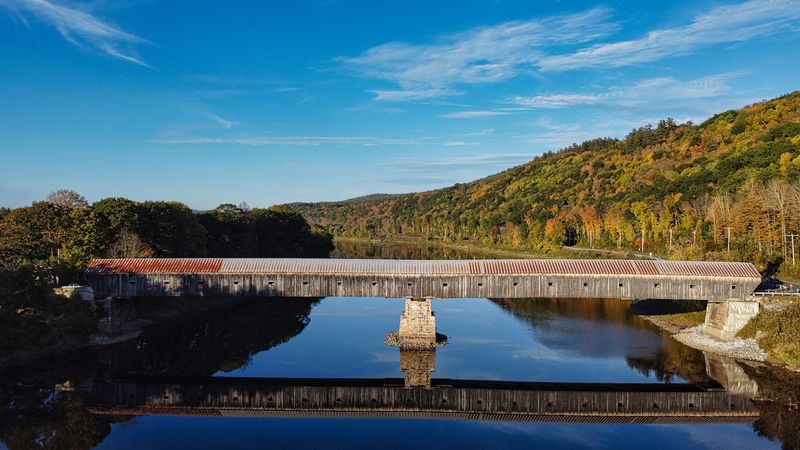
The Cornish-Windsor Covered Bridge is the longest two-span covered bridge in the world, and it wears that crown with zero fuss.
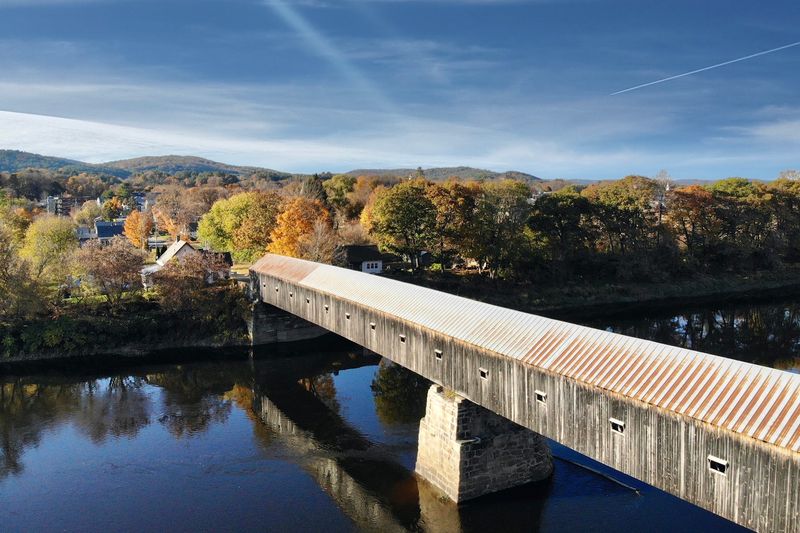
Two big spans rest on a stone pier in the middle of the Connecticut River. Together they stretch so far that your eyes keep traveling and traveling before reaching the other bank.
It is also the longest wooden covered bridge in the United States that still carries traffic.
Think about that for a second. Long before power tools, builders shaped heavy timbers and fit them together into a structure strong enough to handle modern cars and trucks.
Not bad for a bunch of beams and bolts.
New Hampshire has plenty of charming covered bridges, but none stretch quite like this beauty. Fans of record books will love telling friends they drove across a world champion.
Kids get a kick out of it too, since it feels like cruising through a giant barn on stilts.
Bring your camera and a sense of wonder. Bragging rights come free with every crossing, and nobody can take them away from you.
Two States, One Wooden Tunnel
Blink and you have crossed a border. The bridge links Cornish on one bank with Windsor, Vermont, on the other, all in one short, rumbling ride.
Underneath your wheels flows the Connecticut River, the natural line between the two states. So when you roll in from one end and pop out the other, you have officially switched states without a passport, a toll booth, or a single stamp.
Pretty slick for a quick drive.
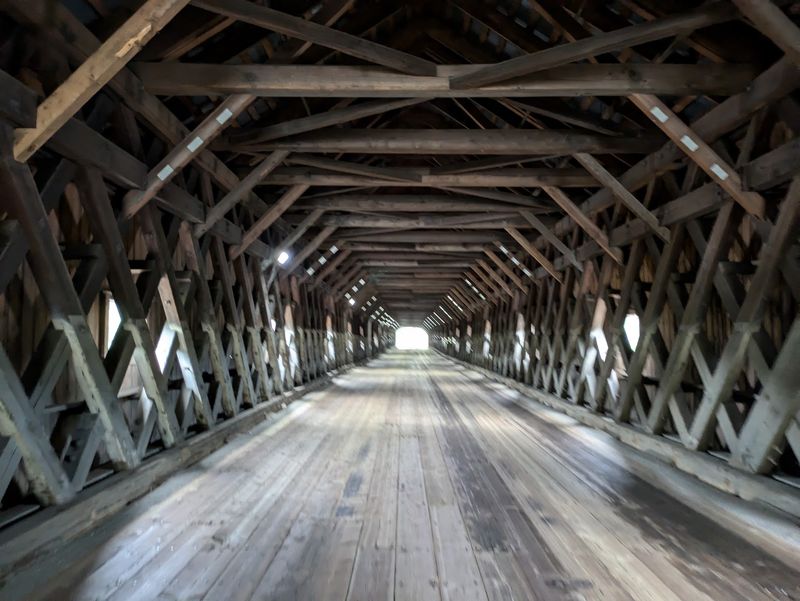
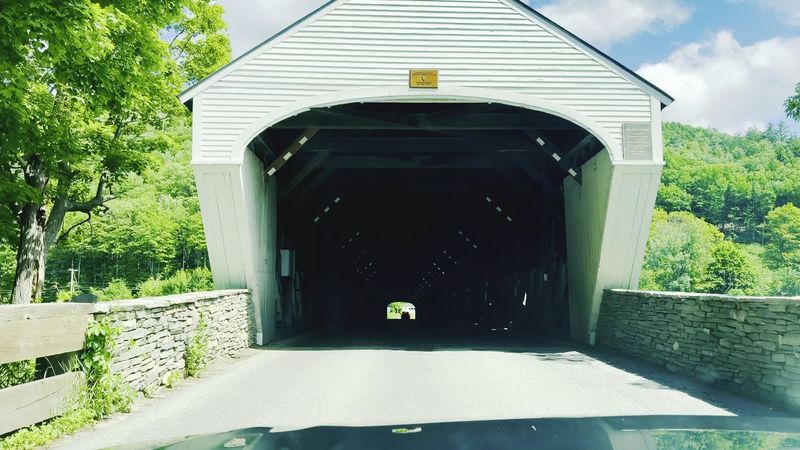
Inside, the light dims and the world gets cozy. Wooden walls crisscross on both sides, and the sound of tires on planks gives the whole experience a delightful old-timey soundtrack.
You might even catch yourself grinning like a kid on a carnival ride.
Here comes the practical bit. Flip on your headlights before entering, since the interior gets dark fast, especially on bright days when your eyes need a moment to adjust.
Two lanes squeeze through, so stay in your lane and take it easy.
Families love counting down to the moment they enter a new state. Some folks even turn around and cross again, just because.
Honestly, who could blame them? Once is never quite enough.
Clever Lattice Secrets of the Builders
Engineering nerds, this section is your playground. Builders James Tasker of Cornish and Bela Fletcher of Claremont put their own spin on a classic design called the Town lattice truss.
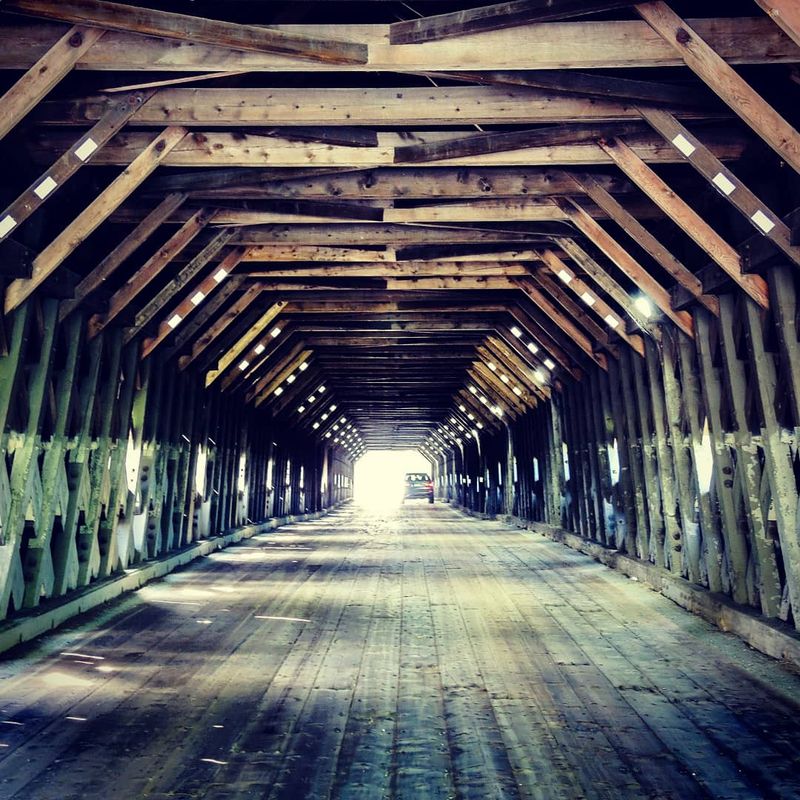
Most lattice bridges use flat planks pinned with wooden pegs called trunnels. Tasker and Fletcher went bolder.
They used thick square timbers instead, then notched and bolted the pieces together for extra muscle.
Covered bridge historians point out that notched timber lattice bridges were rare. Today, the Cornish-Windsor Covered Bridge stands as the only surviving example of this style.
Talk about a one-of-a-kind!
Here is another fun twist. The crew framed the bridge in a nearby meadow first, like a giant wooden puzzle, and then reassembled it over the river.
Imagine hauling those massive beams around without modern cranes.
Peek at the walls as you pass through and you will see that diamond pattern repeating like a woven basket. It is equal parts art and math.
That design spreads weight across the whole structure, which helps explain why it still stands so proudly.
Next time someone says wood is old-fashioned, just point them here. Smart building never goes out of style.
Floods, Tolls, and a Stubborn Survivor
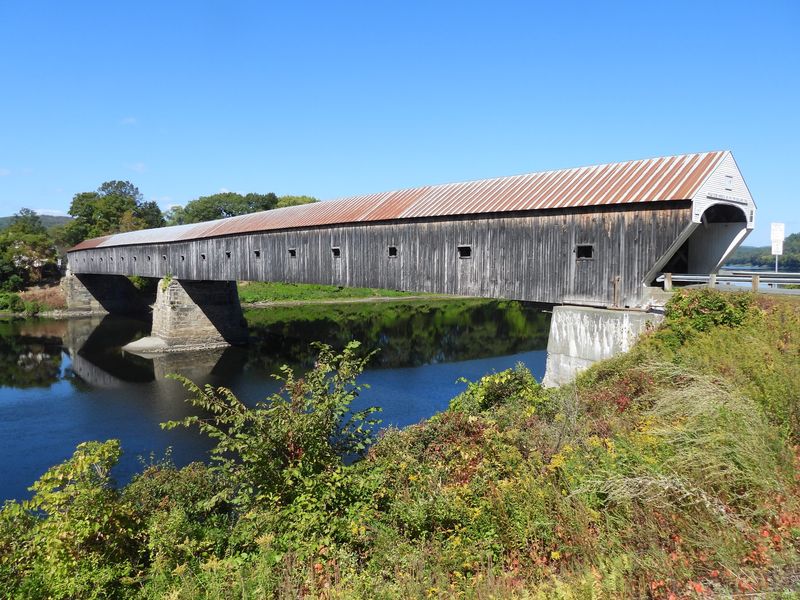
Rivers can be rude. Before the current bridge arrived, earlier crossings at this very spot were swept away by floodwaters, one after another.
The bridge you see today is the fourth to stand here. Clearly the folks of Cornish and Windsor refused to give up, and their persistence paid off with a structure tough enough to outlast generations of spring floods and snowy winters.
Money has a role in this story too. For a long stretch, crossing meant paying a toll, and that cash helped keep the bridge running.
Eventually the state of New Hampshire purchased it and later removed the tolls, opening it up freely to everyone.
Major restorations over the years have kept it safe and sturdy. Crews worked carefully to protect the historic character while updating what needed fixing.
That balance is tricky, and they nailed it, quite literally.
Plaques and information boards near the entrance share these tales in bite-size pieces. Spend a few minutes reading them before you cross.
Suddenly every creak and plank feels a little more meaningful.
Survivor stories are always the best stories. This one just happens to be painted red and stretched across a river.
Walk Your Horse or Pay Up
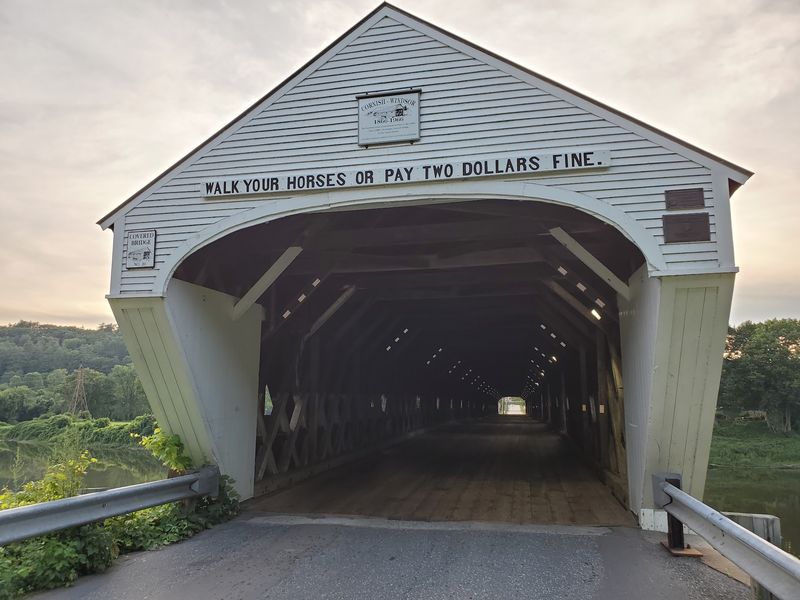
Giddy up? Absolutely not.
Above the bridge portal hangs an old-fashioned sign warning that anyone riding or driving a horse faster than a walk will face a fine.
Back in the horse and buggy days, galloping hooves could shake a wooden bridge and wear it down. So the rule was simple.
Slow down, walk your horse, and keep the bridge happy.
Today, the sign mostly makes people smile. You probably will not spot a horse clip-clopping through, but the warning remains a charming wink from the past.
It is the kind of detail that makes history feel alive and a bit silly at the same time.
Snap a photo of it. Seriously, it is one of the most fun little details at the whole site, and friends back home will love the quirky message.
Modern drivers can take the hint too. Local traffic sometimes zips through faster than it should, so go easy on the gas pedal and enjoy the ride.
Rushing through a world record bridge would be a crime against road trips anyway.
Consider the sign your gentle reminder. Slow travel always wins, whether you have four hooves or four tires.
Best Photo Angles on the Granite State Side
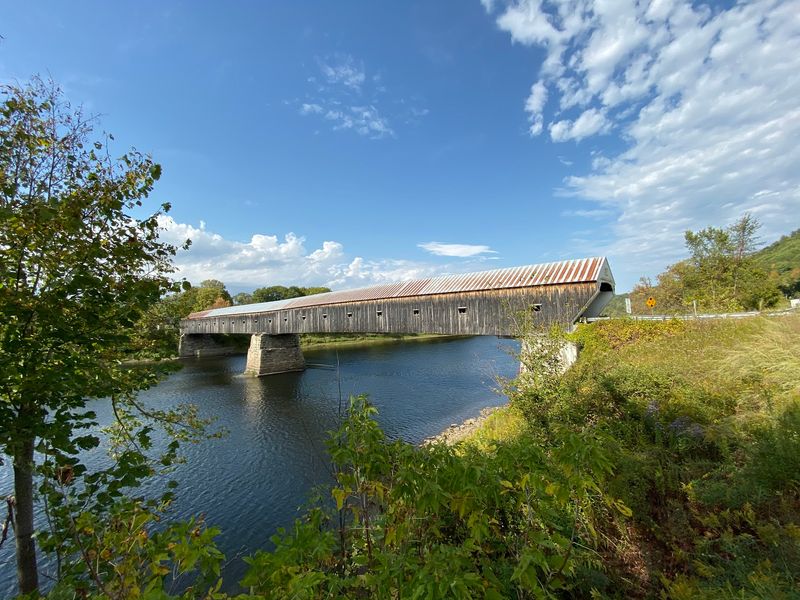
Cameras ready, shutterbugs. If you want the whole bridge in one dreamy frame, head for the New Hampshire side, where the views open up wide and generous.
A small pull-off area sits near the bridge on that side, with room for just a handful of cars. Arrive early or be patient, because space fills up quickly on pretty days.
A few more spots along Route 12A give you longer, sweeping shots from farther away.
From the Vermont end, things get cramped. The angle is narrow, and squeezing the entire length into your shot becomes a real challenge.
Morning light can make that red paint practically glow. Calm days are even better, since the river sometimes mirrors the bridge like a giant watery postcard.
Here is a safety tip worth repeating. The bridge has no pedestrian walkway, the inside is dark, and traffic can be busy, so do not stroll through it on foot.
Stay on the banks and let your zoom lens do the walking.
Also look for the welcome sign nearby for a fun state line selfie. Two-for-one photo ops?
Yes, please. Your social feed will thank you later.
Fall Foliage Puts on a Show
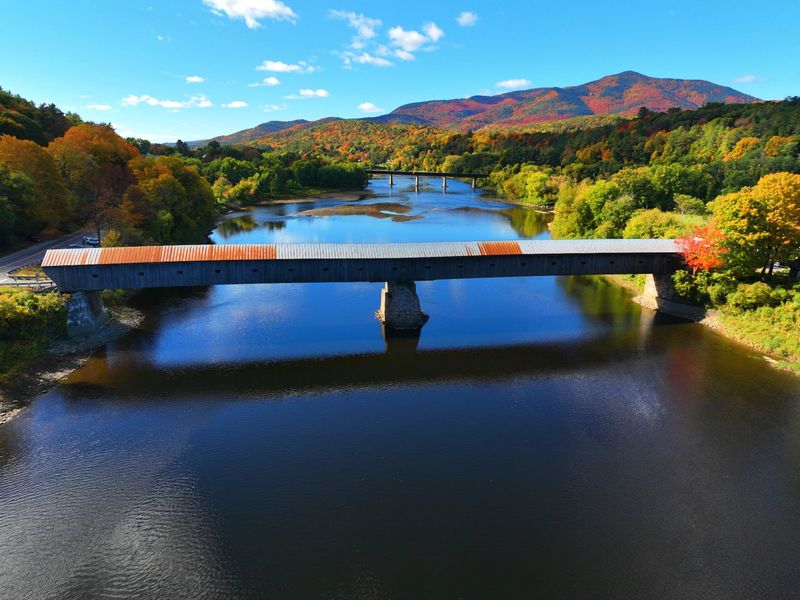
Autumn here does not whisper. It shouts in orange, gold, and fiery crimson, and the red bridge sits right in the middle of the party.
When the leaves turn, the hills along the Connecticut River light up like a box of crayons spilled across the landscape. The bridge, already bold in color, suddenly becomes the star of the most photogenic scene in the valley.
I have to admit, few sights in New England match this combo of wood, water, and wild color. It feels almost too pretty, like a puzzle box come to life.
Peak foliage draws plenty of leaf peepers, so plan for a little extra traffic. Weekday mornings tend to feel calmer, and the soft light makes those colors pop even more.
Pack layers. Crisp air rolls off the river, and a cozy sweater makes standing around for photos way more comfortable.
Summer brings its own green glow, and winter snow can dust the roof like powdered sugar. Spring wakes everything up with fresh buds.
Still, if you can pick just one season, autumn wins the popularity contest by a landslide. Mark your calendar and chase those leaves.
Art Lovers Get a Bonus Next Door
Sculpture fans, prepare to swoon. Just up the road on the New Hampshire side sits Saint-Gaudens National Historical Park, the former home and studios of famous sculptor Augustus Saint-Gaudens.
Gorgeous gardens, elegant buildings, and striking works of art fill the grounds. Walking paths wind through the property, offering peaceful views of the surrounding hills and even Mount Ascutney across the river.
Back in his day, Saint-Gaudens attracted a whole circle of artists and writers to Cornish. They formed what became known as the Cornish Art Colony, turning this quiet corner into a creative hotspot.
Not bad for a tiny rural town.
Pairing a bridge visit with the park makes for a fantastic half-day adventure. You get engineering, history, and fine art in one smooth package.
It is like a buffet of culture, minus the sticky fingers.
Check the park website before heading over, since seasonal schedules can change. Wear comfy shoes, because those grounds invite lots of wandering.
Honestly, combining the two feels like ordering the deluxe combo. Why see one treasure when you can see two?
Your brain and your camera roll will both leave very satisfied.
Cross Over for Windsor Treasures
Once you roll out the far end, the fun keeps going. Windsor, Vermont, waits on the other side with a few worthy stops of its own.
Gearheads will flip for the American Precision Museum, housed in a historic brick armory building. Inside, old machines and tools tell the story of how precise manufacturing helped shape modern industry.
It sounds serious, yet the gizmos are surprisingly fascinating.
Windsor also claims the title of birthplace of Vermont, since the state constitution was signed here at the Old Constitution House. History buffs, that is your cue to add another pin to the map.
Hungry explorers can find local spots around town for a bite, and Artisans Park offers places to stroll and shop for regional goodies. It is a relaxed little town with plenty of character.
Make it a loop. Cross the bridge, explore Windsor, then drive back through for a second dose of that wooden tunnel magic.
Coming and going doubles the fun with zero extra effort.
Road trips work best with a mix of surprises. This border-hopping route delivers them in neat, bite-size portions, and that keeps everyone in the car happy.
Plan Your Trip and Hit the Road
Time to make it happen. Set your GPS for the Cornish-Windsor Covered Bridge, Cornish, NH 03745, and get ready for one of the most delightful drives in New Hampshire.
Access is free, and no tickets are needed. The bridge is open to traffic around the clock, so you can swing by whenever the mood strikes, though daylight is best for photos.
Taller vehicles should double-check clearance before entering, since the opening has height limits. Stick to driving through rather than walking, because there is no sidewalk and the inside stays dim.
Bring snacks, a full camera battery, and a playlist full of road trip anthems. Nearby covered bridges in the area make great add-on stops if you want to turn the day into a full-blown bridge hunt.
My final advice is simple. Slow down, roll down the windows, and listen to those planks hum beneath your tires.
So what are you waiting for? A world record bridge is sitting there right now, painted red and looking fabulous.
Grab the car keys, round up your favorite crew, and go cross a state line the old-fashioned way. Your next great story starts on those planks.
