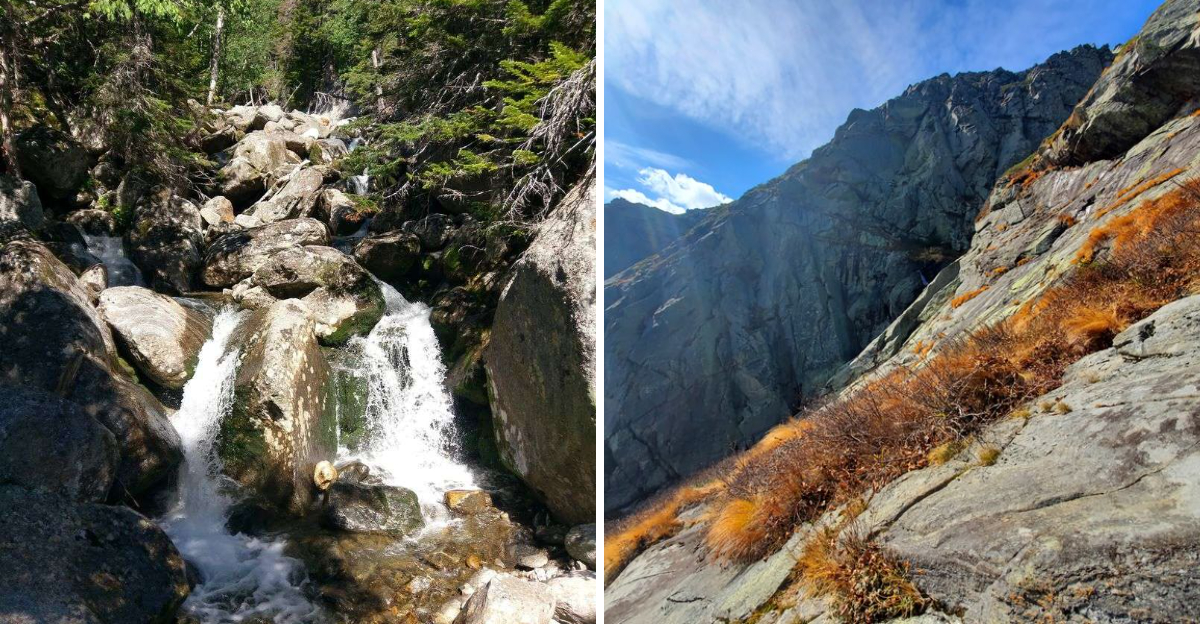
The trail is steep and exposed, and the drop-offs are sheer. This New Hampshire hike is not for anyone scared of heights.
The route climbs up a rugged ravine, with sections that require scrambling over rocks and pulling yourself up by your hands. I stood at the base and looked up, feeling the weight of the challenge ahead.
The views from the top are stunning, but the journey is not for the faint of heart. The wind is strong and the footing is tricky.
That is the thing about this New Hampshire hike. It is a test of courage and endurance.
But the payoff is a view that will take your breath away.
My First Look Up At The Ravine Wall
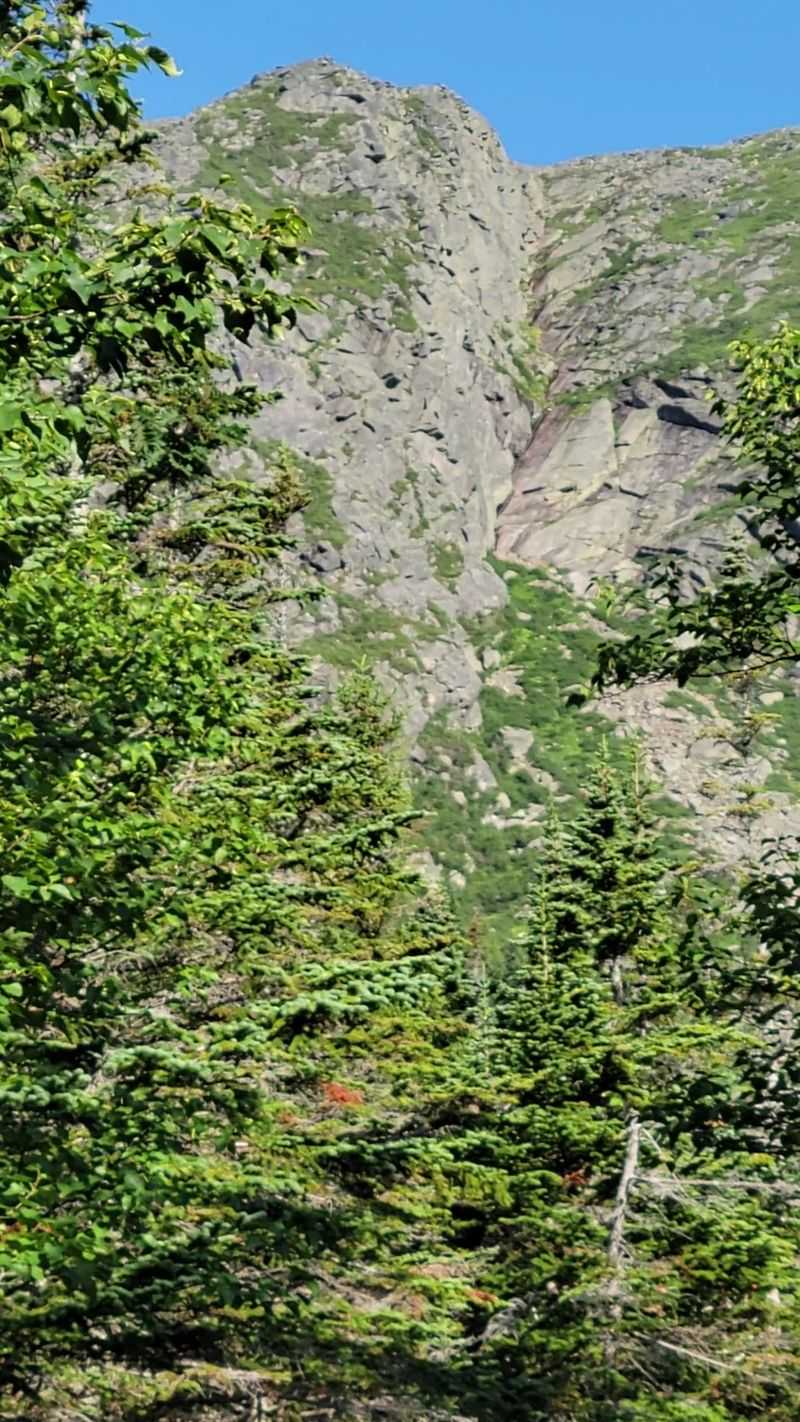
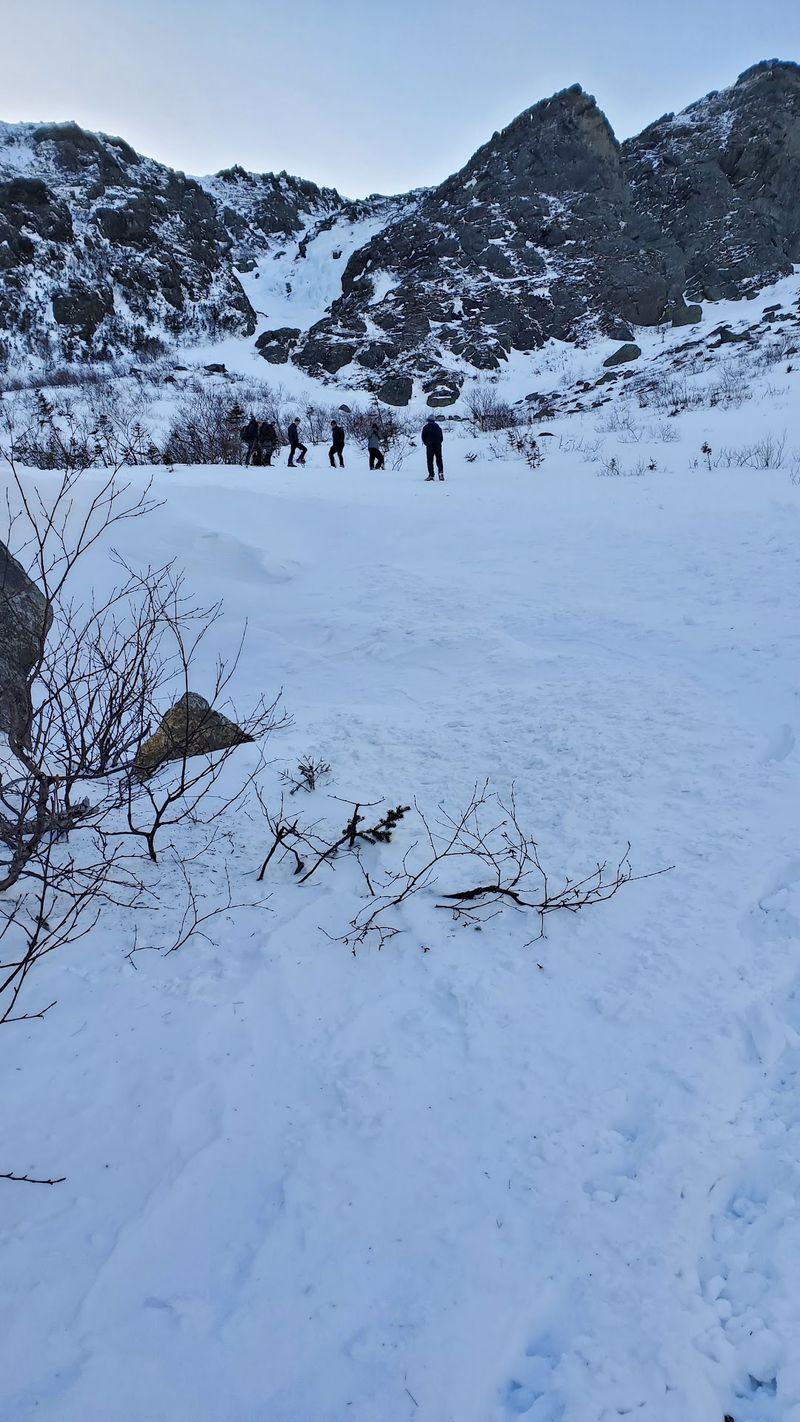
Standing at the mouth of the ravine, I tilted my head back so far my hat fell off. The wall above looked less like a hiking route and more like a dare scribbled across the mountainside in granite.
Huntington Ravine Trail does not ease you into anything. It shows you the goods early, then waits to see if you flinch.
I remember the exact moment the scale registered. Those specks moving slowly across the upper slabs were fully grown adults, reduced to grains of rice by sheer rock.
My pulse picked up in the best way. There is a specific flavor of excitement that only arrives when a mountain in New Hampshire looks you square in the eye and asks a real question.
Boots tightened. Straps cinched.
Water bottle topped off one last time.
What struck me most was the silence. Away from the busier corridors of the White Mountain National Forest, the ravine holds a hush that feels almost ceremonial.
I stepped forward anyway, half thrilled and half convinced I had made a spectacular mistake. Both feelings turned out to be entirely correct.
Steepest Regular Trail In These Mountains
Reputations get inflated all the time. Not this one.
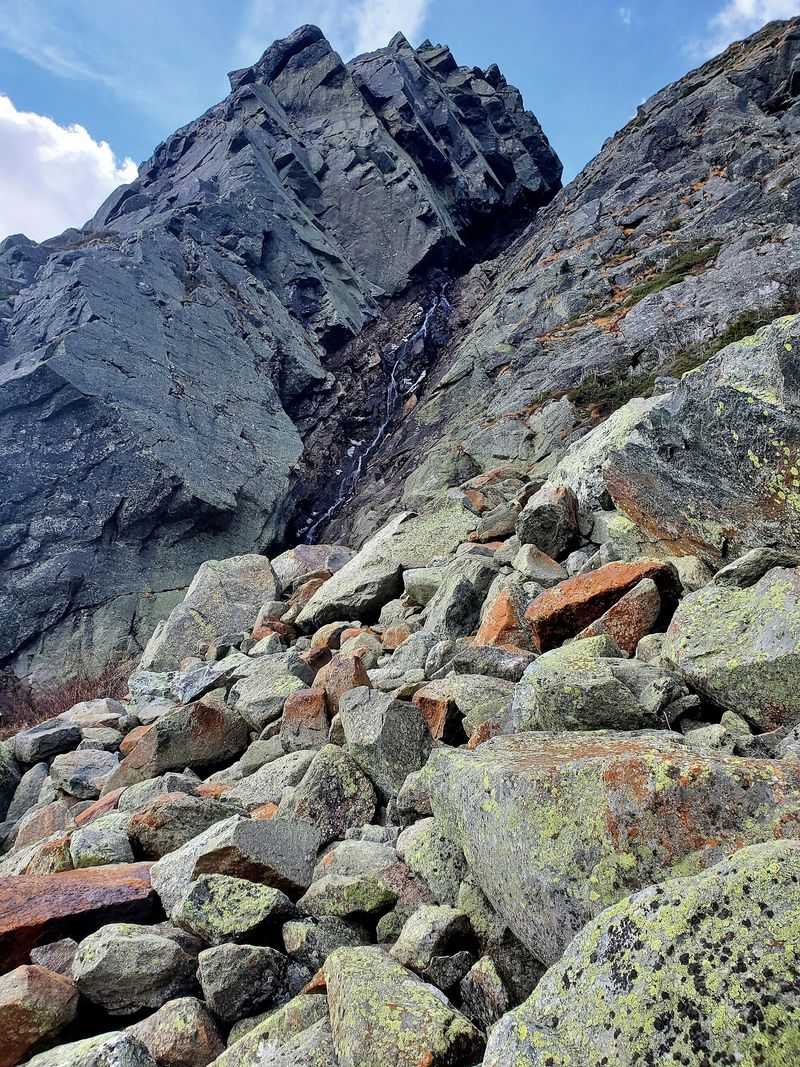
Huntington Ravine Trail carries the title of steepest regular hiking trail in the White Mountains, and after one afternoon on its slabs I stopped arguing with the label entirely.
Here is what makes it strange. The lower miles behave beautifully, rolling through mossy forest with a rocky floor and a friendly grade that lulls you into confidence.
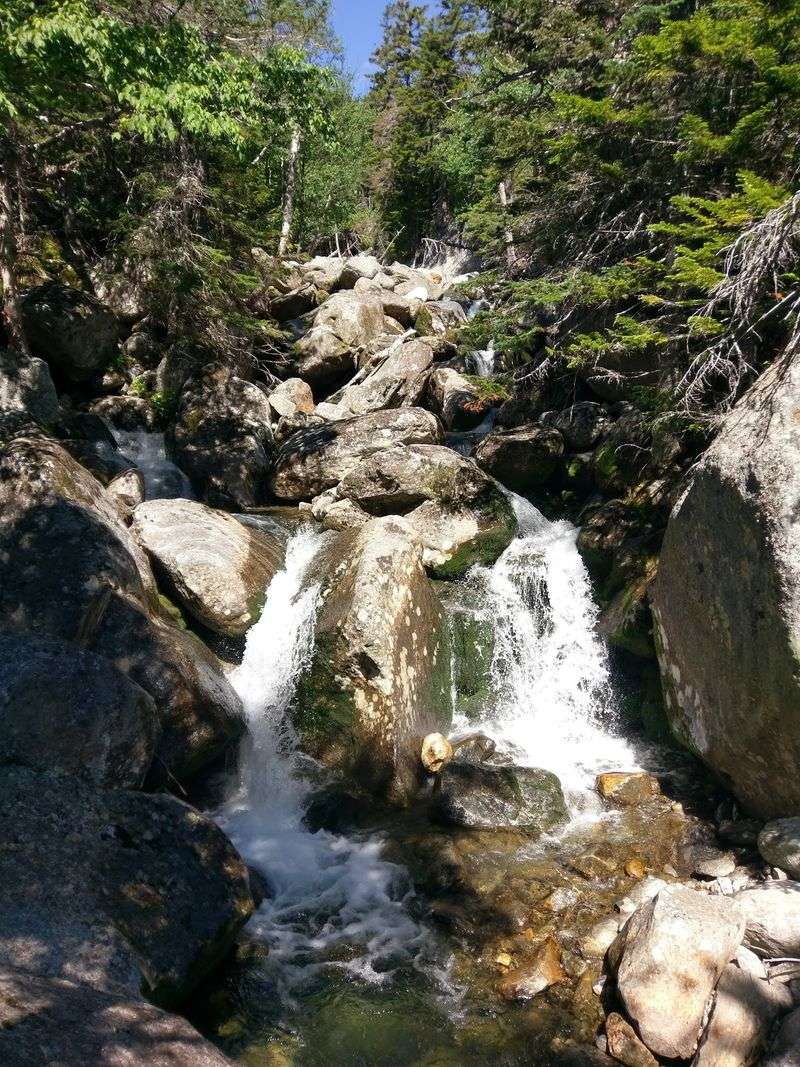
Streams chatter alongside the path. A cave sits tucked into the terrain like a small secret.
Waterfalls slide over green stone.
Then the trees thin, and the mountain drops the act.
Angles sharpen. Hands leave pockets and start gripping rock.
Hiking quietly turns into climbing without anyone announcing the transition.
What I appreciate is the honesty of it. No gimmicks, no manufactured thrills, just raw geology arranged in the most inconvenient way imaginable.
New Hampshire has softer trails with equally big payoffs, and there is zero shame in choosing one. But if you want terrain that genuinely tests you, this ravine delivers without exaggeration.
The mountain sets the terms. You simply agree to them.
The Fan And Its Boulder Field Of Doom
Boulders. Everywhere.
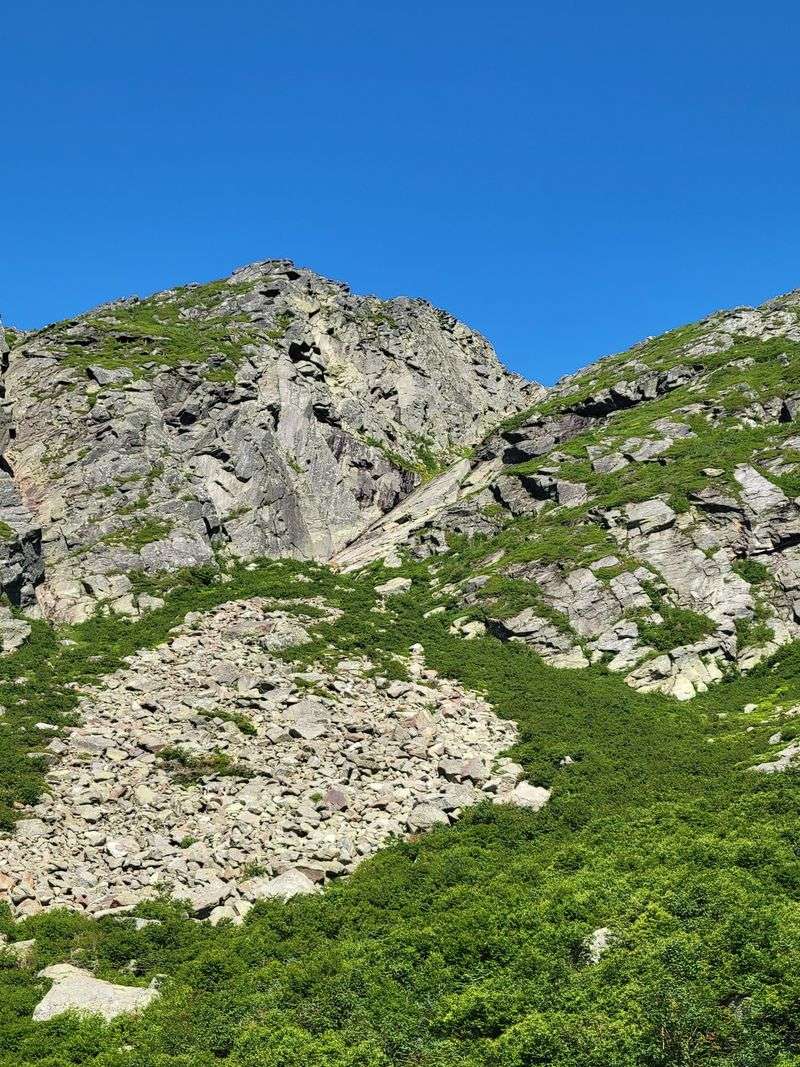
Some the size of refrigerators, others closer to garden sheds, all stacked at angles that suggest a giant lost a game of blocks.
The talus slope known as The Fan spreads across the ravine floor, and crossing it is your official warmup for the chaos above.
I picked my way over, under, and occasionally around slabs of granite while cairns played hide and seek among the rocks.
Route finding here demands attention. Markings scatter in several directions, and I stopped more than once to scan for the next painted blaze before committing.
Anyone uneasy in tight spaces should know a few passages squeeze narrow. Shoulders brush stone.
Packs snag.
My advice is simple. Move deliberately, test each rock before trusting it, and resist the urge to hurry.
Loose stones shift underfoot with alarming enthusiasm, which is exactly why trekking poles spend most of this stretch strapped to your back.
Above The Fan, the headwall of Huntington Ravine Trail waits, patient and vertical. You will see it the entire way across, growing steadily larger, like a plot twist you can watch approaching.
Slabs, Chimneys, And Very Real Exposure
Here comes the part everyone whispers about.
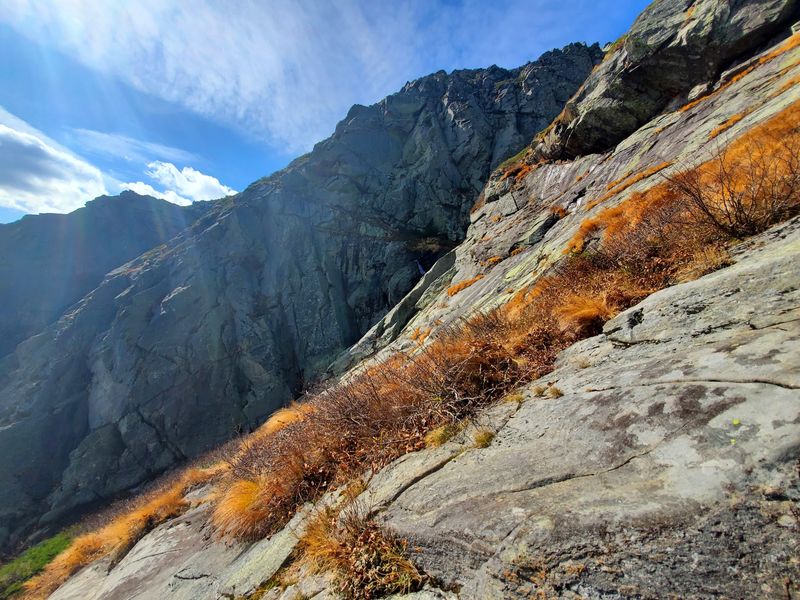
The headwall of Huntington Ravine Trail turns hiking into an honest scramble, with polished slabs tilted at angles that make your calves file a formal complaint.
One section traverses a narrow ledge with impressive air beneath it. Another asks you to hug a boulder that appears to be hanging out over nothing in particular.
A slender chimney demands genuine agility, the kind that involves wedging, reaching, and briefly questioning your life choices.
Water trickles down portions of the rock even on dry days, which is precisely why wet weather turns this route from thrilling into genuinely dangerous.
I placed every hand and foot like it mattered, because it did.
The commitment factor deserves emphasis. Once you are established on the headwall, turning around becomes far harder than continuing upward.
That reality alone should filter out anyone who is unsure.
Yet the reward arrives instantly. Each successful move sends a jolt of pure satisfaction straight through you, and cresting the top delivers a triumph few trails in New Hampshire can match.
Terrifying? Occasionally.
Unforgettable? Absolutely.
Alpine Garden Rewards Above The Cliffs
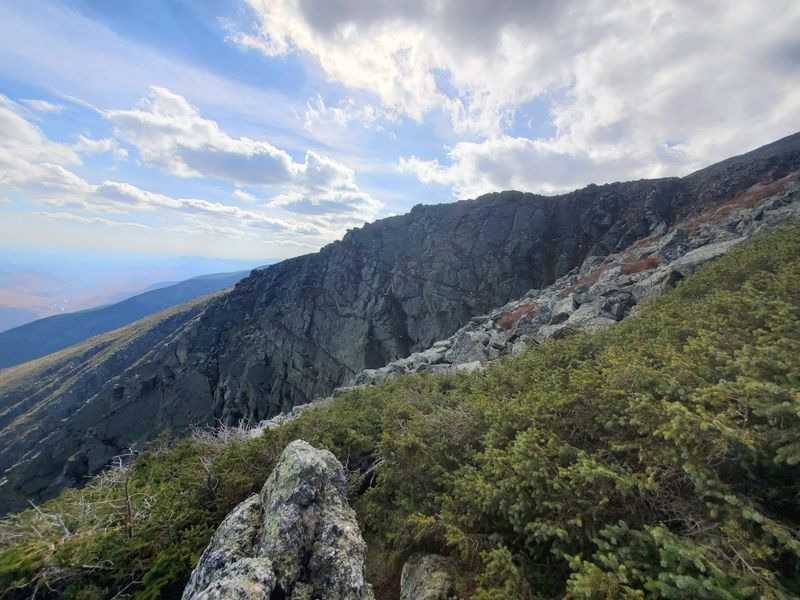
Pop out over the lip of the headwall and the world changes character completely.
Gone are the vertical slabs. In their place stretches the Alpine Garden, an airy tableland of low scrub, weathered stone, and views that run for miles across the White Mountain National Forest.
I sat down. Just sat, boots dangling toward the ravine I had climbed, tracing my zigzag route back down through the rock.
Nothing beats looking at a wall you just conquered.
Wind sweeps this plateau with real authority, so a layer comes out of the pack almost immediately regardless of how warm the valley felt.
Tiny alpine plants cling to life up here, survivors of a climate that would flatten most greenery, and stepping carefully on rock rather than vegetation is basic mountain manners.
Ridgelines fold outward in every direction. Distant summits catch light and shadow in slow rotation as clouds drift past.
The contrast is what stays with me. Brutal effort below, serene openness above, all within a few hundred feet of elevation.
Huntington Ravine Trail earns this moment, and the moment repays every scraped knuckle.
Never Go Down The Way You Came Up
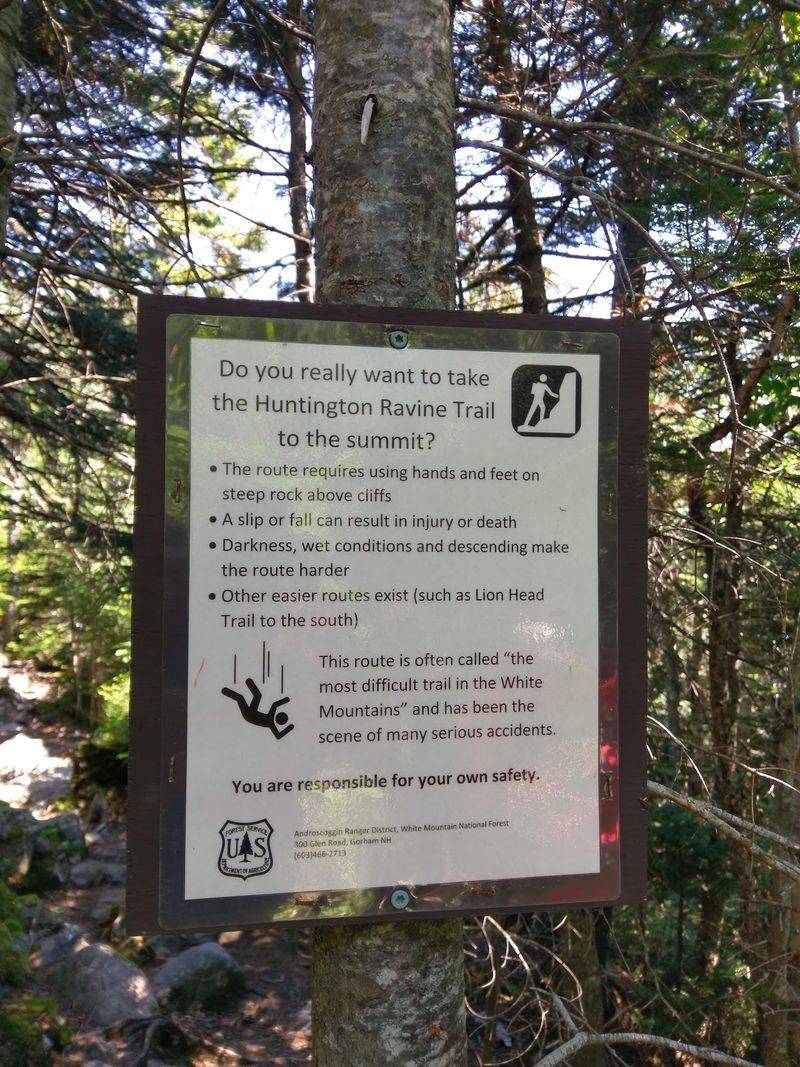
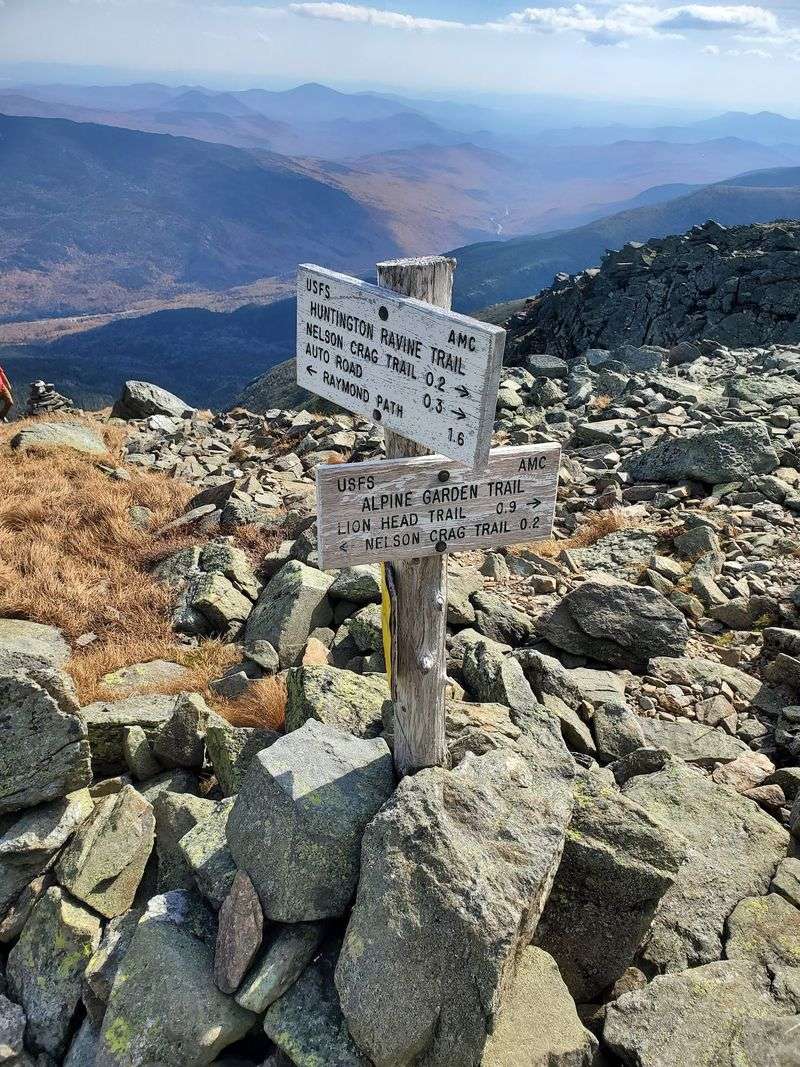
A sign sits at the top of the ravine, and it does not mince words. Do not descend this trail.
Take that seriously. Reversing the headwall means facing downward on slick, exposed rock with limited visibility of your own footholds, and gravity stops being a neutral party.
My exit ran along the Lion Head Trail, which serves up handsome views of the surrounding peaks while keeping the technical difficulty at a reasonable level.
Tuckerman Ravine Trail offers another solid way back toward the valley floor, popular and well traveled.
Either choice turns your outing into a loop, which honestly improves the whole day. New scenery beats retracing steps.
Time management matters here too. Ascending Huntington Ravine Trail eats hours, and plenty of groups need most of a day just to reach the summit area.
Starting early gives you buffer for the descent, and packing a headlamp covers you if the mountain runs long.
Smart planning is not cowardice. It is the difference between a story you tell laughing and a story someone else tells about you.
Pinkham Notch As Your Launch Pad
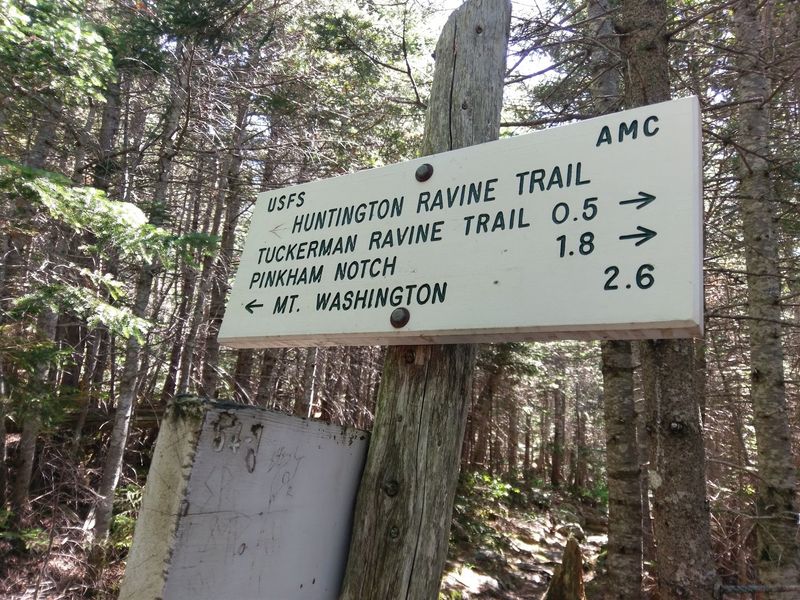
Every serious expedition needs a proper staging ground, and mine sat at the Appalachian Mountain Club Pinkham Notch Visitor Center.
Timber-framed and tucked beneath Mount Washington, the building hums with pre-hike energy. Packs get repacked.
Laces get retied. Maps get studied with unusual intensity.
My routine started with checking posted trail and weather conditions, which I consider non-negotiable before touching anything as committing as Huntington Ravine Trail.
Restrooms, water, maps, and trail information all live here, which makes the last-minute scramble far less stressful.
Parking fills fast on bright weekends, another argument for an early start.
The atmosphere itself deserves mention. Wooden beams, worn floors, and a general sense that thousands of adventures have begun in exactly this spot.
Trails radiate outward from here into the Presidential Range, so the notch functions as a genuine crossroads of the White Mountain National Forest.
I lingered a few extra minutes, partly to double-check my route and partly because places like this deserve a proper pause.
Then I walked out the door and pointed myself uphill.
Weather That Writes Its Own Rules
Mount Washington holds a global reputation for ferocious wind, and the mountain enjoys reminding you of it.
Sunshine in the parking lot means absolutely nothing about conditions above treeline. Clouds roll in fast, temperatures drop hard, and visibility can vanish while you are mid-scramble.
Dry rock is the single most important condition for Huntington Ravine Trail. Wet slabs transform the headwall into something no reasonable person should attempt.
Snow lingers in the ravine well past the point when the valley feels like summer. Early season attempts can require an ice axe and real winter skills.
I checked the higher summits forecast the night before and again that morning, then built in a plan for turning back at the base if anything looked marginal.
Layers went in my pack even on a warm day. Wind shell, gloves, hat, extra food.
Respecting the forecast is the entire game up here.
New Hampshire weather does not negotiate, and the smartest hikers I know treat a cancelled attempt as a normal outcome rather than a failure.
Gear And Grit You Actually Need
Fingernails do the work your ego cannot, so bring equipment that supports them.
Grippy hiking boots with genuine tread top the list. Smooth-soled sneakers on wet granite are a comedy sketch with a bad ending.
A compact pack keeps your center of gravity tight against your back, which matters enormously when scrambling through narrow passages.
Water goes in generous quantity. Snacks go in larger quantity than you think reasonable, because sustained scrambling burns fuel at a startling rate.
Headlamp, extra layers, and a paper map round out the essentials.
Fitness matters as much as gear. Being in decent shape transforms Huntington Ravine Trail from a survival exercise into an exhilarating challenge.
Comfort with heights is the real prerequisite though. If exposure makes your hands shake, this route will not cure that, and there are dozens of magnificent alternatives across New Hampshire that will treat you kindly.
Going with a partner beats going solo here, given how committing the terrain becomes.
Prepare properly and the ravine rewards you generously. Wing it, and the mountain notices immediately.
Where To Land Once Your Legs Give Out
Legs wobbling, grin permanent, I rolled down into the valley craving nothing but soft surfaces and flat ground.
North Conway makes an excellent recovery zone. The village center carries genuine mountain-town character, with walkable streets, a historic railway station, and shops that beg you to browse slowly.
Craving more scenery without the vertical suffering? The Mount Washington Cog Railway climbs the same peak in vastly more civilized fashion, delivering summit views while your quads recuperate.
Franconia Notch spreads out to the west with its own catalog of cliffs, waterfalls, and lakeside paths.
Bretton Woods sits north beneath the Presidential Range, all sweeping meadows and grand mountain backdrops.
That balance is what makes this corner of New Hampshire so addictive. Ferocious adventure in the morning, relaxed village wandering by afternoon.
Huntington Ravine Trail begins in Sargent’s Purchase, NH 03846, with access from the Pinkham Notch Visitor Center at 361 NH-16, Gorham, NH 03581.
Check the forecast, lace up tight, and go find out what your nerve is really made of. The ravine is waiting, and it never gets less steep.
