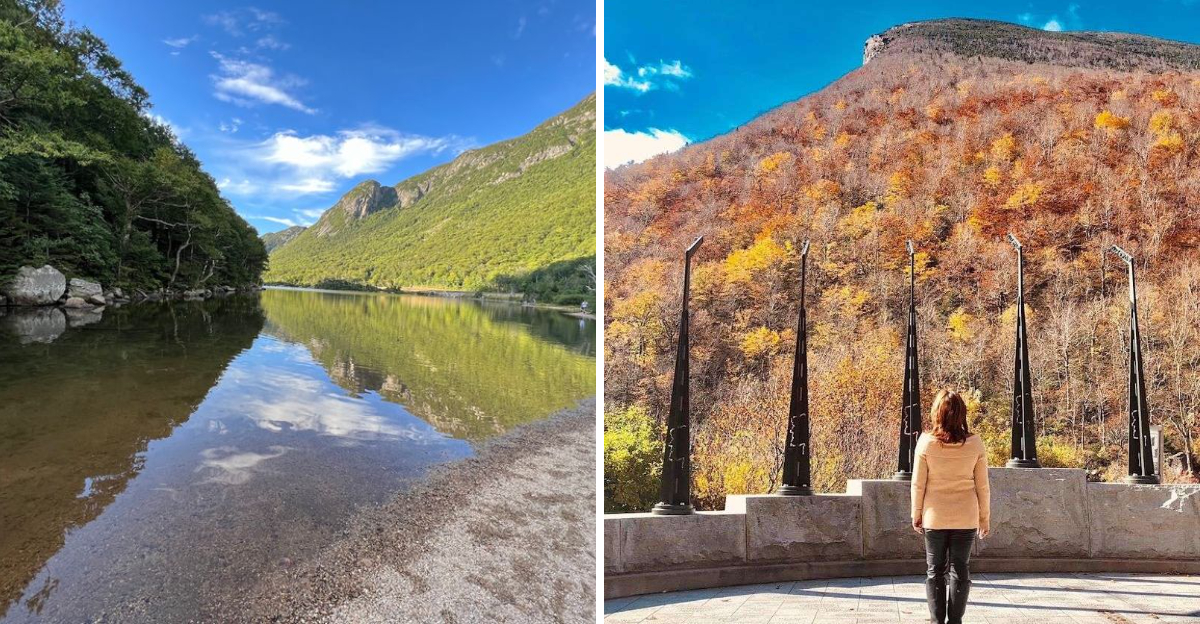
The mountain looks like any other peak in New Hampshire. The profile is striking, but so are many others. Until you learn what happened there.
This was once a natural rock formation that resembled a human face, and it was a symbol of the state for generations. People came from all over to see it, to stand at the base and look up at the profile that seemed to watch over the valley.
It was there for centuries, and then it was gone. In 2003, the rock formation collapsed, and the face fell from the mountain.
The place still draws visitors who come to remember what was once there. A memorial now marks the spot.
That is the thing about this New Hampshire landmark. It is not about what is there now. It is about what used to be. And the memory of it still lingers.
The Face That Became a State Symbol
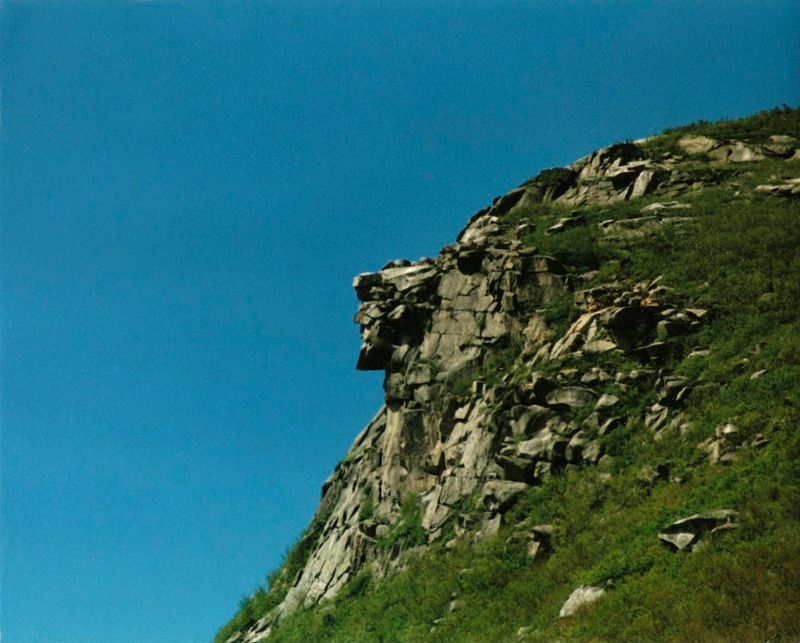
Long before New Hampshire had a state motto, a state bird, or a state flower, it had a face. The Old Man of the Mountain was a series of five granite ledges stacked naturally on the side of Cannon Mountain.
They were forming a remarkably convincing human profile when viewed from the right angle along Profile Lake below.
The formation stood approximately forty feet tall and jutted outward from the cliff face with a stern, dignified expression that seemed almost deliberate. It looked like something a sculptor might spend years chiseling. Yet, nature pulled it off entirely on its own, shaped by glacial forces over thousands of years.
New Hampshire embraced this rocky sentinel with extraordinary pride. The profile appeared on the state seal, on highway signs, and eventually on a special edition U.S. quarter.
Generations of families made pilgrimages to Franconia Notch just to stand at the lake’s edge and gaze upward in quiet admiration. For many, it was not just a rock formation.
It was a living symbol of strength, independence, and the enduring character of the Granite State itself.
A Granite Giant With a Very Complicated Health History
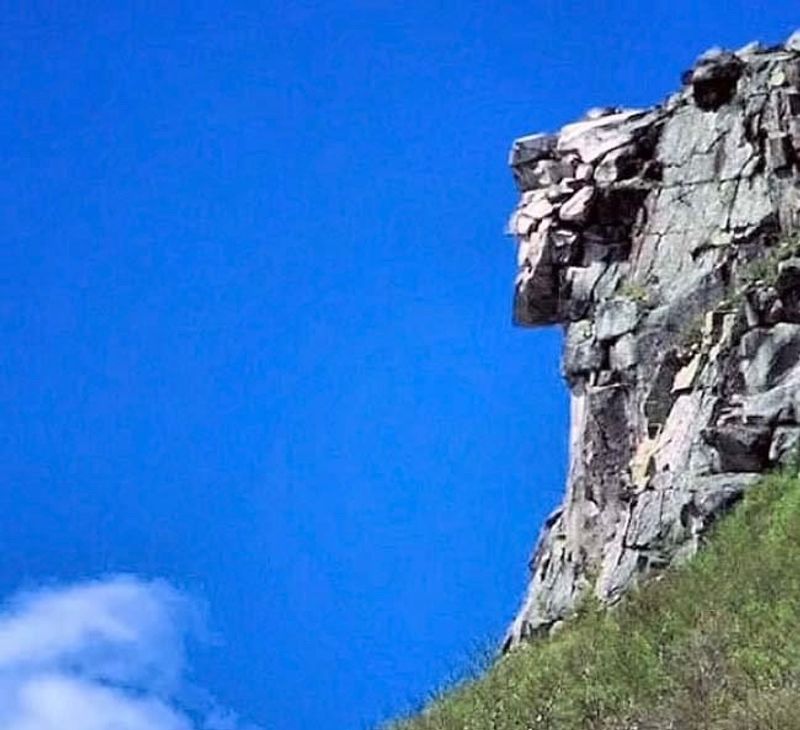
Maintaining a forty-foot rock face on the side of a mountain in New Hampshire is, predictably, not easy. For decades, the Old Man of the Mountain required serious structural intervention just to stay in one piece.
The freeze-thaw cycles of brutal northern winters were relentlessly prying the granite ledges apart, millimeter by millimeter, year after year.
Repair efforts began in the early twentieth century and became increasingly sophisticated over time. Workers used steel rods, turnbuckles, chains, and even epoxy to hold the crumbling profile together.
The man most associated with these heroic preservation efforts was Niels Nielsen, a dedicated caretaker who spent years monitoring and stabilizing the formation with genuine devotion.
Despite all the effort, the underlying geology was simply not cooperating. Water infiltrated the rock through tiny cracks, froze, expanded, and widened those cracks with every passing season.
The mountain was slowly reclaiming its own. By the late twentieth century, geologists and park officials knew the situation was precarious, but nobody quite anticipated how sudden the final chapter would be.
The Old Man of the Mountain had fought hard to stay, but nature, as always, had the final word.
The Night Everything Changed
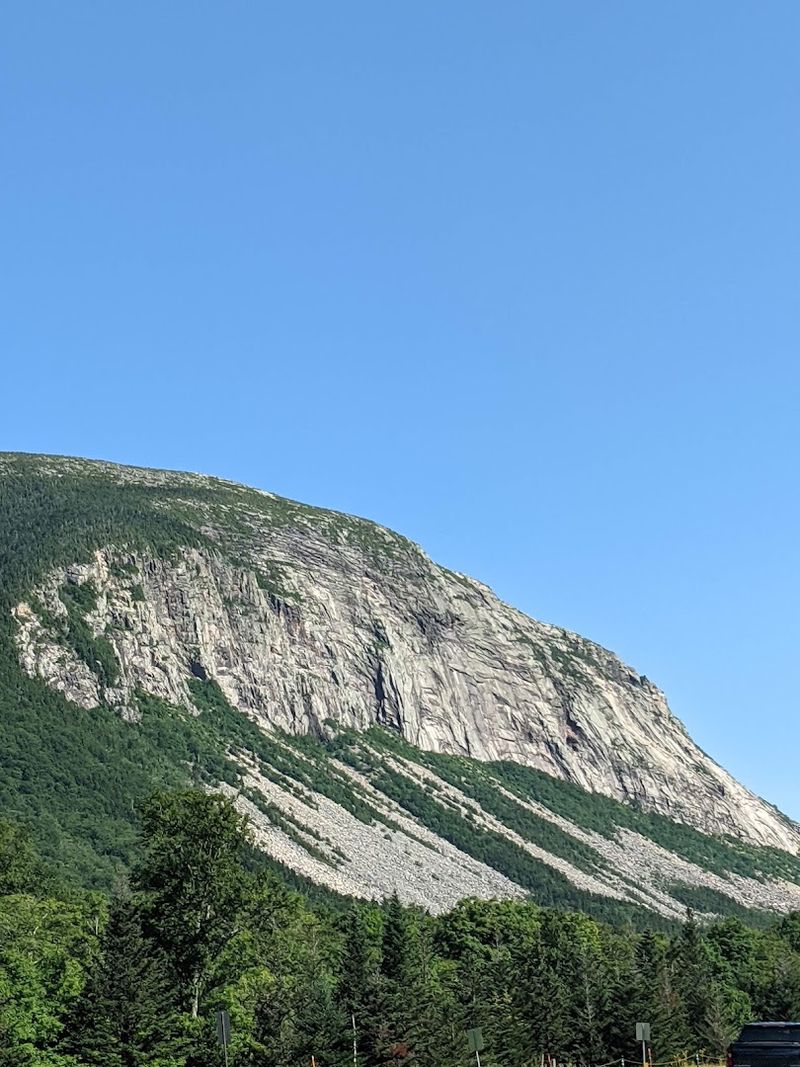
May 3, 2003 started like any other spring morning in Franconia Notch. The air was cool, the park was quiet, and the mountain stood as it always had, or so everyone assumed.
Sometime in the early hours before sunrise, the granite ledges that had formed the Old Man’s face finally gave way, tumbling silently down the cliff and disappearing into the forest below.
A state park employee discovered the loss that morning, and the news spread with stunning speed. New Hampshire Governor Craig Benson called it a sad day for the state.
Tributes poured in from across the country. Newspapers ran front-page stories.
People who had never even visited the park felt a genuine pang of grief, which says something extraordinary about how deeply this formation had embedded itself in the American imagination.
No warning signs preceded the collapse. No dramatic storm triggered it.
The rocks simply reached a tipping point after years of slow deterioration and fell. The swiftness of the end made it feel almost like a passing, quiet and private, as if the Old Man had simply decided it was time to rest.
That bittersweet quality is exactly what makes the story so unforgettable to everyone who hears it.
Profiler Plaza and the Art of Remembering
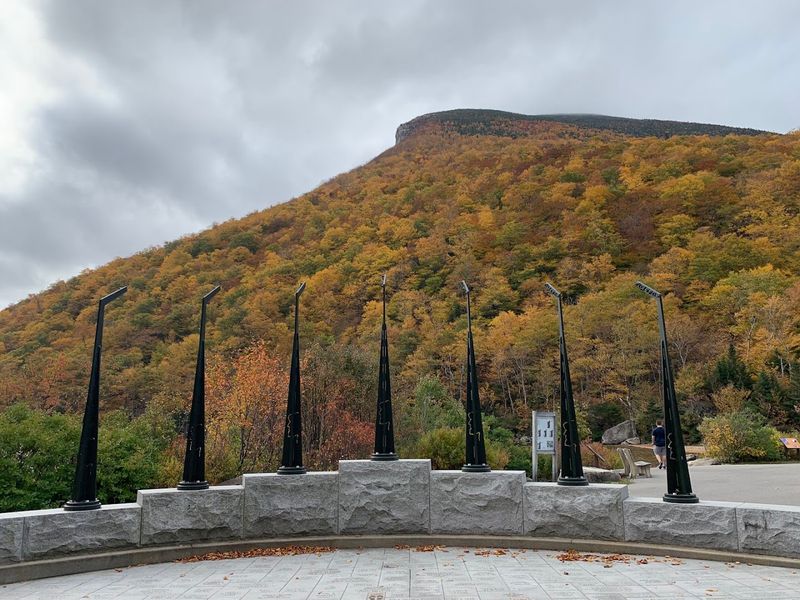
Grief, when handled creatively, can produce something genuinely beautiful. That is exactly what happened at Franconia Notch State Park.
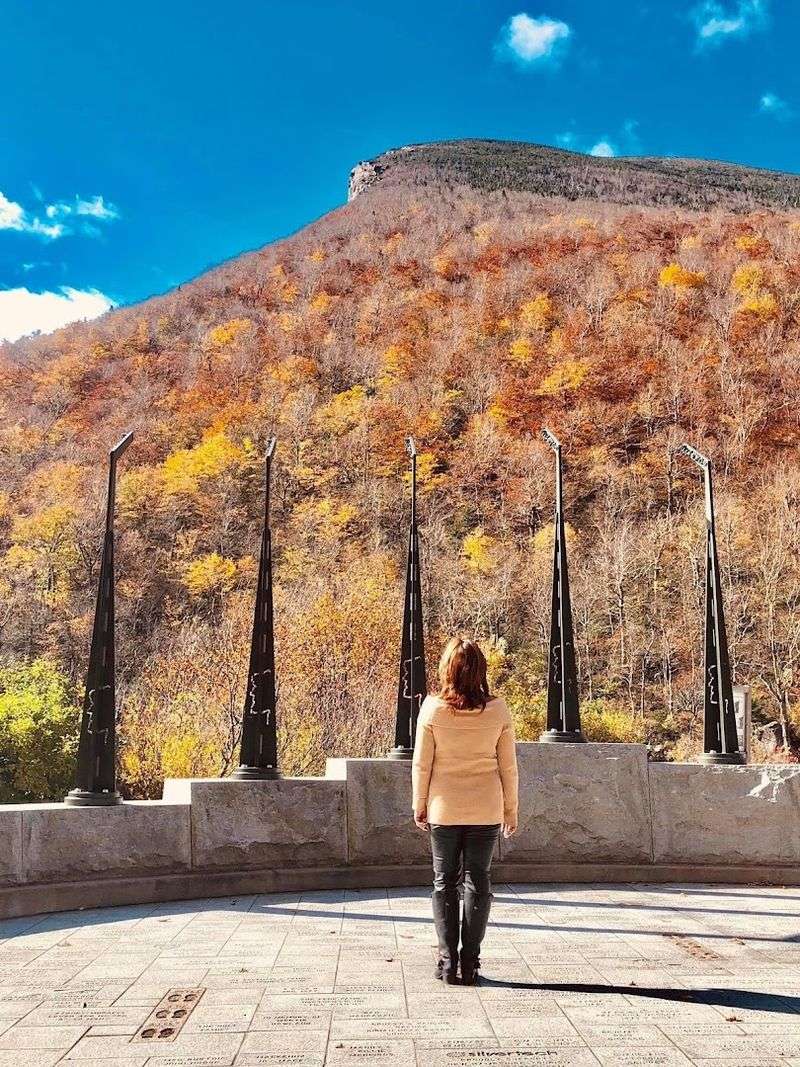
This is where a brilliant memorial called Profiler Plaza now stands along the shores of Profile Lake, directly across from the bare cliff where the famous formation once rested.
Designed by Ron Magers and Shelly Bradbury, the installation features several steel frames fitted with carefully positioned rods. Walk up to one of these frames, peer through it toward the mountain, and something almost magical happens.
The rods align perfectly with the contours of the remaining cliff, recreating the optical illusion of the Old Man’s face against the sky. It is a clever, moving, and surprisingly effective tribute.
My first time looking through one of those frames, I genuinely caught my breath. The silhouette snaps into focus so cleanly that for just a moment, it feels like time has reversed.
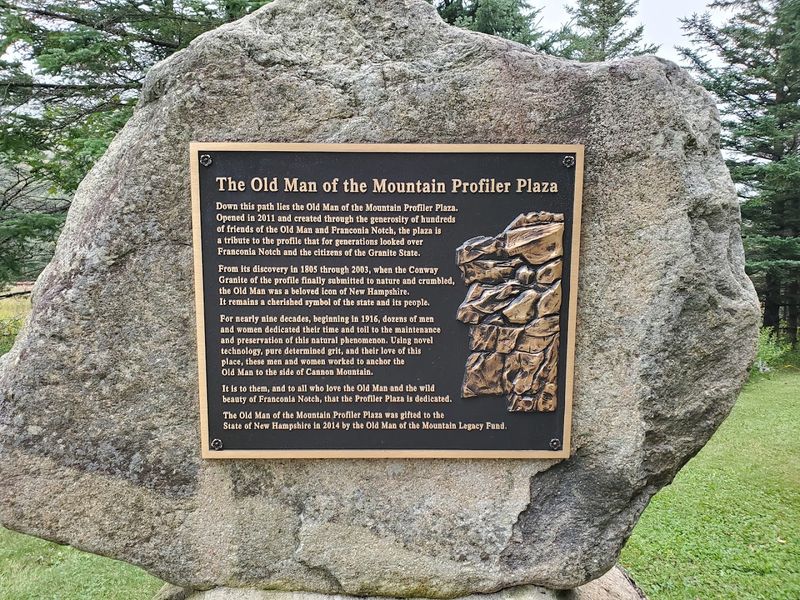
The plaza is accessible, free to visit, and positioned beside one of the most serene stretches of lakeside scenery in all of New Hampshire. Plaques and informational panels add historical context, ensuring that even first-time visitors leave with a thorough understanding of what once stood on that cliff and why it mattered so profoundly.
Profile Lake, Where Reflections Run Deep
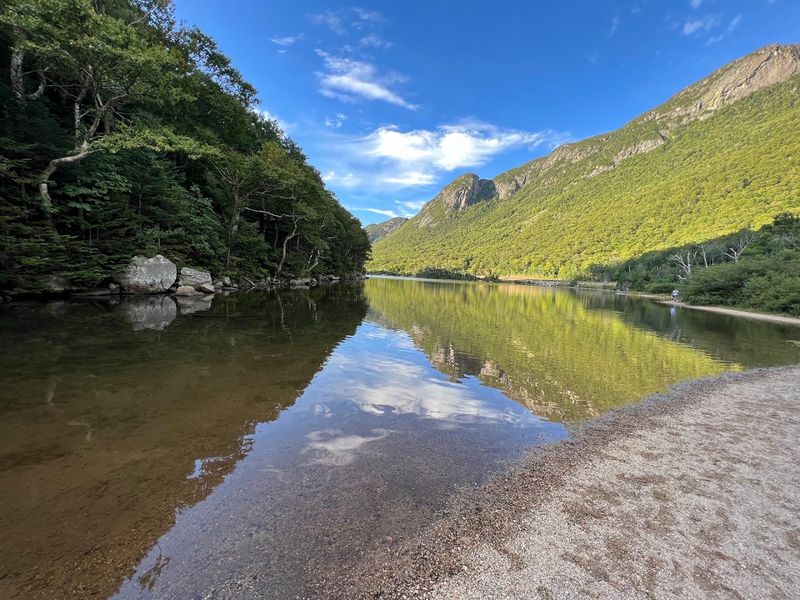
Profile Lake sits at the base of Cannon Mountain like a mirror that refuses to forget. For generations, this was the exact spot where people would gather to see the Old Man of the Mountain reflected in the still water below, doubling the drama of the famous face above.
Today, the lake remains one of the most photographed spots in New Hampshire, even without its famous subject.
The water is remarkably clear and ringed by forest that erupts in spectacular color each autumn. Fly fishing is popular here, and the shoreline walking path is gentle enough for all ages, with benches placed thoughtfully along the route.
Early mornings are particularly special, when mist rises off the surface and the surrounding peaks glow with soft golden light.
Spending time at Profile Lake feels meditative in a way that few natural spots manage. There is something about standing where so many others have stood before, looking up at that same cliff, that connects you to a long chain of human experience.
The Profiler Plaza frames are just steps away, making this a natural circuit for anyone visiting Franconia Notch. Come at sunset if you can, because the light on the water at that hour is genuinely extraordinary and absolutely worth the timing effort.
Flume Gorge, Nature’s Most Dramatic Hallway
Flume Gorge is the kind of place that makes you feel genuinely small in the best possible way. This natural granite chasm stretches for roughly eight hundred feet through the base of Mount Liberty, with walls soaring nearly ninety feet high and narrowing to just about twelve feet apart at the tightest points.
A wooden boardwalk winds through the entire length, keeping your feet dry while the mountain stream rushes energetically alongside.
The walls drip with moisture and are blanketed in bright green moss, delicate ferns, and clinging wildflowers. At the far end, Avalanche Falls crashes down a rocky drop with satisfying force, sending a fine mist into the air that feels refreshing on a warm summer afternoon.
The whole experience takes roughly two hours at a leisurely pace, and every step reveals something new to admire.
Flume Gorge has been drawing curious explorers since the early 1800s, when a local farmer reportedly stumbled upon it by accident. Today it remains one of the top natural attractions in New Hampshire, and justifiably so.
The combination of geological drama, lush vegetation, and the sound of rushing water creates an atmosphere that feels genuinely otherworldly. Pack comfortable shoes and expect to get slightly damp, because the gorge earns its spectacular reputation in every season.
Echo Lake and the Joy of Simply Being Outside
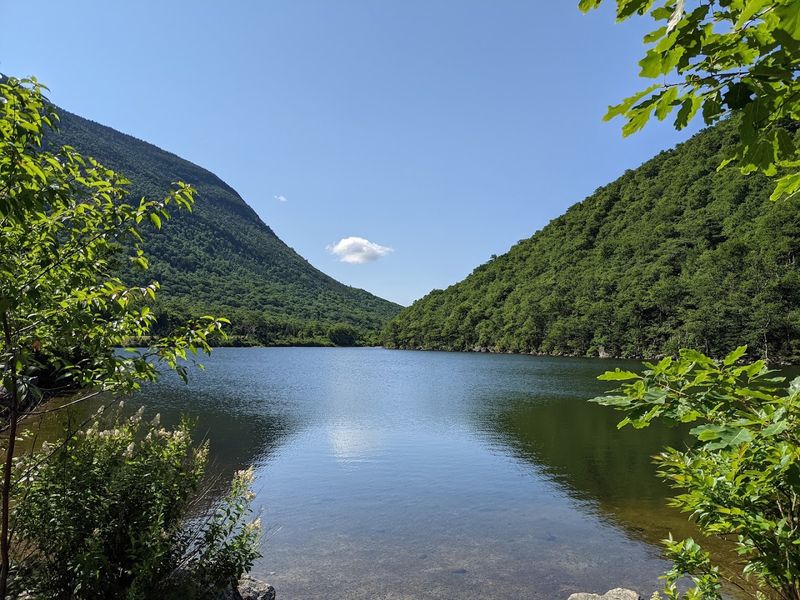
Echo Lake delivers exactly what its name promises, a place where the mountains seem to talk back. Nestled at the northern end of Franconia Notch, this pristine alpine lake is framed by Cannon Mountain on one side and the ridgeline of the Kinsman Range on the other, creating a bowl of natural scenery that is hard to improve upon.
Swimming is allowed at the designated beach area during summer, and the water, fed by mountain snowmelt, stays refreshingly cool even in August. Pedal boats and canoes are available for rental, giving families an easy and enjoyable way to explore the lake from the water.
Anglers favor the lake for its healthy fish population, and the surrounding picnic areas make it a natural gathering spot for groups of all sizes.
What makes Echo Lake particularly appealing is its accessibility. The parking area sits just a short walk from the water, making it an easy stop even for those with limited mobility.
Kids love the shallow entry point at the beach, and the surrounding trails offer options for those who want to stretch their legs after a swim. Franconia Notch State Park packages this lake beautifully into the broader visitor experience, and it rarely disappoints no matter what season you arrive.
Cannon Mountain and the Trails That Test Your Legs
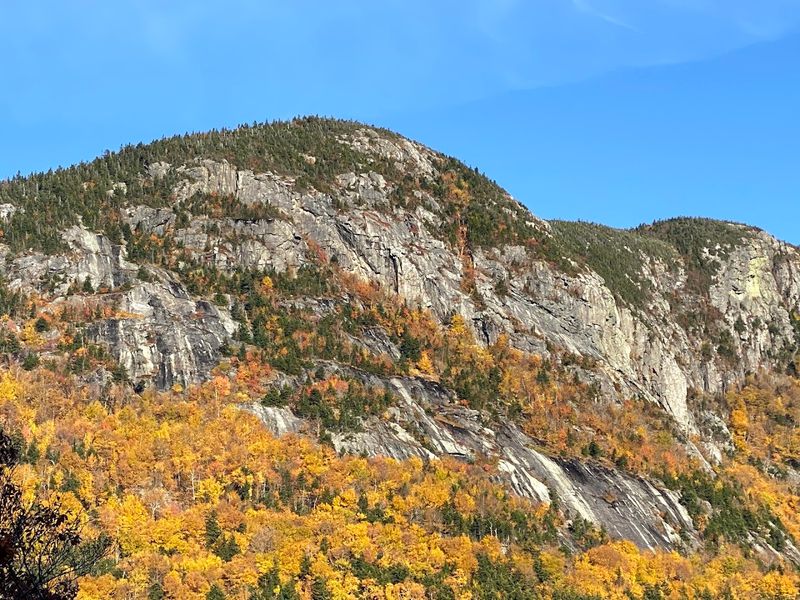
Cannon Mountain has personality to spare. Rising dramatically above the Notch, this peak is famous for its ski terrain during winter and its network of hiking trails during warmer months.
The mountain’s name comes from a distinctive cannon-shaped rock formation near the summit, and the entire peak carries a rugged, no-nonsense energy that feels very on-brand for New Hampshire.
The Kinsman Ridge Trail is a popular route to the summit, rewarding hikers with sweeping views across the White Mountain National Forest that stretch seemingly forever on clear days. The Rim Trail at the top loops around the summit area, offering multiple vantage points and a chance to spot red-tailed hawks riding thermal currents overhead.
For rock climbing enthusiasts, Cannon Cliffs on the mountain’s east face represent one of the most challenging and respected climbing destinations in the entire northeastern United States.
The mountain’s Aerial Tramway, a beloved feature that carried passengers to the summit for decades, is currently undergoing a full replacement project and will not operate during the summer season in 2026. That means the hiking trails are the primary way up right now, which honestly suits the mountain’s rugged character perfectly.
Lace up your best boots and earn those views the old-fashioned way.
The Old Man of the Mountain Museum and What It Preserves
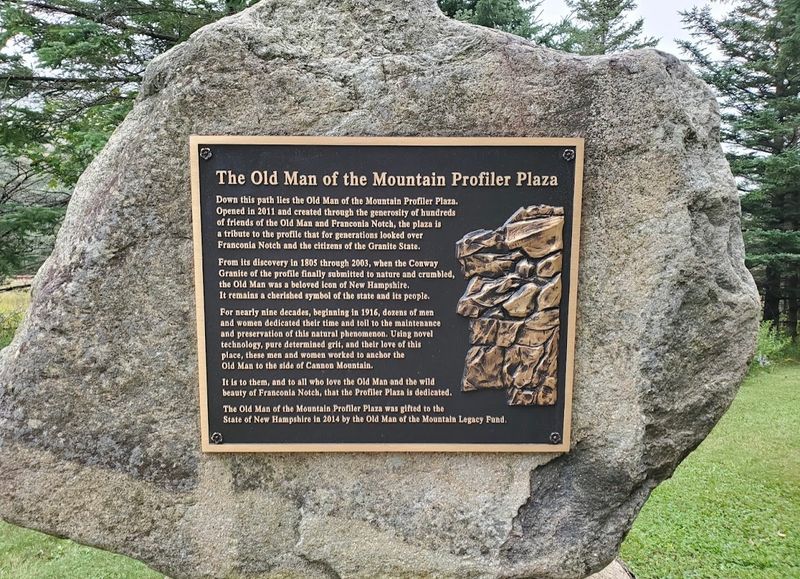
Not far from Profiler Plaza, a small but richly stocked museum tells the full story of New Hampshire’s most famous geological celebrity. The Old Man of the Mountain Museum houses an impressive collection of historic photographs, newspaper clippings, memorabilia, and artifacts that document the formation’s long history, from its earliest recorded observations through the dramatic decades of preservation efforts and finally the 2003 collapse.
What makes this museum genuinely moving is the human dimension it captures. You learn about the caretakers who dedicated years of their lives to keeping the profile intact, the engineering creativity they employed, and the community that rallied around a pile of rocks as if it were a living neighbor.
Admission is free, which makes it an easy and worthwhile addition to any visit.
Spending an hour inside gives context that transforms the rest of your time in Franconia Notch. The lake looks different after you understand what once watched over it.
The cliff looks different after you see old photographs of the face that clung to it for so long. This museum does not simply memorialize something lost.
It actively celebrates the relationship between a place and the people who loved it, and that distinction makes it genuinely special among New Hampshire attractions.
Planning Your Visit to Franconia Notch State Park
Getting to Franconia Notch State Park is straightforward. The park runs along Interstate 93, which doubles as the Franconia Notch Parkway through the heart of the pass, making it one of the most scenic highway drives in New England.
The park is open year-round, though different attractions operate seasonally, so checking current conditions before arrival is always a smart move.
The address for the park’s main visitor area is 260 Tramway Drive, Franconia, NH 03580. Parking areas are scattered throughout the park near major attractions, including Flume Gorge, Echo Lake, Profile Lake, and the Profiler Plaza.
The Franconia Notch Recreational Trail, a paved multi-use path running the full length of the park, connects these spots beautifully for cyclists and walkers alike.
Autumn is arguably the most spectacular time to visit, when the surrounding forests ignite in brilliant red, orange, and gold. Summer brings swimming, hiking, and long golden evenings.
Winter transforms the area into a snowshoeing and cross-country skiing paradise. Spring offers rushing waterfalls and blooming wildflowers.
My honest advice is to visit more than once, because no single season captures everything this magnificent corner of New Hampshire has to offer. Pack layers, charge your camera, and arrive with curiosity.
