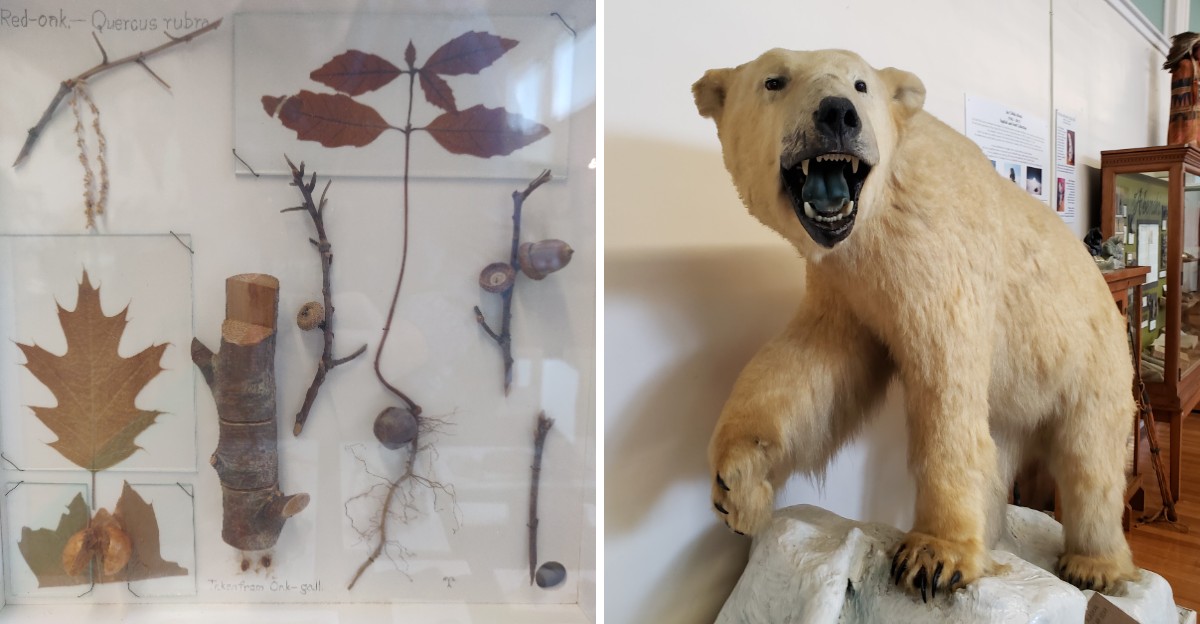
Some museums try to impress you with size or funding. This one impresses you with sheer oddity.
The Libby Museum in New Hampshire was founded by a dentist named Henry Forrest Libby, who spent a lifetime collecting anything that caught his curiosity. The result is a building packed with taxidermy, Native American artifacts, colonial weapons, and items that do not fit neatly into any category at all.
Among the highlights is a necklace made from monkey teeth and, yes, a genuine pair of Egyptian mummy hands. There is also the skeleton of the last rattlesnake found on an island in Lake Winnipesaukee.
Nothing here feels curated for mass appeal. It feels personal, strange, and completely original.
This New Hampshire museum has been called one of the quirkiest in the country, and that reputation is well earned. Once you walk through the doors, you will understand why people keep talking about it.
Meet the Dentist Who Collected Everything
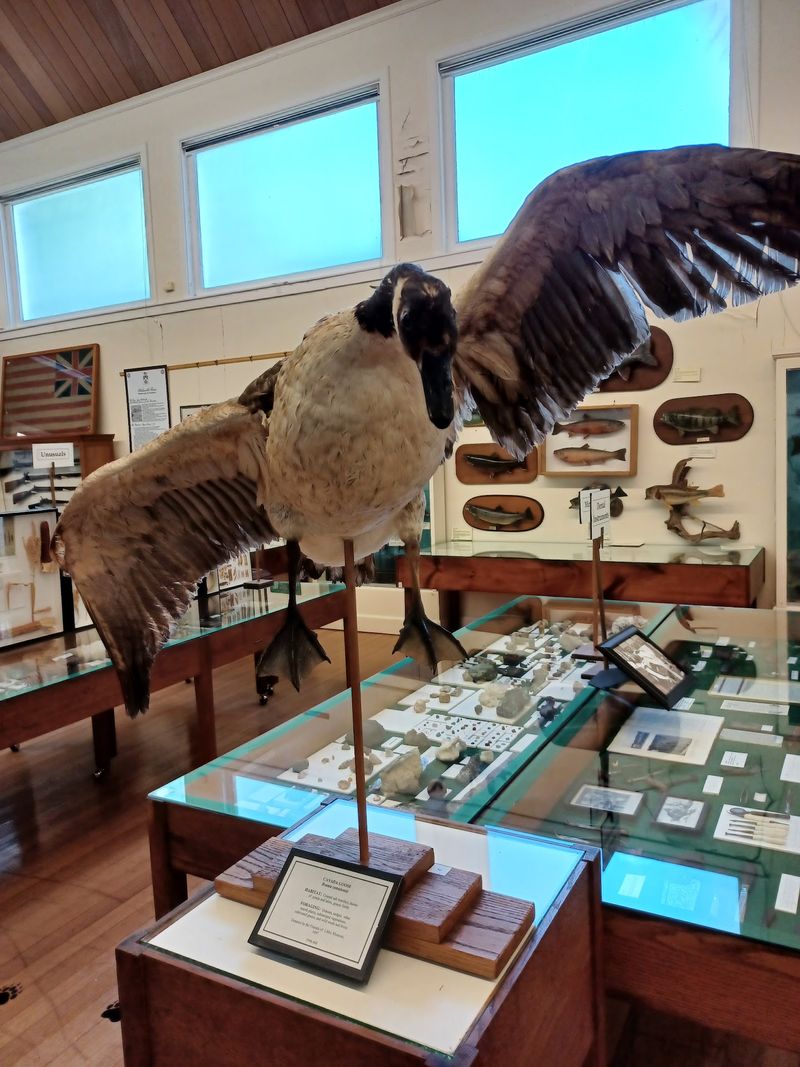
Picture a dentist who spent his free time hunting for bones, bugs, and birds. Dr. Henry Forrest Libby was exactly that kind of person, and his curiosity built an entire museum.
He grew up loving nature and science. Long after he started fixing teeth, he kept collecting animals, rocks, and artifacts.
Eventually his collection got so big that he needed a whole building to hold it.
So he built one right on the shore of Lake Winnipesaukee. The Libby Museum was his gift to the public, a place where anyone could learn about the natural world up close.
After he passed away, the Town of Wolfeboro took over caring for it, and the town still runs it today.
Knowing the story makes the visit more fun. Every shelf reflects one man’s hobby that simply refused to stay small.
You can almost feel his excitement in the way the cases are packed with treasures.
Think of it as stepping into the attic of the most interesting grandpa ever. Instead of dusty boxes, though, you get skeletons, feathers, and fossils.
Honestly, it beats any sock drawer.
Keep that friendly, curious spirit in mind as you wander. The museum rewards people who ask questions and look closely.
Yes, Those Really Are Mummy Hands
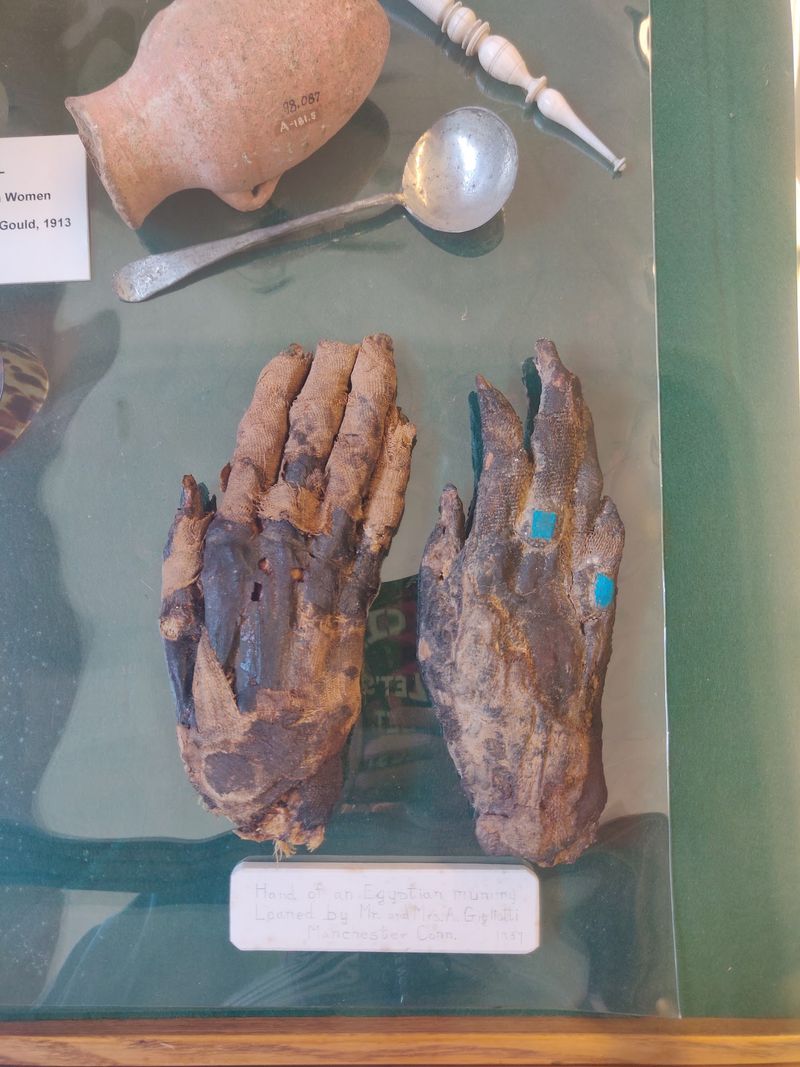
Nothing says small-town New England quite like ancient Egyptian body parts. Strange but true, the Libby Museum displays a pair of mummified hands, and they are easily the most talked-about objects in the building.
Seeing them in person feels a little spooky and a lot fascinating. The skin looks dark and leathery, shaped by centuries of drying and preserving.
It is a real window into how people in ancient Egypt cared for their dead.
Kids usually lean in, gasp, and then lean in closer. Grown-ups do the same thing, just a bit more quietly.
Here is a smart tip. Read the information card nearby before you snap a mental photo.
The labels explain what you are looking at, which turns a creepy moment into a cool history lesson.
Talking about mummies is also a great way to get young readers excited about history class. Ask them how they think the hands survived so long.
Their guesses might be wild, and that is half the fun.
Respect goes a long way here too. These hands once belonged to a real person, so treat the display like the special piece of the past it is.
Spooky, yes.
Silly, no.
Bears, Bobcats, and a Wild Taxidermy Crew
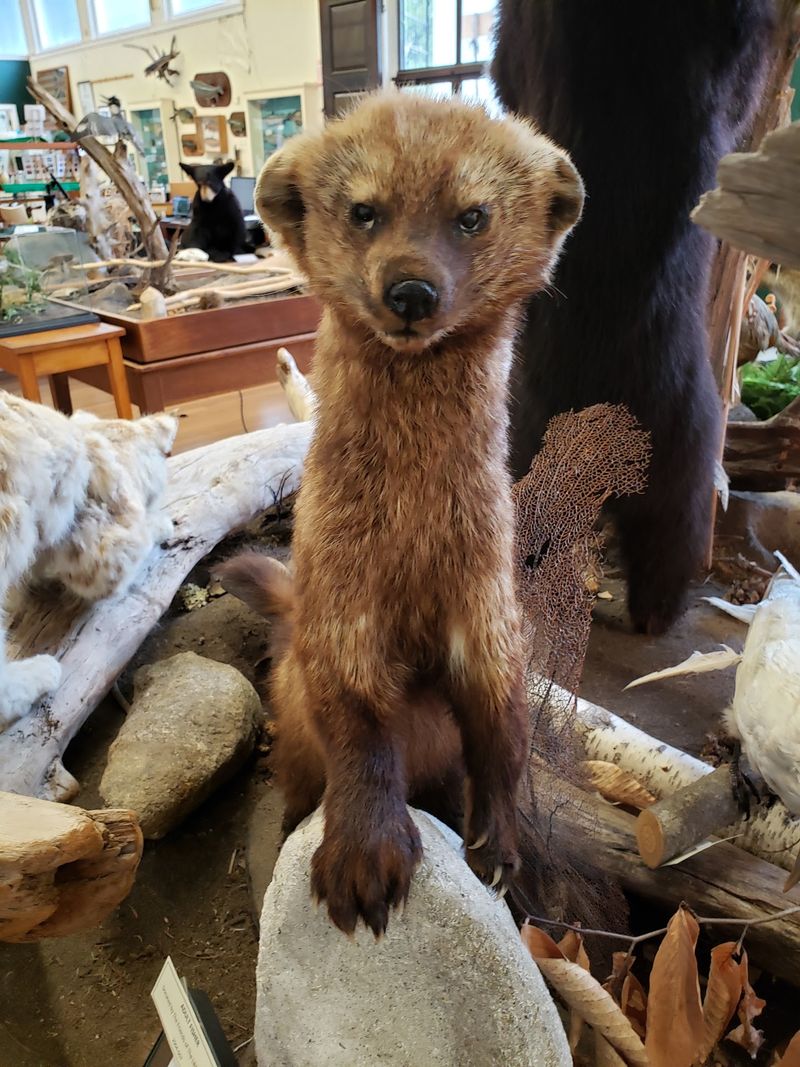
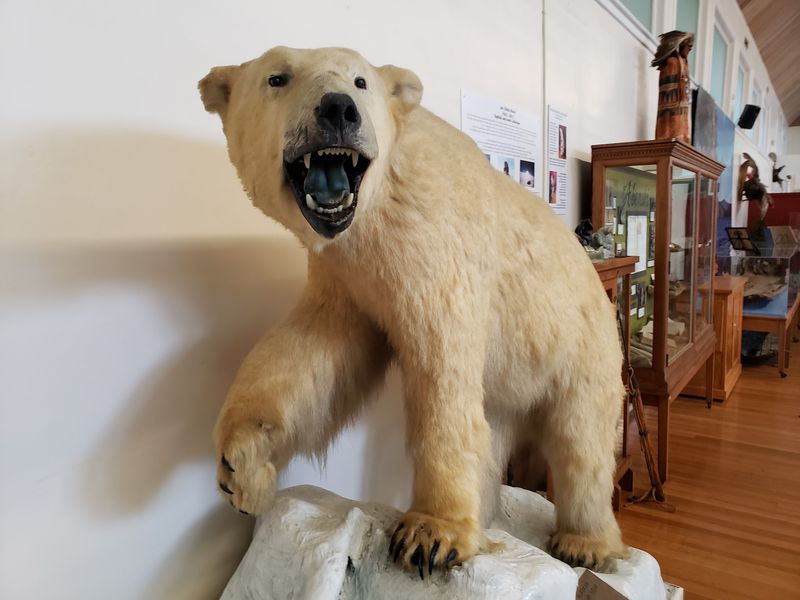
Stare down a black bear without breaking a sweat. Mounted animals fill much of the main hall, and they make the north woods feel close enough to touch.
Bears, bobcats, foxes, and plenty of other local creatures stand frozen in their best poses. Many of them live in the forests around the Lakes Region, so you are basically meeting the neighbors.
Seeing an animal this close changes how you think about it. A bobcat looks way bigger than the cute cat you imagined.
A bear’s claws look like they mean business.
For families, this is a perfect game zone. Try picking a favorite animal and guessing where it sleeps, what it eats, and how it stays warm in winter.
Then check the labels to see who wins.
Photographers and sketchers will love it too. The animals never blink, never wander off, and never complain about bad lighting.
Bring a small notebook if your kids like to draw.
Remember that these specimens are old and delicate. Hands stay in pockets, and noses stay a polite distance from the glass.
The bears have earned their peace and quiet after all these years on duty.
Feathers Everywhere in the Bird Gallery
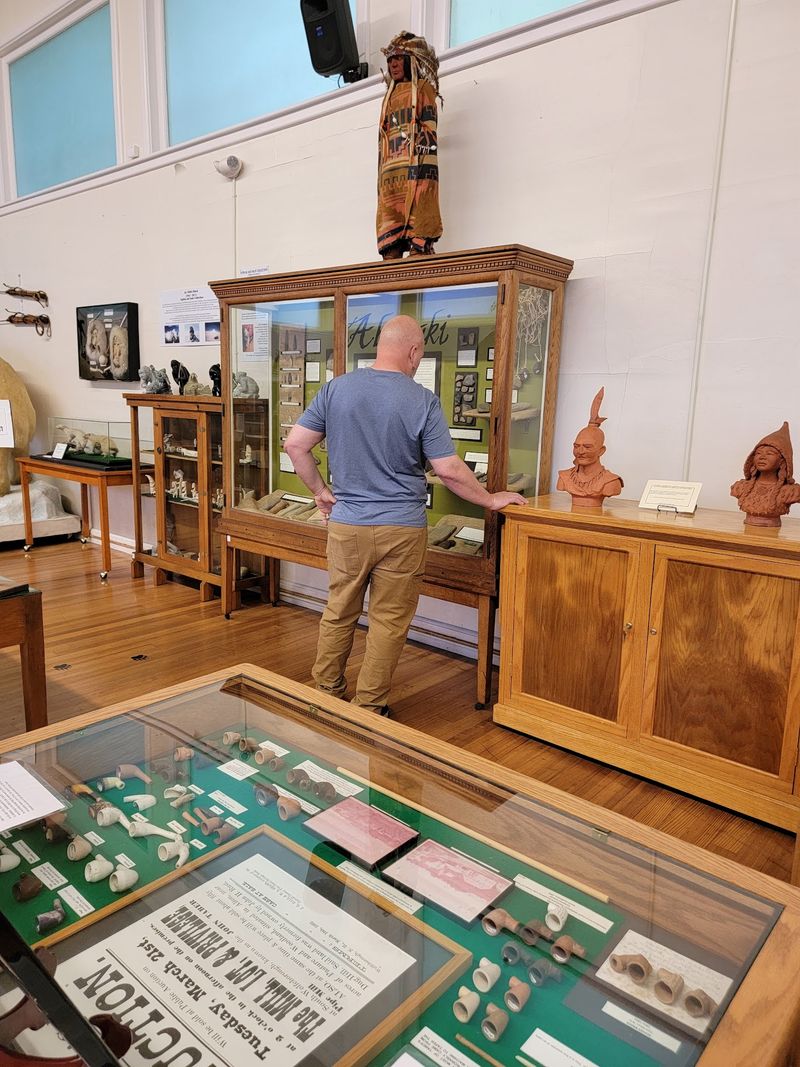
Birdwatching usually requires binoculars, patience, and very cold toes. Inside the museum, you get all the birds and none of the frostbite.
Cases are lined with mounted birds of many shapes and sizes. Owls, ducks, songbirds, and birds of prey show off feathers you would rarely see this clearly in the wild.
Look at the patterns up close. Some feathers shine like tiny mirrors, while others blend perfectly into bark and leaves.
Nature really knows how to dress for the occasion.
Here is a fun challenge for the car ride home. Try to spot some of the same birds around the lake.
Ducks are easy. Owls are tricky, since they prefer to hunt at night.
Learning bird names here can make every hike in the Lakes Region more exciting. Once you know what a loon looks like, hearing its wild call across the water feels magical.
Adults who enjoy quiet moments will appreciate this corner. It feels calm, almost like a library made of wings.
Take your time, read the cards, and let the colors do the talking.
Skeletons That Steal the Show
Bones tell stories, and this place has plenty of them to share. Skeleton displays rank among the coolest and most surprising parts of the whole collection.
Dr. Libby was deeply interested in how bodies are built and how animals are related. His skeleton exhibits let you compare different creatures side by side, which is a great way to understand anatomy.
Notice how a leg bone in one animal looks oddly similar to one in another. That kind of discovery makes science click in a way textbooks sometimes cannot.
Kids tend to love this section for one simple reason. Skeletons are a little bit creepy, and creepy is fun.
Use that excitement to sneak in some learning about how muscles and bones work together.
A quick tip for parents is to point out the skull shapes. Meat eaters and plant eaters have very different teeth, and spotting the difference turns into a quick detective game.
Fittingly, a dentist built this museum, so teeth deserve extra attention. Count how many sharp ones you see.
Then go home and brush yours a little more carefully.
Arrowheads and Abenaki History
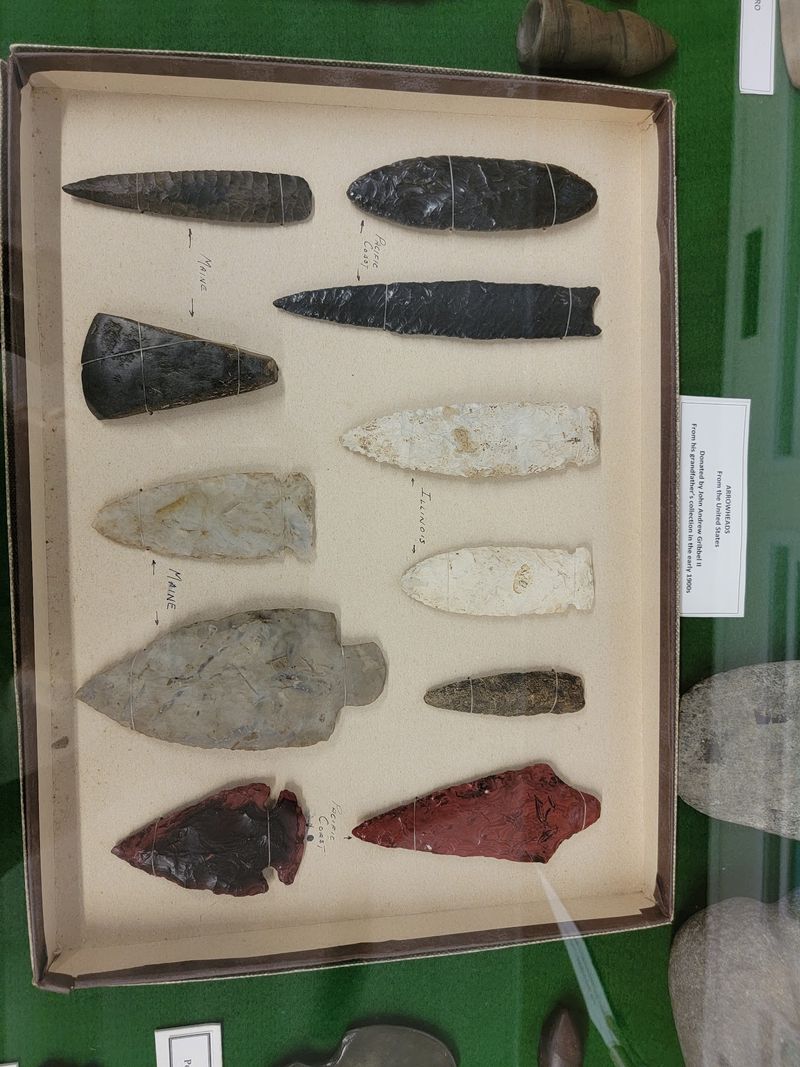
Long before summer cottages and speedboats, Native peoples lived along these shores. Displays of arrowheads, stone tools, and other artifacts help tell that important story.
The Abenaki and other Native communities called this region home for a very long time. Their knowledge of the land, the lake, and the seasons shaped life here in deep ways.
Looking at handmade stone points, you can almost imagine the skill it took to shape them. Each one was chipped carefully, and each one had a job to do.
This section offers a calmer, more thoughtful mood than the bears and mummy hands. It is a good place to slow down and think about who walked these woods first.
Families can use these exhibits to start meaningful conversations. Ask how people found food, made tools, and traveled before cars existed.
The answers build respect and curiosity at the same time.
New Hampshire history is richer than any single museum can cover, of course. Still, this collection gives a meaningful starting point.
Afterward, you may find yourself noticing stones along the shoreline a little differently, wondering what stories they could tell.
Coins, Silk Fans, and Delightful Odds and Ends
Some collections follow a strict theme. Others happily wander wherever curiosity leads, and this museum proudly belongs to the second group.
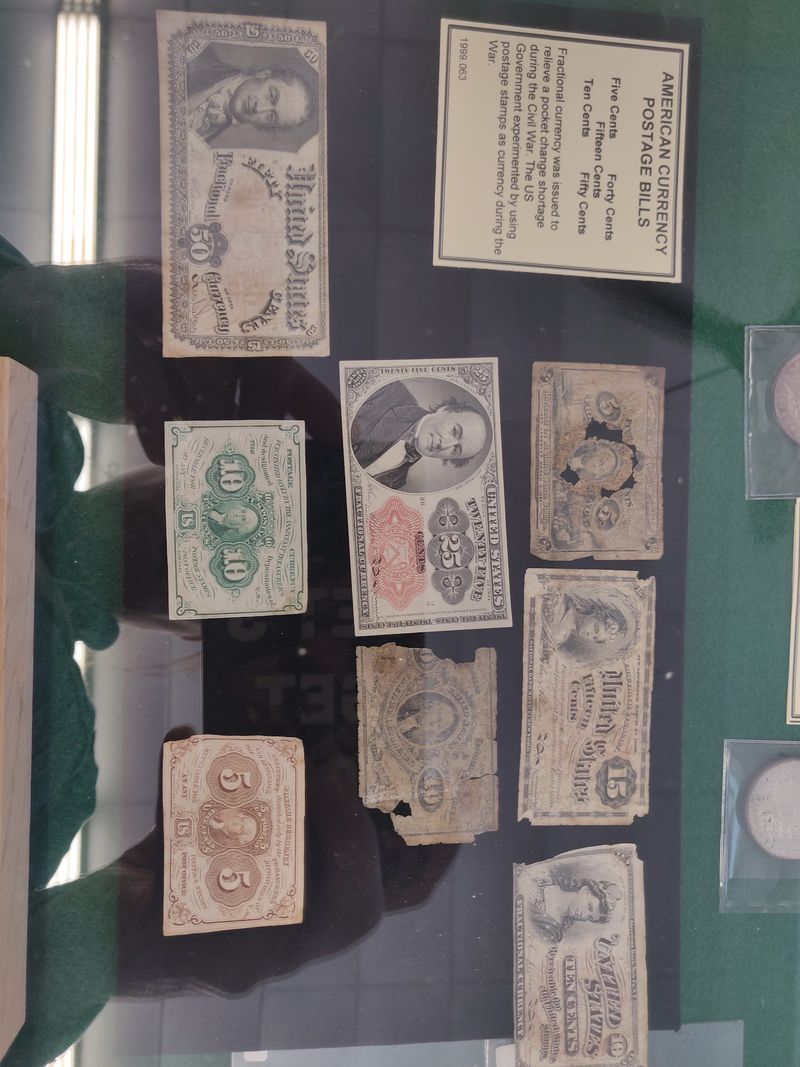
Alongside the animals, you will discover old coins, delicate silk hand fans, fossils, and plenty of surprising curiosities. It feels like a cabinet of wonders from an earlier age of collecting.
Old coins are especially fun to study. Look for faces, symbols, and tiny details that show what people valued long ago.
Every coin traveled through countless pockets before landing here.
The silk fans bring a touch of elegance to the mix. Their fine patterns stand out next to rugged rocks and prehistoric fossils, which is exactly the charm of this place.
Fossils, meanwhile, take you back further than any coin. Ancient plants and creatures pressed into stone remind you how old our planet truly is.
Wondering how all these pieces fit together? They do not, really, and that is the point.
The mix shows how much one curious mind could gather in a lifetime. Let yourself bounce between cases like a happy pinball.
Surprise is the main attraction here.
Bugs That Sparkle Like Jewelry
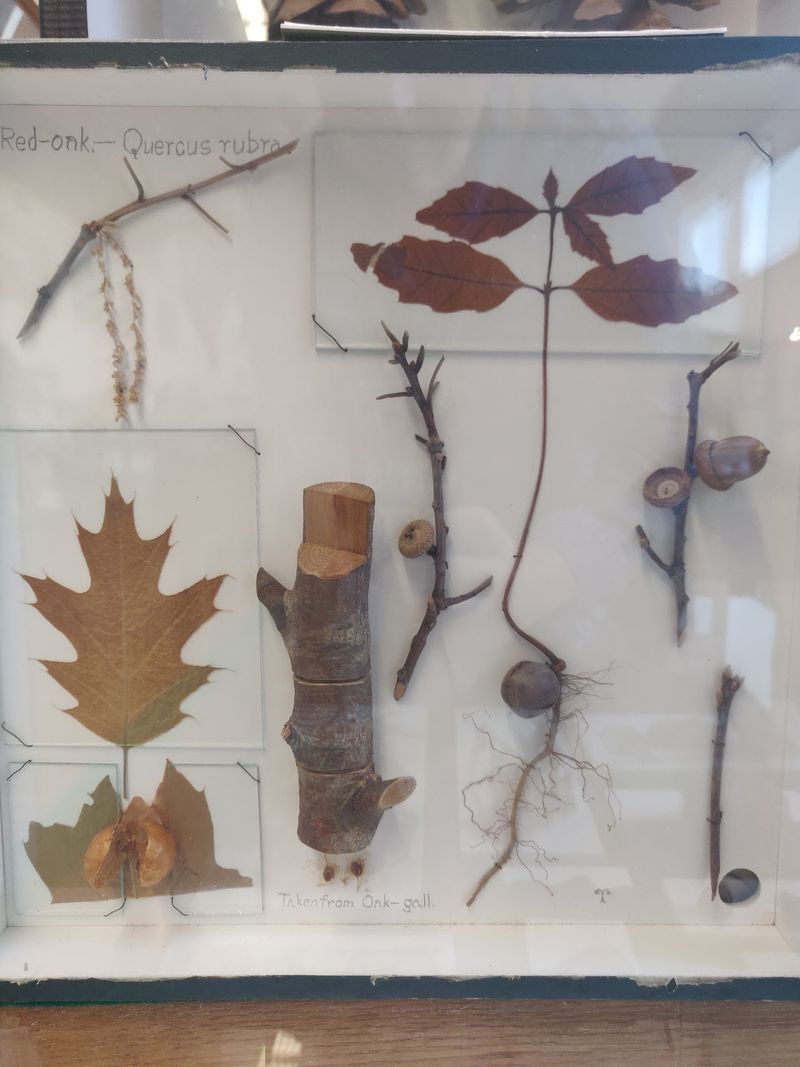
Butterflies with wings like stained glass and beetles that shine like polished metal are waiting for you. Insect exhibits here prove that tiny creatures can be seriously dazzling.
Neatly pinned rows show off colors and shapes you might never notice outside. Some bugs look fierce, some look fancy, and a few look like they came from another planet.
This area is a favorite for younger explorers. Kids who usually run from spiders often find themselves fascinated once the critters are safely behind glass.
Bring a little patience and a good eye. Many insects hide clever tricks, like wing spots that look like eyes to scare off hungry birds.
Spotting those tricks feels like solving a puzzle.
Bug lovers can turn this into a backyard project later. Grab a field guide, head outside, and see how many local insects you can identify around your own home.
Squeamish grown-ups, take heart. Nothing here crawls, buzzes, or lands in your hair.
You get all the beauty of the insect world with none of the itchy surprises. Call it nature’s jewelry box, minus the price tag.
Live Animal Shows and a Kid Scavenger Hunt
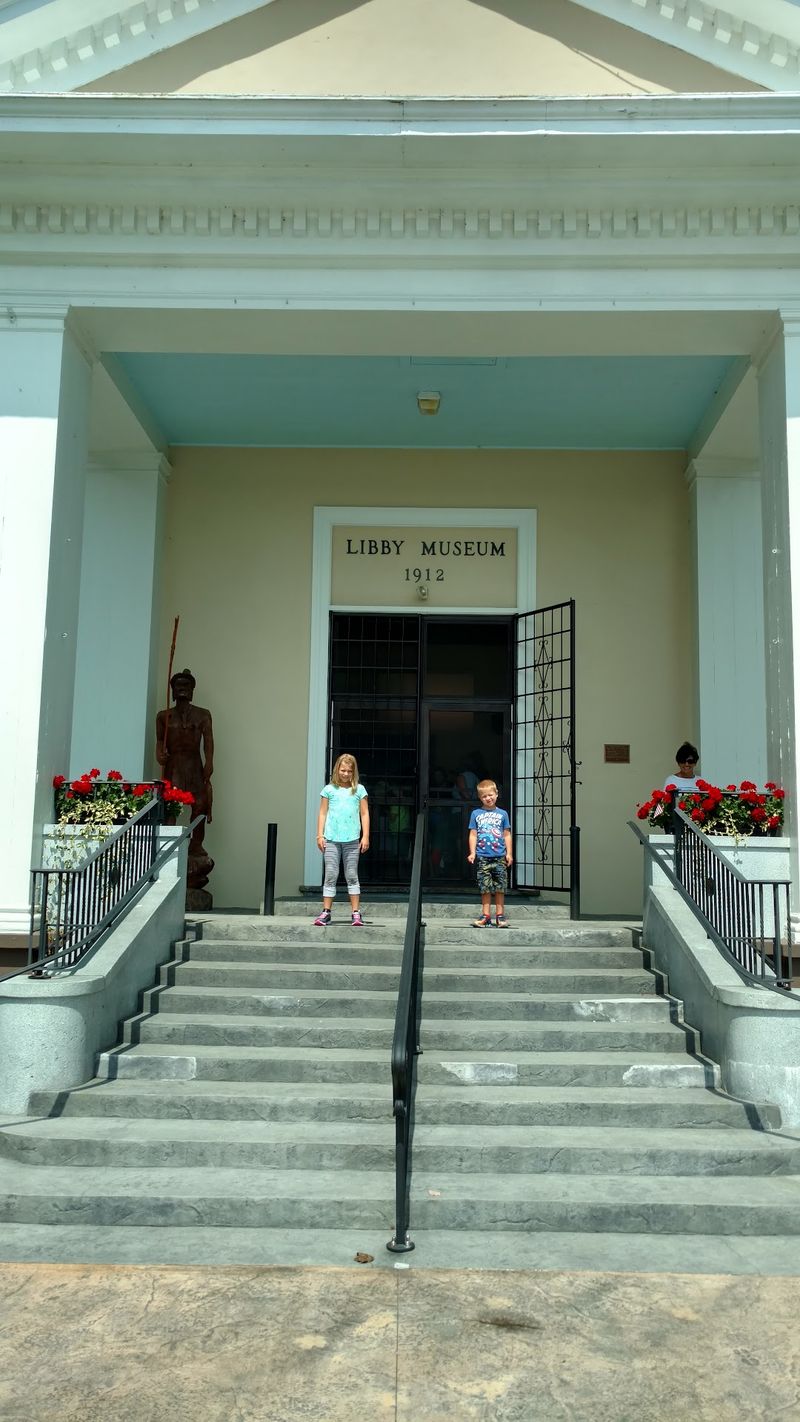
Stuffed animals are cool, but living ones bring the house down. During the summer season, the museum hosts programs that often include live animal presentations.
Wildlife educators share creatures and fun facts in a lively, hands-on style. Many families leave having met an animal they had never seen in person before.
These shows work well for all ages. Little ones get wide-eyed wonder, while older kids and adults pick up surprising facts they will repeat at dinner for weeks.
Younger visitors to the galleries can also grab a scavenger hunt list at the front desk. Finishing it means a small prize, and the hunt keeps kids focused on actually looking at the exhibits.
Here is some practical advice. Check the official Libby Museum website before your trip to see what programs are planned for the season.
Schedules change from year to year, so a quick look saves disappointment.
Arriving a bit early for a show is smart too, since good seats go fast. Pack sunscreen and a water bottle if the program is outside.
Happy kids, happy parents, happy animals. Everybody wins.
Lake Views and How to Find the Place
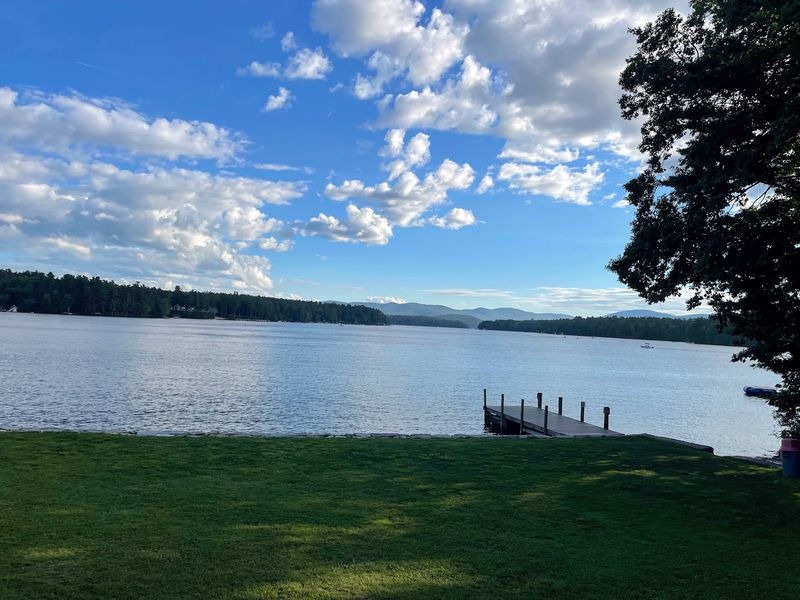
Step outside and the scenery takes over. Sitting right beside Lake Winnipesaukee, the museum grounds offer picture-perfect views of shimmering water and forested hills.
A public boat launch sits nearby, so lake lovers can easily combine a morning on the water with an afternoon of oddities. Few museums let you arrive smelling like sunscreen and lake breeze.
Wolfeboro calls itself the oldest summer resort in America, and the title fits. The town has a charming downtown, waterfront strolls, and that relaxed New Hampshire summer feeling.
Plan your stop for the warmer months, since the museum runs seasonally. Pair it with a picnic, a scenic drive, or an ice cream stop in town for a perfect day.
You can find the Libby Museum of Natural History at 755 N Main St, Wolfeboro, NH 03894. It sits along the main road heading out of town, so keep your eyes peeled for the sign.
So, what are you waiting for? Mummy hands, bears, bugs, and a gorgeous lake are calling your name.
Pack the car, grab the kids, and go meet the strangest little museum in New Hampshire. Curiosity has never looked this good.
