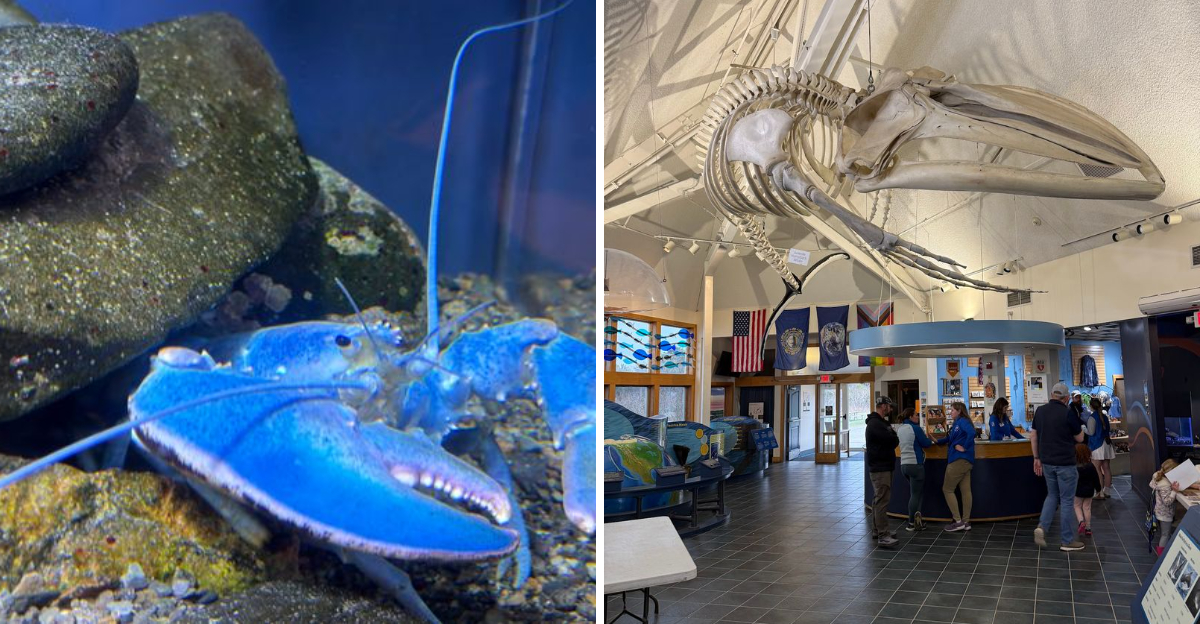
The humpback whale skeleton hangs above you, and the sea creatures swim below. This New Hampshire museum lets you meet marine life in a setting that is both educational and awe-inspiring.
The exhibits are interactive and engaging, with touch tanks and live animals. I spent an afternoon exploring the museum and learned something new at every turn.
The whale skeleton is the centerpiece, a reminder of the scale and beauty of the ocean. The staff is knowledgeable and passionate.
That is the thing about this New Hampshire museum. It is a place to connect with the ocean and its creatures.
Tofu the Humpback Whale Hangs Overhead
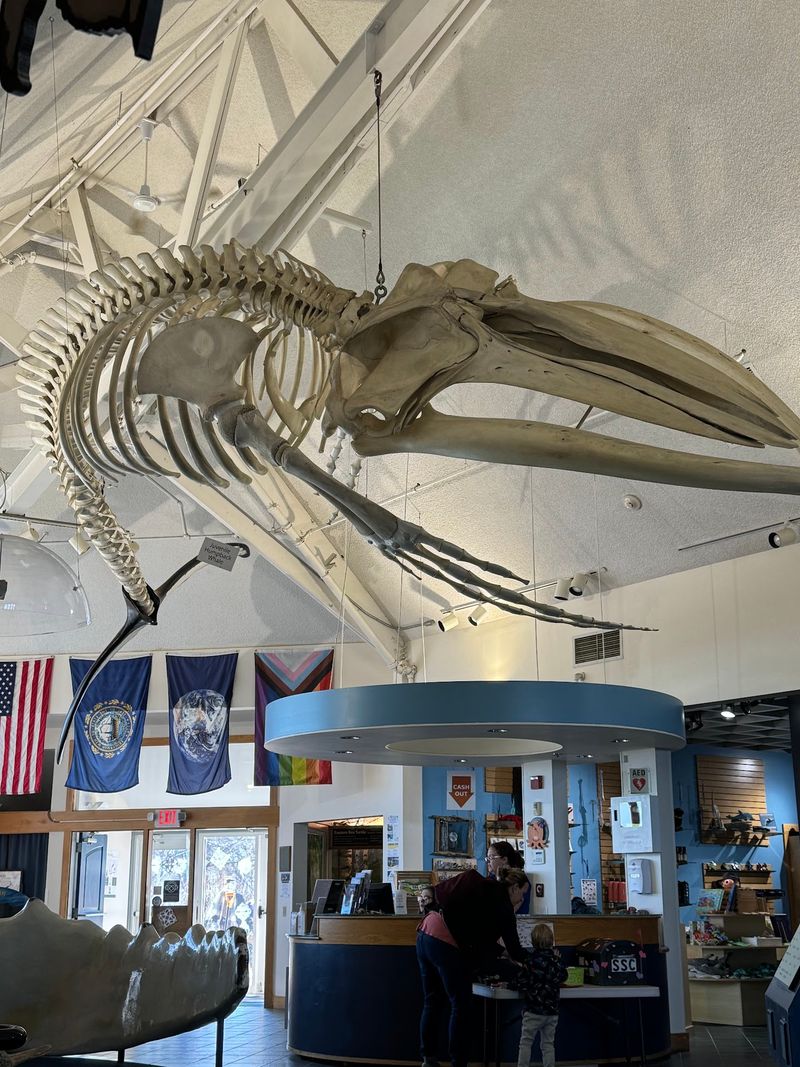
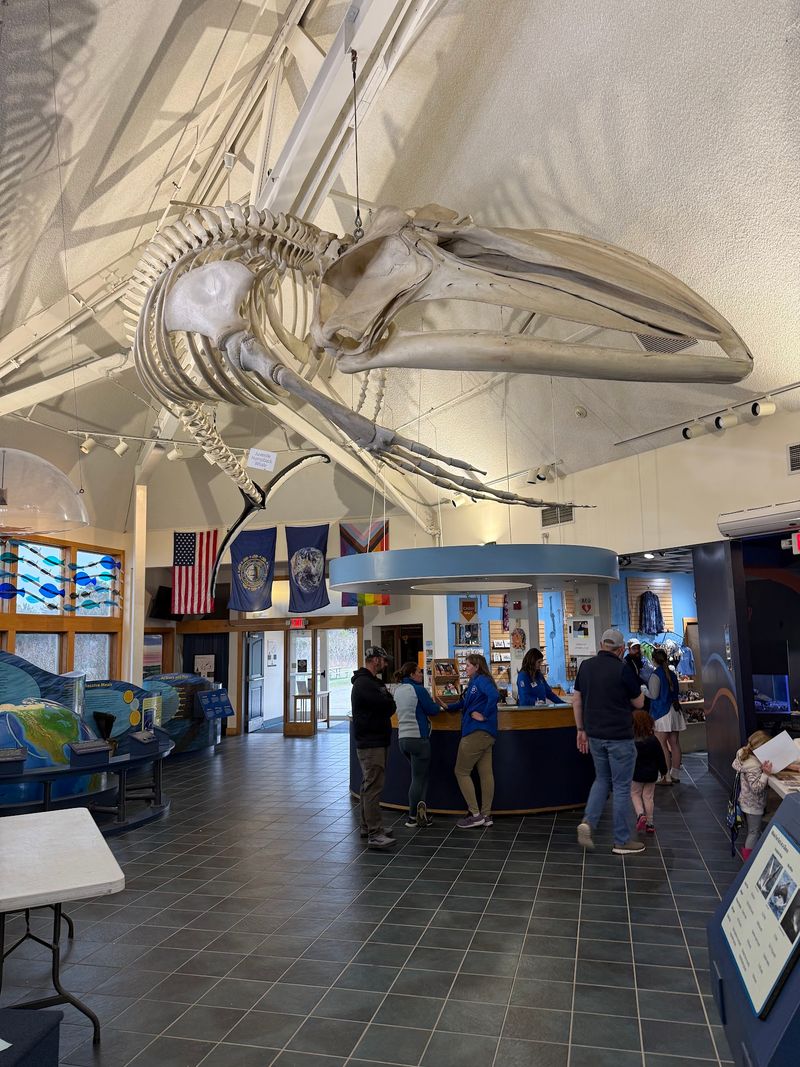
Look up the moment you walk in and you will meet Tofu, a 32-foot humpback whale skeleton suspended mid-roll as though she never stopped swimming.
She was a juvenile female whose life ended far too early, and her articulated bones now anchor the Marine Mammals of the Gulf of Maine exhibit. Standing directly beneath that ribcage rearranges your sense of scale in about four seconds flat.
What surprised me most was the playful posture. Rather than a stiff, textbook hang, her skeleton twists the way real humpbacks roll through the water, which makes the whole hall feel alive.
A life-size replica of her flipper sits nearby, and pressing your palm against it does more for comprehension than any diagram ever could.
Interactive stations circle the room, explaining whale evolution, feeding habits, and the social behaviors that make humpbacks such show-offs at sea.
Conservation runs quietly through every panel, covering vessel strikes, entanglement, and the research that tracks individual whales year after year.
Bring your neck-craning enthusiasm. Tofu remains the undisputed headliner of the Seacoast Science Center, and she works that spotlight beautifully.
Cold Water Touch Tanks Where Sea Stars Say Hello
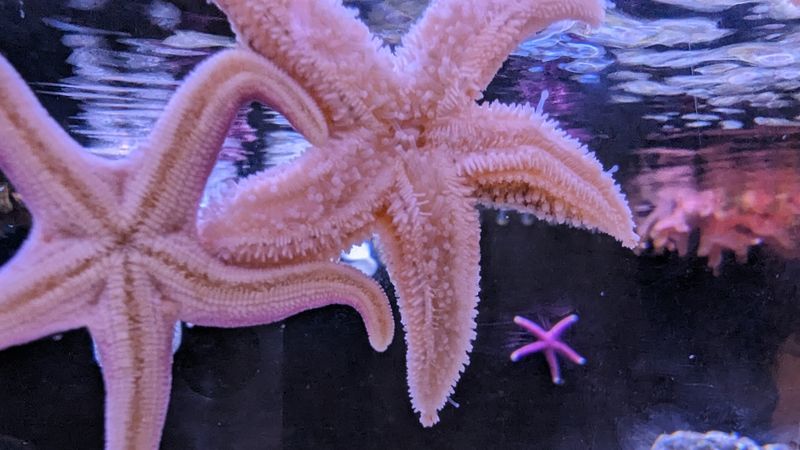
Sleeves up, watches off, and prepare for a shiver. The Edge of the Sea exhibit runs three cold-water touch tanks, and the water temperature is exactly as brisk as the Atlantic outside.
Sea stars cling with hundreds of tiny tube feet, and the sensation is somewhere between velcro and wet suede. Nobody expects that texture, which is half the fun.
Green crabs scuttle sideways across the rocks, sea urchins inch along like slow-motion pincushions, and if you look carefully, tiny lobsters hide in the crevices pretending to be pebbles.
Naturalists hover close by with answers and encouragement, coaxing out the shy residents that most people walk right past.
Ask about the nudibranchs. Those neon sea slugs look like someone spilled highlighter into the tank, and they steal the show whenever they emerge.
Sea cucumbers and brittle stars round out the cast, each one weirder than the last.
Tank access can pause briefly for animal care, so start here rather than saving it for last.
Two-handed learning, salty fingers, zero regrets. Simple as that.
Exploring the Gulf of Maine Gets Genuinely Weird
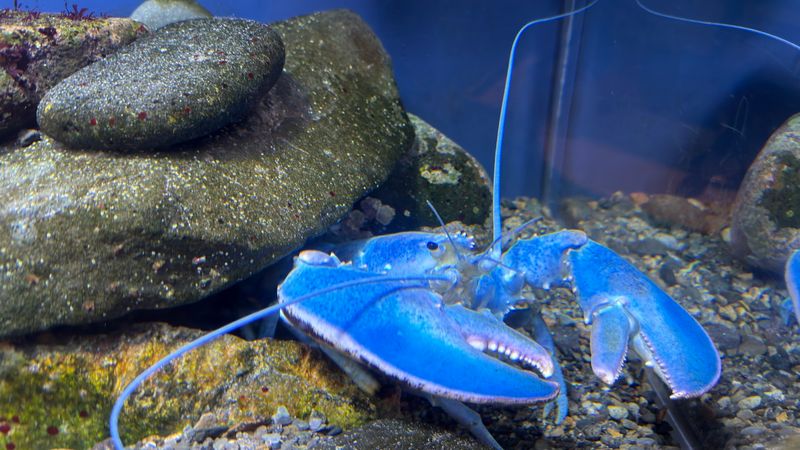
Northern Atlantic water hides some absolute oddballs, and this exhibit hall puts them front and center.
Glowing tanks line the room, each one stocked with native fish and invertebrates pulled straight from the ecosystem lapping at the doorstep.
The blue lobster stopped me cold. That electric cobalt shell comes from a rare genetic quirk, and seeing one in person feels like spotting a typo in nature’s code.
Anemones ripple nearby, tentacles drifting in slow hypnotic loops, while deeper-water fish with faces built for the dark stare back with total indifference.
Over at the Close Encounters tank, chain cat sharks glide past horseshoe crabs whose body plan has barely changed in hundreds of millions of years. Ancient meets sleek, all in one pane of glass.
Naturalists run short talks here, and the shark sessions are worth planning around. Facts land better when the animal is right there proving them.
Every label ties back to the health of the Gulf of Maine, one of the fastest-warming bodies of water on the planet.
Slow down in this room. The strangeness rewards patience.
NH Beaches Exhibit Makes You Rethink Sand
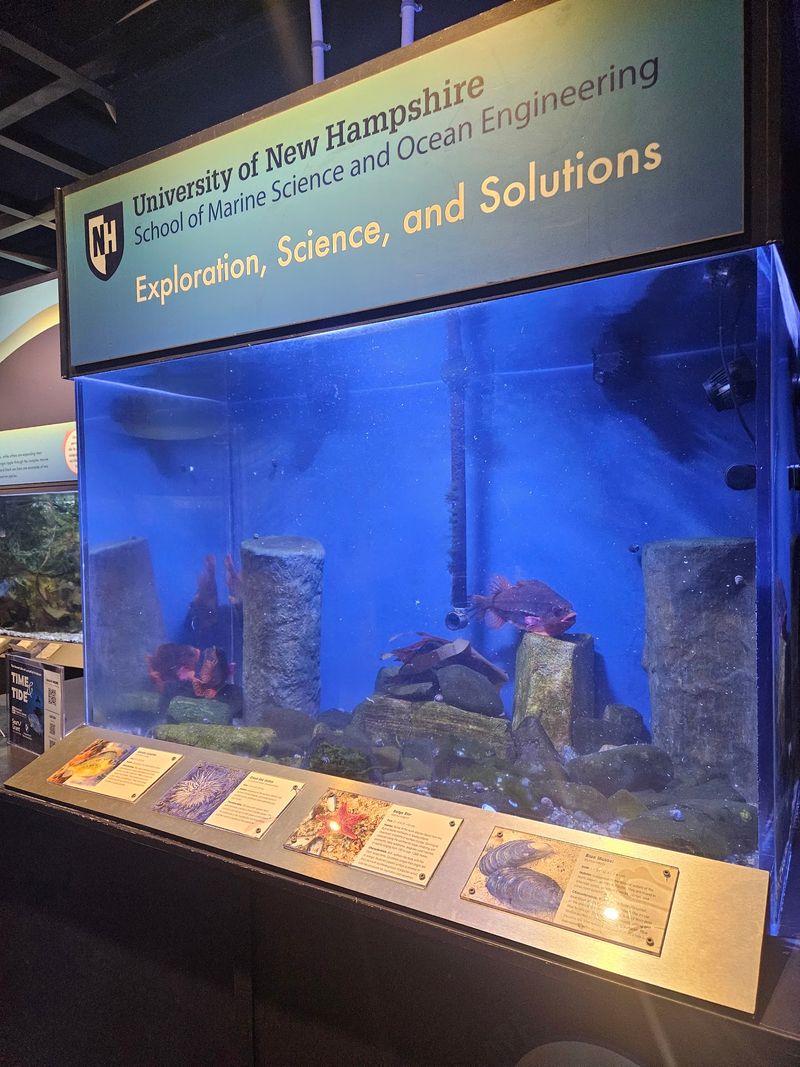
Sand seems simple until a museum takes it apart for you.
The NH Beaches display asks a deceptively basic question about what these shorelines actually mean, then answers it from about six different angles.
Native species get their moment first, the crabs and clams and beach grasses that have figured out how to survive constant tidal chaos.
Then come the invaders. Green crabs and other newcomers push out locals, and the panels lay out that ongoing tug-of-war without sugarcoating it.
Climate content sits at the heart of the exhibit. Rising seas, stronger storms, and shifting sand all reshape a coastline that New Hampshire has precious little of to begin with.
Graphics and interactive pieces do the heavy lifting, turning abstract projections into something you can actually picture happening at the beach down the road.
My favorite touch is how personal it gets. Small everyday choices show up alongside big scientific data, which lands harder than any lecture.
Walk out to the shore afterward and the whole place reads differently. That is smart exhibit design doing its job.
Working Under the Sea Turns You Into a Diver
Ever pumped air to a diver? The redesigned Working Under the Sea exhibit hands you the crank and lets you keep a replica 1940s hard hat diver supplied.
That brass helmet and canvas suit weigh a ton in the imagination alone. Early underwater work was brutal, and this station makes you feel the effort rather than just read about it.
Next to it, a remote-controlled mini ROV waits for a pilot. Steering one through a miniature subaquatic course is trickier than it looks, and mildly addictive once you get the hang of it.
The best surprise is EDALHab, and yes, you can crawl inside a model of it. The world’s first mobile underwater habitat was built right here in New Hampshire, a fact that deserves far more bragging than it gets.
Engineering history and playground energy rarely share a room this well.
Kids treat it like a jungle gym with a diploma. Adults linger over the mechanics and quietly reconsider their career choices.
Set aside real time for this corner of the building.
Coastal Trails Wrap Around Odiorne Point State Park
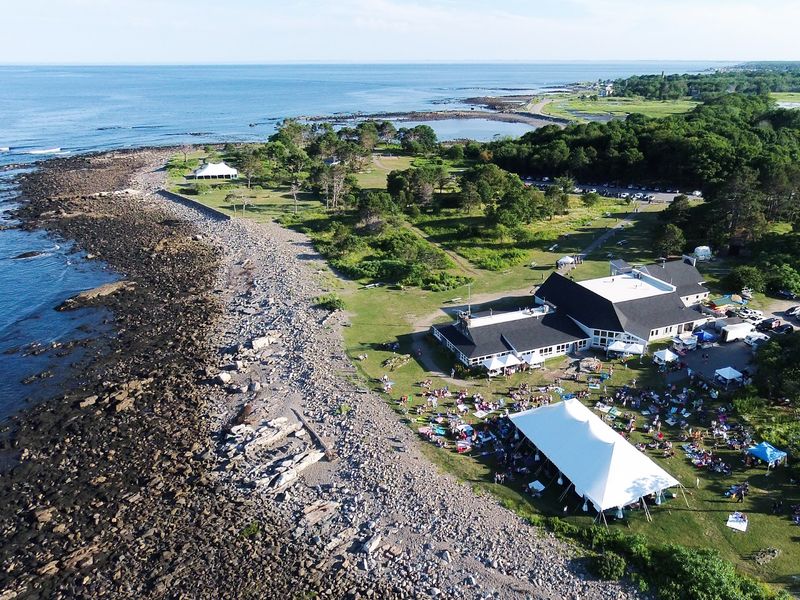
Indoor learning is only half the ticket here. The building sits inside Odiorne Point State Park, and more than three miles of trails fan out through coastal woods and along the rocky edge of the Atlantic.
Salt air hits immediately. Waves crash against the boulders, gulls complain overhead, and the ocean views stretch wide enough to justify the whole trip on their own.
Paths range from paved and stroller-friendly to rougher wooded stretches, so pace yourself according to your footwear.
Rock scrambling is practically mandatory for anyone under twelve, and honestly for plenty of us over twelve too.
Picnic tables and shaded spots dot the grounds, which makes packing lunch a genuinely good strategy. A playground and restrooms sit within easy reach.
A small beach area waits nearby for anyone wanting to actually get their feet in the water.
The walk from parking to the entrance is longer than expected, so factor that in on hot days or with anyone who tires easily.
Outside, the Seacoast Science Center becomes a state park adventure with a science museum attached.
Tide Pooling With a Naturalist Beats Guessing
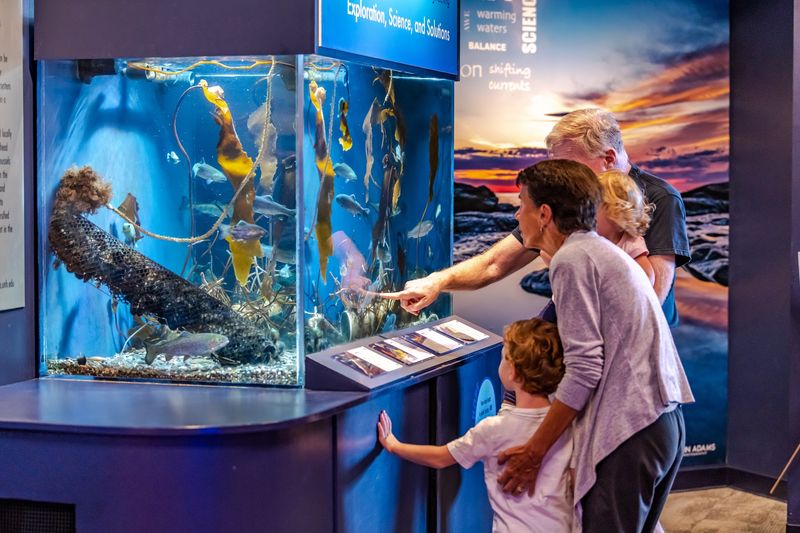
Low tide is when the shoreline shows its cards.
Naturalist-led tide pooling sessions head straight onto the rocks, flipping seaweed and peering into puddles that turn out to be entire neighborhoods.
Sea stars wedge into crevices, spiny urchins sit half-buried, periwinkles cluster by the hundreds, and hermit crabs argue over shells like tiny landlords.
Having a guide changes everything. Alone, you see wet rocks.
With someone who knows the zones, you see barnacle lines, tidal pressure, and animals built to survive being pounded twice a day.
Grip matters more than style out there, so wear shoes you do not mind soaking and expect slippery footing on the rockweed.
Timing follows the tide chart rather than the clock, which means checking the schedule before you commit.
Everything gets returned exactly where it was found, and that ethic gets stated plainly rather than assumed.
Twenty minutes on those rocks reframes the entire New Hampshire coast as a working ecosystem instead of scenery.
Go slowly, look twice, and the shore keeps delivering.
Nature@Nite Brings After-Hours Science Play
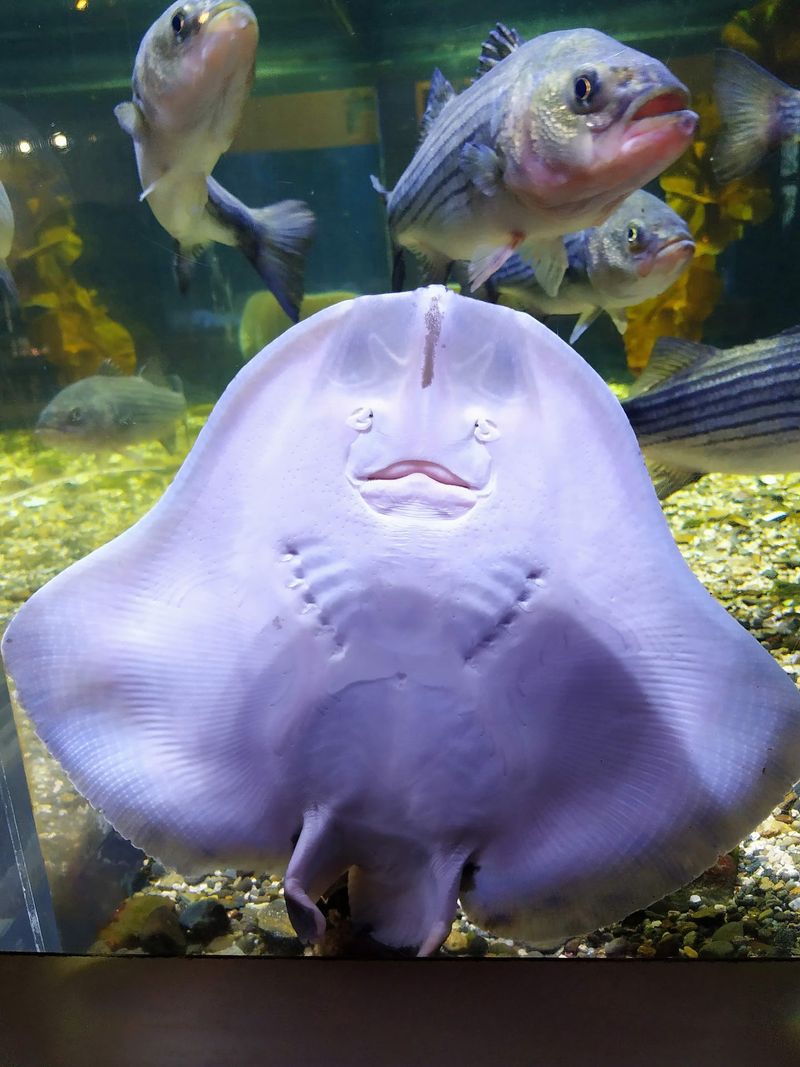
Third Friday of the month, the lights stay on later and the mood shifts entirely.
Nature@Nite programs fill the halls with family-friendly S.T.E.A.M. stations, and the themes rotate between art, engineering, and whatever else the education team dreams up.
Evening changes the acoustics of a museum. Quieter, cozier, less rushed, with the ocean going dark and dramatic just beyond the windows.
Activities are built around confidence rather than testing. Kids tinker, build, sketch, and experiment while adults quietly get invested in their own projects.
A guided nature program usually accompanies the evening, digging into one topic properly instead of skimming.
Dress warmer than daytime instincts suggest. Coastal air drops fast once the sun goes, and part of the program often heads outdoors.
Free access makes these evenings especially worth circling on a calendar, and word gets around, so arriving early helps.
Under a New Hampshire night sky with the surf providing background noise, science stops feeling like homework and starts feeling like a party with better facts.
Check the schedule before you drive out.
June Turns Into a Month Long Ocean Celebration
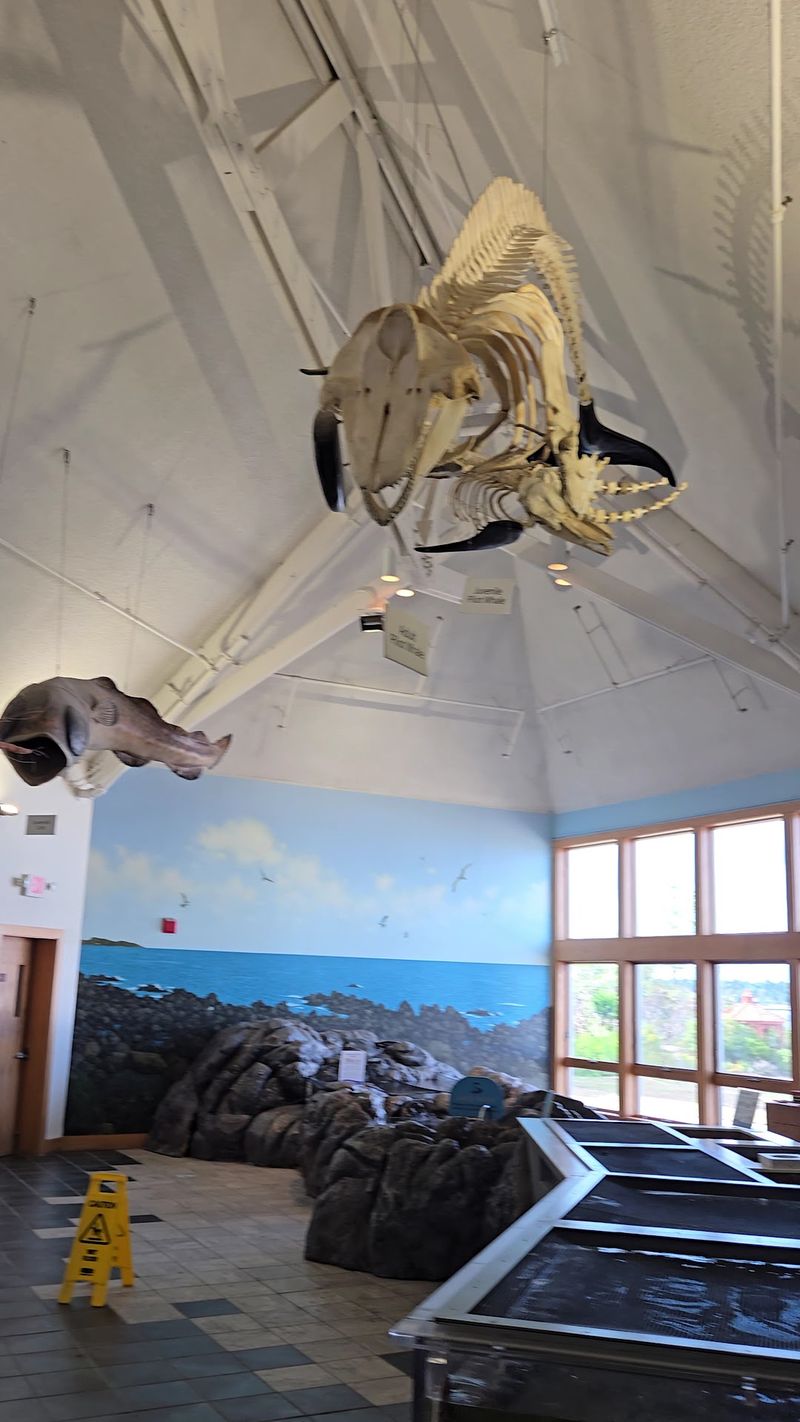
World Ocean Day gets one day globally. Here it gets stretched into an entire June.
Games, crafts, and extra naturalist-led tide pooling sessions pile up across the month, and the energy tips from museum-quiet to festival-loud.
Local scientists, divers, artists, and conservationists rotate through, each one bringing a different angle on why the ocean deserves better treatment.
Flower and shell crown making sits happily alongside serious research talks, which is exactly the right kind of chaos.
Sand and water tables keep the smallest arrivals busy while older kids chase the hands-on games and demonstrations.
Music drifts through the grounds, tents pop up outside, and the whole property takes on a community-block-party feel with the Atlantic as the backdrop.
Programming shifts week to week, so two visits in June will not look the same.
The Seacoast Science Center calls it a shell-ebration, and the pun is fully earned.
Early summer weather on this coast tends to cooperate beautifully, making June arguably the smartest month to plan your visit around.
Wildlife Kayak Tours and Your Trip Details
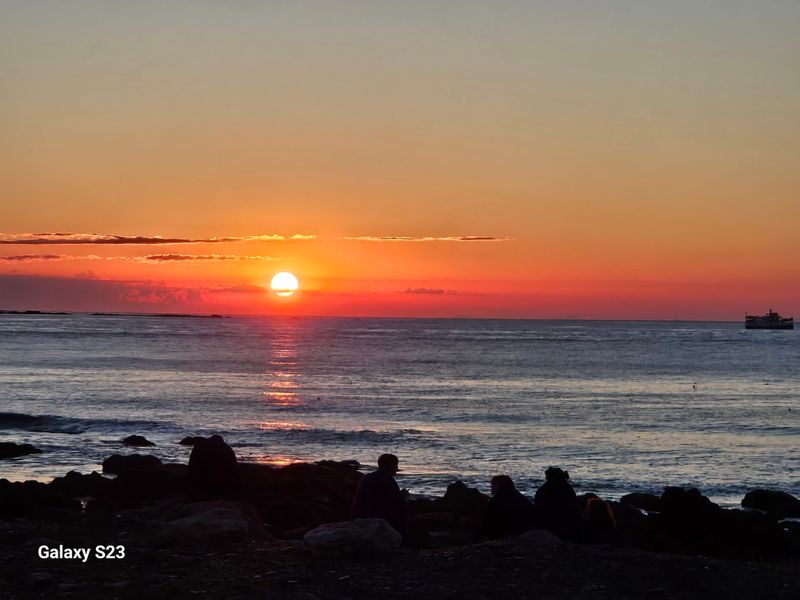
Want the ocean without glass between you and it? Wildlife Kayak Tours push off from the New Hampshire seacoast with naturalists and members of the Marine Mammal Rescue team leading the way.
Paddling brings herons, cormorants, drifting seaweed forests, and the occasional curious seal head popping up at a respectful distance.
Responsible viewing gets covered before anyone touches the water, along with a kayaking orientation for first-timers.
Beginners are genuinely welcome, and the pace favors observation over athletics.
Practical notes worth knowing: doors open at ten in the morning daily and close at four, and parking sits inside the state park with a separate per-person fee.
The walk from the lot to the entrance runs longer than most expect, so plan accordingly.
Two hours covers the exhibits comfortably, then the trails and shoreline can easily swallow another two.
Find the Seacoast Science Center at 570 Ocean Blvd, Rye, NH 03870, phone 603-436-8043.
Pack a picnic, bring shoes that can get wet, and let a whale skeleton and a bucket of sea stars sell you on New Hampshire’s tiny, mighty coast.
